

Fully-Funded PhD in Cambridge, UK
Posted by Kathy Grube, on 24 December 2025
Job type:
Location: Cambridge, UK
Closing Date: 19 January 2026
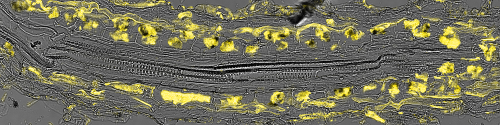
Project Name: DIY Plant Walls: Engineering Plant Cell Size and Material Strength using Fungal Proteins (Plant BioDesign Cambridge project)
Institute: Sainsbury Laboratory, University of Cambridge
Supervisors: Professor Sebastian Schornack (lead supervisor) and Dr Sarah Robinson (co-supervisor)
Enrolment Department: Department of Plant Sciences, School of Biological Sciences, University of Cambridge
Application Deadline: 5pm Monday 19 January 2026
Start Date: 1 October 2026
Eligibility: Open to Home students only. Please note that students who need a visa to study in the UK are not eligible to apply for this project.
Funding: Appointed candidates will be fully-funded for 4 years. The funding includes: tax-free annual stipend (estimated to be £31,000 for the 2026/27 academic year), tuition fees and Research Support and Training Grant (RSTG).
All enquiries should be directed to sebastian.schornack@slcu.cam.ac.uk
Project Overview
The plant cell wall is the ultimate natural biocomposite: it determines cell size, shapes organs, and represents the world’s most abundant biomass. The Schornack lab has discovered a class of fungal proteins, the FOLD effectors (e.g. SIX6), that act as highly potent, molecular-scale “wall softeners” by directly binding to key wall carbohydrates. When these effectors are expressed in plants, the cells balloon in size within two days.
This PhD project is a pioneering effort to move from discovery to design. You will be a Plant BioDesign Engineer, treating these FOLD effectors as sophisticated, naturally evolved DNA ‘parts.’
Mechanics & Engineering: Work in collaboration with Dr Sarah Robinson to utilize the unique Automated Confocal Micro-Extensometer—a device that applies microscopic force while imaging the cells and atomic force microscopy — to quantify exactly how the FOLD effector changes the stiffness and elasticity of the plant cell wall in Nicotiana benthamiana leaves.
Molecular Design & Testing: Identify which carbohydrate polymer (cellulose, pectin, xyloglucans, xylan) the effector targets, then rationally design and build mutant FOLD effectors to see if you can tune their ‘softening’ power.
Synthetic Biology: Use advanced cell-type-specific promoters (e.g., only in the epidermis or vasculature) in Arabidopsis thaliana to programmatically control where and when the cells enlarge. Can we use this control to design a stronger stem, a larger leaf, or biomass that is easier to convert into sustainable materials?
Salary: £31,000 tax-free annual stipend
Start date: 1 October 2026
Closing Date: 19 January 2026
Scientific fields: Cell biology, Computational and systems biology, Plant development, Gene regulation, Growth control
Model systems: Arabidopsis, Other plant: Other - plant
Duration: Fixed term
Minimum qualifications: Bachelor's degree (e.g. BSc)
Get involved
Create an account or log in to post your story on the Node.
Sign up for emails
Subscribe to our mailing lists.