

From Bench to Bedside: Highlights from the 2026 FlyPower Meeting in São Paulo
Posted by Guilherme Oliveira Barbosa, on 3 August 2026
By: The FlyPower Team
From July 27–28, 2026, the Institute of Biosciences at the University of São Paulo (IB-USP) hosted the FlyPower Meeting 2026, held as an official satellite event of the XXIII Congress of the Brazilian Society for Cell Biology (SBBC).
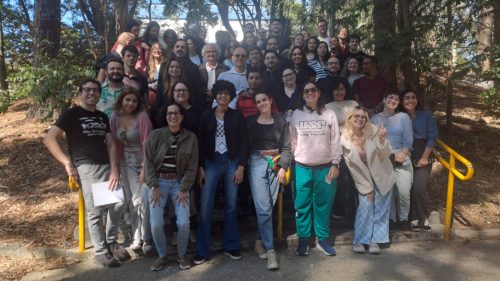
Figure 1: FlyPower Meeting attendees at the Universidade de São Paulo.
Bringing together research groups from institutions across Brazil, including USP, USP-RP, UNESP-Araraquara, UNIFESP, PUC-Campinas, UNICAMP, UFTS, UFRJ, and UFAL, the meeting hosted approximately 60 attendees. The meeting served as a vibrant stage to demonstrate how Drosophila melanogaster—alongside other insect systems—continues to push the boundaries of biomedical science, bridging fundamental discovery (“bench”) to translational application (“bedside”). It was thought to enhance scientific network and friendship among the Brazilian community of drosophilists, who foster the model organism to understand basic science all the way to complex diseases.
Broad Science: From Cancer to Neurobiology
Over two days, the scientific program showcased the remarkable versatility of the fly model across three primary thematic pillars: Cancer Biology, exploring tumor growth, microenvironment interactions, and oncogenic signaling using Drosophila models. Molecular Tools & DIY Innovation, demonstrating cutting-edge genetic manipulation techniques and accessible open-source hardware. This discussion was enhanced by the talk of André Chagas (Promethea / Prisma Science) with an insightful session on DIY devices for Drosophila research, demonstrating how open-source hardware can democratize experimental setups and expand lab capabilities. His company is up and running in Campinas, Brazil and can be accessed via their website (https://www.prismascience.net/en). Finally, Neurobiology & Neurodegeneration, where the researchers showcased their work on complex neural circuits, neurodegenerative disease models, and behavior.
Alongside student presentations, the meeting featured specials talks from principal investigators who brought essential perspectives to the program: Ana Bossolani (Ana Bossolani’s lab) and Alison Júlio (Alison Júlio’s lab), who delivered dedicated talks in the neurobiology session, exploring complex neural mechanisms and disease models for amyotrophic lateral sclerosis, showcasing the use of Drosophila for the personalized medicine. Together, their contributions provided valuable methodological frameworks and cutting-edge insights that enriched the scientific program.
Community & Connection
Beyond the rigorous scientific discussions, the meeting prioritized building a strong community. Networking was woven into the schedule with dedicated coffee breaks and shared lunches, allowing participants from various institutions to connect and exchange ideas. The event closed on a high note with “Flipa ou Reflipa?”, a vibrant trivia game that combined knowledge of Drosophila science with plenty of fun, reinforcing the friendly and collaborative spirit of the FlyPower network.
Empowering the Next Generation of Brazilian Researchers
A central pillar of the FlyPower group’s mission is capacity building and fostering young talent within the Brazilian scientific ecosystem. With the exception of the key invited talks mentioned above, all oral sessions and flash talks throughout the meeting were delivered entirely by trainees—undergraduates, master’s students, PhD candidates, and postdocs.
This deliberate structure gave young scientists direct experience communicating their research on an international-standard stage, equipping future Brazilian biomedical researchers with essential skills in model organism genetics. Prof. Maria Vibranovski and her team of students and postdocs were crucial in organizing the meeting alongside the FlyPower group. One of the seniors in the group, Prof. Ricardo Guelerman Pinheiro Ramos, who also supervised many of the current PI’s in the community shared his thoughts with us:
“This Drosophila community grows stronger every year. This is our third meeting, and we are maturing our organization. I never imagined this would happen one day. This event is highlighted by the outstanding presentations of the students who are performing at a very high level, dominating the genetic toolkit existent in this fly system.”
Impact Beyond the Satellite Event: FlyPower at SBBC 2026
The strong presence and high scientific standard of the FlyPower community carried seamlessly into the main XXIII Congress of the Brazilian Society for Cell Biology (SBBC). FlyPower trainees actively presented their work across poster sessions, showcasing the breadth of research powered by model organism genetics in Brazil.
Highlighting the exceptional quality of work produced by young FlyPower researchers, undergraduate student Renata Campelo (from Prof. Lucas Anhezini’s lab / LAVITOX, Universidade Federal de Alagoas – UFAL) received an Honorable Mention for Best Poster in the Undergraduate Category (Iniciação Científica). It is common sense to the FlyPower group that the quality of her world shall pave the way to a great scientific career as she wishes. This prestigious recognition underscores how early-career trainees in Brazil are performing world-class science using Drosophila.
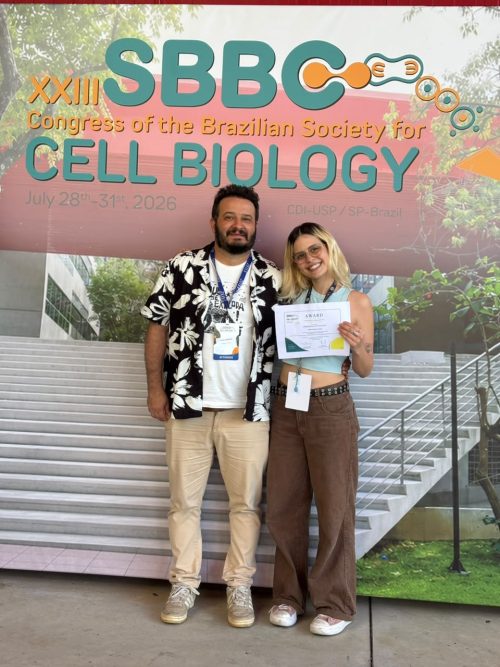
Figure 2: Prof Lucas Anhezini from UFAL and the undergrad student Renata Campelo after receiving honorable mention at the SBBC congress.
Additionally, a major highlight of the main congress was Symposium 08: Paracrine Signalling Controlling Cell Fate Decisions, chaired by Prof. Guilherme Oliveira Barbosa (UNICAMP). The session featured high-impact talks linking local leadership with international collaboration:
- Prof. Helena Marcolla Araujo (UFRJ) presented “How Sog moves BMPs: extracellular transport strategies across insects”, exploring morphogen gradient regulation across species.
- Jean-Paul Vincent (The Francis Crick Institute, UK) shared insights on “GAGs and planar Wnt Transport”.
- Prof. Guilherme Oliveira Barbosa (UNICAMP) delivered a presentation titled “HS-Beyond: the intracellular role of heparan sulfate in paracrine signaling”.
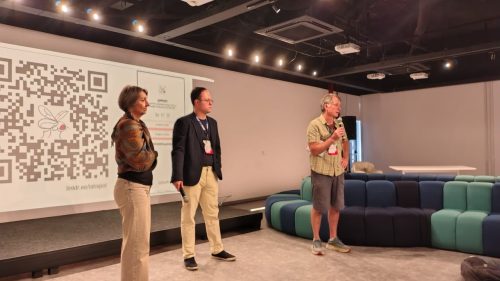
Figure 3: Helena Araujo (UFRJ – BR), Guilherme O. Barbosa (UNICAMP – BR) e Jean-Paul Vincent (Francis Crick – UK)
This integration between the FlyPower satellite meeting and the main SBBC congress highlights how the Brazilian Drosophila community is both training top-tier award-winning students and actively shaping cutting-edge cell biology research alongside international leaders.
Looking Ahead
The FlyPower Meeting 2026 demonstrated that the Brazilian Drosophila community is thriving, highly collaborative, and deeply committed to training world-class scientists. By mastering sophisticated fly genetics, these trainees are well-positioned to drive future discoveries in cell biology, human disease modeling, and biotechnology.
Acknowledgements
We are deeply grateful to the FEW Foundation for their generous financial support, facilitated by alumna Prof. Maria Vibranovski, who was the local organizer of the event, together with her amazing team. We also extend our sincere gratitude to the organizing committee—Prof. Marcos Túlio Oliveira, Prof. Carlos Couto, Prof. Lucas Anhezini, and Prof. Guilherme Oliveira Barbosa. All their dedication were instrumental in the success of the FlyPower Meeting 2026.
Get involved
Create an account or log in to post your story on the Node.
Sign up for emails
Subscribe to our mailing lists.