

Insights from the InSDB–ISD Joint Meeting 2025
Posted by Prashant Tewari, on 30 April 2026
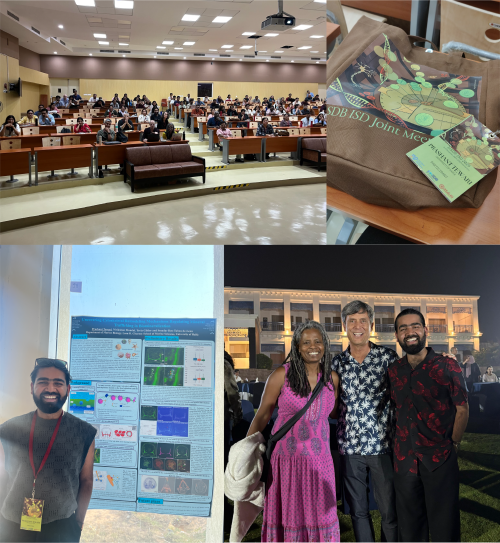
This meeting was particularly meaningful to me, as it marked my first engagement with the developmental biology community in India since beginning my academic training abroad four years ago in 2021. I joined the laboratory of Smadar Ben-Tabou de-Leon at the University of Haifa, Israel, for my master’s research and subsequently continued in the same group for my doctoral studies. My research focuses on the regulation of sea urchin larval skeletogenesis, with a particular emphasis on the role of cytoskeletal remodelling proteins in controlling morphogenesis. Against this backdrop, the meeting provided a valuable opportunity for me to reconnect with the broader research community and situate my work within the expanding landscape of developmental biology.
The conference brought together a diverse group of established and early-career scientists, including principal investigators, graduate students, and postdoctoral researchers from across India and internationally. It highlighted the rapidly evolving nature of the field, where classical embryology is increasingly integrated with stem cell-based models, quantitative approaches, and systems-level perspectives. Personally, one of the best parts of this conference was that there were no parallel sessions – so, we didn’t have to choose between different talks (or seminar halls!).
Understanding gastrulation, human gastruloids and metabolism in context of stem cell-based models
One of my favourite talks was by Alfonso Martínez Arias (Universitat Pompeu Fabra, Spain), a renowned developmental biologist and one of the authors of the exceptional book: Wolpert’s Principles of Development (Wolpert’s Principles of Development – Paperback – Lewis Wolpert; Cheryll Tickle; Alfonso Martinez Arias; Marysia Placzek – Oxford University Press). He presented the gastrulation from the perspective of pluripotent stem cells and gastruloids, highlighting how self-organizing stem cells aggregate when exposed to defined signalling and can generate post-gastrulation-like body plans.
Extending the gastruloid paradigm to human biology, Maneesha Inamdar (Institute for Stem Cell Science and Regenerative Medicine, India) presented a robust, accessible human gastruloid-based platform for studying early cell fate decisions and teratogenicity. Metabolism plays an instructive role during early development – was the major takeaway from Maneesha’s talk. Her work addressed a longstanding challenge in developmental biology and medicine: the lack of ethically permissible and human-relevant models for post-implantation development. Towards the end of her talk, she also introduced the Centre for Research, Application and Training in Embryology (CReATE) – a research institute within theInStem, that aims to conduct innovative research to advance understanding of early human development.
The discussion on the role of metabolism in development was continued by Sally Dunwoodie (Victor Chang Cardiac Research Institute, Australia), who focused on the role of nicotinamide adenine dinucleotide (NAD) metabolism in embryogenesis. She presented that during early development, NAD deficiency can lead to a plethora of congenital abnormalities, since metabolism is a key regulatory layer in embryogenesis.
Organogenesis, spatial patterning, and regeneration
The meeting also included a dedicated session on the themes of organogenesis and regeneration across organisms and developmental systems. Peter Currie (Monash University, Australia) discussed comparative insights into muscle stem cell systems across vertebrates, highlighting how distinct stem cell populations are regulated during growth, maintenance, and regeneration. James Briscoe (Francis Crick Institute, UK) gave the Jean Brachet Memorial Lecture, highlighting the importance of temporal dynamics and spatial patterning during spinal cord development. His talk emphasised how cells can interpret morphogen signals in a time-dependent fashion to precise neuronal identities. He famously presents the “6 Ps of Developmental Biology”—position, pattern, proportions, precision, pace, and purpose. Adding on to this theme, Raj Ladher (National Centre of Biological Sciences, India) presented findings on cochlear morphogenesis, showcasing how tightly regulated cell differentiation and tissue remodelling generate the complex architecture of the inner ear. Complementing these studies on organ morphogenesis, Richard Behringer (MD Anderson Cancer Centre, USA) talked about tissue remodelling during sex differentiation, highlighting how anti-Müllerian hormone–dependent epithelial-mesenchymal interactions drive Müllerian duct regression during male development.
Physical forces and morphogenesis work hand in hand
Several talks highlighted the emerging importance of mechano-genetic regulation of the developmental program. Speakers Tamal Das (Tata Institute of Fundamental Research, India) and Priti Agarwal (National Centre of Biological Sciences, India) discussed how cytoskeletal dynamics, actomyosin contractility, and mechanical feedback influence cell behaviour and organ morphogenesis. Their work demonstrated that morphogenesis commences from a close interaction between biochemical signalling and physical constraints. On par with this perspective, Shankar Shrinivas’s (University of Oxford, UK) work demonstrated patterned heterogeneities in tissue mechanics during early mammalian development, showing how spatial differences in mechanical properties guide cell migration and anterior patterning. All together, these talks emphasized the importance of mechanical forces’ role as an active regulatory layer across different developmental scales. Richa Rikhy (Indian Institute for Sciences, Education and Research, India) delivered the Anne McLaren Award Lecture. Her work using Drosophila as a model system emphasized that mitochondria are not merely metabolic organelles but function as active regulators of developmental processes. She highlighted how mitochondrial morphology—regulated by coordinated fission and fusion events—modulates cellular metabolism, redox state, and signalling pathways, ultimately influencing cell fate decisions.
Translational impact
Bringing a developmental disease perspective, Loydie Majewska (McGill University Health Centre Research Institute, Canada) showed that TMED2-dependent protein trafficking is essential for craniofacial and heart morphogenesis. Using conditional mouse models, she linked defects in secretory pathway function to congenital malformations, underscoring how embryological mechanisms inform human disease. Extending the translational scope beyondcongenital disorders, Tina Mukherjee (Institute for Stem Cell Science and Regenerative Medicine, India) discussed how developmental programs governing sensory perception shape mosquito vector competence and disease transmission. She presented how developmental programs, which govern sensory systems, shape host-seeking behaviour and disease transmission. An intellectually stimulating talk came from Kavita Babu (Centre for Neuroscience, Indian Institute of Life Sciences, India), who demonstrated that long-term associative memory in Caenorhabditis elegans can be transmitted between individuals via extracellular vesicles. Her work extended the concept of biological information transfer beyond genetic inheritance and intracellular memory.
Legacy of P. Babu, the man who brought C. elegans to India
In addition to the scientific sessions, the Society for Developmental Biology (SDB) recognised the historical contributions of Padmanabhan Babu and honoured him with the society’s inaugural Campus Award. The Campus Award, as described by Richard Behringer (MD Anderson Cancer Center), recognizes research discoveries that serve as guiding milestones for the field and have paved the way for major conceptual breakthroughs. Babu’s early work in C. elegans genetic screens led to the isolation of the e912 mutant, an allele foundational to the discovery of the first microRNA. This mutation, obtained by Babu during his post-doctoral research in Sydney Brenner’s laboratory in the early 1970s, later enabled pivotal studies that revealed the role of lin-4 in post-transcriptional regulation, a discovery honoured by the 2024 Nobel Prize in Physiology or Medicine for microRNA research. The SDB highlighted his work as a landmark contribution that helped shape the modern field of developmental biology and inform subsequent research on gene regulatory mechanisms (Society for Developmental Biology | Resource).
Concluding remarks
Altogether, the 2025 Joint Meeting of InSDB and ISD was a great success in bringing together researchers across the globe with expertise in classical embryology, stem-cell models, metabolic regulation, organelle dynamics, mechanical control and regenerative biology. The final day of the conference concluded with a gala dinner at the beautiful Mayfair Resort, Orissa, India, on the coast of the Bay of Bengal. The evening culminated in an impromptu dance session by many attendees, which beautifully captured the vibrant and diverse cultural spirit of India.
Get involved
Create an account or log in to post your story on the Node.
Sign up for emails
Subscribe to our mailing lists.