

8th International PhD School in Plant Development
Posted by Kay Schneitz, on 9 June 2015
On behalf of the organizing committee I would like to draw your attention to the 8th International PhD School Plant Development (IPSPD VIII) (www.plant-development.org).
The meeting will take place October 07-09 at Zellingen-Retzbach close to Würzburg, Germany.
Conference website: www.plant-development.org
Registration costs are 195 Euro per person (includes accommodation, meals, conference dinner, conference fee).
Registration deadline: August 14, 2015
Organizing committee: Kay Schneitz, Markus Schmid, Rita Gross-Hardt
General information:
With the growing complexity of biological research projects in the last decades it has become increasingly important for scientists to communicate and collaborate across geographical and subject boundaries. Thus, young scientists not only need to be trained early in their career to present data at international meetings and discuss it with peers and leaders in the field but also to organize chair sessions as well as to network and identify potential collaboration partners. The PhD School on Plant Development was set up in 2008 with the aim of training young scientists in these skills and give them a platform for communication and collaboration.
Plant developmental biology is an exciting and fast moving field, which has seen many breakthroughs over the last decade. However, apart from this PhD School we are not aware of a signature meeting that is aimed at international graduate students and young postdocs.
The International PhD School consists of ten successive sessions that are each introduced by an internationally renowned keynote speaker. These sessions cover a broad range of topics, such as stem cells and meristem function, vegetative and reproductive development, hormone signaling, embryogenesis, gametophyte and germ line formation, seed development, cell biology as well as aspects such as epigenetics, evolution, systems biology and mathematical modeling. It is expected that two to three PhD students/young scientists represent their research data in each of the sessions that shall be chaired by other PhD students/young scientists. It will be at their responsibility to initiate fruitful discussions and guide constructive conversations. Two poster sessions will provide extra time and informal opportunities for discussions.
The IPSPD will take place at the congress center “Benediktushöhe” in Zellingen-Retzbach, a small town near Würzburg (http://www.benediktushoehe.de). This place is distinguished by its central location, which can be easily reached by train from throughout Germany, including from central international airports such as Frankfurt Airport or Nürnberg. Furthermore, past experience has shown that Benediktushöhe provides a professional seminar venue with nice rooms, excellent catering and a friendly and professional atmosphere. At the same time, the center charges moderate fees, which allows for registration costs that are easily affordable for students and young postdocs alike.
Invited speakers include:
Maria Albani (MPI Köln)
Martin Bayer (MPI Tübingen)
Miguel Blazquez (University of Valencia)
Thomas Dresselhaus (University of Regensburg)
Veronica Grieneisen (JIC, Norwich)
Ueli Grossniklaus (University of Zürich)
Marcus Heisler (EMBL Heidelberg)
Alexis Maizel (University of Heidelberg)
Moritz Nowak (VIB, Ghent)
Karin Schumacher (University of Heidelberg)
Dolf Weijers (University of Wageningen)
 (No Ratings Yet)
 Loading...
 (4 votes)
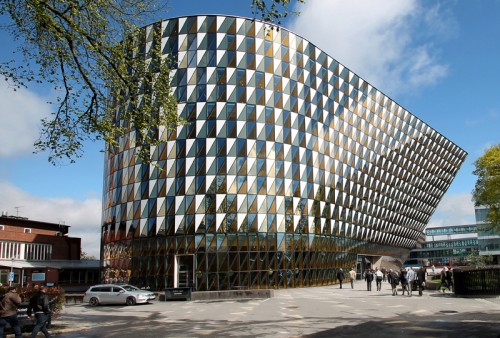 We’ve been working with the ISSCR, and with European stem cell projects PluriMes, HumEn, ThymiStem and NeuroStemcellRepair, on a public event to coincide with the ISSCR meeting in Stockholm next month. It kicks off with an informal, interactive reception, followed by a moderated conversation between four leading scientists on stem cells and the ageing brain, with questions and comment from the audience. This free event offers a unique opportunity to hear, discuss and ask questions about what is happening in this fascinating field.
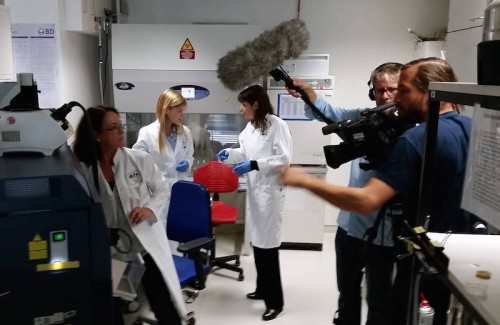 Three new films produced by the German Stem Cell Network focus on three scientists and their research: on blood, cancer and neuronal stem cells. Watch the films in English or German, featuring Anthony D. Ho, Andreas Trumpp and Magdalena Götz, and find out more about why and how they were made.
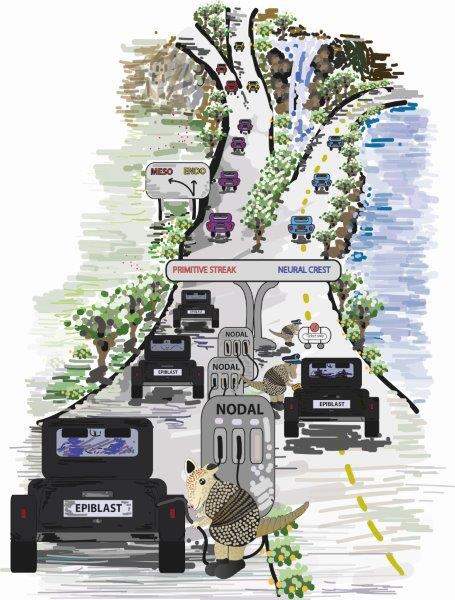 Scientists at DanStem, the Danish Stem Cell Centre, University of Copenhagen have identified one mechanism that explains how some stem cells choose to become a given cell type: the cells combine specific sets of proteins at precise positions along the DNA. When these particular groups of proteins are combined, the gates are opened so that certain groups of genes can now be used, driving the cells towards a new identity.