

Science and society
Posted by Alex Eve, on 23 September 2026
Did you know that Development publishes ‘Perspective’ articles that cover the intersection of developmental biology and stem cell research with society, including some useful resources for science communication with the public and discussions of research ethics? Some of the recent articles include:
Speaking science in a fractured world: making truth land when facts alone cannot
by Rebecca Calisi-Rodríguez, Kevin Alicea-Torres, Jamy Peng, Nicole Theodosiou and Crystal Rogers
How can scientists communicate more effectively in an era of misinformation? This Perspective draws on insights from ‘Truth Matters: Strengthening Science Communication to Counter Misinformation’, a scenario-based workshop delivered at the 20th International Congress of Developmental Biology in Puerto Rico in June 2025. The authors share practical strategies for culturally responsive and emotionally attuned communication, alongside a broader message: for science to inform society, it must be communicated in ways that people understand, trust, and find relevant to their lives.
Frozen potential: embryo research at the crossroads of ethics, regulation and scientific opportunity
by Mina Popovic, Catello Scarica, Susana Chuva de Sousa Lopes and Marta Shahbazi
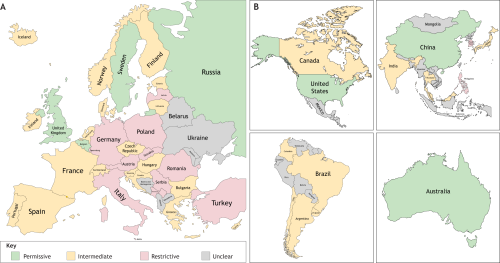
Why does improving medically assisted reproduction remain such a pressing clinical challenge? This Perspective explores the inherent inefficiencies of human reproduction and makes the case for a more nuanced global conversation on embryo research. Rather than framing the debate as a choice between permissiveness and prohibition, the authors advocate for governance frameworks that enable ethical, transparent, and responsible scientific progress.
From bench to business: translating academic advances into industry innovations
by Oscar J. Abilez, Alok Javali, Jacob Jones, Rubén Rellán-Álvarez, Rosangela Sozzani and Eldad Tzahor
What does it take to turn scientific discovery into commercial success? In this Perspective, six researchers reflect on their transition from academia to industry, sharing their experiences helping to build four bioscience companies. From navigating patents and intellectual property to working with investors and biotech start-ups, they offer insights into the challenges and opportunities involved in translating discoveries from the laboratory to the marketplace.
Adventures in involving and engaging the public in human developmental biology research
by Naomi Clements-Brod and Emma Rawlins
What can researchers learn from experimental approaches to public engagement? In this Perspective, the authors reflect on the successes and setbacks of a unique initiative designed to connect the public with fundamental research through the Human Developmental Biology Initiative. Their experiences offer practical insights for others looking to build meaningful public involvement into their own work.
Past and future of human developmental biology
by Nick Hopwood
How has the study of human development changed over time and what challenges does it face going forward? In this Perspective, science historian Nick Hopwood explores whether research on human development will be facilitated or frustrated.
Human developmental biology – a global perspective
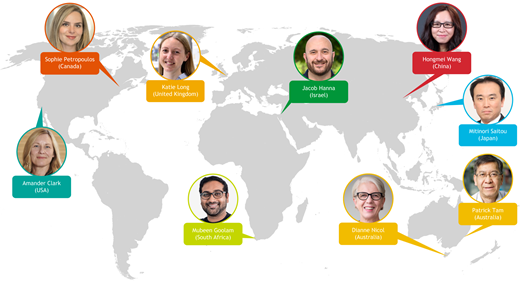
by Amander Clark, Mubeen Goolam, Jacob Hanna, Katie Long, Dianne Nicol, Sophie Petropoulos, Mitinori Saitou, Patrick Tam and Hongmei Wang
How is human developmental biology perceived around the world? This Perspective brings together researchers from eight countries to reflect on the factors shaping human developmental biology. Responding to Nick Hopwood’s view that the field has experienced cycles of attention and neglect, they discuss how local legal, political, societal, regulatory and technological contexts are influencing its future direction.
The art of observation: bridging science and art to see the unexpected
by Lauren Gonzalez, Haoyang Wei, Valentina Greco and Linda Friedlaender
What can scientists learn from artists? In this Perspective, the authors show how art-based training can strengthen observational skills, revealing insights that might otherwise be missed in scientific data. They share practical lessons on collaborative observation, interpretation, and creativity, offering a framework that other research groups can adapt to enhance their own scientific practice.
Get involved
Create an account or log in to post your story on the Node.
Sign up for emails
Subscribe to our mailing lists.