Highly motivated postdoctoral candidates are invited to lead several new projects to address fundamental questions in protein and RNA homeostasis related to neurodegenerative diseases in the laboratory of Jiou Wang. Experimental approaches, including biochemistry, genetics, and cell biology, from invertebrate to mammalian systems are employed. New techniques applied in the lab include iPSC neurons, genome editing, single cell analysis, and metabolite studies. Candidates with a strong background in biochemical, molecular, and/or cellular biology are encouraged to apply.
The Johns Hopkins Medical Institutions provide a stimulating and collaborative environment for biomedical research. Our lab is affiliated with the Department of Biochemistry and Molecular Biology at the Bloomberg School of Public Health and the Department of Neuroscience at the School of Medicine. The Baltimore/Washington D.C. area also offers rich professional and living opportunities.
Candidates should have a doctoral degree and strong research background. Please send a statement of research experience and career goals, a copy of Curriculum Vitae, and contact information of at least one reference to Dr. Jiou Wang at jiouw@jhmi.edu.
A complete listing of PubMed-accessible publications can be accessed at the following URL: http://www.ncbi.nlm.nih.gov/pubmed/?term=Jiou+Wang.
More information available at: https://www.jhsph.edu/faculty/directory/profile/2251/jiou-wang.The Johns Hopkins University is an Equal Opportunity Employer.
In this episode of Genetics Unzipped, reporter Graihagh Jackson loses herself in the valley of hybridisation, visiting the Society’s medal-winning Mendel-based garden at the RHS Chelsea Flower Show and speaking with Professor Wendy Bickmore (MRC HGU, Edinburgh) and Dr Greg Mellers (NIAB, Cambridge). Plus, Professor Laurence Hurst (University of Bath) on the importance of playing with your genes.
If you enjoy the show, please do rate and review and spread the word. And you can always send feedback and suggestions for future episodes and guests to podcast@geneticsunzipped.com
Alcohol consumption during pregnancy has been linked to poor growth of the placenta, causing conditions such as fetal growth restriction and low birth weight. Although most women cease drinking once they know they are pregnant, the effect of alcohol during the initial stages of pregnancy, even as early as around the time of conception, is less well understood. Now, Dr Jacinta Kalisch-Smith together with Professor Karen Moritz at the University of Queensland in Australia have investigated the impact of alcohol consumption on the placenta early in pregnancy. They show that the growth of the placentas of rats that consumed alcohol around the time of conception was reduced significantly, providing new evidence for how pregnancy-related conditions develop. This research has just been published in the scientific journal Development.
“We wanted to know whether early alcohol exposure could affect the development of the early embryo and the placenta. Using a rat model, we assessed the ability of the embryo to implant into the uterus, and, later, how well blood vessels formed in the placenta,” explained Kalisch-Smith.
Using this approach, the scientists were able to study changes that happen throughout the rat’s pregnancy and found that even early exposure to alcohol (between 4 days before and 4 days after fertilisation) restricted the growth and function of the placenta.
“We found early alcohol exposure reduced blood vessel formation in the placenta, and this led to fewer nutrients being delivered to the embryo,” said Kalisch-Smith.
Strikingly, the placentas of female embryos were particularly susceptible, with up to a 17% reduction in size and a 32% drop in blood vessel formation, limiting the ability of the placenta to transport nutrients.
“This has implications for human health by helping to explain, in part, why babies exposed to alcohol in the womb are often born small,” said Kalisch-Smith. “It is important to understand the causes of low birth weight, because it has been shown to be an independent risk factor for diseases later in adulthood, such as type 2 diabetes, hypertension and obesity.”
These observations provide an important basis for future research into pregnancy-associated conditions like fetal growth restriction. Kalisch-Smith added, “The next part of this project is to see whether nutrient supplementation can reduce or even prevent the adverse effects of alcohol exposure.”
Here we hear the experiences of three students who completed a developmental biology course in Zhiyuan College in Shanghai, as well as an introduction to the course by organiser Guojun Sheng
Zhiyuan College (https://zhiyuan.sjtu.edu.cn/articles/701) of Shanghai Jiao Tong University (STJU) is an undergraduate talent-training program founded by then president Zhang Jie in 2010. Its philosophy is to place a small group of selected students in a non-traditional learning environment so that they can explore their genuine academic interest and realize their full intellectual potentials. Each year, Zhiyuan College recruits about 20-30 students majoring in Biological Sciences (other majors include Mathematics, Chemistry, Physics, Computer Sciences, Engineering and Biomedical Sciences). Developmental Biology is an elective course offered to all second- and third-year Zhiyuan students, with a usual class-size of 7-15.
The course organizer(s) decides the topics to be covered and invite colleagues who share their passion for developmental biology research and training to teach at Zhiyuan for 1-2 weeks each. Lecturers for this year’s animal development include Drs. Jeremy Green, Shigeo Hayashi, Antoon Moorman, Olivier Pourquie, Fengwei Yu, Weimin Zhong and myself (The course also includes ongoing plant development lectures organized by Prof. Wanqi Liang). Lectures are divided into class-room style teaching (2/3) and journal-club style presentation and discussion (1/3). For most students, this course is the first instance when they get a systematic introduction to developmental phenomena and concepts which had fascinated many of us before we chose developmental biology as a career. Thanks to the small class size and enthusiastic lecturers, students get an early peek into developmental wonders. Each year, after the course, a couple of students kindle their inner passion and pursue further training and education in developmental biology.
Student experiences
Why I study developmental biology
Xinyu Wang
Before I took the course, I considered developmental biology to be just about how a fertilized zygote becomes a baby through cell division and cell differentiation. But when I truly got into it, I found this was quite a shallow representation of the subject, and that there was lots of charm in development.
From the conservation of Hox genes from sea urchin to human, we see the great power of evolution. From the dynamic process of gastrulation, we see the elegant design of the body plan. From the grafting experiments of the Spemann organizer, we see another opportunity of regeneration. All of these impressive scenes greatly broadened my view of developmental biology.
Besides these interesting parts, the idea of interdisciplinary experiments also attracts me. Development is the final result, but the access to get this result is variable. We can see through the egg shell to know how chicken embryos form. We can use forward and reverse genetics to study the important molecules in AP axis formation. We also can utilize bioinformatics strategies to screen homologous genes in different organisms.
The journey of studying developmental biology is far from terminal, and the insight that organisms give will encourage me to work hard in biology.
What I learnt in developmental biology
Yankun Li
This semester we took a course on animal developmental biology for animals and I learnt a lot. Here are some of my feelings on this course.
Arranged in order, there are 7 professors teaching this course in turn. Prof. Sheng was the first to come. He introduced the whole view and outlook of developmental biology, as well as some basic concepts on early embryo development, such as gastrulation. Then, Prof. Zhong came, who was charged with the early development of the nervous system. What impressed me most was the way that he induced and brightened our mind on the topics, though he was somewhat strict. During Prof. Moorman’s stay, I received knowledge not only in academic but also in other aspects. Firstly, I can visualize the cardiac development through his heart model. What’s more, in the seminar, he told us about 3D reconstruction of human embryo. What a fantastic technology that can convert 2D pictures to a 3D model! Besides, the wide conversation between us made it clearer for me how scientists thought about questions. I enjoyed Prof. Hayashi’s lectures very much, by the end of which I knew more about cell-cell junctions. However, I did not do such a good job in the mid-term exam. A-week-long stay might be a little bit short for Prof. Hayashi, because I thought that he still had something to share with us and I retained some questions to ask him, unfortunately, not in time. Prof. Yu told us something about Drosophila and some experiences in the lab. Then Prof. Pourquie came to teach us in the middle of April: his movies gave a better understand on Hox genes. Finally, Prof. Green visited our campus. He is a talkative British with an appealing accent. His lectures were lively and he made the process of morphogenesis concrete in details by comparison, etc. Besides, I appreciated that he taught us how to use a confocal microscope.
Finally, I must say that each professor’s efforts are very respectable. They did their best to teach us the experiences they have got from their lives in research, and so lightened the future of our own scientific research. Thank you all for the cheering lectures. I will never forget the precious knowledge you told us.
Before and after taking the course
Yangye Zhang
The initial reasons why I chose to take the developmental biology course was to fulfill my credit requirements as well as equip myself with more knowledge. Actually, at that time, I had no idea which field in biology I should choose for my further study, so I decided to try as much as I can. Luckily, I met with the one I am willing to devote myself to.
I could still remember the first lecture, which contained lots of movies showing the early embryonic development of Drosophila, Xenopus, birds and mice. I was impressed with these well-organized processes. The more we looked into the detail, the less we knew and the more it attracted me. Later, there were other professors coming to show us certain system development. During that period of time, I learnt lots of experimental techniques to see or test gene expression as well as the way to logically analyze the pathways and links during development. Besides, we also learnt the backgrounds of ESCs and iPSCs, which are good materials to test our hypothesis and reconstruct organs in vitro. Although some parts were a little bit difficult to me, e.g. imaging the 3D gastrulation, I never thought of giving up or felt discouraged. In contrary, I grew strong ambition to figure them out. At that time, I set my dream as being a developmental biologist.
This year, I offered to be the teaching assistant of this course. Although I knew there would not be many students who become real developmental biologists in the future, the way of critical thinking and other information learnt from the course can also benefit us a lot in other fields. I liked it so much and I would like to recommend others to learn developmental biology as well.
Picture gallery
Do you want to share your experience of learning or teaching developmental biology? We’d love to hear from you!
A PhD position is available in the laboratory of Néva P. Meyer at Clark University in Worcester, MA USA (https://wordpress.clarku.edu/nmeyer/) beginning as early as August 2019 as follows:
Spiralians are a great group of animals to study evolution of body plans in part because many spiralian taxa develop via a stereotypic and likely ancestral cleavage program. Ultimately, this cleavage program results in formation of highly diverse body plans with diverse arrangements of nervous systems, e.g. compare annelids and gastropod mollusks. Research in Dr. Meyer’s lab is currently focused on understanding how the central nervous system develops in annelids with the goal of gaining a better understanding of how nervous systems evolved. The research community that studies evolution and development of spiralians is rapidly growing and is very welcoming and collaborative.
The successful applicant will develop a project focused on molecular control of neural fate specification inthe annelid Capitella teleta, but this can be expanded to include other spiralians and different avenues ofresearch depending on the applicant’s interests and goals. Possible avenues of research include analysisof fate specification via blastomere isolation, genetic manipulation, and transcriptomic profiling. We havea lab colony of Capitella teleta, and techniques used in the lab include microinjection of embryos, qRTPCR, immunohistochemistry, imaging of live and fixed tissue, quantification of phenotypes using ImageJ,and gene knockdown and misexpression by injection of morpholinos and mRNA. We are also currentlydeveloping CRISPR/Cas9 gene editing and single-cell RNA sequencing in C. teleta. There will be multipleopportunities for career development, including mentoring undergraduate and accelerated M.S. studentsin the lab, participating as a guest lecturer in courses taught by the PI, and attending national workshopssuch as the Embryology course at the Marine Biological Laboratories.
The successful applicant will enter Clark University’s Biology PhD program with an anticipated start datein late August. Previous experience in molecular biology and working with marine larvae and/orbioinformatics is desirable. Additionally, the Meyer lab is interested in creative, engaged applicants whocan contribute to diversity of the academic community, for example via outreach or mentoring studentsfrom historically underrepresented communities. The successful applicant will be guaranteed funding forfive years through a combination of research assistantships and teaching assistantships; two years ofresearch assistantship for this position are currently available.
Clark University is a small but active and highly-respected research university located in Worcester, MA.Worcester has a good combination of urban and outdoor activities and is in close proximity to a variety ofNew England destinations.
Please email a cover letter explaining your interest in the position and qualifications and a CV to nmeyer@clarku.edu
The Marine Biological Laboratory seeks a highly motivated individual to join the laboratory of Dr. Kristin Gribble in the full time position of Research Assistant I, II, or III. The successful applicant will contribute to our projects on the biology of aging, maternal effects on offspring health and lifespan, life history, evolution, and ecology using an aquatic invertebrate model system. The Gribble lab is housed within the Josephine Bay Paul Center, a collaborative research group addressing questions of microbial diversity, molecular evolution, and comparative genomics. Information about our research may be found at: http://mbl.edu/jbpc/gribble
Additional Information: Responsibilities for this position include, but are not limited to, designing and conducting experiments, rotifer and phytoplankton culture, PCR, qPCR, protein extraction and analysis, microscopy, data entry and analysis, and general laboratory maintenance and organization. This position requires occasional work on weekends to accomplish long-term life table experiments. The position will be for 1 year, but may be extended beyond this period contingent upon progress and funding.
Basic Qualifications: Applicants should have a B.A./B.S., or M.A/M.S. in biology, cell/molecular biology, biochemistry, or a related field. This position requires an independent, organized, and self-motivated individual with robust problem-solving skills. Excellent written, verbal, and interpersonal skills; attention to detail; and a strong work ethic are essential. Position level and salary will depend upon education and experience.
Preferred Qualifications: The ideal candidate will have one or more years of experience working in a research laboratory and will be familiar with standard laboratory practices and equipment. Previous experience with DNA, RNA, and protein extractions; next-generation sequencing library construction; PCR and qPCR; protein analysis; RNAi; microscopy; and bioinformatics is preferred. An understanding of basic molecular biology concepts is important.
Instructions: Apply at the MBL website and please provide the following required documents:
Cover letter describing your interests, skills, prior research experience, and motivation for joining the lab;
Curriculum vitae;
The names and contact information for three references (Please do not send letters at this time; we will contact references directly).
The Company of Bioloists’ Workshops provide leading experts and early-career researchers from a diverse range of scientific backgrounds with a stimulating environment for the cross-fertilisation of interdisciplinary ideas. The programmes are carefully developed and are intended to champion the novel techniques and innovations that will underpin important scientific advances.
In November 2019, a Workshop on birth defects is being held with the aim of
dismantling boundaries between developmental biology and clinical birth defects research so that clinical findings can inform our understanding of the processes that construct a human being, which in turn can guide clinicians in order to deliver better care to patients.
There are around 10 funded places for early-career researchers available – a fantastic opportunity to share your research with leading scientists in an intimate setting.
An exciting role is now available with The Company of Biologists to enhance the community content on our journal websites and grow our social media presence in China through our new WeChat channel.
We publish five important journals that serve the biological research community. All have effective marketing and a good social media presence. We now seek to extend our community engagement, increase awareness of our charitable activities and build on our connections with early-career
researchers.
We are looking for an enthusiastic and motivated team player to support us in this initiative, which is initially planned as a one-year position as we determine future directions. Working with experienced marketing and editorial teams, you will be responsible for accurate and engaging short-form
content for the journal websites, generating WeChat content for our growing China-based audience, and writing stories about our grant recipients. We are open to new creative ideas.
Core responsibilities include:
• Engaging the scientific community through the journal websites and social media channels.
• Generating dynamic content ‘snippets’ to draw in readers.
• Developing our new WeChat channel to engage China-based researchers.
• Measuring usage and online behaviours to assess and guide strategies.
• Working with the marketing and editorial teams on other community engagement content such as video interviews and educational materials.
The successful applicant will have:
• A science degree, ideally in a field relevant to one or more of our journals.
• Experience with scientific communications such as social media, marketing or outreach.
• Ability to write accurate and engaging summaries for the non-specialist.
• Experience with a web content management system to create and publish web content.
• Experience with metrics (such as Google Analytics).
• Excellent written and verbal communication skills.
• Confident networking abilities and strong interpersonal skills.
This is an exciting opportunity within a well-established publishing company. The role is based in our attractive modern offices on the outskirts of Cambridge, UK.
The Company of Biologists (biologists.com) exists to support biologists and inspire advances in biology. At the heart of what we do are our five specialist journals – Development, Journal of Cell Science, Journal of Experimental Biology, Disease Models & Mechanisms and Biology Open – two of them fully open access. All are edited by expert researchers in the field, and all articles are subjected to rigorous peer review. We take great pride in the experience of our editorial team and the quality of the work we publish. We believe that the profits from publishing the hard work of biologists should support scientific discovery and help develop future scientists. Our grants help support societies, meetings and individuals. Our workshops and meetings give the opportunity to network and collaborate.
To apply, please send your CV by email to recruitment@biologists.com along with a covering letter that states your current salary, summarises your relevant experience and explains why you are enthusiastic about this opportunity. You must be able to demonstrate your entitlement to work in the UK. Applications should be made as soon as possible and by 21 June (late applicants may be considered).
A postdoc position is available in Uri Frank’s lab in Centre for Chromosome Biology, National University of Ireland, Galway. We study stem cells and regeneration in the cnidarian Hydractinia. This animal can regenerate a whole body from only tiny tissue fragments and is amenable to genome editing, live imaging, cell sorting by FACS, and transplantation. Due to its small size and translucent body, Hydractinia allows performing in vivo experiments that are difficult or impossible to conduct with most other animal models.
The research will be on the molecular mechanisms that drive cellular reprogramming during whole body regeneration in the absence of stem cells. For details, email Uri at <uri.frank@nuigalway.ie>. The position is funded by Wellcome Trust.
Most of what we know about axial patterning in insects comes from decades of careful, beautiful work done in flies. Thanks to the genetic screens of Christiane Nüsslein-Volhard and Eric Wieschaus in the late 1970’s, we learned that distinct classes of genes, many of them transcription factors, act in an elegant procession to achieve the designation of segment identity along the anterior-posterior and dorsal-ventral axes of the insect embryo. This process is robust when nature gets noisy- buffering against noise in RNA gradients to create precise boundaries, detecting coincidence of different proteins and translating their affinities into procedural specificity. Robustness ensures remarkable reproducibility of developmental processes in the face of novelty, since evolution is restless. And it is restless: two fully developed individuals of the same species with the same life history are full of small genetic differences, due to the persistent insinuation of random mutations. When we take a step backwards to look at two closely related species, we see much larger differences. Recognizing the value of this perspective has led to the field of Evo-Devo: that is, using an evolutionary perspective to better understand a developmental process and, in turn, using the knowledge of development to decipher the mechanisms of evolution.
Strength in numbers.
If you have ever looked at insects, you know that they have tremendous variation in morphologies in nature, and it turns out that this diversity arises in part from variation in their embryonic patterning program. Gerhard Krause described variation in developmental styles from his morphological studies of insect embryos in the 1930’s. Later, pioneers in modern Evo-Devo like Michael Akam, Nipam Patel and Diethard Tautz took this further: molecular comparison of evolutionarily distant insects illuminated developmental programs in a way that looking only at one species could not. Discoveries in beetles especially, but also aphids, crickets and others, showed that flies are not typical among insects and therefore are not the only important game in town: a point that insect evo-devo researchers are always quick to point out. And yet, many of us studying less traditional model systems today, like beetles, wasps, or bugs, nevertheless get siloed in our own organism’s biology. One of the greatest strengths of these insect systems is the ability to put things together by looking at where they drifted apart. It is through the diffracting lens of evolutionary differences that we can understand the origins of robustness and of genetic consensus. The ability to move experimentally in a single project between different organisms permits full expression of this colorful perspective.
Collaboration was essential for synthesis of the discoveries of Nüsslein-Vollhard and Wieschaus into the basis of our understanding of axial patterning. And so too is collaboration between developmental biologists in different (insect) systems to make fundamental discoveries about the origins of robustness and functional variation in developmental programs.
Our recent paper in eLife (Ray* and Rosenberg* et al, eLife 2019) describes such a finding about the ancestral function of a highly conserved peptide, which would not have been possible if the study had been limited to any single insect. In this post, we highlight the importance of the collaboration and how it came about, since this ability to move between insect species, and open data sharing, permitted the most profound insights of our work.
Better together.
Ray and Rosenberg et al., is a work that came together from 4 different groups working in different countries, and carried out over almost 10 years. Our story involves a few main molecular characters: Mille-pattes, a regulatory micropeptide; Shavenbaby, a transcription factor previously known for its key role in epidermis development; and Ubr3, an E3 ubiquitin ligase. Our paper’s story was inspired by the publication by Savard et al. (Cell 2006) showing that mille-pattes (mlpt), which they identified in an expression screen in the flour beetle Tribolium castaneum, is essential in Tribolium for abdominal segment formation. This finding was surprising at first because mlpt doesn’t produce a regular protein, but rather is a an apparently long non-coding RNA encoding only four tiny peptides of 11-32 amino acids in length. The suspense grew later, when studies of the same gene in flies, named polished rice (pri) or tarsal less (tal), revealed functions in leg patterning, trachea and epidermis differentiation, but no role in segmentation of the Drosophila embryo (Kondo et al., Nat Cell Biol 2007; Galindo et al., PLoS Biol 2007).
Our collaboration arose from parallel stories, which made possible the insights from comparison. We have decided to tell each of the stories, that became a powerful synergy and ultimately, enabled the most profound results.
1. Ray and Klingler.
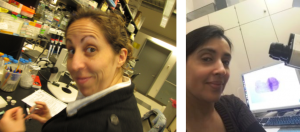
Martin Kingler and Suparna Ray
Suparna Ray had joined the lab of Martin Klingler in Erlangen, Germany, towards the end of a collaborative genome-wide screen, iBeetle, whose aim was to uncover all developmental genes in Tribolium. mlpt was the newest kid on the block in the search for a definitive set of gap genes. Of particular interest was its interaction with Notch during Drosophila tarsal leg joint development, since Notch is a missing link long sought between the vertebrate segmentation clock and the segmentation clock of short germ insects, like Tribolium (Dequéant et al., Science 2006; Pueyo and Couso Dev Biol. 2011). Intrigued by the novel regulatory potential of micropeptides encoded from small open reading frames (smORFs) in developmental programs, the Klingler lab began to apply the most cutting edge approaches in Tribolium for functional analysis of gap genes (Schinko et al., BMC Dev Biol 2010 ; Schinko et al., Dev Genes Evol 2012). Shortly after Mlpt was discovered to activate the transcription factor Shavenbaby (Svb) in the fly epidermis (Kondo et al., Science 2010), RNAi knockdown of Triboliumsvb in the Klingler lab revealed its role in abdominal segmentation. Furthermore, the mlpt and svb RNAi phenotypes were similar, suggesting a functional interaction of these two genes in Tribolium embryonic segmentation.
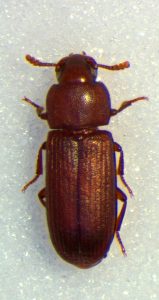
Tribolium castaneum (flour beetle), adult
Meanwhile, out of the iBeetle screen (Schmitt-Engel et al., Nature Comm. 2015) came a small group of additional candidate genes showing mlpt-like RNAi phenotype. Intriguingly, these genes did not match any known developmental regulators. Instead, they correspond to enzymes involved in the ubiquitin proteasome system, often seen as a mere degradation factory that removes damaged or misfolded proteins. In particular, two genes located side by side and that give strong mlpt-phenotypes were predicted to encode ubiquitin E3 enzymes. These unexpected results prompted a whole flurry of research questions. Was the proteasome actually involved in Tribolium segmentation? How can a ubiquitous degradation machinery be required for the proper formation of posterior segments? Is the proteasome functionally related to mlpt and svb functions in segmentation, as suggested by strikingly similar phenotypes?
2. Rosenberg and Payre.
Payre and Rosenberg
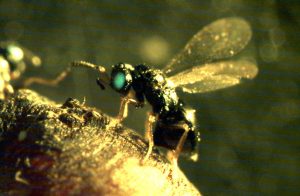
Miriam Rosenberg was at New York University in the lab of Claude Desplan, studying Nasonia, a wasp whose embryonic development exhibits intermediate character between Tribolium and Drosophila. The Savard paper opened the possibility of a role of mlpt peptide in abdominal segment specification, a function not yet accounted for in control of Nasonia’s posterior development by known fly genes. She began to investigate Nasonia mlpt and found that it exhibits striking expression in the region of the embryo that gives rise, in a delayed fashion, to the most posterior abdominal segments (Rosenberg et al., eLife 2014). Shortly thereafter, François Payre, who has spent many years elucidating the function and evolution of Svb during epidermal differentiation, came to the Desplan lab for a sabbatical. The Payre lab in Toulouse, France, had just shown that the Svb protein is post-translationally processed, from a transcriptional repressor into an activator, in the response to mlpt (pri/tal) peptides in flies (Kondo et al., Science 2010). During his sabbatical in New York City, he began to characterize the expression of svb and of its target genes during Nasonia embryogenesis.
Upon his return to Toulouse, he and Rosenberg continued working together to characterize the expression and function of mlpt and svb in Nasonia. When the Payre lab demonstrated the role of the ubiquitin ligase Ubr3 in fly for Mlpt/Pri-mediated processing of Svb (Zanet et al., Science 2015), ubr3 joined the club in Nasonia, as well. Contrary to what was reported in fly, the long germ embryo of Nasonia showed essential functions for these genes in embryogenesis.
3. Descaras, Toubiana, Khila.
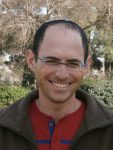
Abderrahman Khila
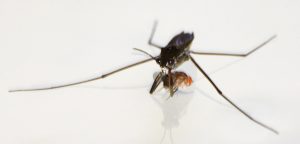
At the same time, in Lyon, France, Abderrahman Khila and his group were studying development of the water strider, Gerris buenoi. Water striders have the remarkable ability to walk on water, enabled by specialized hairs on the legs which allow it to trap air bubbles between leg and water, as well as differential elongation of the T2 leg (Khila et al., PLoS Genetics 2009; Armisén et al., 2018 BMC Genomics). An RNAi screen, searching for genes involved in these features in Gerris was being conducted by Amelie and William. Since Svb is a key regulator of hair formation in flies, they also assayed a putative role of svb in Gerris legs. When svb function was knocked down, they indeed observed a lack of hairs, but a prevalent phenotype in earlier stages was strong embryonic segmentation defects.
This was the starting point for testing whether the Svb partners were also involved in segment patterning in the water strider.
A collaboration is born!
By this time, Ray and Klingler were deep into the characterization of the E3 ubiquitin ligase when a poster from the Payre lab was presented at the French Fly meeting in Sète in 2014: they reported that the Svb processing triggered by Mlpt/Pri peptides relies on a limited proteasome degradation that critical requires the same E3 ligase, called Ubr3, as deduced from genome-wide functional screening.
François Payre
Excited by these data, Ray and Klingler made contact, and arranged a visit to the Payre lab in Toulouse to discuss each others’ findings. During this meeting, an important common link was made: the complementarity of expression of mlpt and svb that had been observed in Tribolium was also present in Nasonia, and possibly other, more basal insects.
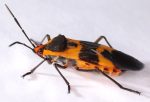
Payre was already in touch with Khila and kept collaborating with Rosenberg, who had moved to Israel and expanded the study of (now) three genes to the milkweed bug, Oncopeltus, working with Tzach Auman, a graduate student in the lab of Ariel Chipman in Jerusalem. Payre suggested to all groups involved that to meet shortly before Christmas of 2017, in Lyon, to discuss interest in joining forces with all insect models into a single story about the functional evolution of this trio of genes.
An eventful meeting.
A consensus was reached, since all data supported the ancient evolutionary origin of mlpt/Svb function in the insect embryo, and in all species with segmentation function, both genes exhibit posterior expression. But in flies, Svb expression is restricted to the head segments. A nice idea was proposed by Amelie Descaras, a student from the Khila lab. Could we use the Drosophila system, with its facile genetic tools, to broadly express Svb in the early fly embryo, to see whether its ability to function in embryonic patterning could be re-awakened? Here, the finesse and fly expertise of Hélène Chanut-Delalande was invaluable in designing and executing experiments that not only established the genetic role for Mlpt in embryo patterning, via Svb, but also highlighted the exquisite specificity of this regulation- using surgical mutations in Svb, required for Ubr3/Mlpt association, that abrogate the segmentation phenotype.
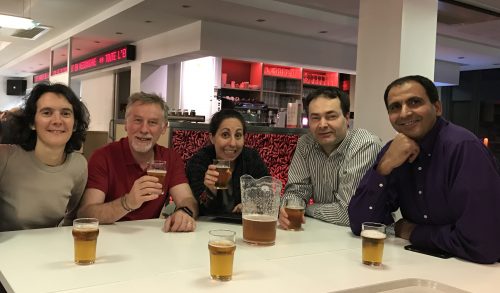
Collaborators and beer! Hélène Chanut-Delalande, François Payre, Miriam Rosenberg, Martin Klingler, Abdou Khila
All together now…
Together, our research has traced the story of a multi-protein complex whose conserved functional interaction is critical for epidermal differentiation, leg development, and embryo segmentation. While each component of this complex has been strongly conserved through the evolution of insects, the segmentation function was lost in the most derived species, Drosophila. The dynamic expression patterns of mlpt and svb, which we observe in species that have diverged for hundreds of millions of years, underscore the continued importance of their segmentation function throughout the insect phylum. This ancestral role in segmentation calls out for study in additional, independently evolved, long germ insects. But it was the a-ha’s made possible by studies in divergent species with various modes of segmentation that coalesced into our current understanding of phenotypic plasticity and the evolutionary role of multi protein complexes.
When the Node invited us to highlight our recent advances with a post for young scientists about our work, we decided it was an important opportunity to highlight the significance of one central player in our work who does NOT appear in the published manuscript: the collaboration itself.
The authors would like to thank Martin Klingler, Abdou Khila, François Payre, Ariel Chipman and Galit Ophir for helpful comments on this piece.