
Epigenomics of Common Diseases
Posted by Treasa Creavin, on 8 June 2015
Epigenomics of Common Diseases
6-9 November 2015
Wellcome Trust Genome Campus, Hinxton, UK
Conference hashtag: #ECD15
Bursary deadline: 8 September | Abstract deadline: 22 September | Registration deadline: 6 October
The 5th Wellcome Trust Epigenomics of Common Diseases conference will bring together leading scientists from the fields of epigenomics, genetics and bioinformatics to discuss the latest developments in this fast-moving area.
Epigenetic variation plays an important role in disease processes and provides a promising focus for disease prediction, prevention and treatment. Technological advancements in the past few years have fuelled a dramatic increase in the scale, breadth and availability of epigenomic reference data. In addition, novel developments such as single cell analysis and gene editing present exciting new opportunities. Associations between epigenetic variation, a variety of risk factors and the development of many diseases continue to emerge but causality has, in many instances, not yet been established.
This meeting will focus on epigenomic studies across of a wide range of common and other diseases, including approaches from a variety of different disciplines. It will explore technological and methodological developments and provide a forum to present and discuss recent advances in epigenomics of relevance to human disease. We welcome abstracts from all areas relevant to epigenetic and epigenomic research. Several oral presentations will be chosen from the abstracts submitted.
Topics will include:
Epigenomics of disease
Chromatin organisation
Model systems: animal and cellular models
Population epigenetics
Clinical epigenetics
Single cell epigenetics
Epigenetic engineering
Informatics and technology
Scientific programme committee:
Stephan Beck, University College London, UK
Susan Clark, The Garvan Institute of Medical Research, Australia
Andy Feinberg, Johns Hopkins University School of Medicine, USA
Edith Heard, Institut Curie, France
Caroline Relton, University of Bristol, UK
For further information, visit: https://registration.hinxton.wellcome.ac.uk/display_info.asp?id=515
 (No Ratings Yet)
 Loading...
 (4 votes)
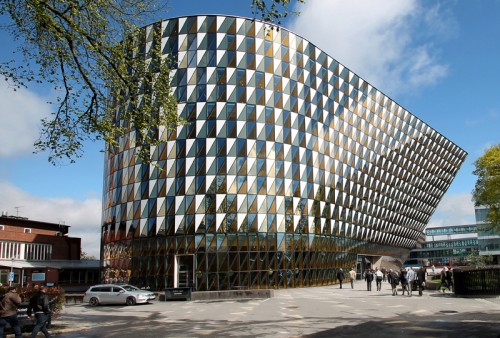 We’ve been working with the ISSCR, and with European stem cell projects PluriMes, HumEn, ThymiStem and NeuroStemcellRepair, on a public event to coincide with the ISSCR meeting in Stockholm next month. It kicks off with an informal, interactive reception, followed by a moderated conversation between four leading scientists on stem cells and the ageing brain, with questions and comment from the audience. This free event offers a unique opportunity to hear, discuss and ask questions about what is happening in this fascinating field.
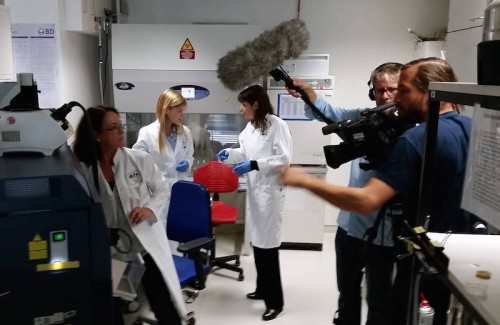 Three new films produced by the German Stem Cell Network focus on three scientists and their research: on blood, cancer and neuronal stem cells. Watch the films in English or German, featuring Anthony D. Ho, Andreas Trumpp and Magdalena Götz, and find out more about why and how they were made.
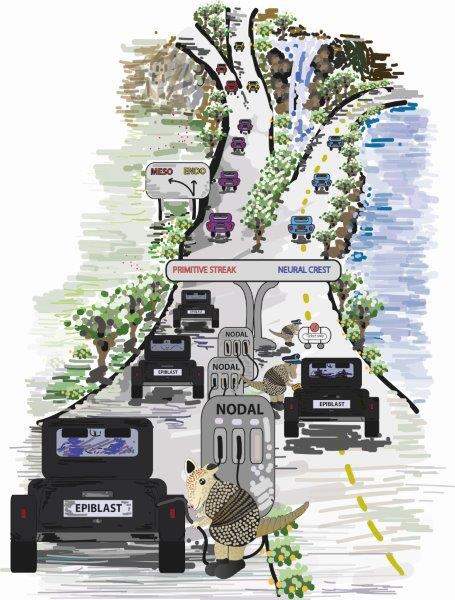 Scientists at DanStem, the Danish Stem Cell Centre, University of Copenhagen have identified one mechanism that explains how some stem cells choose to become a given cell type: the cells combine specific sets of proteins at precise positions along the DNA. When these particular groups of proteins are combined, the gates are opened so that certain groups of genes can now be used, driving the cells towards a new identity.