
The community site for and by
developmental and stem cell biologists

An interview with Lewis Wolpert

Posted by , on 4 August 2015

This interview first featured in Development.


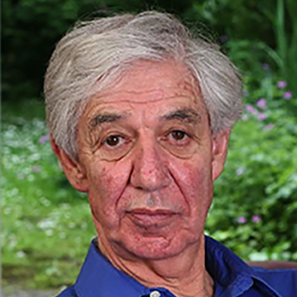
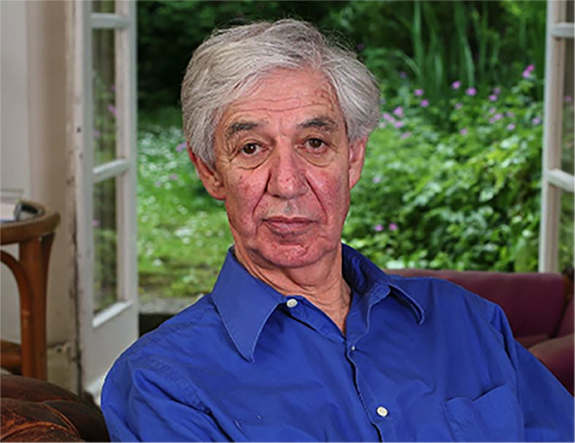
Lewis Wolpert is a retired developmental biologist who, over his long career, has made many important contributions to the field, from his French Flag model and the concept of positional information to the famous quote that it is “not birth, marriage or death, but gastrulation which is truly the most important time in your life.” In addition to his scientific contributions, Lewis is also a prolific writer, from the textbook ‘Developmental Biology’ to books about popular science, religion and his battle with depression. Although born in South Africa, it was in the United Kingdom that Lewis spent most of his scientific career. We met Lewis at the Spring Meeting of the British Society for Developmental Biology, where he was awarded the Waddington Medal.
 

DEV2547What does it mean to you to receive the Waddington Medal?

It is wonderful. I was very excited indeed to receive it. I knew Conrad Waddington, who was a friend of mine, so it makes it personal. And of course I am a developmental biologist and I am old, so it is very nice to receive it!


This award recognises your career contributions to developmental biology, but you were originally a civil engineer. How did you make this transition?

I studied civil engineering during my undergraduate studies because I wanted to do science. I qualified as a civil engineer, and worked as a soil mechanic for a building research institute for two years. However, I had been involved with Mandela and was a bit frightened, so I decided to leave South Africa to get away from the politics…and also from my parents! I hitchhiked up Africa and eventually ended up in Europe. I did another course in soil mechanics at Imperial College but was very unhappy: I didn’t want to spend the rest of my life working on soil mechanics! A friend of mine knew this, and he had read some papers where people were looking at the mechanics of cell division. So I went to King’s College in London where I did a PhD on this topic. Having a civil engineering background gave me a very different perspective, and I applied my mechanics knowledge to the cells. And this is how I got involved in biology.


You have switched fields and models multiple times in your career – from cell mechanics to developmental biology, from sea urchins and amoebae to Hydra and the vertebrate limb. What motivated these changes and how easy was it to make these moves?

I did my cell mechanics PhD mainly on sea urchin eggs. I became interested in sea urchin development, and that’s how I got into developmental biology. However, to work on sea urchins you needed to visit marine stations and this became difficult once I got married. I therefore switched to working on Hydra for a time. Later, I moved to Middlesex Hospital Medical School, now part of University College, London, and I felt that Hydra was not an appropriate model to work on in a medical school. So I started working on the development of the limb. Changing so many times, from civil engineering to biology and then to different systems, required me to work very hard. For example, during my PhD I had to learn quite a lot and pass exams in zoology. It was a little difficult but interesting.


You’re perhaps best known for your French Flag model of positional information. This is now considered a landmark publication but wasn’t widely accepted at first. Why do you think that was?

Conrad Waddington had organised a theoretical biology meeting at Serbelloni, on Lake Como in Italy, and the idea was well received there. However, when I gave a big lecture on it at Woods Hole nobody would speak to me afterwards. I don’t know what it was, but the Americans didn’t like my ideas. The next morning, while I was bathing, Sydney Brenner found me crying in the water and said “Lewis, pay no attention. We like your ideas. Pay no attention to people who don’t like it.” And he’s the one who saved me. He gave me total encouragement, so I didn’t care that all these Americans didn’t like what I was doing. If Sydney liked it, that’s what mattered, because Sydney is an amazing man. I knew him from South Africa of course, since I went to university with him. He is funny and brilliant, the only genius I know. And Francis Crick liked my ideas too. So that lecture was a bit of a disaster but I recovered because of Sydney. It took quite a long time for the Americans to come around and accept my ideas.

It’s now over 45 years since you proposed this model. Where do you think the French Flag model fits with our current understanding of positional information, and what do you think are the exciting questions at the moment?

There are problems we haven’t solved. It is terrible, but we still don’t have a molecular basis for it. If I still had an active lab, finding the molecular basis for positional information would be my objective, but would be quite tricky, since I’m not a biochemist or molecular biologist. There is one case of a molecule that might encode positional information, Prod 1, which is graded along the amphibian limb and was discovered by Jeremy Brockes. But it would be nice to find similar molecules in other systems.


You have said in earlier interviews that you are not interested in the details, but rather in the overall principles, and also that you don’t like doing experiments. How has this influenced your career?

I’m really a theoretician – I’m not very good at doing experiments! Fortunately I had PhD students, postdocs and research workers to do the experiments for me. I had, for example, a German technician, Amata Hornbruch, who was my hands for 20 or 30 years!


Over the years many of your PhD students and postdocs moved on to become successful developmental biologists in their own right – including previous winners of the Waddington Medal, Julian Lewis and Jim Smith. Are you proud of your mentoring?

Absolutely. I was very fortunate to work with very nice people. I’m very pleased with them – I like them very much and we got on very well. I encouraged them, and we had good discussions. It is very satisfying to see them doing well.


How do you think science has changed since your early days, and do you have any advice for young scientists?

Oh, it has changed tremendously. I would always say “don’t be frightened of changing your career as a scientist.” It is hard for young scientists to know what they should work on. When I look at journals these days I find them very boring. It’s just detail and very little general theory at all. Find something really exciting and don’t be afraid. If you are going to spend your life just studying little details it won’t be terribly interesting. At least for me! Study something like the brain, where we understand the least. It is a very exciting and complicated area.


Over the years you have written several popular science books, presented the RI Christmas Lectures and have generally been an advocate for science education. Do you consider yourself passionate about science outreach? Do you encourage other scientists to communicate their science?

I would, but it’s not terribly rewarding. Rather, it is quite rewarding and I enjoyed it, but I don’t think people pay much attention! I was quite involved in outreach because I was the Royal Society chairman of the committee for the public understanding of science, but I don’t think we made much progress. And I wrote a textbook, of course. Funnily enough I’m just writing a book at the moment, asking ‘What has science done for us?’ It addresses the way science has affected our lives, not just from a biology perspective but also physics, chemistry, the lot.


You have been very open about your battles with depression. What advice would you give to young scientists struggling with mental health issues?

They should be open about it and try to get cognitive therapy. I found professional therapy very helpful. You know, when I came out of my depression, out of hospital – I was in hospital for three weeks – my wife hadn’t told anybody that I was depressed. She just said that “he’s very tired and not feeling well.” The stigma related to depression is still very severe and that makes it much worse. That’s why I wrote a book about it. I wanted to understand what depression was, so I researched it a bit. I still lecture on depression every now and then. In fact I’m shortly going to Abu Dhabi to give a lecture on depression.


What would people be surprised to find out about you?

Just how bad my memory is! My favourite story is that I was once in my son’s house in Cambridge, and they were away. I went downstairs for breakfast and I found a young woman in the kitchen, doing some washing up. I said, “Hello, and where are you from?” It was my granddaughter! I didn’t recognise her!


Thumbs up (20 votes)
Loading...

Tags: , , , , ,
Categories: Interview

Navigate the archive

Use our Advanced Search tool to search and filter posts by date, category, tags and authors.

In Development this week (Vol. 142, Issue 15)

Posted by , on 4 August 2015

Here are the highlights from the current issue of Development:


CHD4 restrains gene expression during lineage specification

Figure
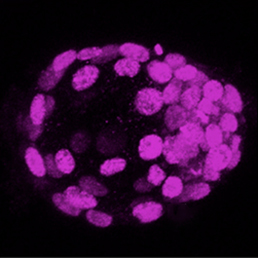
The first lineage-specification event in the early embryo generates the inner cell mass (ICM), which later gives rise to the embryo proper, and the trophectoderm (TE), which then develops into extra-embryonic tissues. This fate decision is known to depend upon the activity of key chromatin modifiers but their precise mechanism of action remains mysterious. Now, Brian Hendrich and colleagues (p.2586) show that CHD4, an ATP-dependent chromatin remodelling protein generally thought to participate in the NuRD complex to repress transcription, is essential for TE specification and ensures successful blastocyst implantation. Mechanistically, the authors show that CHD4 is required for TE specification independently of the NuRD complex. They further show that, in contrast to its role in somatic cells where it mediates cell cycle progression, CHD4 is not required for cell division but instead regulates apoptosis and maintains the expression of appropriate lineage markers, thus reducing the frequency of multi-lineage gene expression. By using single-cell transcriptional output, this study describes the temporal and molecular sequence of events leading to the first lineage commitment during embryogenesis.


A neuronal ballet mediates the lamination of the retina

Figure

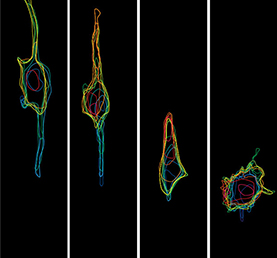
In the mature retina, retinal inhibitory neurons (RINs) are arranged in three distinct layers composed of horizontal cells (HCs), inner nuclear layer amacrine cells (iACs) and displaced amacrine cells (dACs), respectively. How do such interneurons reach their specific laminar positions during development? To explore this question, William Harris and co-workers (p.2665) quantify cell behaviour in the developing retina of several transgenic zebrafish lines over long periods of time. They first show that all RIN types show a bipolar morphology and migrate to the centre of the retina, near the region where the inner plexiform layer (IPL) later forms. RINs then adopt a multipolar morphology and can migrate tangentially, frequently changing direction. Interestingly, multipolar RINs are highly dynamic and do not just pile up in the centre of the retina according to their time of arrival, as previously thought. Moreover, RINs undergo cell type-specific behaviours that fine-tune their position. Contrary to previous belief, dACs actively migrate to their respective layer through the proto-IPL rather than being trapped in their layer by the future IPL. This study offers a valuable framework for further dissecting the molecular mechanisms of retina lamination.


Shaping long-term hematopoietic stem cells

Figure

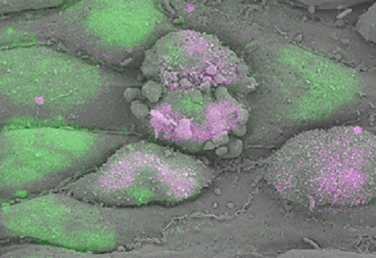
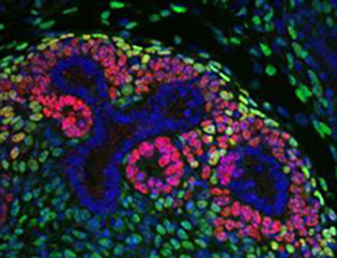
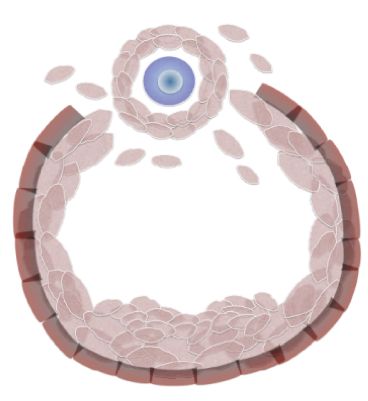
During embryogenesis, a subset of endothelial cells, the haemogenic endothelium, undergoes an endothelial-to-hematopoietic transition (EHT) to generate the first long-term haematopoietic stem cells, which bud off the aorta – a known haemogenic site – as intra-aortic clusters. On p.2719, Frank Bos et al. use correlative scanning electron microscopy to associate the morphological changes seen in murine and human haemogenic endothelium during EHT with the expression of RUNX1 and SOX17, two transcription factors required for EHT. During this process, the authors observe that in a subset of initially flat, smooth and oblong endothelial cells with low RUNX1/SOX17 ratio, the acquisition of a haematopoietic fate, identified by the expression of CD41 and c-kit, is associated with an increase in RUNX1/SOX17 ratio, the acquisition of a rounded morphology and the appearance of previously undescribed filopodia-like structures at the cell membrane. This innovative method allows the analysis of EHT a single-cell level and sheds light on the morphological changes associated with the acquisition of haematopoietic fate.


Building a kidney through Fat/Dchs-mediated cell-communication

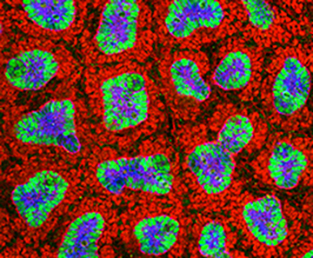
Formation of the adult kidney requires interactions between three adjacent cell populations of the embryonic kidney: the epithelial ureteric bud (UB), the cap mesenchyme (CM), which gives rise to nephron progenitors, and the stromal mesenchyme (stroma). How these different cell types communicate to achieve successful kidney morphogenesis is not yet fully understood. In this issue, two studies assess the contribution of Fat4 and Dchs1/2, members of the cadherin family that regulate both Hippo and planar cell polarity signalling, to the cell-cell communication required for kidney development.

PrintOn p.2574, Kenneth Irvine and colleagues found that, as previously described for Fat4 mutant mice, the ablation of Dchs1 leads to an expansion of the nephron progenitor pool, indicating that Fat4 and Dchs1 function as signalling partners. Interestingly, and contrary to previous studies, the authors did not observe activation of Yap in association with the CM expansion caused by Fat4 or Dchs1 depletion. Using conditional deletion of Dchs1 in different kidney populations, the authors show that Dchs1 is specifically required in CM cells, where it localizes to the cell surface that contact the stroma, to regulate their differentiation, the development of the stroma and, indirectly, that of the UB. This study sheds light on the cellular and molecular mechanisms of the cell-cell communication that orchestrates kidney morphogenesis.

InBagherie et al 2015 Figures the second study (p.2564), Helen McNeill and co-workers show that in the stroma, Fat4 (but not Fat1 or Fat3) interacts with Dchs1 and 2 (which act partially redundantly) to regulate CM differentiation. Interestingly, they further show that Fat4 regulates the nephron progenitor pool size independently of YAP and the core PCP Vangl2, but through Six2, a known regulator of CM size. Additionally, the authors find that Fat4 loss leads to defective cellular organization of the CM and UB-derived tubules and to the alteration of Notch and FGF pathways, providing further insight into the molecular mechanisms governing the intercellular communications that mediate kidney morphogenesis.


PLUS:


An interview with Lewis Wolpert

Lewis Wolpert squareWe recently met with Lewis Wolpert at the Spring Meeting of the British Society for Developmental Biology, where he was awarded the Waddington Medal, and asked him about his life and his career. See the Spotlight article on p. 2547


Transcriptional and epigenetic insights from stem cells and developing tissues

In this meeting review, Daniel Lim discusses major advances in our understanding of the epigenetic and transcriptional regulation of stem cell states, presented at a recent Keystone Symposium. See the Meeting Review on p. 2549


DEV2554The developmental origins of the mammalian ovarian reserve

Grive and Freiman discuss the importance of the formation and survival of the primordial follicle pool during fetal and neonatal periods for the long-term reproductive capacity of female mammals. See the Review on p. 2554


Featured movie

Our latest featured movie shows the movements of the cytoplasm within a normal zebrafish embryo. In their latest paper, Solnica-Krezel and colleagues showed that these movements are impaired in dchs1b mutants, suggesting defects in the actin cytoskeleton. See the paper on p.2704


Thumbs up (No Ratings Yet)
Loading...

Categories: Research

Zebrafish Research Technician – University College London

Posted by , on 3 August 2015

Closing Date: 15 March 2021

Our group works on modelling inherited and acquired haematopoietic diseases using the zebrafish. Our goal is to generate relevant models to study the genetics of these disorders and perform chemical screens to identify novel therapeutic targets for haematological cancers and pre-cancerous conditions. The current post is funded by Children with Cancer and will focus on developing and validating new models of childhood inherited leukaemias.

We are looking for a self-motivated applicant with an interest in developmental biology, cancer genetics or haematopoiesis.  Skills in common molecular biology techniques and prior experience with zebrafish would be beneficial.

The post is funded for 1 year in the first instance

Please contact Elspeth Payne – e.payne@ucl.ac.uk for informal enquiries

https://atsv7.wcn.co.uk/search_engine/jobs.cgi?SID=amNvZGU9MTQ3OTc2OSZ2dF90ZW1wbGF0ZT05NjUmb3duZXI9NTA0MTE3OCZvd25lcnR5cGU9ZmFpciZicmFuZF9pZD0wJnZhY2Zpcm0udmFjdGl0bGU9dGVjaG5pY2lhbiZwb3N0aW5nX2NvZGU9MjI0JnJlcXNpZz0xNDM4NTk5NzUxLTgxYzRiYzgzNTUwOTI3YTRjZGVjNWIwNjhkYzJhYjIzZGEzNjA4YmU=

Thumbs up (No Ratings Yet)
Loading...

Categories: Jobs

The importance of indifference in scientific research

Posted by , on 3 August 2015

This essay by Martin Schwartz was originally published in the Journal of Cell Science.


Current issues regarding scientific ethics have focused for the most part on regulations governing research and publication. I suggest that the internal process by which we separate self interest from the scientific process is a crucial and neglected part of training. Consideration of these issues might help us train better scientists instead of just scientists who adhere to the rules.

This is a follow-up to the essay ‘The importance of stupidity in scientific research’ by Martin A. Schwartz (J. Cell Sci. 121, 1771).


There has been a good deal of public discussion recently about scientific ethics and data reproducibility. As is usually the case in these matters, much attention has been focused on devising regulations or procedures for preventing fraud and ensuring that experimental results can be reproduced. But I believe that something central is missing from this discussion: the internal process by which scientists get the right answers and communicate them to our colleagues. One might get the impression from the public pronouncements and proliferation of mandatory courses in scientific ethics that ethical behavior is primarily a matter of adhering to a set of standards. ‘Thou shalt not Photoshop thy figures.’ I want to suggest that regulations are a response to a breakdown in something deeper, and, further, that they are a poor substitute. Let me explain.

Scientific research is a juggernaut that seems to roll powerfully and inevitably forward, and yet, the process is oddly fragile. Once we have a reasonably accurate picture of how things work, the testing and validation can proceed in a well-organized, efficient manner. But in the early stages, when we really don’t understand the system and the possibilities seem endless, it is easy to go astray. Is that 1.5-fold change meaningful? Maybe if conditions are optimized it will become a 5-fold change. Or maybe it’s just a blip and doesn’t mean a thing. The question often becomes how much effort should we expend on working out the bugs and obtaining a robust result. I have been fooled by a nice result that happened twice but then stopped; only after spending a long time trying to repeat it, and then exploring the system using other approaches, did I realize that it was not correct. I have also gotten results that looked nice once or twice and then stopped working, but after extensive optimization turned out to be correct and important. I have had a weak, hard to reproduce result that I abandoned, only to see it published a few years later in a very nice paper from another lab. In short, there are false positives and false negatives. Nor does statistical analysis solve the essential problem. No result is statistically significant at the start. The statistical analysis comes later, after the system has been optimized and the experiment repeated a number of times. In the early stages of a project when the picture is just emerging, it’s hard to know.

At this early stage in a project, intuition is a major factor. When you really know your system, sometimes a preliminary result just feels right. Or being right makes so much sense that you are willing to follow a feeble lead. But a major confounding variable in this process is the human tendency to want our hypotheses to be correct. If my hypothesis is correct, it means I’m smart, I’m close to writing the paper, and then I have a good shot at landing the job or getting tenure. Our desire to be correct makes it harder to actually be correct.

Every project contains myriad decisions about how to proceed, which are often very delicate. When I see a small effect that is exactly what I hoped for, but the second and third experiments show nothing, do I try again with a different calcium concentration or give it up? When the data goes in the right direction but has a feature that doesn’t quite fit, do I ignore the small discrepancy or explore further to see where it leads? Every project has discrepancies, you can’t follow every one or you will never publish. But some of them are crucial; if you ignore them you will miss something big. The way we make these choices accounts for a significant part of what distinguishes the good scientists from the great ones.

There is a state of mind that facilitates clear thinking; in the title, I jokingly called it disinterest. To be more accurate, I might have called it ‘passionate disinterest’. Buddhists call it non-attachment. We all have hopes, desires and ambitions. Non-attachment means acknowledging them, accepting them, and then not inserting them into a process that at some level has nothing to do with you. Yes, this is a peculiar, even paradoxical idea. Your own discoveries have nothing to do with you? How can that be?

Science occupies a kind of middle ground between two opposite forms of exploration. The arts explore, in free form manner, every aspect of individual, subjective human experience. We might, as an audience, share in it but we each do so in our own individual, subjective way, and to the extent that it touches on our own lives. At the opposite pole, mathematics elucidates a kind of universal language that is true for all time in all places, independent of its creators. Science lies in between. Scientists aim to discover universal laws yet do so through subjective experiences that we call experiments. The paradox originates in the way in which science stands with a foot in two different worlds, between subjective and objective. (It is also, incidentally, the source of the paradoxes in quantum mechanics and relativity.) We might think of an experiment as a conversation with nature, where we ask a question and listen for an answer, then interpret the answer. This process is personal in that the questions come from us. But by listening for an answer that comes from nature, there is also a way in which it connects to something vastly larger than we are; something that might even be universal.

Non-attachment means appreciating the bigger-than-we-are aspect. The reward of doing so is that we have a better chance of getting it right. In which case, we help build something that will long outlive us and that has the potential to grow in ways that we cannot currently even imagine. Making non-attachment a central part of science education would beat the hell out of ethics classes and regulations about the use of Photoshop in preparing figures.

Thumbs up (23 votes)
Loading...

Tags:
Categories: Discussion, Education

This month on the Node- July 2015

Posted by , on 1 August 2015

July was a really exciting month on the Node, as we launched our brand new look and celebrated our 5th anniversary! Here are some of the highlights:


Happy birthday to the Node:

Node cakeThe Node’s birthday gift to itself was a brand new look and logo. Check out our first post of the month for a short explanation on what has changed and why. To mark our 5th birthday, we looked through our archive to find the most popular posts in the last 5 years. We also thought this would a good opportunity to thank all the people who make the Node happen, include some of our most prolific writers. Thank you as well to all of you who came to our stand at the SDB meeting and celebrated the Node’s birthday with drinks and cake!


Discussion:

– To what extent should we be interdisciplinary? Share your thoughts with the latest question of the month!

– Nestor attended the imaging and quantitative biology workshop at the recent SDB meeting and brought the discussion to the Node. What problems do you commonly encounter? This workshop also highlighted the need for a place where all online imaging resources could be listed. Let us know which of these (and other!) useful resources should be included in our new resources section!

– How important is it to take risks in science?

– And in a candid post, Thomas writes about the differing career prospects for men and women in science. Have your say in the comments section!


Meeting reports:

Woods Hole square 1– Nambirajan was the winner of the Node/Abcam competition to be the official reporter at the Abcam Adult Neurogenesis conference. Here is his meeting report.

– When physics meets genetics meets philosophy… Alan Love posted about a recent workshop and shared the reading list around which it was organised.

– And don’t miss the two reports from this year’s Woods Hole embryology course: part 1 gives a general overview of the first weeks of the course, while part 2 describes a day in the hectic life of a student in the course!


Austin Smith squareAlso on the Node:

– This month we featured two new interviews. We interviewed stem cell and developmental biologist Austin Smith, and mouse embryologist Brigid Hogan.

– Setting up a new lab? How do you choose new lab members? Advice in the latest Mole cartoon!

– And don’t forget to check our new jobs page– several new positions were advertised this month!


Happy Reading!


Thumbs up (No Ratings Yet)
Loading...

Categories: Highlights

Postdoc Position C. elegans Cell Biology

Posted by , on 31 July 2015

Closing Date: 15 March 2021

A postdoctoral scientist position is available in the Bembenek Lab at UT Knoxville. Our research group is studying cell division using C. elegans as a model organism. Our lab is seeks to understand how key cell cycle regulators such as separase control membrane trafficking during cytokinesis. We are also interested in how cells regulate abscission and newly emerging functions of the midbody during development using advanced microscopy techniques like lattice light sheet imaging (http://www.sciencemag.org/content/346/6208/1257998.abstract). An ideal candidate will have training in genetics, microscopy and cell biology. Our lab houses a dedicated spinning disk confocal microscope for our live cell imaging work. We also use biochemistry, genetics, and molecular biology techniques to explore how mechanisms of cell division operate in a developmental context. The University of Tennessee also provides opportunities for candidates to obtain teaching experience at a large state university. Interested candidates can send a letter of interest, CV and references to Dr. Joshua Bembenek at bembenek@utk.edu.

Thumbs up (No Ratings Yet)
Loading...

Categories: Jobs

Academic worker with a background in bio-informatics

Posted by , on 30 July 2015

Closing Date: 15 March 2021

For Stemphys, Faculty of Health and Medical Sciences,  University of Copenhagen, Denmark

Background: 
StemPhys is a new interdisciplinary initiative joining forces of physics and stem cell biology with the goal of advancing our knowledge of stem cell commitment and controlling the differentiation process. Six core groups at the University of Copenhagen constitute StemPhys, three in stem cell and developmental biology from DanStem, Faculty of Health and Medical Sciences and three groups covering both theoretical and experimental physics, from the Niels Bohr Institute, Faculty of Science. StemPhys is financed by the Danish National Research Foundation for a period of 6 years and commenced on April 1st 2015. Details can be found at: www.stemphys.ku.dk 

Two of the research groups at Danstem are jointly recruiting a talented and motivated academic worker with a background in bio-informatics. This candidate will be involved in the construction of a transcriptomic and proteomic database for the Brickman and Grapin-Botton laboratories, the mapping of RNA and ChIP Seq, analysis of single cell gene expression, the development of meta-analysis and improvement of our existing bio-infomatics pipelines.

Job Description:
The academic worker will support researchers in both the Brickman and Grapin-Botton laboratories who need assistances with the analysis of bio-informatic datasets. The successful candidate will also devise systems for data storage and assist with meta-analysis of existing datasets. As the StemPhys projects develop the resources for single cell sequencing, the applicant will develop pipelines for the analysis of these datasets.

For additional information about the above position please contact Professor Joshua Brickman:  joshua.brickman@sund.ku.dk

Qualifications: 
• A relevant academic background at master level within bio-informatics or other relevant degree is required.
• Solid and documented work experience from high quality academic and/or industrial laboratories is required. The ability to efficiently work as part of a team is essential.
• Previous experience in molecular biology
• Computer proficiency (Word, Excel) and experience with programming, and in particular R (Bioconductor).
• Considering that the Center is a highly international research environment, solid English communication skills, both oral and written is required.
• Ability to independently organize your work is requested.
• Integrity, enthusiasm, motivation, flexibility, confidence and good collaboration skills.

Terms of salary, work and employment:
The employment is scheduled to start October 1st 2015 or upon agreement with the chosen candidates. The employment is initially for 2 years.
The place of work is at Danstem, University of Copenhagen, Blegdamsvej 3B, Copenhagen.
Salary, pension and terms of employment are in accordance with the provisions of the collective agreement between the Danish Government and AC (the Danish Confederation of Professional Associations). In addition to the basic salary a monthly contribution to a pension fund is added (17.1% of the salary).

The application must include:
• A motivated application letter
• Curriculum vitae
• Diplomas – all relevant certificates

The application must be submitted in English.

The University of Copenhagen wish to reflect the diversity of society and encourage all qualified candidates to apply regardless of personal background.

Foreign applicants may find the following links useful: www.ism.ku.dk (International Staff Mobility) and www.workingconditions.ku.dk.

Application deadline: 23.59 pm, August 22nd 2015.
• Only applications received in time and consisting of the above listed documents will be considered.
• Applications and/or any material received after deadline will not be taken into consideration.

Your application must be submitted electronically by clicking ‘APPLY NOW’ below or via this advertisement found on http://employment.ku.dk/.

Application can be found at the follow link

http://danstem.ku.dk/join/jobs/academic-worker-with-a-background-in-bio-informatics/

Thumbs up (No Ratings Yet)
Loading...

Categories: Jobs

PhD scholarship in ‘Gene Regulatory Networks; deciphering conflicting role in lineage specification and embryonic stem cell pluripotency’

Posted by , on 30 July 2015

Closing Date: 15 March 2021

A PhD scholarship investigating the “the role of lineage specifiers in regulating pluripotency” is offered by the Brickman Lab with in Danish Stem Cell Centre (DanStem) as part of StemPhys.

StemPhys is a new interdisciplinary initiative joining forces of physics and stem cell biology with the goal of advancing our knowledge of stem cell commitment and controlling the differentiation process. Six core groups at the University of Copenhagen constitute StemPhys, three in stem cell and developmental biology from DanStem, Faculty of Health and Medical Sciences and three groups covering both theoretical and experimental physics, from the Niels Bohr Institute, Faculty of Science. StemPhys is financed by the Danish National Research Foundation for a period of 6 years and commenced on April 1st 2015. Details can be found at www.stemphys.ku.dk

DanStem is an international center with in the faculty of Health and Medical Sciences focused on stem cell biology. It was founded three years ago based on a grant from the Novo Nordic Foundation that enabled the recruitment of leading laboratories from abroad to Denmark and bringing them together with some of international leaders already in Denmark. DanStem is the world biggest concentration of groups working on stem cells associated with visceral organ development and homeostasis. It is also rapidly becoming an international center for the study of gene regulation in differentiation and disease. DanStem is currently made up of nine research groups, five of whom were recruited from outside Denmark. Any student hired under this project would be enrolled into DanStem’s PhD program.

The PhD studentship will be based with in the Brickman laboratory and will follow up on their observations about the relevance of lineage priming and ESC heterogeneity in early differentiation.

Project description:
Embryonic Stem Cells (ESCs) are genetically normal, immortal cell lines with the capacity to become any cell type in the future organism. This project will explore the role of signaling and transcription factor networks known to regulate the self-renewal of ESCs in early embryonic differentiation. Can a pluripotent state be explained by simplifying blocking signaling? This project will follow up our recent observations that pluripotency is supported, in part, by inhibiting primitive endoderm differentiation via the Erk pathway (Brickman and Hamilton, Cell Reports 2014). We will now extend this studies to explore signaling downstream of other early embryonic pathways, Gsk3beta, Notch and LIF. We will explore the consequence of signal strength and duration for both differentiation and the maintenance of ESCs. We will characterize the emergent gene regulatory network downstream of each of these pathways using inducible systems and identifying the functional differences between the extent of signaling that supports lineage priming with in the ESC state and signaling known to promote differentiation. Finally, this project will test the hypothesis that this network is conserved in species with extensive extra-embryonic development and identify the conserved members of the ESC pluripotency network that are exploited by other more primitive species of embryos with basal positions in vertebrate evolution.

Qualifications:
• Candidates are required to have a master’s degree in biology, biochemistry, medicine or human biology, or similar, and a general understanding of developmental and/or stem cell biology.
• Strong motivation and very good scientific skills are essential.
• Publications and practical experience are considered an advantage.
• Good communication skills, both oral and written.

Employment Conditions: 
The successful candidate will be offered a full-time PhD Research Position in the Danstem PhD Training Scheme that upon successful completion of formal PhD study culminates in the award of a PhD. Employment as a PhD student is conditioned upon a positive assessment of the candidate´s research performance and enrollment in the Graduate School at the Faculty of Health and Medical Sciences. The PhD study must be completed in accordance with the ministerial orders from the Ministry of Education on the PhD degree and the University´s rules on achieving the degree. Salary, pension and terms of employment are in accordance with the provisions of the collective agreement between the Danish Government and AC (the Danish Confederation of Professional Associations). In addition to the basic salary a monthly contribution to a pension fund is added (17.1% of the salary).

Questions:
For further information contact Professor Joshua Brickman by e-mail to joshua.brickman@sund.ku.dk
Foreign applicants may find the following links useful: www.ism.ku.dk (International Staff Mobility) and www.workingconditions.ku.dk.

Application:
The application must be submitted in English, by clicking on “Apply online” below, and must include the following:

• Application detailing the basis on which the applicant wishes his or her scientific, teaching and other qualifications to be assessed
• Curriculum vitae
• Diplomas – all relevant certificates
• Other information for consideration, e.g. list of publications (if any), letters of recommendation

The application will be assessed according to the Ministerial Order no. 284 of 25 April 2008 on the Appointment of Academic Staff at Universities.

Application procedure:
After the expiry of the deadline for applications, the authorized recruitment manager selects applicants for assessment on the advice of the Appointments Committee. All applicants are then immediately notified whether their application has been passed for assessment by an expert assessment committee. Selected applicants are notified of the composition of the committee and each applicant has the opportunity to comment on the part of the assessment that relates to the applicant him/herself. You can read about the recruitment process at http://employment.ku.dk

The University of Copenhagen encourages all interested in this post to apply.

Please submit the application with the required attachments. Only online applications will be accepted. The closing date for applications is 23.59pm, August 22nd 2015.

Application link can be found at


http://danstem.ku.dk/join/jobs/phd-scholarship-in-human-stem-cell-biology/

Thumbs up (No Ratings Yet)
Loading...

Categories: Jobs

Wellcome-Trust Funded Independent Senior Research Fellows in Quantitative Biomedicine at Warwick

Posted by , on 29 July 2015

Closing Date: 15 March 2021

Wellcome-Trust Funded Independent Senior Research Fellows in Quantitative Biomedicine.

A unique opportunity to launch an independent research career.

The University of Warwick has initiated a Wellcome-Trust funded research programme in “Quantitative Biomedicine” to bridge physical / mathematical sciences and biomedicine. The programme is of a cross-campus nature with strong participation from the Division of Biomedical Cell Biology and the Warwick Systems Biology Centre

We are seeking early career researchers who are no more than 4 years from obtaining a Doctoral degree with the potential to lead a strong independent research programme. The candidates will be selected based on their track record in innovative research and on the strength of the research proposal. Importantly, the proposal should make clear how the project benefits from quantitative methodologies. The proposed research programme should bring together physical and mathematical sciences (including but not restricted to computer science, physics, mathematics, statistics, chemistry, and engineering) and biomedical sciences (including, but not restricted to cell and developmental biology, neurobiology, immunology, microbiology and infection). Successful candidates will be provided salary, laboratory space, running costs and technical support for three years. The identified candidates will be expected to win externally funded fellowships within the contract period and will be mentored in preparing such applications.

Interested candidates should submit their CV, a two-page research proposal, and the names and addresses of three referees who are able to comment on the candidates past research work as well as the readiness of the candidate to embark on an independent career in research.

https://atsv7.wcn.co.uk/search_engine/jobs.cgi?owner=5062452&ownertype=fair&jcode=1475114&vt_template=1457&adminview=1

Informal enquires can be directed to

Mohan Balasubramanian, E-mail: m.k.balasubramanian@warwick.ac.uk

or Karuna Sampath (email: K.Sampath@warwick.ac.uk)


Thumbs up (No Ratings Yet)
Loading...

Categories: Jobs

Question of the month- interdisciplinary research

Posted by , on 29 July 2015

Developmental biology is becoming increasingly interdisciplinary, as biologists team up with physicists and mathematicians to address new and classical problems in the field from a new perspective. But should we all be pursuing such an approach or is there still room for ‘pure’ developmental biology approaches? Should we incorporate more physics/mathematics modules in the training of young scientists to facilitate interactions? And is it enough to collaborate with researchers outside your field on specific projects or should labs include mathematicians and physicists working alongside biologists? This month we are asking:


To what extent should we be interdisciplinary?


Share your thoughts by leaving a comment below! You can comment anonymously if you prefer. We are also collating answers on social media via this Storify. And if you have any ideas for future questions please drop us an email!


Thumbs up (3 votes)
Loading...

Tags: , ,
Categories: Discussion