The community site for and by
developmental and stem cell biologists

MBL Embryology Course: Applications Due February 1

Posted by , on 25 January 2018

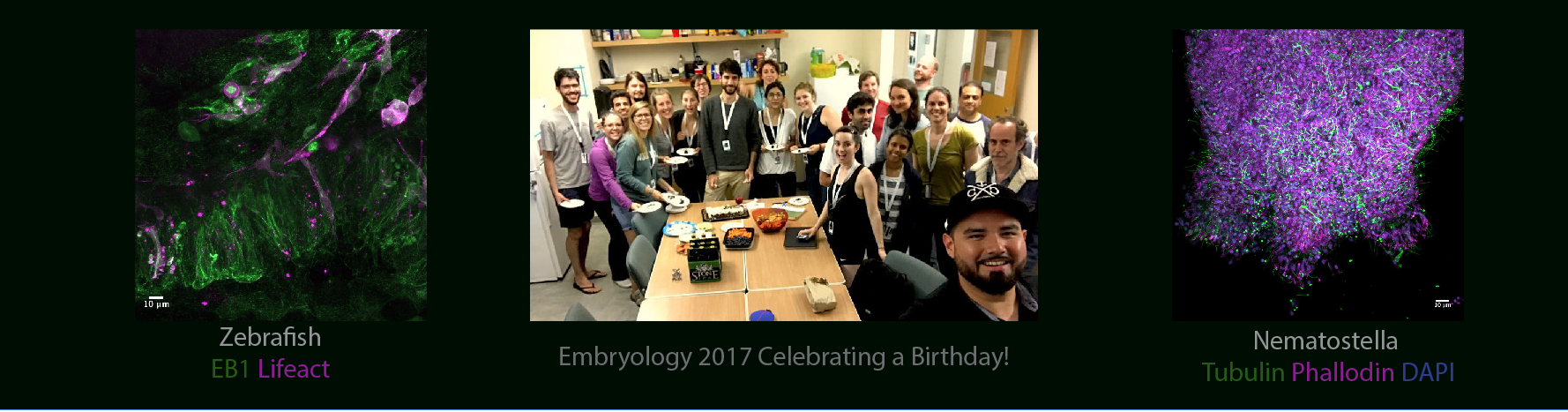
The deadline to apply for the 2018 Embryology course at the Marine Biological Laboratories is just one week away (February 1). That means it is time to get your application submitted!

If you have read the previously posted articles, you learned about this course helping Ania over come fears, its life changing capabilities from Tessa and the benefits of a collaborative environment from Steve.

Don’t pass up the opportunity to be in this environment and place of personal and scientific growth.

I am currently finishing up my PhD at UNC in Molecular, Cell and Developmental Biology. However, before taking the Embryology course I considered myself purely a Biochemist, Cell and Structural Biologist. My research focuses on understanding the structural and functional role of the cytoskeleton at the atomic to cellular level. Due to this skill set many of my colleagues (myself included) thought I would be a Physiology student (another wonderful summer course at MBL – oh and the two courses are kind of rivals). However, as I proceeded through my graduate work I knew that I wanted to understand the role of the cytoskeleton at the tissue and whole animal level. I didn’t know a lot about the work being done in this area and the scientists doing this work. I knew that the Embryology course would offer me the best way to gain technical knowledge, connections to developmental biologists and to learn about the work currently being done in this field. The course provided me with all of this and so much more. The connections I made at the course helped me to land a wonderful postdoc in Developmental Biology!

The connections and personal growth the course fosters and the skills acquired are far beyond any other experience I have had thus far. Honestly, I was worried that I wouldn’t fit in – or I would be so lost and so far behind all the time – I couldn’t have been more wrong. I felt right at home, every single person was fabulous, willing to help out and answer any and all of my questions no matter how basic or crazy. One of my favorite things about the course was the access to so many amazing microscopes. I had such a blast imaging on a dozen or so different systems!

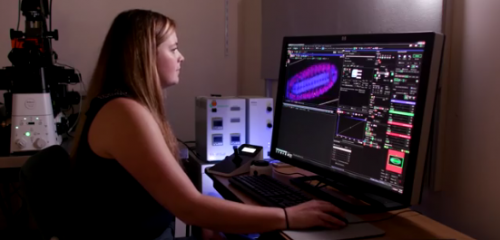
Me on Nikons A1 system. Image from www.xplorationstation.com

No matter your background, training or knowledge base you will learn so much from this course and you will think about science in new and different ways. Do not hesitate to apply!

For more information on the course check out my blog posts from last summer and #embryo2017 on twitter and instagram.


Thumbs up (2 votes)
Loading...

Categories: News

Navigate the archive

Use our Advanced Search tool to search and filter posts by date, category, tags and authors.

Postdoctoral position in Lymphatic Vascular Development

Posted by , on 25 January 2018

Closing Date: 15 March 2021

POSTDOCTORAL POSITION is immediately available to study different aspects of lymphatic vasculature development using a variety of available mouse models. Highly motivated individuals who recently obtained a PhD. or MD degree and have a strong background in mammalian vascular, molecular and developmental biology are encouraged to apply. Interested individuals should send their curriculum vitae, a brief description of their research interests, and the names of three references to:


Guillermo Oliver, Ph.D

Thomas D Spies Professor of Lymphatic Metabolism

Director Center for Vascular and Developmental Biology

Northwestern University Feinberg School of Medicine

303 East Superior Street,10‐107

Chicago, Illinois 60611

Email: guillermo.oliver@northwestern.edu

http://labs.feinberg.northwestern.edu/oliver/


Northwestern University is an Equal Opportunity, Affirmative Action Employer of all protected classes, including veterans and individuals with disabilities. Women, underrepresented racial and ethnic minorities, individuals with disabilities, and veterans are encouraged to apply. Hiring is contingent upon eligibility to work in the United States.


Thumbs up (No Ratings Yet)
Loading...

Categories: Jobs

Unexpected role of Hunchback in retinal glia cell development

Posted by , on 24 January 2018

In our recently published work, we applied dynamic genome wide expression profiling of eye-antennal imaginal discs of Drosophila melanogaster to reveal Hunchback as central factor in retinal glia cell development. Here is the abstract:

Drosophila melanogaster head development represents a valuable process to study the developmental control of various organs, such as the antennae, the dorsal ocelli and the compound eyes from a common precursor, the eye-antennal imaginal disc. While the gene regulatory network underlying compound eye development has been extensively studied, the key transcription factors regulating the formation of other head structures from the same imaginal disc are largely unknown. We obtained the developmental transcriptome of the eye-antennal discs covering late patterning processes at the late 2nd larval instar stage to the onset and progression of differentiation at the end of larval development. We revealed the expression profiles of all genes expressed during eye-antennal disc development and we determined temporally co-expressed genes by hierarchical clustering. Since co-expressed genes may be regulated by common transcriptional regulators, we combined our transcriptome dataset with publicly available ChIP-seq data to identify central transcription factors that co-regulate genes during head development. Besides the identification of already known and well-described transcription factors, we show that the transcription factor Hunchback (Hb) regulates a significant number of genes that are expressed during late differentiation stages. We confirm that hb is expressed in two polyploid subperineurial glia cells (carpet cells) and a thorough functional analysis shows that loss of Hb function results in a loss of carpet cells in the eye-antennal disc. As a consequence of missing carpet cells, we observed abnormal glia cell migration. Additionally, we provide for the first time functional data indicating that carpet cells are an integral part of the blood-brain barrier. Eventually, we combined our expression data with a de novo Hb motif search to reveal stage specific putative target genes of which we find a significant number indeed expressed in carpet cells.


Thumbs up (No Ratings Yet)
Loading...

Categories: Uncategorized

Explaining Developmental Biology to non-specialists

Posted by , on 24 January 2018

BSDBlogoThe BSDB recently initiated an advocacy campaign, starting with (1) the gradual development of the best arguments that can be used as elevator pitches in discussions, presentations, applications or publications, and (2) the collation of support resources which were first published on the BSDB website and are now present in improved version on The Node. To take this initiative a step further, I recently took an invitation by the journal Open Access Government as an incentive to write a short text that would explain the nature as well as the societal importance and impact of DB in terms that are understandable to lay audiences. Please, read the outcome of that effort below (or read the original publication here). This is only a first attempt, but I hope that it will serve as a template that can be used and further developed by members of the DB community.

What is Developmental Biology – and why is it important?

Developmental Biology addresses questions of societal importance

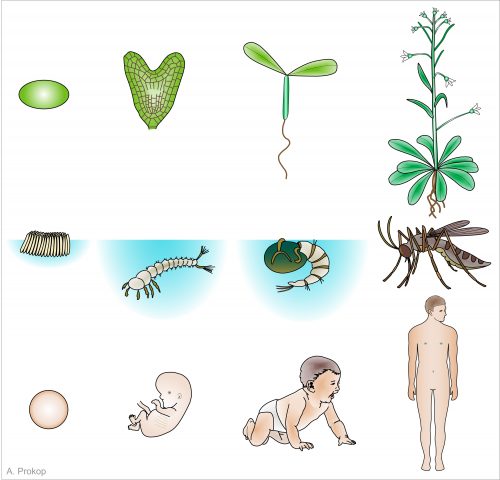
The life science discipline Developmental Biology (DB) aims to understand the processes that lead from the fertilisation of an egg cell (or equivalent) to the formation of a well-structured and functional multicellular organism (Fig.1). At first sight, this may appear a mere curiosity-driven academic goal, not necessarily worth tax payers’ money. Here I argue that the opposite is true: DB is a key discipline in the life sciences, a motor for research into human disease and fertility, food sustainability and biological responses to environmental pollution and global warming.
According to the US’ National Research Council, over half of initial pregnancies are affected by developmental defects, ~3% of live births suffer from major developmental aberrations, ~70% of neonatal deaths and 22% of infant deaths have developmental causes, and ~30% of admissions to paediatric hospitals are due to developmental defects. The causes can be random errors, inherited or acquired gene mutations or toxins – as illustrated by severe limb malformations of thousands of new-borns during the thalidomide/Contergan drug scandal in the 1950s, or the stark increase in birth defects after the Bhopal gas catastrophe in 1984.

These numbers and examples clearly cry out for scientific investigations into the developmental processes affected – not only to understand or even treat human disorders, but also to deliver profound arguments that convince policy makers, for example to reduce toxic wastes, fumes and plastics which pose threats to our healthy genes and development. DB is a scientific discipline at the centre of such investigations, and it has two important strategic strengths, as will be explained in the following.

DB asks profound questions at the level of whole organisms or organs

DB investigates questions such as “how does the kidney or brain develop?” or “how do limbs or leaves achieve their characteristic shapes and positions?” To address such questions, a typical DB research strategy may start by identifying the genes or gene networks regulating the respective developmental processes in a chosen animal or plant. These genes can then be functionally manipulated or eliminated in order to study the resulting developmental aberrations. The findings often allow deductions about how the involved genes and processes function in health; they may also reveal parallels to clinical cases of human developmental disorders, thus directing informed biomedical research into such conditions.
To investigate processes from the genetic level all the way up to the organism/organ level, DB has to be highly inclusive and interdisciplinary, making active use not only of genetics, but also biophysics, biochemistry, cell biology, physiology and anatomy. In this way, it drives discoveries at the various levels of complexity, acts as an umbrella discipline that can provide a common focus towards essential biological questions, and builds bridges to clinicians or plant/animal breeders who tend to think at the organism/organ level.

DB makes strategic uses of model organisms

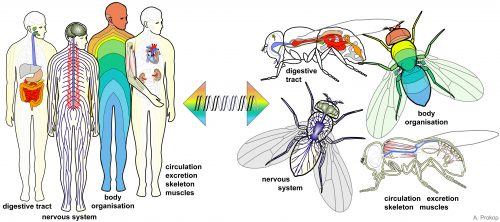
Most DB research does not use human embryos, but covers the breadth of the animal and plant kingdoms. This ambition might seem to bear the risk of over-stretching our research capacities, but it is in fact a great strength of DB and gold mine for discovery. It turned out that many genes and functional gene networks that steer fundamental biological processes have ancient evolutionary origins and are still being used by very different species for similar purposes (Fig. 2); ~75% of human disease genes have a counterpart in fruit flies, and ~50% of yeast genes can be functionally replaced with human genes. Capitalising on this principle of ‘deep homology’, highly efficient and cost-effective, hence economically responsible research can be done in smaller organisms, such as worms, flies or even yeast. The genes and concepts learned can then be tested in mammals (most frequently mice) and eventually used for clinical trials. This discovery pipeline has led to significant understanding of human biology and disease, as evidenced by an impressive number of Nobel Prizes in Physiology and Medicine awarded to scientists working with these “model systems”.

What DB has done for us (so far)

DB research starts with the fertilisation of egg cells; studying the underlying processes has provided the foundations for much of what fertility clinics can do these days. DB investigates how fertilised egg cells divide in regulated manners to grow into full-size bodies, how the cells formed in this process communicate in meaningful ways to become different from each other, migrate, change shape and attach to each other, thus assembling into tissues and complex organs. Many of these processes are needed again during wound repair, and DB research helps to speed up wound healing, prevent scars and overcome chronic wounds. Also ‘tissue engineering’, which aims to grow replacement tissues in a plastic dish, is essentially guided by DB research. In cancer, cells lose their identity, divide excessively, detach from their local environments and migrate to form metastases. Much of this understanding that can instruct cures to contain these aberrant cells, comes from DB research. Tissues keep so-called stem cells which can be re-activated in orderly manners to divide and grow replacement tissues. There are high hopes from stem cell research, for example to replace cartilage in arthritis or damaged discs, or brain cells in dementia, much of which is guided by the vast knowledge gained through DB.

The applications of DB go far beyond biomedical research. For example, understanding plant development provides a means to speed up breeding processes, such as optimising root systems, plant size or flowering time, thus contributing to the efforts of achieving sustainable food security in times of over-population. Furthermore understanding environmental influences on development, such as temperature-dependent sex determination in turtles, has enormous importance for conservation biology, especially in times of increasing pollution and global warming.

In conclusion, DB may appear as a mere academic discipline, but its value for society is enormous. This should make us think about a carefully balanced system of science funding. Current trends seem to favour clinical or industrial research performed to translate biological knowledge into economic or societal benefit. But we must not overlook that fundamental research, such as in the field of DB, lays the long-term foundations for such developments.


 

The author Andreas Prokop is Professor of Cellular and Developmental Neurobiology at the Faculty of Biology, Medicine & Health (The University of Manchester). He has long-standing experience in the field of science communication and is the communications officer of the BSDB. He would like to thank Ottoline Leyser and Aidan Maartens for helpful comments on this manuscript.


Thumbs up (3 votes)
Loading...

Tags: ,
Categories: Discussion, Outreach, Resources, Societies

Advances in stem cell biology course – 1 week to register!

Posted by , on 24 January 2018

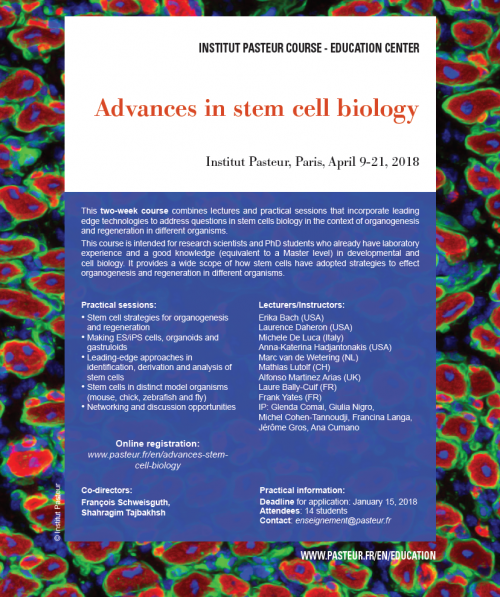
This two-week Institut Pasteur course combines lectures and practical sessions that incorporate leading edge technologies to address questions in stem cells biology in the context of organogenesis and regeneration in different organisms.


The application deadline has been extended to January 31st 2018

Find out more here:

https://www.pasteur.fr/en/advances-stem-cell-biology


Thumbs up (No Ratings Yet)
Loading...

Tags: , ,
Categories: Events

Funded places for ECRs in plant development workshop

Posted by , on 23 January 2018

In April, The Company of Biologists is hosting a workshop ‘Cellular gateways: expanding the role of endocytosis in plant development‘, organised by Jenny Rusinova, Takashi Ueda and Daniel van Damme.

There are around 10 funded places available for early career scientists to attend the workshop, along with the 20 speakers. Deadline for applications = 16 February


For more details visit the site:


Disease Models & Mechanisms

Thumbs up (1 votes)
Loading...

Tags: ,
Categories: Events

Postdoc in lung organoids – Gurdon and Stem Cell Institutes, Cambridge

Posted by , on 23 January 2018

Closing Date: 15 March 2021


Wellcome Trust Cancer Research UK Gurdon Institute and Wellcome Trust/MRC Stem Cell Institute

Salary – £25,728 – £29,799 or £31,604 – £38,833

Closing date: 16th February, 2018

Applications are invited for a postdoctoral research assistant/associate to work on functional validation of targets for lung regeneration using human organoids. This project will be jointly supervised by Dr Joo-Hyeon Lee (Stem Cell Institute; https://www.stemcells.cam.ac.uk/research/pis/lee) and Dr Emma Rawlins (Gurdon Institute; http://www.gurdon.cam.ac.uk/research/rawlins) and is funded by Astra Zeneca. Recent research in the two labs has focused on the development of organoid systems for studying lung development and maintenance (Lee et al., Cell, 2017; Nikolic et al., Elife, 2017). We now aim to recruit an outstanding individual who is interested in lung developmental mechanisms, and their potential therapeutic applications, in order to extend our current organoid work into lung regeneration.

Applicants should have a PhD in a relevant subject, or be close to completion of their degree. Expertise in general areas of developmental/stem cell biology including live cell imaging, image analysis, CRISPR genome editing, flow cytometry analysis, and cell signalling mechanisms would be suitable for this position. Experience of in vitro models would be an advantage.

The successful applicant will learn human lung organoid systems and have a strong publication record and an excellent aptitude for research and career development. We are looking for applicants who are collaborative with effective communication skills and enjoy working in a team. Proven capacity to design, execute, and interpret your own experiments is essential.

Limited funding: The funds for this post are available for 2 years in the first instance with year 2 of funding being contingent on progress made in year 1.

To apply online for this vacancy, please click on the ‘Apply’ button below. This will route you to the University’s Web Recruitment System, where you will need to register an account (if you have not already) and log in before completing the online application form.

Applications should include a CV and a brief statement outlining key areas of expertise and reasons why you would like to join the project. Informal enquiries can be addressed to Dr Joo-Hyeon Lee (jhl62@cam.ac.uk), or Dr Emma Rawlins (e.rawlins@gurdon.cam.ac.uk). Please quote reference PR14553 on your application and in any correspondence about this vacancy.

The University values diversity and is committed to equality of opportunity. The University has a responsibility to ensure that all employees are eligible to live and work in the UK. Benefits include generous maternity/paternity leave, flexible working and funds for returning carers and other family-friendly schemes.

The Gurdon Institute is committed to equality and diversity in the workplace, for more information go to: https://www.gurdon.cam.ac.uk/about/athenaswan.

Further information

Thumbs up (No Ratings Yet)
Loading...

Categories: Jobs

Group leader positions at the Turing Centre for Living Systems (Marseille, France)

Posted by , on 22 January 2018

Closing Date: 15 March 2021

CENTURI seeks to attract outstanding physicists, mathematicians or computer scientists with a theoretical and/or computational biology project.

The selected candidates, who are expected to bridge biology and other disciplines will be affiliated to two institutes and will be offered competitive funding.

PDF for the call.


Application informations

Applicants should send a curriculum vitae with a complete list of publications, a 2- page summary of research achievements and projects in English, and the names and addresses of three references to Thomas LECUIT (info@centuri-livingsystems.org), before February 26th, 2018. Short listed candidates will be invited to submit a full proposal by 22nd April, and for an interview in May.

Contract duration: 4 years

Thumbs up (No Ratings Yet)
Loading...

Categories: Jobs

Digital Scientific Writer Traineeship

Posted by , on 19 January 2018

Closing Date: 15 March 2021

Hi Guys,

Over the past fews years I’ve done a lot of SciComm and really enjoyed everything I learned and all the experiences I got from running PhD websites and the Pint of Science Ireland events.

As many researchers are looking to get experience in scientific writing we’ve put together a “Digital Scientific Writer Traineeship” program.

If you are interested you can find our more here, would be great to hear from interested candidates:

https://www.elisagenie.com/careers/

Regards

Seán

Thumbs up (No Ratings Yet)
Loading...

Categories: Jobs

Matthew Cobb: What makes great biology?

Posted by , on 19 January 2018

Prof. Matthew Cobb (The University of Manchester)

Plenary talk given at the School of Biological Sciences symposium on Friday, 12 January 2018

Matthew Cobb is an inspiring advocate and communicator of science, in particular of biology. This is clearly reflected in his books and articles about the history of biology (and beyond), and his various radio programmes reflecting on past and contemporary science topics. Recent highlights are his book “Life’s Greatest Secret: The Race to Crack the Genetic Code” (shortlisted for the 2015 Royal Society Winton Prize for Science Books) as well as his BBC Radio programmes “Editing Life” (a well-balanced analysis of the opportunities and risks of the newly emerging CRISPR gene editing techniques) and ”Sydney Brenner: A Revolutionary Biologist“ (about the life of this outstanding scientist).

As a result of working on two BBC radio programmes and a project on scientific collaboration (supported by a Sydney Brenner Research Scholarship from the Cold Spring Harbor Laboratory), Matthew has been reflecting on what are the magic ingredients that produce great biology. The talk he presented at Manchester’s School of Biological Sciences Symposium on 12 January 2018 (see re-recording of this entire talk here), was an inspiring and enlightening summary of the key ideas extracted from this endeavour.

In his talk, Matthew first gave a definition of “great biology” which he proposes as “influencing our thinking about life, from nucleic acids to ecosystems, in ways that are long-lasting and opening up new perspectives”; he pointed out that these traits are “not necessarily associated with large grant funding, publication in ‘high-ranking’ journals or practical or therapeutic implications”. He then moved on to explain what he thinks the five magic ingredients are that promote great biology, illustrating each point with enlightening examples of scientists and anecdotes from the biology’s past (one of them about amateur scientists!) – always with a view to current practice, and providing inspirational advice for the future. Certainly, I do not want to spoil the watching of Matthew’s talk by giving away the concrete examples, but shall briefly discuss the fundamental ingredients that Matthew highlighted, mixed in with some of my own thoughts.

The first advice is to be early in the game. To be at the forefront of new developments or even being a trend setter requires vision, meaning the ability to recognise today what will be important tomorrow, but also living with the right mind at the right time. Certainly, the chances of being in the early game is helped by keeping an open mind for the bigger picture and unanswered questions, rather than getting lost in detail. And there are measures that can be taken to this end. For example “The encyclopaedia of ignorance – life sciences”, edited by R. Duncan and M. Weston-Smith in 1977/78, was an inspiring attempt to make renowned scientists of the time think aloud about the future of the various life science disciplines; and I could imagine that this was a great catalyser for curious readers to awaken their pioneer spirits. Another important means to foster a culture that honours forward-looking thinking, is to free time for, and take an interest in, true dialogue and discussion. For this, we also need to generate the right environment and opportunities, such as to ensure that all new buildings have informal social spaces where people can meet and discuss. But also, when reviewing manuscripts, we need to be open to new ideas so that they can develop – rather than brush them away with a tunnel view. In a recent case of a fellowship application I experienced, ten lay reviewers gave maximum marks; in contrast, three specialist reviewers rated the application as being mere average, mostly based on technical detail and blind to the concepts and ideas behind that application and its potential to develop great science. It is the latter that we all need to recognise and foster.

The second advice is to think and plan long-term. Key to this strategy is the art of long-term objective setting guided by fundamental questions and their break-down into medium and short-term goals that can be dealt with at a time. Again, this is not made easy in the current science and science funding landscape, but all arguments are in favour of long-term developments. The “skimming-the-cream-and-moving-on” mentality might be good for the careers of individual scientists, but perhaps not so good for the actual science. Similar conclusions are drawn by the article “How should novelty be valued in science?” published by B. A. Cohen in Elife last year. Cohen’s analysis of arguments from the philosophy of science (how reliable knowledge is generated) and from the sociology of science (how science communities work most efficiently) clearly dismantle the excessive demand for novel mechanisms (as opposed to gradual development of concepts) that governs contemporary science funding and publishing policies. This trend has become a significant inhibitor of high quality science, and the alarming increase in reports about non-reproducibility of published results is a logic consequence of these developments, and poses a risk to the future of science.

The third advice is to choose and/or develop the right tools. Apart from the examples Matthew mentioned in his talk, I can mainly speak for the biomedical sciences; my personal experiences lie with Developmental Biology and Drosophila research within, both of which are under threat by the growing emphasis on translational (i.e. clinical) research. Many politicians and funders seem to focus increasingly on the final steps of the discovery pipeline, fixing their gaze on expected short-term returns. They overlook, and often don’t understand, that longer-term basic research (which is typically not performed on humans but on animal model organisms as the more versatile “tools”) generates the creative pool of ideas that will feed the bench-to-bedside pipeline in the future. But even within fundamental research, “tool choice” has shifted away from the use of genetic invertebrate model organisms, such as C. elegans or Drosophila, to the use of mouse models. This development fails to recognise that research concerning evolutionary conserved processes and mechanisms is done far more productively and economically in the smaller model organisms; as Hugo Bellen once stated [LINK]: “You get 10 times more biology for a dollar invested in flies than you get in mice”. I therefore believe that we would see greater biology if grant panels looked more critically at the justifications for the model organisms that are being proposed for projects – and that such a practice would free up funds for a greater variety of science.

The fourth advice is to build good teams. Matthew highlighted three factors. Ideally have at least one person with great vision in your team that has the genius to drive the conceptual ideas behind the work. Be complementary in your expertises. But, most importantly, foster a productive culture of discussion: be prepared to play around with ideas even if they appear mad at first sight; and enjoy and capitalise on friction coming from different opinions and opposing thoughts, so that the best ideas can emerge and be developed into scientific experiments.

The fifth ingredient, least accessible to advice, is luck! We all know this component as a potential maker and breaker of careers. This said, bad luck certainly breaks those who either lack the vision or disregard the above advice. However, the good scientists will be prepared: either by taking the long view that provides flexibility for alternative strategies and approaches, or by using failure as an opportunity to rethink and take new directions – perhaps providing a new chance to be early in the game! As Napoleon supposedly said: “I believe in luck, and the wise man neglects nothing which contributes to his destiny”.

But even if we are eager to follow this advice, the circumstances of the current science landscape might not be in support of great biology. Harmful metrics, counterproductive expectations, bureaucracy, a shift in public opinion, and harmful publishing policies “bully us into bad science” and promote self-focussed communities and mechanisms that inhibit true progress and passion for science. Some examples were given above and many more can be found in other publications (e.g. Lawrence; Cohen; Young; Smaldino; Martínez-Arias; Nerlich). But, as I argued in a recent blog, we must organise ourselves and engage as a community in dialogue with each other, clinicians, policy makers, funders and publishers – all with a view to improving the biology we do. For such dialogue, we need arguments and elevator pitches that are engaging and convincing. To this end, Matthew’s talk is a rich resource of ideas and well thought-out arguments that we all should listen to and take on board.

Andreas Prokop

Watch his talk:

Thumbs up (5 votes)
Loading...

Tags: , ,
Categories: Discussion, Events, Highlights, Outreach, Resources, Video