– Can we make embryos in silico? Miquel posted about his recent paper in Bioinformatics, and the modeling framework he implemented in the new tool EmbryoMaker.
– What does YAP do? Muriel explained the role of this Hippo effector in the Xenopus retina.
As a part of a team of students from the MRC Centre for Developmental Neurobiology, Kings College London we commissioned and edited an issue of The Biochemical Society’s magazine, The Biochemist. The issue is entitled ‘What makes us human’ and is a discussion of the evolutionary steps that lead to modern humans. The articles in the issue were written by a fantastic set of authors. The potential role of connectivity in the evolution of humans was one of many topics we were interested in but didn’t include in the end. Here we share some of our ideas on the topic.
Is a large or highly connected brain more important for human intelligence?
Whenever anyone talks about what makes humans special compared to other animals on earth, our intelligence and self-consciousness is often the first thing mentioned. The cognitive abilities held by humans are usually attributed to the size of our cortex, which is the most rostral, outermost and highly folded region part of the brain. The mammalian cortex is generated by a varied progenitor pool that has expanded and diversified through evolution1,2.
A large number of studies have tried to elucidate the human specific genes and regulatory elements that are involved in generating and regulating mammalian neuronal progenitors in order to make a larger brain during development3,4. Together these studies suggest that as brains evolve to be larger, the stem and progenitor cells that make the brain show increased heterogeneity in both cell biology and gene transcription1-4. This results in blurred lines between stem/progenitor cells and differentiating/committed cells in the developing human brain3,4. It is still unknown whether a larger brain containing more neurons alone can have a subsequent effect on intelligence or cognitive ability. In fact, even authors of these studies have suggested that the evolution of human-like cognitive abilities would have required more than a big brain full of a large number of neurons. Is it possible (even likely) that something else has to change in the brain inorder to evolve consciousness and levels of learning and memory that are considered human traits.
So if not the size of the brain, what other candidate do we have for explaining our unique cognitive abilities? One possibility is that the critical factor lies in how the neurons connect to each other. Greater amounts of cortical connectivity allow for a greater number of neural circuits to exist and thus potentially allow for a more plastic, adaptable brain. This line of thinking can be summarized by: ‘it’s not the size of your brain but what you do with it that matters’.
Increased connectivity
One human-specific genetic change that has been shown to boost synaptic connectivity is the duplication of SRGAP2. Around the transition from Australopithecus to Homo (approximately 3.4 million years ago) an initial duplication event generated SRGAP2B5. This initial duplication was followed by secondary duplication events which generated SRGAP2C ~2.4mya and SRGAP2D ~1mya. Interestingly, these gene duplication events (summarised in figure 1) occur around the time that the neocortex expands, use of stone tools begins, and more complex culture and behaviour emerges6. All of these duplication events were incomplete and were found to generate truncated proteins that assume a dominant negative function and antagonise the ancestral SRGAP2 protein5. Additional quantification of the paralogues found that of the three duplicated genes, only SRGAP2C is expressed in any significant amount in the human brain.
Figure 1: Schematic showing the putative protein products for each of the four human paralogs of SRGAP2 and the evolutionary duplication events generated that them. Adpated from 1.
Charrier et al. 2012 examined the functional consequences of the SRGAP2 gene duplication and the inhibitory interaction with its paralog SRGAP2C7. Inhibition of SRGAP2 led to much faster radial migration of neurons in the cortex with less leading process branching. They also found that expression of SRGAP2C in mouse pyramidal neurons in vitro led to drastically altered morphology of dendritic spines. Dendritic spines receive most of the excitatory inputs for a neuron, and thus any changes to their morphology can have drastic effects on neuronal output. They are also thought to allow neurons to sample inputs over a greater area of nearby space and thus allow for additional connectivity without a corresponding increase in brain size8.
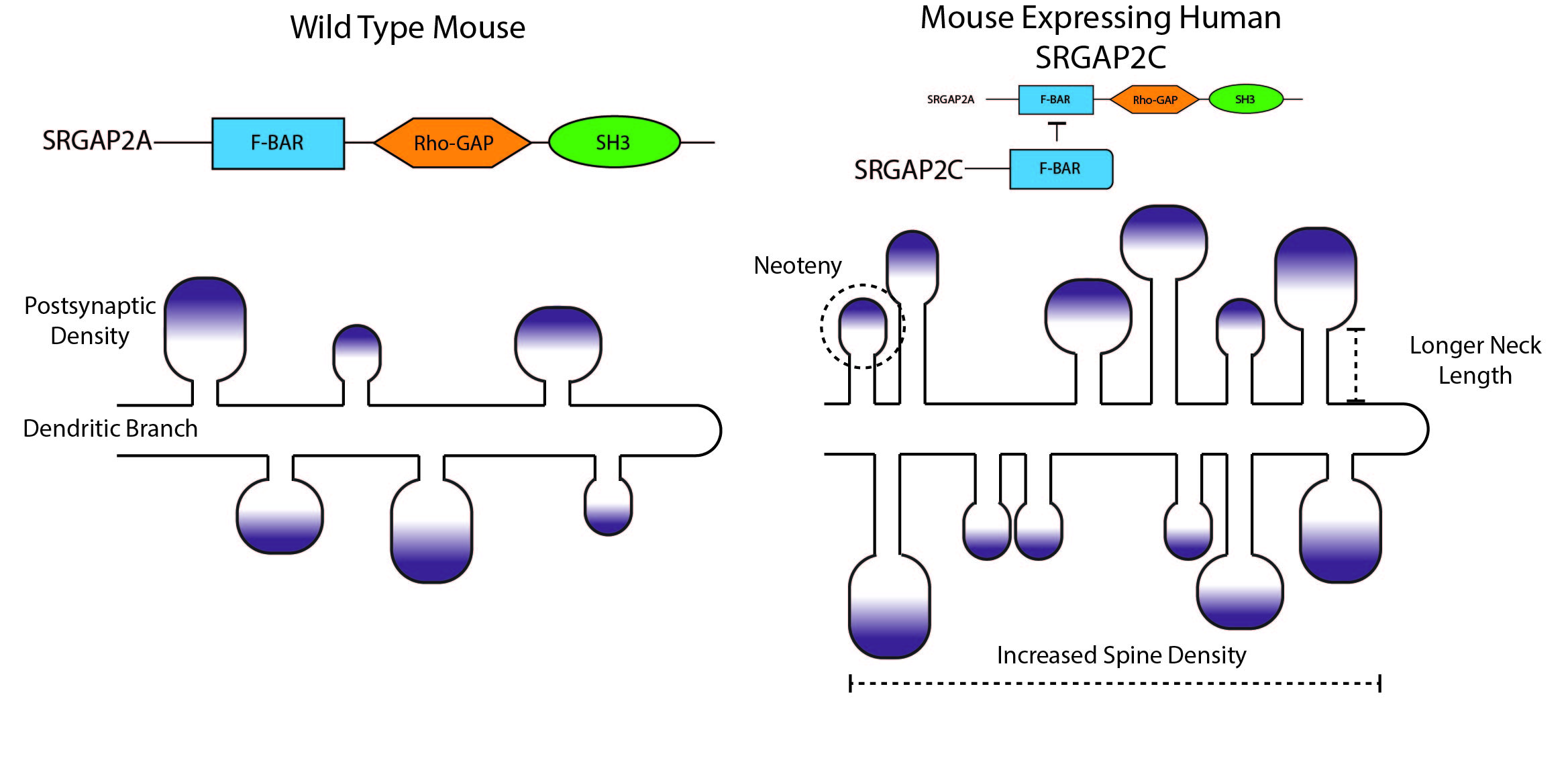
In mice, SRGAP2 promotes spine maturation and limits density. On the other hand, coexpression with SRGAP2C led to increased spine density, lengthened dendritic necks and ultimately led to marginally larger spine heads (figure 2). These ‘mutant’ spines also required more time to fully mature. These results are intriguing as human spines are known to be more dense in the cortex, have longer necks and larger heads, and also to develop more slowly (termed neoteny)9 -11. This experiment then provides an anatomical readout of what may have been occurred in the human brain after the gene duplication event5.
Figure 2: Schematic showing the effect of SRGAP2 function of dendritic spine morphology. Left: Dendritic spines in a wild-type mouse expressing endogenous SRGAP2A. Right: Altered dendritic spine morphology in mice expressing human SRGAP2C. Dendritic spine neck length and density was increased and spines developed more slowly (neoteny). Postsynaptic density (shown as a purple gradient) was not affected. Adapted from 7.
While these studies have shown that a human-specific gene can alter neuronal anatomy, the physicological and functional outcome of the expression of this gene is still not clear. Do the cells expressing both SRGAP2 and SRGAP2C have different electrical properties from those that do not? Do they integrate their inputs differently? Are the rules governing plasticity different or altered for cells with different dendritic spine sizes?
These experiments suggest a plethora of future directions for research. There are a number of human-specific duplicate genes that are incomplete or missing segments12,13. If these genes are important in neurodevelopment or neuronal structure and behavior, then they could assume roles analogous to that played by SRGAP2C to its parent gene. And of course, linking these genetic changes to anatomical and ultimately behavioral changes in neurons would be the ultimate goal in explaining what it is that makes us human.
Recently, Tomer Stern and Itamar Harel posted on the Node about Graduate Peer Group, a discussion group where graduate students could interact with each other and address the challenges that arise specifically during graduate school. Many of these challenges go beyond research at the bench: how to communicate your research, how to manage relationships in the lab, how to establish collaborations, how to write manuscripts, etc.
Indeed, as a scientist advances in their career, they must become more than just researchers: they must also be writers, reviewers, mentors, managers and communicators. So, this month’s question is:
Which “away from the bench” skills are required to be a successful academic? How and when should those skills be developed?
Share your thoughts by leaving a comment below! You can comment anonymously if you prefer. We are also collating answers on social media via this Storify. And if you have any ideas for future questions please drop us an email!
Pattern formation and regulation emerges from cellular activity determined by specific biophysical and genetic rules. A major challenge for developmental biology, biomedicine, and synthetic bioengineering is this highly indirect (Lobo et al., 2014b) relationship between the rules that govern processes at the lower scales, and the anatomical outcomes observed at the macroscopic scale. It is very hard to predict what a complex, iterative, distributed system such as an embryo or a regenerating animal will do, from knowledge of the low-level rules. It is even harder to infer what manipulation can be applied at the molecular level, to achieve a specific anatomical change in biomedical or synthetic morphology applications. This is known as an “inverse problem” in computer science; for example, it’s very easy to iterate a mathematical function like Z<=Z^2+c and create a beautiful fractal (http://mathworld.wolfram.com/MandelbrotSet.html ), but it’s an intractable task to take an arbitrary pattern and figure out what formula would produce it.
In this post, I describe our recent efforts to address the gulf between the molecular details that come out of bench experiments, and the complex patterns or regulatory behavior that we would like to understand and control. We view this as the beginning of a “bioinformatics of shape” – the creation of computational tools addressing shape, not only sequence or expression, and that assist human scientists in discovering models that explain pattern and complex, stochastic developmental phenotypes. An important component of this “robot scientist” (Sparkes et al., 2010) effort is enabling the inference of models that are generative (algorithmic): they specify every step, quantitatively, without ambiguity or magic, and show exactly what dynamics are sufficient to produce the pattern in question. The field is moving towards these kinds of models (Wittmann et al., 2009; Raspopovic et al., 2014; Uzkudun et al., 2015; Werner et al., 2015), and away from simple “arrow diagram” models, that capture valuable loss-of-function and interaction data, but only reveal the pieces necessary for the process to occur. That is generally insufficient to show why or how the complex patterning proceeds to a specific shape, or enable full control of its outcome toward a different goal state; thus, it is crucial to develop tools for generating and testing fully-specified generative models.
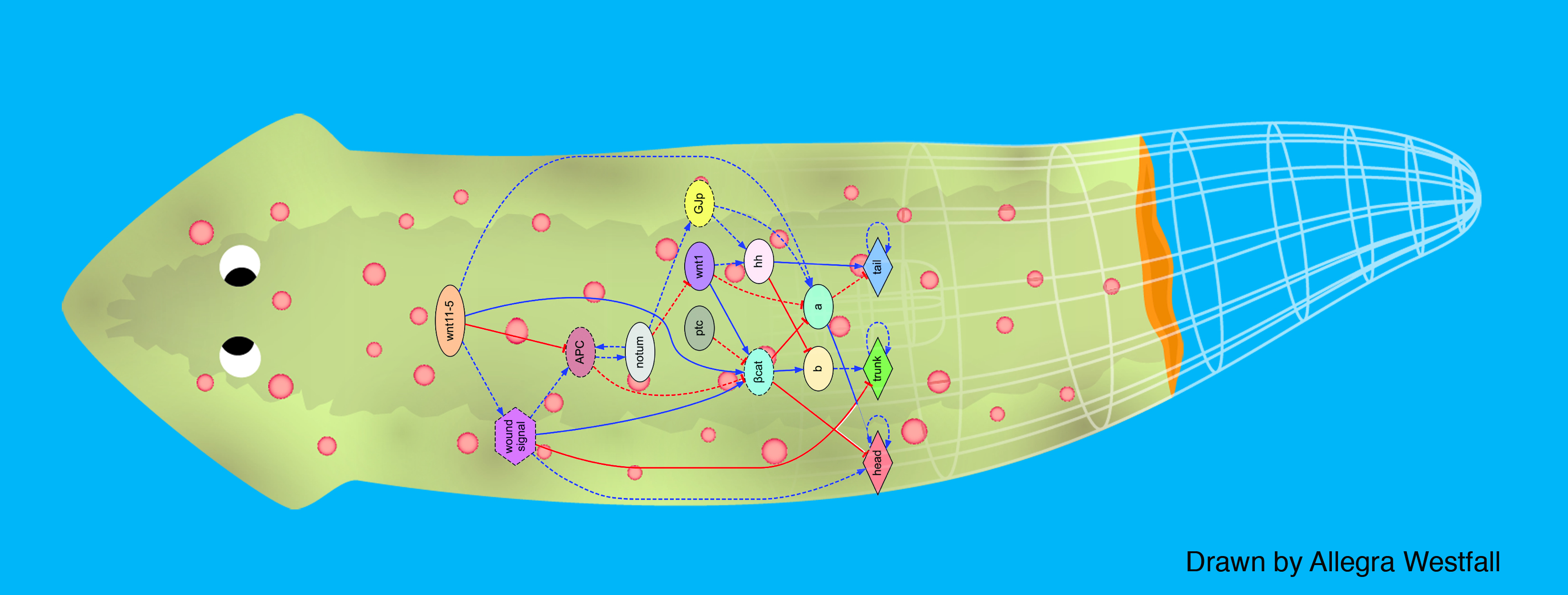
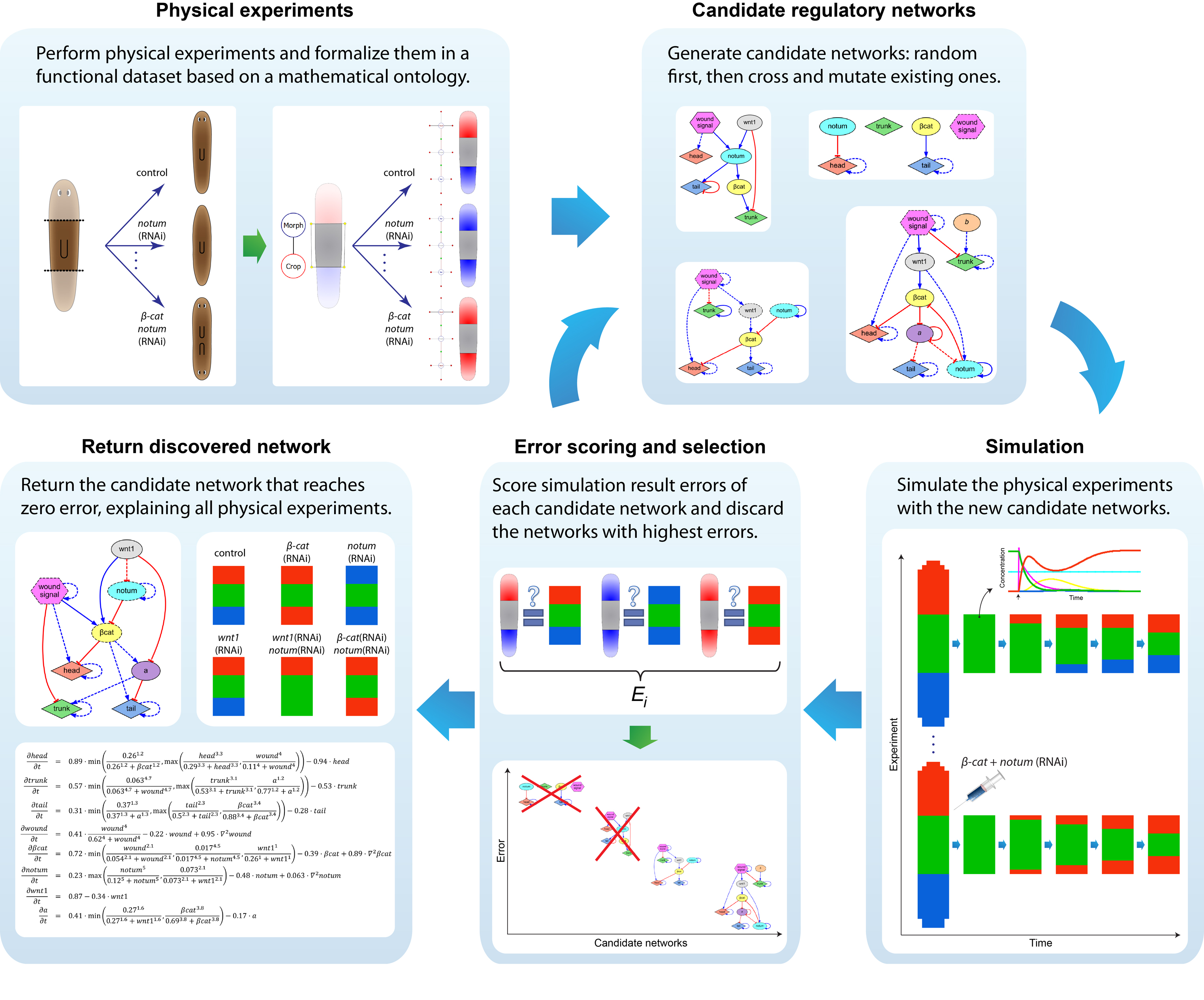
We first tackled the problem of planarian regeneration (Handberg-Thorsager et al., 2008; Lobo et al., 2012). A fragment of these complex bilaterian creatures regenerates all the missing components, no more and no less, in the correct orientation and at the correct locations (Reddien and Sanchez Alvarado, 2004; Gentile et al., 2011). People have been wondering about how this process works for at least 120 years, but despite remarkable molecular advances in stem cell regulation (Reddien et al., 2005; Wagner et al., 2011), there have been no quantitative models that algorithmically explain more than a few different patterning experiments in this very rich body of functional data. We began by creating a formal language (Lobo et al., 2013b) to describe possible experimental manipulations of worms (cuts, grafts, RNAi knockdown, etc.), and a graph representation scheme by which any shape of worm could be encoded (normal, 2-headed, etc.). We then encoded a large number of papers from the planarian literature into a database, which contains the sum total of current knowledge about this model species – a sort of expert system on planarian regeneration, which a human or algorithm can consult when needing to know what outcome results from a given experiment (Lobo et al., 2013a). Next, we created a virtual worm simulator – an in silico platform on which any genetic model of planaria could be run, and manipulated in virtual “experiments”, to see if the predicted outcomes matched the existing results from the database. Models could now be tested, but where to find a model detailed enough to be run on such a simulator? This problem is already so complex that human scientists have a very hard time to simply think of a model whose emergent behavior correctly predicts all the available results. With each new paper published, it becomes harder, not easier, to come up with a model that matches all the data. We thus implemented the final piece: a machine-learning module, that uses evolutionary computation to try to infer a model of gene regulation that behaves just like the real thing, under the published experimental perturbations. The system ran for several days on a supercomputer cluster, and indeed discovered a model that not only explained the existing data but made correct predictions for experiments it had never seen (Lobo and Levin, 2015).
This is the first model of regeneration discovered by an artificial (non-human) intelligence; we and others are testing the model’s predictions and its ability to suggest manipulations that result in never-before-seen phenotypes (as well as extending the platform to limb regeneration in multiple species (Lobo et al., 2014a)). Remarkably, the model it found was not an incomprehensible hairball (akin to diagrams of “metabolism”) but a small, easy-to-understand network with only two unknowns (which have since been identified from their connections to neighbors in protein interactome databases). The power of this system is that any future papers’ data can be continuously be added to the database, and the inference process re-run, to discover ever better models. Regardless of the fate of this particular model, we think this platform is a proof-of-concept, highly generalizable system for using artificial intelligence to assist scientists in the most creative aspect of our work: trying to come up with a testable model of what could be going on during complex pattern regulation.
References
Gentile, L., Cebria, F. and Bartscherer, K. (2011) ‘The planarian flatworm: an in vivo model for stem cell biology and nervous system regeneration’, Dis Model Mech 4(1): 12-9,
Lobo, D., Beane, W. S. and Levin, M. (2012) ‘Modeling planarian regeneration: a primer for reverse-engineering the worm’, PLoS Comput Biol 8(4): e1002481, http://www.ncbi.nlm.nih.gov/pubmed/22570595
Lobo, D., Feldman, E. B., Shah, M., Malone, T. J. and Levin, M. (2014a) ‘A bioinformatics expert system linking functional data to anatomical outcomes in limb regeneration’, Regeneration: n/a-n/a, http://dx.doi.org/10.1002/reg2.13
Lobo, D. and Levin, M. (2015) ‘Inferring Regulatory Networks from Experimental Morphological Phenotypes: A Computational Method Reverse-Engineers Planarian Regeneration’, PLoS Comput Biol 11(6): e1004295, http://www.ncbi.nlm.nih.gov/pubmed/26042810
Lobo, D., Malone, T. J. and Levin, M. (2013a) ‘Planform: an application and database of graph-encoded planarian regenerative experiments’, Bioinformatics http://www.ncbi.nlm.nih.gov/pubmed/23426257
Lobo, D., Malone, T. J. and Levin, M. (2013b) ‘Towards a bioinformatics of patterning: a computational approach to understanding regulative morphogenesis’, Biology Open 2(2): 156-69, http://www.ncbi.nlm.nih.gov/pubmed/2342966
Lobo, D., Solano, M., Bubenik, G. A. and Levin, M. (2014b) ‘A linear-encoding model explains the variability of the target morphology in regeneration’, Journal of the Royal Society, Interface / the Royal Society 11(92): 20130918, http://www.ncbi.nlm.nih.gov/pubmed/24402915
Raspopovic, J., Marcon, L., Russo, L. and Sharpe, J. (2014) ‘Modeling digits. Digit patterning is controlled by a Bmp-Sox9-Wnt Turing network modulated by morphogen gradients’, Science 345(6196): 566-70, http://www.ncbi.nlm.nih.gov/pubmed/25082703
Reddien, P. W., Oviedo, N. J., Jennings, J. R., Jenkin, J. C. and Sanchez Alvarado, A. (2005) ‘SMEDWI-2 is a PIWI-like protein that regulates planarian stem cells’, Science 310(5752): 1327-30,
Uzkudun, M., Marcon, L. and Sharpe, J. (2015) ‘Data-driven modelling of a gene regulatory network for cell fate decisions in the growing limb bud’, Molecular Systems Biology 11(7): 815, http://www.ncbi.nlm.nih.gov/pubmed/26174932
Wagner, D. E., Wang, I. E. and Reddien, P. W. (2011) ‘Clonogenic neoblasts are pluripotent adult stem cells that underlie planarian regeneration’, Science 332(6031): 811-6, http://www.sciencemag.org/content/332/6031/811.full.pdf
Werner, S., St√ºckemann, T., Beir√°n Amigo, M., Rink, J. C., J√ºlicher, F. and Friedrich, B. M. (2015) ‘Scaling and Regeneration of Self-Organized Patterns’, Physical Review Letters 114(13): 138101, http://link.aps.org/doi/10.1103/PhysRevLett.114.138101
Wittmann, D. M., Blochl, F., Trumbach, D., Wurst, W., Prakash, N. and Theis, F. J. (2009) ‘Spatial analysis of expression patterns predicts genetic interactions at the mid-hindbrain boundary’, PLoS Comput Biol 5(11): e1000569, http://www.ncbi.nlm.nih.gov/pubmed/19936059
Two PhD positions in the area of quantitative stem cell biology are available in the laboratory of Christian Schroeter, starting in spring 2016 at the Max Planck Institute for Molecular Physiology in Dortmund, Germany.
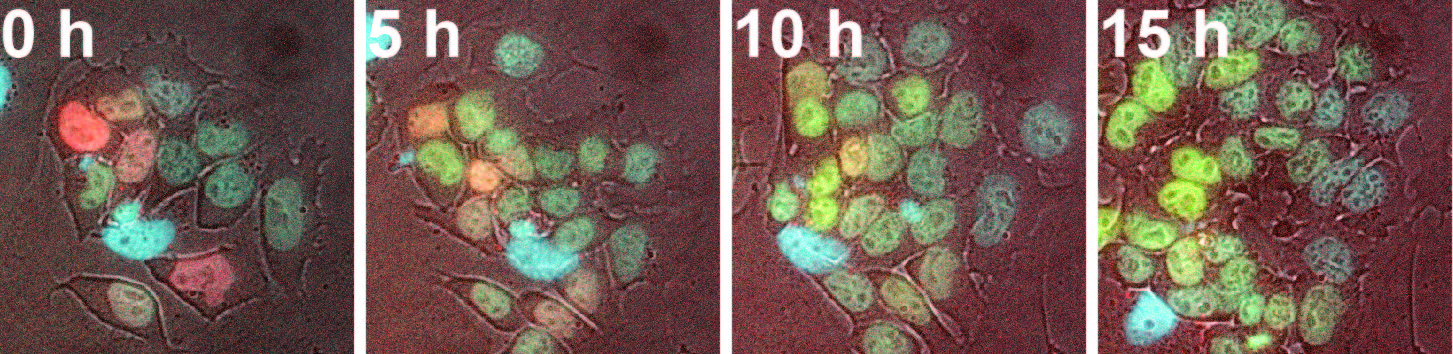
The aim of our research is to understand how pluripotent stem cells receive, process and integrate signals to take lineage decisions. Now that most of the important genes and proteins involved in differentiation decisions have been identified, we want to investigate the functions of the interaction networks formed by these molecules. In particular, we will ask questions such as: How do cells measure quantities of extracellular signals, and how do they encode this information in the dynamic activity of signal transduction networks? How are different signals integrated? How are fate decisions coordinated in cell populations to form tissues?
Multi-color reporter ES cells to interrogate signal integration in fate decision-making at the single cell level
Successful candidates will address these questions using mainly mouse embryonic stem cells as a model system, and apply a combination of genetic engineering, molecular biology, immunohistochemistry and live cell microscopy to investigate the dynamics of decision-making processes in single cells. A strong focus of the projects will be on cutting edge live-cell imaging approaches. Together with collaborators we will use the resulting quantitative, dynamic data to develop predictive mathematical models for information processing and decision-making in pluripotent cells.
In the frame of the 2016 “Juan de la Cierva” Call, a postdoctoral research post is available in Juan R. Martinez-Morales laboratory. (www.cabd.es).
CABD (UPO/CSIC). National Research Council. Seville. Spain.
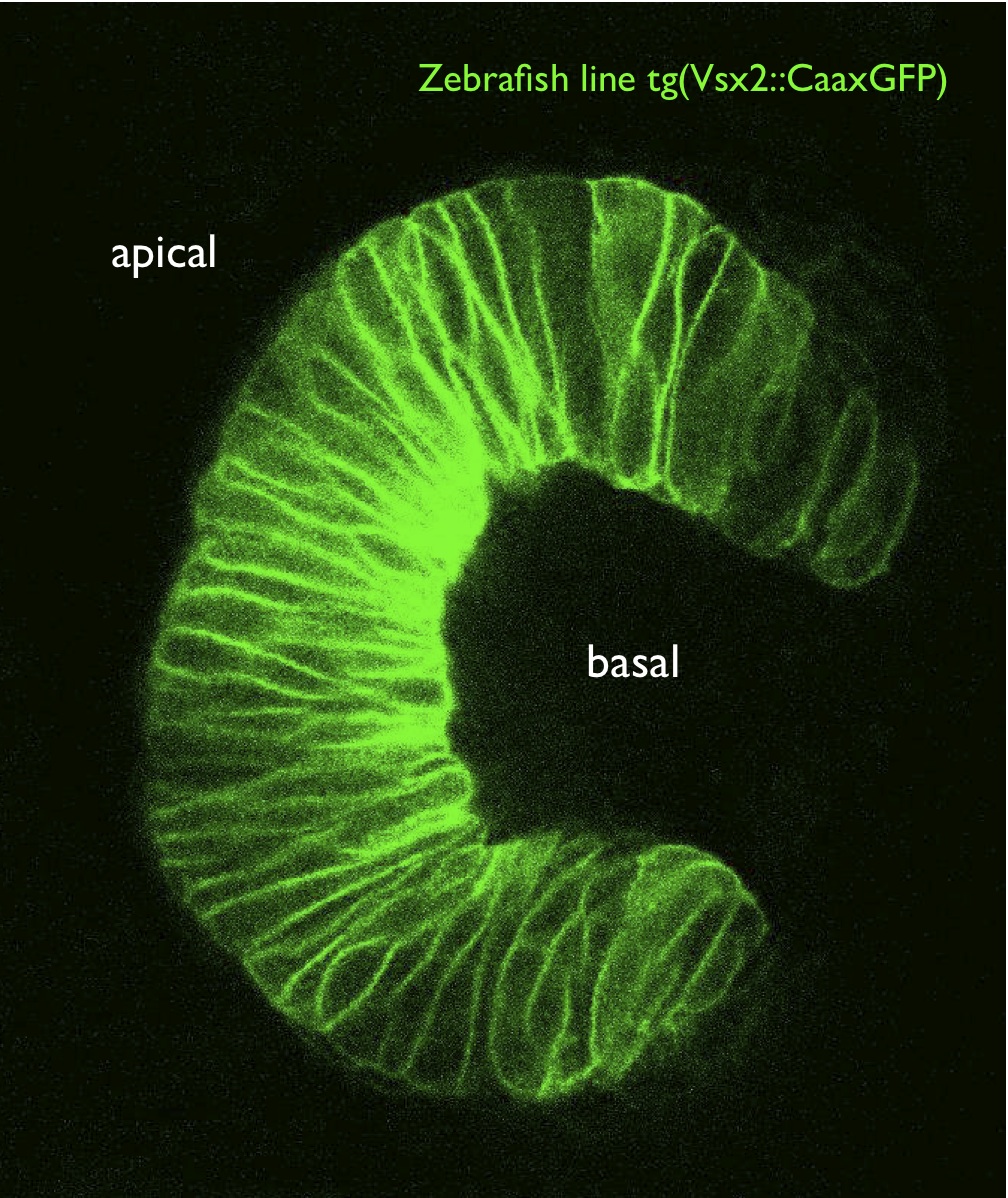
The research project focuses on the morphogenesis of the optic cup as an epithelial model to identify key effector genes that determine cell and tissue architecture in zebrafish. By RNAseq analysis, we have identified some of these effector genes operating on basic cell properties such as: cell-adhesion, cell-contractility, and cytoskeletal organization. Investigating their role on epithelial cell geometry is now our objective. To this end we will use a combination of CRISPr/Cas9, live-imaging in zebrafish and gain and loss of function experiments in MDCK cysts.
Gago-Rodrigues I, Fernández-Miñán A, Letelier J, Naranjo S, Tena JJ, Gómez-Skarmeta JL, Martinez-Morales JR (2015) Analysis of opo cis-regulatory landscape uncovers Vsx2 requirement in early eye morphogenesis. Nat Comm. 6:7054
Tena JJ, González-Aguilera C, Fernández-Miñán A, Vázquez-Marín J, Parra-Acero H, Cross JW, Rigby PW, Carvajal JJ, Wittbrodt J, Gómez-Skarmeta JL, Martínez-Morales JR (2014) Comparative epigenomics in distantly related teleost species identifies conserved cis-regulatory nodes active during the vertebrate phylotypic period. Genome Research.24(7): 1075-85
Bogdanovic O, Delfino-Machín M, Nicolás-Pérez M, Gavilán MP, Gago-Rodrigues I, Fernández-Miñán A, Lillo C, Ríos RM, Wittbrodt J, Martínez-Morales JR (2012) Numb/Numbl-Opo antagonism controls retinal epithelium morphogenesis by regulating integrin endocytosis. Developmental Cell. 23 (4)
Candidate Requirements: We are seeking for highly motivated candidates with excellent publication record and a background either in Cell or Developmental Biology. Previous experience with zebrafish, MDCK cultures, or CRISPr technologies is not an essential requirement, but it will be considered positively.
Interested candidates should send a letter of interest, a CV and contact information for 2 referees before December 20, 2015 to: Juan R. Martinez-Morales: jrmarmor@upo.es
Starting early: How can we make more out of graduate school?
In the long and winding road of a scientific career, graduate school is a benchmark and a springboard for days to come and how high we “jump” clearly depends on a variety of factors. Yet, it seems that some of them are entirely unrelated to our experimental results, nor taught in the many years we spend on the bench, in the lecture hall, or in front of our computers. How can we to improve the guidance of our mentors to better fit our personal needs? How should we initiate and maintain a successful collaboration? What can we do to improve the presentation of our work in meetings or publications? Is it possible to be productive graduate students without letting it take over our lives? How should we find a new lab for our rapidly approaching postdoc? According to the physicist and author Evelyn Fox Keller (Keller, 1996), there is an invisible equation stating thatscientific = logicaland thereforeemotional = non-scientific. Does this leave less room for ‘soft skills’ (See box A) in science? Much is discussed about ‘The Researcher’s Toolkit’ as the sum of methods and techniques practiced by a scientist, although it appears that far more is needed in order to become a successful and happier one.
On February last year, we attended a scientific meeting that was held on the peaceful shores of the Dead Sea. After a long day of lectures has ended, we enjoyed an informal lecture by Prof. Uri Alon from the Weizmann Institute of Science (WIS), who presented several topics related to nurturing scientists (Alon, 2009). It was then that we first heard about the ‘Young PI Forum’ (Milo and Schuldiner, 2009) . The idea behind this group, explained Prof. Alon, is to nurture young principal investigators (PI’s) and help them face the various challenges of the first steps in their independent careers. “Why not start earlier?” we thought; but are we putting the cart before the horse? Clearly, dilemmas concerning topics such as mentoring or hiring research students are not relevant to us, yet. Thinking about this possible adventure, several questions occupied our thoughts, such as are there any advantages for starting early? what are the unique requirements of graduate students, when compared to undergraduate students, postdocs or young PIs (Milo and Schuldiner, 2009), and how will these in turn reflect on such a peer group?
Every step in our scientific training has its own features. During graduate studies, we begin to shape our identity as independent scientists and our voice is starting to be heard. We gradually learn how to lead projects, initiate collaborations, read and criticize the scientific works of others and, finally, decide if and where to train as postdocs. On the other hand, in many aspects we are not yet fully ‘ in charge’. We are still significantly dependent on the guidance, approval and support of our supervisors and we have many questions about the academic world and our place in it. Identifying these unique characteristics has enabled us to start designing our own peer group, in terms of goals, needs, format and especially the case studies for our discussions. Looking back on more than a year of activity, we can say that the ‘WIS Graduate Peer Group’ has helped us find inspiring solutions, a fresh point of view and great support in the traditional, yet slightly forgotten concept of “the power of the group”.
–
More than just a group of friends: A DIY recipe
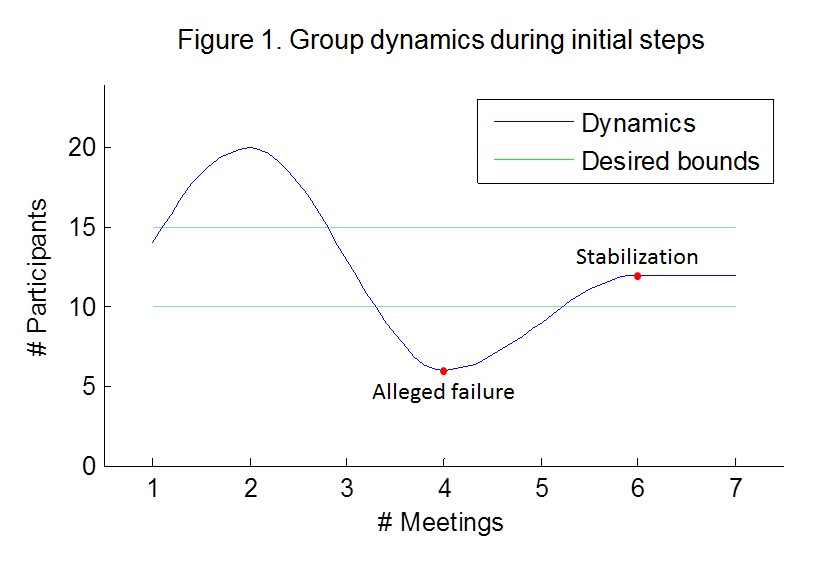
Our main objective was to establish a group with an intimate and interactive atmosphere, enabling a dialogue over the various challenges and dilemmas we encounter during graduate school. As this is uncharted terrain, initiating this activity in graduate school may pose a variety of challenges; the main one is of course creating and maintaining a committed and steady discussion group. As this type of activity is unfamiliar to graduate students, therefore, when we started ‘recruiting’ students around campus, reactions ranged from suspicion, skepticism and fear of sharing, to enthusiasm and excitement. Prepare yourselves for the possibility that in the beginning, there might be meetings attended by no more than a handful of people. Knowing this in advance will help to alleviate the frustration from the alleged failure and will keep you going until the group starts to stabilize (Fig. 1). When such a group performs its first steps, it is perfectly natural that some participants will not relate to this type of activity and will clear their seats for new members. Eventually, the group will converge to its final size and composition. Additional challenges were acquiring the consent of scientists to attend as guest speakers, and getting faculty financial support for funding of management courses, refreshments, etc. Notably, we enjoyed the friendly advice and opinion of experienced researches at our institute, especially in our first steps. Therefore, we recommend looking for researchers from your faculty with which you can share some of your questions and challenges.
After extensive trial-and-error during the last year, we wish to present a few ground rules we found to be useful. Several features of the group, such as the recommended number of participants, format of meetings (e.g. discussing dilemmas vs. teaching a skill) and the role of the coordinators, were inspired by known models of discussion groups (Klein and Lande-Diner, 2011; Milo and Schuldiner, 2009). Therefore, we will focus mainly on the lessons we have learned from our own experience and the adjustments we made accordingly.
Confidentiality: Although it is not unique to our group, this is the most important guideline we would like to offer. In this forum, members share their private thoughts and intimate experiences; therefore, maintaining absolute discretion among members is critical. It is necessary to stress this point and to create an atmosphere that will promote gradual building of trust.
Participants: The meetings require intimacy and therefore it is preferred that the number of participants will range between 10-15 students. Consequently, inviting every graduate student in the faculty is not advisable, as more applicable for the young PI forum (Milo and Schuldiner, 2009). In order to obtain a wide spectrum of opinions, try to diversify the group in terms of stages of graduate studies, gender etc. Furthermore, since personal dilemmas raised in discussion often involve lab mates or supervisors, we would advise to avoid the participation of multiple members from the same lab.
Guest lecturers: Every third meeting we invited a guest speaker, who can be a group leader, an expert in a certain field, or any other person of interest. We found that an open and informal discussion between graduate students and PIs was extremely fruitful, enabling us to discuss issues we typically wouldn’t feel comfortable raising in front of our own advisors. These meeting were dedicated to a wide variety of topics, ranging from professional skills, such as “How to write a good scientific paper” with Prof. Eran Segal, to nurturing ‘soft skills’ by getting acquainted with the “The impostor syndrome” with Dr. Maya Schuldiner (see box B). In other meetings, we had an opportunity to discuss “The passion in science making” with the Nobel laureate Prof. Ada Yonath, and learn about how scientific paradigms rise and fall (Kuhn, 1996) in a meeting with Prof. Yadin Dudai.
Online forum: A private online forum enables members to continue the dialogue after the session, keep records and upload materials relevant to recently discussed topics. In addition, the forum informs members about upcoming meetings.
–
From a dilemma to a solution – a few case studies
During the passing year, we discussed fascinating dilemmas and topics, which we would like to share as case studies.
‘Managing up’:An honest confession: as graduate students, we like to complain about our advisors, and quite often. Our mentors are either rarely around or they burden us with frequent meetings, scarcely guide us or limit our independence, overly strict and organized or unpredictable and chaotic – you name it. How hard can it be for a world leader in cancer research to handle ’straightforward‘ tasks such as mentoring, nurturing us to become independent scientists and, on top of these, have perfect social skills? Is that really too much to ask?! We often tend to assume that to be an advisor is to miraculously acquire all the skills of advising. But when we think of it, our supervisors are just like us, only several years ahead. Discussing this topic in our peer group has yielded interesting practical advices, along with valuable support. Based on a few case studies, we would like to offer some suggestions on how to make the most of the challenging “student- advisor” relationship.
Our discussions related to personal interactions and communication, constructive feedback and criticism, effective meetings with the supervisor etc. We found that in order to relieve ‘communication tight spots’, we first needed to define what we wanted. In other words, instead of expecting our advisors to know what we lack, we should merely ask for what we need. This is sometimes easier said than done, but it’s worth the try. For instance, while asking for comments on a written paper, one student described criticism by the supervisor as vague remarks muttered on the way to the coffee machine, whereas another student mentioned that the returned manuscript seemed like ‘pages over pages of a tick-tac-toe tournament’ with red ink. Can this be improved? For example, if we wish for specific feedback on the ‘Results’ section, sending the entire text and asking for an opinion might be counterproductive. However, it would be useful to meet beforehand and discuss the general direction before submitting the complete work to our advisor. This brings us to our next topic, properly organized meetings.
Our mentors are busy; no surprise there, but this only means that we ought to be more persistent. Regular meetings with our supervisors are pivotal to the success of our studies for obvious reasons, such as getting good advice, better focus and avoiding unnecessary mistakes. By ‘meeting’ we mean one-on-one sessions; group meetings or random discussions are no substitute. Furthermore, the more familiar our supervisors are with our work, the more likely they are to be interested in it, to further read, think about and present it, as well as to learn how we think and work. Therefore, describe to yourself what you want to achieve from an upcoming meeting and come prepared. We found that a simple and well-defined target may work better than an overwhelming flood of topics and data.
How can we lead when we are not in charge? Or in other words, how can we ‘manage up’? (Kearns and Gardiner, 2011). To most of us, there comes a point in our graduate studies when we realize that the responsibility for our research, lies mostly on our shoulders, along with the enjoyment of practicing it. Our supervisors possess a range of good and poor qualities. We have to benefit from what they have to offer; and when we are not content, learn how to guide them to better fit our needs, or find alternatives elsewhere (such as consulting mentors that are not our PIs). The qualifications and traits that will help us become world leaders in cancer research are not necessarily those that will make us good mentors. However, exercising these often-neglected aspects during graduate school, for instance by guiding other research students, may provide an early start for acquiring and improving mentoring skills.
‘Searching for a postdoc position’:Choosing a lab for postdoctoral research is tough, really tough, and probably one of the most significant and difficult science-related decision we have to make. As graduate students, we have spent the last several years gaining expertise in our field. We know by now what the leading labs and central paradigms are; no doubt, valuable knowledge. But what if we change direction? There are so many questions to answer in a very short time. Which topic should I choose, and how do I do it when there are so many I hardly know anything about? How do I compose a list of potential labs and make my visits as effective as possible? This decision is very personal, as it is based on one’s personality and scientific interests. Nevertheless, discussing this topic in our meetings has proved highly useful. First, realizing that we were not alone and that it was just as hard for everybody else was comforting. Furthermore, it has enabled us to identify common ground rules that can help us all on this route. These helpful tips have been drawn from the personal experience of members that were searching for a postdoc position at that time, as well as from the experience of visiting young PIs. In the following section, we will share some of our collective dilemmas and the insights we have gained by discussing this complicated decision.
Choosing the topic for a postdoc is a rare opportunity for scientists to completely change their field of research. We found that toward the end of our graduate studies, it was useful to step out of our niches and to expose ourselves to a wide range of topics unrelated to our research. For instance, although most of us have by then accumulated the required credit points, taking some courses (even as a free auditor) was a great way to start. Reading articles and going to lectures and meetings outside our field is also recommended. Once we had several directions in mind, we consulted with researches in relevant fields (in our university or in neighboring ones) regarding potential postdoc labs. We prepared our own list of candidate labs, as well as asked for advice and recommendations regarding others we might have missed.
There are many other personal aspects to consider besides the research topic. For instance, whereas some of us preferred a big and established lab, others looked for a smaller lab likely run by a younger PI (both options have great advantages). Other considerations, such as where you (or your spouse) would want to live, and even seemingly trivial factors such as the climate, may be taken into account. We tried to inquire as much as possible about the labs before we applied; former or current postdocs from the lab or the department may provide valuable information. When we wrote our letters of application, we made sure they reflected the fact that we had carefully studied the lab. If you don’t get an answer, don’t take it personally; we learned that persistence could be rewarding, as sending an additional mail or have a mutual acquaintance introduce you can make all the difference.
The ‘tour’ itself can be quite stressful. From our experience, visiting more than four or five labs in a single trip might be a bit overwhelming; if possible, it is better to make two trips instead. Keeping that in mind, in order to facilitate this costly endeavor, try to look for funding sources, such as traveling grants, and ask for assistance from the labs you are visiting. In preparing your talk, don’t forget that your crowd might not be familiar with your scientific discipline. Therefore, try to present your work as a story that would be interesting and accessible to a broad audience and try to rehearse your talk in front of a mixed crowd as well.
The chemistry with your future PI is perhaps the most important aspect to consider – don’t compromise! This was emphasized repeatedly by postdocs and young PIs that were guest speakers in our group. Furthermore, there are important practical matters that you should discuss with your future mentor, such as financial support, grants, your family etc. Make sure to ask the lab-members questions about issues that are important to you, preferably outside the lab or over lunch. What are the PI’s strengths and weaknesses? How available is he/she? Are there collaborations among the group members? What are the expected working hours? As long as you ask politely, it is completely OK. Listen carefully to criticism you hear and don’t ignore it, since it is likely to be true. Finally, don’t forget that although you will try to impress people in your visit, they should impress you just as much.
Looking for a postdoc position is hard, and doing it alone and without guidance is even harder. Although this might feel like preparing for a military operation, don’t let these challenges spoil the fun and don’t forget to enjoy it. It is essential to keep in mind that the postdoc period is a great opportunity to grow, scientifically as well as personally. If we don’t enjoy the journey by fulfilling our scientific curiosity, expressing our creativity and originality, then what are we doing it for?
–
Conclusion and next steps
Graduate school is a wonderful period, during which we ask questions and obtain the tools needed to reveal the secrets of nature. This period is also well known for its diverse range of challenges, stresses and frustrations. It was fascinating to realize how common these are among our colleagues. As scientists, studying the literature or discussing our results with our peers seems practical and almost obvious. We think that a similar approach can and should be applied to ‘non-scientific’ aspects of our everyday life as graduate students. Along the same line, this concept may very well be relevant for earlier academic stages, each with its own characteristics. One of our main goals in forming the ‘Graduate Peer-Group’ was to address these somewhat neglected aspect of our education as young scientists; Such as getting familiar with relevant psychological theories (e.g. ‘the imposter syndrome’), techniques for personal interactions (e.g. soft skills, ‘managing up’), practical information and sharing of experience (e.g. finding the right place for postdoc training), combined with the support of our peers and friends.
The described set-up was previously shown to be successful for young PIs. With the proposed modifications, we show its great potential for graduate students. We hope our experience will serve as an example, demonstrating the central role a peer group can play during graduate school and assist in initiating it. Excitingly, by word of mouth, the Graduate Peer-Group idea has spread. Currently, similar groups are being established in several places, including the Sheba medical center and the Tel-Aviv University. We believe that such programs should be encouraged and supported, possibly as an integral part of the syllabus. In case of high demand, multiple peer groups can operate in parallel at the same institution, ideally with formal assistance, such as management courses for the coordinators. Initiating such programs will provide a source of knowledge and support, and prepare us for a future independent career, when we will guide our own students.
Our experience in the peer group also demonstrated the importance of soft skills. Classic “hard science” disciplines, such as medicine, science and engineering, are often bound to traditional professional behavior models. In some aspects, these models might find themselves at odds with the diverse interpersonal interactions required in today’s workplaces. We think that developing soft skills through educational and professional enrichment activities, such as the peer-group also puts us responsible for confronting our current challenges as graduate students, as well as to our own career development. Therefore, addressing and improving these skills in graduate school should not be considered as ‘too early’ – but rather ‘just on time’. Finally, mastering these ‘non-scientific’ aspects of our everyday life means that, by relieving unnecessary frustrations, more time and energy would be devoted to creative science – making us happier as well as better scientists.
–
Box A – Soft skills:
This sociological term, also known as “people skills”, refers to a set of personal traits and social abilities, allowing someone to effectively interact with other people. Soft skills relate to a person’s “EQ” (Emotional Intelligence Quotient), and considered essential to both personal and professional success by complementing hard skills which is more associated with a person’s IQ. In a job-related environment as well as in the scientific world, soft skills are valuable (and can be nurtured and improved) in a variety of aspects (Heckman and Kautz, 2012), such as scientific presentations, conflict resolution and collaborations, in building a successful research team etc’.
–
Box B – The imposter syndrome:
The impostor syndrome (Clance and Imes, 1978; Felder, 1988; Laursen, 2008) is a psychological phenomenon in which people, despite their evident competence and recognition by their peers, are incapable of internalizing their own success and accomplishments. This syndrome is not limited to scientists or the scientific community, and those with it feel as frauds which do not deserve the success they have achieved. Interestingly, any proof of success is regarded as sheer luck, timing, or as a result of misleading others into thinking they are more intelligent and competent than they believe themselves to be. The term was coined by clinical psychologists Pauline Clance and Suzanne Imes in 1978, and although not an official psychological disorder, it has been discussed in of many books and articles by psychologists and educators.
By Tomer Stern, the skeletal development laboratory of Prof. Elazar Zelzer, Department of Molecular Genetics, Weizmann Institute of Science, Israel.
Proper shape-size relation is essential for the function of all organs and organisms. Thus, one of the key challenges shared by developing organs is the adjustment of physical dimensions to the massively growing body, known as scaling. There are two basic modes of scaling: isometric, in which the physical proportions are maintained throughout growth, and allometric, in which the proportions undergo changes. A well-known example for the latter is the change in relative size of the human head from early infancy to adulthood. Despite the fundamental importance of this phenomenon, our understanding of the mechanisms underlying scaling is surprisingly limited.
The question
In a Walt Disney cartoon, bones are typically depicted as smooth cylinders with a round joint popping at each end. However, it only takes a quick glance at a 3D micro-CT image of a bone to realize how complex and unique the morphology of each bone is. Much of this complexity is due to the existence of various asymmetrical protrusions located at specific positions along the bone, which allow the attachment of muscles and the formation of complex joint structures. As such, the specific position of these protrusions directly dictates the ability of the organism to control the movement of the bone while chasing prey or escaping from predators, as well as the mechanical efficiency of movement. Thus, any inaccuracy in the positioning of protrusions during development is likely to significantly compromise motility. Interestingly, although the average bone elongates by more than 5 times during development, its protrusions constantly remain in the same relative positions, to say, long bones scale isometrically. However, since bones are rigid organs that elongate only from their ends, the question is: How is the relative position of each protrusion between the two ends maintained during growth?
The answer
Our starting point for addressing this question was a prevalent hypothesis proposed more than 60 years ago. In an iconic work, Nigel Bateman1 argued that bone protrusions continuously drift along the bone, as they are destroyed and rebuilt by bone-absorbing and bone-depositing cells. As this hypothesis offered a straightforward mechanism for regulation of the longitudinal position of protrusions, we saw it as an elegant way to explain how long bones scale isometrically. Filled with scientifically inappropriate optimism, we were on the direct track to solving our enigma!
To do so, we generated a massive database of 200 three-dimensional micro-CT images of long bones, ranging from early developmental stages to adulthood. Then, to allow proper comparison between the morphologies of all bones, we developed an automated computer algorithm that accurately aligns all imaged bones to one another. Lastly, we documented the exact physical position of each protrusion in each bone at each time point. Under these settings, any change in the position of a protrusion over time would indicate that it has undergone drift, as predicted by Bateman’s hypothesis. Yet, to our surprise, most protrusions drifted very little if at all. Rather, bone shape was maintained by a completely different mechanism.
The right answer
As mentioned, the rigid bones elongate solely from their ends. The driving force behind elongation is a thin layer of cartilage called the growth plate, which is composed of chondrocytes that undergo a well-defined differentiation program resulting in their replacement by ossified tissue. Without prior knowledge, it would be reasonable to assume that the rate at which each growth plate lengthens the bone is the same at both ends. However, the interesting fact is that each of the hundreds of growth plates in our body has a unique growth rate. The first indications for this variability have been provided almost 300 year ago. However, the developmental rationale behind it and the biological code that determines the specific activity rate of each growth plate have remained open key questions in the field of skeletal biology.
Our finding that the relative positions of protrusions are kept throughout development without drifting has led us to hypothesize that the balance between the rates of growth at the two bone ends may be the mechanism that underlies isometric scaling. This may happen if when a protrusion is much closer to one end of the bone, that end will grow more slowly, while the opposite end will grow more quickly. In this manner, no matter how much the bone increases in size, the protrusion will always maintain its relative location. Such a growth ratio-based mechanism would render drifting unnecessary. To test this hypothesis, we constructed a mathematical model for the relation between the balance of the growth rates and the relative position of protrusions. When we fed the model with real growth data, it predicted the positions of non-drifting protrusions and the rate at which drifting protrusions moved with striking accuracy, thus providing strong support to our hypothesis. Lastly, through additional mathematical analyses, we showed that the newly discovered mechanism also minimizes the total drift activity of each bone during development. As the mineral deposition and absorption that occur during drift are assumed to be highly energy consuming, this finding suggests that the mechanism we have discovered follows the energetically optimal path for achieving the challenging goal of isometric scaling of developing bones.
My name is Helena, and for the next few months I’ll be helping to run the Node, while Cat concentrates on other projects to make the Node even better! I am Spanish, but I moved to the UK five years ago to study Biochemistry. I am currently doing my PhD in Alfonso Martinez Arias’ lab at the Department of Genetics in Cambridge: I use mouse embryonic stem cells to study patterning in the embryo, and to try and elucidate how different signalling molecules coordinate this patterning during gastrulation. My PhD programme (the BBSRC DTP in Cambridge) includes a PIPS (Professional Internship for PhD Students, you can see some discussion on these internships here), and this is how I came to the Node.
Although I trained as a biochemist, my passion is in developmental biology. While I find work at the bench (or in the hood) incredibly fulfilling, I also love discussing science. A good conversation about science can be inspiring, eye-opening, but most of all, great fun. Good science becomes even better when it’s well communicated, and part of my reason for doing my PIPS at the Node was the opportunity to help a community exchange views, opinions and news about a field I really enjoy. I want to help the community grow and keep sharing research at the very highest level, so please keep posting and getting in touch with any suggestions and comments!
I’m Cat Munro, a third year PhD Candidate in Casey Dunn’s lab at Brown University. The Dunn lab has an even split of lab members that work on the evolution, development, and systematics of siphonophores, and members that focus on building tools and phylogenetic methods, with an eye to understanding the relationships at the base of the animal tree.
So what are siphonophores, and why would anyone study them?
Siphonophores
Siphonophores are cnidarians, more specifically, they are found within the clade Hydrozoa. Like many other hydrozoans they are colonial, reproducing asexually to produce a colony of clonal, physiologically integrated, and physically attached bodies. However they have such a high degree of physiological integration that we consider each of these ‘bodies’ (termed zooids) to be homologous to a solitary, free living individual (think of a solitary polyp, like Hydra or Nematostella). Each of these zooids is also functionally specialized, and show a division of labour – some zooids are specialized for locomotion, others for feeding, reproducing, digesting, protecting and so on. As a lab, we study siphonophores in order to understand the evolution of this type of functional specialization.
This siphonophore species is found locally off the coast of Rhode Island. Siphonophores consist of a gas filled float (top left), swimming bodies (directly below the float), and a series of feeding, defensive, digestive and reproductive bodies (arranged on the stem below the swimming bodies). Photo credit: C. Munro
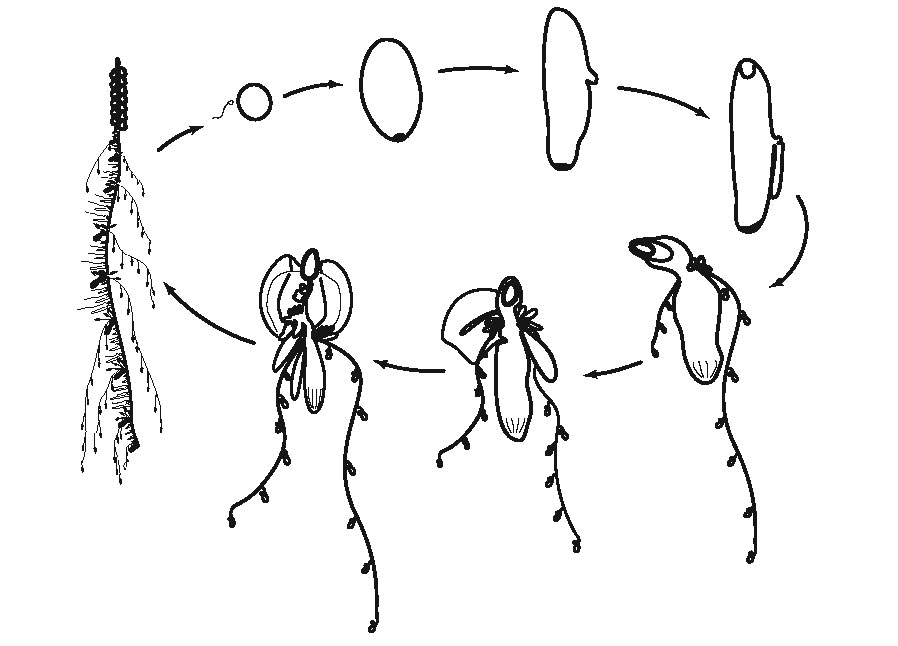
There is a sexual phase in the life cycle, where fertilized eggs develop into a primary feeding zooid with a gas-filled float, that subsequently forms two growth zones (in some species there is only one). The growth zones are the site of asexual budding. In most species the zooids are produced from a single probud, that subdivides further to form various zooid types along the stem. The zooid types are always produced in the same reiterated sequence. What’s great about this form of development is that we have access to an entire ontogenetic sequence along the stem of the colony, with the oldest zooid at one end and the youngest probud at the other end in the growth zone. Additionally, because the organization is highly organised and predictable, we always know the zooid identity of each bud in the growth zone.
The lifecycle of the siphonophore Nanomia bijuga. From fertilized egg, to planula, to a siphonula larva with a primary feeding polyp, tentacle and gas filled float. Finally a fully formed “polygastric” siphonophore. Credit: FreyaGoetz, wikimedia
A typical (field) day
A typical day in a siphonophore lab might include time at the bench working up samples for sequencing or time at the computer working on data analysis. We also spend time on the microscope working with fixed and stained samples. However, these late Summer/Fall field days provide us with hundreds of samples that last for months until we get back out to the field in the spring and summer.
0430: The alarm clock rings. After a few minutes feeling disorientated by the early wake up, I remember – it’s dive day. I get up, throw on my swimsuit and clothes, and make a quick breakfast.
0500: Just before heading out the door, I check the marine weather forecast. We check the weather a lot in the days before a field day. If the wind is blowing faster than ~25 knots and wave height is higher than 5 ft/1.5 m, then it becomes harder (and even dangerous) to get in the water and collect specimens. The seas were rough the past few days, but the weather looks good, so I jump in my car.
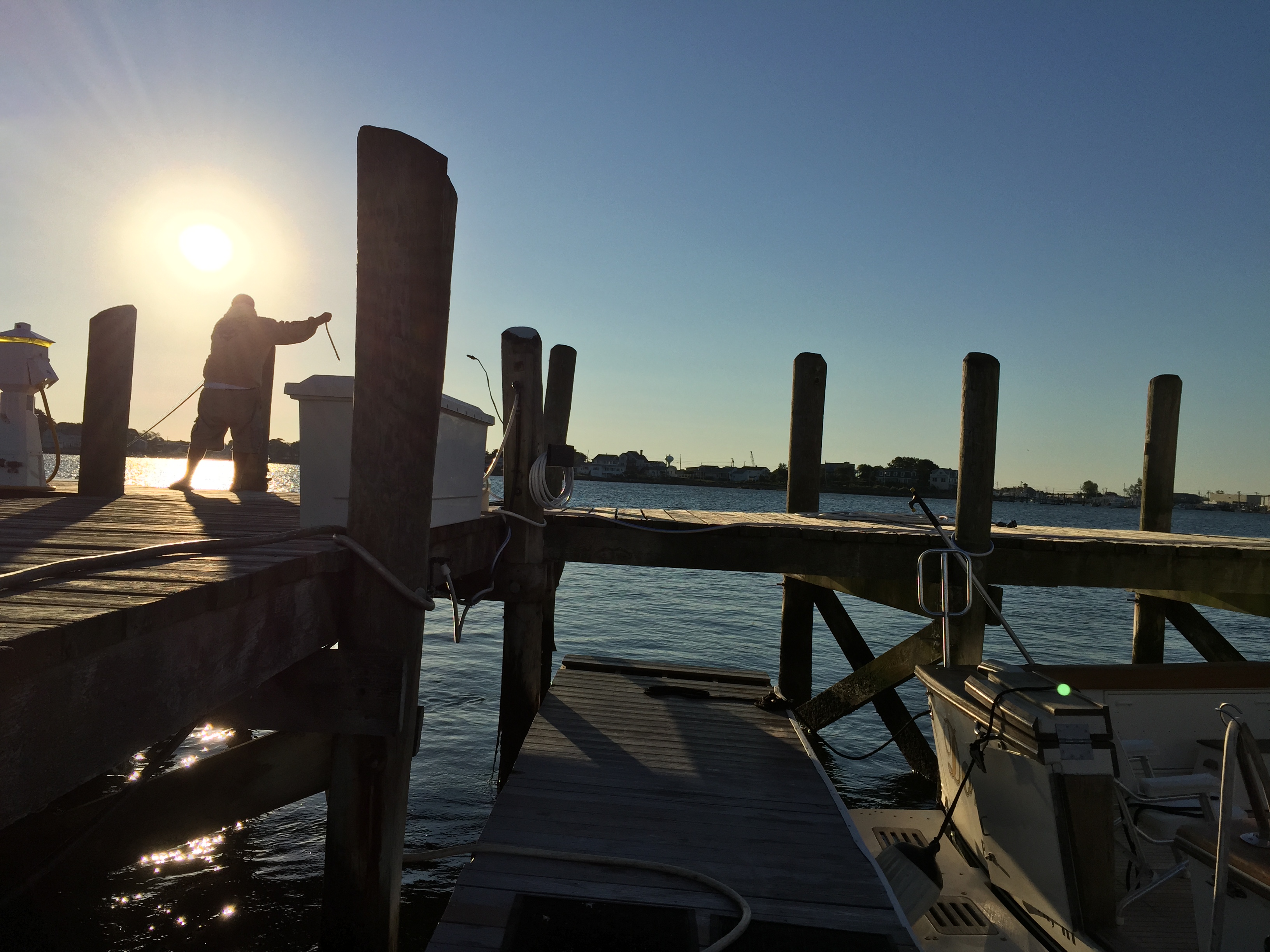
0630: I arrive at Point View Marina, South Kingston, Rhode Island. The sun is rising, and a few fishermen are already starting up the engines of their boats, coffee in hand, to start a day of fishing. The dock poles here are adorned with billfish bills and tails from other successful fishing expeditions.
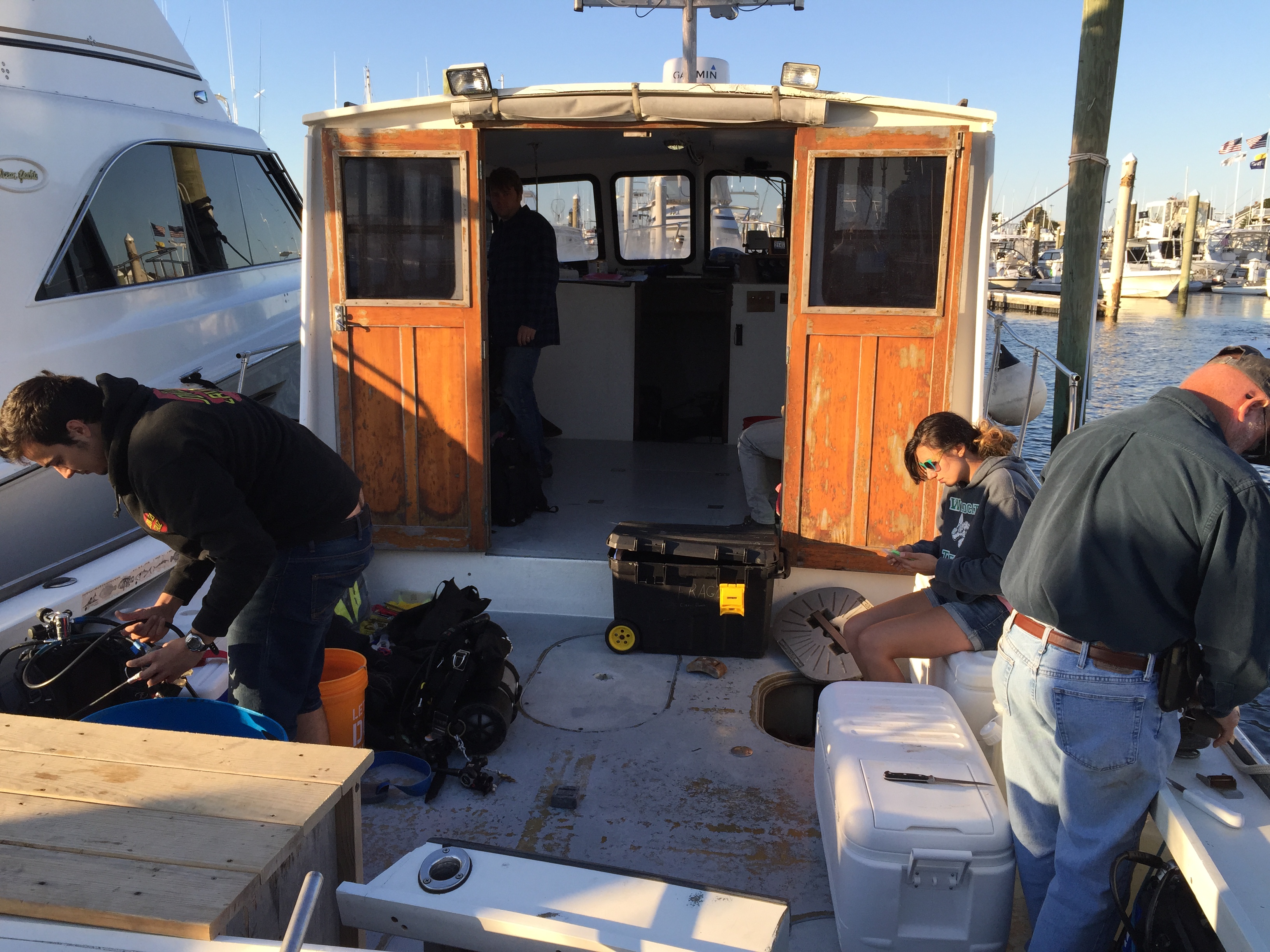
Along with the rest of the lab, we empty the truck and load up the boat with our equipment (coolers with plastic collecting jars; buckets and a plankton net; dive gear and tanks).
Early morning at the marina. Photo: C. Munro
0700: The Captain gets the engine going and we leave the dock. The boat slowly makes its way out into Point Judith Pond, a well sheltered body of water that opens out into Block Island Sound. To our right, we pass sleepy vacation homes, some still occupied by a few holdouts at the end of summer; and to our left, a large fishing vessel is docked in the port of Galilee, where among a flurry of seabirds, fishermen are already unloading the day’s catch.
As we leave the relative calm of Point Judith Pond, the waves are higher and the boat speeds up. We settle into our seats, we have a few hours until we reach our destination.
~0900: The engine cuts. The captain has been waiting for the waters to get bluer, and perhaps also some indication of a scattering layer in the sonar. We check the water to see if we can see any gelatinous organisms below.
All the divers start to gear up, and in the meantime our other lab members fill the collection jars. The jars are prefilled with seawater, without any bubbles, so that there aren’t any issues with the pressure at depth crushing them or making them hard to open. They are loaded into mesh bags that the divers can clip on to their buoyancy control device (BCD).
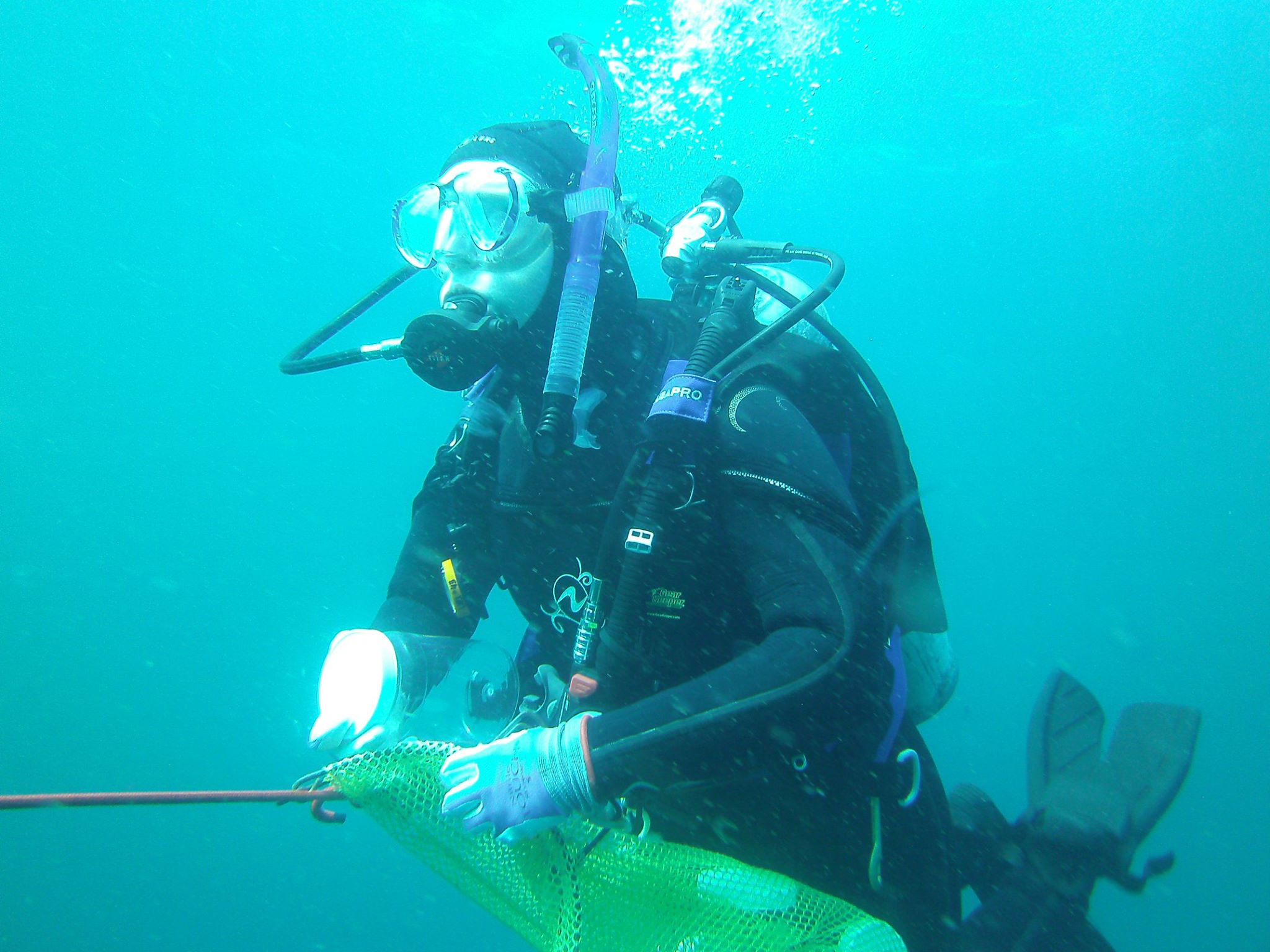
0930: We get into the water. The type of diving we do is called blue-water diving which, due to some of the unique issues related to diving in the open ocean with no seafloor in sight, requires special procedures. We need a constant connection to the boat, and so we use a slightly weighted ‘down line’ that connects to a buoy and then to the boat. Each of the divers are connected to their own tethers that are attached to a loop of metal called the trapeze. The trapeze can be clipped onto the down line at any depth, and each of the divers can then spread out to collect our specimens. One diver is the ‘safety diver’ and stays near the trapeze and the down line and keeps an eye on all of the divers.
Blue water diving is unlike any other diving experience. Without the seafloor as a frame of reference, it can be quite disorientating, and it is possible to shift depths quite rapidly (this is part of the reason for the tether system). On a sunny day, when you look down, you can see shafts of sunlight that extend down and gradually fade into a dark blue. Sometimes there are Sapphirina copepods below us that flicker back blue light from their skin as they move; against the background of the darker deep water they look like shimmering stars. It’s beautiful, but unless you’re the safety diver, you don’t have much time to take it in. We’re on a mission to spot and catch siphonophores, and today it isn’t hard – they’re all around us, alongside several species of ctenophore, various hydromedusae, and pteropods. It’s a gelatinous soup.
Catching siphonophores can be hard. They are largely transparent, and in very clear waters you often need to angle your head to catch the right angle of light, or use the dark suits of your fellow divers for contrast. We catch our specimens by opening the lids of the jars and gently swirling the animal into the jar. Sometimes before you collect, you have to poke them gently so that they retract all their tentacles.
Ready to collect samples on the dive with a jar and collection bag in hand. Photo credit: A. Damian Serrano
1030: The dive is over. We’ve gradually made our way up the down line from 60ft, and once our air reaches 500 PSI, we take a safety stop and ascend. Usually the limit is not air, but the number of jars, and by the end of the dive we are checking our samples and evaluating whether it is worth abandoning one sample and collecting a particular species. Back on the boat, we check our haul. Based on numbers, we reassess which species we should collect on the next dive. The jars are loaded into the coolers with some ice packs to keep them cool, and more jars are filled with seawater for the next dive.
1100: We get back in the water and descend to 60ft. Sometimes we find that even though we are roughly in the same location, the patch of water can change slightly, and we see slightly different species assemblages to the last dive. Sometimes even within a single dive, if there is a reasonable current, we can see very different species throughout the dive.
1200: We finish up the dive and get back on the boat. We load up the last of our samples, grab a few carboys of water from the site, quickly change out of our wetsuits, and pull the lines out of the water. Within 30 minutes or so, the captain fires up the engine and we head back towards the marina. Generally we are exhausted after the dives, so we eat our packed lunches and fall into a deep sleep until the boat pulls back into the dock.
1500: The boat is back in the dock and it’s time to unload. Everyone has just woken up from their naps, so we stop for a quick coffee on our way back to lab.
On the boat getting ready to go out. Photo: C. Munro
1600: Back in the lab, we do our final counts of different species and transfer our samples into the incubator. We need to work out the fate of each of the samples for various projects: some of the samples are frozen for phylogenetics, differential gene expression studies, and also fixed and stored for in situs and immunostaining. Most of the samples need to be processed the next day, but others need to be processed right away.
Along with a fellow grad student, I spend a few more hours in the lab processing samples for various projects.
2200: Finally home! Once I rinse off all of my dive equipment, I can finally shower and clamber into bed. I’ll sleep well, but not for too long – there are more samples waiting to be processed in the morning.
This post is part of a series on a day in the life of developmental biology labs working on different model organisms. You can read the introduction to the series here and read other posts in this series here.



 – An interview with Mike Levine featured on the Node this month.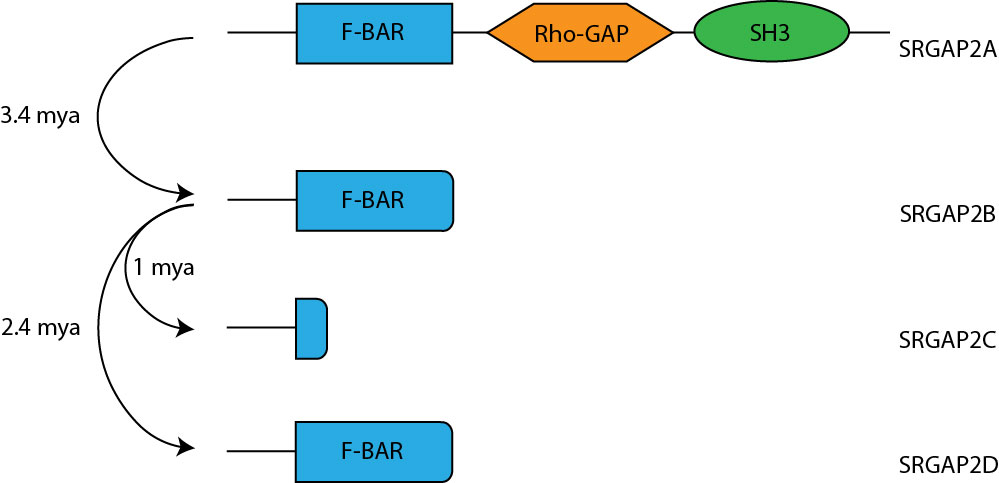
 My name is Helena, and for the next few months I’ll be helping to run the Node, while Cat concentrates on other projects to make the Node even better! I am Spanish, but I moved to the UK five years ago to study Biochemistry. I am currently doing my PhD in Alfonso Martinez Arias’ lab at the Department of Genetics in Cambridge: I use mouse embryonic stem cells to study patterning in the embryo, and to try and elucidate how different signalling molecules coordinate this patterning during gastrulation. My PhD programme (the
 This post is part of a series on a day in the life of developmental biology labs working on different model organisms. You can read the introduction to the series