DB, a large community of developmental biologists, is a highly collaborative interdisciplinary group of basic scientists and clinicians studying fundamental questions in developmental biology, the genetic basis of pediatric disease and regenerative medicine (http://www.cincinnatichildrens.org/research/divisions/d/dev-biology/default). Being embedded in CCHMC, one of the top ranking pediatric research centers in the world, creates a unique environment where clinical translation of basic science is greatly enhanced. CCHMC is making a major long-term investment in basic and translational research and developmental biology is a pillar in this effort.
DB faculty have access to state of the art subsidized cores, high-quality graduate and MD/PhD programs, and training programs for postdoctoral/clinical fellows, residents and clinical faculty. Successful candidates must hold the MD, PhD, or MD/PhD degrees, have recently completed postdoctoral training, published significant original work and have a mature research plan.
Applicants should submit CV, two-three page research statement focused on future plans, and contact information for three people for letters of recommendation to DB_devbiologists@cchmc.org by December 1, 2015.
CCHMC and the University of Cincinnati are Affirmative Action/Equal Opportunity Employers. Qualified women and minority candidates are especially encouraged to apply.
Wealth is not new. Neither is charity. But the idea of using private wealth imaginatively, constructively, and systematically to attack the fundamental problems of mankind is new.” – John Gardner
Philanthropy, derived from private wealth, stands unique as a vital source of scientific funding. Yet many scientists don’t truly understand the workings of this form of charitable giving. Some are even wary of it, and believe that a divide between the worlds of science and business is a normal state of affairs. My experience has exposed striking similarities between the two specialties: both dedicate their resources to innovation and the sincere desire to do good for their fellow man.
I’ve been lucky to work on both sides of the fence. I conducted research for my PhD at the Wistar Institute in Philadelphia, PA, and at Sloan Kettering Institute in New York City, NY, where I worked on the Id1 gene and its role in the molecular mechanism of mammalian cell differentiation. I later moved to the Pershing Square Foundation. In 2013, to support young investigators with bold and risky ideas in cancer research in the New York area, the Pershing Square Foundation partnered with the Sohn Conference Foundation to create the Pershing Square Sohn Research Alliance (PSSCRA). Since the organization’s founding, I have served as its Executive Director. As a result of my career experience, I understand firsthand the role of philanthropic support of medical research. I am always excited to work with new, young and innovative talent, and to introduce that talent into the social mainstream.
Philanthropy today: measuring impact
Philanthropy, like everything in this high-tech world, has changed dramatically in the past few years. There was a time when donors did not focus on measuring the impact of their gifts. Only a few individuals were wealthy enough to establish foundations and provide funds to build museums, programs and art collections. In today’s world, foundations strive to be part of the scientific solution, to provide money that goes to new advancements, such as the discovery of a new molecule. Of course, present-day donors have become increasingly more sophisticated in their expectations and want to see a return on their investment. They have a clear picture of the issues, and foundations and donors want to measure their impact.
One important way to measure impact is by observing whether the project scales up and leverages additional types of funding. More than ever, donors think in terms of business-model philanthropy when considering social investments. This model is not incompatible with that of science; the short-term goal of funding new basic discoveries is consistent with the long-term goal of a financial return stemming out of the commercialization of a new drug.
Philanthropy touts innovation and rewards risk
Philanthropists give money generously for a variety of reasons. Some examples include: The Civic-Minded Donor who seeks to help the community. He or she seeks out worthy causes and donates to them; The Foundation Donor has the money to start his or her own foundation, usually with specific interests in mind – health, social entrepreneurship, poverty or the environment; The Donor with a Cause raises money for a specific purpose. The Michael J. Fox Foundation for Parkinson’s Research, and The Breast Cancer Research Foundation are prime cases.
All these philanthropists are viable funding sources for scientific researchers. They offer dynamic alternatives to traditional resources. Although the United States is well known for having many private philanthropists (in my native France, by contrast, research funding is provided almost exclusively by the government), it functions under economic constraints that make private philanthropic money even more crucial. Philanthropy will not replace what the government does but, by its nature, can do things the government can’t or won’t. Bold, innovative projects need funding at the earliest stages.
The National Institutes of Health (NIH), the United States’ preeminent public source of scientific research funding, is traditionally risk-averse and regularly funds only incremental research. Budgeted at $30-billion per year, the NIH has, for the past 10 years, received no increase in its budget, and has had funding cut through sequestration. Consequently, it finances and rewards safe and predictable projects.
Conversely, foundations in medical research can fill a unique niche by supporting new and risky projects early on, understanding that the investment is more long-term.
Philanthropists and programs like the PSSCRA, are willing to identify the ‘budding’ scientist, the up-and-comer. In short, investing in the future leaders of the next generation.
Scientists should take risks: changing perceptions
The nature of scientific work requires solitude and isolation. Researchers work methodically, with great concentration. Their single-mindedness and sensitivity suit them well for exploration into molecular frontiers and, as a result, they are less exposed to the business and philanthropic worlds in the early stages of their career. In addition, the perceived dissimilarity between the worlds of science and business has for a long time led many researchers to hold a lingering skepticism of commerce. The need to collaborate and the changes in the funding landscape have altered this perception.
The scientist has many factors to consider when approaching funding sources. First, the NIH rewards safety and predictability. Knowing this, the scientist is often inhibited from submitting risky projects to the NIH. Next, scientists are rewarded by the quality and amount of publication. A risky project financed primarily by foundations, for example, is less likely to turn into a paper in the foreseeable future, which presents challenges to the traditional model of advancement and also inhibits the type of research that is done.
How to bridge the gap
It is imperative that we create other funding paths for scientists that enable them to push forward their boldest research. By creating the PSSCRA (‘the Alliance’), we are seeking to bridge the gap between scientists and the business and philanthropic communities in New York. We made it our mission to bring them together so that today’s scientists can take the risks needed to find the solutions for tomorrow.
The Alliance is based in New York City, which is a special place. So much talent is concentrated in such a little area, spanning many disciplines, the arts and business. Where but in New York City can the entrepreneur sit beside the artist, the scientist beside the captain of industry?
Leveraging the Alliance’s events, which are incredibly focused networking opportunities, the Alliance brings together scientists, leaders in industry, heads of large foundations and business community leaders. We take pride in creating these vibrant mentoring relationships and connections.
Building communities and networks around the scientists is one of the elements of success that we have identified as being crucial to their growth and exposure. Each one of our Prize Winners is paired with a mentor in the pharma or biotech industries. Thus, the three important pillars of our program are: (1) the selection of the scientists, (2) their match with a mentor, and (3) measuring the impact of this program. Ultimately, there’s nothing better than validation, and the new-model foundation offers it both professionally and socially.
Finding talented scientists
“To give away money is an easy matter and in any man’s power. But to decide to whom to give it and how large and when, and for what purpose and how, is neither in every man’s power nor an easy matter.” – Aristotle
When we instituted the Pershing Square Sohn Prize for Young Investigators in Cancer Research (now in its second year), the search began by reaching out to all the communication and development offices of every scientific research institution and university department in the New York area, placing banner ads in the most prominent and interesting scientific magazines, and sending personalized emails to chairs, heads of departments and individual scientists. “Spread the word,” we told them.
Ads in special-interest magazines and websites for specific groups are important. Even though our search is broad, this puts us on very specialized radars.
Every institution has a grant department, individual gift department or foundation organization that assesses needs and suggests funding options. We wanted to encourage each scientist who has an innovative idea to apply. We wanted a democratic process. And, even if they have funding for another area of their research, they might not have it for the innovative, risky idea.
In the first year, we received 64 applications. This year, we received 67 applications. We look at the quality of each applicant, the project’s innovative approach and its relevance in cancer research. After a first round of screening last year, we asked 28 applicants to return for full submission.
After the submission process, each application is reviewed by three experts in the field. The finalists present their work in a boardroom where the leaders in the field are present. This is unique exposure for our young innovators. Finally, we chose six Prize Winners in 2014 and another six in 2015.
The Prize Winners are then invited for individual meetings with a mentor in the pharmaceutical or biotech company. Mentors are exposed to research that they would not be otherwise. It’s a way for pharma and academia to exchange ideas and build on each other’s strengths.
For philanthropists, there is nothing more satisfying than to have personal contact with the individuals whom they are helping and to understand their needs better so that they can be more effective. Philanthropy is uniquely positioned to take risks. We want to identify future innovators. And so, our relationship to a grantee is very important. Non-profit organizations that raise money and do not give donors direct access to see what their money is doing are going to lose them. It’s satisfying to fund the future musical genius…why not the future Nobel Prize Winner? And, young scientists are excited to know they’re part of that prestigious group.
Times are changing. Technology has brought us closer and piqued our interest in all facets of life. Science and philanthropy are changing as well and share the common goal of providing our society with enlightenment. Now is the perfect time to bring these two attributes together.
The Uhlirova lab seeks talented, creative and motivated researchers to investigatehow alterations of the essential and ubiquitous process of pre-mRNA splicing contribute to tissue-specific degeneration and cancer. The project combines state-of-the-art Drosophila genetics with studies in mammalian cells utilizing tools of cell biology, imaging, biochemistry, and genomics.
We invite applicants with a Ph.D. degree, a strong background in molecular and cell biology, expertise in imaging, and interest in utilizing high-throughput genomic technologies.
To apply, please submit your CV, a brief statement of research interests including motivation for the application, and contact information for two references toMirka.Uhlirova[at]uni-koeln.de.
Application deadline: September 13th, 2015
The successful candidates will benefit from an excellent environment within the CECAD initiative at the University of Cologne that offers diverse areas of expertise, collaboration and modern facilities.
The healthy development of an organism depends on its tissues and organs growing to the right size, stopping when they need to, and maintaining stability in their form and function. Correct development depends on the availability of nutrients to the cells in their environment, a process that is tightly controlled by signalling mechanisms that occur within and between the cells that form these structures. Disruptions in this signalling can lead to unbalanced growth within a tissue or organ, and can give rise to conditions such as cancer.
The TOR and PI3K signalling pathways regulate tissue growth according to nutrient availability, and are frequently over-activated in human cancer. In the study published yesterday in PLoS Biology, Institute for Research in Biomedicine (IRB Barcelona) PhD student Ana Ferreira and Group Leader and ICREA Research Professor Marco Milán report that the over-activation of these two pathways not only causes the excess growth of cells and tissues, but also restrict the growth of neighbouring cell populations.
They present evidence that the proteoglycan Dally, a protein that is known to modulate the spreading, stability and activity of the growth-promoting signalling molecule called Dpp (in flies) or TGF-β (in humans), is regulated by these two pathways and mediates the effects on neighbouring populations. “They do so by competing for Dpp”, says Ana Ferreira, first author of the paper and funded by a PhD fellowship from Portugal’s Fundação para a Ciência e a Tecnologia.
“PTEN, a gene that negatively regulates the PI3K pathway, is one of the most commonly lost tumour suppressors in human cancer. Understanding whether this pathway also affects TGF-β spreading in mammals may help us to gain insight into the early events of tumorigenesis and the selection of the tumour-initiating cells,” she confirms.
“Tumour initiating cells might be selected by their ability to compete for limiting growth factors and their capacity to restrict the growth of neighbouring cell populations,” says Marco Milán, head of the Development and Growth Control Laboratory at IRB Barcelona. “Seventy percent of men with prostate cancer are estimated to have lost a copy of the PTEN gene at the time of diagnosis. It will be interesting to determine whether this mechanism, identified in fruit flies, is also active in humans.”
Reference article:
Dally proteoglycan mediates the autonomous and non-autonomous effects on tissue growth caused by activation of the PI3K and TOR pathways.
This week the BioMedCentral blog put together a quiz to test how good you are at assessing the best course of action when faced with tricky peer review scenarios. These scenarios make for a fun exercise, but similar situations can and are encountered by you when invited to review manuscripts. However (like many other tasks that are asked from researchers) very few people receive formal training on how to review a manuscript. Of course, a lot of what makes a good reviewer is also what makes a good experimentalist, but how best to avoid conflict of interests, biases or becoming the dreaded third reviewer? Should formal training be provided by universities (e.g. during graduate school or postdoc) or by journals when a new reviewer is invited? Should it be the responsibility of mentors? Or should the community put together a set of guidelines that everyone agrees to follow? In other words:
What is the best way to encourage good peer reviewing?
Share your thoughts by leaving a comment below! You can comment anonymously if you prefer. We are also collating answers on social media via this Storify. And if you have any ideas for future questions please drop us an email!
Development is planning a Special Issue on Plant Development – in memory of Ian Sussex, one of the founding fathers of the plant developmental biology field. Ian passed away earlier this year (you can read more about his life in this Obituary, recently published in Developmental Biology), but his legacy lives on in his work and in the many members of the plant community he trained and worked with.
With this Special Issue, Development aims to commemorate Ian’s life and to showcase the best plant developmental biology research across the field today. Development has a long-standing history of publishing influential papers about plant developmental biology, and today our plant papers are consistently among the most highly accessed and cited articles in the journal. We are therefore excited to have the opportunity to continue in this tradition with this upcoming Special Issue.
For those interested, full details on the Special Issue, including timelines for submission, can be found here. Please contact the Development office with any queries.
The Zaidel-Bar lab (http://CellAdhesionLab.com) has an open position for a postdoctoral fellow to study the regulation of the actomyosin cortex in mammalian cells and C. elegans embryos.
The lab is part of the Mechanobiology Institute (http://mbi.nus.edu.sg), which is the world’s leading center for interdisciplinary research in tissue, cellular and molecular mechanics.
Qualifications: PhD in cell or developmental biology or in biophysics, experience working with cells and/or C. elegans, experience using fluorescence microscopy for live imaging. Experience in the cytoskeleton field is an advantage, but not required.
Application: Candidates should send Dr. Zaidel-Bar (biezbr@nus.edu.sg) their CV and list of publications along with a cover letter detailing their research interests and suitability to this position.
The Miguel-Aliaga lab investigates the plasticity of the intestine and its neurons, particularly in relation to the regulation of food intake, nutrient storage and metabolic homeostasis. We are a productive lab, well funded by the ERC, MRC and BBSRC. We belong to the MRC Clinical Sciences Centre and our lab is located in a new research building in Imperial’s Hammersmith campus in West London.
Projects involving Drosophila melanogaster, mouse and/or human cells are available, and are typically underpinned by multidisciplinary approaches combining genetics, physiological and behavioural assays, metabolic profiling and RNA-seq analyses. Our work is supported by core facilities in genomics, bioinformatics, imaging and proteomics, and by collaborations with other groups at the CSC .
Here is some developmental biology related content from other journals published by The Company of Biologists.
Deducing the stage of origin of Wilms tumours from a developmental series of Wt1 mutants
Wilms’ tumours, paediatric kidney cancers, are the archetypal example of tumours caused through the disruption of normal development. In this study, Hohenstein and colleagues compare different nephron-specific Wt1-knockout mouse models, identifying the stage of origin of human WT1-mutant Wilms’ tumours. Read the paper here [OPEN ACCESS].
Enolase 1 and PDIA3 regulate Wnt/β-catenin-driven trans-differentiation of murine alveolar epithelial cells
The alveolar epithelium represents a major site of tissue destruction during lung injury. Königshoff and colleagues conducted proteomics, expression analysis and functional studies in primary murine ATII cells and identified proteins involved in Wnt/β-catenin-driven alveolar epithelial plasticity in lung injury and repair. Read the paper here [OPEN ACCESS].
Ciliary adenylyl cyclases control the Hedgehog pathway
Protein kinase A (PKA) accumulates at the base of the cilium where it negatively regulates the Hedgehog pathway. Although PKA activity is essentially controlled by the cAMP produced by adenylyl cyclases, the influence of these enzymes on the Hh pathway remains unclear. Pons and colleagues show that ciliary adenylyl cyclases AC5 and AC6 respond to stimulatory and inhibitory GPCRs to control PKA and, hence, transduce the Hedgehog signal. Read the paper here.
Stk40 represses adipogenesis through translational control of CCAAT/enhancer-binding proteins
Stk40 is a putative serine/threonine kinase originally identified as an activator of the Erk1/2 signaling required for primitive endoderm differentiation from mouse ESCs, and later found to be important for mouse fetal lung maturation. Jin and colleagues now show that Stk40 also plays a role in repressing adipogenesis through inhibition of C/EBP protein translation. Read the paper here.
Multiple-stressor interactions influence embryo development rate in the American horseshoe crab
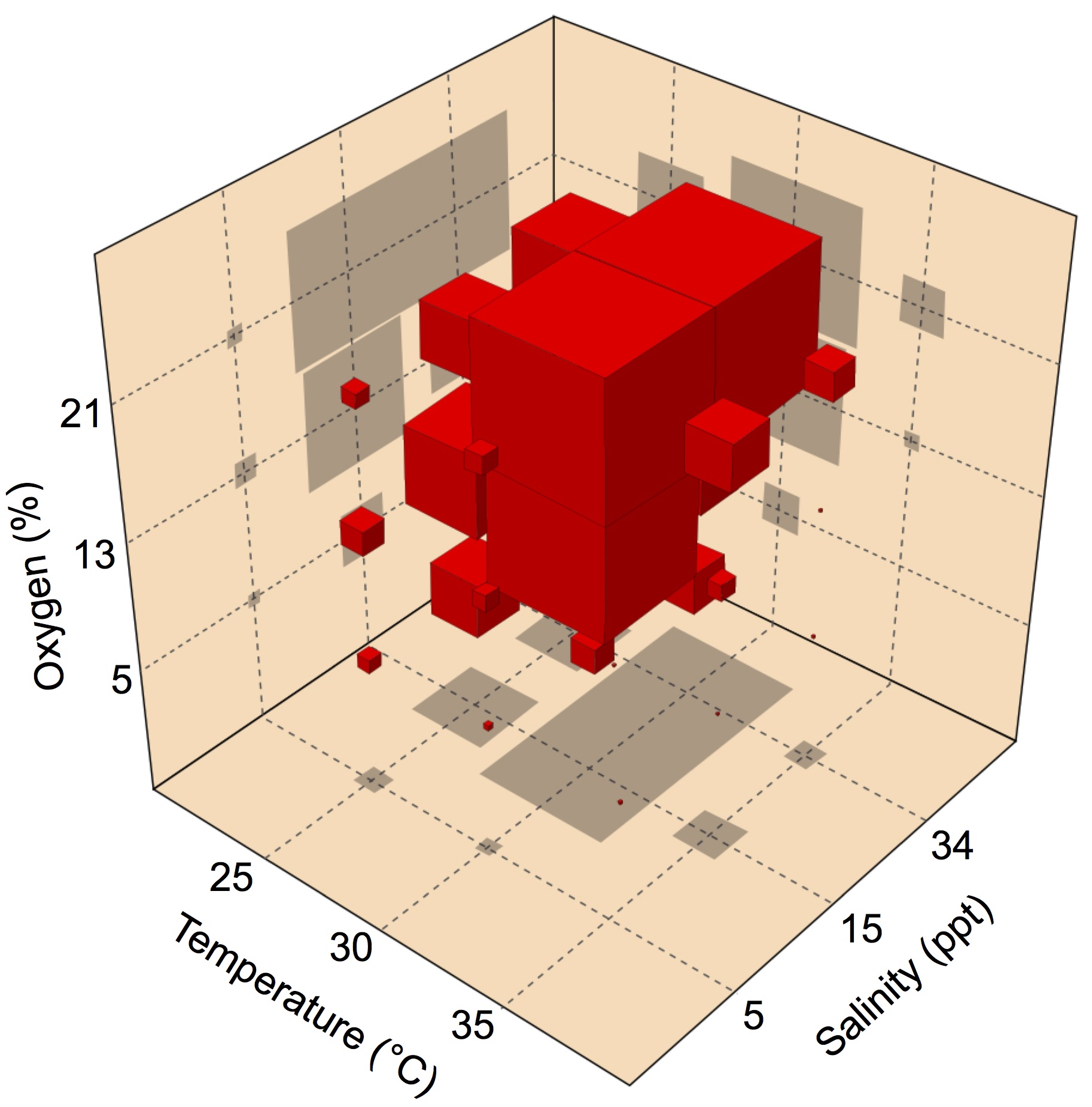
Fertilized eggs of the American horseshoe crab are buried in shallow nests above the high tide line, where they are exposed to variations in abiotic conditions during early development. Using a multiple-stressors approach, Julian and colleagues examined whether the rate of embryonic development in these animals is affected by exposure to temperature, salinity and oxygen. Their results show that multiple abiotic stressors can interact to affect the development rate in ways that cannot be predicted from the effects of the stressors in isolation. Read the paper here.
Cold adaptation overrides developmental regulation of sarcolipin expression in mice skeletal muscle
Sarcolipin plays an important role in muscle-based thermogenesis. Periasamy and colleagues show that it is abundantly expressed in neonatal mouse muscles and cold challenge prevents its developmental downregulation, indicating higher recruitment of muscle-based thermogenesis in neonates. Read the paper here.
Gender-bending alligators use ESR1
In crocodilian as well as several turtle species, the gender of offspring is determined by the temperature at which the eggs are exposed during a critical developmental window called the thermo-sensitive period. Hormones also contribute to this process, since exposure to estrogens feminizes alligators developing at a male-producing temperature, but the mechanisms behind this phenomenon remain elusive. Sarah Alderman highlights a recent paper by the lab of Louis Guillette Jr in Endocrinology, examining which of the two known estrogen receptos (ESCR1 and ESCR2) is responsible for this hormone-mediated switch from male to female alligators. Read this Outside JEB feature here.
The group led by ICREA Research Professor Cayetano Gonzalez at IRB Barcelona, in collaboration with the group of Professor Giuliano Callaini from the University of Siena in Italy, has published a new study in Current Biology that contributes to understanding how cilia are assembled.
Many cells in our bodies present a small structure that looks like, and as a matter of fact works as an antenna, conveying to the cell information on the extracellular environment. They are called cilia (plural) or cilium (singular). Ciliated cells play essential functions in the human body. Thus, for instance, the monitoring of fluid flow in the kidney, the detection of hormones in the brain, or the senses of hearing and smell depend on specialised neurons equipped with chemo-sensory or mechano-sensory cilia. Moreover, besides sensing, beating cilia keep fluids in motion in many parts of our bodies and are critical for human health.
A cilium can be regarded as a long and thin protrusion of the cell membrane that contains microtubules. Ciliary microtubules are arranged in a typical radial symmetry that is conserved through evolution and is templated by a small organelle that sits at the base of the cilium, known as basal body. Most animal cells contain two basal body-like structures (centrioles), but only one of them can actually work as basal body. In human cells, this is always the centriole that is said to be the “mother” because it was assembled earlier than the other, called the “daughter” centriole.
One laboratory animal model used to investigate how cilia are assembled is the vinegar fly Drosophila melanogaster. The article by the Gonzalez’s group shows that in Drosophila, as in humans, basal body fate is also reserved to the mother centriole. Moreover, through genetic manipulations that are easily performed in flies, they have been able to get a glimpse into the molecular mechanism that governs this fundamental process.
They have found that removal of the daughter-centriole specific protein Centrobin (CNB) allows daughter centrioles to serve as basal bodies. Thus CNB-depleted neurons present two cilia, the standard, which is templated by the mother centriole and a second one templated by the daughter centriole from which CNB has been removed. Conversely, mother centrioles engineered to carry CNB cannot function as basal bodies and, therefore, neurons modified this way cannot assemble cilia.
In humans, the lack of cilia, or cilia that do not work well, are the cause of a long list of disorders, known as ciliopathies, which include polydactyly, obesity, respiratory dysfunction, hearing impairment, and many others. Basic research in model organisms like the vinegar fly is helping to understand the molecular details of cilium assembly, thus paving the way to applied research in this field.
Reference article:
Loss of Centrobin enables daughter centrioles to form sensory cilia in Drosophila
M. Gottardo, G. Pollarolo, S. Llamazares, J. Reina, M. Riparbelli, G. Callaini, and C. Gonzalez
Current Biology (20 August) DOI: 10.1016/j.cub.2015.07.038
This article was first published on the 21st of August 2015 in the news section of the IRB Barcelona website