
The community site for and by
developmental and stem cell biologists

Independent Research Group Leaders in Cross-Disciplinary or Translational Stem Cell Science

Posted by , on 10 April 2015

Closing Date: 15 March 2021

Department/Location: Wellcome Trust – Medical Research Council Cambridge Stem Cell Institute, university of Cambridge

Salary: £38,511-£65,453

Reference: PS05703

Closing date: 01 June 2015

The Wellcome Trust – Medical Research Council Cambridge Stem Cell Institute is founded on the concept that deep understanding of stem cell biology will contribute to transforming future healthcare (http://www.stemcells.cam.ac.uk).

The Institute has openings for Group Leaders who will complement and synergise with our existing programmes. In particular we are seeking investigators with expertise in two areas:

  1. Bridging physical, materials or engineering sciences with stem cell biology
  2. Applying stem cell research to human disease

Junior group leader candidates will have a minimum of 3 years post-doctoral experience, distinctive research achievements, and an original project proposal. Senior group leader candidates will be internationally recognised for independent high quality science and have an exceptional and well-founded research proposal.

The Institute offers a collegiate environment with excellent core facilities plus extensive opportunities to pursue disease-oriented studies. Successful candidates will be supported to obtain external personal fellowship and grant support within 1-2 years. An interim start-up package is available. Depending on experience, you can expect remuneration between £38,511 – £65,453.

To apply online for this vacancy and to view further information about the role, please visit: http://www.jobs.cam.ac.uk/job/6571. This will take you to the role on the University’s Job Opportunities pages. There you will need to click on the ‘Apply online’ button and register an account with the University’s Web Recruitment System (if you have not already) and log in before completing the online application form.

Applicants should upload a full curriculum vitae with contact details of 3 referees, and 1-2 page outline of research proposal, by Monday 1st June 2015.

Informal enquiries about the post are also welcome via email on cscrjobs@cscr.cam.ac.uk.

Interviews will be held on 28th and 29th July 2015.

Please quote reference PS05703 on your application and in any correspondence about this vacancy.

The University values diversity and is committed to equality of opportunity.

The University has a responsibility to ensure that all employees are eligible to live and work in the UK.

Thumbs up (No Ratings Yet)
Loading...

Categories: Jobs

Navigate the archive

Use our Advanced Search tool to search and filter posts by date, category, tags and authors.

”The revolution is not an apple that falls when it is ripe. You have to make it fall.” – The Nurse review of science funding.

Posted by , on 10 April 2015

The following is my response to the Nurse review on scientific funding call for evidence:

https://www.gov.uk/government/consultations/nurse-review-of-research-councils-call-for-evidence

Now he has lots of free time(!) having stepped down from running the Royal Society, Sir Paul remains the biggest name in scientific establishment, or at least the first name in the section marked ‘scientists’ in David Willett’s former permanent secretary’s phonebook (ah hem, I mean iPad). As such, he is conducting a massive review, following the previous massive review published last April:

https://www.gov.uk/government/uploads/system/uploads/attachment_data/file/303327/bis-14-746-triennial-review-of-the-research-councils.pdf.

I don’t know (I am not RCUK; I can’t predict the future), but I bet the conclusion is along the lines of:

”This review notes that UK science has been excellent for most of its history. However, the obvious problem with the theory of evolution, the standard model of particle physics, all of medicine, and all of technology is that they did not have enough impact.  Over the last decade, impact has been invented and now the world is better and more impactful. This has had no impact [ha!] on the quality of UK science, but has lead to the biggest scientific capital project in the history of Europe, that I was put in charge of. We need more impact, and analysis of impact. And impactfulness. Impact. Impact. Impact. The end. Impact.”

As such, EVERYBODY should respond to the call for comments. Stop what you are doing and respond. Now. Please. Once you have done that, if you can be bothered to or would actually like to read it, here is my response:


Strategic decision-making

The ability of a government funding body, however well informed or advised by experts, to predict the future direction of scientific progress has proved demonstrably terrible throughout the entire history of science (arguably the history of government). As such, I have no objection to the current methods and practice of horizon scanning at RCUK (though my expertise very much only applies to the BBSRC and the MRC); they are probably better than they have ever been. Rather, I object enormously to the importance they are bestowed with. Decision-making in relation to scientific strategy is something on which research funders, with the exception of those with a very specific scientific remit (eg. small medical charities dedicated to particular conditions), should place very little importance. Rather, scientific direction should be the organic result of scientific progress, which is completely unpredictable. Funders should not pretend they can predict it. They cannot.

The practice of systematically concentrating research in strategic areas has developed hand-in-hand with an emphasis on economic and other less pernicious forms of ‘impact’ – ‘‘describe how your research will contribute to the economic performance of UK PLC’’. This is often justified on the basis that taxpayers money should be accounted for with democratic imperative. This is a very noble goal, but one which is entirely misplaced in the context of science. It has developed extensively over the last decade, largely at the imperative of ministers and senior civil servants (according to the triennial review of research councils – section 116) in a manner that I would argue counteract the Haldane Principle. No voter, even amongst scientists, makes political decisions on the basis of scientific funding. This is quite as it should be. Science is an activity that by its very nature is entirely undemocratic and entirely meritocratic. Scientific discoveries that change the world do so irrespective of whether they were popular when made.

In contrast, the emphasis on impact makes the process of funding in the UK far more opaque, since no one (not even the research councils) can judge it sensibly, as acknowledged in the triennial review – sections 118-124. (Unfortunately, the civil servants authoring the review suggest in sections 125 and 126 that because it is not judged sensibly at present, such measurement should receive more emphasis. Predictably, they do not suggest how). Most importantly, the emphasis on impact also means that research proposals are not judged based purely upon quality. This is ludicrous and profoundly damaging to the future of science in the UK. It is quite rightly ridiculed by American and European colleagues.

Balance of funding portfolio

The high proportion of the total funding pot available through the BBSRC and MRC for council-specified ‘strategic target areas’ has, over the period of my scientific career (2005 to date) got progressively larger in absolute and relative terms. This has had the direct result of concentrating research in a small number of areas, and in a small number of laboratories, that are deemed of high importance by a small number of (albeit well qualified) people. This is a model of science funding that would systematically overlook the enormous curiosity-driven, and entirely unpredictable, world-changing findings that characterise the world class UK science base since the end of the second world war, and indeed all great science in every place and every time.

Secondly, the modern practice of making even the dwindling curiosity-driven responsive mode part of the portfolio subject to judgement against the very same strategic objectives makes the system not only enormously opaque, but means that as it currently operates, the system is profoundly unmeritocratic. This is ludicrous, as anyone with even a partial grasp of the scientific process and its history ought to realise. As currently constituted, the entire funding scheme is based upon a profoundly mistaken philosophical premise: that the scientific process is predictable. It is not. Even in modern times we have optogenetics because people were studying unfashionable algal ion channels; we have CRISPR because people were studying odd ‘non-functional’ regions of strange bacterial and archael genomes. It is not possible, even for the finest minds, to predict the future direction of science. HM government certainly should not have an entire system predicated upon doing so itself.


Effective ways of working

The current career structure in science is absolutely appalling, and has got steadily worse over the course of my career (2005 to date). In contrast to scientific strategy, it is precisely the sort of thing that should be the subject of strategic oversight by governments. In a sad irony, while scientific direction has been the subject of increasing beaurocarcy, the career structure has been left to grow organically with no planning. This has resulted in the overproduction of people with almost no employment rights and even worse career prospects in science precisely at the age at which they should be able to start families. It is why the brightest graduates are no longer choosing science as a career, and why scientists are advising them against doing so. Sadly predictably, it underlies the appalling lack of sexual and ethnic diversity amongst scientific workforces, even at junior levels: we are almost at the point where it is necessary to have independent wealth to pursue a scientific career. Women, quite correctly, judge in droves that it is not a career for them since it systematically discriminates against people who are not heavily engaged in self-promotion and able to commit a very long working week. This means that increasing numbers of scientists who do achieve permanent positions do so at the expense of having a family, leading to even less recognition for family commitments in the workforce: a vicious circle that benefits no-one.

There is a good argument that the scientific pyramid is responsible for providing highly qualified people for the knowledge economy of the future. I wholeheartedly agree. However, the current system that prevents the brightest talent from progressing in their career in their late 20s and 30s (and increasingly 40s) ie. the age at which they would be parents, negates this. PhDs are excellent qualifications that are an inherent good for society and the economy. A sensible system would encourage education to PhD level. However, the postdoc stage is not a ‘training’ period, and should not be treated as such. There should be far fewer postdocs, with each being granted longer contracts and far more security. To be clear, I am not advocating less postdoc hours in the work force. Just less postdocs. Each would have much more time. In this way, science would be the desireable career it ought to be. Just as importantly, it would also, of course, drastically increase the quality of the science being done. Pressure does not lead to better science; curiosity does.”

Thumbs up (10 votes)
Loading...

Tags: , ,
Categories: Careers, Discussion, Funding, News

Research Technician Position, Baylor College of Medicine, Houston, Texas

Posted by , on 9 April 2015

Closing Date: 15 March 2021

A research technician position is available immediately to study the transcriptional regulation of retinal progenitor cell proliferation and its interface with cellular bioenergetics. Our lab utilizes a multi-disciplinary approach that combines traditional mouse developmental genetics and molecular biology with live, dynamic tissue imaging and high throughput genomics. The ideal candidate for this position will have a Masters degree and experience in mouse husbandry, cell culture and molecular biology.  Experience in time lapse imaging and data analysis is also highly desirable, but not required.

We are a young and vibrant research group located at Baylor College of Medicine within the Texas Medical Center in Houston. Being in the largest medical center in the World has the advantage of fostering a very collaborative research environment and we firmly believe that merging scientific expertise and interests ultimately drive innovation. Therefore, highly creative, independent, but also interactive applicants are particularly encouraged to apply.

To apply, please submit your résumé, a brief description of your research interests and career goals and the name and contact information of 3 references to Dr. Ross Poché, Department of Molecular Physiology and Biophysics, Baylor College of Medicine. Email: poche@bcm.edu.

Thumbs up (No Ratings Yet)
Loading...

Categories: Jobs

Postdoctoral position to study retinogenesis and bioenergetics, Baylor College of Medicine, Houston, Texas

Posted by , on 9 April 2015

Closing Date: 15 March 2021

A postdoctoral position is available immediately to study the transcriptional regulation of retinal progenitor cell proliferation and its interface with cellular bioenergetics. Our lab utilizes a multi-disciplinary approach that combines traditional mouse developmental genetics and molecular biology with live, dynamic tissue imaging and high throughput genomics. The ideal candidate for this position will be within a year of completion of her/his PhD and have expertise in mouse genetics, cell biology, protein and mRNA analysis, recombinant DNA technologies and bioinformatics. Expertise in retinal development, ChIP-seq, 2D-gel Mass Spec. and the characterization of metabolic phenotypes is also highly desirable.

We are a young and vibrant research group located at Baylor College of Medicine within the Texas Medical Center in Houston. Being in the largest medical center in the World has the advantage of fostering a very collaborative research environment and we firmly believe that merging scientific expertise and interests ultimately drive innovation. Therefore, highly creative, independent, but also interactive applicants are particularly encouraged to apply.

To apply please submit your CV, a brief description of your research interests and career goals and the name and contact information of 3 references to Dr. Ross Poché, Department of Molecular Physiology and Biophysics, Baylor College of Medicine. Email: poche@bcm.edu

Thumbs up (No Ratings Yet)
Loading...

Categories: Jobs

The Node at the BSDB Spring Meeting!

Posted by , on 9 April 2015

From this Sunday the University of Warwick will be the location of this year’s British Society for Developmental Biology Spring meeting, held jointly with the British Society for Cell Biology. It promises to be a great meeting (see the programme here) and the Node will be there! Come to The Company of Biologists stand (stand 1 & 2) to chat with our community manager Cat and to collect Node tea bags and our beautiful postcards!


Node marketing


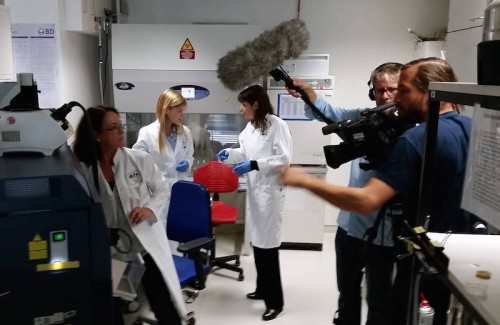
We also need your help! We will be doing some filming and we would like to interview a few Node supporters. If you think you could spare a few minutes to help us out drop us an email! It would also be great to feature a meeting report about this conference on the Node, so get in touch as well if you would like to contribute.

We look forward to meeting you in Warwick!

Thumbs up (2 votes)
Loading...

Categories: News

Editorial: Developing peer review

Posted by , on 7 April 2015

This editorial first appeared in Development.


Those of you reviewing for Development from this week onwards will notice some changes to our Reviewer Guidelines and Report Forms. After consultation with our Academic Editors, Advisory Board and the wider community, we have significantly revised the form that referees complete when reviewing a paper. We hope that these modifications will help our referees give clear, constructive and focussed feedback to authors, resulting in a more efficient and pain-free peer-review process.

Development is proud of the papers we publish, and we believe that a rigorous approach to peer review is an essential part of ensuring that our articles are useful and interesting to the community. We frequently hear that ‘you can trust a Development paper’ or that ‘papers in Development stand the test of time’, and this is in no small part thanks to the time and diligence devoted by the numerous members of our community who provide helpful and detailed guidance to authors when reviewing manuscripts. However, over recent years, concerns have been growing in the broader scientific community about how well the traditional peer review system works: there is a perception of excessively demanding referees (and editors) who make authors jump through hoops to get their papers published, as well as the worry that it does not adequately ensure that published papers are accurate. We have discussed Development’s efforts to ensure the integrity of its papers in a recent editorial (Pourquié et al., 2014), and now we have taken steps to try and make sure that the peer-review process is fair and efficient, while still maintaining the high quality of published papers.
 

Rolling out new Reviewer Guidelines and Report Forms may seem like a small step in this direction, but we hope this will encourage a shift in the mindset of reviewers. There can be a tendency for a review to read like a ‘shopping list’ of potential experiments, some of which may be important to support the major conclusions of the paper under consideration, but with others that are somewhat peripheral or that may form the basis of the next paper. Instead, we believe that referees should focus on two key questions: how important is the work for the community, and how well do the data support the conclusions? Referees can help our editors to make the best decisions by clearly spelling out what they see to be the advance reported and its likely significance to the field. Requests for additional data should primarily be aimed at ensuring that the conclusions are sufficiently well founded, rather than aimed at potentially interesting extensions of the study. In other words, what are the necessary revisions, not the ‘nice to- have’s? When the decision on a manuscript is positive, this should give authors a shorter butmore directed set of revisions (experimental or otherwise); when a paper is rejected, the authors should have a clear idea of why the paper was not considered suitable for the journal.

In the new form, we also specifically encourage referees to comment on issues of data integrity – be it the validity of statistical tests used or the possible presence of inappropriate data manipulation. We also request that all remarks pertinent to the decision on a manuscript be made in the comments to the authors, rather than provided confidentially to the editor. Finally, we ask that referees give credit to colleagues who have helped them to review a paper, so that early career scientists can be mentored in how to review a paper, and can progress from reviewing under the auspices of their PI’s name to becoming independent referees. For further information, we encourage you to look at our new Referee Guidelines online (http://dev.biologists.org/site/misc/referees.xhtml).

 
We are of course aware that these changes are conservative compared with some of the more radical approaches in peer review that have been implemented or trialled elsewhere. Recent innovations include the publishing of referee reports (pioneered by The EMBO Journal), inter-referee discussions and report consolidation (as embraced by eLife), open peer review (where referees are named, such as at the British Medical Journal) or its converse double-blind peer review (currently being trialled, though on an optional basis, at the Nature titles) and post-publication review (as at F1000 Research).We have yet to be convinced that any journal or organisation (ourselves included) has hit upon the ideal peer-review system, but we are watching these new approaches with interest and will continue to review and revise our own system. Meanwhile, we hope that the changes announced here will help referees to provide constructive feedback to authors, editors to make well-justified decisions and authors to focus their revisions in a more efficient manner. As always, we welcome the community’s feedback on these changes as we go forwards.

 
Finally, shepherding papers through the review process requires not only editors and referees, but also strong administrative support. Development is fortunate in this regard, with a highly dedicated team. However, we have had to say farewell to a key part of that team: Jenny Ostler, our senior administrator, retired from the journal last month. Jenny had been with Development for over 26 years, and many of you will know her by e-mail or over the phone. Always friendly and efficient in helping authors, referees and editors to navigate the system, Jenny has been an immense asset to the journal and will be greatly missed. We’re sure you will join us in wishing her a long, healthy and happy retirement.


Reference
Pourquié, O., Brown, K. and Moulton, C. (2014). Ethical development. Development 141, 3439-3440.

Thumbs up (3 votes)
Loading...

Tags: ,
Categories: Discussion

In Development this week (Vol. 142, Issue 8)

Posted by , on 7 April 2015

Here are the highlights from the current issue of Development:


Getting to the heart of human epicardial differentiation

FigureThe epicardium is crucial for heart development and function, and it has also emerged as a potential source of multipotent progenitors that can contribute to heart repair. But how epicardial cells develop in humans and how they might contribute to heart regeneration is unclear, partly because methods to study them have been lacking. Here (p. 1528), Sanjay Sinha and colleagues describe a robust protocol for generating epicardial cells and their differentiated progeny from human pluripotent stem cells (HPSCs) under defined chemical conditions. They first use FGF2 and BMP4 to differentiate HPSCs to a lateral plate mesoderm intermediate. A combination of WNT, retinoic acid and BMP signals, they report, then drives differentiation to an epicardial fate. The resulting cells express epicardial-specific markers and exhibit a morphology that is characteristic of human foetal epicardial cells. The authors further demonstrate that HPSC-derived epicardial cells can undergo EMT and differentiate into smooth muscle cells and cardiac fibroblasts. Importantly, they show that, when injected into developing chick embryos, HPSC-derived epicardial cells localise to the subepicardial space and integrate into coronary vessels. This method thus provides both a novel system for understanding epicardial development in humans and a potential platform for drug screening and modelling vascular disease.


From A to B: glucagon governs pancreatic fate switches

FigureDiabetes is caused by the loss or dysfunction of pancreatic β cells, and approaches to restore β cell numbers therefore offer attractive therapeutic avenues. Recent studies have revealed that other pancreatic endocrine cells, such as glucagon-producing α cells, can transdifferentiate into β cells following β cell depletion but what controls this cell fate switch is unclear. Now, Ryan Anderson and co-workers demonstrate that activation of the glucagon gene is essential for α cell transdifferentiation in zebrafish embryos (p. 1407). Using lineage tracing, they demonstrate that islet regeneration following β cell ablation occurs via β cell neogenesis, with new cells arising from pre-existing α cells and naïve progenitors. The depletion of α cells confirms their role in β cell neogenesis and suggests that they might provide cues that regulate β cell neogenesis. Following this, the authors reveal that glucagonis upregulated following injury and that glucagon gene products are required for islet regeneration. Finally, they show that, although glucagon is known to increase hepatic glucose levels, glucose alone cannot stimulate α cell transdifferentiation, suggesting that glucagon acts directly on α cells. Together, these findings reveal that glucagon plays a crucial role in maintaining pancreatic cell homeostasis, a role that could be exploited pharmacologically.


Rooting for a role for PIP2 in plants

FigureGenes involved in phosphoinositide signalling are conserved across eukaryotes, yet their role in plant development remains unclear. Now (p. 1437), Christian Hardtke and colleagues reveal that balanced phosphatidylinositol-4,5-bisphosphate (PIP2) levels are required for differentiation of the Arabidopsisprotophloem, a specialised vascular tissue found in the root. The researchers analyse plants harbouring mutations in COTYLEDON VASCULAR PATTERN 2(CVP2) and its partially redundant homolog CVP2-LIKE 1 (CVL1), which encode phosphoinositide 5-phosphatases that convert PIP2 into phosphatidylinositolphosphate (PIP). They reveal that a second site mutation in cvp2partially rescues previously identified mutants with impaired protophloem development, suggesting that PIP2 levels modulate protophloem differentiation. In line with this, they demonstrate that CVP2 hyperactivation impairs protophloem differentiation and overall root growth. The researchers further show that, while cvp2 and cvl1 single mutants display no apparent root defects, double mutants paradoxically also exhibit protophloem differentiation defects and a skewed PIP to PIP2 ratio. Finally, they report, this impaired protophloem differentiation systemically alters the auxin response in the root system and, hence, lateral root emergence. In summary, these findings highlight a crucial role for tightly regulated PIP2levels in the Arabidopsis root and suggest that activity in the primary root protophloem shapes root architecture.


Slitting open muscle morphogenesis

FigureMuscle migration and attachment to tendons are crucial steps in establishing a contractile muscle that is able to move bones. However, how this encounter between muscle and tendon cells is coordinated remains unclear. In the early stages of development, Slit, a large cleavable protein secreted by midline glia, repels migrating muscle cells. Later, it reportedly acts as a muscle attractant. How does Slit achieve this dual role and does its cleavage contribute to its function? Using live imaging of different slit mutant Drosophila embryos (devoid of Slit or expressing an uncleavable form of the protein), Talila Volk and co-workers reveal that Slit actually acts exclusively as a repellent and stop signal for muscle cells (p. 1431). Furthermore, the authors show that the processing of Slit into a more stable N-terminal form tethered to the tendon cell membrane restricts its action and is crucial for the short-range repulsion and arrest of muscle cell migration. This study thus uncovers a novel regulatory mechanism controlling Slit function and distribution during muscle morphogenesis that is likely to operate in other tissues such as the heart and blood vessels.


PLUS…


Developing peer review

Dev slideSeveral changes to Development‘s Reviewer Guidelines and Report Forms have just been introduced. These changes, which aim to make the peer-review process more efficient and helpful for authors, are explained in the Editorial on p. 1389


Lysophosphatidic acid signalling in development

Dev Poster LARGELysophosphatidic acid (LPA) is a bioactive phospholipid that regulates cell survival, proliferation, differentiation, migration, adhesion and morphology. These LPA-influenced processes impact many aspects of organismal development. In their short poster article, Jerold Chun and colleagues review the developmentally related features of LPA signalling. See the Development at a Glance article on p. 1390


Dynamic stem cell heterogeneity

DEV1396Recent lineage-tracing studies based on inducible genetic labelling have emphasized a crucial role for stochasticity in the maintenance and regeneration of cycling adult tissues. These studies have revealed that stem cells are frequently lost through differentiation and that this is compensated for by the duplication of neighbours, leading to the consolidation of clonal diversity. With a focus on mammalian spermatogenesis, intestinal maintenance and the hair cycle, Teresa Krieger and Ben Simons review the role of dynamic heterogeneity in the regulation of adult stem cell populations. See the Review article on p. 1396

Thumbs up (No Ratings Yet)
Loading...

Categories: Research

Best method to measure force transmission between cells

Posted by , on 6 April 2015

We have been trying to implement FRET in the lab and transfect our cells with mechanical biosensors, but so far we haven’t managed to successfully force our cells to express our constructs. After some digging, we realised that this technique does not work for all cell types. Its success seems to be highly dependent on cell sensitivity, which may be one of the reasons why we are not getting positive results out of it because HUVECS are pretty sensitive cells to work with.

That’s why I am here asking for advice regarding alternative techniques we could use to measure cell-cell force transmission. Fom what I have seen so far, a lot of people have been using AFM (Atomic Force Microscopy) to quantify cell adhesion to the ECM. However, what I am interested in is actually to measure force between neighbour cells. There are also other techniques to consider like micropost arrays or even flow chamber assays, but these methods kind of escape what we would like to address. Anyone has any other advice for something else we could try?


Thumbs up (No Ratings Yet)
Loading...

Categories: Discussion, Research

How a new startup is bridging the gap between universities and industry

Posted by , on 3 April 2015

GS-x2


About a year ago, I met someone at a conference who worked at a food chemistry lab in New Orleans. She was telling me about how her company had tried to hire a chemist with a Masters or PhD by putting some ads out on various job boards, but no one with the right credentials had applied. I thought this was strange because, having recently finished grad school at Purdue University, I knew several Masters and PhDs that would have loved to relocate to New Orleans with their proposed starting salary.

People are going to grad school in record numbers, so why was it so hard to find scientists and engineers with advanced degrees?

Part of the problem, I realized, was the business model of mega-job boards, which attempt to drive as much indiscriminate traffic to their site in order to provide job postings with maximum exposure. This, of course, is not a very effective way to recruit scientists and engineers. Consequently, major companies establish relationships with a handful of universities to develop a pipeline for specialized talent. But there are thousands of research universities around the world – and if companies are looking for a biologist, or a chemist, or a biochemical engineer (just for example), why should they have to source from just a few schools? There had to be a better way to connect scientists to industry careers.

The deeper problem, however, was that universities were isolated from industry. For a long time, this made sense; after all, the job of a research professor was to do research and train the next generation of research professors. But now that professors must train scientists and engineers who may not remain in academia, the talent pipeline needs to be reconfigured.

Graduate students across STEM disciplines are facing a rapidly changing career landscape. For many grads, the options are to either perennially hop from post-doc to post-doc, or pivot to an industry career. Fortunately, STEM grads certainly have transferable skills, but finding a job and pursuing a career can still be difficult challenges. So I built GradSquare to reconfigure the talent pipeline by bridging the gap between universities and industry.

GradSquare is a centralized platform where scientists (both social and natural) and engineers connect with employers who are looking for their talent.

We launched exactly two weeks ago and we now have over 1k sign-ups. It’s great to see such an accomplished community of grads connecting with employers and recruiters. And I’m happy to say that there’s been a remarkable amount of interest in candidates with backgrounds in biological and biomedical sciences. From biotech startups to CROs, recruiters and employers are eagerly searching for candidates with degrees in life sciences.

Finally, GradSquare is not just a place to browse jobs and connect with employers – it’s also a place to learn about industry careers. I host a podcast series, GradSquare Radio, where I interview grads who have successfully pursued industry careers, asking them how they went about finding their jobs, what a day in their life is like, and what advice they have for others who are interested in pursuing non-academic careers. Biologists in particular may be interested in a couple of GSR podcast episodes.

The first features Ramsey McIntire, PhD, Anatomy and Cell Biology, discussing her transition from a post-doc at the University of California San Francisco to a job at EMD Millipore as a Multiplex and Cytometry Specialist: http://www.gradsquare.com/blog/gsr-episode-21-ramsey-mcintire-phd-anatomy-and-cell-biology

The second features Yin He, Ph.D, Molecular Biology, Genetics, & Molecular Nutrition, discussing her transition from graduate school at Cornell to working at a startup in Silicon Valley called Transcriptic, an automated remote wet lab that functions as a faster, less error prone, and cheaper alternative to traditional CROs (disclosure: Transcriptic is hiring through GradSquare): http://www.gradsquare.com/blog/gsr-episode-17-yin-he-ph.d-molecular-biology-genetics-molecular-nutrition

I’d love to hear your comments, questions, and suggestions! Please don’t hesitate to email me at marco@gradsquare.com.

Thumbs up (2 votes)
Loading...

Tags: , , ,
Categories: Careers, News

The small beginnings of gastruloids

Posted by , on 1 April 2015

March2015

Mouse embryonic stem cells (mESCs) are by definition cells that can self-renew (make identical copies of themselves) and specialize into any cell type of the body. Since their discovery, scientists have used them to produce various specialized cell types in culture but also to produce transgenic mouse lines. When injected into a mouse early embryo, mESCs can become any cell type of the body but can also be passed on to the next generation. Using this technique, scientists have been able to generate hundreds of transgenic mouse models, from which resulting studies have been invaluable for the progress of biology and medicine.

However, although mESCs are able to integrate into embryos, mESCs cultured in a dish do not organize themselves into structures that are similar to embryos. If aggregated into balls, called embryoid bodies, they can develop into a disorganized mass that does not resemble an embryo. Very interestingly, van der Brink and colleagues have published, in Development, a culture protocol with which they obtain mESCs structures that exhibit collective behaviors similar to those of the cells in the early mouse embryo: axis elongation, axial organization and early cell specialization. They thus call these structures gastruloids, in reference to gastrulation, one of the key and central process of early embryo development.

In this picture you can observe the cells of the tip of a gastruloid. The protein brachyury is shown in green, presence of protein TCF/LEF is shown in red and Hoechst (blue) corresponds to the cells nuclei. The yellow cells at the very tip express both brachyury and TCF/LEF, a characteristic specific of cells of the primitive streak structure in early embryos. This observation, along with others in the study, suggests that the gastruloids formed by mESCs undergo developmental movements that resemble the ones of early embryos.

Although the impact of such interesting observations is hard to determine yet, it is fascinating nevertheless to obtain such complex organized structures in vitro. This hopefully will open new ways of studying early development and disentangle early development mechanisms so far unknown.


Picture Credit:

van den Brink, S., Baillie-Johnson, P., Balayo, T., Hadjantonakis, A., Nowotschin, S., Turner, D., & Martinez Arias, A. (2014). Symmetry breaking, germ layer specification and axial organisation in aggregates of mouse embryonic stem cells Development, 141 (22), 4231-4242 DOI: 10.1242/dev.113001

Thumbs up (5 votes)
Loading...

Tags: , , ,
Categories: Research