So why is this important to a geneticist? If we want to discover a causal link between a gene mutation and a developmental abnormality in a mouse, we need to be really sure that any abnormalities we see aren’t just standard features of embryo development. The morphology of an embryo can change rapidly as it grows, and things that seem unusual at first glance might be completely typical for a given stage of development. Understanding and avoiding these potential pitfalls is hugely important when studying embryos for the effects of a gene mutation.
Using the new technique described by the authors, it’s now possible to find an embryo’s exact developmental stage simply by looking at its fingers.
NORMAL OR ABNORMAL?
To be sure that an embryo has developed abnormally, we need to compare it to one that we know has developed normally. But this can be a complicated comparison to make when an embryo’s ‘normal’ appearance is changing dramatically as it develops.
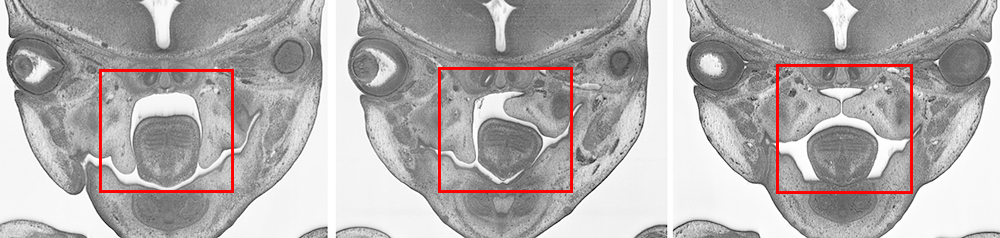
Cleft palate is a serious abnormality, as it can prevent a mouse pup from suckling and eventually lead to death. But the palate is also one of many tissues that changes its structure and orientation dramatically between E14 and E15 (days 14 and 15 of gestation). The image below shows three snapshots of a typical mouse embryo palate during this period.
During days 14 – 15 of embryo development, the palatine plates change their orientation rapidly. Initially, both plates are lateral to the tongue (left). They begin to elevate, but do so asymmetrically (centre), ending with both shelves above the tongue (right) at which point the plates fuse together.
Not only do the palatine plates completely change their orientation, they also move one at a time. Without knowing the precise developmental stage of an embryo, it would be impossible to tell whether the palate was developing normally, or whether a cleft palate had developed as a resust of a gene mutation.
Dramatic changes within a similarly short timeframe can also be seen in both the heart and the intestine. It’s vital to measure the developmental stage of the embryo as precisely as possible, so that it can be compared to what is normal at that exact stage.
MEASURING INTER-DIGITAL WEBBING
In the past, the development of a mouse embryo has been described using a set of 26 Theiler stages. Days 14 – 15 of gestation are typically described by the stages 21, 22 and 23.
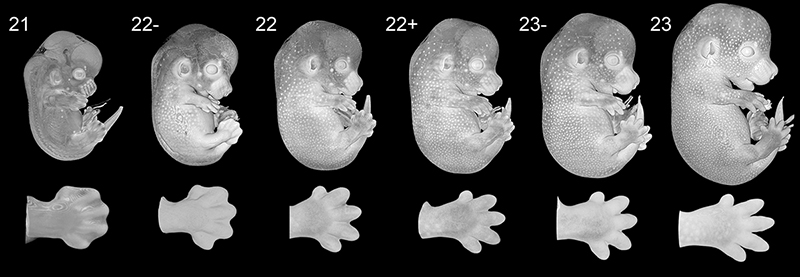
However, the authors found that for embryos of this age many organs and tissues developed rapidly even within a single Theiler stage. The stages weren’t granular enough to be sure that tissues like the palate, heart and intestines were really showing abnormal development. To address this the article defines 6 alternative stages, together with a novel technique to identify the stage solely by measuring the amount of webbing between the embryo’s fingers.
Six individual stages were defined, each of which can be identified by measuring the amount of inter-digital webbing.
During this time, the forelimb develops from a paddle to a hand with separate fingers. The full set of new stages S21, S22-, S22, S22+, S23- and S23 allow the developmental stage of the embryo to be determined much more precisely, meaning that developmental abnormalities can be identified with confidence.
There are many different structures in our eyes that work in conjunction to allow us to see. These structures are strikingly similar between different species, from zebrafish to humans. The growth of ocular tissues must be tightly controlled in order to maintain the correct eye size and shape that allow us to see. This tight regulation has intrigued developmental biologists for decades.
The lens of the eye focuses incoming light on the retina, which then converts the light into electrical signals allowing us to see. Two distinct cell types comprise the lens: epithelial cells, which cover the front, or anterior, portion of the lens, and fiber cells, which populate the back, or posterior, portion. It has been shown that epithelial cells proliferate in the anterior half of the lens and move towards the posterior half, differentiating, or transforming, into fiber cells when they reach the equator between the two halves. In order to elucidate the underlying mechanisms that drive this movement, the Developmental Neurobiology Unit at the Okinawa Institute of Science and Technology Graduate University (OIST), led by Prof. Ichiro Masai, employed time-lapse imaging techniques to observe real time lens development in zebrafish. Their results were recently published in Development.
Embryonic stem cells express genes necessary for self-renewal, and also ‘prime’ lineage-specific genes which stay silent until differentiation; the molecular players and pathways that govern the timely gene expression are still being delineated. Today’s paper comes from the most recent issue of Development and reveals a role for the histone demethylase Jmjd2c in gene activation in stem cell differentiation. We caught up with first author Rute Tomaz and PI Véronique Azuaraof Imperial College London.
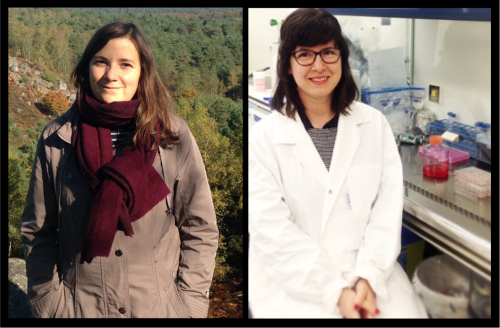
Véronique (in nature) and Rute (in lab)
Véronique, can you tell us how you first came to be interested in science and how you came to form your lab?
VA Driven by curiosity and the true pleasure of seeing unexpected facets of life really. There is also I think a real satisfaction in “relentlessly” pursuing a question and finding new standpoints to break through it. The question might remain the same the standpoints would vary infinitely. Understanding how a cell identity is defined and sustained is a key question in biology, which I made mine throughout my formative years. First in Paris at the Pasteur Institute studying the ontology of specialized blood cells; then in London at the MRC CSC (now MRC LMS) examining how specific chromatin patterns – fingerprints of a cell identity are established in development initially using haematopoiesis as a model system. Whilst setting up my lab at Imperial College London thanks to a MRC Career Development Award in Stem Cells, our contribution primary focussed on studying the epigenetic regulation of pluripotency and cell fate decisions in the early embryo and derived stem cells.
You’re part of the Stem Cell Regenerative Medicine Network at Imperial, and with the Crick having just opened, London must be a great place for stem cell biology at the moment?
VA Stem cells and developmental biology are indeed key research interests and strengths at the Crick. As an Imperial PI, I will without a doubt nurture collaborative links within this promising science hub in London.
And Rute, how did you come to join Véronique’s lab? I understand you started in Portugal and are now doing a postdoc in Cambridge?
RT That is right. I first stepped into the world of research when I joined Dr Branca Cavaco’s lab(CEDOC, Nova University of Lisbon) for an internship back in Lisbon. There, I studied the molecular aspects of a very rare imprinting disease (Pseudohypoparathyroidism type Ib), and this is what really sparked my interest in epigenetic mechanisms taking place very early on during embryonic development. I then started looking for possible host labs to do a PhD focusing on stem cell epigenetics, and that is when I reached out to Véronique because her scientific interests where a perfect fit for me. In addition, I thought (and still do) that London and the UK are very exciting places to do stem cell research. I was awarded a PhD fellowship from the Portuguese Ministry of Science and Technology, which allowed me to join Véronique’s lab at Imperial where I then explored the role of the histone demethylase Jmjd2c in embryonic stem cells. Stem cells are really fascinating tools, which we here used to mimic embryonic development and take a close look at how gene expression programs are being put in place early on. Over time, this experience has built in me a strong motivation to apply stem cell differentiation methods to the production of relevant cell types for disease modelling. For this reason, I joined Professor Ludovic Vallier’s lab in Cambridge to pursue my post-doctoral training where I am now specializing on hepatocyte differentiation.
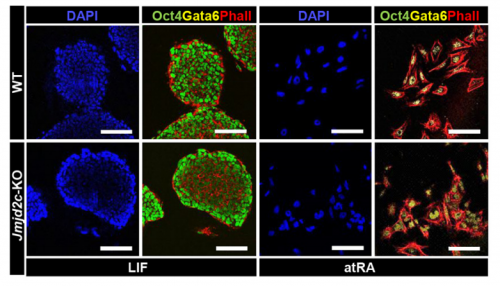
Wild-type and Jmjd2c-KO ESCs maintained under proliferative and differentiation conditions, from Figure 1, Tomaz, et al. 2017
Véronique, you’ve worked with embryonic stem cells for more than a decade now. How has the field changed in this time?
VA Stem cell technology is at the heart of regenerative medicine with innovative therapeutic options continually in development. And this was largely made possible by the incredible vitality of basic stem cell research we enjoyed over the past decades; high-quality research investigating fundamental principles and factors that underpin stem cell properties and normal development to provide a reliable foundation for clinical applications.
“Stem cell technology is at the heart of regenerative medicine with innovative therapeutic options continually in development”
There is not much controversy in saying that the area of reprogrammed cells has been a major development in the field. The ability to return somatic cells to an embryonic state is a remarkable breakthrough with the promise of using these cells as tools for translational research. The identification of distinct pluripotency phases, from a naïve to a primed state for differentiation, and characterisation of in vitro growth conditions that would sustain the propagation of these cells is also a key achievement in the field. This brings the prospect of unfolding mechanisms that trigger the exit from naïve pluripotency, enable lineage priming and/or promote specification.
We also greatly benefited from major technology advances including the most recent CRISPR and gene editing technology, as well as the development of single-cell “omic” approaches going hand-to-hand with mounting computational and modelling capacity.
What was known about poised enhancers and lineage priming of embryonic stem cells before your work?
VA & RT Distal regulatory elements such as enhancers have long been recognized to play a significant role in potentiating gene expression. Enhancers are epigenetically delineated by the deposition of H3K4me1/me2 marks with H3K27ac telling apart active (H3K27ac-high) and poised (H3K27ac-low) enhancers, and are commonly bound by pioneer transcription factors. For example, the core pluripotency factor Oct4 was shown to mark both active and poised enhancers in naïve and primed pluripotent stem cells. Enhancer activity and ESC-specific gene expression were also thought to entail long-range DNA interactions with the transcriptional apparatus at promoters, involving the cooperative action of Mediator-Cohesin complexes. Yet, we did not know a great deal about the identity of proteins and mechanisms that stabilize the formation of such assemblies.
Lineage priming occurs at the onset of multi-lineage differentiation of ESCs, and is commonly seen as a “preparation” step for subsequent lineage specification. At the chromatin level, this was typified, for example, by the discovery that many inactive developmental regulators carry bivalent domains being enriched for the repressive H3K27me3 marks along with indicators of permissive chromatin (i.e. early replication timing, methylated H3K4). Bivalent marking was thus proposed to prime lineage-specifying genes for future activation yet prevent their premature expression through Polycomb-mediated repression in ESCs. In trophoblast and extra-embryonic endoderm stem cells, many of the same bivalent promoters would typically acquire additional repressive layers – i.e. Suv39h1-mediated H3K9 methylation and de novo DNA methylation as these genes are not needed for the further development of extra-embryonic tissues.
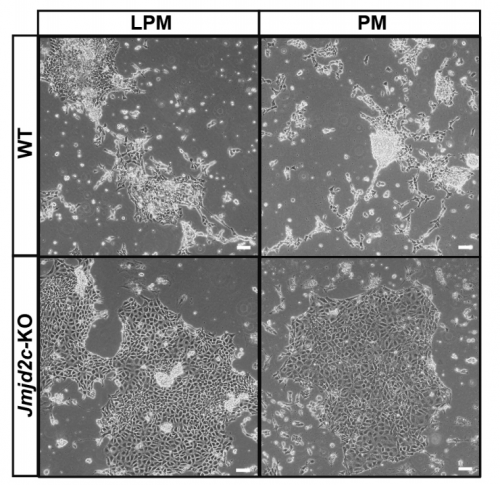
Phase-contrast images of LPM and PM wild-type and Jmjd2c-KO cultures, from Fig. 2, Tomaz, et al. 2017
Can you give us the key results of the paper in a paragraph?
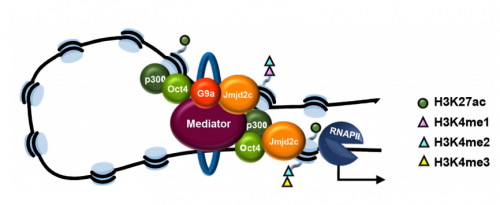
VA & RT We constitutively depleted the H3K9-demethylase Jmjd2c in mouse ESCs and found that this causes an early blockage in multi-lineage differentiation. In contrast, these cells retain the ability to differentiate into extra-embryonic derivatives, where Jmjd2c is not normally expressed. At the chromosomal level, we mapped Jmjd2c binding sites and confirmed that, in our system, Jmjd2c primarily binds to active and bivalent promoters in ESCs. In addition to that, we uncovered that the protein is also timely re-distributed to lineage-specific enhancers at the onset of ESC differentiation. Unexpectedly, we found that Jmjd2c co-occupies active and poised enhancers together with an antagonistic enzyme, the methyltransferase G9a, and that both molecules form a complex with Mediator. Depletion of Jmjd2c abrogates the loading of Mediator-Cohesin and G9a, proposing Jmjd2c as an essential factor for the stable assembly of enhancer multi-protein complexes in ESCs.
Do you know how Jmjd2c itself is being recruited to promoters and enhancers?
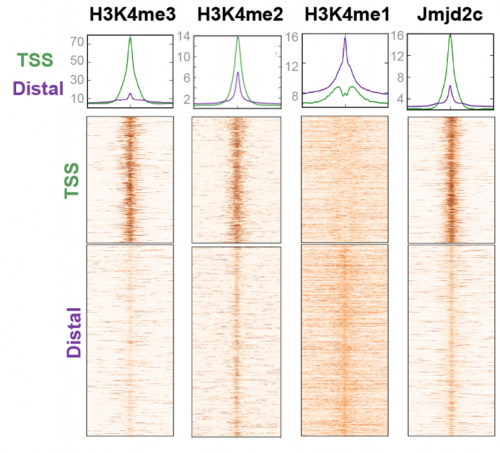
VA & RT We don’t know exactly whether there is a specific transcription factor that recruits Jmjd2c to promoters and enhancers, but what we do know is that two functional Tudor domains and recognition of modified histone tails seem to be important in this recruitment. Published work has shown that Jmjd2c’s Tudor domains can recognise H3K4me3 and H3K4me2 marks, the latter being enriched at both TSS and distal regulatory regions. In our study, we show that deleting these domains abrogates Jmjd2c recruitment at promoters and lineage-specific enhancers. In contrast, this does not impede Jmjd2c binding to active enhancers evoking a different mode of recruitment at these active sites and speculate a possible link with another member of the Jmjd2 family – Jmjd2b. This is mainly for two reasons: Jmjd2b was previously found to bind active enhancers in ESCs; and Jmjd2 family members can form heterodimers, so this could be the case.
Proposed model for assembly of activating Jmjd2c-G9a centred enhancer-protein complexes, from Fig. 7, Tomaz,et al. 2017
Jmjd2c is co-recruited to enhancers with another histone modifying enzyme, G9a, but you think that they are not acting directly on histone to influence gene expression. So what are they doing?
VA & RT Finding these two molecules together at enhancers but not at promoters was very surprising, most specifically because the levels of H3K9me2 enrichment were not changed at these sites in the absence of Jmjd2c. This made us wonder whether G9a and Jmjd2c play roles beyond their canonical histone modifying activities. We know from published work that, in ESCs, the interplay between G9a and PRC2 safeguards repression of developmental-associated genes. In our work, we find that G9a assembles with Jmjd2c-Mediator-Cohesin at active and poised enhancers. Therefore, we think that G9a might form part of both repressing and activating complexes in ESCs. Interestingly, a dual role for G9a was previously described in hematopoietic cells, where G9a participates in two distinct protein complexes: an “activator” complex with Mediator and a “repressor” complex with Jarid1a, both regulating the differential activation of globin genes in development. The key question is what makes the switch. Published in vitro work has shown that G9a can auto-methylate itself and this mediates the anchor of other repressive factors such as HP1 and Cdyl. A similar link with PRC2 is yet to be explored. On the other hand, non-histone targets have been identified in vitro for the different Jmjd2 family members. Interestingly, these included the auto-methylation site of G9a. One exciting possibility would be that the integration of G9a into distinct complexes relies on its methylation state, and that, in ESCs, this is mediated by Jmjd2c. Being part of an activator complex could indeed require Jmjd2c-dependent demethylation, whereas its methylated form creates a platform for recruitment of repressive complexes.
“Finding G9a and Jmjd2c together at enhancers but not at promoters was very surprising, and made us wonder whether they play roles beyond their canonical histone modifying activities”
When doing the research, was there a particularly exciting result or eureka moment that has stayed with you?
RT There were definitely moments (or results) we recognised as turning points in this work and I will not forget them. We had a very strong phenotypic effect of Jmjd2c-knockout, in terms of ESC differentiation blockage. And throughout this process we were driven by the original hypothesis that Jmjd2c, being an H3K9-demethylase, might be required to “protect” bivalent promoters from acquiring methylation and becoming silenced. I guess a key turning point in this study was the realisation that this might not be the whole story at all. Promoters of lineage-specific genes were not significantly de-repressed in constitutive knockout cells, despite ChIP results showing that Jmjd2c was recruited at these sites. And this is when I started noticing the “little peaks” on Jmjd2c ChIP-seq profiles that seemed always located distally from TSS regions in the “primed” (serum) dataset. By curiosity, we pulled out the published G9a ChIP-seq data and found that this antagonistic enzyme was frequently sitting at these same sites than Jmjd2c. The true excitement came when realising that these sites were actually poised enhancers. I can’t say this was a eureka moment since we still don’t really know what these two are doing together, but it was definitely an exciting one, that opened up some new questions.
H3K4me3/2/1 and Jmjd2c levels across a 10 kb window centred at TSS and distal Jmjd2c-bound regions in serum/LIF, from Fig. 3, Tomaz, et al. 2017
And what about the flipside: any moments of frustration or despair?
RT Frustration and despair are part of the process! Luckily we have been supported by a great number of collaborators who shared with us key expertise we were lacking. For example, setting up endogenous co-immunoprecipitation assays was quite demanding and frustrating. Fortunately, Lauriane in Slimane’s lab had the know-how and years of experience and thus was able to perform this set of experiments with ease. I guess the important lesson I learn when in despair is – call for help!
“Frustration and despair are part of the process!”
As an early career stem cell researcher I wonder what you think the stem cell field is going in the next decade?
RT Technology advances exponentially and I think this will have an impact in all sectors of biomedical research. Nowadays we have better methods for genetic engineering, faster and more robust equipment, and the high-throughput sequencing platforms keep evolving significantly. These constant developments will enable us to answer questions in a faster and more profound way, and learn, for example, how signalling and transcriptional networks operate in cellular contexts. This in-depth knowledge we get from stem cells and the developing embryo will have a great impact on our ability to generate conditions that fully mimic in vivo environments on a dish, and recapitulate cell interactions. In particular, I think we will see great advances in 3D tissue culture systems, and the potential of these in disease modelling and drug testing will be limitless.
Where next for the Azuara lab following this work?
VA Surely the lab will continue investigating the epigenetic foundation of pluripotency following-up on Rute’s inspiring study, as well as exploring novel and fundamental links between transcriptional switches, metabolic flux dynamics and cell state transitions in pluripotent stem cells. In fact, we are currently inviting applications from enthusiastic and talented postdoctoral scientists to join us and pursue exciting lines of research at Imperial.
The “Meet Our Scientists” video entitled “Our relative the fly” presents the research performed by Marco Millán on the cellular and molecular mechanisms underlying the regulation of tissue growth during normal development, tissue homeostasis, and tumorigenesis.
Marco Milán, ICREA research professor, leads the Development and Growth Control Laboratory at IRB Barcelona. In the video, he talks about the study of human diseases, such as diabetes and neurodegenerative diseases, in Drosophila melanogaster—the fruit fly.
As he explains, his research aims to understand how the genes that are involved in the regulation of normal growth are also those responsible for generating a tumor. In particular, the Development and Growth Control Laboratory is very interested in understanding the link between diabetes, nutritional deficiency, and cancer.
“Meet Our Scientists” comprises a series of 3-minute videos that present several of IRB Barcelona’s leading scientists. The videos seek to show the insight, passion, character and talent of the researchers that work at the centre.
Watch the video “Our relative the fly” (Subtitles available in Spanish, Catalan and English).
This report written by Justine Alford and highlighting a recent Development paper originally appeared on the CRUK Science Blog.
Over the past 12 months, the acronym CRISPR has been popping up in science news left, right and centre. And for good reason.
Hailed as a revolution in genetic engineering, this molecular toolbox lets researchers make remarkably precise changes to DNA. By observing the consequences of these alterations on cells, such as how they look or behave, scientists can begin to work out what certain genes do.
“CRISPR has completely transformed the landscape for how we study gene function,” says Dr Steven Pollard, one of our brain tumour experts from Edinburgh’s MRC Centre for Regenerative Medicine. “It’s opening up the human genome for us to be able to do what we want genetically.”
And because cancer is a disease of faulty genes, CRISPR has huge potential for studying a raft of different types of cancer.
Now, for the first time, a team of scientists led by Pollard has succeeded in using CRISPR to change genes in specialised neural stem cells, which are thought to play a role in how the most common type of brain tumour, glioblastoma, grows.
This important work, published in the journal Development, lays the foundations for future, more detailed investigations. But firstly, what are these neural stem cells that scientists are tinkering with, and why are they so important?
Astrocytes grown from brain cancer stem cells. Steven Pollard/Wellcome Images. Flickr/CC BY-NC-ND 2/0
The stars of the brain
If you’re unfamiliar with stem cells, we all begin our lives as a small bundle of them in the womb. Like the shape-shifting Mystique from X-Men, these amazing cells can change their appearance, morphing into every specialist cell in the body.
In our brains, a type of stem cell – called a neural stem cell – divides to become the complex mixture of highly specialised cells forming our ‘grey matter’, including cells called astrocytes. These star-shaped cells play incredibly important roles in the brain, offering protection for other cells and repairing those that become damaged.
During the transformation from neural stem cell into an astrocyte, the dividing cells can make a genetic ‘spelling mistake’, leading to a tumour made up of rogue astrocytes.
But some of the tumour cells become ‘locked’ in a neural stem cell state and continue to grow uncontrollably, never becoming specialised. These haywire cells, called glioblastoma stem cells, are thought to be important in fuelling and maintaining brain tumour growth.
And the similarities between the glioblastoma stem cells and neural stem cells means that researchers can study genes in neural stem cells to understand more about how glioblastomas form.
By introducing deliberate genetic mistakes into the neural stem cells’ DNA, scientists can track the role they may play in cancer. And thanks to the work by Pollard and his team, they now how a range of powerful new approaches to do this, all built upon CRISPR.
Scissors and homing devices
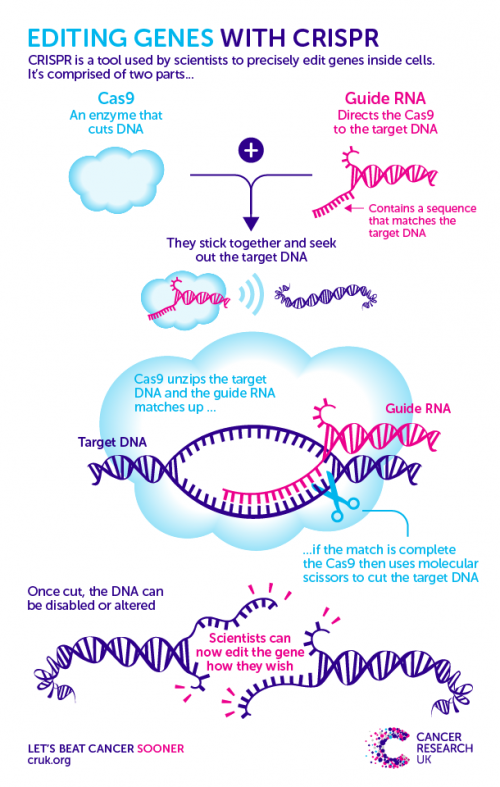
CRISPR is a two-piece toolkit that uses a homing device to seek out a specific region of DNA, and a pair of ‘molecular scissors’ to make a precise snip across the strands.
The cut DNA is then flagged to the cell’s own DNA repair system, which galvanises into action to sew the broken strands back together. Scientists then sneakily trick this system into making a mistake by providing a repair template that has a fault in it.
After this error is unwittingly copied into the DNA, scientists can track the consequences of this genetic change on the cell. Check out the graphic below to see how it works.
“Most groups have been using CRISPR to make random changes to genes, which is its simplest use,” Pollard explains. But the team’s latest study, he says, was focused on more sophisticated and precise changes made to neural stem cells in the lab.
For example, by stitching a fluorescent marker onto the molecule produced by a gene called SOX2, the scientists were able to track the journey that molecule takes around the cell. Precisely following molecules in this way could help researchers understand the role they play in cancer and find new targets for drugs.
“The obvious next step is finding out if we can use the same technology in cells taken from patients’ brain tumours,” says Pollard. By making important molecules glow inside these cells in the lab, Pollard believes they could “see which drugs are important in destroying that fluorescence”.
Making headway
After proving the editing prowess of CRISPR in neural stem cells, the scientists then moved on to their next challenge: could they deliberately introduce faults in genes already known to drive brain tumours?
The team focused its attention on 2 different genes. The first,p53, protects cells from becoming cancerous. It’s faulty in more than half of human tumours, including many brain tumours.
The second is a gene called H3F3A, which is commonly faulty in childhood glioblastomas. H3F3A helps package up our DNA into chromosomes.
The team managed to make faulty versions of both of these genes in human neural stem cells. And when they studied the cells harbouring the faulty version of p53 in the lab, they found that they divided faster – a hallmark of cancer.
While it’s still early days, this study has important implications for brain tumour research and therefore ultimately for patients. By demonstrating that CRISPR can successfully be used to create and study faulty genes, the team has opened the door for more in-depth research into what genes play a role in these brain tumours.
“It’s proof of principle that it works very efficiently,” says Pollard of the technique. “It’s a toolbox to show that, in the future, we can target other genes to study them and manipulate them in diverse ways. This will help us to understand their function and reveal how to manipulate them with new drugs.”
And by using CRISPR to understand how brain tumours grow, this could lead to more targeted treatments.
Although significant progress has been made in cancer medicine, with survival across all cancers doubling over the past 40 years, poor survival is a shared feature among brain tumours, making them one of our top priorities.
It’s clear that we urgently need to do more. And kick starting a greater understanding of brain tumours is needed, which is exactly what this study does.
Successful division was an essential criterion for establishing the cell as the basic unit of life on earth. Later, cell-cell adhesion made possible the evolution of multicellular life forms. These two fundamental cellular processes co-function throughout the life of an organism, during development, wound healing and tissue regeneration. In epithelial tissues this results in a curious situation. Epithelial cells, to fulfill their barrier function, need to attach strongly with one another via E-cadherin mediated cell junctions and not leave any gaps between them. However, to divide, cells must round up and form an ingression furrow and therefore detach from their neighbors.
Therefore a ‘cell division conundrum’ exists in the multicellular scenario, wherein the dividing cell is trying to furrow inwards by assembling a contractile actomyosin ring, while the neighboring cells are attempting to keep the tension intact at the boundary by forming cell-cell junctions. In such a scenario an inhibitory regulation between cell-adhesion and cell division machineries would enable the cells to defuse this ‘tug of war’ situation between the two forces.
Convergence on the idea
After completing my Ph.D. with Prof. Mohan Balasubramanian studying cytokinesis in the single cell S.pombe[1], I was eager to address the interplay between cell-cell adhesion and cytokinesis in a multicellular organism. I joined the group of Dr. Ronen Zaidel-Bar, who had recently moved to the Mechanobiology Institute, Singapore and setup his lab to study cell and tissue morphogenesis in mammalian cells and in C. elegans. Co-incidentally, during his post-doc Ronen had observed a genetic interaction between cell-adhesion and cell division mutants in C. elegans embryogenesis and had wondered about possible connections between the two force-generating cellular machineries. However, he never followed up on those results. Therefore, he was extremely receptive to my idea despite the fact that I had never seen a C. elegans nematode before then.
The ride
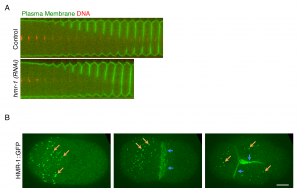
We decided to focus on the early embryo, where the cells are large and divisions are rapid. Additionally, the absence of cell-matrix adhesion in early embryos meant we could focus solely on cytokinesis and cell-cell adhesion. The ortholog of E-cadherin in C. elegans is called HMR-1 [2, 3], and so my first experiment was to deplete HMR-1 by RNA interference (RNAi) and measure the time it took for cytokinetic furrows to ingress during the first, second and third cell divisions (Fig. 1A)[4]. We were really excited to observe faster furrow closure upon HMR-1 depletion during these divisions. This suggested that HMR-1-mediated cell adhesion inhibited cytokinetic furrow ingression and in the absence of HMR-1, this inhibition was released allowing embryonic cells to accomplish faster cytokinesis.
Around the same time, three papers, published back to back in Developmental Cell, reported the existence of a ‘tug-of-war’ mechanism in Drosophila epithelial cells between E-cadherin-mediated cell adhesion and contractile forces of the cytokinetic ring [5-7]. On the one hand, we were pleased our hypothesis received strong reinforcement from Drosophila, but on the other hand we couldn’t help feeling “scooped”.
The First Division Problem
While most of our results were consistent with our hypothesis and the newly published papers from Drosophila, there was one inconsistent result: furrow ingression was faster in the first cell division when HMR-1 was depleted. How could the “tug-of-war between forces” model explain the speeding up of furrow ingression in the 1-cell zygote lacking any cell contacts? The fact was it couldn’t.
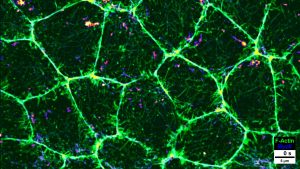
To answer this question I analysed the localisation and dynamics of HMR-1 in these early embryonic stages, by imaging Green Fluorescent Protein (GFP) fused to the cytoplasmic domain of HMR-1 protein [8]. As expected, HMR-1 localised to cell-cell junctions in the 2-cell and 4-cell stage (Fig. 1B, blue arrows). Additionally, I also detected HMR-1::GFP as distinct spots or clusters along the non-junctional surfaces in these stages as well as the 1-cell stage (Fig. 1B, orange arrows) [4, 9]. Thus, we concluded, it must be these non-junctional E-cadherin/HMR-1 clusters, which, even though not involved in cell-cell adhesion, slow down cytokinesis. But how do they do it?
Non-Junctional E-cadherin/HMR-1 Dictate a Change in Course
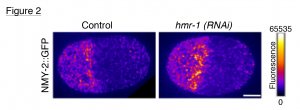
Our unexpected findings in the zygote led to a new question: how do non-junctional E-cadherin/HMR-1 clusters regulate cytokinesis? The first clue to this puzzle emerged when I examined type-II myosin NMY-2, in hmr-1 depleted embryos and control embryos. I detected a significant increase in the levels of NMY-2 at the cortex (Fig. 2) upon HMR-1 depletion and also observed that HMR-1 and NMY-2 excluded each other. Depletion of HMR-1 also resulted in up regulation of cortical RHO-1, the global contractility regulator, which acts upstream of NMY-2. At this juncture we realised that although our analysis of the 1-cell stage might not be along the ‘tug of war’ model, there definitely is an inhibitory relationship between the adhesion and cytokinesis machineries of the cell.
As the zygote initiates first cleavage by assembling a contractile zone bisecting the separating chromosomes, the actomyosin cortex rotates. I found this cortical rotation to be faster in embryos lacking HMR-1 compared to the control. Given that NMY-2 is the major force generator in cells, it seemed natural to attribute the faster cortical rotation as well as the accelerated cytokinesis to the increase in cortical NMY-2. However, when I tested this hypothesis by reducing the amount of NMY-2 recruited to the cortex in both control and hmr-1 (RNAi) embryos, I observed that even when NMY-2 levels were reduced to similar levels, hmr-1 (RNAi) depleted embryos furrowed faster than control, indicating that HMR-1 could influence cytokinesis independently of NMY-2 regulation.
HMR-1 Inhibits Cortical NMY-2 Localisation
The Discovery of an Unexpected Mechanism
The second clue came to light when I examined the relationship between HMR-1 clusters and cortical F-actin. I detected transient interactions between F-actin at the cortex and HMR-1 clusters embedded in the membrane, and showed that this transient interaction slows the cortical movement akin to stapler pins holding paper sheets from sliding. Since furrow ingression during cytokinesis is clearly a form of cortical deformation, one possible mechanism by which HMR-1 slows down cytokinesis independent of NMY-2 is by physically resisting cortex deformations.
Our studies uncovered a hitherto unknown facet of E-cadherin/HMR-1, wherein it regulates the actomyosin cortex through interactions of its cytoplasmic intra-cellular domain and not the adhesive abilities of the extracellular domain. The intracellular domain – cortex association maintains the structural integrity of the cortex and slows its movement. Compromising this association leads to weakening of the cortex, which under the influence of cellular contractile forces results in faster cytokinetic furrow ingression and in extreme cases can result in splitting of the cortex (Movie1).
Movie 1 – F-actin cortex splitting in hmr-1(RNAi) embryos
Wider Implications
In parallel with my work in the C. elegans zygote, other members of our group working with mammalian epithelial cells have found that non-junctional clusters of E-cadherin can be found all over the cell surface[10, 11]. Whether non-junctional cadherin in mammals regulates the cortex in the same way they do in C. elegans remains to be tested. Nevertheless, given the high frequency of loss of E-cadherin in cancer the possibility that it could affect cellular processes other than cell adhesion, such as cell division and migration, is tantalising.
References
Padmanabhan, A., Bakka, K., Sevugan, M., Naqvi, N.I., D’Souza, V., Tang, X., Mishra, M., and Balasubramanian, M.K. (2011). IQGAP-related Rng2p organizes cortical nodes and ensures position of cell division in fission yeast. Curr Biol 21, 467-472.
Costa, M., Raich, W., Agbunag, C., Leung, B., Hardin, J., and Priess, J.R. (1998). A putative catenin-cadherin system mediates morphogenesis of the Caenorhabditis elegans embryo. J Cell Biol 141, 297-308.
Armenti, S.T., and Nance, J. (2012). Adherens junctions in C. elegans embryonic morphogenesis. Subcell Biochem 60, 279-299.
Herszterg, S., Leibfried, A., Bosveld, F., Martin, C., and Bellaiche, Y. (2013). Interplay between the dividing cell and its neighbors regulates adherens junction formation during cytokinesis in epithelial tissue. Dev Cell 24, 256-270.
Guillot, C., and Lecuit, T. (2013). Adhesion disengagement uncouples intrinsic and extrinsic forces to drive cytokinesis in epithelial tissues. Dev Cell 24, 227-241.
Founounou, N., Loyer, N., and Le Borgne, R. (2013). Septins regulate the contractility of the actomyosin ring to enable adherens junction remodeling during cytokinesis of epithelial cells. Dev Cell 24, 242-255.
Chihara, D., and Nance, J. (2012). An E-cadherin-mediated hitchhiking mechanism for C. elegans germ cell internalization during gastrulation. Development 139, 2547-2556.
Munro, E., Nance, J., and Priess, J.R. (2004). Cortical flows powered by asymmetrical contraction transport PAR proteins to establish and maintain anterior-posterior polarity in the early C. elegans embryo. Dev Cell 7, 413-424.
Guo, Z., Neilson, L.J., Zhong, H., Murray, P.S., Zanivan, S., and Zaidel-Bar, R. (2014). E-cadherin interactome complexity and robustness resolved by quantitative proteomics. Sci Signal 7, rs7.
Wu, Y., Kanchanawong, P., and Zaidel-Bar, R. (2015). Actin-delimited adhesion-independent clustering of e-cadherin forms the nanoscale building blocks of adherens junctions. Dev Cell 32, 139-154.
Here are the highlights from the new issue of Development:
A new mechanism in ESC lineage priming
Histone demethylases have recognized roles in the control of gene expression during development and disease, and are typically associated with the remodelling of the chromatin environment. Jmjd2/Kdm4 H3K9-demethylases cooperate in promoting mouse embryonic stem cell (ESC) identity, but their specific roles during the exit from pluripotency are still unclear. In this issue (p. 567), Véronique Azuara and colleagues uncover a previously unrecognized functional link between Jmjd2c recruitment to lineage-specific enhancers and ESC priming for differentiation. The authors show that Jmjd2c is required for the proper assembly of mediator-cohesin complexes at lineage-specific enhancer regions, and that differentiation is stalled at an early post-implantation epiblast-like stage in both Jmjd2c-knockout and Jmjd2c-knockdown ESCs. Interestingly, Jmjd2c-deficient cells were still able to differentiate towards extra-embryonic endoderm-like cells. At the chromosomal level, the authors showed how Jmjd2c-bound enhancers are co-occupied by the H3K9-methyltransferase G9a/Ehmt2 independently of its canonical H3K9-modifying activity, and suggest that Jmjd2c-G9a co-occupancy might facilitate the loading of Med1 and Smc1a molecules. This study is significant and novel as it reveals a new mechanism for the regulation of lineage priming in ESCs via Jmjd2c-mediated stabilisation of essential protein complex assembly at enhancers.
Tick tock goes the segmentation clock
Somitogenesis is the process by which the somites, blocks of mesoderm that give rise to tissues such as the vertebrae, skeletal muscle, cartilage, tendons and skin, are formed. The process occurs under the control of a ‘segmentation clock’: the oscillatory expression of a number of genes and proteins that control cell commitment. The protein paraxial protocadherin (PAPC) is a protocadherin that has been implicated in paraxial mesoderm segmentation; however, the way in which PAPC controls somite formation remains unclear. Now, on p. 664, Olivier Pourquié and colleagues investigate the role of PAPC in chick and mouse somite boundary formation, and demonstrate an entirely novel mechanism for periodic somite formation through the regulated endocytosis of N-cadherin (CDH2). The authors first show that PAPC is cyclically expressed downstream of the segmentation clock, and that PAPC expression colocalizes with CDH2 in the rostral half of the forming somite. In ovo overexpression of the short PAPC isoform in the presomitic mesoderm disrupts apical accumulation of CDH2 and interferes with proper somite morphogenesis. Mechanistically, the authors show how PAPC regulates the endocytosis of CDH2 in the anterior compartment of the forming somite, that is, in regions that have not yet epithelialized. In this way, PAPC regulates the segmental de-adhesion of the somites, which is crucial for their subsequent formation.
p53+ cells drive in vivo cardiomyocyte expansion
The mammalian heart has a limited capacity to regenerate. Under certain conditions, however, cardiomyocyte proliferation has been observed, for example in resected neonatal hearts and in response to certain cytokine treatments. Nevertheless, the extent to which cardiomyocyte proliferation occurs both in steady state and after injury in the postnatal mouse is hotly debated, as studies are limited by a lack of reliable genetic tracing tools. Now, on p. 580, Zhongzhou Yang and colleagues use a p53-based genetic tracing system to investigate postnatal cardiomyocyte proliferation and heart regeneration through neonatal, adolescent and adult stages. The authors observed clonal expansion of p53+ cardiomyocytes in the neonatal heart, as well as in pre-adolescent and adult hearts. Interestingly, some of the labeled cardiomyocytes also formed larger clusters if given a longer tracing time, suggestive of a selectively long-lasting proliferative potential. The authors also investigated cardiomyocyte proliferation after cryo-injury and showed that p53+ cardiomyocytes exhibit cytomembrane localization of the sarcomeric protein cTnT during heart regeneration, consistent with previous studies. Finally, the authors demonstrated that the p53 genetic labeling system reliably traced proliferating cardiomyocytes following not only in cryo-injury, but also in two additional types of cardiac injury models in neonatal mice. This study reveals the specific lineage contribution to mammalian cardiac repair and provides evidence for the heterogeneity of cardiomyocytes in mammalian heart.
PLUS:
Auxin 2016: a burst of auxin in the warm south of China
Auxin – a key plant hormone – plays a prominent role in regulating plant developmental processes, and delineating its role is therefore the subject of intensive investigation. In their Meeting Review, Teva Vernoux and Stéphanie Robert discuss discuss new insights into auxin-mediated signalling that were presented at the Auxin 2016 meeting, which was held in Sanya, China, in October 2016.
Metabolic remodeling during the loss and acquisition of pluripotency
Cellular metabolism plays a vital role in development, beyond the simple production of energy, and may be involved in the regulation of cell fate. In their Review article, Julie Mathieu and Hannele Ruohola-Baker review the metabolic changes that occur during the transitions between different pluripotent states, both in vitro and in vivo, and discuss the extent to which distinct metabolites might regulate these transitions.
Neural tube closure: cellular, molecular and biomechanical mechanisms
The process of neural tube closure is complex and involves cellular events such as convergent extension, apical constriction and interkinetic nuclear migration, as well as precise molecular control via the non-canonical Wnt/planar cell polarity pathway, Shh/BMP signalling, and the transcription factors Grhl2/3, Pax3, Cdx2 and Zic2. More recently, biomechanical inputs into neural tube morphogenesis have also been identified. In their Review article, Andrew Copp and colleagues review these cellular, molecular and biomechanical mechanisms involved in neural tube closure.
We are seeking to recruit a postdoctoral fellow to develop and apply high resolution light sheet microscopy in order to image cytoskeletal networks and adhesion complexes in developing embryos (e.g. Drosophila). We have recently developed a light sheet microscope for fast 3D imaging and we aim at including a new illumination scheme to achieve higher resolution and single molecule detection. The recruited postdoc will also develop new image analysis tools to analyze the generated high resolution data.
The candidates should have experience in computational image analysis and/or optical engineering (including software engineering for machine control).
The postdoc will benefit from an interdisciplinary environment with expertise in imaging, optical engineering, physics and cell developmental biology (Labex Inform, IBDM)
The postdoctoral fellowship is offered for a period of two years.
Applicants should send a CV, names of two referees, and a short outline of their research interests to P.-F. Lenne and T. Lecuit.
Live imaging of mouse peri- and post-implantation morphogenesis
Fixed-term: The funds for this post are available for three years.
ImageInLife is a Marie Skłodowska-Curie Innovative Training Network (MSCA-ITN) funded by the European Commission Horizon 2020 programme and focused on the training of European experts in multilevel bio-imaging, analysis and modelling of vertebrate development and disease.
In the context of the ImageInLife network, the Department of Physiology, Development and Neuroscience (PDN), University of Cambridge, has a vacancy for one Early Stage Researcher (ESR, PhD student) on the project detailed below.
Project description: Live imaging of mouse peri- and post-implantation morphogenesis
The ESR will work in the group of Prof. Magdalena Zernicka-Goetz with Drs Neophytos Christodoulou and Matteo Molè as co-supervisors. The project aims to uncover the morphogenetic events shaping the mouse embryo during implantation development in the synthetic and natural environment. The ESR will use the well-established ex-vivo culture system developed in the host laboratory, in combination with transgenic fluorescent reporter mouse lines and advanced confocal and multiphoton microscopy. Additionally, 4D cell motion and lineage tracking analysis will be performed to characterise how single cell behavior contributes to tissue wide morphogenetic events.
Applicants should hold a degree in biology, biophysics, or biomedical sciences and must comply with the eligibility criteria and transnational mobility rules for MSCA-ITN:
Early-stage researcher(ESR) will be appointed for three years as Marie Skłodowska-Curie Fellow. The Fellowship is offered in conjunction with a PhD position in the PDN, University of Cambridge and will be subject to the Fellow satisfying the University’s admissions requirements. At the time of recruitment, the ESR shall be in the first four years (full-time equivalent research experience) of his/her research career and have not been awarded a doctoral degree.
Full-Time Equivalent Research Experience is measured from the date when the researcher obtained the degree entitling him/her to embark on a doctorate (either in the country in which the degree was obtained or in the country in which the researcher is recruited or seconded), even if a doctorate was never started or envisaged.
Trans-national mobility (i.e. move from one country to another) is an essential requirement of MSCA-ITN. The ESR can be of any nationality. At the time of recruitment by the host organisation, he/she must not have resided or carried out his/her main activity (work, studies, etc) in the country of the host organisation for more than 12 months in the three years immediately before the reference date. Compulsory national service and/or short stays such as holidays are not taken into account.
The ESR will be employed at the host institute by a contract with full social security coverage. He/She will receive a salary of £35,000 per annum augmented by a mobility allowance of £5,600 per annum in line with the EC rules for Marie Skłodowska-Curie grant holders. The ESR will be liable to pay his/her fees (see www.graduate.study.cam.ac.uk/finance). The appointment will be made on educational background, research experience, fluency in spoken and written English, and motivation to take part in and contribute to the research and training programme of the ImageInLife consortium. Applications, in English, should include a covering letter, CV, detailed academic transcripts and two reference letters, which are all to be submitted through the on-line application system at https://www.imageinlife-application.eu. Additionally, please submit the same application documents by email to Drs Christodoulou (nc480@cam.ac.uk) and Mole (mam238@cam.ac.uk).
ImageInLife strives to recruit between 40-60% female researchers. For more information contact Prof. Magdalena Zernicka-Goetz (mz205@cam.ac.uk).






 This report written by Justine Alford and highlighting a recent Development paper originally appeared on the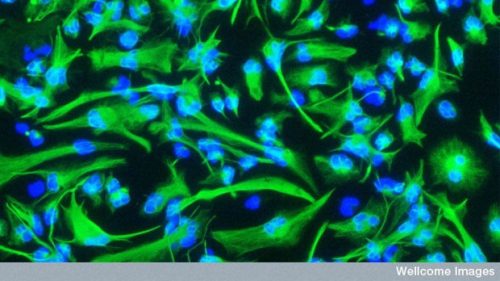


 Auxin – a key plant hormone – plays a prominent role in regulating plant developmental processes, and delineating its role is therefore the subject of intensive investigation. In their
  Cellular metabolism plays a vital role in development, beyond the simple production of energy, and may be involved in the regulation of cell fate. In their
  The process of neural tube closure is complex and involves cellular events such as convergent extension, apical constriction and interkinetic nuclear migration, as well as precise molecular control via the non-canonical Wnt/planar cell polarity pathway, Shh/BMP signalling, and the transcription factors Grhl2/3, Pax3, Cdx2 and Zic2. More recently, biomechanical inputs into neural tube morphogenesis have also been identified. In their