Recommended by Jane Langdale (University of Oxford)
If you read about plant development in textbooks you will be told that the shoot meristem, which gives rise to all the stems, leaves and flowers, is formed of distinct cell layers. In dicotyledonous flowering plants there are three layers: the outermost layer (L1) will give rise to the epidermis; the L2 layer will produce most of the subepidermal tissues of leaves and flowers; and the innermost L3 layer forms the stem and vasculature tissues. That these layers exist and that they make different contributions to the shoot does not seem so surprising now, but there was a time when even the number of the then called ‘germ’ layers was a topic of debate. There had been much interest in meristems since the mid 19th century, and scientists like Hanstein had already suggested that meristems might have 3 germ layers in some plants. There was the need to carefully determine whether that was the case in all higher plants.
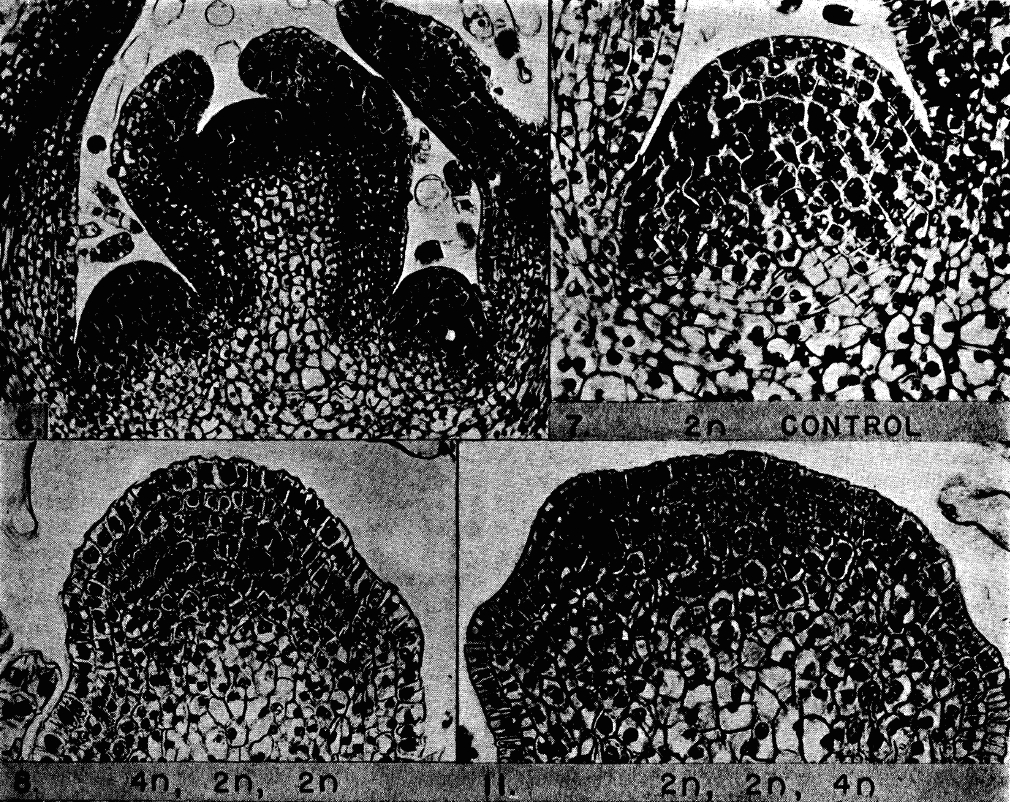
In the late 1930s, Amos Avery and his colleagues were on the case. But how do you investigate cell lineages when you are 60 years too early to use ‘basic’ labelling techniques like GFP-tagged proteins? What was needed was a way to genetically modify some of the cells of the plant so that you could identify their descendants and hence follow their fate, but it didn’t necessarily have to be a precise change. Realising this, Avery and colleagues took a blunt approach. They soaked seeds of Datura plants in colchicine to induce chromosome duplications. As colchicine inhibits spindle formation, chromosome duplication occurs without cell division, generating cells of different ploidy within a single seed – a chimera. It is important to note that the shoot meristem is fully formed in the embryo and hence these treated seeds contained shoot meristems in which some cells were polyploid and others were not.
Reproduced with permission of the American Journal of Botany
The seeds were grown in fields over the summers of 1938 and 1939, and the plants were regularly pruned to encourage the formation and outgrowth of lateral shoot meristems (which were ultimately derived from subsets of cells in the primary embryonic shoot meristem). Such an experiment is of course a game of chance, and as a result Avery and his colleagues obtained a huge range of chimera types, which they then used to study different aspects of plant development. In this particular paper, they examined the shoot meristem. Using cell size as a broad readout of ploidy, they examined how the cells of the shoot meristem were affected by the procedure. They noticed that you could find plants in which all the cells of the first layer had a different ploidy to the rest of the meristem. Sometimes they found plants in which the change in ploidy happened only in the cells of the second layer, and sometimes only in the cells of the third layer. And very occasionally you could find a plant where all three layers had different ploidy, e.g. the first layer was 2n, the second layer was 4n and the third layer 8n. Since ‘the response of any one layer to colchicine is independent of the response of the other two’, the authors concluded that the shoot meristem of Datura must have three independent germ layers. They also observed another phenomenon that is now textbook fact, namely that the cells in the 1st and 2nd layer (L1 and L2) mainly undergo anticlinal cell divisions (where the division plane is perpendicular to the cell layer) while the cells of the third layer can undergo divisions in any orientation.
This paper essentially reported the results of a single experiment, and did not go on to give further details on the subsequent development of the germ layers and on which organs originated from which layer. This is perhaps something we would expect in a modern paper, but science was different in those days so the authors saved those experiments for a subsequent paper. However, one should not underestimate the importance of this work. As Jane Langdale (who recommended this paper) put it, this was the ‘first demonstration that shoot apical meristems of flowering plants operate in the context of functionally distinct layers. A concept that is now so embedded that students rarely wonder how it was first shown.’
Further thoughts from the field
This study is a prime example of an early clonal analysis in plants. It provided direct information about the cell division patterns in shoot apical meristems and laid the basis for the tracing of cell lineages and the origin of tissues. Most importantly, it established the existence of three germ layers in plants.
Kay Schneitz, TU Munich (Germany)
Though molecular genetics has shown the importance of communication among layers in shoot meristem organization, we are far away from understanding its complexity and how this communication orchestrates layer-specific gene expression and the identities of individual cell layers. In the data rich science that we practice today, this paper is a must read for every developmental biologist, as it conveys the power of a single and carefully thought about experiment.
Venugopala Gonehal, UC Riverside (USA)
The American Journal of Botany has kindly provided free access to this paper until the end of June 2016!
—————————————–
by Cat Vicente
This post is part of a series on forgotten classics of developmental biology. You can read the introduction to the series here and read other posts in this series here.
You just started your research career, or maybe you just moved fields. The first thing on your to-do list is to catch up with the literature. What has been the latest progress? What are the open questions in the field? Ideally, you would go all the way back to the beginnings of the field and acquire a broad perspective of how research has changed and how the earlier works have impacted on current research. But time is short. The literature is just too vast, and the bench is calling, urging you to get started on your experiments. So you read a couple of recent comprehensive reviews, a bunch of papers from the last few years and a handful of the most significant earlier studies and move on to start your research project.
There is nothing wrong with this approach- there really is a vast number of papers out there, and time is limited. Unfortunately, this means that many important papers are overlooked. Certain ‘facts’ are taken for granted, and how they were obtained is not questioned. That chance encounter with an old result that could change the course of your research never takes place.
Aware of these issues, we have decided to launch a new series of posts called ‘Forgotten Classics of Developmental Biology’. We asked prominent researchers from all areas of developmental biology to suggest their favourite hidden gems and to explain why we should all revisit them. In this series we will provide you with a summary of each paper, alongside comments from the person who recommended it as well as from other researchers in the field. For those papers still not freely available online, we also aim to ask the publishers if they will provide free access to each paper for a limited period of time after the post is published. We hope this will give everyone a chance to benefit from re-reading these forgotten classics!
The list of papers that we plan to feature in this series is still growing, so if there is a ‘Forgotten Classic’ that you think we should cover, please get in touch. We would love to hear your suggestions.
The signalling systems that conduct the orchestra of embryonic development are fantastically complex and dynamic. We owe much of our knowledge of in vivo signalling dynamics to advances in microscopy and protein tagging with fluorescent reporters that have allowed visualization of signalling proteins. Looking forward, however, it is clear that simply analyzing the localization patterns of proteins is only the first step to fully understand signalling processes. Of course, a protein’s presence at a particular time or place in the embryo does not tell us if it is actively signalling or lying dormant until its activity is required. Therefore, generic methods to distinguish actively signalling proteins from passive proteins will be tremendously useful advances for researchers interested in developmental processes.
A few years ago, Darren Gilmour at the European Molecular Biology Laboratory (EMBL) in Heidelberg, Germany, realized that since many signalling events lead to the degradation, stabilization, or relocalization of participating proteins, methods for detecting changes in protein turnover could provide powerful proxies for in vivo signalling activity. Gilmour and his graduate student Erika Donà therefore took advantage of a dual-color genetically encoded fluorescent reporter called a “tandem timer”, newly developed by Michael Knop in the next-door lab at the EMBL. Tandem timers report on the age of protein populations through the relative fluorescence of adjacent slow- and fast-maturing fluorophores (Khmelinskii et al. Nat. Biotechnol 2012). In collaboration with Knop and his postdoc Anton Khmelinskii, Gilmour and Donà tagged the chemokine receptor Cxcr4b with a tandem timer with a view to observing Cxcl12a chemokine signalling activity across a migrating tissue, the zebrafish posterior lateral line primordium. They wagered that this strategy was likely to inform on chemokine signalling activity since Cxcr4b receptors undergo rapid internalization and degradation upon ligand-mediated activation. Higher Cxcl12a levels would increase Cxcr4b internalization rate and this should be reflected by a decrease in the receptor’s population age (increased protein turnover). Gilmour and Donà also understood the potential long-term implications of their attempt; a successful proof-of-principle study might lead to the adoption of the tandem timer as a generic tool for the detection of signalling activities.
At the time I was a postdoctoral researcher in Wolfgang Huber’s group at EMBL, and having collaborated with Knop and Khmelinskii on the original tandem timer paper, I was happy to get involved in this first project using tandem timers in embryos. Using image processing and analysis tools from R and Bioconductor software, I measured tandem timer signalling readouts from 3D images of migrating tissues, and used a mathematical model of timer behaviour to interpret the results. The model describes the maturation kinetics of the two fluorophores on the timer, as well as production and degradation rates of the tagged protein. What surprised and delighted me throughout my collaboration with Gilmour and Donà, was the extent to which quantitative analysis and modelling was able to feed back on subsequent experimental design, and positively influence later results. Ultimately our tandem timer observations, along with other data, allowed us to demonstrate that a self-generated chemokine gradient guides the migration of the zebrafish posterior lateral line primordium (Donà et al. Nature 2013).
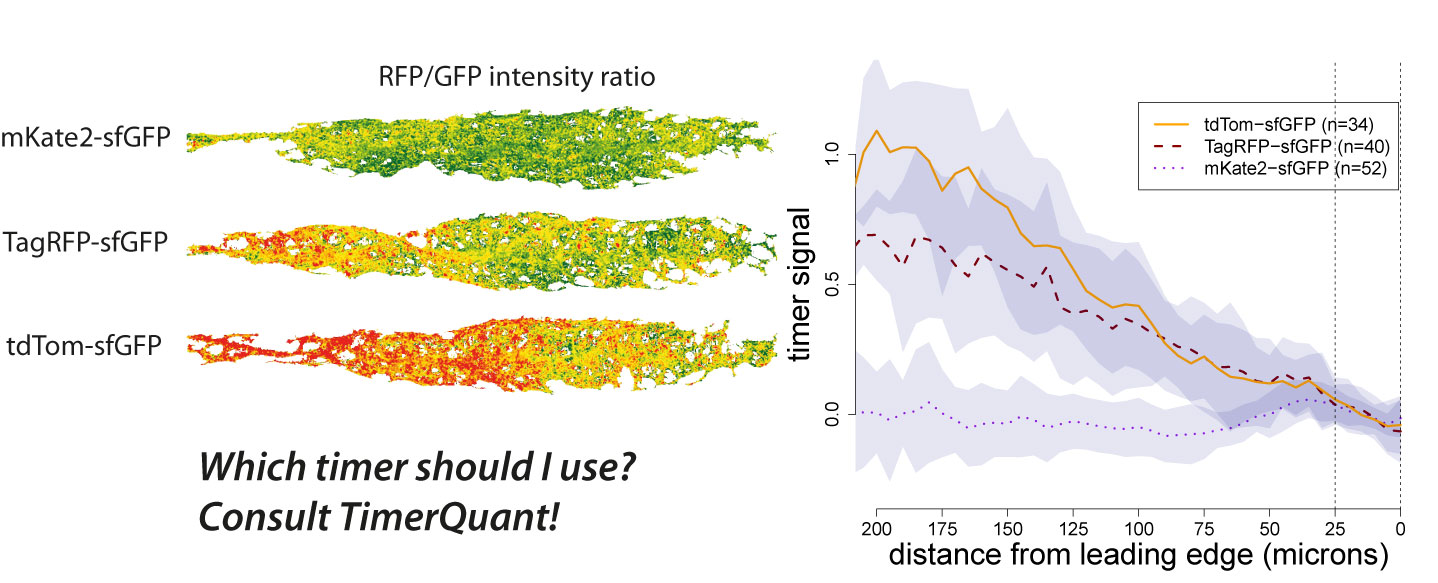
Tandem timers can be constructed with virtually any combination of spectrally separated fluorescent proteins with different maturation rates. Therefore, the first question an experimentalist typically asks when using tandem timers is: which fluorophores should I choose? We have been contacted by many groups asking exactly this question. As our ability to design timers and interpret timer data has benefited greatly from the use of modelling, we decided to write a paper outlining how our modelling tools could be used by other researchers interested in tandem timer research. To make these tools easily accessible we developed an interactive web application, TimerQuant, and made all our code available through the open-source software platform Bioconductor. For our new paper, which is now published in the journal Development (Barry et al. Development 2016), we systematically investigated the effect of relevant experimental parameters on timer signal, a measure of how good a particular timer is at detecting differences between two protein half-lives. To validate the predictions of our model, we reinvestigated the Cxcr4b signalling gradient identified in our original study using three tandem timers that had the same fast-maturing fluorophore (sfGFP), but different slow-maturing fluorophores (mKate2, mCherry, TagRFP). We found that timer signal decreased as the maturation times of the slow- and fast-maturing fluorphores became more similar. Readouts became noisier as protein abundance decreased. Timer signal increased with the maturation time of the slow-maturing flurophore, albeit at the expense of noisier readouts. While these conclusions might already be expected from a more qualitative reasoning, the quantitative model also led to some unexpected and intriguing findings. For example, Förster resonance energy transfer (FRET) between the fast- and slow-maturing fluorophores actually increased timer signal, a prediction that was borne out in our experiments, and which may be an important consideration for future timer designs.
In the initial model protein production (expression) and degradation rates were kept constant. Given that in developmental contexts these are likely to change over time, we decided to explore the effect of dynamics on timer ratio profiles. We modelled constant increases and decreases of protein expression and degradation rates as well as sudden bursts of expression and degradation, and looked at model solutions over time. The simulation results showed timer ratio profiles over time producing clear, characteristic responses to expression and degradation dynamics. We were surprised by the extent to which expression and degradation responses were distinguishable from one another. These additions to the model further help in the interpretation of timer ratio results in non-steady state conditions, which is often the situation when studying dynamic developmental processes. Moreover, as degradation rate could be experimentally fixed, for example by using non-degradable (or slowly degradable) versions of tandem timers, these model predictions open up the exciting possibility of using tandem timers to observe gene expression dynamics with time-lapse microscopy.
Here on the Node you can sign up for several mailing lists, but since they were implemented at different stages each sign up page was in a different place. To makes things simpler and easier, we have now created a single page where you can sign up to our three mailing lists:
Node Weekly emails– a list of all new posts published on the Node in the last week.
Occasional writing ideas– for those who want to post on the Node but need some inspiration.
Occasional news from The Company of Biologists– updates from our sister journals, workshops and grants.
If you haven’t sign up to these lists yet, or only signed up to some, you can do it now in our new Sign up page. We also added a new Sign up box on the right hand side column of the Node, so that this new page is easy to find. New users will also be given the option to sign up to these email lists upon registration.
You will also notice that that our daily update emails have now become weekly. In our recent survey several of you commented that our update emails were sent too frequently, so we hope that a weekly email will work better. Our first weekly email will arrive to your inbox tomorrow, also featuring a new look. As always, we welcome your feedback on these changes. Please feel free to leave a comment here or drop us an email!
TheBSDB Newletter 2015 is out! As you might have noticed, there was no BSDB summer newsletter this year. The reason for this is that the BSDB committee has taken the sensible decision to reduce them to one edition a year. Newsletters clearly do no longer play the same role as they used to. In times of the internet, they are no longer needed to update members on new developments of society matters or in the area of Developmental Biology. This is now done far better through the BSDB website and through The Node (also see page 9 of the Newletter). However, we feel that providing an overview of the year still is a service we owe to BSDB members, and which might provide an informative document also for future generations.
This year, the BSDB has implemented the new Cheryll Tickle Prize and we proudly announce Abigail Tucker as the well-deserved inaugural Awardee of 2016 (page 14). This prize is for outstanding women in their mid-career and our chair, Ottoline Leyser, explains the underlying rationale in her welcome note (page 2). As usual, this issue contains the reports by our secretary Kim Dale (page 3), meetings officer Joshua Brickman (page 4), treasurer Chris Thompson (page 7), communications officer (page 9) and, for the first time, a joined note by our graduate student rep Alexandra Ashcroft and postdoc rep Michelle Ware who explain to us their plans to improve services for young BSDB members (page 10). We congratulate all BSDB awardees of 2015 (page 6), introduce our new committee members (page 11) and present Ana Ribeiro’s report of the Autumn Meeting 2015 (page 5). Claudio Stern makes an important case for promoting developmental biologists for prizes and politically important memberships (to which the BSDB committee is responding already; page 16), and we explain our recent decision to become a full member of the Royal Society of Biology (page 23). Finally, we present four reports of the 2015 Gurdon/The Company of Biologists Summer Studentship awardees which clearly demonstrate the success of this scheme (page 17).
I hope you enjoy this issue and, in the name of the BSDB committee, would like to wish you a happy and successful new year 2016.
Andreas Prokop (Communications officer)
P.S. If you are interested in BSDB newletters of the last 10 years, they are archived on our website.
A running joke amongst avian developmental biologists is that the chicken (Gallus gallus) is the tastiest of the model organisms. A typical response from some of my mouse, frog or fish friends, would be that that is where the advantages end – the lack of the ability to do genetics in birds present limitations in the types of molecular analyses that could be done. Despite being so tasty, the chick is not the most cost effective lab animal to keep: It is big, and requires a large amount of space for housing, and it has a slow generation time of almost a year. These points make the development of genetic techniques in chick prohibitive to most labs. About 5 years ago, we decided to see what could be done with the zebra finch. Zebra finches have been widely used in studying behaviour and neural circuitry. They have the advantage of being small and have a generation time of about 3-4 months, the same as that for mouse. With support from the RIKEN CDB Director’s fund (Masatoshi Takeichi at that time) and from the Animal Facility (particularly Shinichi Aizawa, its then head), establishing our finch colony in the RIKEN CDB was straightforward. We bought the founders from pet shops in the Kansai region of Japan and housed them in our newly appointed finch room at the CDB. At this point we realised that many of the published protocols for finch husbandry were not optimal for egg production and so we decided to invest time optimizing these protocols.
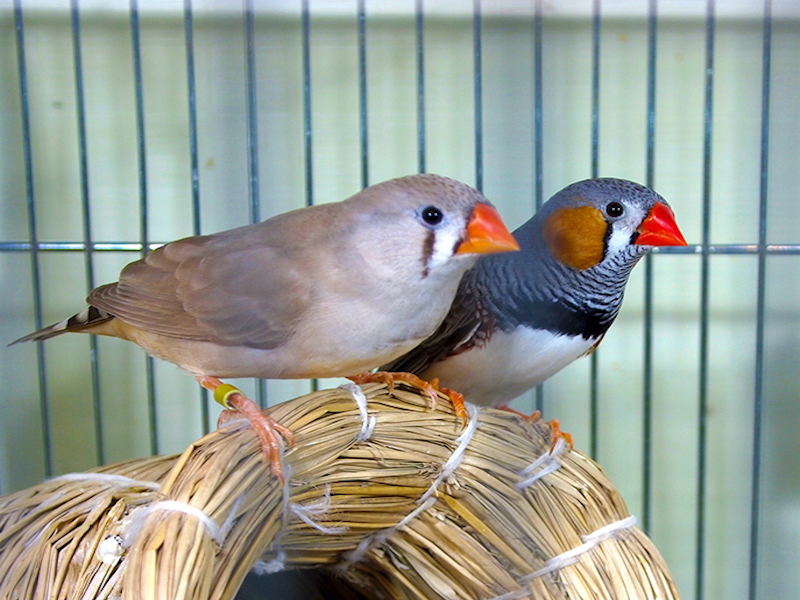
Zebra finch pair
Siu-Shan Mak (Suzanne) the lead post-doc who really drove the study, and Anna Wrabel-Suzuki, the animal technician in charge of looking after the birds, spent the first year studying the behaviour of the birds, and checking the quality of the eggs, tweaking the diet, lighting, and cage conditions so that we could house them in the best conditions for optimal fertile egg production. It was during these checks of egg quality that Suzanne noticed that the finch embryo was at a younger stage than the chick at laying. A small note here; birds undergo some development in utero, before the egg is laid. Chicks and quails lay their eggs when the embryos are just about to gastrulate (Eyal-Giladi and Kochav 1976). We found that finches lay fairly early, with the embryo at a late blastula stage. We thought that this difference would allow us some additional insights into early avian development.
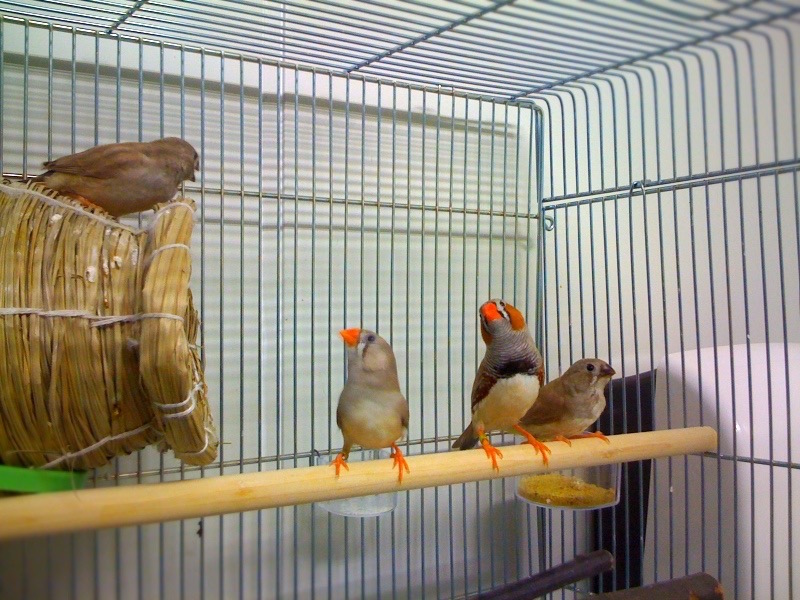
The zebra finch family
Around this time, the groups of Jennifer Nichols and Austin Smith published a series of papers describing the stage in mouse at which embryonic stem cells (ES cells) that showed naïve pluripotency could be derived (Boroviak et al. 2014). In this state, naïve ES cells can give rise to all cell types found in the embryo. It contrasts with primed pluripotency, where the cells (also called epiblast-derived stem cells or EpiSCs) have a more restricted potential (Nichols and Smith 2009). Another key difference of these cells is their sensitivity to the inhibition of an important signalling pathway intermediate MAP kinase: naïve ES cells were resistant to its inhibition whereas EpiSCs were not (Nichols and Smith 2012). The group showed that mice blastocysts at around E4 were able to generate naïve ES cells. At this stage the epiblast has been specified (as shown by molecular markers) but is yet to epithelialise. We found that the finch blastoderm at laying is similar: The epiblast, and indeed the hypoblast, are both specified but there is little morphological segregation, reminiscent of the pre-epithelialised epiblast. When we took cells from newly laid finch embryos, and cultured in the presence of a MAP kinase inhibitor, they retained the expression of pluripotent markers, and markers of naïve ES cells. Cells taken from later staged finches or from newly laid chicken embryos did not express pluripotent markers when MAP kinase was inhibited, behaving more like primed pluripotent cells. These results were presented in our recent paper in eLife (Mak et al. 2015).
We think that at the very least, the finch embryo could provide some comparative insights into the restriction of pluripotency in amniotes, and possibly would enable the generation of testable hypotheses when thinking about the evolution of pluripotency in mammals. Our hope that by combining new genome engineering tools with long-term finch ES cell cultivation and subsequent chimera generation, this work sets the stage for a tractable, genetic avian model system. These are some of the ideas we will be thinking about in our new labs in Kumamoto (Guojun) and in Bangalore (Raj).
Join the Biochemical Society in exploring the mechanisms of BMP signal transduction and regulation of signalling, and discussing how genetic and epigenetic alterations result in aberrant signalling and how this leads to cancer. The BMP signalling pathway is a key therapeutic target and we will consider how to manipulate the pathway with small molecules or biologics. The BMP Signalling in Cancer conference will bring together researchers from academe and industry, and will be a great opportunity for those working on BMP signalling, cancer, stem cells, structural biology and drug discovery to share data and interact in a vibrant, but informal environment.
Topics
Mechanisms of BMP signalling
Deregulation of BMP signalling in cancer and therapeutic approaches
Genetic and epigenetic alterations in BMP pathway components
BMP signalling in disease
There are selected oral communication slots in the programme and flash poster presentation opportunities available from poster abstracts.
This four-day long time-lapse shows the development of pre-implantation mouse embryos from the 2-cell stage to over 100-cells as the expanded blastocysts hatch from their zona pellucidas. These embryos were imaged using two-photon microscopy, which enabled us to visualize and track individual cells and lineages throughout pre-implantation development with good spatiotemporal resolution and excellent viability. Bright-field images were collected simultaneously, allowing us to visualize the over-all morphology of the embryos as they developed. Such a complete, bright-field movie of developing pre-implantation embryos is extremely useful for demonstrating the rapid and dynamic growth that occurs during the early stages of mammalian development.
Since our initial work on the subject had just been published when I made this movie, few people ended up seeing it outside of conferences or talks. Frequently, however, people would ask me to use it in their own slides and lectures, and we wanted to make it available to the community at large. The Node has been an excellent resource for developmental biologists, and I hope people are able to find this movie as useful and informative as the many others shared on The Node.
(Time stamp: hh:mm:ss, scale bar 40 microns. Source: McDole, K. and Zheng, Y., Carnegie Institute for Science – Department of Embryology).
This editorial by Olivier Pourquié and Katherine Brown first appeared in Development.
As a journal with its community very much at its heart, we here at Development believe it is essential to ensure we take your opinions into account when planning for the future. It was with this ethos in mind that we recently carried out a community survey looking at how well the journal reflects the current state and future directions of the field. Firstly, we’d like to take this opportunity to thank all of you who took the time to complete the survey – we were overwhelmed by the number of responses and by the detailed feedback we received. We’d like to report back on the results of that survey and on how these are now influencing the journal’s plans.
Developmental biology as a field is evolving. While these aren’t necessarily easy times for fundamental research, with funding tight and an ever-increasing pressure for work to have ‘translational impact’, we would argue that they are exciting times for our field. Genome sequencing and editing technologies have opened up a world of non-traditional model systems to genetic analysis, allowing us to probe the evolutionary and developmental mechanisms underlying the development of a wide range of species. Quantitative and computational techniques allow us to probe these mechanisms in greater detail. In vitro technologies using stem cells provide tools to analyse fundamental principles and mechanisms of cell proliferation, differentiation and even morphogenesis. These techniques are proving to be particularly important for providing insights into human development, which can not be addressed in vivo. Development’s mission is to publish the best research across the scope of our field: to publish papers at the cutting edge of modern developmental biology, as well as continuing to be the natural home for the best work in more traditional areas.
So, how well are we succeeding in that goal, and how well do you – our community – think we are doing? These were some of the questions we set out to explore with our recent survey, which gathered over 700 responses and included lots of detailed comments (see Box 1 for some of the key statistics). We’re still sifting through some of the data, but this has given us a very valuable impression of where you think Development sits within the publishing landscape. In general, you told us that the journal reflects our field very well. While a few of you raised some concern about a perceived decline in quality or influence, others told us that Development is the premier journal for the field and a key source of essential reading matter. We asked whether particular fields were over- or under-represented in the journal. Most of you think we are doing a good job in covering a broad spectrum of areas, although your comments have highlighted particular areas (such as quantitative, computational and systems biology, ‘omics, evo-devo and plant development) where perhaps we need to do more to attract more high-quality submissions. We are looking at ways of doing this and are, for example, in the process of putting together a Special Issue on Plant Development, which is still open for submissions (see http://dev.biologists.org/content/special-issue-plant-development). Some of you feel that we are publishing too much stem cell work (more on which below) or that too many of our papers use too narrow a range of model systems. But in general, it seems that although there are always improvements to be made, you feel that the papers we publish reflect the diversity of research being carried out in our community.
Question: Considering the content of Development over the past year or so, how well do you feel the journal reflects the state of the modern developmental biology field?
Rate on a scale of 1 (not at all well) to 5 (very well)
Average score: 4.15
Question: Please rate the extent to which you think changing Development’s name (e.g. to Development and Stem Cells or similar) could benefit/disadvantage the journal.
The second part of the survey focussed on our recent expansion into the stem cell field. This has been one of our major strategies over the past few years, and one that we have discussed extensively in previous editorials (e.g. Pourquié et al., 2013). We continue to believe strongly that this is an important direction for the journal (and for the field more generally), but we wanted to gauge opinions in the community and to ensure that we have your support in this. As we expected, responses here were quite polarised. The vast majority of you agree that Development should be publishing stem cell papers – particularly those where there is a clear link to an in vivo developmental biology process – and most of you feel that we have the balance of content about right. Your comments indicate that you, like us, recognise the deep connections between the two fields, and we are heartened to see that we have your support. That said, some of you expressed strong opposition to this move, arguing that most stem cell research isn’t really developmental biology, that stem cells are a ‘hot topic’ right now but that this is a passing fad, or that there are plenty of other stem cell journals out there and that Development should stick to core aspects of developmental biology. While we respect these opinions, our viewpoint is rather different. Clearly there are aspects of stem cell research, particularly the more translational work, that do not directly relate to developmental biology, and these do not belong in the pages of Development. Still, much of stem cell research, even the exclusively in vitro work, is clearly informed by developmental principles, or contributes to our understanding of these principles. The stem cell field is here to stay, although it will – like developmental biology – evolve over time, and we see an important role for Development in bridging the gap between these two interlinked fields.
We will therefore continue to strengthen our efforts to attract the best stem cell research to the journal. In particular, we are very keen to publish more research on human development (a field that several of you told us was under-represented in our pages). Our 2015 Special Issue on Human Development (see Pourquié, 2015) showcased some fantastic research in this field, and we have recently attracted more submissions in this area – a trend we hope we will continue. To this end, we are organising a meeting on this topic (a follow-up to our highly successful 2014 event) for September 2016; for more details, see http://www.biologists.com/meetings/from-stem-cells-to-human-development-2016/. We are also delighted to announce that we have recruited two new editors to Development’s editorial team. Paola Arlotta has joined the team to replace Magdalena Götz, who stepped down last year and whom we thank for her dedicated service to the journal. Paola, who is based at Harvard University (USA), is an expert in cortical neurogenesis, with a strong interest in how neuronal progenitor fate is regulated and how our understanding of these processes might impact on potential regenerative therapies for nervous system disorders. Rong Li steps down from the editorial team at the end of 2015, and we are also very grateful for her contribution over the past five years. Rather than recruit a direct replacement for Rong, we have instead decided to create a new ‘Guest Editor’ position. This temporary position will allow us to focus on a particular field of interest, and will be used over time to promote different up-and-coming areas of developmental biology. In keeping with our strategy to promote the analysis of developmental mechanisms using stem cell systems, our first Guest Editor will be Melissa Little (Murdoch Childrens Research Institute, Australia). Melissa has a long-standing interest in kidney development, and is now pioneering research into generating kidney tissues in vitro from human stem cells. We are absolutely delighted to welcome both Paola and Melissa to the editorial team.
Returning to the survey, perhaps the most controversial part asked whether Development should consider changing its name to reflect the inclusion of stem cell research. This is something we had been discussing internally – as it might help us to attract more and higher quality submissions from the stem cell community, as well as more accurately echo the current content of the journal – but without a clear consensus among the editorial team we wanted to gauge the opinion of the broader community. A clear majority of you said that changing our name would disadvantage the journal. While most of you responded that any potential name change would not affect the likelihood of your submitting to, reviewing for or reading Development, it is clear that our community wants Development to remain ‘Development’. And so it shall.
What other lessons have we learned from this survey? Interestingly, it seems that opinions about the journal are remarkably consistent across the age and career stage range. We already knew that many more established members of our community recognise the value of a journal like Development, but it was particularly pleasing to see that most early career scientists do too. We hope this stands us in good stead for the future, as those students and postdocs progress through their career. We also saw that, while many of you know about our publisher – The Company of Biologists – and its not-for-profit status and charitable activities, a sizeable proportion of the community does not know much about the organisation behind the journal. For those of you interested in finding out more, please see our recent editorial (Pourquié et al., 2015). Finally, and perhaps most importantly, we learned (from the size and nature of the response to this survey) just how much you care about Development. Your continued support and engagement is what keeps Development the important journal that it is, and we are hugely grateful to have it.
We would like to close by thanking all those who contribute to Development’s success. Our editors, editorial board members, staff and authors gain public recognition, but the importance of our dedicated referees should also be acknowledged. All those who reviewed for the journal in the past 12 months are listed in the supplementary information, and we are truly thankful for their time and dedication that ensures the quality of the work we publish.


 This post is part of a series on forgotten classics of developmental biology. You can read the introduction to the series here and read other posts in this series here.