
The community site for and by
developmental and stem cell biologists

From a travel fellowship to starting your own lab

Posted by , on 4 February 2014

Until last year, I was a bioinformatician post-doc in the laboratory of Prof. Richard Harvey, at the Victor Chang Cardiac Research Institute in Sydney. My project consisted of deciphering the regulatory network that controls heart development and how this network might be perturbed in disease conditions, such as congenital heart disease (which in Australia affects one in a hundred newborn babies). For this, we used a mouse cell line (HL-1 cells) which was a great system to rapidly obtain all the genome-wide information that we needed for the project, but had its limitations since it is an adult cell line that is cultured in vitro. In the meantime, the laboratory of Dr. Eileen Furlong at EMBL Heidelberg in Germany published a new method, BiTS-ChIP-seq (Bonn et al., 2012), that allows to obtain genome-wide information from tissue specific cell-types in vivo. Using this method in the developing zebrafish, in a transgenic line that specifically labels heart nuclei (cf image), would be the perfect experiment to gain insight into the nature of this gene regulatory network in vivo.
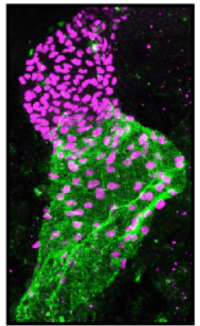
zebrafish Tg(cmlc2::dsRednuc) transgenic line co-stained with S46 (Ramialison lab)
Zebrafrish embryonic heart nuclei (red) and atrium (green)

Zebrafrish embryonic heart nuclei (red) and atrium (green)

When I started to plan the experiment, I was daunted by the detailed published protocol due to its length and complexity, but mainly due to my own limitations- it included many techniques that I had never performed before. My time was limited, as my post-doc was ending at the end of the year. The quickest way to get these experiments going was to get “hands-on” experience on this protocol. These are the times when I miss Europe, where I could just hop on a train and visit a large number of diverse laboratories nearby. Yes, I am in Australia, and “popping-in” to visit any European laboratory involves a 24-hour flight (one way) and lots of $$. Fortunately, our grants management officer encouraged me to apply for a Development travelling fellowship from the Company of Biologists to support this visit. Thanks to this fellowship, I had the hands-on experience to learn the protocol and its “tricks” that I wanted, which probably saved me months of trials to get it right.

Far beyond the technical knowledge that I gained, receiving the fellowship also had great repercussions on my career path. At the time I was doing this work, I was also in the process of looking for independent positions and writing grants to fund it. I submitted a proposal to the Australian Research Council that included the BiTS-ChIP-seq experiments, in collaboration with Dr. Furlong’s laboratory. An important criterion for the grant was to provide evidence of this collaboration, ideally by showing co-authored publications. Since we had not published together at that time, the visits to Dr. Furlong’s laboratory definitely testified for the feasibility of these experiments in my hands, which was essential for the success of the grant.

In summary, receiving the Development travelling fellowship allowed me to save time on experiments, strengthen my collaborations around the world, and help to win my first grant to start my lab at the Australian Regenerative Medicine Institute in Melbourne.


Thumbs up (7 votes)
Loading...

Tags:
Categories: Careers, Funding

Navigate the archive

Use our Advanced Search tool to search and filter posts by date, category, tags and authors.

This month on the Node- January 2014

Posted by , on 3 February 2014

January was a busy month on the Node, particularly our jobs page, which included several new postdoctoral positions, as well as PhD studentships, group leader and technician positions.

Here are some of the other highlights:


Research:

Conceptual-Raeppli.001 (smaller)– Yan Yun wrote about his recent Development paper examining the origins of aneuploidy by tracking chromosomes and their kinetochores in oocytes from young and aged mice.

– Oguz discussed the development of Raeppli, a new technique that allows whole tissue labelling in Drosophila.

– and Christele’s stem cell image choice this month is from a Cell Reports paper showing that the junctional adhesion molecule JAM-A is essential for the survival and growth of the cancer stem cells found in glioblastoma.


Science life:

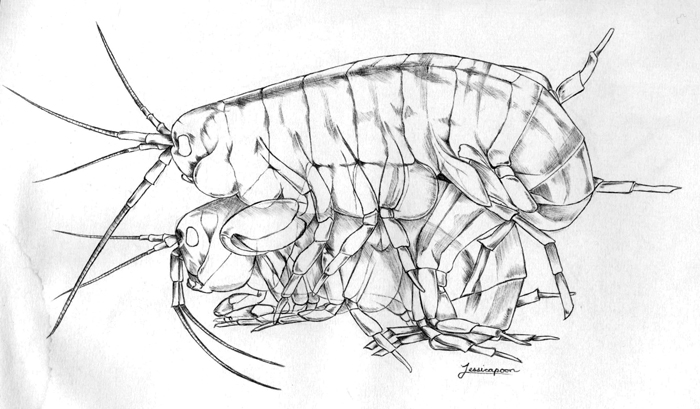
– Erin kicked off our model organism series in 2014 with her post ‘A day in the life of a Parhyale lab’– make sure to read it to learn all about using beach hoppers in developmental biology.

– Máté discusses the experience of returning to his home country Hungary to establish his own lab after a PhD and postdoc abroad.

– And Sonia, a postdoc at the National Centre for Biological Sciences in India, wrote about her recent collaborative visit to a lab in California.

Parhyale Amplexus. Drawing by Jessica Poon.

Also on the Node:

L0018664 M. Klein's hands, writing.– If you are keen in writing on the Node but have never blogged before, we collated a list of handy tips to get you started.

– We had a look at our stats to find the top posts of 2013.

– And there is less than a month left to participate in our outreach competition!


Happy reading!


 Writing image: Wellcome Library, London

Thumbs up (No Ratings Yet)
Loading...

Categories: Highlights

Of non-existent black holes and pickled stem cells

Posted by , on 2 February 2014

Physics and Biology were the media darlings last week. Earlier, one of my favorite physicists Professor Stephen Hawking claimed through his paper that there are no black holes! Well… later I realized he actually insist in calling it with different name, “Metastable bound states of the gravitational field”!!! I know I am not meant to explore the nature of black holes. Nevertheless, While I was contemplating over the yes-or-no event horizon, there came hey-remember-you-are-a-biologist kind of reminder articles in Nature and makes a sensation. I first read about it from a random free newspaper on London Tube. Now you know how quickly it hit the media!

Untitled-2

By now, most of people who work in the research field which uses key word “stem cells” should be aware of these two articles. So me not going into much details. Apparently, Haruko Obokata and Charles Vacanti’s team has done amazing job in showing a new method to derive iPS-like cells (as Yamanaka calls it). The method involves exposing the cells to stress, like comfortable acidic pH. And the rest of the story is well known.

Now, the lesson for me from these two articles is not only how I can reprogram cells in a new way but also how an alternative thinking can lead to breakthrough discoveries. Most of the scientists often plunged into narrow topics that often restricts to think outside the lab. As the lead author says, the original idea occurred to her when she thought about plants how they regenerate missing parts when it get chopped off. Obviously plants do not need to overexpress Yamanaka factors-like factors or any genetic manipulation to regenerate. In plants, mostly the regeneration is induced by stress. By inspired by this, the authors tried various stress applications including to squeeze the cells through narrow capillary pipettes (of course, without killing) and see if it could make the cells to do something different. And the ingenious idea of dipping cells in low pH worked out! Inspirations all around us, we need to keep eyes open, a bit wider.

Lateral thinking is vital in biology and science in general, I say!

This post is also available in our lab blog – wattlab blog. Please visit for more interesting topics and discussions.

Further reading

S. W. Hawking (2014) Information Preservation and Weather Forecasting for Black Holes. Preprint at http://arxiv.org/abs/1401.5761.

Obokata et al., (2014) Stimulus-triggered fate conversion of somatic cells into pluripotency. Nature. 505, 641–647.

Obokata et al., (2014) Bidirectional developmental potential in reprogrammed cells with acquired pluripotency. Nature. 505, 676–680.


Thumbs up (3 votes)
Loading...

Categories: News, Research

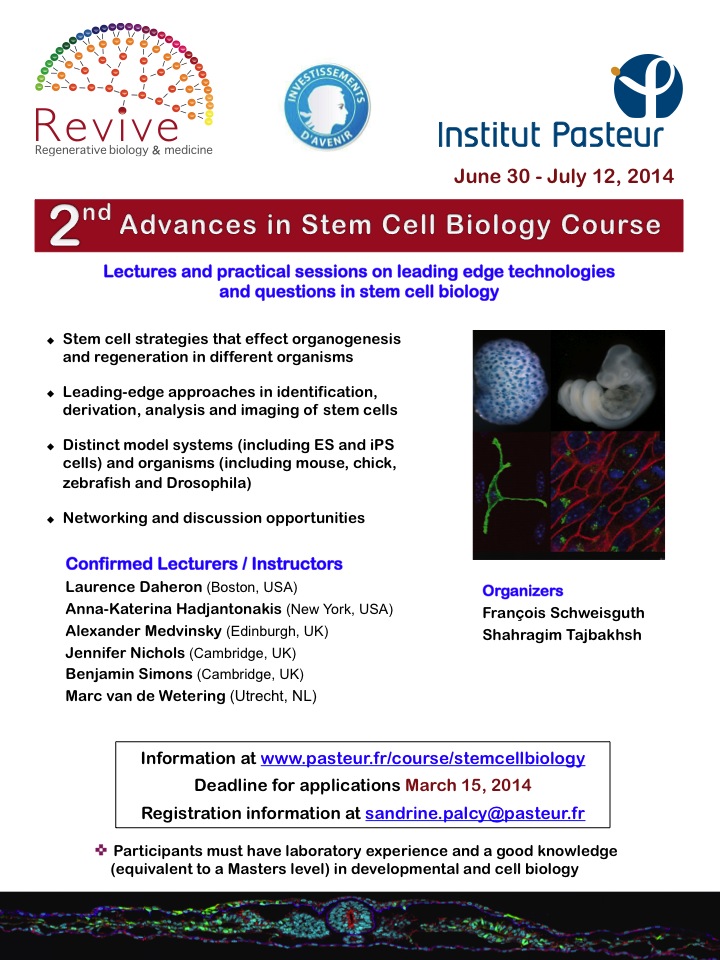
2nd Advances in Stem Cell Biology course – June 30-July 12, 2014 – Institut Pasteur, Paris (Labex Revive)

Posted by , on 31 January 2014

StemCellCourse_Flyers_2014_v2


This two-week course combines lectures and practical sessions to leading edge technologies and questions in stem cells biology in the context of organogenesis and regeneration in different organisms.

This course is intended for research scientists and PhD students who already have laboratory experience and a good knowledge (equivalent to a Master level) in developmental and cell biology. It provides a wide scope of how stem cells have adopted strategies to effect organogenesis and regeneration in different organisms.

The practical part covers methods and techniques that will allow participants to reproduce state of the art technologies in their own research activities. Leading-edge approaches in identification, derivation, analysis and imaging of stem cells will be presented. Distinct model systems and organisms have been chosen to expose the participants to the advantages and challenges in each paradigm and to provide added insights into the biology of stem cells. The models include mouse, zebrafish, Drosophila, and ES and iPS cells.

Lectures will be presented by selected speakers who investigate not only stem cells but also use innovative technologies.

Networking and discussion opportunities will be enhanced by the convivial formal and ad hoc discussion sessions in the teaching facilities.

For more detailed information the program of the 2013 course can be dowloaded (at http://www.pasteur.fr/sites/www.pasteur.fr/files/programme_ascb.pdf); some topics and practical sessions might change from year to year, without altering the general frame and means of the course.

Thumbs up (No Ratings Yet)
Loading...

Tags: ,
Categories: Education, Events, News

Cancer stem cells: quite beautiful, mainly scary…

Posted by , on 31 January 2014

january picture edit

Of all the types of stem cells, there is a kind than can be a lot more scary than beautiful: the cancer stem cell. Although the concept of cancer stem cell is still controversial among the scientific community, it is of great medical interest to further understand these cells so that we develop better strategies to tackle them. Cancer stem cells are described as cells with regular stem cell characteristics, they can – self renew (make identical copies of themselves) and – differentiate (give rise to multiple cell types). However, contrary to normal stem cells, they can also give rise to malignant tumors.

Since normal stem cells and cancer stem cells share many characteristics, it is a major challenge to identify molecules (also called markers) that are specifically located on malignant cells and not healthy ones, or mechanisms that are important for the function of malignant cells but not for the function of healthy ones.

In a recent study published in Cell Reports, Lathia and colleagues showed that the junctional adhesion molecule JAM-A was essential for the survival and growth of the cancer stem cells found in glioblastoma, a type of brain tumor; but dispensable for normal brain stem cell function.

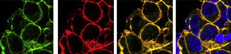
In this image, you can observe cancer stem cells obtained from a patient’s glioblastoma and grown in-vitro. In green is JAM-A protein, in red is α-6 integrin protein, and in blue are cell nuclei. Overlap of the green and red (yellow) shows that cells that express α-6 integrin also express JAM-A. Since α-6 integrin was shown to be a marker for glioblastoma cancer stem cells in a previous study by the same group, this picture confirms that JAM-A, being located on the same cells as α-6 integrin, can also be used as a marker for glioblastoma cancer stem cell.

Further down in the study, Lathia and colleagues show that JAM-A is almost undetectable on healthy brain stem cells. Also, blocking of JAM-A reduces cancer stem cell growth but does not affect the growth and function of other healthy brain stem cells. Altogether, since JAM-A is specifically important to glioblastoma cancer stem cell function, it could a promising therapeutic target for treating this type of cancer, making those stem cells a little less scary.


Lathia, J. D., Li, M., Sinyuk, M., Alvarado, A. G., Flavahan, W. A., Stoltz, K., Rosager, A. M., Hale, J., Hitomi, M., Gallagher, J. et al. (2014) ‘High-throughput flow cytometry screening reveals a role for junctional adhesion molecule a as a cancer stem cell maintenance factor’, Cell Rep 6(1): 117-29.

doi: 10.1016/j.celrep.2013.11.043


Thumbs up (2 votes)
Loading...

Tags: , ,
Categories: Research

Young Group Leader Positions in Stem Cell Biology – Institut Pasteur, Paris

Posted by , on 31 January 2014

Closing Date: 15 March 2021

Young Group Leader Positions

in Stem Cell Biology

The Institut Pasteur (Paris, France) announces an international call for candidates wishing to establish independent research groups. The recruitments are part of the Revive Laboratory of Excellence (LabEx) programme on “Stem Cells and Regenerative Biology and Medicine”. Candidates will be integrated into the cutting edge interdisciplinary environment provided by the Department of Developmental & Stem Cell Biology. Candidates specializing in the field of stem cells in the context of developmental and cell biology, genetics, epigenetics, regeneration, translational research and ageing are encouraged to apply.

To be eligible, candidates must have defended their PhD on or after June 15, 2006 (women with children are eligible up to 11 yrs after their Ph.D). Successful candidates will be appointed as head of a group of up to 6 people for a period of 5 years. The budget (up to €1,500,000 over 5 years) includes the salary for the group leader, a three-year postdoctoral position, a technician’s position, part-time secretarial assistance, a substantial contribution to running costs and equipment, and access to on-campus facilities including state-of-the-art technology core facilities. Candidates should send their formal applications by E-mail to the Director of Scientific Evaluation, Prof. Alain Israël, at the Institut Pasteur (g5revive@pasteur.fr).

Application deadline: June 15, 2014

Short-listed candidates will be contacted for interview to be scheduled for beginning of September 2014 and recruitment decisions announced by October 2014. Further information on the Revive program can be found at http://www.pasteur.fr/revive

Applicants should provide the following (in order) in a single pdf file:

1. A brief introductory letter of motivation, including the name of the proposed group. Candidates are encouraged to contact the coordinator of the Revive programme Shahragim Tajbakhsh (shaht@pasteur.fr).

2. A Curriculum Vitae and a full publication list.

3. A description of past and present research activities (up to 5 pages with 1.5 spacing; Times 11 or Arial 10 font size).

4. The proposed research project (up 10 pages with 1.5 spacing; ; Times 11 or Arial 10 font size).

5. The names of 3 scientists from whom letters of recommendation can be sought, together with the names of scientists with a potential conflict of interest from whom evaluations should not be requested.


Thumbs up (No Ratings Yet)
Loading...

Tags: , , , , , , ,
Categories: Jobs

Post-doc opportunity in Melbourne, Australia. Investigating craniofacial development & neural tube closure

Posted by , on 31 January 2014

Closing Date: 15 March 2021

An exciting opportunity exists for a highly motivated individual to join the Epidermal Development Laboratory in the Department of Medicine. The group has an interest in understanding the mechanisms underpinning epidermal development and homeostasis.

As the Research Officer or Senior Research Officer, you will investigate the genetic pathways which regulate vertebrate craniofacial development, with a focus on Grhl2, one of the genes responsible for facial skeletal development. The project will involve molecular and cellular experiments, histology and animal handling.

Any Enquiries to

Dr Sebastian Dworkin, Senior Research Fellow, +61 3 9903 0072

For more details visit : http://www.seek.com.au/job/25919366

Thumbs up (1 votes)
Loading...

Categories: Jobs

Technical assistant in IIMCB, Warsaw, Poland

Posted by , on 29 January 2014

Closing Date: 15 March 2021

IIMCB (http://iimcb.gov.pl) is the top-ranked Polish research institute in the field of biology.

The institute provides cutting-edge equipment and facilities, including a newly established zebrafish facility, bioimaging facilities, strong bioinformatics cluster, and structural biology. The IIMCB is committed to provide a supportive and inclusive work environment.

A full time technical assistant position is available starting from April 2014 for a highly motivated researcher in the laboratory of Zebrafish Developmental Genomics. This position is funded by the EC FP7 grant “FishMed – Fishing for medicines and their targets using zebrafish models of human diseases” and will be available for 2 years with the possibility of extension.

The group will apply state-of-the-art genomics approach to study the gene regulatory networks regulating embryonic development in zebrafish. Responsibilities include providing technical expertise to support research (e.g. general molecular biology and biochemistry techniques, FACS, in situ hybridization, microscopy, zebrafish embryo techniques), and general management of the laboratory which include keeping track and purchasing of laboratory stock reagents or equipment.

Position requirements

The candidate should hold a first degree in biology or other equivalent fields and demonstrated laboratory experience with expertise in basic molecular biology and biochemistry techniques including nucleic acid and protein isolation, molecular cloning, real-time PCR, and western blot among others. Experience with FACS, preparation of next generation sequencing libraries, and working with zebrafish is highly desirable but not essential. The ideal candidate should be self-motivated and have excellent organisational skill and attention to detail. He/she must be capable to work as part of a team and possess good communication and interpersonal skills.

The successful candidate is expected to start work by 1st of April, 2014. We offer a competitive monthly salary which is adjusted to the cost of living in Warsaw.

Please forward your complete application including a CV, a motivation letter, and the names of two referees to cwinata[at]iimcb.gov.pl by 15th of March, 2014.

Thumbs up (No Ratings Yet)
Loading...

Categories: Jobs

Two postdoctoral positions in zebrafish developmental genomics, IIMCB, Warsaw, Poland

Posted by , on 29 January 2014

Closing Date: 15 March 2021

Two postdoctoral positions in zebrafish developmental genomics, IIMCB, Warsaw, Poland

IIMCB (http://iimcb.gov.pl) is the top-ranked Polish research institute in the field of biology.

The institute provides cutting-edge equipment and facilities, including a newly established zebrafish facility, bioimaging facilities, strong bioinformatics cluster, and structural biology. IIMCB is committed to provide a supportive and inclusive work environment.

The laboratory of Zebrafish Developmental Genomics was setup in partnership with the Max Planck Institute for Heart and Lung Research (MPI-HLR), as part of the EC FP7 grant “FishMed – Fishing for medicines and their targets using zebrafish models of human diseases”. Our research applies state-of-the-art genomics approach to study the mechanism of embryonic development. The current focus of our research is to elucidate the gene regulatory networks and epigenetic mechanisms regulating various stages of heart development as the initial step towards understanding congenital malformations in human.

IIMCB invites applications from motivated and talented individuals for two postdoctoral positions in the lab of Dr. Cecilia Winata to work on the following projects:

1. Elucidating the gene regulatory network of cardiac development in zebrafish

Project background and description

The project aims to elucidate the gene regulatory networks of heart development in zebrafish. The successful applicant will apply chromatin immunoprecipitation followed by next generation sequencing (ChIP-seq) to characterize downstream regulatory mechanisms of key cardiac transcription factors during several stages of heart development. The project will involve the use of molecular biology and biochemistry methods in addition to standard techniques in zebrafish research.

Position requirements

The ideal candidate should hold a PhD in molecular biology, developmental biology, biochemistry, or other relevant fields. A strong background in molecular biology and biochemistry is required. Candidates with strong interest in genomics or developmental biology are encouraged to apply. Experience in handling genomics data and research using developmental model organisms are desirable but not essential. The successful candidate will be given the opportunity to develop his/her own projects and attend international training or conference. We offer a very competitive monthly salary which is adjusted to the cost of living in Warsaw. The position is available from 1st of May 2014,  for 2 years with the possibility of extension, depending on grant or fellowship applications.

Please forward your complete application including a CV, a motivation letter, and the names of two referees to cwinata[at]iimcb.gov.pl by 1st of April 2014.


2. Epigenetics of heart development in zebrafish            

Project background and description

The planned research aims to characterize the epigenetics of heart development. The successful candidate will use the ChIP-seq method to profile the epigenome at several stages of heart development in zebrafish (wild-type and heart mutants). The project will also involve the use of techniques in molecular biology and zebrafish research.

Position requirements

The ideal candidate should hold a PhD in molecular biology, developmental biology, or other relevant fields. Expertise in molecular biology and familiarity with basic biochemistry techniques (SDS-PAGE, co-immunoprecipitation, EMSA) are essential. Candidates with strong interest in epigenetics or developmental biology are encouraged to apply. Experience in genomics, chromatin biology, and research using developmental model organisms are highly desirable but not essential. The successful candidate will be given the opportunity to develop his/her own projects and attend international training or conference. We offer a competitive monthly salary which is adjusted to the cost of living in Warsaw. The position is available from 1st of May 2014, for 2 years with the possibility of extension, depending on grant or fellowship applications.

Please forward your complete application including a CV, a motivation letter, and the names of two referees to cwinata[at]iimcb.gov.pl by 1st of April 2014.


Thumbs up (No Ratings Yet)
Loading...

Categories: Jobs

18 months post-doctoral position at iBV in Nice, France

Posted by , on 28 January 2014

Closing Date: 15 March 2021

A post-doctoral position is available in the Neurodevelopment Team at the iBV, Nice, France, to create and study new mouse genetic models that, together with the established Otx2 conditional knockout model, will help disentangling the roles of Otx proteins in retinal development and function. The project will use the CRISPR/Cas9 strategy to generate new alleles that will be instrumental to characterize the repertoire of target genes of Otx family members. Our approach is based on a strategy that was successfully used for Otx2 and that led to the identification of new genes relevant to retinal diseases. We will take advantage of time series analyses of gene expression by RNA-seq to achieve a non-biased identification of direct target genes.

The candidate will contribute to the creation of new mouse genetic models aimed at deciphering to which extent Otx proteins act redundantly in development. Candidates should hold a PhD in cellular and molecular biology. Experience in mouse molecular genetics is required. The successful candidate will possess strong self-motivation, excellent written and spoken English communication skills and team spirit.

The institute of Biology Valrose, (iBV http://ibv.unice.fr), is a leading Center for research in cellular and developmental biology. It is located on the Valrose Campus of the University of Nice. It hosts an international PhD program and welcomes post-doctoral researchers from more than 20 countries, which makes it very lively. Nice is a beautiful city on the French Riviera with a cosmopolitan lifestyle.

Please send full CV including research interests and the name of 2-3 referees by email to Thomas Lamonerie (lamonerie@unice.fr)
iBV, UMR UNS CNRS7277 INSERM1091, Université de Nice Sophia Antipolis
Parc Valrose, 28 avenue Valrose, 06108 Nice cedex 2, France.

Thumbs up (No Ratings Yet)
Loading...

Categories: Jobs