Submitted by Andrew Renault:
“An example of purely basic research, using beautiful live imaging to overturn previously held ideas about how an oocyte nucleus is repositioned to break radial symmetry.”
From December 1 to 24 we are featuring Node readers’ favourite papers of the past year. Click the calendar in the side bar each day to see a new paper. To see all papers submitted so far, see the calendar archive.
Roger Barker is Professor of Clinical Neuroscience at the Cambridge Centre for Brain Repair, and one of the authors on a recent Development paper from Elena Cattaneo’s group in Italy, about the derivation of functional neurons from human stem cells. EuroStemCell has published a range of videos by several authors involved in this paper, but here we spend a bit more time with Roger Barker to talk about his international collaborations and his work looking at verification of stem cell-derived neurons. One of the questions is from his EuroStemCell video interview (conducted in collaboration with the Node), and the other two are unique to the Node.
What was your role in this project?
The work that I’ve been doing on this paper with Elena Cattaneo is to look at the normal development of the human striatum. The striatum is particularly important for the work that I do, because the early pathology of Huntington’s disease is found within that structure. Ultimately, what we’re trying to do is to replace the striatal cells, which are lost as part of Huntington’s disease, by some equivalent – whether it be from a stem cell source or a fetal source.
Elena has been very keen to make these cells from a stem cell source and to validate that the cells you get at the end look like the cells that are there in the original state, we’ve looked at the normal development of the human striatal system. This has involved collecting human fetal tissue at different ages and then staging it and staining it for a series of markers to show when the transcription factors and other markers come on as the striatum normally develops. The earliest stage we got was 3-4 week old human fetuses, which then extended up to 11-11.5 weeks. By verifying those markers in normal human development and correlating them with what you see in striatal cells derived from stem cells, you can say whether they are actually one of the same.
Elena Cattaneo’s lab is in Italy, and you’re in the UK. What is the benefit of such an international collaboration in work like this?
One of the great challenges with doing work on stem cells across Europe is the different political landscape in the different countries where the work is actually done. I’m part of a consortium called NeuroStemcell, which links groups of scientists in the United Kingdom with people in Sweden, Germany, and Italy, and is able to allow for valuable human tissue and stem cell expertise to be brought together efficiently across the EU. Of course each country has its own agenda and its own rules with respect to work on fetal tissue and stem cells, which can make this type of work difficult at times. I also lead a Europe-wide transplant programme for Parkinson’s disease called Transeuro, which is bringing together groups from Germany, France, Sweden, Austria, and the UK to develop a treatment method for Pakinson’s disease using human fetal tissue. Again, there are huge differences in the regulation and use of that tissue between countries.
So on the one hand you have this great ability to bring expertise together across Europe, with all the complementary techniques and abilities to really crack key questions, but you also have to do that in a regulatory context that can make it extremely difficult. One of the outputs from NeuroStemcell, for example, may be to develop a cell therapy from an embryonic stem cell source, which could not then be necessarily used in all the countries in which it was actually developed. But the advantage of NeuroStemcell is that you have this amazing capacity to link resources. In this particular paper, the group in Italy, led by Elena, have such fabulous expertise in developing striatal neurons, but their lack of access to human fetal material makes it very difficult for them to do the project without collaborating with a lab like ours, in a country that does have access to fetal material. So these are truly international collaborations and without either party the project wouldn’t happen.
How does this work compare to other studies in the same field?
This is a pretty major study, because people have been trying to develop protocols to take human embryonic stem cells through to striatal DARPP-32-positive neurons for a while. Of course, as in a lot of areas in this field, people always make claims that they’ve achieved this, but often the data are not quite as robust as they first seem.
In the early days of stem cell biology, verification of the final cell type derived from a stem cell usually only involved testing for a single marker, but now the requirements extend beyond this. Now one wants to see that the cell not only expresses the marker that you’ve defined as being of paramount interest, but all the other markers which are evidence that the derived cells is equivalent to the mature native cell. This is where the developmental study we’ve done with human fetal material is very helpful as it shows that the stem cell derivatives follow and express all the markers found in normal development. In addition it is also necessary to show that the derived neurons are electrically active in a way that you’d expect and has the neurophysiological signature of the cell we’re interested in- in this case DARPP-32 striatal neurons. Finally it is important to show not only that the cells look neurophysiologically, developmentally and anatomically like their host equivalent, but that on grafting they can be integrated into a circuit in the appropriate fashion.
Trying to make these striatal cells has been a major challenge in the field. There was a paper either earlier this year in Cell Stem Cell in which the authors claimed that they had produced a similar cell to the one that we have in this paper. I think, again, that the extent to which it is exactly the same as the type of cell we’ve produced is debatable.
These type of verification experiments are very important, because there is now a great desire to try these cells in clinical trials, but we only want to do that if we’re absolutely convinced that the cell we have is the cell we think we have.
Article: Carri A.D., Onorati M., Lelos M.J., Castiglioni V., Faedo A., Menon R., Camnasio S., Vuono R., Spaiardi P. & Talpo F. & (2012). Developmentally coordinated extrinsic signals drive human pluripotent stem cell differentiation toward authentic DARPP-32+ medium-sized spiny neurons, Development, 140 (2) 301-312. DOI: 10.1242/dev.084608
Submitted by Barry Thompson:
“This paper overturns the dogma that H3K4 methylation is essential for activation of gene transcription in response to many different signaling pathways.”
From December 1 to 24 we are featuring Node readers’ favourite papers of the past year. Click the calendar in the side bar each day to see a new paper. To see all papers submitted so far, see the calendar archive.
Here are the highlights from the current issue of Development:
Against the segmentation clock
A gene expression oscillator called the segmentation clock controls the periodic formation of somites in vertebrate embryos. In zebrafish, negative autoregulation of the transcriptional repressor genes her1 and her7 is thought to control the clock’s oscillations. Delays in this negative-feedback loop, including transcriptional delay (the time taken to make each her1 or her7 mRNA) should thus control the clock’s oscillation period. On p. 444, Ertuǧrul Özbudak, Julian Lewis and colleagues report that, unexpectedly, mutants in which only her1 or her7 is functional have almost identical segmentation clock oscillation periods – because the her1 and her7 genes are very different lengths, the researchers had anticipated that the two mutants would have different transcriptional delays and thus different oscillation periods. The researchers resolve this paradox by showing that the RNA polymerase II elongation rate is extremely fast in zebrafish embryos. They suggest, therefore, that the time taken for her1 and her7 transcript elongation is relatively insignificant, and that other sources of delay (e.g. splicing delay) may instead determine the oscillation period.
Non-catalytic role for Mmp14 in stromal invasion
During mammary gland branching morphogenesis, mammary epithelial cells (MECs) invade the surrounding stroma. Here (p. 343), Mina Bissell and co-workers investigate whether the matrix metalloproteinase Mmp14, which is expressed in mammary glands during branching and which has a key role in cancer cell invasion, is involved in branching morphogenesis. The researchers report that the catalytic activity of Mmp14 is required for MEC branching in dense but not sparse three-dimensional collagen gels, but that, surprisingly, a non-proteolytic function of Mmp14 is required for branching in both conditions. They show that silencing Mmp14 reduces the levels of integrin β1 (Itgb1), which is required for branching in vivo, and that Mmp14 associates directly with Itgb1 through a transmembrane/cytoplasmic domain in Mmp14. Notably, this non-catalytic domain is required for branching in collagen gels. These results indicate that non-proteolytic activities of Mmp14 modulate the Itgb1-dependent signals that mediate MEC invasion during branching morphogenesis and provide a possible explanation for why cancer therapy drugs that target Mmp14’s catalytic function have failed in clinical trials.
Bioelectric signals size up regeneration
Regenerative medicine aims to replace lost or damaged tissues and organs with functional parts of the correct size and shape. To achieve this goal, we need to understand what determines the scale and form of regenerating tissues. Michael Levin and colleagues have been tackling this issue by investigating the regulation of organ size during planarian regeneration (see p. 313). During this process, existing tissues are remodelled concurrently with new tissue growth to maintain the correct relative tissue proportions. The researchers show that, in Schmidtea mediterranea, membrane voltage-dependent bioelectric signalling determines head size and organ scaling during regeneration. Specifically, RNA interference of the H+,K+-ATPase ion pump causes membrane hyperpolarisation and produces regenerated animals with shrunken heads and oversized pharynges, but does not inhibit the production of new tissue (blastema). Other experiments indicate that the H+,K+-ATPase ion pump maintains proportionality during regeneration by mediating apoptotic sculpting of the original tissues. Thus, bioelectric signalling regulates the cellular mechanisms that control organ size and shape during regeneration.
Fat-tening up planar cell polarity
The conserved atypical cadherin Fat regulates planar cell polarity, but the mechanisms by which Fat controls cell shape and tissue organisation are unclear. Emily Marcinkevicius and Jennifer Zallen (p. 433) now show that Fat is required for the planar polarised organisation of denticle precursors, adherens junction proteins and microtubules in the Drosophila embryo epidermis. Adherens junction remodelling and cell shape are disrupted in fat mutants, they report, and in flies carrying mutations in Expanded (a regulator of the Hippo pathway) and in Hippo and Warts (two kinases in the Hippo pathway). Mutations in the Hippo/Warts pathway do not recapitulate the effects of Fat loss on denticle planar organisation, however, and the cell shape and planar polarity defects in fat mutants do not require transcriptional regulation by Yorkie, a target of the Hippo pathway. These results suggest that a common upstream signal provided by Fat regulates junctional and cytoskeletal planar polarity in the Drosophila embryo and that Fat influences tissue organisation by regulating polarised junctional remodelling.
Recapitulating striatal neurogenesis
Medium-sized spiny neurons (MSNs) are the only neostriatum projection neurons and are among the first neurons to degenerate in Huntington’s disease. Here (see p. 301), Elena Cattaneo and co-workers report that human pluripotent stem (hPS) cells can be induced to differentiate into MSNs using an ontogeny-recapitulating protocol. The researchers induce ventral telencephalic specification of hPS cells in feeder-free adherent cultures using BMP/TGFβ inhibition followed by sonic hedgehog/WNT pathway modulation. They then induce terminal differentiation of the telencephalic progenitors in the presence of brain-derived neurotrophic factor, thereby generating MSNs that express DARPP-32 and other striatal markers. These MSNs carry dopamine and adenosine receptors, elicit a typical firing pattern, and show dopamine-dependent neuromodulation and synaptic integration ability in vivo. Finally, when transplanted into the striatum of a rat model for Huntington’s disease, hPS cell-derived neurons survive and correct motor deficits. This ontogeny-recapitulating method provides a platform for human neurodevelopmental biology studies, suggest the researchers, and could be used to develop a Huntington’s disease model for drug screening.
Cell-cycle pattern predicts stem cell fate
Cell-cycle progression and lineage commitment of stem cells seem to be tightly linked but it has not been possible to study this relationship in live stem cells. Now, Matthias Lutolf and colleagues (p. 459) describe a single-cell tracking approach that enables the automatic detection of cell-cycle phases in live stem cells that express fluorescent ubiquitylation-based cell-cycle indicator (FUCCI) probes. The researchers use their approach to identify distinctive changes in the length of cell-cycle phases and in the fluorescence intensity of the G1 (red) and S/G2-M (green) FUCCI probes during the differentiation of adult neural stem/progenitor cells (NSCs) and embryonic stem cells. Moreover, they use these changes in fluorescence intensity to purify NSCs from a heterogeneous population and to increase the proportion of reprogrammed cells obtained during NSC reprogramming to an induced pluripotent stem cell-like state. These findings shed new light on the relationship between cell-cycle progression and cell fate choice and introduce a tool that could advance our understanding of stem cell biology.
Plus…
DEVELOPMENT AT A GLANCE: Phyllotaxis
The precise arrangement of plant organs, also called phyllotaxis, has fascinated scientists from multiple disciplines. In this Issue, Jan Traas reviews new insights into the regulation of phyllotactic patterning and provides an overview of the various factors that can drive these robust growth patterns. See the Development at a Glance poster article on p. 249
Adhesion in the stem cell niche: biological roles and regulation
Stem cells are often anchored to their niche via adhesion molecules. However, as reviewed here by Xie and colleagues, recent studies have revealed other important roles for adhesion molecules in the regulation of stem cell function. See the Review article on p. 255
Submitted by Benoit Bruneau:
“Left-right asymmetry is well studied but important mysteries have remained unsolved. This paper finally seals the deal on the importance and mechanistic role of the nodal cilia of the mouse in establishing the initial signaling that launches the LR cascade.”
From December 1 to 24 we are featuring Node readers’ favourite papers of the past year. Click the calendar in the side bar each day to see a new paper. To see all papers submitted so far, see the calendar archive.
I am a second year graduate student in Department of Chemical and Biological Engineering, Princeton University. I got a chance to visit Center for Mathematical Biology, Mathematical Institute, University of Oxford this November. I would like to thank Company of Biologist’s Traveling Fellowships program and people behind it for supporting me. It was an amazing and enriching visit. We ( Prof. Stanislav Shvartsman’s Lab) work on Drosophila (fruit fly) Oogenesis and Embryogenesis. The focus of this trip was discussing the modelling aspect of Epithelial morphogenesis specifically formation of respiratory appendages during Drosophila Oogenesis. Discussions were very fruitful and we came up with some good ideas. I am currently working on them. I will share with all of you more about the work ,once this project comes to its logical conclusion of a research article.
Once again I would like to thank Company of Biologist for the Traveling Fellowship.
Do you need to learn a new technique? Are you planning a collaborative visit? If so please have a look at The Compnay of Biologist’s Travelling Fellowships – http://www.biologists.com/fellowships.html. The next deadline is the 31st December 2012.
Submitted twice – by Andrew Renault and by Seema Grewal.
Andrew: “How morphogens create robust and discrete responses has been a long standing question. This paper nicely shows that the correct order of Bicoid target gene boundaries depends on a system of transcriptional repressors, reinforcing the notion that antagonistic mechanisms are critical for morphogen function”
Seema: “This paper challenges the idea that Bicoid acts as a simple morphogen.”
From December 1 to 24 we are featuring Node readers’ favourite papers of the past year. Click the calendar in the side bar each day to see a new paper. To see all papers submitted so far, see the calendar archive.
Submitted by Heather Etchevers:
“I am interested in skin development and pigmentation. But this paper was justifiably published in a general science journal because to some extent, everyone has asked themselves the question of how the leopard got its pattern of spots – in some form or another. The technical approaches in this paper started classical and then used a nearly impossible model to test its conclusions: rare mutant, endangered felid samples from captive animals, and used as controls an impressive number of samples from wild animals. It makes for a good read and clearly leaves avenues open for further exploration.”
From December 1 to 24 we are featuring Node readers’ favourite papers of the past year. Click the calendar in the side bar each day to see a new paper. To see all papers submitted so far, see the calendar archive.
Many years ago, we started to use micro-arrays to look at how gene expression changes during differentiation of lateral mesoderm. In particular we were interested in differentiation leading to the endothelial and hematopoietic lineages (derivatives of lateral mesoderm) and we performed array experiments on populations of cells sorted by surface molecules at different stages of the process. Although these identified Etv2 as the primary driver of the primitive to lateral mesoderm transition (Kataoka 2011), as well as pretty much all genes induced as a result, we were unable to draw any conclusions as to the nature of the underlying system that controls this process. Even simple observations which on the surface have obvious explanations could be interpreted as being evidence of a range of phenomena. For example, we observed apparent co-expression at low levels of genes associated with both erythropoiesis and endothelial identities in lateral mesoderm; this is kind of expected, but in truth, we cannot even conclude to have seen that, as the genes may not be co-expressed in the same cells, nor can we actually state that the expression is low, as it may simply be observed in a small fraction of the cells. Similarly we observed oddities like hemoglobin gene expression apparently preceding the expression of it’s presumed activator Gata1, which on the surface seems interesting, but which is most likely an artefact due to differences in promoter strengths combined with cellular heterogeneity.
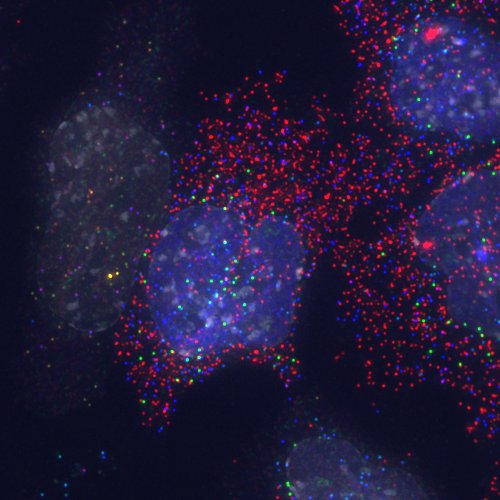
Detection of transcripts by candy FISH and an EGFP-Etv2 fusion protein by direct fluorescence. Lateral mesoderm differentiation was induced by expression of an EGFP-Etv2 fusion protein and transcripts detected by candy FISH. Transcripts: Fli1 (blue), Cdh5 (green), Flk1 (blue + green -> cyan), Etv2 (red), Pdgfra (blue + red -> purple), Snail1 (green + red -> yellow). The EGFP-Etv2 fusion protein can be seen as an even nuclear signal (blue) in most of the nuclei and sites of transcription appear as intense nuclear signals. DAPI (white) indicates nuclei. Pseudocolors: Alexa 488 and EGFP blue; Cy3 green; Cy5 Red; DAPI white.
This led us to search for some means of estimating gene expression within single cells; as we wanted to detect co-expression of genes, whatever method used needed to allow measurements of expression from at least two genes, but since co -induction or -expression may occur in different cell states specifically, the more genes we could observe simultaneously the better. We also strongly wanted a method which would provide some way of judging the accuracy of any measurements as it would otherwise be very difficult to interpret low frequency events.
It had already been shown in 2002 that combinatorial fluoresecent in situ hybridisation (FISH) can be used to detect sites of transcription from up to ten genes simultaneously (Levsky 2002). Combinatorial detection, or encoding, of identities relies on the ability of spatially segregating individual sites containing signals and since it had been shown even earlier that FISH combined with high-resolution microscopy makes it possible to detect single transcripts (Femino 1998), it had been obvious for some time that the combination of these two methods ought to allow the enumeration of transcripts in a combinatorial fashion. However, reliably detecting single transcripts is more difficult than detecting sites of transcription (which usually contain many copies of the transcript) and we made use of an improved protocol (Raj 2008) that uses large numbers (~48) of weakly labelled probes targeted to individual transcripts. This provides sequence dependent signal amplification, and we used this to demonstrate the reliable detection of transcripts using specific combinations of fluorophores for each transcript (Jakt 2013). Given the complexity of the hybridisation (simultaneous use of 100s of probes) it is somewhat surprising quite how well it works; the resulting colours show a great range and vibrancy reminding us of an assortment of candies (artificially coloured no doubt) leading us to propose the term candy FISH.
In routine use we have been able to use only three fluorophores for detecting transcripts, and this limits us to a maximum of 7 genes; however, the methodology should extend easily to 10 genes or more depending on the number of usable fluorophores, the resolution of the microscopy and the level of expression of genes. Indeed, recently Lubeck et al. (2012) demonstrated the detection of transcripts from 32 genes simultaneously using super-resolution microscopy based upon switchable fluorophores and statistical imaging (STORM).
We used candy FISH to analyse gene expression of a number of genes associated with vascular and blood differentiation (Etv2, Tal1, Fli1, Gata2, Runx1 and Cdh5) during differentiation of ES derived mesoderm cells. Initially we had been concerned primarily with determining the extent of heterogeneity within differentiating cells and using such information to refine analyses of micro-array gene expression data. However, the data itself has properties that reveal much more than we had initially considered. Since descriptive power increases exponentially with parameter number, a limited number of genes can describe a wide range of cell states, and the data can be used to visualise the set of cell states that appear during differentiation. In our analysis we were able to visualise a continuum of identities corresponding to stage of differentiation from cells at a single time-point. Somewhat surprisingly, cells within the endothelial lineage essentially co-expressed all genes assayed with levels varying along the primary axis of differentiation in a coordinated manner, suggesting that maturation along this axis is a largely deterministic process. In contrast, the timing of expression of Etv2 (which is necessary for lineage entry) appeared largely stochastic, suggesting different mechanisms for lineage entry and maturation.
Currently most effort expended towards explaining mechanisms governing biological phenomena is focused on identifying gene interactions and from there deducing gene regulatory networks. Such networks often appear to have explanatory power, but it is difficult to determine both appropriate functions and parameters that recapitulate the biological systems. Etv2 has been proposed to act through the three transcription factors Gata2, Tal1 and Fli1, which in turn are thought to be able to form a positively reinforcing triad motif that stabilises the state of hematopoietic precursors (Pimanda 2007). In our data we see a strong correlation in expression between these three factors suggesting that such a network might be operating; however, superimposing the axis of differentiation on our data indicated that the expression of these factors is lost during endothelial maturation and that their correlation in expression is more likely related to commonality in upstream regulation, and that for unknown reasons the triad motif fails to engage during this process. In this case there are clearly many unknown gene interactions that drive the process, but this example highlights the difficulty of modelling gene regulatory networks in the absence of cellular data.
The use of FISH to enumerate transcripts has several advantages over more commonly used means of estimating gene expression at the single cell level. In particular the measurements are absolute numbers of transcripts making it trivial to compare levels across different genes and samples. Perhaps more importantly, the measurements are made in situ and hence allow the affects of cellular interactions to be assessed. In addition the method is compatible with antibody staining and as such allows the simultaneous detection of protein and transcripts. This should also allow it to be combined with methods like in situ proximity ligation in order to also assess the state of signalling cascades and how signalling drives gene expression.
The future brings with it hopes of understanding complex biological phenomena such as embryonic differentiation through computational modelling of the interactions between regulators and regulatees. Such models make predictions of cellular behaviour, which in the case of differentiation of multipotent cells must include the generation of diversity. Methods such as candy FISH allow not only the direct observation of the behaviour of systems at the individual cell level, but also make it possible to take into account effects of interactions between cells thus turning the problem on its head. We believe that this is crucial for the development of credible models of differentiation, and that when used in combination with more classical approaches will eventually provide the ability to model complex cellular behaviour. In the meanwhile, the simple scaling up of the analysis to larger numbers of cells will provide an abundance of numbers that are intrinsically linked to the basic manner in which genes are regulated.
Jakt L.M., Moriwaki S. & Nishikawa S. (2013). A continuum of transcriptional identities visualized by combinatorial fluorescent in situ hybridization, Development, 140 (1) 216-225. DOI: 10.1242/dev.086975


 (No Ratings Yet)
 Loading...
 An interview with Roger Barker
 (2 votes)
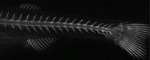 A gene expression oscillator called the segmentation clock controls the periodic formation of somites in vertebrate embryos. In zebrafish, negative autoregulation of the transcriptional repressor genes her1 and her7 is thought to control the clock’s oscillations. Delays in this negative-feedback loop, including transcriptional delay (the time taken to make each her1 or her7 mRNA) should thus control the clock’s oscillation period. On
 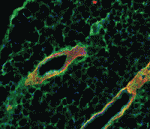 During mammary gland branching morphogenesis, mammary epithelial cells (MECs) invade the surrounding stroma. Here (
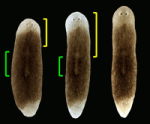 Regenerative medicine aims to replace lost or damaged tissues and organs with functional parts of the correct size and shape. To achieve this goal, we need to understand what determines the scale and form of regenerating tissues. Michael Levin and colleagues have been tackling this issue by investigating the regulation of organ size during planarian regeneration (see
 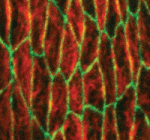 The conserved atypical cadherin Fat regulates planar cell polarity, but the mechanisms by which Fat controls cell shape and tissue organisation are unclear. Emily Marcinkevicius and Jennifer Zallen (
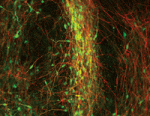 Medium-sized spiny neurons (MSNs) are the only neostriatum projection neurons and are among the first neurons to degenerate in Huntington’s disease. Here (see
 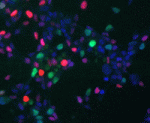 Cell-cycle progression and lineage commitment of stem cells seem to be tightly linked but it has not been possible to study this relationship in live stem cells. Now, Matthias Lutolf and colleagues (
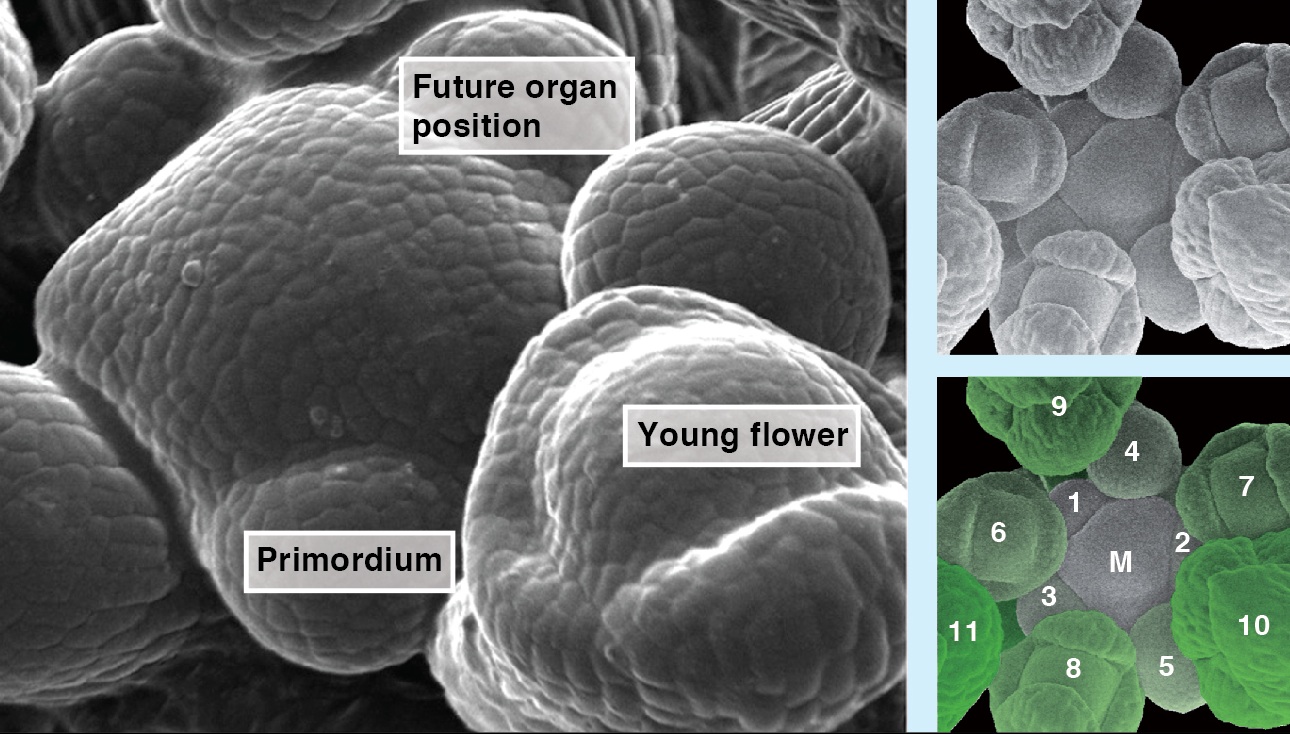 The precise arrangement of plant organs, also called phyllotaxis, has fascinated scientists from multiple disciplines. In this Issue, Jan Traas reviews new insights into the regulation of phyllotactic patterning and provides an overview of the various factors that can drive these robust growth patterns. See the Development at a Glance poster article on p.
 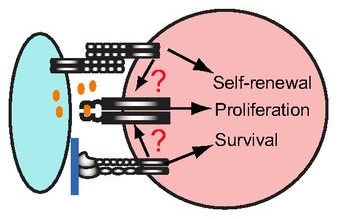 Stem cells are often anchored to their niche via adhesion molecules. However, as reviewed here by Xie and colleagues, recent studies have revealed other important roles for adhesion molecules in the regulation of stem cell function. See the Review article on p.