
In the last few years, the life sciences have been plagued by cases of scientific misconduct which led to corrections, retractions and, to some extent, in a lack of trust on the scientific record. This has encompassed a variety of issues, from manipulation to fabrication of data, from inappropriate use of statistics (unintentional or otherwise) to the inability to reproduce results, from authorship disputes to plagiarism. Some of these practices are clearly misconduct, while others may have become almost common practice under the current publishing and funding pressures. Which of these do you think is most widespread? Which do the most damage? And what can we do to prevent them? This month we are asking:
What do you think are the biggest ethical issues in life science publishing at the moment?
Share your thoughts by leaving a comment below! You can comment anonymously if you prefer. We are also collating answers on social media via this Storify. And if you have any ideas for future questions please drop us an email!
This post highlights the approach and findings of a new research article published in Disease Models and Mechanisms (DMM): ‘5-HT2A and 5-HT2C receptors as hypothalamic targets of developmental programming in male rats’. This feature was written by Richard Seeber as part of a graduate level seminar at The University of Alabama (taught by DMM Editorial Board member, Prof. Guy Caldwell) on current topics related to use of animal and cellular model systems in studies of human disease. The course is designed to expose students to recent research in a variety of diseases, and for this assignment, students were asked to read and provide a scholarly summary of an assigned research article ‘in press’ at DMM. Richard’s summary was selected by the editorial team for publication at the Node. The text has been edited and shortened by DMM in conjunction with the author.
Over the past three decades, the global incidence of obesity, a condition characterized by excess body fat, has more than doubled. According to the WHO, obesity now affects over two billion people and is fast becoming a global epidemic. Although about 13% of the world’s population now lives with some degree of obesity, elucidating the molecular underpinnings of the disorder has proven challenging.
In 1994, the discovery of a gene encoding leptin, the so-called ‘satiety hormone’, provided a framework for explaining the mechanisms underlying obesity – in part. Leptin acts on different neuronal cell populations, including the pro-opiomelanocortin (POMC) neurons in the arcuate nucleus of the hypothalamus, to regulate appetite and modulate energy homeostasis. Previous research suggests that chronic overproduction of leptin results in leptin resistance, leading to decreased feelings of satiety and thereby increased risk of developing obesity (Myers et al., 2008). Although defects in leptin signaling are important contributors to the development of obesity, these alone do not provide a complete picture of the underlying molecular mechanism, and there is evidence for leptin-independent programing of obesity. For example, low-birth-weight mice that undergo subsequent rapid growth (‘recuperation’) demonstrate adult obesity, increased food intake, and increased fat pad size, irrespective of leptin levels (Cottrell et al., 2011).
Research has uncovered such a leptin-independent mechanism of obesity: defects in 5-hydroxytryptamine (‘5-HT’ or ‘serotonin’) signaling result in lasting increases in food consumption and weight in mice (Tecott et al., 1995). Such lasting changes in food consumption and weight could be developmentally programmed by a congenital deficiency of serotonin receptors, as fetal serotonin receptor expression decreases in response to high levels of serotonin itself (Pino et al, 2004). Poor prenatal nutrition has been demonstrated to affect fetal developmental programming and has also been tied to obesity later in life, although molecular mechanisms underpinning such obesity have remained poorly characterized (Godfrey et al., 2000). Connections among prenatal nutrition, serotoninergic signaling, and feeding behavior were elucidated in a recent study published in Disease Models and Mechanisms, in which a team probed the effects of prenatal nutritional challenge followed by rapid postnatal growth on the serotoninergic system in rats (Martin-Gronert et al., 2016).
To establish rat models for further analysis, the team fed pregnant rats with a protein-restricted diet. As expected, the offspring of these nutritionally limited mothers weighed significantly less than the pups born from normally-fed control counterparts. Both experimental and control pups were allowed to nurse on normally-fed control mothers, leading to rapid ‘catch-up’ growth of the low-birth-weight pups, which were termed recuperated rats. Of note, this model is clinically correlated to observations made in human neonates, as low birth weight human babies also often experience rapid postnatal ‘catch-up’ growth (Ong et al., 2002).
To examine the effect of nutritionally-induced high 5-HT levels on expression of the corresponding receptor, 5-HT2CR (encoded by Htr2c in rats), the authors analyzed levels of Htr2c mRNA. As predicted by previous findings (Pino et al. 2004), the highly-plastic transcriptome profile of 5-HT2CR changed in response to altered levels of 5-HT in nutritionally challenged fetal and neonatal brain tissues, which displayed a significant decrease in Htr2c mRNA when compared to controls. This difference in mRNA levels abated after the nutritionally-challenged rat offspring underwent rapid growth during nursing and subsequent weaning; however, even after nursing and weaning from control mothers, nutritionally challenged pups showed significantly decreased hypothalamic 5-HT2CR protein levels. This suggests a possible explanation for why low birth weight coupled with rapid growth could have long-lasting defects in the regulation of hunger and food consumption.
To validate the biological significance of altered expression of 5-HT2CR in recuperated rats, the authors directly administered D-fenfluramine to the brains of control and recuperated rats. Previously used in the treatment of human obesity, D-fenfluramine is metabolized by the liver to D-norfenfluramine, a potent 5-HTR agonist capable of exerting anorectic effects (Gibson et al., 1993). Control rats experienced a decrease in food consumption in response to treatment; however, recuperated rats showed impaired sensitivity to D-fenfluramine-driven redunction in food intake. This suggests that alterations in serotonin receptor-mediated signaling result in resistance to pharmacological modulation of feeding behavior, possibly through lowered 5-HT2CR levels.
Next, the authors studied whether early nutritional challenge followed by rapid growth resulted in alterations to the expression of other genes that are involved in regulating appetite. Using laser-capture microdissection, the authors isolated cells of the arcuate nucleus, the hypothalamus’s ‘hunger center’, from 3-month-old control and recuperated rats and performed global transcriptome analysis on isolated samples. The team’s microarray analysis revealed several significantly upregulated and downregulated genes in recuperated mice. Importantly, the most upregulated gene identified was Htr2a, which encodes another serotonin receptor family protein, 5-HT2AR. This significant upregulation, however, does not occur until birth and subsequent nursing of nutritionally-challenged rat pups: a change in Htr2a expression wasn’t observed in neonatal and fetal brains. Thus, the increase in nutrients and sudden growth brought on by nursing could serve as a stimulus for alternative serotonin receptor production when 5-HT2cR levels are altered by poor prenatal nutrition.
The authors then sought to determine whether upregulated 5-HT2AR localized to satiety-signalling POMC neurons in the arcuate nucleus. Using in situ hybridization histochemistry, the authors demonstrated the presence of 5-HT2A receptors on POMC-expressing neurons of the hypothalamus. Given the significant increase in 5-HT2AR expression in recuperated mice and the localization of those receptors to regulatory POMC-expressing neurons in the hypothalamus, the authors suggest that the upregulation of this alternative serotonin receptor could serve to balance diminished 5-HT2C receptor levels in recuperated mice by offering an alternative mechanism through which to regulate feeding behavior. In support of this hypothesis, they show that treatment with a 5-HT2AR agonist leads to suppressed food intake in 3-month-old recuperated rats, demonstrating that these rats are sensitive to pharmacological modulation of this pathway.
Using a clinically relevant rat model of postnatal recuperation following prenatal diet restriction, Martin-Gronert et al. have offered a molecular mechanism through which feeding behavior could be altered for life through perturbations in serotonin signaling. It has previously been reported that low-birth-weight human neonates who undergo rapid postnatal growth are at increased risk for obesity; thus, this new study could provide insight to a molecular mechanism of developmentally-programmed obesity in humans. As the relative contributions of serotonin receptor subfamily-mediated and leptin receptor-mediated signaling to obesity remain unknown, future work could make use of serotonin receptor and leptin receptor double mutants, with particular attention paid to mutagenesis of various serotonin receptor subtypes. These mutants could be fed varying diets to further probe the relative contributions of each receptor type to the genotype-by-environment interactions at play in the etiology of obesity.
Additionally, the authors offered strong evidence for the upregulation of the 5-HT2A receptor, which could be a valuable druggable target in the treatment of obesity caused by disrupted 5-HT2C signaling secondary to prenatal nutritional challenge and accelerated postnatal growth. As of yet, most selective 5-HT2A receptor agonists often cause psychiatric side effects. Future efforts should be made to identify additional drug-like 5-HT2A agonists from compound libraries, which could be filtered, optimized, and then screened in vivo for improved efficacy in the treatment of obesity with less severe side effects – work to which this rat model would be amenable.
Why some vertebrates like salamanders and zebrafish are able to regenerate complex tissues while humans cannot is a question that has fascinated biologists for centuries. Understanding how and why regeneration occurs in these animals can inspire novel treatment strategies for regenerative medicine. At the cellular level, the regeneration process is driven by dynamic activities of cell migration, cell proliferation, and cell assimilation between old and new tissues. All of these events must be orchestrated in a precise order and at appropriate locations along the proximal-distal axis in order to restore a flawless, complex tissue (e.g. limbs or fins) from an amputation stump. With current imaging tools and platforms, it remains challenging to capture these dynamic, intricate cell behaviors in regenerating tissues from live adult vertebrates.
In 2012, my colleague in Dr. Ken Poss’s laboratory at Duke University, Vikas Gupta, had just successfully applied the “Brainbow” technique to the zebrafish heart to study cell behaviors during heart development and regeneration (Gupta and Poss, 2012). Since its debut in 2007, this elegant, multicolor cell labeling technique was mostly used to untangle the neuronal circuits in the brain (Livet et al., 2007). Vikas’s study demonstrated that this technique can also be applied to cell types other than nerve cells. At the time, biology aside, I was amazed by the beauty of the images he captured and started to wonder how I can apply this technique to fins, the tissue I study. The idea was that by tagging cells with diverse colors using the Brainbow cassette, I would be able to retrospectively determine contributions of distinctly labeled cells and their progeny in regenerating tissues, a key mechanistic question in understanding appendage regeneration. In addition, because fins are external, flat, and optically translucent, I might be able to uncover novel cell dynamics during regeneration by following these bar-coded cells in live animals. To label most cell types in fin tissue, I naively employed the ubiquitin promoter to drive the expression of Cre recombinase, while using the beta-actin2 promoter to drive the Brainbow cassette. To impose precise temporal control of Cre activity, I constructed a dual-inducible system that combines both the Tet-on system and an inducible Cre (CreERT2) in the transgene. The activity of Cre recombinase would require exogenous addition of both Doxycycline and Tamoxifen, limiting the possibility of leaky recombination. Such transgene design appeared to work nicely in injected, mosaic embryos.
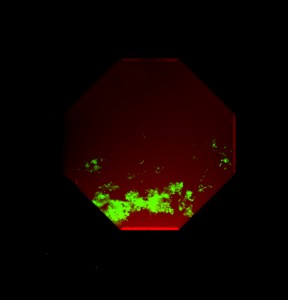
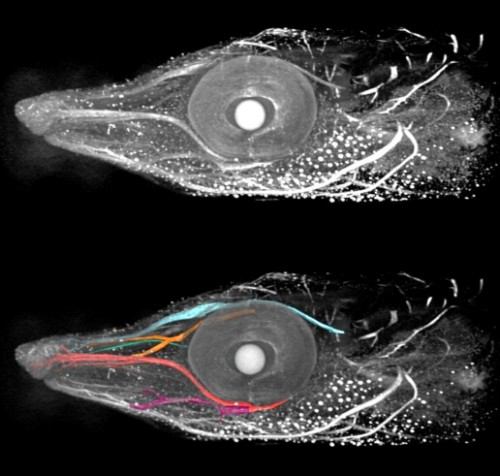
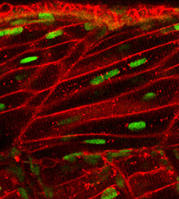
Several months later when I began to screen through transgenic founders, I was at first disappointed to find that leaky recombination still occurred in many lines, and the expression domain of the Brainbow cassette was quite variable. However, I also noticed that progeny from one particular founder consistently displayed an unexpected, dazzling pattern (Figure 1) that was restricted to the outermost layer of the skin. Amazed by diverse hues displayed in this stable transgenic line, I assessed color stability of these labeled, post-mitotic cells by time-lapse imaging. Much to my surprise, multicolor tagging on this population of epithelial cells was rather stable, making tracing these cells over long time periods possible. Ken and I began to see that this “skin-bow” line may serve as a tool to study cell dynamics during skin turnover and regeneration. With hopes of tracing hundreds of cells in a large field of view, we were very fortunate to team up with two terrific quantitative biologists: Stefano Di Talia, who at the time just had established his laboratory at Duke, and Alberto Puliafito, a postdoctoral scientist in Luca Primo’s group in Italy to tackle this challenge. Alberto developed customized algorithms to segment our images, quantify and transform diverse cell behaviors that we just had a glimpse into compelling numbers.
Figure 1. Fin epithelium of adult skinbow zebrafish
With the skinbow system, we showed that regeneration of skin can be dissected into the most basic building block (i.e. cells), and each cell can be accurately monitored at the population level as regeneration takes place (Chen et al., 2016). Our findings identified diverse cell behaviors in response to different injuries that we would not have anticipated or discovered in fixed samples (click on video link below). The skinbow system provides a quantitative readout for studying these cell behaviors and their underlying mechanisms, many of which may be perturbed in aging, infected, or malignant skin tissues. As a proof of concept, we demonstrated that skinbow can be coupled with other transgenic lines to study cell-cell interactions during epithelial regeneration, or be employed as a screening platform to uncover molecular influences on certain cell behaviors. Among many future directions, I and others in the field are positioned to apply similar approaches (i.e. combination of cell barcoding, live imaging, and quantitative analysis) to illuminate activities of basal epithelial cells, bone cells, and mesenchymal cells in regenerating zebrafish tissues. The skinbow system might well be the first step to establish a complete, three-dimensional map of cell dynamics during vertebrate appendage regeneration. We merely scratched the surface of the subject at this point (literally!). New transgenic strains and analysis tools need parallel development to quantify cell behaviors in their respective z-positions, including in deep tissues. Nevertheless, I expect that new Brainbow cassettes that were recently developed in Jean Livet’s group (Loulier et al., 2014) would allow more flexibility in tagging and tracing different cell types in vivo, as now one can choose to paint either entire cells, or just nuclei and/or cell membranes in multicolor.
One thing I have learned to appreciate from this project is to be always on the lookout for unexpected findings, which can turn out to be more colorful than your best-laid plans.
Applications are invited for a 2 year Wellcome Trust funded Research Assistant position to join an international team in the Department of Genetics in central Cambridge. The project is led by Dr Ben Steventon and is aimed towards understanding the role of gene expression heterogeneity in the control of neural/mesodermal cell fate decisions during the elongation of the posterior body axis in zebrafish embryos. For further details on this position please look here. For further details on our research, please visit steventonlab.wordpress.com
The post-holder will be involved the generation of zebrafish transgenic lines that will enable the imaging of gene-expression dynamics in vivo. In addition, they will utilize cutting-edge imaging techniques to quantify gene expression levels in situ.
The successful candiate will be a highly motivated and well-organised individual with a first degree in biological or biomedical sciences and experience in molecular biology. Experience in zebrafish genetics would be an advantage.
Fixed-term: The funds for this post are available for 2 years in the first instance.
The University values diversity and is committed to equality of opportunity.
The University has a responsibility to ensure that all employees are eligible to live and work in the UK.
The Evolutionary and Functional Genomics Lab led by Josefa González is seeking a highly motivated postdoctoral researcher to join our research team at the Institute of Evolutionary Biology (CSIC-UPF).
The postdoctoral researcher will work on a project funded by a European Research Council Consolidator Grant that aims at identifying the genetic basis, the molecular mechanisms, and the functional traits relevant for environmental adaptation.
The postdoctoral researcher will be responsible for the in silico characterization of candidate adaptive mutations identified in natural populations of Drosophila melanogaster. Among others, the tasks involved in the postdoctoral research project will be to identify pathways under selection, and to analyze the expression and the epigenetic changes of genes nearby the candidate adaptive insertions.
A PhD in Populations Genetics or a related field, good programming skills, and good writing skills are required. Previous postdoctoral experience will be considered.
We offer a full-time position for 2 years with the possibility of extension. Salary will depend on the experience of the candidate.
Starting date September 2016 but alternative dates can be discussed.
Application
Please send your CV and a brief letter of motivation before the 5th May 2016 to: josefa.gonzalez@ibe.upf-csic.es
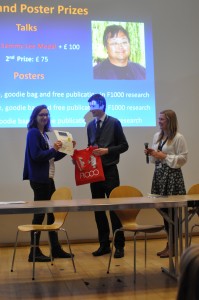
In 2016 the BSCB/BSDB Spring conference has yet again been a great success, and many prizes were announced, amongst them the BSDB’s Waddington, BSCB’s Hooke, BSCB’s Women in Cell Biology Early Career Award, BSDB’s Cheryll Tickle and BSDB’s Beddington medals. See below movies of the first four of the five medal talks and find more information about all awardees of the conference in a separate blog. In addition, watch a short movie of the Uri Alon special who gave an entertaining spiel about the challenges for creative science, its opportunities, pitfalls and how to get out of the CLOUD, accompanied by his amusing but all so true songs.
All films were produced by Warwick Conferences, commissioned by the BSDB/BSCB Spring Meeting organisers.
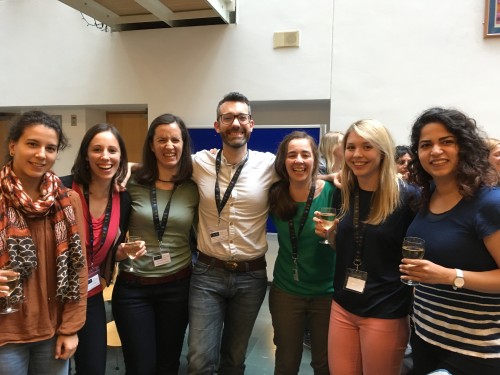
It was on the 7th of February of 2016 when 20 leading scientists from all over the world headed to the historic Wiston House in West Sussex, England, to spend four days in focused atmosphere discussing new insights in cardiovascular research: the workshop for Transdifferentiation and Tissue Plasticity in Cardiovascular Rejuvenation. Supported by the Company of Biologists, Brian Black and Jim Martin brought together experts of the field of heart development, regeneration and tissue engineering with the aim to discuss new approaches and recent findings to improve cardiac repair. In addition to the 20 senior investigators, also 10 early-stage scientists (PhD students, postdocs, and junior PIs) were selected to participate. For me in particular, with my PhD recently completed, joining this event was a great honour and a unique opportunity. I excitedly anticipated the four intense workshop days with great interest.
by Christian Mosimann
With the heart being such a complex and specialized tissue, repair of cardiac muscle in human is difficult to achieve. In the workshop, we were introduced to and discussed a wide range of ongoing efforts, including genomic regulation of cardiomyocyte differentiation, environmental factors involved in cardiac regeneration, as well as the contribution of different cell types in this process. Although I cannot allude to all the talks here, all participants agreed about the outstanding scientific quality of the work presented in this meeting.
Liz Robertson opened the first session of the workshop on Sunday afternoon recapitulating the origin of cardiac progenitors during embryogenesis and explaining the involvement of Eomesodermin in cardiac mesoderm specification in the mouse embryo (Costello et al., 2011). To understand myocardial differentiation, it is fundamental to define transcription factors and epigenetic modifications that specify cardiac lineages. Benoit Bruneau introduced his lab’s latest study on the coordination of three cardiac transcription factors (Nkx2.5, Tbx5 and Gata4) in the regulation of cardiac gene expression and differentiation (Luna-Zurita et al., 2016). Laurent Dupays described the interaction of the two transcription factors Meis and Nkx2.5 on a specific enhancer sequence (Dupays et al., 2015). Moreover, Brian Black explained new findings from his group about the Mef2c transcriptional regulation machinery in cardiomyocytes.
We also learned about specific approaches to elucidate the functions of distinct cellular factors active in cardiomyocytes. Guo Huang is currently investigating fetal cardiac genes, which reactivate cell cycle re-entry of adult heart muscle cells for potential regenerative repair after myocardial infarction. Jim Martin reported the implication of the Hippo pathway in cytoskeletal remodelling of cardiomyocytes in the injured heart (Morikawa et al., 2015). Finally, Kathy Ivey introduced how to study human iPSC-derived cardiomyocytes to better understand protein signalling and interaction networks as well DNA-occupancy in cellular differentiation.
Another focus during this workshop was the understanding of environmental factors, which impact cardiomyocyte behaviour and fate during cardiac repair. We learned from Eldad Tzahor how the stiffness of the extracellular matrix affects the differentiation state of cardiomyocytes (Yahalom-Ronen et al., 2015). Ahmed Mahmoud described the implication of cardiac innervation and Neuregulin signalling in the regulation of cardiomyocyte proliferation in the regenerating neonatal mouse and zebrafish heart (Mahmoud et al., 2015). The fact that many different cell types are crucial for cardiac regeneration was demonstrated by Paul Riley and Nadia Rosenthal. Nadia nicely illustrated the cellular composition of the heart and discussed recent work that demonstrates the fundamental role of macrophages during cardiac repair and regeneration (Pinto et al., 2016), while Paul Riley explained the different origins and the development of lymphatic vessels in the heart and described how this developmental program is reactivated after myocardial infarction (Klotz et al., 2015). Another approach was described by Enzo Porrello, who is seeking to understand the differences between cardiac cells at different stages of life, to unveil the mechanisms that impede adult cardiac regeneration.
Multiple talks presented studies using the zebrafish, an important model of cardiac development and regeneration due to its remarkable regenerative capacity and its transparency during embryogenesis. Didier Stainier illustrated how cardiomyocytes delaminate from the compact layer to form trabeculated myocardium in the zebrafish embryo (Staudt et al., 2014). Karina Yaniv showed beautiful movies displaying the origin of lymphatic vessels during development (Nicenboim et al., 2015). Christian Mosimann presented live imaging that traces back the cardiovascular lineages to the lateral plate mesoderm (Mosimann et al., 2015) and explained what we could learn about cardiac diseases by modelling human patient mutations in zebrafish. Ken Poss, whose lab is interested in the mechanisms of heart and fin regeneration, guided us through his journey in searching for regenerative cellular programs in the zebrafish (Kang et al., 2016). Further, Nadia Mercader spoke about distinct populations of cardiomyocytes in the early and the adult zebrafish heart and injury studies to decipher the mechanisms of myocardial regeneration.
by Christian Mosimann
Another key topic discussed in this workshop was how we can investigate the underlying causes of human cardiac diseases in more depth. Alessandra Moretti showed one example of how her lab studies the cause of Arrhythmogenic right ventricular dysplasia using patient-derived iPSCs. Deepak Srivastava further reported new findings about the molecular consequences of human GATA4 mutations obtained by studying iPSCs-derived cardiomyocytes from patients. An impressive finding was reported by Eric Olson: he explained how his lab achieved the repair of mutations in the Dystrophin gene, the cause of Duchenne muscular dystrophy, by CRISPR/Cas 9 technology in mice in vivo(Long et al., 2016).
I was personally very intrigued to hear about the work of the bio-engineers participating in this workshop. Nenac Bursac illustrated how his lab gains insights into cardiomyocyte functions by using in vivo assays of cardiomyocyte patches. Moreover, from Molly Stevens we learned about the versatile use of nano needles, which can deliver substances to cells or even make measurements (Chiappini et al., 2015).
In my opinion, and I am sure all participants would agree, this workshop was a tremendous success. Fascinating data, of high scientific value were presented and openly discussed. For me, this workshop was a unique experience; I met experts in the field of cardiovascular research and learned about a vast range of experimental approaches. Moreover I had the opportunity to present and discuss our latest results on the endocardial dynamics in zebrafish heart regeneration. Finally the guided tour through the amazing 16th century historical Wiston House, the windy walk in the beautiful Sussex countryside, and the experience of watching the Super Bowl for the first time, completed the great experience of the Transdifferentiation and Tissue Plasticity in Cardiovascular Rejuvenation workshop.
Here is a short video put together by the Company of Biologists on this workshop:
I am grateful to Christian Mosimann for comments on the text.
References
Chiappini, C., De Rosa, E., Martinez, J. O., Liu, X., Steele, J., Stevens, M. M. and Tasciotti, E. (2015). Biodegradable silicon nanoneedles delivering nucleic acids intracellularly induce localized in vivo neovascularization. Nature materials14, 532-539.
Costello, I., Pimeisl, I. M., Drager, S., Bikoff, E. K., Robertson, E. J. and Arnold, S. J. (2011). The T-box transcription factor Eomesodermin acts upstream of Mesp1 to specify cardiac mesoderm during mouse gastrulation. Nature cell biology13, 1084-1091.
Dupays, L., Shang, C., Wilson, R., Kotecha, S., Wood, S., Towers, N. and Mohun, T. (2015). Sequential Binding of MEIS1 and NKX2-5 on the Popdc2 Gene: A Mechanism for Spatiotemporal Regulation of Enhancers during Cardiogenesis. Cell reports13, 183-195.
Kang, J., Hu, J., Karra, R., Dickson, A. L., Tornini, V. A., Nachtrab, G., Gemberling, M., Goldman, J. A., Black, B. L. and Poss, K. D. (2016). Modulation of tissue repair by regeneration enhancer elements. Nature.
Klotz, L., Norman, S., Vieira, J. M., Masters, M., Rohling, M., Dube, K. N., Bollini, S., Matsuzaki, F., Carr, C. A. and Riley, P. R. (2015). Cardiac lymphatics are heterogeneous in origin and respond to injury. Nature522, 62-67.
Long, C., Amoasii, L., Mireault, A. A., McAnally, J. R., Li, H., Sanchez-Ortiz, E., Bhattacharyya, S., Shelton, J. M., Bassel-Duby, R. and Olson, E. N. (2016). Postnatal genome editing partially restores dystrophin expression in a mouse model of muscular dystrophy. Science351, 400-403.
Luna-Zurita, L., Stirnimann, C. U., Glatt, S., Kaynak, B. L., Thomas, S., Baudin, F., Samee, M. A., He, D., Small, E. M., Mileikovsky, M. et al. (2016). Complex Interdependence Regulates Heterotypic Transcription Factor Distribution and Coordinates Cardiogenesis. Cell164, 999-1014.
Mahmoud, A. I., O’Meara, C. C., Gemberling, M., Zhao, L., Bryant, D. M., Zheng, R., Gannon, J. B., Cai, L., Choi, W. Y., Egnaczyk, G. F. et al. (2015). Nerves Regulate Cardiomyocyte Proliferation and Heart Regeneration. Developmental cell34, 387-399.
Morikawa, Y., Zhang, M., Heallen, T., Leach, J., Tao, G., Xiao, Y., Bai, Y., Li, W., Willerson, J. T. and Martin, J. F. (2015). Actin cytoskeletal remodeling with protrusion formation is essential for heart regeneration in Hippo-deficient mice. Science signaling8, ra41.
Mosimann, C., Panakova, D., Werdich, A. A., Musso, G., Burger, A., Lawson, K. L., Carr, L. A., Nevis, K. R., Sabeh, M. K., Zhou, Y. et al. (2015). Chamber identity programs drive early functional partitioning of the heart. Nature communications6, 8146.
Nicenboim, J., Malkinson, G., Lupo, T., Asaf, L., Sela, Y., Mayseless, O., Gibbs-Bar, L., Senderovich, N., Hashimshony, T., Shin, M. et al. (2015). Lymphatic vessels arise from specialized angioblasts within a venous niche. Nature522, 56-61.
Pinto, A. R., Ilinykh, A., Ivey, M. J., Kuwabara, J. T., D’Antoni, M. L., Debuque, R., Chandran, A., Wang, L., Arora, K., Rosenthal, N. A. et al. (2016). Revisiting Cardiac Cellular Composition. Circulation research118, 400-409.
Staudt, D. W., Liu, J., Thorn, K. S., Stuurman, N., Liebling, M. and Stainier, D. Y. (2014). High-resolution imaging of cardiomyocyte behavior reveals two distinct steps in ventricular trabeculation. Development141, 585-593.
Yahalom-Ronen, Y., Rajchman, D., Sarig, R., Geiger, B. and Tzahor, E. (2015). Reduced matrix rigidity promotes neonatal cardiomyocyte dedifferentiation, proliferation and clonal expansion. eLife4.
Every year, the British Society for Developmental Biology (BSDB) awards the Beddington Medal to the best PhD thesis in developmental biology. The 2016 award went to Elena Scarpa, who did her PhD with Roberto Mayor at University College London (UCL). We caught up with Elena at the BSCB/BSDB Spring meeting, and we asked her about her thesis work on the neural crest and what she is doing now.
Congratulations on winning the Beddington Medal. What does this prize mean to you?
I am very happy about this prize. I moved from Italy to the UK to do my PhD, which was a big change for me. I knew my science background was good, but at UCL I was surrounded by people who had come from excellent universities, like Cambridge or UCL, and my university in Italy was not recognised in the same way. Some of the other students in my PhD course were foreigners as well, but they had studied in the UK. So receiving this medal is a big achievement.
This prize also recognises the communal effort that went into this project. It was a lot of work, not just from me but also from the people I collaborated with and helped me. I think this prize also reflects well on Roberto. I am the second student from his lab that wins it, showing that his students are doing well and that he is a good supervisor.
Can you tell us a bit more about the lab where you did your PhD?
I did my PhD in Roberto Mayor’s lab at UCL. The lab works on neural crest, mostly in Xenopus but also in zebrafish. The lab started out by working on induction and specification of the neural crest, but in the last few years the majority of the lab has worked on different aspects of neural crest migration. The lab had a very nice environment. There were many students, so it was a lot of fun.
It seems that contact inhibition is on a winning streak, since last year’s winner of the Beddington Medal, John Robert Davis, was also working on contact inhibition. What is contact inhibition and in what contexts is it important?
Contact inhibition is the process by which two migrating cells interact and change their direction of motion after contact. This phenomenon was discovered by Abercrombie at UCL. Roberto likes to say that Abercrombie was based in the same room as the Mayor lab, but I am not sure this is true! Abercrombie and his colleague Heaysman observed that contact inhibition was related with the ability of malignant cells to invade other tissues. Their work was very nice but descriptive, and contact inhibition and its molecular mechanisms did not receive much attention for several years.
In 2008 Roberto’s lab published a paper about contact inhibition of locomotion, showing that this process is required for neural crest directionality, and hinting at the molecular mechanism behind it. It showed that cell-cell contacts, planar cell polarity and cadherins are required. However, what I think is interesting about contact inhibition is that it mediates many different types of cell behaviour during development. In the neural crest it mediates collective behaviour (in combination with other processes). However, as John showed in hemocytes, and also in neurons, it can mediate dispersion. In addition, it can be used by certain cancer cells as a driving force for invasion. So the presence or lack of contact inhibition can really change how cells interact with each other.
What was your thesis project about, and what were your major findings?
Contact inhibition is the process by which cells separate, but many other cells types, such as epithelial cells, stay together and make stable contacts. We wanted to understand better the nature of mesenchymal cell-cell interactions. Are mesenchymal cell-cell interactions like contact inhibition intrinsically different because cells are unable to form a junction, or is there something in the junction itself that changes the behaviour of the cells?
My main finding was that, at least in the neural crest, cells that undergo contact inhibition do not express different cadherins. The ability of cadherins to recruit the cadherin complex or the actin complex is very similar, but there is a difference in their ability to polarise the activity of small GTPases, polarising the motility of the cells. This adds to what was already previously known. In the neural crest and in cancer it is well known that E-cadherin is down regulated, and this seems to correlate with the ability of the cells to invade. However, the idea that loss of contact allows invasion does not really make sense. Cells that are unable to make contacts with other cells cannot interact properly with their environment, so in vivo this does not favour migration. Our paper showed that there are other changes in the way cells form protrusions and interact with their environment that lead to scattering and active migration, rather than just the cell-cell contact itself. Other papers had proposed this idea before, but we were able to put it in a developmental framework.
You mentioned collaborators. Which labs did you collaborate with?
Within the lab I originally worked with Eric Theveneau, and also with András Szabó who is a modeller and helped me with the quantitative analysis of traction forces.
During my project we used FRET to obtain more information about the dynamics of how contact inhibition is regulated. For this I collaborated with Maddy Parsons at King’s College London, who had already collaborated with Roberto on other contact inhibition papers. I worked with Maddy a lot, and it took a lot of effort in the first two years of my PhD to get the FRET to work. It is very nice to collaborate with Maddy because she is very available, and happy to try different things.
I also established a collaboration for the optogenetics part of the project, since were not able to get it to work at UCL. During my PhD Eric moved to Toulouse, where Xiabo Wang , who previously adapted photoactivation in vivo during his postdoc in Denise Montell’s lab and used a photo-activatable form of Rac. He was familiar with the imaging conditions, so I did my experiments in their microscope in Toulouse. This was a great opportunity to learn a new technique, and I am going to develop optogenetics further in my postdoc. So this collaboration also helped me to define my interests.
You have moved from London to Cambridge for your postdoc. What are you working on now and how did you choose your new lab?
I now work in the lab of Benedicte Sanson at the department of Physiology, Development and Neuroscience. The lab studies the Drosophila embryo at the global level, examining how extrinsic forces generate collective rearrangements in the tissue. They focus mostly on germ band extension and parasegment boundary formation. My project is concerned with oriented cell division in the early Drosophila embryo. I am looking at how mechanical cues influence the orientation of cell division.
During my PhD I looked at cell migration, and how the traction on the substrate relates with the tension mediated by cell-cell interactions. For my postdoc I wanted to develop more my knowledge of tissue mechanics. The Sanson lab is a really good place to develop this interest because the Drosophila embryo is a really powerful system. It is very simple and very easy to access. They also have a great ongoing collaboration with Guy Blanchard from Richard Adam’s lab. Their tracking software is very powerful and allows very fine image analysis. You can track mesenchymal cells like the ones I studied during my PhD, but it is never very refined because it is very difficult to segment the cells. In epithelial cells this type of analysis is possible.
Did you find it difficult to change model organism?
It is different. In the beginning working with Drosophila didn’t make sense to me. I am used to Xenopus and microinjections. When you come into the lab on a Monday you don’t know exactly what will you do, and choose your experiment based on the quality of the embryos. Because you just microinject it isn’t necessary to plan ahead, but on the other hand you can’t do clean genetics. In Drosophila you have very powerful genetic tools which are very useful. However, you need to plan your experiments. You need to cross the flies, wait, then select them… It just didn’t make sense to me why I had to wait 2 weeks to see the membrane! But you get used to it.
Do you have any advice for new students?
Choose something that you really like and that really motivates you. You are going to spend a lot of time in the lab trying to solve problems, so you need a good question that you are passionate about. Also try to choose a good environment, where you will be supported and have interesting discussions. Finally, be creative. Sometimes you get stuck, and if you tried everything and it doesn’t work then you need to think outside the box. Be a bit brave and take some risks.
Research Group: James Wakefield (www.thewakefieldlab.com)
Salary scale: £19,828 – £25,023
Duration: 1st June 2016 – 31st August 2018 (with possible 3 yr renewal)
We wish to recruit a Research Technician to support the work of Dr James Wakefield. The successful applicant will assist Dr Wakefield in the day-to-day management of the lab and work on an interdisciplinary project aimed at understanding the fundamental process of mitotic spindle formation in the model organism, Drosophila melanogaster. As such, this position represents an opportunity to work in a creative, collegiate and interdisciplinary research environment, making an essential contribution to an internationally-leading research programme.
The successful applicant will support a wide range of research activities, including supporting and training undergraduate and post-graduate research students, working closely with the PI to organise and co-ordinate aspects of lab-management, overseeing the culture and maintenance of Drosophilalaboratory stocks and undertaking their own independent research project. They will be enthusiastic, highly motivated and possess excellent verbal and written communication skills.
Applicants will possess a relevant first degree (BSc Honours) in Biological Sciences, Biochemistry, Genetics or a related subject and demonstrate sufficient knowledge of research methods and techniques to work within the established research programme. Applicants will be able to demonstrate skills in genetics, biochemical techniques, microscopy and cell biology. Previous experience working with Drosophila would be a distinct advantage.
A postdoctoral position is available to study the developmental mechanisms that pattern differentiation during organ development.
Epithelial tubes often have a functional polarity written along their P-D axis, with specialised segments carrying out distinct physiological activities. With a handful of notable exceptions, we know little about how P-D axes and segment-specific differentiation are regulated during organogenesis.
We aim to understand the molecular and cellular mechanisms that pattern and maintain functional polarity along the P-D axis in a structurally simple, but functionally sophisticated epithelial tube: the Drosophila renal tubule.
Highly motivated applicants with a PhD and strong background in cell/developmental biology are encouraged to apply.
For informal inquiries about the position please contact Barry Denholm directly: Barry.Denholm@ed.ac.uk