The community site for and by
developmental and stem cell biologists

Call for Papers: a Special Collection focused on Rat Models of Disease

Posted by , on 3 December 2015

Disease Models & Mechanisms invites you to submit original research for consideration for an upcoming Special Collection named Spotlight on Rat: Translational Impact scheduled for publication in autumn 2016. This ongoing collection* will focus on translational advances made using Rat as a model organism, including insights into disease mechanisms and therapeutic targets, new resources and technologies, and drug discovery and development.

The issue will be guest edited by Tim Aitman (University of Edinburgh, UK)

We invite you to showcase your breakthrough Rat research in this Special Collection. Submissions should describe original research in the form of a Research or Resource article. Please read the author guidelines for information on preparing a manuscript for DMM, and submit your manuscript via our online submission system. Please highlight that your submission is to be considered for the Special Collection in your cover letter. For rapid feedback on the suitability of a paper for inclusion in the Special Collection, please send us a presubmission enquiry. The Collection will also contain invited Review articles covering topics of broad interest to the Rat community and interviews with leading scientists in the field. The launch issue of the Special Collection will be widely marketed and will be distributed at relevant conferences worldwide, providing prominent exposure for your work.

Submission deadline: 1st March 2016

Key benefits of publishing in DMM include:

  • High visibility and impact (2014 Impact Factor 5)
  • Open Access (CC-BY licence) and PMC deposition
  • Rapid peer review and publication
  • Indexed in Medline, ISI and Scopus
  • Not-for-profit publisher

*Please note that not all papers accepted for publication after peer review will be included in the launch issue for the Special Collection; some will be published in later issues and added to the compiled online Special Collection. Contact us for further details.

Thumbs up (No Ratings Yet)
Loading...

Categories: News

Navigate the archive

Use our Advanced Search tool to search and filter posts by date, category, tags and authors.

BSDB Gurdon Summer Studentship Report (5)

Posted by , on 2 December 2015

BSDBlogoIn 2014, the British Society of Developmental Biology (BSDB) has initiated the Gurdon Summer Studentship program with the intention to provide highly motivated students with exceptional qualities and a strong interest in Developmental Biology an opportunity to engage in practical research. Each year, 10 successful applicants spend 8 weeks in the research laboratories of their choices, and the feedback we receive is outstanding. Please, read the student report, kindly sent to us by Anna Klucnika who studies at Cambridge University and was hosted in summer 2015 by Aziz Aboobaker in Oxford.

Immortal worms

AnnaKlucnikaThe Gurdon Summer Studentship has allowed me to undertake a fascinating summer project in the laboratory of Aziz Aboobaker in Oxford, working with the planarian Schmidtea mediterranea, an exciting model for stem cells, ageing and cancer1. These flatworms have the capacity to regenerate completely from the smallest fragment from almost any body part, owing to the widespread abundance of neoblasts in their mesenchyme. Neoblasts, or at least a subset, have been demonstrated to be pluripotent by single cell injection into lethally irradiated worms resulting in complete rescue2.

Since vertebrates do not have adult stem cells that are pluripotent, planarians provide a unique opportunity to study the mechanisms of stem cell maintenance, induction of differentiation, whole body regeneration, as well cancer related stem cell behaviour.

An interesting feature of neoblasts is the presence of chromatoid bodies, which strikingly resemble germ granules found in germ cells across metazoa. These are electron dense structures made up of RNPs involved in posttranslational gene regulation in the germline. Chromatoid bodies and germ granules contain many homologous proteins, which suggests a conserved germline multipotency program3. Except for Nanos, neoblasts express most germ line specific genes, such as homologues to Bruli, Piwi, and Tudor, and RNAi depletion of these proteins blocks regeneration and indicates involvement in neoblast maintenance and differentiation4.

Does Tudor reign over pluripotency?

The focus of my project was on the Tudor homologue in S.mediterranea, Smedtud-1. RNAi in a related species, S. polychroa, results in neoblast depletion, indicating a role in long-term neoblast maintenance5. From studies in other organisms we know that the Tudor domains of Tudor bind symmetrically dimethylated arginines of Piwi proteins and glycolytic enzymes in the germ granules6,7. These studies and knockdowns indicate that Tudor is involved in piRNA synthesis required for gametogenesis and stem cell maintenance. The role that Tudor may have as a pluripotency factor made me keen to investigate this mysterious protein.

What makes the picture even more interesting is that RNP granules are also found in planarian neurons and Smedtud-1 is expressed in the CNS as well as in germ cells and neoblasts8,9. However it is not known in which specific neurons Tudor is expressed or when Tudor expression is switched on and/or off.

Elucidating the Tudor lineage

I wanted to find out what is the pattern of Tudor expression in stem cell progeny as they differentiate into neurons. To do this I carried out fluorescence in situ hybridization (FISH) for several markers (tudor, coe, th, tph, ChAT10) to visualize their expression on top of an immunostain for Tudor protein.

Coe is a marker for neural progenitors and neurons and so I synthesised antisense probes to detect coe to see whether Tudor is co-expressed continuously throughout the neuronal lineage or not.

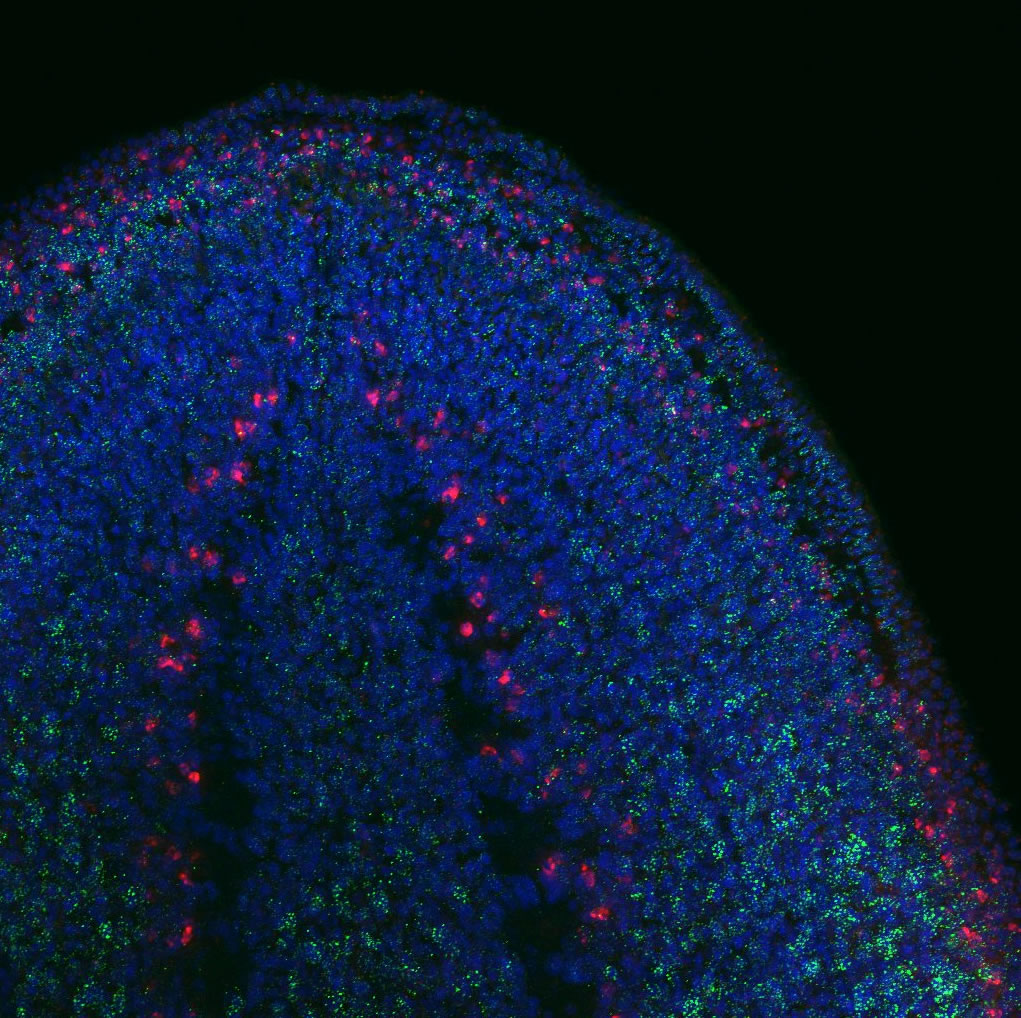
To establish where in the CNS Tudor is expressed, various markers for specific neuronal subtypes were used- th for dopaminergic, tph for serotonergic and ChAT for cholinergic neurons. Anish, a DPhil student, was thus able to help me show that Tudor protein is not expressed, for example, in dopaminergic neurons but in proximal neurons.

FISH and immunohistochemical staining showing the expression of a domapinergic neuron marker in (red), Tudor (green) and nuclei (blue). Courtesy of Anish Dattani.

To find out whether the expression pattern of the transcript matches that of Tudor protein. I used the genome data available to clone Smedtud-1 to synthesise antisense probes that I used for FISH jointly with immunostaining for the protein using the Tudor antibody.

Although I wasn’t able to collect all of my data in the short time that I was in the lab, I’ve achieved so much. I’ve learnt how to cut worms, microinject, clone genes, synthesise probes and carry out immuno and in situ protocols. I’ve learnt to always ask when in doubt. I’ve learnt to be scrupulous. I’ve learnt that it can be very frustrating when experiments don’t work out as planned and when time runs out. But those little setbacks showed me just how determined I am to do science.

The Aboobaker lab was extremely welcoming and supportive. Thank you to Aziz, Natasha, Dani, Nobu, Prasad, Anish, Sounak, Yuli, Sam, Damian, Alvina, Holly, Ben and Alex.

Thumbs up (7 votes)
Loading...

Tags: ,
Categories: Education, Lab Life, Research

This month on the Node- November 2015

Posted by , on 1 December 2015

Our jobs page was very busy this month! Check out the 13 new positions available. Elsewhere on the Node:


Research:

– Mike Levin explains how his group used artificial intelligence to produce a model that explains the all-or-none phenotypes seen in depolarised Xenopus tadpoles.

– How do you express two genes stably and bicistronically through electroporation in chick? Joana Lima posted about her recent paper in BMC Developmental Biology.

– Julia posted a new stem cell image, and told us a bit about pancreas development!


Discussion:

– The New Year is coming! What is your wish list for your research in the year 2016? Tell us in the latest question of the month!

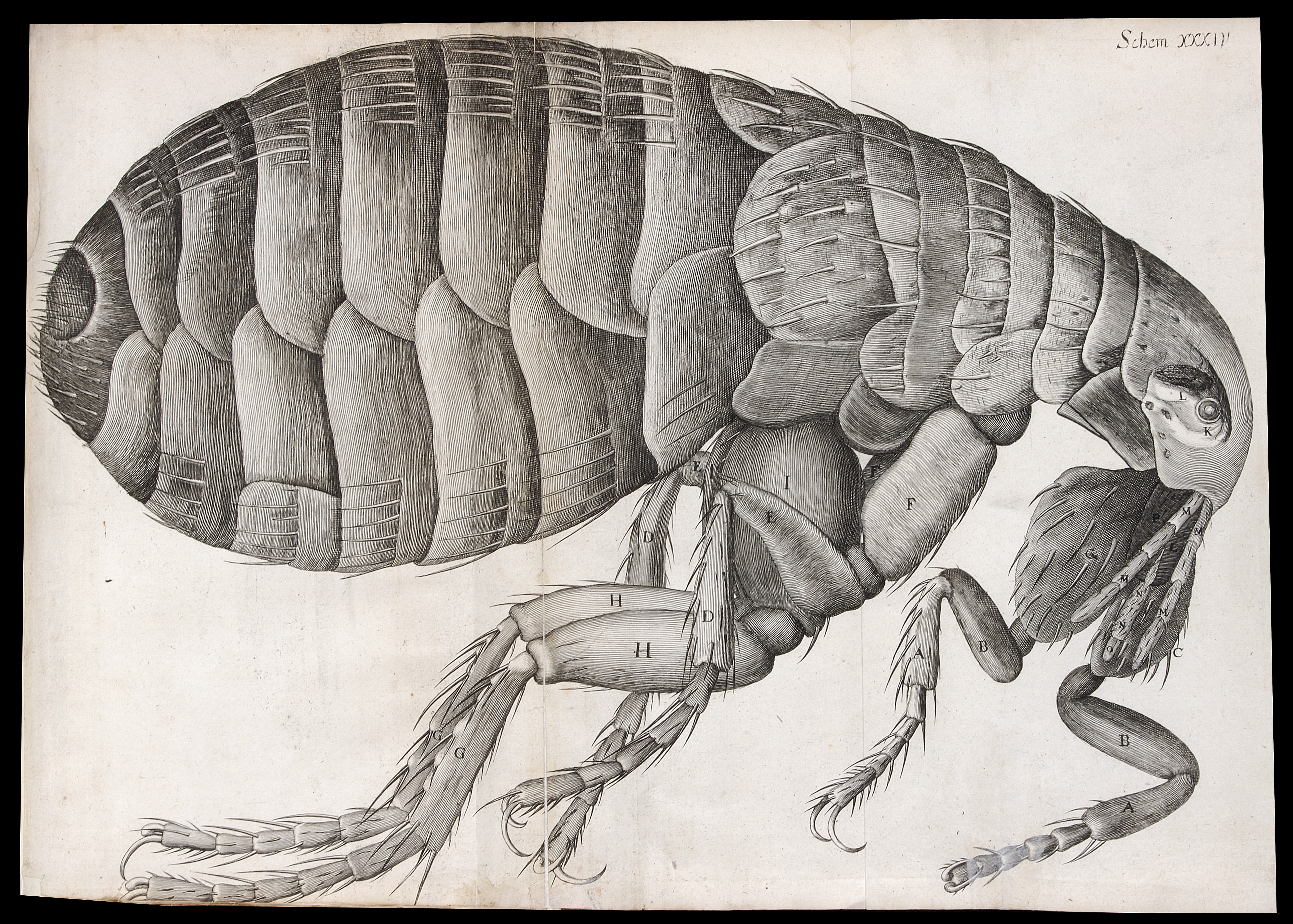
– Why was Micrographia such an important book? Cat Vicente posted about why scientists should know about Robert Hooke’s work.

Hooke R, IM002201


Also on the Node:

Embedded Image– Marcela told us about the time she spent in Jeremy Brocke’s lab in UCL and her visit to the lab of Aziz Aboobaker at the University of Oxford, sponsored by a Development Travelling Fellowship.

– An interview with José Silva featured in the Node this month!

– A new Mole cartoon, about grant writing (and proposing to Fundamentally Change the World As We Know It). And two more Sticky Wicket posts on bad and not-so-bad ideas.

– Check out the SDB’s new small grants program!

– And Oliver Davis wrote about his time at Jean-Paul Vincent’s lab sponsored by a BSDB Gurdon Studentship!


Happy reading!


Thumbs up (1 votes)
Loading...

Categories: Highlights

In Development this week (Vol. 142, Issue 23)

Posted by , on 1 December 2015

Here are the highlights from the current issue of Development:


Human embryos: a mixed bag

Embedded Image

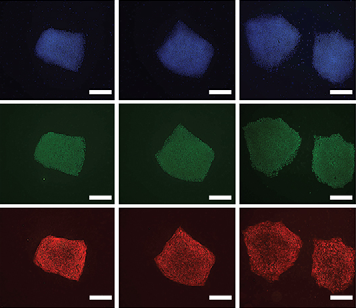
Human embryonic stem cells (hESCs) are conventionally derived from embryos that are at the blastocyst stage of development. Now, to gain insight into lineage allocation in early human development, Susan Fisher and colleagues report the derivation of various hESC lines using single blastomeres from 8- and 12-cell human embryos (p. 4010). The characterisation of these lines reveals that, at the transcriptome level, they differ from blastocyst-derived lines. Notably, blastomere-derived hESCs are enriched for genes expressed by trophoblasts and the ectoplacental cone. The researchers further show that blastomere-derived lines are hypomethylated in genomic regions that control trophoblast differentiation and early developmental processes, indicative of trophoblast competence. Variations in gene expression profiles are also observed among the various blastomere-derived lines (all of which are derived from embryos from a single couple), highlighting the existence of blastomere heterogeneity. In line with this, the authors show that levels of EOMES, T, GDF15 and active b-catenin differ among the blastomeres of 8- to 10-cell human embryos. Finally, the researchers report the derivation of the first human trophoblast stem cell line, which could be used in the future to model placental development and disorders.


Cilia: at the heart of chamber maturation

Embedded Image

Increasing evidence suggests that blood flow and biomechanical forces generated by the developing heart feedback to regulate cardiac chamber formation and maturation. How such forces are sensed and translated, however, remains unclear. Here, Jiandong Liu and co-workers show that, in zebrafish, cardiac contraction activates Notch signalling in the endocardium to control chamber maturation (p.4080). By analysing embryos deficient for troponin T type 2a (tnnt2a), which encodes an essential component of the cardiac contraction apparatus, the researchers first show that cardiac contraction is required for the formation of cardiac trabeculae – the luminal protrusions that are indicative of cardiac chamber maturation. They further show that cardiac contraction controls Notch signalling in the endocardium; notch1b expression is reduced in tnnt2a–/– embryos. Notch activation, they report, induces the expression of ephrin b2a and neuregulin 1 to promote trabeculation. Finally, the authors demonstrate that shear stress controls notch1b expression in a primary cilia-dependent manner, suggesting that primary cilia in this context are responsible for detecting fluid flow. In summary, these findings highlight a molecular mechanism that links flow sensing to the transcriptional changes that regulate cardiac development.


Vascular development in full flow

Embedded Image

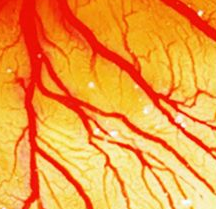
Vascular development and angiogenesis are known to be regulated by various signals, but the roles played by blood flow and biomechanical signals are unclear. This is mostly because the ability to image and measure changes in blood flow has been limited. Now, Elizabeth Jones and colleagues develop a method to simultaneously image blood flow dynamics and vascular remodelling (p. 4158), and use this technique to show that flow dynamics control sprout location and elongation in quail embryos (p.4151). Their imaging approach uses micro-particle image velocimetry: embryos are injected with a fluorescent dye that labels endothelial cells and with fluorescent microspheres that act as tracers of fluid motion. Subsequent imaging via a high-speed camera allows changes in blood flow dynamics and vessel geometry to be quantified. Using this method, the researchers demonstrate that sprout location can be predicted based on flow dynamics; sprouts form from vessels that are at a lower pressure towards vessels at a higher pressure and localise to points where shear stress, a force created by flow, is at a minimum. In addition, the rate of sprout elongation is proportional to the pressure difference between the two vessels. These studies provide insights into the hemodynamic forces at play during vascular development and open the door to further studies of the biomechanical control of vascular remodelling.


Con-Nek-ting cilia biogenesis and resorption

Embedded Image

The left-right organiser (LRO) is a transient ciliated structure that plays a key role in establishing left-right (LR) asymmetry in the vertebrate embryo. However, the mechanisms that control the formation and resorption of cilia on this structure are unclear. In this issue (p. 4068), Martina Brueckner and colleagues reveal that Nek2 regulates cilia biogenesis and resorption at the Xenopus LRO. They show that both the knockdown and the overexpression of nek2, which encodes a NIMA-like kinase, result in reduced cilia numbers and motility at the LRO and hence abnormal LR development. Nek2 is known to play a role in centriole separation and, in line with this, the authors reveal that the knockdown of nek2results in centriole defects in the LRO. They further show that Nek2 acts upstream of the tubulin deacetylase Hdac6, and that it interacts with the nucleoporin Nup98, to control cilia resorption. Together, these findings demonstrate that Nek2 is involved in multiple stages of the cilia life cycle. Given that NEK2 has previously been implicated in abnormal laterality in humans, these findings also provide further evidence that links Nek family kinases to human ciliopathies.


An appendage to Hox gene function

Embedded Image

Hox genes are best known for their role in axial patterning during embryogenesis, but they have also been implicated in the development and patterning of cutaneous accessory organs, such as hair follicles and mammary glands. How do they function in this context? Here, by showing that Hoxc8 can initiate an ectopic mammary gland programme in mice, Lara Carroll and Mario Capecchi propose that Hox genes regulate the distribution of cutaneous appendages (p. 4056). They first show that Hoxc8 is transiently expressed in the early surface ectoderm prior to mammary line formation. The researchers then show that the conditional overexpression of Hoxc8 – to express it in regions where it is not normally expressed – results in the formation of ectopic mammary placodes. These ectopic rudiments express known mammary placode markers, such as Tbx3 and Wnt10b. The authors further report that the ablation of ectodermal Tbx3 prevents the formation of both normal and ectopic mammary rudiments, suggesting that Tbx3 is directly regulated by Hoxc8 during mammary development. Together, these and other findings highlight a role for Hoxc8 in the initial stages of mammary development and suggest that Hoxc8 and other Hox genes play roles during the regional specification of cutaneous appendages.


PLUS…


How to make an oligodendrocyte
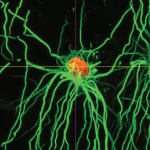
DEV3983The loss of oligodendrocytes – the cells that produce the myelin sheath of axons – can result in a broad array of diseases including cerebral palsy and multiple sclerosis. Accordingly, replacing lost oligodendrocytes holds great promise as a therapeutic strategy. Here,  describe the molecular events regulating oligodendrocyte development in vivo and discuss how our understanding of this process has led to the establishment of methods for producing oligodendrocytes in vitro. See the Primer on p. 3983

*Also see the other articles in the “How to make…” series here


Morphogen rules: design principles of gradient-mediated embryo patterning
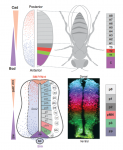
DEV3996The Drosophila blastoderm and the vertebrate neural tube are archetypal examples of morphogen-patterned tissues that create precise spatial patterns of different cell types. Here, James Briscoe and Stephen Small compare these systems in the context of gene regulatory networks and dynamical systems theory. This comparison reveals several shared features that suggest that a set of common design principles underpins the patterning of both tissues. See the Review on p. 3996

Thumbs up (No Ratings Yet)
Loading...

Categories: Research

Question of the month- New Year wish list

Posted by , on 30 November 2015

It’s getting to that time of year when we think about the year to come and the things we hope it will bring: love, health, money… and maybe a little bit of help with our research.

There are many things that could make the year 2016 better for a developmental scientist: new equipment, better protocols, an easier way to maintain a model organism, or quite simply some more time to do experiments! So, in the spirit of the festive season, this month we are asking:


What is your research wish list for the New Year?


Share your thoughts by leaving a comment below! You can comment anonymously if you prefer. We are also collating answers on social media via this Storify. And if you have any ideas for future questions please drop us an email!

Thumbs up (2 votes)
Loading...

Tags:
Categories: Discussion, Lab Life

From our sister journals- November 2015

Posted by , on 30 November 2015

Here is some developmental biology related content from other journals published by The Company of Biologists.


CoB_DisModMech_AW_RGB


Genome-wide lacZ profiling in the mouse

Mouse lacz From our sister journals Nov 2015 DMM

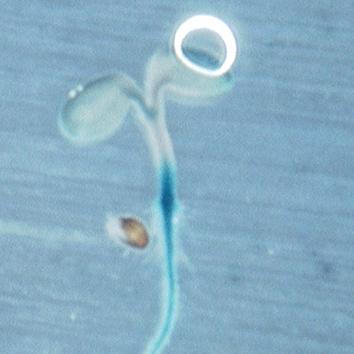
Tuck, Estebel and colleagues have produced an open access adult mouse expression resource with the expression profile of 424 assessed in up to 47 different organs, tissues and substructures using a lacZ reporter gene. Read the paper here [OPEN ACCESS].


A method for labelling leukocytes infiltrating the mouse retina

Leukocytes in retina from our sister journals Nov 2015 dmm

Sim and colleagues describe a method to image myeloid cells infiltrating the mouse retina in vivo using a depot injection of indocyanine green dye (ICG). Read the paper here [OPEN ACCESS].


Urine-derived stem cells predict patient response to cholesterol-lowering drug

dmm.022277.jpg

Si-Tayeb, Idriss and colleagues have shown that cells derived from patient urine samples can be reprogrammed to generate patient-specific models of hypercholesterolemia, providing a tool to predict patient response to cholesterol-lowering drugs. Read the paper here [OPEN ACCESS], and read the press release here.


Journal typography


Mass and drought resistance linked in seedlings

JCS171207F6Seedlings of large-seeded plants are considered to withstand abiotic stress more efficiently. Meng and colleagues show that the integration of drought stress response into the regulation of mass is mediated by the transcription factor ARF2. Read the paper here.


New role for eIF6 in myofibroblast differentiation

128-21 Remake

Myofibroblast differentiation is regulated by TGF-β1. In this paper, Yang and colleagues show that eukaryotic initiation factor 6 can modulate myofibroblast differentiation by altering the occupancy of the TGF-β1 promoter by H2A.Z and Sp1, affecting TGF-β1 transcription. Read the paper here.


Journal typography

High-salt exposure increases cardiovascular defects in early chick embryos

chick heart salt From our sister journals Nov 2015 JEB

In chick, embryonic mortality at early stages is usually due to vascular malformations. Wang and colleagues show that high-salt exposure results in angiogenesis and heart defects, possibly due to excess generation of reactive oxygen species (ROS). Read the paper here.


The effects of rearing amphibious fish out of water

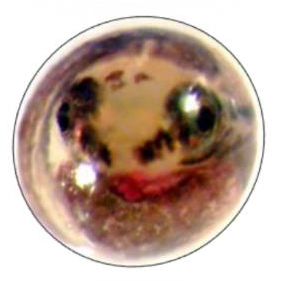
JEB127399suppWells, Turko and Wright rear an amphibious fish in and out of water, and find that embryos reared in aqueous environments consume more energy than their faster developing terrestrial counterparts. Read the paper here.


Hatching success does not decrease with higher nest temperatures in flatback turtles

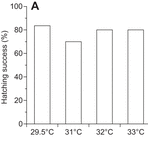
turtle climate change from our sister journals Nov 2015 JEBElevated nest temperatures caused by climate change could harm the viability of ectotherm eggs. Howard and colleagues show that high nest temperatures do not decrease hatching success in flatback turtles, and observe a high pivotal sex-determining temperature in these turtles. Read the paper here.


Thumbs up (1 votes)
Loading...

Tags: , , , , , , ,
Categories: Research

Stable and bicistronic expression of two genes in somite- and lateral plate-derived tissues to study chick limb development

Posted by , on 27 November 2015

The electroporation technique is widely used in developmental biology to deliver foreign DNA into cells and study gene function. The chick embryos exhibit a remarkable easy access to perform electroporation and follow in ovo development.

Electroporation of limb somites allows the misexpression of genes in limb somite derivatives, like myogenic and endothelial cells, while electroporation of the lateral plate targets other limb cells like cartilage, bone and tendons.

We previously performed limb somite electroporation using two plasmids, one containing the gene-of-interest and one containing the reporter gene. However, this approach does not allow analysis at the cellular level, which constitutes a limitation of the technique.

To overcome this limitation and perform analysis at the cellular level, we aimed to design bicistronic vectors to misexpress, in the same cell, the gene-of-interest and the reporter gene. To do this, we took advantage of the 2A peptide that allows expression of a bicistronic mRNA. In these vectors, a single peptide is produced by the bicistronic mRNA, and auto-cleavage of the 2A peptide subsequently produces equal amounts of the two proteins. To test our vectors, we used control plasmids expressing two fluorescent proteins, Tomato and GFP, separated by the 2A peptide. We further used the Tol2 transposon system to allow genomic integration of the construct and enable analysis at late developmental stages.

One focus of our research is skeletal muscle and tendon formation. Therefore, we designed a set of stable bicistronic vectors containing different promoters to target muscle cells at different stages of differentiation. After performing limb somite electroporation using these vectors, we observed a simultaneous cellular expression of Tomato (membrane) and GFP (nuclei) at the different stages of muscle differentiation. In electroporated limbs, the ubiquitously expressed CMV/βactin promoter targeted both muscle progenitors (Pax7+ cells) and differentiated cells (myosin+ cells). The p57MRE/βactin promoter, which drives expression in differentiated myoblasts, targeted mononucleated (myosin-) cells and muscle fibres (myosin+). Finally, the MLC (myosin light chain) promoter targeted differentiated cells (myosin+). Lateral plate electroporation with the vector containing the CMV/βactin promoter allowed Tomato and GFP co-expression in cartilage, tendons and connective tissue of the limbs, but never in myogenic (Pax7+ or myosin+) cells.

We believe that this set of tools can be used to efficiently misexpress genes at different time points of myogenic cell differentiation and analyse the consequences for muscle development. Moreover, because these vectors can be integrated into the genome, the analysis at late developmental time points can be performed. Finally, the combination of limb somite and lateral plate electroporation can provide us with a tool to study the molecular and cellular interactions between the different components of the musculoskeletal system.

Full article at : http://www.biomedcentral.com/1471-213X/15/39

Thumbs up (No Ratings Yet)
Loading...

Tags: ,
Categories: Research

Post-doctoral Research Associate

Posted by , on 26 November 2015

Closing Date: 15 March 2021

We are seeking to appoint a Post-doctoral Bioinformatician to undertake research on the bioinformatics of eye cancers with Prof. Shin-ichi Ohnuma and Dr. Mandeep Sagoo.

The work aims to understand the mechanism of cancer initiation and progression through bioinformatics data analysis of whole genome sequences and mRNA expression profiling in combination with single cell biology. The position is available for 32 months in the first instance.

This project builds on the previous basic cancer biology works of Prof. Ohnuma and on the patient-based clinical retinoblastoma research of Dr Sagoo.

Applicants should have a PhD and research experience in bioinformatics. Previous experience in analyses of next generation genome sequence data and mRNA expression profiling is preferable. Applicants must beself-motivated, havetheability to plan and interpret experimental studies as well as have excellent communication skills and ability to write well.

The laboratory is well equipped and is part of UCL Institute of Ophthalmology. The Institute comprises about 40 research groups spanning a research area encompassing visual development, stem cell based study, and therapy of retinal diseases. UCL has active neuroscience, developmental biology, and stem cell research communities and the group has established collaborative links within the institute and UCL, as well as with national and international colleagues.

UCL Reference: 1519787
Applicants should apply online through UCL Job search webpage.

https://atsv7.wcn.co.uk/search_engine/jobs.cgi?SID=amNvZGU9MTUxOTc4NyZ2dF90ZW1wbGF0ZT05NjUmb3duZXI9NTA0MTE3OCZvd25lcnR5cGU9ZmFpciZicmFuZF9pZD0wJmpvYl9yZWZfY29kZT0xNTE5Nzg3JnBvc3RpbmdfY29kZT0yMjQmcmVxc2lnPTE0NDg1NTExNjItYTI5ZTdmMjBhNDcyOWNmMzNlMDk3ZDQzOGVmYzcwYWJkNmUzMjliOA==
Informal inquiries may be addressed to s.ohnuma@ucl.ac.uk

Deadline of application: 16th Dec 2015

Thumbs up (No Ratings Yet)
Loading...

Categories: Jobs

A call for abstracts: BMP Signalling in Cancer conference

Posted by , on 25 November 2015

15—17 March 2016
St. Catharine’s College, Cambridge, UK


The aim of this Biochemical Society focused meeting is to explore the mechanisms of BMP signal transduction and regulation of signalling, and discuss how genetic and epigenetic alterations result in aberrant signalling and how this leads to cancer. The BMP signalling pathway is a key therapeutic target and we will consider how to manipulate the pathway with small molecules or biologics. This conference will bring together researchers from academe and industry, and will be a great opportunity for those working on BMP signalling, cancer, stem cells, structural biology and drug discovery to share data and interact in a vibrant, but informal environment.

Organizers

  • Caroline Hill (The Francis Crick Institute, United Kingdom)
  • Alex Bullock (University of Oxford, United Kingdom)
  • Gareth Inman (University of Dundee, United Kingdom)

Topics

  • Mechanisms of BMP signalling
  • Deregulation of BMP signalling in cancer and therapeutic approaches
  • Genetic and epigenetic alterations in BMP pathway components
  • BMP signalling in disease

Details of the event and a list of speakers can be found here.

There will be opportunities for abstracts to be elevated to short oral talks, particularly from early-career scientists.

Abstract deadline: 12 January 2016

Earlybird registration deadline: 12 January 2016

Thumbs up (1 votes)
Loading...

Tags: , , ,
Categories: Events, Societies

Postdoctoral position in Developmental Neurobiology in Barcelona

Posted by , on 24 November 2015

Closing Date: 15 March 2021

FIG

We are seeking for highly motivated and enthusiastic candidates interested in understanding how tissue compartmentalization and cell fate decisions take place in the Central Nervous System during embryonic development. The project will focus in understanding the genetic mechanisms involved in the control of the cellular fate using zebrafish embryos as a model. Experience on molecular biology, imaging, and developmental biology will be an advantage.

We are located in the Department of Experimental and Health Sciences of the Universitat Pompeu Fabra in Barcelona. Interested candidates are encouraged to contact Cristina Pujades for more information. To apply, send a letter of interest, CV, a short description of your research background, and contact details of 2 referees to cristina.pujades[at]upf.edu          http://pujadeslab.upf.edu/

Thumbs up (No Ratings Yet)
Loading...

Categories: Jobs