
The community site for and by
developmental and stem cell biologists

Cricket Leg Regeneration: Histone Modification Matters

Posted by , on 22 October 2015

In autumn, crickets generally exhibit chirping songs in the temperate East Asian country of Japan. While the African field cricket Gryllus bimaculatus originates from tropical countries, it is an emerging model animal globally because of its ability to regenerate amputated legs during nymph and its developmental mode (short germ band) (Mito and Noji, 2008).

Many living organisms in the animal kingdom are able to regrow their body parts following injury. Examples of body parts that may be regrown include the lens and tail of amphibians, the head of planarians, and the heart of fish. In contrast, it has long been assumed that humans cannot restore lost body parts, except for particular tissues, including the epidermis, the liver, and the ovarian surface after ovulation. Therefore, it is important to elucidate the molecular mechanisms involved in regeneration processes using animal models that are able to regenerate body parts for subsequent application in non-regenerative human organs and tissues.

Within the last 2 years, comparative genomic studies of two planarian species with different regenerative abilities led to the successful regeneration of heads by reducing beta-catenin activity from otherwise non-regenerative tail fragments (Umesono et al., 2013). Studies of vertebrates with the ability to restore limbs, including newts, frogs, and salamanders, have demonstrated that limb regeneration occurs in a stepwise manner. The limb regeneration process is divided into at least three phases: wound healing, dedifferentiation, and redevelopment, with the redevelopment phase mimicking embryonic development (Endo et al., 2004).

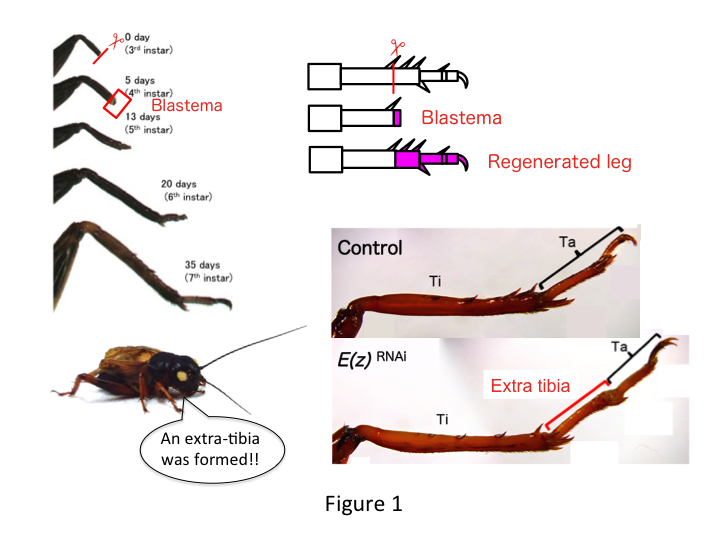
The cricket leg is composed of six segments that are arranged along the proximo-distal (PD) axis: coxa, trochanter, femur, tibia, tarsus, and claw (Figure 1). Fig1The tarsus is further subdivided into three tarsomeres. When the tibia of the third-instar nymph is amputated, the leg regenerates and recovers its allometric size and proper shape by the sixth instar (i.e., within 20 days of amputation), being restored to almost normal adult size and shape. Soon after healing, the blastema (a pool of cells that proliferate) develops in the distal region of the amputated leg. Blastema cells proliferate and form the missing structures by intercalary processes between the most distal region and the remaining part of the leg (French et al., 1976).
Previously, we performed comparative transcriptome analysis of regenerating and normal amputated legs of crickets to profile mRNA expression associated with leg regeneration (Bando et al., 2013). We first focused on the upregulation of Jak/Stat pathway genes, which are linked to the immune system. RNA interference (RNAi) of genes in this pathway thoroughly disturbed leg regeneration. In contrast, RNAi against Socs, a suppressor of cytokine signaling, caused leg elongation. Additional experiments showed that the Jak/Stat pathway promotes cell proliferation downstream of the Ds/Fat pathway.

Subsequently, we investigated epigenetic regulation during cricket leg regeneration. Tetsuya Bando, a senior investigator in our group, identified one gene for histone H3 lysine 27 (H3K27) methyltransferase, E(z), and one gene for histone H3K27 demethylase, Utx, in G. bimaculatus. Cloning Gryllus genes is now a straightforward process due to information being available about the cricket genome (Mito and Noji, personal communication). Methylation of histone H3K27 by E(z) represses the expression of target genes by recruiting Polycomb group proteins. Conversely, demethylation of the trimethylated histone H3K27 by Utx promotes gene expression. Tetsuya found that the transcription of both E(z) and Utx genes is upregulated in the blastema cells of amputated legs (Bando et al., 2013). In situ hybridization verified that both genes are ubiquitously transcribed in the regenerating legs of crickets, and that both genes are expressed in developing embryos (Hamada et al., 2015). Immunostaining on the amputated tiny legs after RNAi by Yoshimasa Hamada (a PhD student) confirmed that E(z) and Utx contribute to the methylation and demethylation at histone H3K27me3, respectively, during leg regeneration.

However, Yoshimasa unexpectedly found that the extra leg segment is formed after RNAi against E(z) (Figure 1). Initially, we were not able to determine the identity of the leg segment. Morphologically, the leg segment appeared to be a tibia, because it had spines and spurs that were characteristic to an authentic tibia. Our opening hypothesis was that the phenotypes after RNAi might depend on the amputation site in the tibia. However, even when a leg is amputated in the distal part of the femur, the extra tibia-like segment emerges. Pattern formation along the antero-posterior and dorso-ventral axes remained unchanged, except along the PD axis. We then examined whether the amputation site along the PD axis in the tibia influenced phenotypic severity. The extra-tibia that formed became longer the more proximal the amputation sites on the tibia (Figure 1). Conversely, RNAi against Utx resulted in the loss of joint formation between tarsomere 1 (Ta1) and Ta2 (Figure 2). Fig2In situ hybridization showed that the expression of leg patterning genes altered along the PD axis. Specifically, the domain of dachshund (dac) expression expanded in E(z)RNAi regenerating legs, whereas Egfr expression diminished in UtxRNAi legs. Therefore, E(z) may repress dac expression during normal leg regeneration, whereas Utx induces Egfr expression.
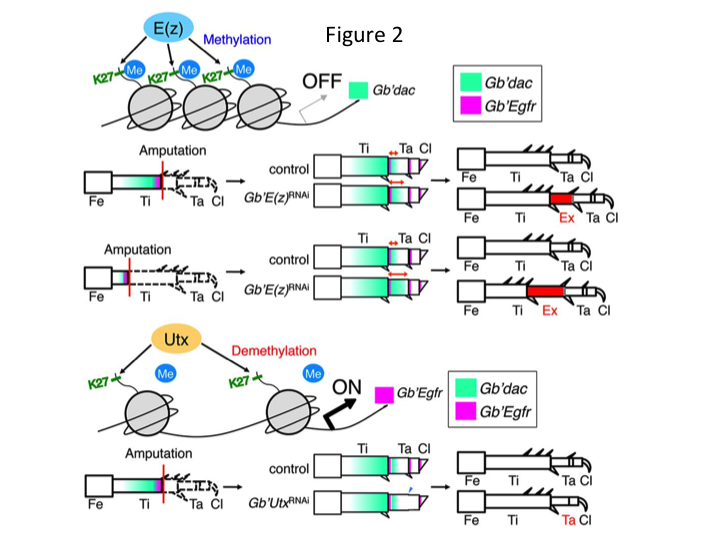
dac encodes a transcriptional co-repressor that is categorized in leg gap genes. dac produces crude positional values along the PD axis of the leg and mediates the formation of the distal tibia and Ta1 (the proximal tarsomere) during cricket leg regeneration (dac expression domain is shown in green in Figure 2) (Ishimaru et al., 2015). Specifically, dac promotes tibial cell proliferation. Therefore, because RNAi against E(z) upregulates dac, E(z) expression in the blastema cells may suppress the blastemal overproliferation by repressing extra dac expression.

This information raises the question of how E(z) specifically regulates dac expression. Furthermore, what is the mechanism that determines the target genes of E(z)? E(z) belongs to the Polycomb repressive complex 2 (PRC2), which is one of three Polycomb group (PcG) complexes (Schuettengruber et al., 2007). During cricket embryogenesis, E(z) represses the anterior expansion of Hox gene expression and provides proper identity in embryos (Matsuoka et al., 2015). This information indicates that the target genes of E(z) differ depending on the cellular context. A DNA binding protein, Pleiohomeotic (Pho), along with other factors, binds to the Polycomb response elements (PRE) of target genes, after which E(z) trimethylates histone H3K27. Although PREs have only been identified in Drosophila, the meta-analysis of putative target genes for PcG proteins has shown that many of the target genes are common to the fly, mouse, and humans. dac and Egfr are included among these genes (Schuettengruber et al., 2007). Thus, the regulatory region of the cricket dac gene probably contains PREs, through which E(z) epigenetically regulates the expression of dac during cricket leg regeneration (Figure 2). Ongoing research is focused on characterizing the functions of the Pho gene and other PcG complex genes and epigenetic modifiers during Gryllus leg regeneration.

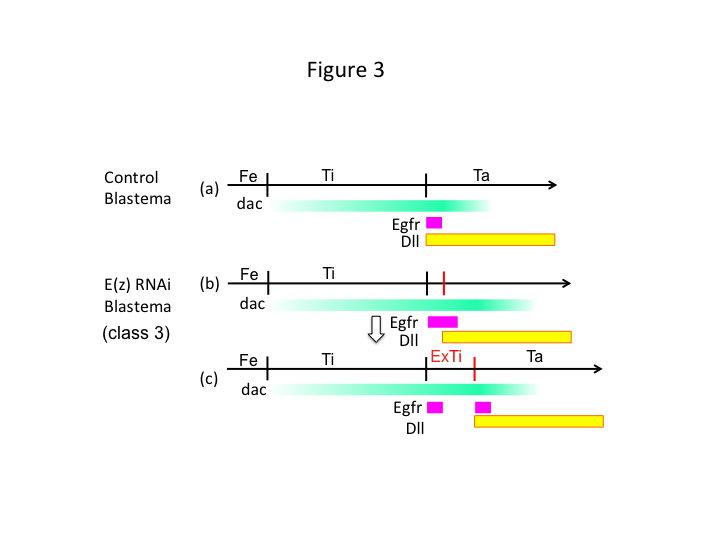
Finally, why does E(z) RNAi cause extra-tibia formation? One hypothetical scenario is that when the tibia is amputated at the proximal position where dac expression is low, Utx expression (which dominates E(z) expression) permits dac expression (Figure 3a) to restore the tibia. Fig3Thus, these histone modifiers sense the positional values along the PD axis of the amputation site, and fine-tune the expression level of leg patterning genes, like dac. In the case of E(z) RNAi just before proximal amputation, intense dac expression is induced and expands in the regenerating leg (Figure 3b). Distal-less (Dll) expression, which is another leg gap gene that specifies the distal domain of the leg (Angelini and Kaufman, 2005), may shift more distally depending on expanded dac expression (Figure 3b). Thus, the Egfr-expressing domain may be separated into two parts where (1) Dll expression is low and (2) Dll is high. The extra-tibia probably forms between the two different Egfr-expressing domains by intercalating cell proliferation and patterning (Figure 3c).
Our goal is to elucidate blueprints for “making a regenerated leg” by using this attractive hemimetabolous insect model. The blueprints are expected to clarify how the number of leg segments is determined. Our striking observations on RNAi against E(z) leading to “extra tibia formation” represent an important step towards elucidating this process.


References

  1. Mito, T. and Noji, S. (2008). The Two-Spotted Cricket Gryllus bimaculatus: An emerging Model for Developmental and Regeneration Studies. Cold Spring Harb Protoc, 331-346.
  2. Umesono, Y., Tasaki, J., Nishimura, Y., Hrouda, M., Kawaguchi, E., Yazawa, S., Nishimura, O., Hosoda, K., Inoue, T. and Agata, K. (2013). The molecular logic for planarian regeneration along the anterior–posterior axis. Nature 500, 73–76.
  3. Endo, T., Bryant, S. V. and Gardiner, D. M. (2004). A stepwise model system for limb regeneration. Dev Biol 270, 135–145.
  4. French, V., Bryant, P. J. and Bryant, S. V. (1976). Pattern regulation in epimorphic fields. Science 193, 969-981.
  5. Bando, T., Ishimaru, Y., Kida, T., Hamada, Y., Matsuoka, Y., Nakamura, T., Ohuchi, H., Noji, S. and Mito, T. (2013). Analysis of RNA-Seq data reveals involvement of JAK/STAT signalling during leg regeneration in the cricket Gryllus bimaculatus. Development 140, 959-964.
  6. Hamada, Y., Bando, T., Nakamura, T., Ishimaru, Y., Mito, T., Noji, S., Tomioka, K. and Ohuchi, H. (2015). Leg regeneration is epigenetically regulated by histone H3K27 methylation in the cricket Gryllus bimaculatus. Development 142, 2916-2927.
  7. Ishimaru, Y., Nakamura, T., Bando, T., Matsuoka, Y., Ohuchi, H., Noji, S. and Mito, T. (2015). Involvement of dachshund and Distal-less in distal pattern formation of the cricket leg during regeneration. Sci Rep 5, 8387.
  8. Schuettengruber, B., Chourrout, D., Vervoort, M., Leblanc, B. and Cavalli, G. (2007). Genome regulation by polycomb and trithorax proteins. Cell 128, 735-745.
  9. Matsuoka, Y., Bando, T., Watanabe, T., Ishimaru, Y., Noji, S., Popadić, A. and Mito, T. (2015). Short germ insects utilize both the ancestral and derived mode of Polycomb group-mediated epigenetic silencing of Hox genes. Biol Open 4, 702-709.
  10. Angelini,R. and Kaufman, T. C. (2005). Insect appendages and comparative ontogenetics. Dev Biol 286, 57-77.
Thumbs up (2 votes)
Loading...

Tags: , ,
Categories: Research

Navigate the archive

Use our Advanced Search tool to search and filter posts by date, category, tags and authors.

Journal of Cell Science Special Issue on 3D Cell Biology: Call for Papers:

Posted by , on 22 October 2015

Journal of Cell Science is pleased to welcome submissions for consideration for an upcoming Special Issue on 3D Cell Biology. We have a limited understanding of cells within their natural context of tissues and organs, but recent advances in imaging techniques, organoids and other more complex systems are making it easier for cell biology research to be conducted in more complex and physiologically relevant settings. Ultimately, we hope to achieve a sophisticated molecular understanding of how cells build organs during development and corrupt their structure and function during disease processes. Journal of Cell Science is a natural home for the research that will help to address these fundamental biological questions.

We invite you to showcase your breakthrough research on all aspects of 3D Cell Biology in this Special Issue, which is scheduled for publication in mid 2016 and will be widely marketed and distributed at relevant conferences worldwide. The articles within this issue will receive extensive exposure to a broad audience of cell biologists.

The issue will be guest edited by Andrew Ewald (Johns Hopkins School of Medicine, USA), who is also the Journal of Cell Science Guest Editor and will handle all 3D cell biology papers submitted to the journal for one year, from August 2015.

We encourage submissions of Research Articles and Short Reports, and Tools & Techniques papers. Articles must be received by January 16th, 2016 for consideration for the Special Issue. Please refer to our author guidelines for information on preparing your manuscript for Journal of Cell Science, and submit your manuscript via our online submission system. Please highlight that your submission is to be considered for the Special Issue in your cover letter. For rapid feedback on the potential suitability of an article for this Special Issue, please submit a presubmission enquiry.

Why publish in Journal of Cell Science?

  • NO page or colour charges
  • Expert Academic Editors
  • Efficient and fair decisions
  • Open Access option
  • Not-for-profit publisher
  • Wide international circulation

Submission deadline: January 16th, 2016

Thumbs up (1 votes)
Loading...

Tags:
Categories: News

Unique opportunity for early career scientists interested in cardiovascular rejuvenation

Posted by , on 22 October 2015

CoB WORKSHOPS A4 Feb 2016b

For more information click here or the image!


Thumbs up (1 votes)
Loading...

Tags: ,
Categories: Funding, News

From our sister journals- October 2015

Posted by , on 21 October 2015

Here is some developmental biology related content from other journals published by The Company of Biologists.


CoB_DisModMech_AW_RGB


Modelling Alzheimer’s Disease in vitro

DMMOct15Hall and colleagues established an in vitro model of Alzheimer’s Disease by culturing and differentiating embryonic stem cells isolated from the APPsw transgenic minipig. They use this system to provide insights into astrocyte and radial glia pathology in this disease. Read the paper here [OPEN ACCESS].


Journal typography


RhoC regulates VEGF signalling

JCS167601F7The small GTPases RhoA and RhoB are involved in vasculogenesis and angiogenesis; however, the role of another Rho family member, RhoC, in these processes is less understood. Now, Mukhopadhyay and colleagues show that RhoC maintains vascular homeostasis in endothelial cells yet is dispensable for vascular development. Read the paper here.


MyoD gets rid of Twist-1 with miR-206

JCS172288F6MyoD and Twist-1 are transcription factors known to promote and inhibit muscle cell differentiation respectively. Phylactou and co-workers identify a mechanism of myogenesis in which MyoD and miR-206 downregulate the expression of Twist-1. This pathway might also play an important role in muscle disease. Read the paper here.


PP6 gets oocytes out of meiosis

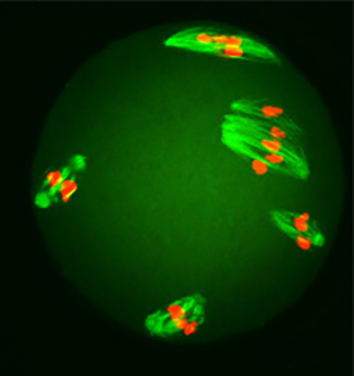
JCS173179F6PP6 is known to modulate Aurora A activity in mitosis, but what is its role in meiosis? Xu, Yang, Su and colleagues present in vivo evidence showing that PP6 suppresses Aurora A activity in oocytes in meiosis II, and is crucial for meiosis II exit, euploid egg production and female fertility. Read the paper here.


Journal typography


The relationship between bone adaptation and mesenchymal stem cells

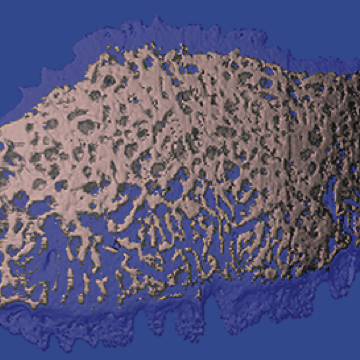
JEB Oct15Wallace and colleagues expose growing mice to exercise, showing that the ability of the progenitor population to differentiate toward bone-forming cells may be a better correlate to bone structural adaptation than external forces generated by exercise. Read the paper here.


Thumbs up (No Ratings Yet)
Loading...

Tags: , , , ,
Categories: Research

Joint Meeting of the Portuguese, Spanish and British Societies for Developmental Biology

Posted by , on 21 October 2015

3logo

A portuguese person, a spanish person and an english person meet in a bar…

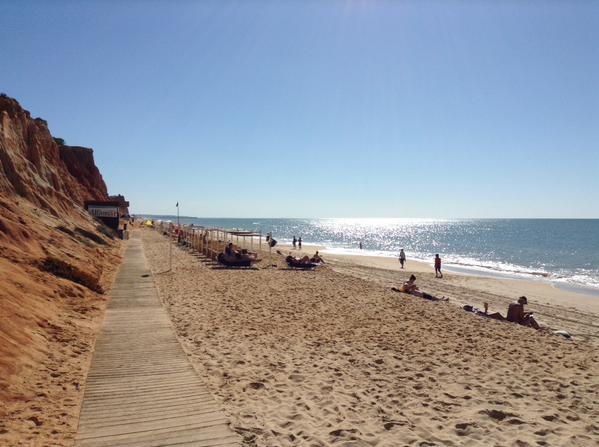
… and start discussing developmental biology. This may sound like the beginning of a joke, but in fact happened during the Joint Meeting of the Portuguese, Spanish and British Societies for Developmental Biology, which took place in Algarve, Portugal, in early October. The meeting venue, besides having the aforementioned bar, was also closely located to the beach, which we were able to enjoy thanks to a pleasant weather. Some of the participants also took advantage of the beautiful and family-friendly location to bring their own families. Nevertheless, the scientific talks and poster sessions still managed to draw the participants away from the seaside.

A meeting by the sea. Photo by Catarina Vicente @the_node.


The meeting started with early development, with a plenary lecture on the principles of pluripotency presented by Austin Smith. The lecture focused on the ongoing quest to establish human naïve embryonic stem cells in vitro independently of pluripotency transgenes, showing the progresses achieved so far and presenting the challenges that still need to be overcome.

The transition from pluripotency to lineage commitment was explored by Sally Lowell, whose work identified some of the factors that prime cells for differentiation and revealed a role for adhesion molecules in the decision to differentiate. Berenika Plusa presented the advantages of using rabbit as an alternative model to study early mammalian development. Andrew Johnson showed that axolotl, an organism without extraembryonic tissues, can be used to study later roles of the pluripotency factor Nanog.

The regulation of neuronal differentiation was also the focus of several talks. Kate Storey showed how differentiating neurons in the chick neural tube undergo apical abscission and revealed new evidence for the involvement of microtubule dynamics and adhesion molecules in this process. Also in the chick neural tube, Elisa Marti presented work on the role of Shh signalling in the decision to proliferate or differentiate and showed that the subcellular localisation of several Shh pathway components contributes for this decision. Anna Philpott also talked about division/differentiation in the nervous system and the regulation of proneural factor activity by phosphorylation in Xenopus. François Guillemot highlighted the role of the proneural factor Ascl1 in adult brain neurogenesis and how modulation of Ascl1 stability affects the balance between quiescence and differentiation. The talk by Alexandre Raposo was also on Ascl1 and its function promoting chromatin accessibility during neurogenesis.

The link between adult neural stem cells and cancer was discussed by two drosophilists. Cláudia Barros is using a fly brain tumour model to identify new factors involved in tumour initiation, while Rita Sousa-Nunes is using this model to study the interaction between tumour cells and the microenvironment.

Moving away from neural lineages, we also heard about regulation of proliferation, differentiation and cell movement of presomitic mesoderm progenitors from Leonor Saúde and single cell oscillators as components of the segmentation clock during somitogenesis from Andrew Oates.

Later in development, the formation of the inner ear lumen in zebrafish was introduced by Berta Alsina, revealing that mitotic cell rounding and epithelial thinning regulate lumen expansion. Juan R. Martinez-Morales talked about optic cup morphogenesis in zebrafish, showing that both rim involution and basal constriction contribute to cup folding. Zebrafish embryos were also the stars in the beautiful movies shown by Claudia Linker, whose work combined live imaging with cell ablation to test the role of leader, follower and pre-migratory cells in the collective migration of neural crest cells.

At the chromatin level, Ana Pombo proposed that the priming of developmental genes for future expression in embryonic stem cells involves the Polycomb complex, a specific modification of the RNA polymerase II and local transcript degradation. Rui Martinho showed how chromatin remodelling is involved in the transcriptional reactivation of the Drosophila oocyte during meiosis. Javier Lopez-Rios presented his work on a limb-specific enhancer responsible for the spatial differences in Ptch1 expression between mice and bovine, which underlies their distinct limb anatomy.

The meeting ended with a plenary talk by Moisés Mallo, who presented his work on Gdf11 as the coordinator of the trunk to tail decision during vertebrate embryogenesis and revealed an unexpected role for a pluripotency gene in trunk specification.

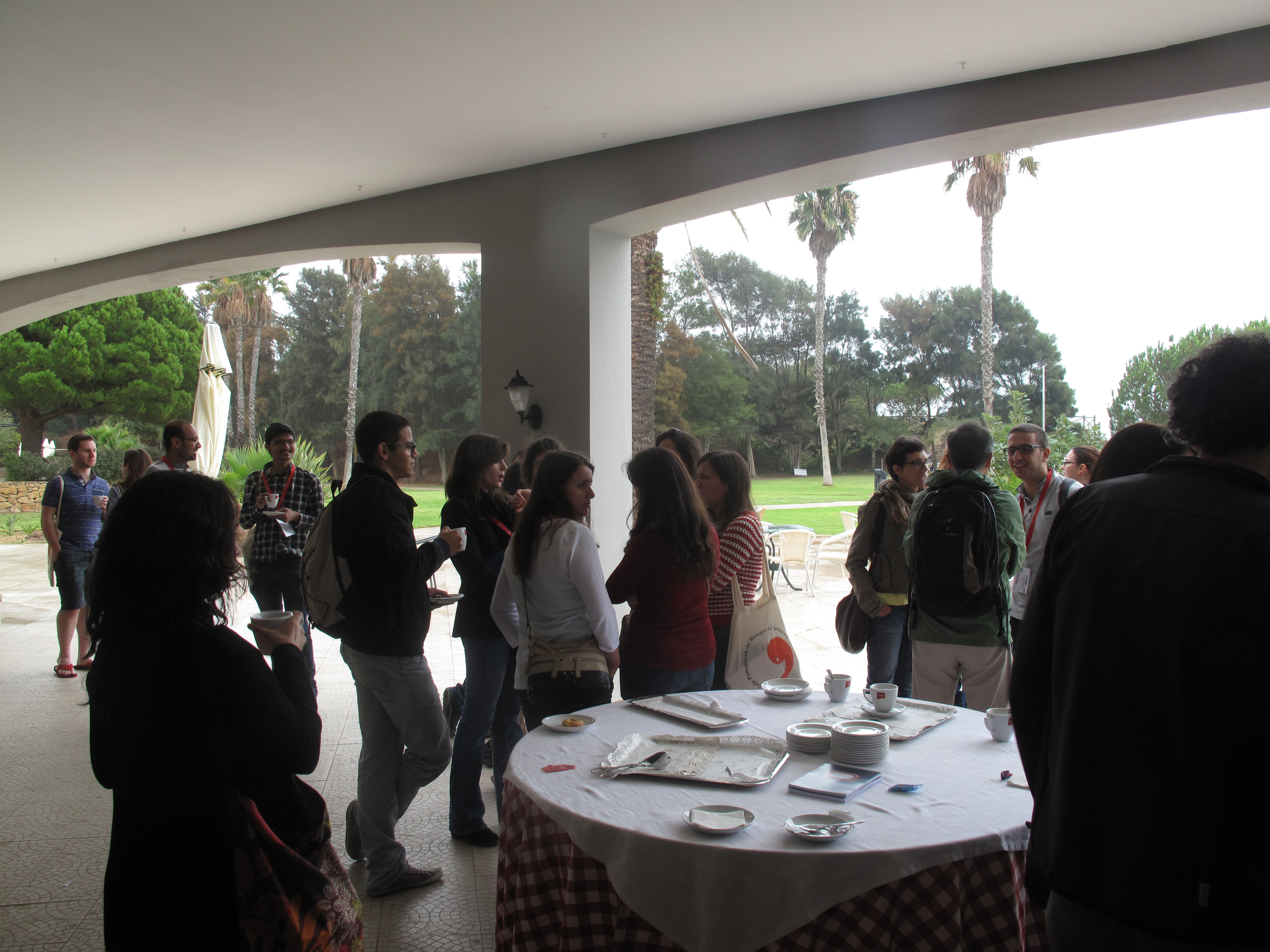
The meeting included many other exciting talks that have not been reported here. Overall, the meeting programme showcased the diversity of the developmental biology field in terms of subjects and model systems. The meeting also achieved a perfect gender balance among speakers – 17 female and 17 male speakers. Outside the lecture hall, scientific discussions continued throughout the free afternoons and outdoor poster sessions while enjoying the warm weather. And, of course, in the bar.

As the meeting came to an end, the sunny weather turned into a rainy storm, which made the departure a little less sorrowful.

Coffee break al fresco. Photo by SPBD.

Thumbs up (6 votes)
Loading...

Tags: , , ,
Categories: Events, Societies

An interview with Mike Levine

Posted by , on 20 October 2015

This interview first featured in Development.


Mike Levine, director of the Lewis-Sigler Institute for Integrative Genomics at Princeton University, is a developmental biologist who has dedicated his career to understanding how gene expression is regulated during development. Some of his most significant research, such as the co-discovery of the homeobox genes and his work on even skipped stripe 2, was performed in Drosophila, but he has since branched out to Ciona intestinalis, which he is using as a model to understand how vertebrate features have evolved. We had a lively chat with Mike at this year’s Society for Developmental Biology (SDB) meeting, where he was awarded the Edwin Grant Conklin Medal.


DEV3453Here at the SDB meeting you will be awarded the Conklin Medal by the society. What does it mean to you to receive this prize?

It is a really special honour for me, for a number of reasons. First, the list of people who got it before me is pretty awesome, so I am very proud to be among them. People like John Gurdon, Nicole LeDouarin, and some of my friends and peers like Richard Harland, Cliff Tabin, Marianne Bronner… The other reason why this award is special for me is because Conklin did his lineage-tracing studies in sea squirts, and half my lab has worked on this model system for 20 years. To my knowledge, I am only the second sea squirt guy to get the Conklin Medal, after my good friend Nori(yuki) Satoh. For those of us who work on the same material that Conklin himself studied, this is a very special honour. He was always one of my scientific heroes.


You were SDB president a few years ago. What do you think is the role of the society?

A field of study is only as good as its smartest young people. I think it is important for the society to reach out to the young, talented stem cell, computational and genomics researchers and say: ‘Hey, this is a really cool field of study’. We have one advantage over most other fields: we work on intrinsically beautiful material. What is more beautiful than a developing embryo? I remember when I was an undergraduate seeing for the first time movies of developing chick and frog embryos and I was just mesmerised. I just thought: ‘Oh man, that is what I want to study’. And it is not only visual, it is a highly integrated science. It really pulls together so many different disciplines. We have a lot to offer to the next generations of discoverers, and the SDB needs to reel these young men and women in.


How did you first become interested in biology? I understand that you considered becoming a medical doctor…

I always had an interest in the life sciences, and enjoyed going to my backyard to dissect bugs with my little microscope. I came from a blue-collar family, so if you were good at biology, which I was, it was only logical that you should become a doctor and make some money. For a modest Jewish family, being a doctor is a big escalation in status. I tried to be a good boy and even took the medical school admissions test and went to a couple of interviews, but it really was not for me. I have always been a hypochondriac, so I can’t even imagine how many times I would have tested my own urine and blood for whatever disease I was learning about! So I had this ‘going to medical school’ thing hanging over me during my undergraduate studies, but I was lucky to discover the wonderful world of biological research.

It was really hard in Berkeley to find a lab where you can do research as an undergraduate. Fortunately, I had an amazing stroke of luck to get to work in Allan Wilson’s lab. He and Mary-Claire King had proposed that regulatory DNAs were really important in evolution and in distinguishing chimps and humans, and this definitely infiltrated my thinking.


During your scientific career you have examined how gene regulation is controlled. What excites you about this topic and why did you choose Drosophila as a model?

I love gene regulation. I love the process of transcription so much that I regard RNA as an unfortunate by-product of an otherwise elegant process! I think part of it is that when I was an undergraduate I must have learned about the lac operon in three different classes: genetics, molecular biology and protein biochemistry. It is an inherently beautiful mechanism. Who would have thought that a bacterium exposed to sugar would deploy this elaborate and elegant transcriptional response? The developmental biology classes by Fred Wilt also really stayed with me. So I had a strong sense that gene regulation was a cool process from my undergraduate studies. This was reinforced by my undergraduate research in Allan Wilson’s lab. There they were talking about regulatory DNA, but instead of bacteria they were looking at animal cells.

I first became interested in flies because of a Scientific American article written in 1975 by the Swiss molecular geneticist Ernst Hadorn on transdetermination. He took wing imaginal discs out of larvae and cultured them in the stomachs of recipient flies, so they proliferated for longer than they normally would. He then grafted these discs back into a recipient larva that underwent metamorphosis, and found that sometimes the grafted tissue didn’t become the original structure that it was slated for, but the whole thing transformed into a leg. I thought that was a really exciting discovery. Later on, I read about the homeotic mutants that Tom Kaufman and Ed Lewis were working on and figured: ‘It has got to be gene regulation, and it has got to be in flies’.


As you mentioned earlier, part of your lab now works on Ciona. Why this organism?

I was co-director of the embryology course at Woods Hole for a few years, and this gave me the chance to get exposed to a lot of different systems in developmental biology. When I heard Richard Whittaker and Nori Satoh talk about Ciona, I immediately loved the system. I don’t know if it triggered recollections about Conklin’s work, which I had been taught about as an undergraduate, but I just liked the simplicity. Embryogenesis is amazingly complex, and I really don’t think in 3D so well. But when I heard Whittaker and Satoh discuss Ciona, where the movements are not that complex, I thought: ‘This is a system I can understand’.

Our fly studies have always been pretty abstract, studying gene regulation but never connecting it to morphogenesis. I always thought we should be able to link the two, but at least for me it seemed hopeless to try it in flies. There are so many cells, the processes are complex and occur very late in development. But I thought Ciona might be a good place to attempt this and complement our fly studies. The thinking was: ‘Let us extend our studies from gene regulation in Drosophila to a model organism in which we can study gene regulation and the connection to cellular morphogenesis in development’.

Bob Zeller, who trained with Eric Davidson studying sea urchins but had done undergraduate work in sea squirts, came to my lab as a postdoc to set up this system. I thought we were nearing the end of the line with the flies, so the plan was to wind down and eventually just convert completely to sea squirts. But every time I think I am going to drop the flies, I just can’t. I like sea squirts, don’t get me wrong, but I am really a fly guy. I feel like Michael Corleone in The Godfather III: “Every time I try to get out, they keep pulling me back”. The early fly embryo is the sweetest system in the world for looking at gene activity in development. The last 10 years have been dominated by fantastic new technologies, such as single-molecule live imaging, and these just work like a charm in the early fly embryo. So I can’t leave it!


You did your postdoc with Walter Gehring at the University of Basel. How did your time there influence your career?

Where do I begin in describing my 15 months in Basel? Culturally, it was a defining experience for me. I had never been a political person. But in Basel people would stay up drinking and discussing politics, and I learned that not everyone agreed with American policy. I had never realised how parochial my experience was until I went there, so it was really eye opening and gave me a broader perspective. There was also a special camaraderie that I had never experienced before. Ah, and Europe! I had never been to Europe before, and it is like a giant museum, with its cathedrals and art… It was truly a mind-blowing, defining experience.

As for the lab, it was a hot and cold experience. The hot part was that I met some of my best friends and collaborators, like Markus Noll, Erich Frei, Bill McGinnis and Ernst Hafen. Also on the good side, everything I have done with Drosophila for the ensuing 30 years was a direct consequence of my time in Basel working on gene expression in the fly embryo. Unfortunately, Walter and I just didn’t get along, so I eventually had to leave. But as difficult as my personal relationship was with Walter, I would probably do it again, because I got an enormous amount from the experience, both culturally and scientifically.


What would you consider to be your most important discovery?

The work I did with McGinnis and Hafen on homeobox genes was pretty good, but I don’t like to think I did my best stuff in those 15 months as a postdoc. I think that I am proudest of my work on eve stripe 2. The project was launched by a student named Dusan Stanojevic who was very mercurial, very high maintenance, but absolutely brilliant. When he started the project he said: “This is going to be the lacoperon and the lambda switch of developmental biology!”. At the time I thought he was cracked, but 25 years or so later I would say that there is something to it! Our work on eve stripe 2 was less a single discovery than a war of attrition. It took 3 to 4 years of really hard work, doing DNA binding assays, targeted mutagenesis and transgenesis, which were harder methods then than they are now. Some amazingly talented scientists, including Tim Hoey and Steve Small, worked through that problem.


Which scientific questions would you like to tackle in the future?

TA few years ago Delsuc et al. (2006) showed that the urochordates (which include sea squirts) and not the cephalochordates, as most text books still say, are the closest living sister group to the vertebrates. This paper has been extremely influential in our thinking because it means that if you are interested in understanding the evolutionary origin of some of the major vertebrate innovations, such as the neural crest, neurogenic placodes and second heart field, Ciona tadpoles are a good place to look. Of course Ciona doesn’t have a neural crest, but it does have a cell type with some of the properties of neural crest. We also found that Ciona tadpoles have neurogenic proto-placodes, another feature of the vertebrate head.

On the fly side I am very excited about the use of single-molecule live imaging. One of the big benefits of my recent move to Princeton is the close proximity to two of my favourite young Drosophilacollaborators: Thomas Gregor, a physicist who does live imaging in the fly embryo, and Stanislav Shvartsman, a chemical engineer studying signalling in fly eggs and embryos. Collaborating with these two labs is going to invigorate our studies. One line of research that I am most excited about is visualising enhancer-promoter communication directly. The human genome is just riddled with hundreds of thousands of enhancers. In other words, a typical gene in the human genome is regulated by up to 50 different enhancers. So all of a sudden you have to worry about trafficking: how do the right enhancers get to the right promoters at the right time? For all we know, this could be the rate-limiting determinant in the patterning of the Drosophila embryo. Thomas is devising strategies for directly visualising the interaction of remote enhancers with promoters in living embryos during key patterning events. That is very exciting.


You mentioned that you have moved to Princeton, where you are now the director of the Lewis-Sigler Institute for Integrative Genomics. What are you hoping to achieve in this new position?

The Lewis-Sigler is called a genomics institute but it really started as a systems biology institute, initially led by Shirley Tilghman and then David Botstein. Botstein was the first person I heard explain properly what systems biology is and the concept really turned me on. Systems biology is the systematic identification of every component of a complex process. You need the experimentalists to generate the big data, the computer scientists to handle the big datasets, and then quantitative biologists to model these datasets so that you can understand emerging properties of the process. I can know everything about a neuron in the neocortex but if I multiply that by a million I am not going to learn how consciousness works. You have to do something different. This is the philosophy of systems biology and I still believe in it. The Lewis-Sigler institute is like a scientific Noah’s Ark: it has a couple of computer scientists, a couple of high-throughput biologists, a couple of physicists, a couple of engineers. It is just the right mix of talents for systems biology, so I see no need to deviate from Botstein and Tilghman’s original vision. I just want to have some fun, and bring people together towards this enterprise of trying to learn the emerging properties of really complex processes, like the patterning of the fly embryo. I think there are wonderful challenges and opportunities, and with these new technologies we can take systems biology into the new millennium.


What is your approach to running a successful lab?

The alumni of my lab are an amazing group of people, and so many of them run their own labs now. I would love to take credit for it but, believe me, they came in pretty good! I have a reputation of being pretty demanding, a pretty tough boss. I have in me a bit of my Jewish uncle, who fought in World War II and had this warmth on the one hand and this tough ‘you are not quite good enough’ on the other hand. And I think I do a little bit of that in the lab.

I aim to keep my lab members excited about their project. I try to constantly look at the big picture and, if I have an idea, I try to give it to them when I am at my most enthusiastic. They might tell you that I am tough, but I hope they’ll also tell you that I do love science. It’s like with sports people getting towards the end of their careers: when you ask them what keeps them going they all say the same thing – they love the process. They like getting up in the morning, working out, training, they like the banter in the locker room. I really enjoy the process too. I like going in to the lab. I think whatever influence I have had in helping my lab members has been my enthusiasm for the process.


What is your advice for young scientists?

It is much harder now to find an identity for yourself in science. I was in the right place at the right time, I admit it. I got a great job when I was young and the field was wide open. It is much more crowded now. The whole ‘follow your passion and everything will work out’ may have been true 20-30 years ago, but it is not as true now. My hard-nosed advice to young scientists who want to continue being scientists (and you can do this in many capacities, it doesn’t have to be as the PI of a lab) is to learn technology. Go to a graduate programme or do a postdoc where you have access to the cutting-edge technologies. When I was a postdoc in the Gehring lab, Ernst Hafen and I helped develop the first in situ hybridisation methods with fixed tissues and I think it was that method that really got me a job. When you know a good technology, people are interested in it, even if they are not interested in the specific process you are working on. You increase your value. Discovery depends on technology now more than it ever did. The old guys did the easy stuff: we pillaged the low-hanging fruit a long time ago. I do believe the best is yet to come, but it requires technology. I would advocate imaging or genomics, or, best of all, somewhere in between! I also relate what I heard from many people over the years, including James Watson: “Don’t go straight up the middle in an established discipline. The action is at the cusps”. I think that is also very good advice.


What would people be surprised to find out about you?


There is the perception that I am a bit of an eccentric, and I think that even the people in my lab would be surprised to see how ordinary my private life really is. I am a family man, and I enjoy a tightknit relationship with my wife and two sons. We enjoy conventional suburban pleasures, such as going to the movies.


BONUS!: Hear Mike give his account of when he almost set one of his postdocs on fire!


Thumbs up (5 votes)
Loading...

Tags: , , , ,
Categories: Interview

In Development this week (Vol. 142, Issue 20)

Posted by , on 20 October 2015

Here are the highlights from the current issue of Development:


Atoh1: earmarked for differentiation

Embedded ImageAtoh1 is a key regulator of the differentiation of hair cells, the sensory cells that support audition: it is upregulated during their differentiation and downregulated at postnatal stages. But what are the mechanisms underlying Atoh1 transcriptional regulation during inner ear development? To address this question, Neil Segil and co-workers (p. 3529) analysed the epigenetic status of Atoh1 in mouse hair cell progenitors. They report that histone H3 at the Atoh1 locus is bivalently marked by the repressive tri-methylation of lysine 27 (H3K27me3) and the permissive tri-methylation of lysine K4 (H3K4me3). In nascent hair cells, Atoh1 upregulation is accompanied by a reduction in H3K27me3 and requires the appearance of the permissive acetylation of histone H3 lysine 9. At postnatal stages, Atoh1downregulation is achieved by an increase in H3K9me3, which is a mark indicative of transcriptional silencing, and a reduction in histone H3 acetylation. In early postnatal supporting cells (a cell population that separates and surrounds hair cells and can regenerate them during the first postnatal week in mice), the bivalent marks are maintained, potentially explaining their latent regenerative capacity. This study suggests a mechanism for the epigenetic control of Atoh1 levels during inner ear development and reveals a potential target for future regenerative efforts to replace mammalian hair cells.


Revisiting blastomere equality

Embedded Image

The fertilised mammalian egg gives rise to seemingly equivalent blastomeres until the fourth cleavage division, when the first indication of lineage specification appears. At this point, certain blastomeres divide symmetrically and others asymmetrically. When do these apparently identical cells diverge and how do these differences arise? To answer this question, Enkui Duan and colleagues performed single-cell transcriptional analysis of human and mouse blastomeres (p. 3468). By studying the mammalian zygote, in which transcription – a known source of heterogeneity during mitosis – is mostly silent, the authors showed that small biases in gene expression arise after the first cleavage division from the unequal distribution of cellular substances between daughter cells, called ‘partitioning errors’. These are especially pronounced for transcripts present in small quantities, which are more likely to be asymmetrically distributed. As cleavage divisions progress, the activation of embryonic transcription minimizes or amplifies the initial biases through positive or negative feedback regulation. Furthermore, the authors show that lineage specification is driven by the relative ratio of pairs of competing lineage specifiers, such as Cdx2 and Carm1, the levels of which are determined by both cleavage history and de novo transcription. This study shows that symmetry breaking leading to lineage specification is a continuous process that emerges as early as the two-cell stage, before morphological differences between blastomeres are detectable.


Revising the origin of thyroid C cells

Embedded Image

Thyroid C cells (or parafollicular cells) are neuroendocrine cells found in the thyroid gland that secrete calcitonin. To date, it has been thought that these cells arise from the neural crest but here, on p. 3519, Mikael Nilsson and co-workers overturn this view. Using lineage tracing, they show that Wnt1-positive neural crest cells do not give rise to C cells in the mouse embryonic thyroid gland. Instead, they reveal, thyroid C cells are derived from Sox17-positive anterior endoderm. The researchers further show that the transcription factors Foxa1 and Foxa2, which are known to play a role in the development of other endoderm-derived populations, are co-expressed in C cell precursors, where they play non-redundant roles. Finally, the authors also show that Foxa1 and Foxa2 are expressed and appear to play distinct roles in human medullary thyroid carcinoma (MTC) cells. Together, these findings disprove the current concept of a neural crest origin of thyroid C cells and argue that MTC tumours should be reclassified as neuroendocrine tumours with an endodermal origin, a change that, from a clinical perspective, may open up new avenues in the search for MTC treatments.


Lin-28: balancing stem cell divisions

Embedded Image

The Drosophila intestine is known to undergo adaptive growth in response to feeding, and this growth is fuelled by the symmetric self-renewing divisions of intestinal stem cells (ISCs). But what controls ISC division patterns? Here, on p. 3478, Nicholas Sokol and colleagues reveal that the RNA-binding protein Lin-28 promotes symmetric ISC divisions and hence tissue growth in the Drosophila intestine. They first show that Lin-28 is highly enriched in adult Drosophila ISCs. They further report that, although lin-28 null mutants are viable, adult mutant animals exhibit reduced numbers of ISCs. Following on from this, the researchers demonstrate that Lin-28 is required in ISCs to promote food-triggered self-renewing divisions and expansion of the ISC pool. Finally, they report that Lin-28 acts independently of its well-known target let-7 and instead interacts with mRNA encoding the insulin-like receptor (InR), suggesting that Lin-28 modulates InR levels, and thus insulin signalling, to control cell division patterns. In summary, the authors propose that Lin-28 acts as a stem cell intrinsic factor that boosts insulin signalling in ISCs and promotes their symmetric division in response to nutrients.


PLUS:


An interview with Mike Levine

DEV3453Mike Levine, director of the Lewis-Sigler Institute for Integrative Genomics at Princeton University, is a developmental biologist who has dedicated his career to understanding how gene expression is regulated during development. We had a lively chat with Mike at this year’s Society for Developmental Biology meeting, where he was awarded the Edwin Grant Conklin Medal. See the Spotlight article on p. 3453
 

Heparan sulfate proteoglycans: a sugar code for vertebrate development?

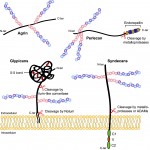
DEV3456Heparan sulfate proteoglycans (HSPGs) have long been implicated in a wide range of cell-cell signaling and cell-matrix interactions, both in vitro and in vivo in invertebrate models. Here, provide a comprehensive overview of the various roles of HSPGs in these systems and explore the concept of an instructive heparan sulfate sugar code for modulating vertebrate development. See the Review on p. 3456



Featured movie

This issue’s featured movie shows mouse development from E11.5 to E14.0, as displayed in the 4D atlas of mouse development developed by Wong and colleagues. Read their paper on this useful resource: http://bit.ly/1NeEiAg

Thumbs up (No Ratings Yet)
Loading...

Categories: Research

Research Assistant – Bioinformatician

Posted by , on 20 October 2015

Closing Date: 15 March 2021

Department/Location: Wellcome Trust – Medical Research Council Cambridge Stem Cell Institute, University of Cambridge, UK

Salary: £24,775-£28,695

Reference: PS07303

Closing date: 12 November 2015

Fixed-term: The funds for this post are available until 30 June 2017 in the first instance.

The Wellcome Trust-Medical Research Council Cambridge Stem Cell Institute (SCI) comprises 200 researchers spanning fundamental science through to clinical applications. Our goal is to advance disease modelling, drug discovery and regenerative medicine through understanding the genetic and biochemical mechanisms that control stem cell fate.

Applications are invited for a computational biologist to join the SCI’s bioinformatics group. We apply state-of-the-art experimental and computational methods toward understanding the biological properties and biomedical potential of stem cells.

The vacant post is at Research Assistant level and would be suitable for individuals with either a computational or biological background. The post holder will bridge the research groups within the SCI and will analyse next generation sequencing data using cutting edge software tools on internally (SCI)-produced data. He/she will work in a team of bioinformaticians dedicated to the application of modern bioinformatics techniques to stem cell research.

Candidates should be able to work in a UNIX/Linux environment. Proficiency with a scripting language (e.g. Perl/Python) and statistical data analysis tools (R, Matlab) would be a strong advantage. Additional experience with analysis of high-throughput sequencing data is desirable. The post holder will be involved in the development and interpretation of multilayer genomic, transcriptomic and epigenomic data. Necessary training in specialist computational tools will be provided; the main criterion is an enthusiasm to use bioinformatic approaches to advance stem cell research.

To apply online for this vacancy and to view further information about the role, please visit: http://www.jobs.cam.ac.uk/job/8347. This will take you to the role on the University’s Job Opportunities pages. There you will need to click on the ‘Apply online’ button and register an account with the University’s Web Recruitment System (if you have not already) and log in before completing the online application form.

Please upload your Curriculum Vitae (CV) and a covering letter in the Upload section of the online application to supplement your application. If you upload any additional documents which have not been requested, we will not be able to consider these as part of your application.

The closing date for all applications is the Thursday 12 November 2015.

Informal enquiries about the post are also welcome via email on jobs@stemcells.cam.ac.uk.

Interviews will be held week commencing 23 November 2015. If you have not been invited for interview by 23 November 2015, you have not been successful on this occasion.

Please quote reference PS07303 on your application and in any correspondence about this vacancy.

The University values diversity and is committed to equality of opportunity.

The University has a responsibility to ensure that all employees are eligible to live and work in the UK.

Thumbs up (No Ratings Yet)
Loading...

Categories: Jobs

Ph.D position: Shark Skin Teeth Evo-Devo/Engineering

Posted by , on 18 October 2015

Closing Date: 15 March 2021

Evolution and development of shark skin teeth inspired surface design for global CO2 reduction

Dr Gareth Fraser, APS, University of Sheffield;
Co-supervisors: Dr Mark Johnson, Department: School of Engineering, Centre for Engineering Dynamics, University of Liverpool;
Dr Zerina Johanson, Natural History Museum, London, Department of Earth Sciences

A Ph.D studentship is available for an interdisciplinary project focused on evolutionary developmental biology of shark skin teeth and engineering shark-inspired surface geometries for reduced drag leading to lower CO2 emissions across several industries. This is an ideal opportunity for an ambitious candidate to work at the interface of evo-devo and engineering. This project aims to explore novel methods to understand the evolution and development of shark tooth patterning and how these data can be modelled in silico for more energy efficient surface design that can be 3D-printed for functional models of drag reduction. This project would suit a candidate interested in skin tooth development in sharks and the diversity of these structures in pattern and morphology across species to understand the most efficient patterns and geometries in nature, and then how nature can help us develop solutions to environmental issues in the engineering industry.


More information about this Ph.D opportunity can be found here: https://acce.shef.ac.uk/shark-skin-inspired-surface-design-for-co2-reduction/

Thumbs up (No Ratings Yet)
Loading...

Categories: Jobs

(Developmental) Biology around the internet- October 2015

Posted by , on 16 October 2015

Here is October’s round-up of some of the interesting content that we spotted around the internet!


News & Research

– Developmental Biologist Eric Davidson, who was based at CalTech, has sadly passed away. You can learn more about Eric and his career in this Q&A published in Current Biology a few years ago.

– Interesting piece in Nature News considers how biohackers (amateur biologists) are using CRISPR.

– We found this excellent resource detailing how to display your figures in a colourblind-friendly manner.

– Do papers with shorter titles really get cited more?

– ‘When did you decide to?’- how most people don’t have clear career paths planned. By Athene Donald.

– The forgotten benefits of drawing in science- in Scientific American.

Masayo Takahashi is the winner of the inaugural Ogawa-Yamanaka Stem Cell Prize, awarded by the Gladstone Institutes. Also don’t miss the chance to vote for the 2015 Stem Cell Person of the Year in Paul Knoepfler’s blog.

– How to unboil an egg and how to make a chicken walk like a dinosaur are just some of the winners of this year’s Ig Nobel prizes.

– How scientists fool themselves and how they can stop- preventing bias in science, in Nature.

– Fish out of water- the challenges of being an academic outside your country, in THE.

– The MRC shared their 12 top tips for writing a grant application.

– And we rediscovered an old piece by Jeff Schatz on how (not) to give a seminar.


Weird & Wonderful

– We spotted these cool notebooks, hand-embroidered with vintage science illustrations.

– Need to explain the difference between correlation and causation? These helpful (and hilarious!) graphs will come handy.

 ‘I need 10,000 marks’– was all you needed to say to get your research funded back in 1921.

– And this is how you explain what it is like to be a developmental biologist to a 4 year old:


Beautiful & Interesting images:

– Tracking C. elegans development- the drawings of Sir John Sulston.

– We spotted this colourful embryology notebook from a 1939 course at MBL.

– And this is just one of our favourite creations from this year’s Agar Art contest, run by the American Society of Microbiology:  


Videos worth watching:

– The PHD Movie 2 is now screening! Check out the dates and venues.

– And this fun movie is a great way to explain concepts of evolution… especially for the Pokemon fans among you:


Keep up with this and other content, including all Node posts and deadlines of coming meetings and jobs, by following the Node on Twitter

Thumbs up (1 votes)
Loading...

Tags:
Categories: News