
The community site for and by
developmental and stem cell biologists

Bioinformatician (Smith Lab and Hendrich Lab) Wellcome Trust-Medical Research Coucil Cambridge Stem Cell Institute

Posted by , on 26 February 2013

Closing Date: 15 March 2021

The Wellcome Trust – Medical Research Council Stem Cell Institute provides outstanding scientists with the opportunity and resources to undertake ground-breaking research into the fundamental properties of mammalian stem cells.

Salary: £24,049-£27,047

A new post has become available to perform bioinformatic analysis of high-throughput data generated by the research teams of Professor Austin Smith and Dr. Brian Hendrich. The postholder will work alongside a small team of bioinformaticians dedicated to the application of modern bioinformatics techniques to stem cell research. The post holder will interact with bench scientists in the two groups, the SCI bioinformatics team, and with collaborators at the EBI. The projects aim to understand the molecular controls of potency and lineage commitment of embryonic stem cells.
The vacant post is at Research Assistant level and would be suitable for individuals with either a computational or biological background. Necessary training in specialist computational tools will be provided; the main criterion is an enthusiasm to use bioinformatic approaches to advance stem cell research.

The postholder should be able to work in a UNIX/Linux environment. Proficiency with a scripting language (e.g. Perl/Python) statistical analysis tools (R, Matlab) and genome analysis software (e.g. Galaxy) would be a strong advantage.

To apply, please visit our vacancies webpage:
http://www.stemcells.cam.ac.uk/careers-study/vacancies/

Informal enquiries are also welcome via email: cscrjobs@cscr.cam.ac.uk

For more details on the Smith and Hendrich groups, please see:
http://www.stemcells.cam.ac.uk/researchers/principal-investigators/pressor-austin-smith
http://www.stemcells.cam.ac.uk/researchers/principal-investigators/brian-hendrich

Applications must be submitted by 17:00 on 28th March 2013.

We do not accept applications by post or email except in exceptional circumstances. Please note that you cannot amend your application once you have submitted it, so please ensure that you upload all the correct documents the first time.

Application Forms:
All applications MUST include the following:
• Cover Letter
• CV
• The relevant CHRIS form (Parts 1, 2 and 3)
If you do not wish to submit the Equal Opportunities data, please upload a blank form to the applications site.
Interviews will be held week commencing 22nd April 2013. If you have not been invited for interview by 12th April 2013, you have not been successful on this occasion.
The University values diversity and is committed to equality of opportunity.
(No Ratings Yet)

Categories: Jobs

Navigate the archive

Use our Advanced Search tool to search and filter posts by date, category, tags and authors.

Goodbye!

Posted by , on 21 February 2013

Today was my last day as Community Manager for the Node, so this is goodbye from me!

I’ve had a great time these past three years, setting up the site and learning what’s of interest to the developmental biology community.

My favourite part of the job was meeting people in person at conferences and lab visits. It’s difficult to assess exactly how people view the Node from over here in the Cambridge office. Site statistics only tell you so much. But when, two months after launching the Node, two guys walked up to our booth at the SDB meeting in Albuquerque to photograph each other in front of the Node banner, that meant so much more than some anonymous numbers! (I never did get to see those photos. Any leads welcome!)

The more conferences I went to, the more I ran into people who already knew about the Node. Someone told me they saw a poster in their department. Someone else had heard about it at an SDB regional meeting. I’d never been to that department, or to any regional meeting, so that meant that people were spreading the word! And indeed, when we ran a survey in 2011, and asked people how they found out about the Node, “word of mouth” was the second-most popular answer. That, to me, was definitely the best part of the job. A community website is not something you can just build and wait for people to use. The community itself is more important than the technology, and you’ve all been such a great community!

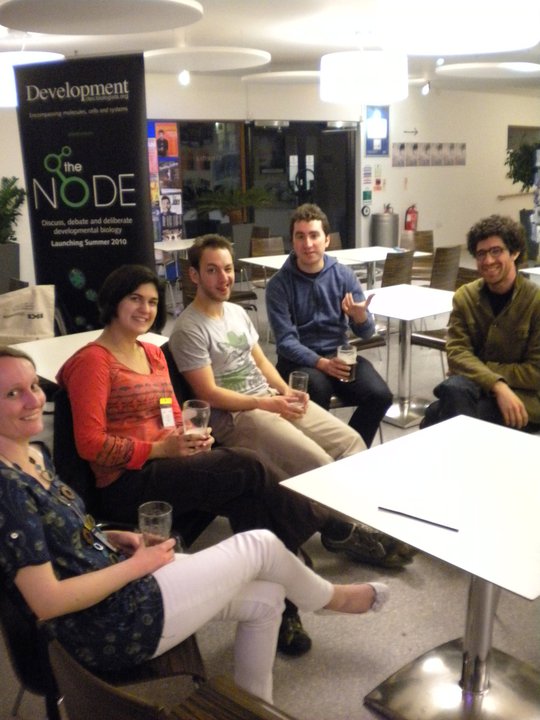
BSDB meeting 2011

Other personal highlights:
-Speaking of community: the 2011 worm meeting. I’m not a worm researcher by any stretch of the imagination, but they were so welcoming!
–Interviewing Jorge Cham of PhD comics. Twice.
–Going viral on Twitter
-Finding people who moved to careers outside academic research, and writing a piece about it for Development.
-Getting Node fan art! (It’s staying in the office, but I’ve got photos!)

The most challenging thing these past few years has been to get across the nature of the Node: people often expected me to update the Node with news relevant to the community, but that is actually something that you should be doing. The Node is meant as a platform for and by developmental biologists, and I’m not one. I was just here to help you find your way. There are currently over 800 people with active Node accounts, who can at any given time post anything they want to the site, without having to ask anyone for permission. It will be a few months until the next Community Manager starts, so I hope that you’ll keep the site filled with interesting things!

I’ll be following along from a distance. A few projects that I started will go live on the site soon. I’m very excited about the next round of Woods Hole images (which I’ve already seen, and which are amazing!) and I’m also looking forward to seeing the first journal club post go up soon!

Thanks to everyone I worked with these past three years – from editors to society staff and from students to lab heads. You’ve all been amazing, and I can’t wait to see where you’re taking the Node next!

If you’d like to stay in touch, you can find me on LinkedIn and Twitter (where my username, @easternblot, reveals my true nature as a biochemist…). I’m moving on to another job that involves a lot of interaction with researchers, in all life sciences, so I hope to see some of you again!

(10 votes)

Tags:
Categories: News

myIDP (Individual Development Plan) by Science Careers

Posted by , on 21 February 2013

The myIDP (Individual Development Plan)  is career aptitude test and career planning site for scientists developed by Science Careers. I recently changed careers, starting my own scientific writing company after a postdoc in developmental biology, so I was interested to see how the software worked.

The first thing you do is go through a few stages of self-assessment. First, you judge your skills in different aspects of science (ex. writing for other scientists, establishing collaborations, mentoring others). The site gives you a list of skills and abilities, and you have to enter where you are on a 1-5 scale from “highly proficient” to “highly deficient”. The software reminds you often that you’re supposed to use the full range of scores, so you have to put aside your ego and rate yourself as “highly deficient” for at least a few key skills!

Second, you rate how often you would like to do certain tasks in your future career (ex. developing and optimizing techniques, negotiating with others, working on committees).

Last, you assess your values as they relate to your career (ex. is it important to you to help advance society, use your strengths frequently in your work, have a good work/life balance). These ratings aren’t used in the career match calculation, but it’s a useful list for self-reflection just the same.

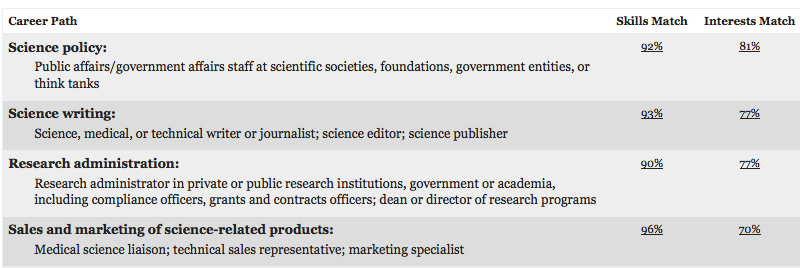
At the end of the assessment, the software tells you the percentage match between your skills and interests and different categories of scientific careers. For me, I was happy to see Science Writing come in at number two, but I was bit surprised to see Sales and Marketing at number four (a field in which I have little interest− or skills for that matter!). Having just started my own business, I was a bit dismayed to see Entrepreneurship was near the bottom!

The output of the career matching function:

The site also includes some journaling-type functions. There are places to add notes about career contacts you’ve met, list your personal career goals and map out how you plan to get there. You can set all kinds of different goals and track your progress, such as for improving some of the skills from their checklist, setting milestones to advance your career, or establishing other career-related project goals, like teaching a class or writing a paper.

At the end you can print out everything you’ve entered, all the self-assessment and goals, as a “personal development plan”.

What I found more useful than the goal-setting and career-matching functions was simply the list of diverse scientific careers, many of which I’d never thought about before. The site has a resources section for each career category that gives links to further reading. For science writing and editing, this collection of links and articles hidden on the Science Careers website was really useful.

(4 votes)

Tags: ,
Categories: Careers

Breakthrough Prize floors winners with sheer amount of money

Posted by , on 20 February 2013

One Million DollarsEleven biologists received some unbelievable news this week: They will each receive 3 MILLION dollars from a newly established award. The Breakthrough Prize was founded by Mark Zuckerberg (Facebook) , Sergey Brin (Google) and venture capitalist Yuri Milner, with the goal of supporting research into life extension and curing diseases.

Among the eleven winners are stem cell researchers Hans Clevers and Shinya Yamanaka. Other winners are Cori Bargmann, David Botstein, Lewis Cantley, Titia de Lange, Napoleone Ferrara, Eric Lander, Charles Sawyers, Bert Vogelstein and Robert Weinberg,

The Guardian interviewed several of the winners, and they’re all just floored by the ridiculous amount of money. Almost literally floored, even. “I almost fell over”, said Lewis Cantley, and Cori Bargmann “had to sit down on the floor for a while”.

While it’s great that there is a new source of funding for biomedical research, and these are definitely very worthy winners, I question the scale of the awards. I think it shows the level of disconnect between Silicon Valley and biology researchers: To the foundation, 3 million dollars per person appears to be a normal award amount, but I bet all eleven winners would have been just as happy, and far less shocked and confused, with even 10% of the money – which would be closer to the sort of amounts they’re used to receiving after a lot of hard work and grant-writing.

Breakthrough scientific research doesn’t come from just a handful of scientists who have already made a name for themselves, but from collaborations between many researchers. While I’m thrilled that the tech community has shown a real interest in the life sciences, I would have liked to see slightly smaller individual prizes, and maybe some money made available by the standard process of application and review to emerging labs, researchers, and initiatives. Preserving a broad network of researchers may in the long run be more rewarding than only awarding the top talent.

The winners seem to be allowed to spend the money any way they want to, though, and I’m excited to see what they come up with. I have some confidence that they will do their best to spread the wealth. Hans Clevers already mentioned plans to use some of his prize money to host a symposium for 150 invited collaborators in Amsterdam, which is something we definitely hope to hear more about.


(Image credit: Juan Barahona on Flickr.)

(4 votes)

Categories: Discussion, Funding, News

Image competition: stem cells

Posted by , on 20 February 2013

In a journal like Development, full of beautiful immunofluorescence images of developing tissues and organisms, it’s quite rare that a picture of stem cells stands out from an aesthetic point of view. Cells growing in a dish just aren’t quite as pretty as multicolour embryos or organs. At least, that’s the impression that we get when looking through the images submitted to the journal as potential cover pictures. But Erin’s posts here on the Node have shown us that pictures of stem cells can be both beautiful and informative, and now we want to give you the chance to prove that a stem cell can be just as eye-catching as a developing pancreas or fly eye.

Do you have a picture of stem cells (either growing in culture, or in their native environment) that you’re particularly proud of? If so, we want to hear from you! Email your picture to thenode@biologists.com before March 13th to be in with a chance of winning our image competition. Shortlisted images will be posted on the Node for a public vote, and the winner will grace the cover of a future issue of Development, and will be featured on the stem cell pages we’re currently developing for the journal’s website.

For more information, see our competition rules and our terms and conditions

(No Ratings Yet)

Tags: ,
Categories: Images

Mouse Molecular Genetics: Save the date 18-21 September 2013

Posted by , on 19 February 2013

We are pleased to announce that the 26th annual Mouse Molecular Genetics meeting will be held at the Wellcome Trust Genome Campus, from 18 to 21 September 2013. This meeting is a leading forum for researchers who apply genetics and genomics techniques to address fundamental issues in mammalian biology, including stem cell biology, development, epigenetics and models of human disease. The meeting invites leaders in these areas to present unpublished research findings, encourages junior investigators to participate in oral and poster presentations and provides a stimulating environment for the exchange of ideas. The programme will showcase the latest technical developments in genetics and engineering of the mouse genome and this year will also feature a new session devoted to cancer.

Topics will include:
Organogenesis
Technology
Stem cells and germ cells
Patterning
Genetics and genomics
Human disease
Epigenetics
Cancer

Scientific programme committee
Allan Bradley Wellcome Trust Sanger Institute, UK
Kat Hadjantonakis Sloan-Kettering Institute, USA
Yumiko Saga National Institute of Genetics, Japan
Philippe Soriano Mount Sinai School of Medicine, USA

We welcome abstracts from areas relevant to mammalian molecular genetics. Several oral presentations will be chosen from the abstracts submitted

Conference website: https://registration.hinxton.wellcome.ac.uk/display_info.asp?id=372

Further information and a list of invited speakers will be available shortly. To register your interest in this meeting, please contact Wellcome Trust Scientific Conferences.

Conference organiser contact details:
Emily Rees
E-mail: emily.rees@wtgc.org

(No Ratings Yet)

Categories: Events

Cover winner: mouse confocal

Posted by , on 19 February 2013

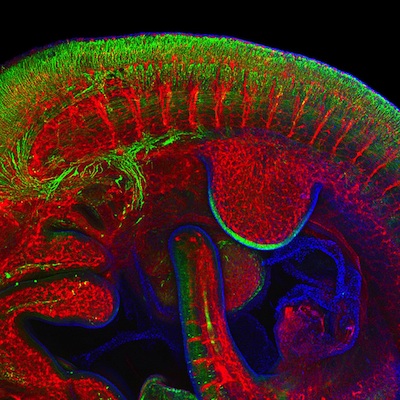
We have a winner! This colourful image quickly took the lead, and stayed there. It will appear on the cover of Development soon.

This confocal image (extended focus Z stack) of an E10.5 day mouse embryo was taken by Joyce Pieretti (University of Chicago), Manuela Truebano (Plymouth University), Saori Tani (Kobe University) and Daniela Di Bella (Fundacion Instituto Leloir) Congratulations!

The runners-up were an image of a chick ectopic limb, taken by Elsie Place (MRC National Institute of Medical Research); a widefield microscopy image of a mouse embryo by Eduardo Zattara (University of Maryland, College Park)
and an image of Xenopus embryo epidermis by Andrew Mathewson (Fred Hutchinson Cancer Research Center).

We have some other exciting image news coming up. Stay tuned!

(2 votes)

Tags: ,
Categories: Images, News

Things that look like Xenopus

Posted by , on 18 February 2013

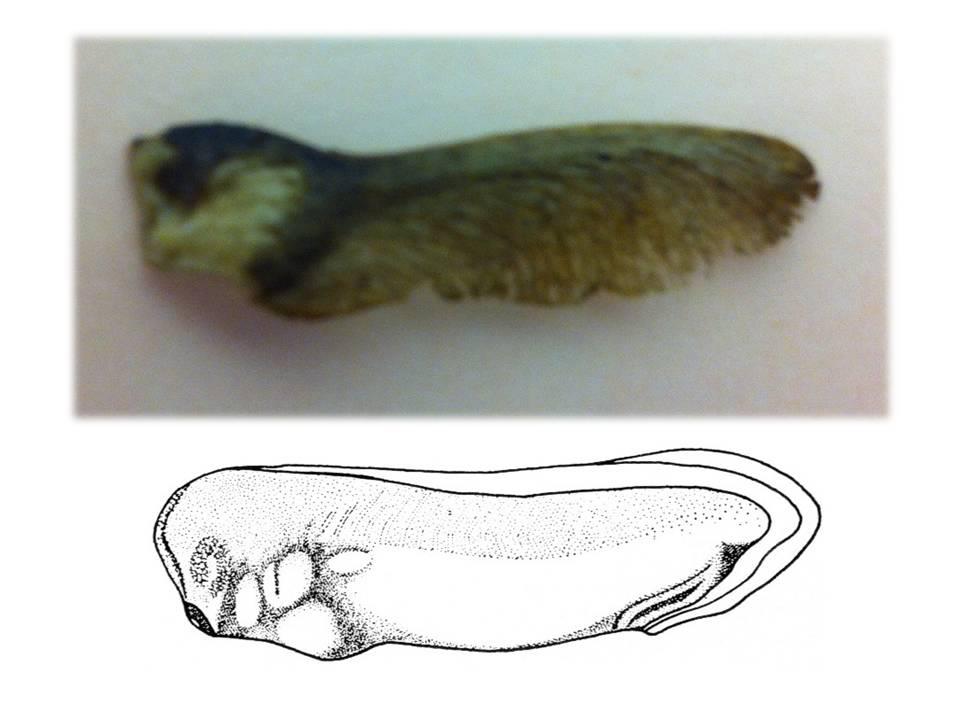
Have you ever thought to yourself ‘Hey, that inanimate object looks just like a xenopus!’ No? Well maybe after reading this you will. I started a PhD in a Xenopus lab in 2010 and ever since I’ve been seeing Xenopus everywhere. So much so that I decided to set up a facebook page called ‘Things that look like Xenopus’. You can check it out by following the link below or simply by searching for things that look like Xenopus in the facebook search bar.

http://www.facebook.com/ThingsThatLookLikeXenopus

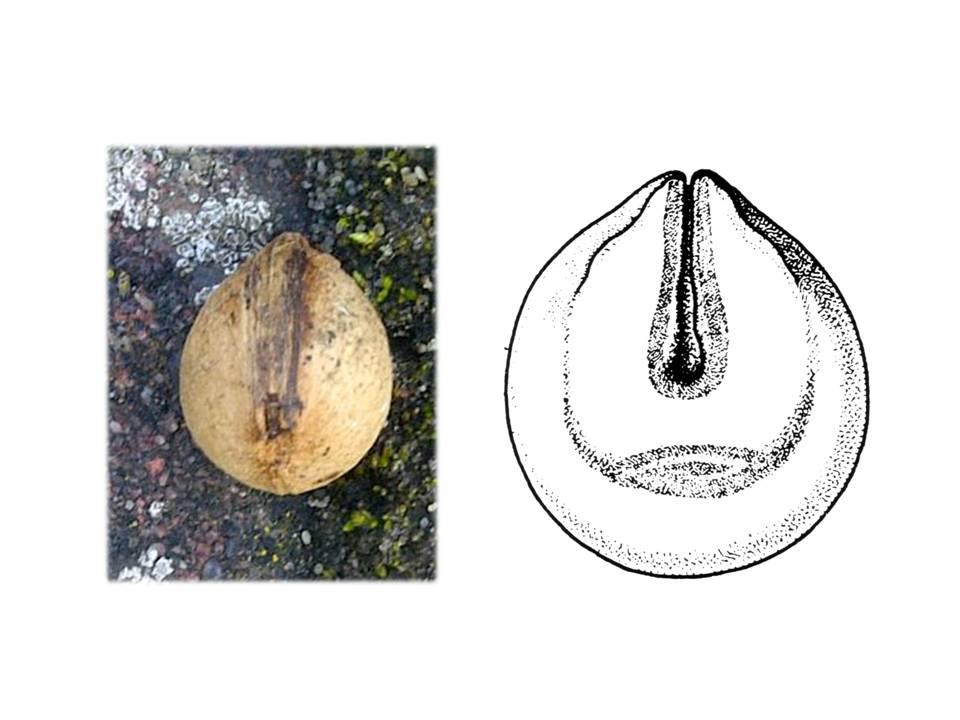
I set the facebook page up around 4 months ago and since then it has had people from round the world ‘like’ it and I have even had a few people send in their own pictures. I’m now trying to boost awareness of the page and fully encourage people to post their own pictures. Some examples can be seen posted here. The sycamore seed was my first picture and still my favourite. Hopefully you can see how it resembles a tailbud stage embryo. Another one of my favourites is this seed sent in by Nicole Ward. It looks just like a neurula stage embryo on its side.

I hope from this you get the idea and will check out the page.

Happy hunting!

(7 votes)

Tags: ,
Categories: Images

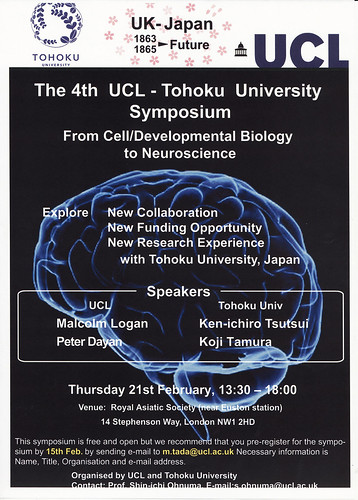
The UCL-Tohoku University joint Symposium is coming soon!

Posted by , on 18 February 2013

IMG

Dear developmental biologists and neurobiologists,

I’d like to give you some information on the UCL-Tohoku University joint Symposium from 21st to 22nd Feburary. If you are interested in research fields from cell/developmental biology to Neuroscience, you are free to join it.

(3 votes)

Categories: Events

Stem cell decisions and the cell cycle

Posted by , on 15 February 2013

A lot of things cycle in life, even down to the cellular level.  In the developing central nervous system, regulators of the cell cycle play important roles in maintaining the balance between stem cell self-renewal and differentiation.  A recent paper in the journal Development describes a cell cycle regulator in stem and progenitor cells in the nervous system.

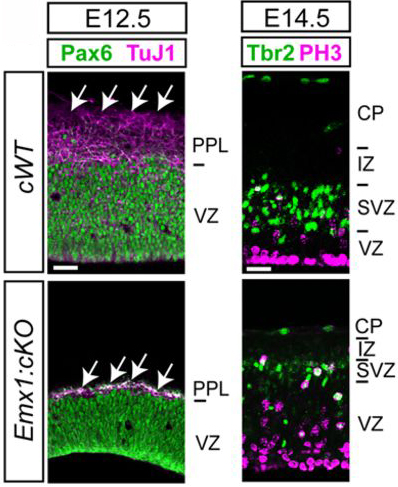
The developing central nervous system depends on the divisions of neural stem cells (NSCs) and intermediate neural progenitor cells (NPCs).  In early development, NSCs continuously self-renew in the ventricular zones of the early neuroectoderm.  After neuroectoderm specification, NSCs give rise to NPCs, which divide and differentiate into many different types of neurons.  Proteins that regulate the progression through different phases of the cell cycle have been shown to regulate NSC and NPC divisions, specifically affecting the balance between proliferative and neurogenic cell divisions.  A recent paper in the journal Development identified the role of a zinc-finger transcription factor specificity protein 2 (Sp2) in regulating cell cycle progression in NSCs and NPCs.  Liang and colleagues found Sp2 expression in NSCs and NPCs in the embryonic and postnatal CNS.  Conditional Sp2-null mice had mitosis-arrested NSCs and NPCs in vivo.  In addition, conditional deletion of Sp2 caused a decrease in the number of NPCs and neurons in developing and postnatal brains, as seen in the images above.  Compared with normal cerebral cortex tissue in the early mouse embryo (E12.5), Sp2-deleted tissue (bottom) had a reduced number of postmitotic neurons (purple, arrows, left column).  NSCs (green, left column) occupied the entire thickness of the Sp2-null cerebral cortex, whereas NSCs occupy only the ventricular zone (VZ) in control tissue.  In addition, NPCs (green, right column) were less dense in Sp2-null tissue a bit later in development (E14.5), compared with control cerebral cortex.

For a more general description of this image, see my imaging blog within EuroStemCell, the European stem cell portal.

ResearchBlogging.org

Liang, H., Xiao, G., Yin, H., Hippenmeyer, S., Horowitz, J., & Ghashghaei, H. (2013). Neural development is dependent on the function of specificity protein 2 in cell cycle progression Development, 140 (3), 552-561 DOI: 10.1242/dev.085621


(1 votes)

Tags: ,
Categories: Images, Research