Less than two weeks to go until the deadline for our essay competition! How is it going? Have you finished your first draft? If you haven’t started yet, you still have time to finish an essay about the future of developmental biology before the July 2nd deadline. Good luck!
Here’s all the information from the original announcement, once more:
If you’d like to share your thoughts about the future of the field, the Node and Development invite you to participate in our essay competition “Developments in development”. Your essay can describe the direction of a particular area of research, the emergence of new techniques or model organisms, career prospects, ethics, publishing, policies or other topics that will shape the future of developmental biology research.
A panel of judges will select the top entries, after which a public vote on the Node will determine the final winner. The winning essay will appear in Development later this year. All finalists posted on the Node will receive an Amazon gift certificate worth £50.
Judges:
Olivier Pourquié – Editor-in-Chief of Development
Claire Ainsworth – science writer
This competition is open to anyone who is involved in developmental biology research, or related fields (such as stem cell science or genetics), or has been within the past three years. PhD students, postdocs, and lab heads all qualify! (N.B. Final year undergraduates and MSc students with at least a year or so of lab experience under their belt may also submit. As long as you know something about developmental biology.)
Please note that the final essays as selected by the judges will not be copy-edited before they appear on the Node. If you’re not confident about your English grammar and spelling, we recommend that you have a (near-)native speaker read over your essay before submitting it. The final winning entry will be copy-edited before publication in Development.
Deadline for submission is July 2nd, 2012 (noon GMT).
Maximum length: 2000 words
Please submit your essay, with a title and your name, as a Word attachment to thenode@biologists.com, and include a brief biography in your email (not in the essay).
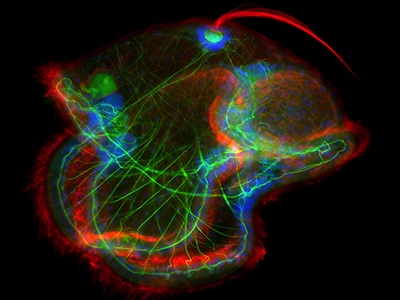
The winner of the last round of cover image voting is this widefield image of a pilidium larvae of the Nemertean ribbon worm, Cerebratulus lacteus. The image was taken by Joseph Campanale, Aracely Lutes, and Stephanie Majkut of the Woods Hole Embryology class of 2011. Congratulations!
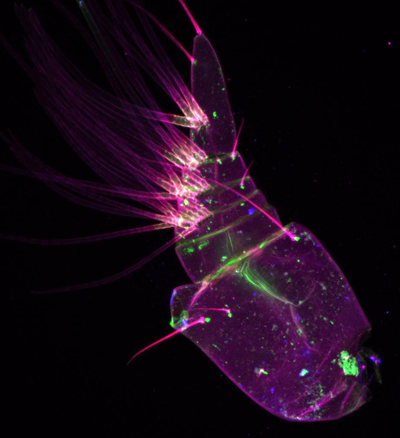
Runners-up: Slipper limpet by Juliette Petersen and Rachel K. Miller; Five squid by Juliana Roscito; single squid by Lynn Kee.
We’ll have a next round of images up soon. In the mean time, you can follow along with the current Woods Hole Embryology course, which started a few weeks ago. Andrew Mathewson has posted his impressions of the first days of the course.
Registration for the Seventh International Chick meeting, ‘Chick 7: Avian Model Systems’, to be held in Nagoya, Japan in November 2012, is now open. Please visit the chick meeting homepage , to register. A small fee (15,000yen/10,000yen for students) will be charged which will include the mixers, lunches and the closing party.
We are also very pleased to announce a limited number of travel awards of 40,000yen for students/postdocs from outside Japan and of 15,000 yen for students/postdocs from Japan. If you wish to apply for the awards, please indicate on the registration page.
4 outstanding keynote lectures are programmed:
Makoto Manabe – A new look at the evolution of dinosaurs to modern birds
Craig Smith – Recent Advances in Our Understanding of Avian Sex Determination
Shinji Iijima – Germline transgenesis of chicken
Olivier Pourquie – Patterning of the vertebrate embryonic axis.
In addition, a number of speaking opportunities are available in most sessions. Please indicate during abstract submission if you would like to be considered as a speaker.
We look forward to welcoming you to Japan this November.
Please feel free to pass on this information to any of colleagues who may be interested.
Sitting down to write this reflection, it struck me that I couldn’t believe it has really been two weeks since I arrived in the quiet town of Woods Hole, MA for the Embryology course at the Marine Biological Laboratory (MBL). Time has become an abstract concept for my fellow students and me; it seems like we just got here and yet have known one another for months. We engage in science almost every hour of every day. There is no work – only play. I was imaging immunostained plankton on a new Nikon A1 confocal microscope at 3am Saturday morning. I would have gone all night except I did not want to miss Nipam Patel’s famous butterfly lecture at 9am the same morning. Again, this isn’t work. I want to be doing this – and so does everyone else here.
I don’t know what generates the enthusiasm and energy at the MBL. In my graduate lab back at the University of Washington I am a hard worker, yet I don’t have the inclination (or ability) to maintain the pace that I have picked up here. It is not uncommon to work in lab until 2 or 3am, and yet we all eagerly attend lectures a few hours later and put in another 15+ hour day, six or seven days a week. Perhaps it’s the access to the best scientific equipment around – the sheer quantity of reagents and quality of microscopes available to us is stunning. However, more likely it’s being removed for six weeks from my regular graduate school environment. There is no pressure to generate actual data during my time here, no PI to disappoint, no lab meetings to prepare, and certainly no time to read current papers (I’ll have a lot of catching up to do in August!). There is only active experimentation. I am encouraged to ask my own questions and take ridiculous risks. I can do what interests me, even if there is no apparent face value for my field. For example, I spent last week honing my antibody staining skills by asking the question, “What is the prettiest combination of antibodies one can use on Drosophila embryos?” At the same time there is enough structure to ensure that I am learning the principles of developmental biology at an alarming pace.
I am a student of molecular biology but fairly new to the field of development, so I initially worried that I would struggle to keep up with students who were already experienced in developmental biology. These worries were unfounded as we all have as varied scientific backgrounds as our countries of origin. As one of five Americans in our class of twenty-four, this experience has allowed me to discover the commonalities in the language of science. Our techniques and questions might be different, but our curiosity and passion is matched. We were told that we would form bonds that will last the rest of our careers here, and two weeks in, I have little doubt that this was the truth.
When we are not actively manipulating embryos, world-renowned scientists distill their experience into our exhausted minds. We absorb as much as we can and then teach them drinking games in the wee hours of the morning. We have learned how to operate multitudes of imaging systems and practiced performing essential experimental techniques on more organisms than most people experience in a lifetime. In just two weeks we have been immersed in the history and current research directions of several models of development, including sea urchin, C. elegans, Drosophila, and many other invertebrates. Each model brings with it new opportunities and excitement, as well as traditions and challenges.
As we make the transition to vertebrate models, I am glad to take this moment to pause and reflect on my experiences so far. Six weeks is a long time to step out of one’s graduate research (and not to mention one’s life). It’s hard to assess what this time will mean to me in the years to come as I continue my own research. But if I were able to continue to engage as fully with the science of life as I have these last two weeks, I would never look back.
We are pleased to announce a call for applications for two MRC-funded postdoctoral researcher positions to investigate mechanisms of wound healing and inflammation in Drosophila embryos. These positions in the labs of Paul Martin (Bristol, UK) and Will Wood (Bath, UK) will complement one another using fly genetics and live imaging opportunities to analyse fundamental aspects of wound repair and inflammation with a longer term view to translate these findings for design of therapeutics to improve wound healing in man.
These are 5 year positions funded by an MRC programme grant awarded jointly to Profs Martin and Wood and we are looking for applicants who have finished their Ph.D, or will do very shortly, and have a background in Drosophila cell/developmental biology. For a review of our own studies and others in the field please see Razzell et al (2011) Disease Models and Mechanisms 4, 569, or embryo.wound.info
Work will be carried out both at School of Medical Sciences, University of Bristol and Dept of Biology and Biochemistry, University of Bath.
The positions are available to start on August 1st. Appointments will be made on Grade I (University of Bristol) and Grade 7 (University of Bath), with a salary starting at £30,122. You will be considered for both positions at the University of Bristol and the University of Bath but you may express a preference.
Patient associations and leading research funders have called on the European Parliament to continue EU funding for embryonic stem cell research. The Wellcome Trust issued the group’s joint statement last Friday 15th June, ahead of parliamentary debates this week in which MEPs will discuss the EU’s next major research and innovation funding programme, ‘Horizon 2020’.
Horizon 2020 will be the European Union’s major research funding programme from 2014 to 2020. The current draft version of the programme provides for funding of stem cell research, including work on embryonic stem cells. However, the group of patient associations and leading biomedical research funders have spoken out because, ‘these provisions are under threat from pro-life MEPs who believe that public funds should not be spent on embryonic stem cell research’.
The joint statement was issued by the Association of Medical Research Charities (UK), the British Heart Foundation, the European Genetic Alliances’ Network, the UK’s Medical Research Council, Parkinson’s UK and the charitable health foundation The Wellcome Trust. Together, they set out the medical, scientific and economic importance of embryonic stem cell research in Europe.
Sir Mark Walport, Director of the Wellcome Trust, said, “The European Parliament must send a clear sign that it recognises the importance of embryonic stem cell research. While the amount of funding allocated to such research under Horizon 2020 is likely to be only a small portion of the overall budget, to close down such a vital avenue of research would be a massive blow to European science. It will significantly set back research into very serious diseases including Parkinson’s and multiple sclerosis and is likely to cost European research its competitive advantage.”
The joint statement considers how an end to human ES cell funding would affect Europe’s competitive position in the field, and also comments on the impact of the recent European Court of Justice case on stem cell patenting.
The statement points out that: ‘The field of research is complex. To enable scientists to best understand the massive potential of stem cells, scientists must be able to continue research in all avenues of stem cell research: this includes adult, induced pluripotent, embryonic and fetal stem cells. It is too early to tell which route will be most effective for ultimate clinical use, so it is essential to keep all avenues of research open’.
Since its establishment in the year 2002, the International Society for Stem Cell Research (ISSCR) has made tremendous efforts in forming annual meetings for stem cell researchers to exchange information, in working with governments to better support our field, and most importantly, in educating the general public about stem cell research and its policies. At the 2012 annual meeting, the ISSCR is now celebrating the 10th anniversary milestone together with growing members of approximately 4000.
As of next year, the ISSCR has a new commander-in-chief. Shinya Yamanaka now holds the presidency and has outlined upcoming priorities of ISSCR. According to his president-elect address, Yamanaka has no intention in “reprograming the ISSCR”, but wants to unite the stem cell research community in “bringing stem cells to clinics.” Finding a new treatment is almost like completing a jigsaw puzzle, says Yamanaka; in order to win the puzzle, Yamanaka asks us to put together a stem cell piece, a DEVELOPMENTal biology piece, a tissue engineering piece, and a pre-clinical study piece. Science pieces alone will not complete the puzzle, says Yamanaka and has emphasized the role of society in finding places for the pieces of ethics, patents, government regulations, and public educations. No player wants a missing/lost piece in a jigsaw puzzle. The president-elect wants us to complete the puzzle and bring stem cells to the patients by following a “mechanism” that consists of annual and regional meetings, online spaces, and published journals. We all hope to see a complete picture of the jigsaw puzzle the next time we meet. Have a safe trip back home everyone.
Despite the unexpected cold summer weather (20°C/68°F), morning began early here in the city of Yokohama with a familiar breakfast at McDonald’s. The second day of the conference began with the third plenary entitled, “Lost in translation: the difficult path for stem cells to the clinic.” Although recent advances in stem cell research reduced a gap between bench and bed and brought a great deal of hope from patients seeking curative treatments, challenges we the investigators face remained still and it was both necessary and obligatory for the members of ISSCR to recognize them.
From an industrial point of view, Ann Tsukamoto (StemCells Inc, USA) introduced highly purified expandable and bankable human neural stem cells (HuCNS-SC) and HuCNS-SC derived functional myelin producing oligodendrocytes which showed enhanced conduction velocity and up to 20 wraps of myelin sheaths in vivo. While Tsukamoto focused on the shiny path of clinical applications of stem cells closing her talk with promising pre-clinical trial data consisted of four Pelizaeus-Merzbacher Disease (PMD) patients, Masayo Takahshi (Riken CDB, Japan) emphasized reproducibility and safety of “donor cells” and the importance of “environmental conditions” of host where the cells would be transplanted into. In order to achieve reproducibility, Takahashi established a culture method which allowed to differentiate hES/iPS cells into mature retinal cells such as retinal pigment epithelial cells (RPE) and adapted autologous iPS cells to prevent host rejections. With her “reproducible and safe” iPS cell-derived RPE, Takahashi targeted a disease called, wet-type age-related macular degeneration (AMD) for which the cure remains unavailable and observed structural recoveries from RPE sheet transplanted monkeys. Furthermore, to define the environmental conditions, Takahashi transplanted various cell lines into the subretinal space and observed rare incidents of tumorigenesis characterizing that the macular region was a “tumor suppressive environment”.
Near the end of the third plenary, the final talk was given by Jan Helge Solbakk, ethics and public policy committee chair of ISSCR. Dr. Solbakk spoke for the “tragedy of translation”; he reminded us the investigators that millions of people have been watching a play called stem cell research: not in a sense of horseplay but in a sense of tragedy. Solbakk pointed out that some have been played the tragedy of “moral superiority” and practiced “inferior science.” Moral errors should be avoided, he said, but should play a tragedy of robustness, commitment, and fidelity, he added. As we the investigators develop a “sociality” within the watching public including the patients, Solbakk asked us to share not only the successes of research but the failures as well.
“In a world of total darkness, a glimmer of light emboldens human spirit”. A view on the work of stem cell scientists among the closing remarks from a moving talk by the NBC journalist Charles Sabine, recently diagnosed with Huntington’s disease. It brought into sharp focus one of the many reasons why this field of research holds so much potential for the future of medicine and therapeutics, and also reflected the overall message from previous talks by heavy-hitters in stem cell science; we are on the cusp of discoveries which could make regenerative medicine a reality.
The conference began mid-afternoon, once we had claimed our passes and purple tote bags filled to the brim with leaflets from companies extoling the virtues of their newest products-I was especially drawn to the claim that I could “Have a weekend off! Change media less often!”…ah but if only my supervisor agreed!
In the huge National Conference Centre at the Pacific Yokohama hotel, Fred Gage, the outgoing president of the ISSCR welcomed the 3,150 registered attendees of the conference and outlined the future aims of the organisation: to educate, investigate and influence public policy, and to increase focus on translational science. This meeting, the first to take place in Asia, was an opportunity to allow basic and clinical researchers to collaborate and facilitate the development of safe, science-based applications of discoveries in the field of stem cell research. This call for cooperation was echoed by the president of the Japan Science and Technology Agency, Michiharu Nakamura, who encouraged “global collaboration”…considering these are the guys who support Shinya Yamanaka and have committed ¥35 billion to research in the 18 years, I think it’s a prudent message!
The keynote talks began with Rudolf Jaenisch, recipient of this year’s ISSCR Public Service Award presented by Rob and Cheryl McEwen, Canadian philanthropists and supporters of stem cell research and innovation. He described his lab’s most recent work in the area of reprogramming and their quest to understand if this process is deterministic or stocastic. He showed how their detailed analysis of cells could lead to greater control of the generation of induced pluripotent stem cells (iPSCs) and finished his talk describing how these cellsmay be used to model human disease and provided an insight into an issue in all scientific experiments: how to generate a proper control!
More fundamental in vitro research was presented by Austin Smith, a key figure in establishing our understanding of the mechanism of pluripotantcy. His talk focused on the mechanism of 2i media and in detail how it functions to maintain stem cells in a “ground state” of pluripotantcy. He also discussed it’s use in other contexts and most interestingly, widened the potential perspective on the definition of what might be considered a stem cell. Mechanisms preventing the aquisition of this pluripotent, self-renewing state were described by the legend that is Prof. John Gurdon-he of two-headed Xenopus fame! Describing his investigation of the “resistance to reprogramming”, it was fantastic to discover that older techniques such as nuclear transfer (which he had been crucial in developing) could provide insight into the questions posed by the modern field of Reprogramming. The use of iPSCs for patients was again addressed by Kazutoshi Takahashi, one half of the famous reprogramming duo. He outlined a system by which stem cells and iPSCs could be screened for their suitability for use in therapeutic applications based on highly detailed transcriptional and epigenetic investigation of multiple cell lines.
The importance of epigenetics was again touched upon by Jane Visvader, who discussed molecular regulation of mammary stem cells at the beginning of the second Planary Session. Elaine Fuchs described their investigation of the role of sweat glands and recent discovery of a stem cell population contained within-more than just a cooling system it seems! An eyeball staring back at you in a dish might sound like something from a horror film, but for Dr. Yoshiki Sasai, the spontaneous generation of optic cups from mouse and human ES cells provided an opportunity to investigate the mechanism of development and formation of this important part of the body. His films showing the folding and curving of cell-layers into 3D structures were breathtaking, and highlighted how small observations can lead to bigger stories.
Finally, the Ernest Mcculloch Memorial Lecture was given by Prof. Irving Weissman, instrumental in identifying and enumerating hematopoietic stem cells in mouse models and humans. His talk encompassed the huge number of breakthroughs in the area of haematopoietic stem cell research from it’s early beginnings will little understood lineages to it’s modern-day potential use for cancers such as lymphoma.
While the topic of the day’s talks varied widely, the singular mood was one of forward-facing hope for the future of stem cells and their use in regenerative medicine. Looking up into the neon-tinged night sky, I felt the potential for our research was as high as the towering skyscrapers of Yokohama Bay.
We all love the beauty of fluorescence, as neatly highlighted by the prevalence of fluorescent images in the Node’s recent Development cover competition.
Such aesthetic data comes at a price however; expensive mercury vapour lamps, or lasers are integral components of the fluorescent microscope. These powerful light sources provide energy which is absorbed by the fluorophore, and subsequently re-emitted as fluorescence. It was believed that the cheaper halogen lamps found on standard bright field microscopes simply lacked the power to do this effectively.
A recent PLoS one article has shown this to be untrue, potentially broadening the availability of fluorescent microscopy by lowering costs, and narrowing the “scientific gap” between developing and developed nations.
The Wakayama lab, from RIKEN CDB, fitted excitation and emission filters to both inverted and upright halogen lamp microscopes, these were then used to examine specimens labelled using fluorescently tagged secondary antibodies. The results are impressive: the presented images are almost as good as those obtained using a mercury vapour lamp.
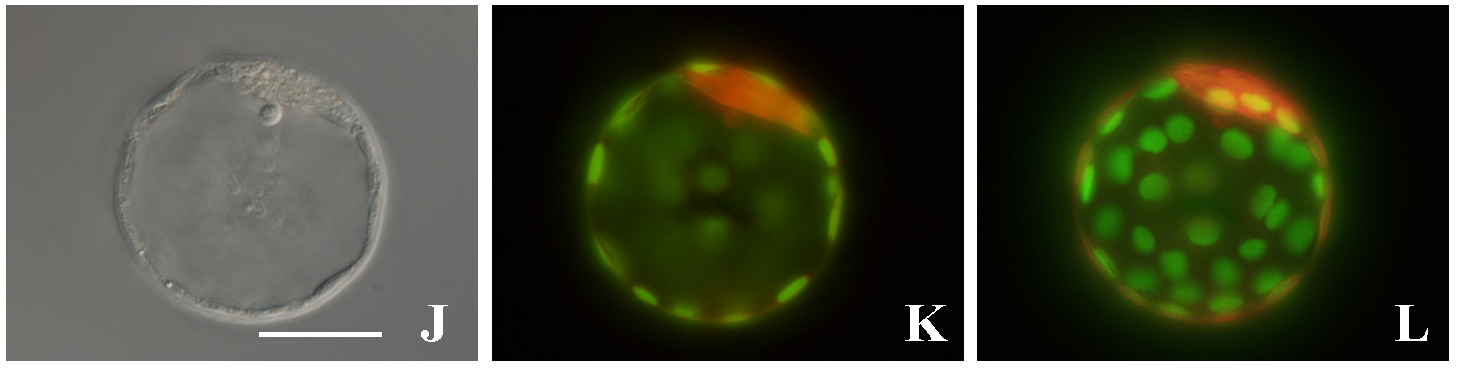
Cdx2 (green) and Oct3/4 (red) antibody labelled mouse blastocyst- imaged using a halogen-lamp microscope
Halogen lamp microscopes typically have a single light source, and inserting a filter in this way would normally disable standard bright field illumination, a major limitation preventing effective manipulation of fluorescent samples. This technical obstacle was overcome by clever design. The excitation filter is of smaller diameter than the condenser, thus unfiltered light can pass around its periphery under the control of a movable diaphragm. In this way the single halogen lamp source can simultaneously provide fluorescent and bright field illumination. Practical applications of the apparatus were demonstrated in the article by the removal of fluorescently tagged chromosomes from mouse and bovine oocytes.
The pages of the Node itself are testament to the power of fluorescent imaging to inspire and delight. Wakayama’s team are hoping that inexpensive modification of existing halogen microscopes in schools and teaching labs will help bring science to life for the next generation of budding researchers.
Yamagata K, Iwamoto D, Terashita Y, Li C, Wakayama S, Hayashi-Takanaka Y, Kimura H, Saeki K, & Wakayama T (2012). Fluorescence cell imaging and manipulation using conventional halogen lamp microscopy. PloS one, 7 (2) PMID: 22347500