In recent years, the zebrafish has emerged as an increasingly prominent model in biomedical research. Its optical transparency for the first few weeks, high fecundity and ex vivo fertilization have made it traditionally suitable to study developmental biology. However, over the past decade these same features have enabled the zebrafish to become a preeminent disease model and tool for studying disease mechanisms. Discoveries in zebrafish disease models are leading to new perspectives on human disease and new drugs that are entering the clinic in diverse areas from cancer to tuberculosis.
To showcase the translational impact of the model across multiple disease areas, Disease Models & Mechanisms has compiled a Special Issue packed with reviews, research and resource articles from researchers at the cutting-edge of their respective disease area of interest.
In the front section of the issue, Jennifer Phillips and Monte Westerfield provide an overview of the use of zebrafish in translational research in an ‘At a Glance’ poster article, illustrating recent examples of successful clinical translation of zebrafish studies. In the other Review articles, important insights from the zebrafish model into cancer, cardiovascular disorders, infectious diseases and more are discussed, with contributions from Jason Berman, Randal Peterson, David Langenau, Annemarie Meijer, Wolfram Goessling and others.
In the research section of the issue, striking examples of how the zebrafish can advance our understanding of disease mechanisms and contribute to the development of new disease models and therapeutic tools are presented. For example, Ana Vacaru, Kirsten Sadler and colleaguesanalyze zebrafish liver steatosis, protein markers and target gene expression to provide a new perspective on the unfolded protein response (UPR) and its role in fatty liver disease (FLD). In another study, Tamara Stawicki, David Raible and colleagues use forward genetics to identify new genes involved in resistance to hearing loss, a disorder that affects over 35% of people over 65. Alexa Burger, Daniel Haber and colleagues provide a new zebrafish model of chordoma, a rare type of bone cancer that is thought to arise from the remnants of embryonic notochord cells and for which, until now, there has been no animal model, few cell lines and limited treatment options. Nadia Danilova, Shuo Lin and colleagues use two genetic zebrafish models of ribosomal protein (RP) deficiency and find that treatment with exogenous nucleosides leads to improved survival, increased blood count and decreased morphological defects, suggesting the use of these compounds for novel therapeutic purpose in humans with RP deficiency, such as Diamond Blackfan anemia patients. Exquisite live imaging in zebrafish to visualize immune response is used by Tjakko Van Ham, Ben Giepmans and colleagues to study the resolution of neuroinflammation in vivoand by Mai Nguyen-Chi, Georges Lutfalla and colleagues to model chronic inflammation during transient Escherichia coli infection in the notochord.
For a more detailed introduction to our special issue read our Editorial by E. Elizabeth Patton, Paraminder Dhillon, James F. Amatruda and Lalita Ramakrishnan and to read all the articles in the issue, for free, visit http://dmm.biologists.org/content/7/7.toc
Don’t forget our special ‘Model for Life’ article in which the DMM Editor-in-Chief, Ross Cagan, interviews Leonard Zon, pioneer in the zebrafish disease models community. In this article, Zon recalls the evolution of his career from developmental biologist to physician-scientist and the stories behind some of his major research accomplishments. He also discusses challenges and opportunities in zebrafish research and provides advice on translating basic research findings to the clinic.
“I think you could easily argue that zebrafish is the best chemical system. Access to the embryos is so easy, and the field really blossomed with interesting screens into all sorts of phenotypes”.
The 2014 FIFA World Cup has mesmerised football fans all around the world over the past weeks, but besides just the fancy footwork on display, we’ve also seen some amazing athleticism. Many of the matches have taken place under scorching, highly humid conditions! Though this might not be foremost in our minds as marvel at the ball-mastery and cheer on our favorite teams, at the same time we are witnessing the marvel of muscle tissue too.
Muscle consists in organized patterns of muscle fibers that contain multiple nuclei. During development, these fibers are assembled from fusion of muscle cells. In the fruitfly Drosophila, founder cells fuse with multiple fusion-competent myoblasts (FCM) to form the muscle fiber. In a recent study published in Development, Ciglar and colleagues attempted to understand a bit more how different muscle cell fates (ie: founder cells and FCMs) are determined during development.
They showed that the proteins tramtrack69 (Ttk69) and lame duck (Lmd) were essential for the normal development of Drosophila muscles. Interestingly, they showed that the acquisition of FCM identity resulted from the combined actions of Ttk69 and lame duck: Ttk69 repressing the expression of founder cell genes whereas Lmd activating the expression of FCM genes.
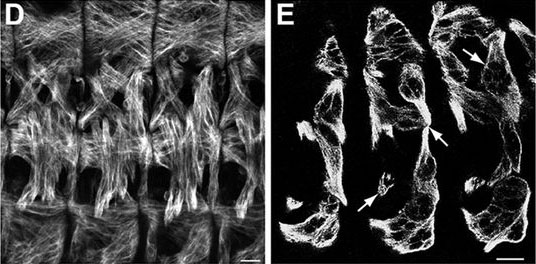
On this picture you can observe (in white) the expression of β-3 tubulin, a marker of cell “skeleton”, in normal embryos (left picture) and in embryos in which Ttk69 has been deleted by genetic engineering (right picture). Since the deletion of Ttk69 leads to the formation of abnormal muscle fibers, the authors conclude that Ttk69 is mandatory for normal muscle development.
This study is a step toward the understanding of the complex machinery involved in muscle development. Robust understanding of what factors direct cell fates during development is key for stem cell biologists. As we try to direct stem cells towards a specific fate, we try to recapitulate development, and we base our experimental strategies on what we know from developmental biology. In this sense, biological research is like football: scoring a beautiful goal involves patience, hard work, and usually a long skillful build-up involving players with different expertise. And as we focus on the strikers that reach the scoring line, we must remember to admire the entire team!
Picture credit:
Ciglar, L., Girardot, C., Wilczy ski, B., Braun, M., & Furlong, E. (2014). Coordinated repression and activation of two transcriptional programs stabilizes cell fate during myogenesis Development, 141 (13), 2633-2643 DOI: 10.1242/dev.101956
– Developmental biologist Julian Lewis sadly passed away last April. We reposted an obituary by Paul Martin and David Ish-Horowicz looking back on his life and work.
– And Megan shared her tips on how you should prepare your application for a postdoc or lectureship position.
“la Caixa” PhD student Nicolas Lecland is the first author of the study published in Nature Cell Biology (Photo: Battista/Minocri, IRB Barcelona)
A breakthrough at IRB Barcelona fills a knowledge gap in understanding how the cell division apparatus, the mitotic spindle, is formed.
The in vivo visualization and monitoring of the starting points of microtubules — filaments responsible for organising the mitotic spindle — provides novel insight into the dynamic architecture of this structure.
The findings will also contribute to understanding how the mitotic spindle is perturbed by drugs that target microtubules and that are used in chemotherapy.
The division of a cell in two requires the assembly of the mitotic spindle, an extremely complex structure, which is the result of the coordinated action of a multitude of proteins and a finely tuned balance of their activities. A large part of the time that a cell requires to divide is devoted to assembling the mitotic spindle, which, superficially, resembles a ball of thread with the shape of a rugby ball.
The most abundant components of the spindle are the microtubules. “By labelling the ends of thousands of these fine filaments, which are indispensable and extremely dynamic and variable, we have finally been able to follow their distribution and movement during the assembly of the mitotic spindle,” explains Jens Lüders, a cell biologist from the Institute for Research in Biomedicine (IRB Barcelona). The breakthrough appeared yesterday in the advanced online edition of the journal Nature Cell Biology.
“For more than 10 years we have been able to track only the growing ends of microtubules but not the starting points. As a result, we lacked essential information in order to understand the dynamic architecture of the mitotic spindle and how it contributes to cell division,” says Lüders. Headed by the German scientist who runs the Microtubule Organisation group at IRB Barcelona, the study carries only two names, his own and that of the French researcher Nicolas Lecland, first author, who completed his PhD at IRB Barcelona through a “la Caixa” fellowship.
The scientists have demonstrated that the protein γ-tubulin localizes at the starting points of the microtubule filaments and is relatively stably associated with these structures. Using a version of γ-tubulin that carries a fluorescent label activated by laser light, the researchers were able to follow the movement of the starting points of microtubules within mitotic spindles by filming dividing human cells.
The Advanced Digital Microscopy Facility, a joint IRB Barcelona-Barcelona Science Park Facility run by the IRB physicist Julien Colombelli, has been crucial for setting up the technology required. “The success of this study is also the result of the technical know-how and cutting-edge technology available, without which we would never have been able to tackle this project,” emphasizes Lüders.
The researchers describe for the first time where most microtubules form inside the mitotic spindle, how they develop, and how their starting points are transported—with the help of three motor proteins—to opposite poles of the spindle, where they attach. Simultaneous to this process, the opposite ends of the filaments extend towards the cell centre, where they interact with chromosomes.
When the spindle is finally assembled, the microtubules pull the chromosomes to opposite poles and initiate the physical division of the cell. “We now have a more complete understanding of how the spindle assembles and functions and can use our novel marker for testing old and new hypotheses about underlying mechanisms,” says the scientist.
A new tool to study cancer
In addition, the breakthrough paves the way to “better” understanding the mode of action of drugs that inhibit microtubules and that are used in chemotherapy. These kinds of drugs impede the mitotic spindle, thus preventing cell division and interfering with tumour growth.
In spite of the many years of clinical success of these treatments against cancer, little is known about how they impair spindle architecture and function. Although these drugs are highly efficient, they do not show the specificity desirable as they also affect healthy dividing cells. In addition, they affect non-dividing cells such as neurons, in which microtubules also have important functions.
“A better understanding of the differences in spindle organisation between cancer and healthy cells and how they respond to microtubule-targeted drugs is essential in order to optimise treatments, for example by identifying more specific drugs or new targets. This tool could be useful to achieve these objectives,” states the researcher.
The study has been supported by structural funds from the Generalitat de Catalunya, a Marie Curie grant from the European Union, and the Plan Nacional, of the Ministry of Economy and Competitiveness.
StemCellTalks is a Canadian high school stem cell outreach initiative that has been running in 7 cities in Canada since 2010. The program has featured over 50 stem cell “experts” during this time, involved the participation of over 500 gradute student volunteers and reached over 5000 grade 11/12 students. This year, sponsored by Stem Cell Network and Let’s Talk Science, the Vancouver chapter was able to partner with the International Society for Stem Cell Research and send five talented student bloggers – Lauren Dobishok, Tanner Jones, Mindy Lin, Vivian Tsang and Michelle Tse – to its Annual Meeting, which was hosted in Vancouver last week from June 18-21th. Three of these blog posts (here, here and here!) have been featured on another excellent stem cell blog – Signals – and we are happy to be able to share the final two posts here on The Node!
By Tanner Jones (Dr. Charles Best Secondary, Vancouver, British Columbia, Canada)
With the promising restorative properties of stem cells, the hopes for treating a variety of diseases are close at hand; however, are these discoveries being accurately conveyed to the public? What are the repercussions of showing diseased patients a treatment that may not be available to them? As patients search for these therapies, many will travel to other countries where their regulatory laws are not in compliance with western standards. This hazardous phenomenon has been classified as stem cell tourism, and it poses an immense risk to patients who seek treatment in illegitimate clinics.
While attending StemCellTalks Vancouver, a conference where youth are educated on the capabilities of stem cells, I was captivated by Dr. Tania Bubela’s speech. Her account of how media can exaggerate research to the general public resonated with me. Dr. Bubela explained that while many clinical trials using stem cells are being run, these trials usually take as long as fourteen years to complete. As these clinical trials are being performed, the media often overstates the work that is being done, creating a certain amount of hype towards the general public. Although this ripple effect seems positive, it leaves many desperate patients confused as to why these treatments are not accessible to them. While seeking treatments that have been reported by the media, many individuals will stumble upon clinics in other countries who have promised successful outcomes for clinical therapy. Using patient testimonials, perspective applicants for these clinics are drawn in, hoping that there experience will be positive as well. In reality, most of these clinics have little evidence or research that supports their claims, yet patients will travel great lengths to visit them as they feel it is their only option. Not only are these clinics extremely expensive, in some cases, treatments my result in harmful side effects for the patient.
The 2014 ISSCR Annual Meeting, held at the Vancouver Convention Centre, provided some of the attendees a rare opportunity to gain a greater understanding of the ethical issues associated with stem cell research. As part of this conference, I was quickly introduced to an issue surrounding stem cell tourism during the Presidential Symposium where Dr. Paolo Bianco, Dr. Elena Cattaneo, and Dr. Michele De Luca, were being presented with the ISSCR Public Service Award. These phenomenal scientists have been championing the cause to halt the introduction of a new stem cell treatment in Italy. The Stamina Foundation in Italy has been treating patients with unproven stem cell therapies that have not been tested in rigorous clinical trials. The Foundation claims that by using mesenchymal stem cells, they can treat Parkinson’s disease as well as Spinal Muscular Atrophy; however, there is no evidence that mesenchymal stem cells can aid in the treatment of either of these diseases. One of the potential dangers of this therapy is the possible generation of bone or fat in organs. These public figures have been tirelessly debating the medical standards and regulatory oversights associated with the Stamina Foundation. As Dr. Bianco humbly accepted his award, he stated that researchers and physicians should be protecting patients from the physical harm, the financial exploitation and the moral illusion that can be produced by these illegitimate clinics.
With the daunting task of ending stem cell tourism, some wonder if it will ever be accomplished. Despite the challenges, Dr. Zubin Master, a Professor at the Albany Medical College, has proposed a few ideas that may lead to the extinction of this problem. He suggests that physicians, patients and the public should be educated on the danger of these unproven therapies. If a greater understanding is developed within the population, many people will be less likely to engage in stem cell tourism. Dr. Master also believes that the most powerful initiative that can be taken to end stem cell tourism would be the involvement of patient advocacy groups. As ambassadors for their disease, patient advocacy groups disseminate information and educate individuals who are suffering from the same disease. These trusted organizations are perceived as a neutral party with the patient’s best interests in mind, while some individuals may view scientists and clinicians as a barrier to certain treatments due to scientific protocols and regulations to clinical trials. With the sharing of information and by releasing statements on the potential risk of illegitimate stem cell clinics and the need for strict regulations, patient advocacy groups can generate an influential effect on patients currently thinking of participating in stem cell tourism.
Will stem cell tourism continue to be a problem in the future? With the prospective advancements in regenerative medicine and other treatments, many hope that patients will remain in their country to seek therapy. Until that time, it is possible that patients may continue to expose themselves to the possible physical harm and financial exploitation associated with these unproven therapies. Unless they are educated on the potential hazards of these illegitimate clinics, stem cell tourism will continue to attract those who are desperate and feel they have no alternatives.
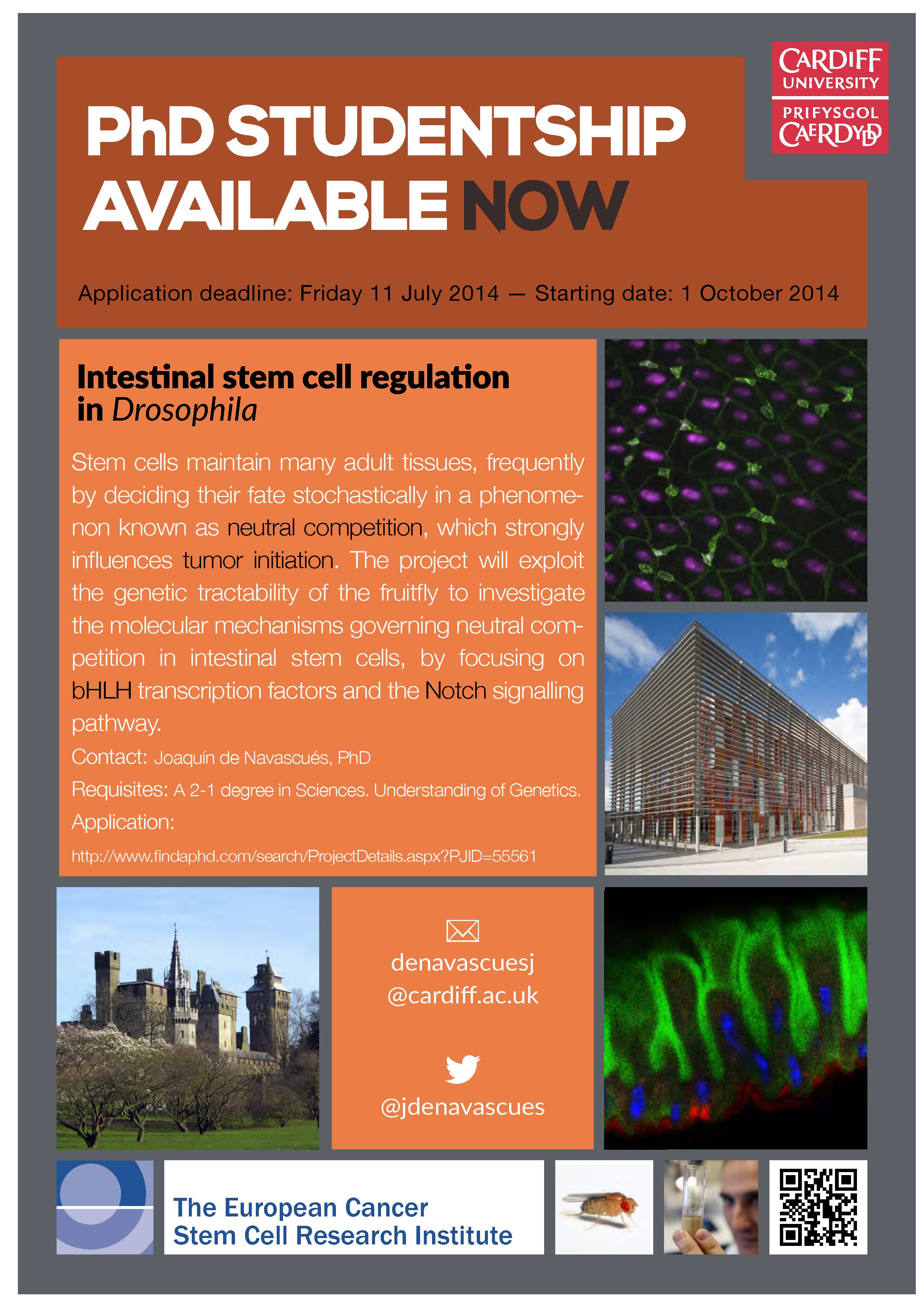
the JQ lab is looking for candidates for one 3-year PhD studentship to work on the regulation of intestinal stem cell neutral competition during the homeostasis of the Drosophila adult intestine, at the European Cancer Stem Cell Research Institute, Cardiff University.
Paul Martin and David Ish-Horowicz look back on the life and work of their long-time friend and colleague Julian Lewis, who passed away on April 30th 2014.
Julian Lewis made unique contributions to several areas of cell, developmental and theoretical biology. He combined a formidable intellect and mathematical training with experimental dexterity and deep biological insight, and used these to great effect to study key questions in early embryonic patterning, neurogenesis and, most recently, Notch signalling and somitogenesis. His fluent prose was evident in his publications and also in the textbook Molecular Biology of the Cell, to which he was a major, founding contributor. His kindness and gentleness endeared him to all, especially to the many people whom he mentored as they passed through his lab. He inspired them and his numerous collaborators and colleagues, all of whom will be bereft at the loss of an irreplaceable colleague.
Julian grew up in West London, attending St Paul’s School, where he was an outstanding linguist. He studied physics at Oxford University, remaining there for his DPhil in theoretical physics. He then spent eighteen months as a postdoc at the Institute for Physical Problems in Moscow, helped by his fluent spoken and written Russian – just one of his non-English languages.
Julian’s long-standing fascination with natural history led him to accept a postdoc position in Lewis Wolpert’s lab at the Middlesex Hospital, which soon became the epicentre of studies on chick limb patterning – the system that triggered many influential theories of vertebrate embryonic patterning that we now take for granted. Julian began working closely with Denis Summerbell, a doctoral student in the lab and, together, they provided the theoretical and experimental basis for the progress zone model of limb patterning, which still influences our ideas of how spatial organisation arises during vertebrate development (Summerbell et al., 1973).
Other colleagues in the Wolpert lab at the time included Jonathan Slack, Cheryl Tickle, Jim Smith and Nigel Holder. This team unearthed many important mechanistic insights from cut-and-paste surgical experiments, thereby laying the foundation for subsequent molecular advances in understanding limb patterning. Julian’s big contributions were in figuring out how cells in the progress zone might measure ‘time’, and how this in turn imparts proximodistal positional values on cells. Several papers involved a combination of experimental and mathematical analysis; they included Julian’s first exploration of how timing mechanisms might pattern tissues – a much understudied problem at the time.
In 1978, Julian set up his own lab at the Anatomy Department of King’s College, London on the Strand,where he taught histology, with a healthy dose of cell biology, and also met his American future-wife Sherry, who was in London doing a PhD in neuroanatomy. His lab there began to examine how the various tissue components of the limb – skeletal elements, muscles, nerves and blood vessels – arrange themselves appropriately in relation to one another. The experiments revealed a hierarchy of interactions such that, for example, connective tissue defined ‘trunk roads’ taken by all limb nerves, which then followed individual paths in response to chemoattractants released by skin or muscle targets (Lewis et al., 1981).
While still at King’s, Julian and his postdoc Gavin Swanson switched models and began to study development of the otic vesicle, which gives rise to the sensory epithelium of the inner ear. One transition paper had them peeling open the otic vesicle and grafting it onto a host chick limb bud, where it differentiated to form the exquisite normal patterning of hair cells, making the process accessible to experimental manipulation (Swanson et al., 1990). Julian’s innovative idea of injecting white paint into the ear to visualise its morphology was a further example of his ingenuity.
In 1986, Julian jumped at an offer to move his lab to the new Imperial CancerResearch Fund (ICRF) Developmental Biology Unit, which had just been set up in Oxford under the directorship of Richard Gardner. Here was a thriving community of interactive groups with most of the major model systems represented along a compact floor at the top of the Zoology Building: flies (Ish-Horowicz and Ingham), chick (Lewis), frogs (Slack), mice (Gardner, Copp and Beddington) and, later, zebrafish (Ingham). These were very exciting times in developmental biology, as striped gene expression patterns in Drosophila competed with new mesoderm-inducing factors in Xenopus for pages in Nature. Julian’s interactions with everyone in the Unit were key to its success and to that of its students and postdocs.
Julian’s major interest remained the inner ear, and he uncovered clues about its morphogenesis, the inductive signals that kick-start its invagination from head ectoderm and how the semicircular canals are formed. He also made a foray into wound healing; in the early 1990s, he published a paper showing that wounds in the simple embryonic epidermis closed by means of an actomyosin cable that assembled in the leading edge cells (Martin and Lewis, 1992). This cable turned out to be a general feature of wound healing in many systems, and is also present during normal morphogenesis, e.g. during dorsal closure in fly embryos.
Julian also became increasingly fascinated by the problem of how local patterning was established in the otic epithelium; in particular, with the beautiful hexagonal arrays of individual hair cells, each hair being surrounded by separating support cells. This patterning smelled of ‘lateral inhibition’, the process mediated by Delta-Notch signalling that had been shown to generate regularly spaced neural precursors in Drosophila – an idea that led him to embark on a series of landmark studies of Notch signalling in vertebrates.
In collaborationwith the Ish-Horowicz lab down the corridor and the Kintner lab in San Diego, Julian’s team showed using Xenopus and chick that a cell’s decision whether to become neural is indeed regulated by Delta-Notch signalling and lateral inhibition – individual differentiating neural cells express the ligand Delta, which inhibits direct neighbours from also differentiating and preserves them as progenitor cells (Henrique et al.,1995; Chitnis et al., 1995). Subsequent work in the chick retina confirmed this model, showing that Delta- Notch signalling regulates the timing and progression of differentiation, but not the type of neuron formed (Henrique et al., 1997).
The Oxford Unit was closed in 1996, and several groups, including the Ish-Horowicz and Lewis labs, transferred to the main ICRF (now Cancer Research UK) institute at Lincoln’s Inn Fields in London. There, Julian began to switch his research to zebrafish, taking advantage of its genetics and suitability for advanced microscopy (the physics of which he understood well) to study the molecular processes involved in cell fate diversification in vivo.
The Delta-Notch story continued with studies of its role in patterning in the developing zebrafish gut and vasculature, but Julian also began a series of incisive experiments on vertebrate segmentation, studying in particular how the regular production of somites (the precursors of our axial skeleton and muscles) is controlled by a molecular oscillator (‘clock’). Here too, he showed that Notch signalling was crucial, acting to synchronise the clocks of neighbouring cells (Jiang et al., 2000). Equally ground-breaking, he modelled the zebrafish clock as a simple, delayed negative-feedback loop based on transcriptional autorepression. He showed that the period of such a clock would depend on the kinetics of synthesis and breakdown of the mRNAs and proteins of the clock, rather than on their absolute protein concentrations (Lewis, 2003). Crucially, he showed that noise in the circuit, far from disrupting the oscillations, contributes to the circuit’s robustness. This single-author paper has formed the basis for most of the subsequent work in the field.
For his collective work, Julian was awarded the British Society of Developmental Biology’s highest accolade, the Waddington Medal, in 2003, and was elected to EMBO membership in 2005 and as a Fellow of The Royal Society (FRS) in 2012. He closed his lab in 2012 but continued working; his most recent paper was published this April in Development (Soza-Ried et al., 2014) and was a perfect example of what the funders now call ‘predictive science’. His lab showed that the development of normally sized somites could be rescued in embryos lacking endogenous Delta expression by delivering regular pulses of Delta activity, thereby confirming his mathematical prediction of Notch-mediated clock synchronisation. It was particularly appropriate that this last paper was published in Development – his 24th in this journal (and its predecessor, JEEM) – on whose editorial board he served between 1988 and 1998.
Julian was a wonderful mentor who gently nudged the best out of all of his graduate students and postdocs, showing immense patience with those of us who were slower than he was in grasping inferences, concepts and equations. He wrote beautifully; his prose was almost lyrical, as if it had been ‘sprinkled with magic’ as described by one journal editor.
For the last ten years of his life Julian suffered from prostate cancer, which led to his making an important contribution to the cancer research community. He talked widely on the biology and treatment of cancers to general scientific and lay audiences. These were especially powerful and important talks; near the end of each, he would show data from a drug trial (Fong et al., 2009) and a bone scan showing metastases, at which point he indicated that he himself was a participant in the trial and that the bone scan and metastases were his. The bravery of a patient advocate talking so lucidly and in such clear scientific language about his personal experience taking a novel cancer drug had tremendous scientific and emotive impact. His tremendous courage and stoicism were also evident in his continued productivity despite his pain and discomfort. In the weeks before he died, Julian also delivered final drafts of two of his chapters for the 6th edition of Molecular Biology of the Cell, as well as a new section on computational biology.
Julian was a scientist’s scientist, with a legendary ability to ask the gentle ‘killer’ question at a seminar despite sleeping through most of it. He could be slightly ‘over the top’ on matters of clarity and precision, once walking out of a seminar to check a controversial but critical fact from a journal article in the library – and he was the speaker! He also had an idiosyncratic dress style, classifying his sweaters into two categories: ‘with holes’ and ‘without holes’. But he was also a lovely human being and a ‘renaissance man’ whose wide interests incorporated music, artistic prints, ceramics (which both he and Sherry collected avidly) and second-hand books, which were usually read in the original Russian or French. He was a devoted husband and father – with Sherry he raised three science-orientated daughters. He is sorely missed by them, and by all of us who knew and loved him.
Hello! I am Maggie Pruitt, a postdoctoral researcher in the Department of Genetics, Development, and Cell Biology at Iowa State University (Ames, Iowa, USA – think middle America or fields upon fields). I work in Dr. Stephan Schneider’s evo-devo laboratory, and my work mostly focuses on studying components of the Wnt/β-catenin signaling pathway during early Platynereisdumerilii development.
The Schneider lab is part of the small, but growing, Platynereis community. Many of the Platynereis labs seem to study developmental biology or evolutionary developmental biology. While the Schneider lab is focusing on early development and the early gene regulatory networks present in Platynereis, other labs work on eye and brain development, gametogenesis, the molecular mechanisms of how the moon affects the life cycle of Platynereis and how neuropeptides control swimming depth of Platynereis larvae within the water column, to name a few.
Platynereis dumerilii as a model organism
Platynereis is a polychaete annelid and belongs to the clade Lophotrochozoa, which is the third but understudied branch of bilaterally symmetric animals (understudied compared to ecdysozoans like the nematode C. elegans, and deuterostomes like the vertebrate mouse). These worms can be collected in the wild from the coasts of the Mediterranean or coasts of Western Europe; however, they can also be easily cultured in a lab.
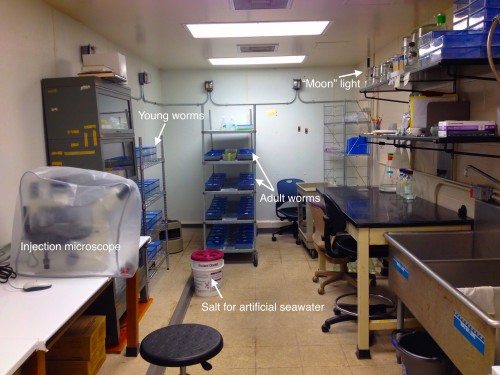
Our culture room. Notable features include boxes of adult or young worms, our artificial moonlight, and an injection microscope (yes, we can inject Platynereis embryos!).
As Platynereis is a marine worm, the worms need seawater. Filtered natural seawater (NSW) is by far the best for the worms. But, if your lab is not located close to a seawater source (like us in the middle of the USA) or you want to avoid steep costs for shipping NSW to your lab, you need to get a little creative. Artificial seawater (ASW) can be made using a salt called Instant Ocean. While this can be technically called seawater, the worms (or more specifically the embryos) do not really survive well in it. So…. since the Schneider lab is far from the sea and the worms do not like ASW, what do we use? This is where creativity comes in. Actually, it is where Dr. Dennis Lavrov’s sponge lab (also at Iowa State University) comes in. We provide the salt to make ASW to the Lavrov lab and their sponges. Then, once this seawater has been “conditioned” by the sponges (i.e. when the Lavrov lab needs to change the water in their tanks), we take their wastewater, filter it, sterilize it, and voila! Seawater that our embryos like, cleverly named DSW (Dennis seawater). We use 100% DSW for all of the fertilizations. Once the worms are juveniles or adults, we keep them in a 50/50 mixture of DSW and ASW.
The Schneider lab Platynereis culture is not huge, so optimal breeding success is key. One way to maximize this is to keep the culture on a fairly tight routine. The culture should be maintained at 18oC or 64.4oF, a standard for Platynereis labs around the globe, as the speed of early development is very temperature sensitive. In addition to constant temperature, it is good to have the worms on a regular feeding and water change schedule. Our young and adult worms receive minced organic spinach (only the best, pesticide-free spinach is good enough) on Mondays and ground fish food flakes on Fridays. The last incredibly important thing is to have tight control of the daily light and dark periods.
Sexual maturity and spawning in Platynereis dumerilii are synchronized by a lunar cycle. In the lab, the culture is on an artificial light cycle. The worms experience summer all year round, and so have 16 hours of light and 8 hours of total darkness each day. In addition, they are exposed to a 28-day night cycle in which three weeks of pitch-dark nights are followed by 7-days of full moon. Our high-tech recreation of this lunar cycle comes in the form of a $1.99 night light from Walmart, and a very reliable undergraduate researcher as a timer to turn the light on and off on the correct days. Sexually mature worms can be collected 3-6 days after our “moon” phase. Any disruption in this light cycle (exposing the worms to light during the dark phase), like leaving a digital clock on that has a bright backlight, has detrimental effects on the breeding success.
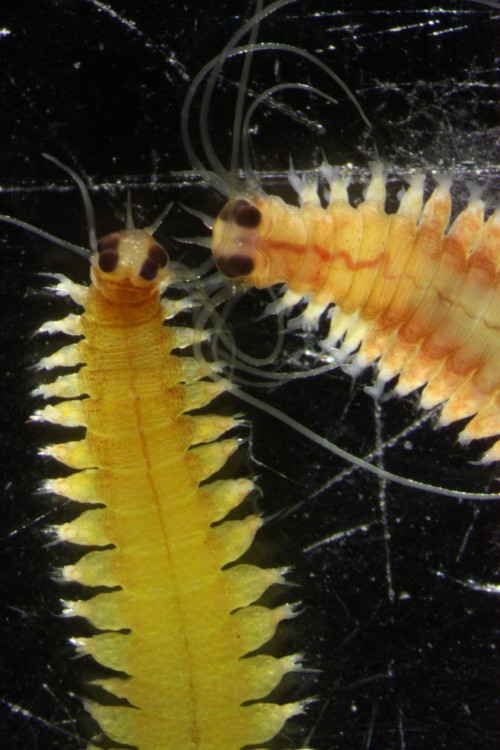
Sexual maturity can occur in worms as young as three months old, but sometimes we have “geriatric” 18-month-old worms finally maturing. In Platynereis, completed sexual maturity lasts one day/night, so an artificial cycle with artificial light allows for collective sexual maturity in the culture. Maturing worms are easily distinguished from non-mature worms by their change in appearance. Maturing worms have an empty gut and become more opaque. As the worms continue to mature, the females become yellow (lots of eggs) and the males have a cream anterior and a red posterior (lots of sperm and blood vessels).
Anterior halves of a female worm (left) and a male worm (right). The distinctive colors, yellow versus cream/red, are noticeable.
The awesome power of the Platynereis mating system
In the wild, Platynereis will swarm at dusk. However, in the lab we keep the sexually maturing male and female worms in separate bowls so the worms can last until the morning. Matings are easy to set-up; all you need is a glass bowl, some DSW, and a sexually mature male and female. After two worms are placed together in a bowl, they will exchange pheromones, which triggers their nuptial dancing and mating ritual:
The female is swimming in small circles, and the male is swimming in large circles. Pheromones are exchanged, the male first releases his cloud of sperm, and then the female releases her eggs (courtesy of Albrecht Fischer, University of Mainz, Germany).
Go ahead; watch the movie again. It is awesome and is partially responsible for getting me hooked on Platynereis. And at the end of this nuptial dance you are left with thousands of synchronously developing embryos and two dead worms. What a way to end your life, right? Perhaps before we pass judgment on how and when these worms die, I should give a bit more information on their life before the fatal spawning event.
Crash course to the life cycle of Platynereis
One of the many reasons why Platynereis is a good model system for developmental biology is that Platynereis develops rapidly. Platynereis begins as a 160μm egg and after instant fertilization of many eggs at once Platynereis embryos develop synchronously. In fact, the thousands of embryos from a single mating develop synchronously through the embryonic and larval stages. During early development, Platynereis embryos exhibit spiral cleavage. Spiral-cleaving embryos develop by a series of stereotyped asymmetric cell divisions that allows for the identification of individual cells by their positions and size. By 24h, the embryos have developed into a free-swimming larval form, a trochophore that swims freely within the water column, and after just 96h, Platynereis is a three-segmented juvenile worm that stays on the bottom of the dish. Segments are added throughout the lifetime of Platynereis at the tail end from a posterior growth zone, and Platynereis maintains a lifelong capability to grow and regenerate posterior segments after loss. The size of an adult worm varies tremendously, but on average they are about 35mm. During segment proliferation, the sexually immature worms live in self-spun silk tubes. The tubes are open at both ends and allow the worm to “check out” their environment, attack passing worms and prey, and eat their food. In their own world they are mostly holistic vegetarians that turn into fierce cannibalistic predators if the opportunity arises.
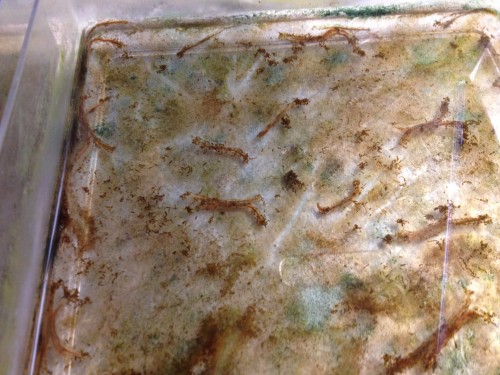
Here is one of approximately 90 boxes where we house our young and adult worms. In this box, you can see the many worms, each with their own silk tubes. If you look closely, you can even see one worm peeking out of its tube (right of center).
To sexually mature, Platynereis goes through a process called epitoky. Essentially, the whole body of the worm is irreversibly modified for reproduction, and the worm is transitioning from a sexually immature “atoke” form, to a sexually mature “epitoke” form. Some of the radical body modifications during this process include upgrades of motor and sensory organs, tune-ups of the muscular system for speedy swimming, resorbing of some muscles and all of the gut tissues, and the growing of thousands of gametes within their central body cavity. Indeed, the female and male worms are mostly reduced to growth chambers for gametes, bags of eggs and sperm, respectively. Once epitoky is complete, and the worm has reached its climax — one-day of sexual maturity, the worm will leave its silk tube home and swim into the pelagic zone (open water column). Here they will find like-minded partners (the good) or end up as a healthy protein shake for some higher ups in the food chain (the bad). After reproduction, the worms die. Maybe this death is still shocking to you, but the entire body of the worm changed for this one event…. the worm dies after completing a final task. From an evolutionary standpoint, the only task that matters.
A typical day in our laboratory
An ideal day in the lab is one in which everything is working correctly. Since this seems to be a mythical creature, I’ll stick to a typical day in our lab. Our typical days come in two flavors, depending on whether or not we have mature worms for fertilizations.
In the absence of sexually mature worms, a typical day in the lab consists of cloning, cloning, cloning, and maybe some more cloning. The goal of most of the cloning work is to make an in situ probe, and determine the expression pattern of the gene over the first 24h of development. The lab has an ever-growing list of interesting genes to clone, so this is a lab effort. I seem to spend most of my time working with all of the hard-earned embryos I collected in previous weeks (it can be hard to share embryos from late night fixations or embryos treated with pharmacological inhibitors). My favorite, and most frequent, activity is performing in situs. Cloning a new gene can be quite satisfying, but not nearly as much as uncovering a beautiful expression pattern that perfectly fits your hypothesis.
In the presence of sexually mature worms, I can typically be found running between our molecular lab (located on the 5th floor) and our culture room (located on the 7th floor). Maybe I’m being silly, but I feel extremely lazy taking the elevator up two flights of stairs. Since we only have sexually mature worms for less than two weeks each month, I try to take advantage of these days. Some of the fertilizations need to be saved to propagate the culture, but I try to use the rest. So, these days begin with a short run up to the culture room to set-up fertilizations. I’ll try to have a plan-of-action for the day, like how I plan to use the embryos, but sometimes, the worms just do not cooperate. Females weren’t feeling the males, all males and no females, etc. Pending total failure with the fertilizations, the embryos will be 1) used for microinjection or a pharmacological inhibitor experiment, 2) fixed for in situ hybridization or immunohistochemistry, or 3) used for RNA isolation. These days can get pretty hectic, but being busy means you and the lab will be set, sample-wise, for the weeks without the matures. It is only when slippery fingers make an appearance and multiple tubes of embryos or entire plates of treated embryos are dropped that these days are the worst. When this happens (yes, it happens), I usually get a coffee, then finish the day pretending the lab is in the absence of matures…. until the next morning.
This post is part of a series on a day in the life of developmental biology labs working on different model organisms. You can read the introduction to the series here and read other posts in this series here.
StemCellTalks is a Canadian high school stem cell outreach initiative that has been running in 7 cities in Canada since 2010. The program has featured over 50 stem cell “experts” during this time, involved the participation of over 500 gradute student volunteers and reached over 5000 grade 11/12 students. This year, sponsored by Stem Cell Network and Let’s Talk Science, the Vancouver chapter was able to partner with the International Society for Stem Cell Research and send five talented student bloggers – Lauren Dobishok, Tanner Jones, Mindy Lin, Vivian Tsang and Michelle Tse – to its Annual Meeting, which was hosted in Vancouver last week from June 18-21th. Three of these blog posts (here, here and here!) have been featured on another excellent stem cell blog – Signals – and we are happy to be able to share the final two posts here on The Node!
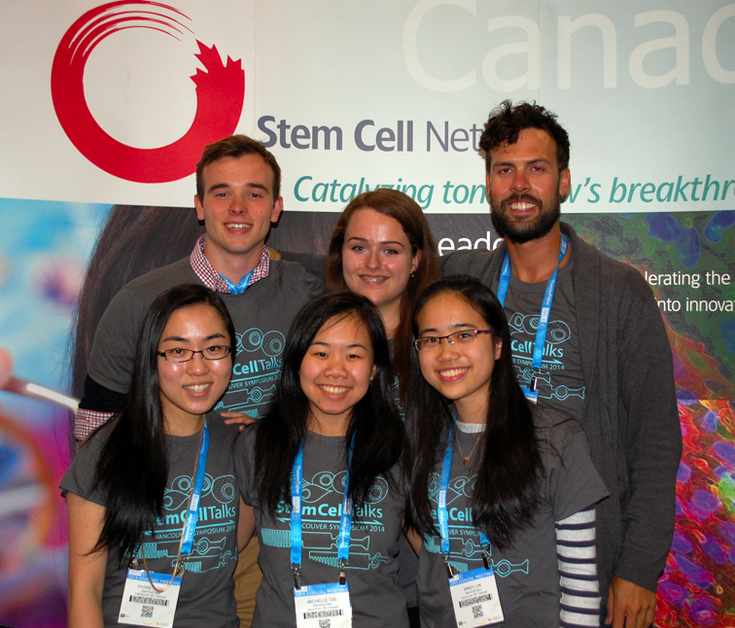
Photo Credit – Stem Cell Network. Front row L-R: Vivian Tsang, Mindy Lin, Michelle Tse. Back row L-R: Tanner Jones, Lauren Dobischok, organizer Ben Paylor
By Michelle Tse (Little Flower Academy, Vancouver, British Columbia, Canada)
At the ISSCR, I noticed the passion and dedication for stem cell research present and the pure desire to better the lives of humanity. The delegates determination to improve research studies pushes me to potentially carry on such a career in the near future.
My morning session consisted of the Tools for Basic and Applied Stem Cell Biology seminar, in which researchers from all over the world gave presentations on topics that went from reprogramming stem cells to the steps required for a research study to be translated for clinical use. Amidst many barriers, these scientists continue to show the world that hard work eventually will pay off. Our afternoon consisted of all five of us attending the Presidential Symposium, where we had the privilege to hear several different speakers present their latest unpublished research. Once again, although challenging to understand, it was extremely fascinating to be given the chance to hear about the latest news in this field of science and, in this case, it actually is the latest unpublished news! Our day ended with us attending the amazing exhibition hall where we all had the chance to personally talk to researchers from various parts of world and what they do for a living. The advantage to going to their booths? Lots and lots of freebies!
While all presentations were equally fascinating and eye opening , Dr. Debbie French’s (Children’s Hospital of Philadelphia) presentation on hematopoietic disease modelling using iPSCs (induced pluripotent stem cells) definitely stuck with me the most. The talk sparked my interest, and it was undoubtedly because her examples used, Down syndrome, Glanzmann thrombasthenia and Juvenile myelomonocytic leukemia (JMML) were diseases I knew of to a certain extent. Dr. French’s presentation widened my knowledge on iPSC’s and hematopoietic disease modeling for all three of these conditions. This was a completely new area of research to me and I was able to get so interested from that 15-20 min talk.
Clearly, it was an amazing opportunity to attend such a world-renowned science research conference and meet so many new people. I hope to hear more about the world of stem cell and the research behind it in the near future as I start my journey into university.
‘Increasing knowledge leads to triumphant loss of clarity’
‘The study of segmentation: that way leads only to madness’
Alfred Romer (1894 – 1973), Director of the Museum of Comparative Zoology and Professor of Biology, Harvard University
Some problems in biology excite such interest as to become symptomatic of a field. This is true, I think (I hope), of all biology, but it is definitely truer of some fields than others. Evolutionary biology is one such field. And segmentation is one such problem. Since the great pre-Haeckelian 19th century comparative embryology tradition, the developmental biology of organisms has been correctly viewed as the prism through which the evolutionary history of animals must be viewed and understood (not ever since though – developmental and evolutionary biology fell out with each other for most of the middle of the twentieth century). For most of that time, it was also viewed as the primary source of evidence for the actual phylogeny of the animals – our shared family tree over the last 580 million years (I use this date perhaps ill-advisedly – the date of the origin of animals is another of those problems about which people are prepared to loose their temper).
The history of animal history
There are fundamentally two ways to start developing as an animal (assuming you are one of the 99+% that are bilaterally symmetrical). Once you have gone from a ball of cells to a hollow ball of cells with a hole through which cells will pass to make your gut, you have two options: you can make the hole (the blastopore) into your anus, or into your mouth. Once achieved, you then have an anterior-posterior axis, which can be organised in two ways: it can be segmented, or not. (Actually, this is not true; lots of animals are ‘pseudosegmented’, but more of that perhaps in future).
As such, zoologists for most of the last 150 years have assumed that having a segmented body axis was a shared derived feature of particular animal groups: (annelid) worms and insects must be closely related because they are both segmented. At least, they must be more closely related to one another than they are to odd-looking, unsegmented things like clams or penis worms. If everyone agrees on something for over a century, it tends to be very difficult to convince people otherwise. Unless you are on the cusp of a revolution…
Revolutions
In 1997, an ingenius pioneering application of DNA data to reconstructing the animal family tree suggested that in fact insects and worms are very distantly related, and that their shared segmental architecture was in fact nothing to do with their position in the phylogenetic tree. This paper1 not only set the stage for the explosion in genomic approaches to addressing phylogeny that have dominated the big journals ever since, but it reignited one of the oldest controversies in biology: how old is segmentation? Is it a (relatively) recent invention in the lineages in which it is found (vertebrates, arthropods and annelid worms), or does it in fact date back to that pioneering worm crawling around in the mud with it’s newly invented bilateral symmetry about 550 million years ago?
Well, thanks to developmental biology (essentially Christine Nusselhein-Vollhard et al. with flies in the 70s and 80s and Olivier Pourquie et al. with vertebrates in the 90s, 00s, and 10s), we know (or perhaps knew) that flies segment using engrailed, wingless and hedgehog, a transcription factor and a couple of secreted signals respectively, but that vertebrates use a curious ‘clock’ of oscillating Notch signalling as they grow that interacts with an FGF- and Wnt- secreting posterior ‘growth zone’; vertebrates, unlike flies, grow from the back. So, pretty different. In 2003, building on this pioneering work in traditional models, Guillaume Balavoine’s group showed that the upto-that-point-largely-ignored annelid worm perhaps forms segments using the fly system: engrailed and Wingless2. So, the ancestor of worms and flies (which incidentally was the ancestor of all animals who turn the hole into the mouth, rather than the anus – the Protostomes) by extension was segmented using engrailed and wingless. Vertebrates, though, are different: segmentation in them is not homologous to the protostome (‘first mouth’) condition of annelids and flies. Case closed. Interesting stuff: nobody was right, segmentation was very old, but that first bilaterally symmetrical worm in the mud (550 million years ago) perhaps wasn’t split into segments.
Spiderman
However, at about the same time Wim Damen et al. published an astonishing study3 showing that the spider uses Notch oscillations to make its abdominal segments, and in a 2008 paper4 showed that it uses Wnt signalling in a posterior growth zone. What? So, worms are like flies, but fish are like spiders. What the hell is going on? Around this time I was actually trying to become a zoologist, and was totally confused about the state of the art. I was in good company. The majority of zoologists threw up their arms and resigned themselves to agreeing with Romer (see above). Those that didn’t, who generally where those actually working on the problem, started to pick holes in the annelid data, which was admittedly the weakest amongst the three segmented taxa. It is important to underline here that this is absolutely through no fault of the annelid investigators. It is bloody hard to work on non-traditional model organisms (my phd was on one), and anyone who does so has my undying respect and admiration, both for scientific reasons and because of how impressed I am by their workrate and endeavour. In any case, I suspect (I don’t know) that most in the field were happy to accept that the ancestral worm-in-the-mud (called ‘Urbilateria’) was segmented, using the vertebrate/spider system of a Notch clock.
Spiderwoman
I have never met Wim Damen, though one has to admire the intellectual courage it takes to start working on a spider – a lot of people will have thought that it was a daft idea. However, the credit now passes to Evelyn Schwager, who worked with him on the next batch of surprises, and who pleasingly is now working in Romer’s old department at Harvard. ‘Underlings’ (we know who we are) never get the attention or praise that they (we) deserve and so while I don’t know this to be true, at this point I want to emphasise the reaction when Evelyn presented her beautiful data5 at the European Evolutionary Developmental Biology Conference in 2008 in Ghent in Belgium. She showed that in fact, spiders use the gene Hunchback, which is called a ‘gap’ gene in Drosophila because it acts high up in the segmentation hierarchy (above engrailed, wingless and hedgehog), to accomplish segmentation, but only in the thorax. So, remarkably, the thorax is ‘fly/annelid-like’ and the abdomen is ‘vertebrate-like’. All great scientific findings or breakthroughs that I have seen possess that ability to make an audience of peers gasp. Schwager and Damen in their experiments managed to halve the number of thoracic segments in a spider and film it. A room of arthropod experts see, on the screen, a 4-legged spider running around. A 4-legged spider. Cue gasps.
Intrepid worms
Fast forward a couple of years to 2010, and the worm guys (I know they hate being called that) produced some delightful further data, filling in the gaps in their engrailed–wingless story to include hedgehog signalling6. Coupled with the spider story, it seems that we have solved segmentation, and it went like this:
Urbilateria evolves segments using the Notch clock.
This is a BRILLIANT invention and it takes over the world (its descedants comprise, remember, over 99% of all animals).
Those that turn that the blastopore into a mouth also evolve the hedgehog–engrailed-wingless system for making segmented structures as well (but why? And how? Lots of work to be done…)
Some of these lineages (possibly most) loose one or both of these ways of segmenting a structure, because there are many ways to make a living as an animal and lineages are just as likely get simpler as to get more complex (Aristotle was wrong about this).
Intrepid chicken (bits)
Except that vertebrates don’t have to do it using the clock, it now seems. In some beautifully old-fashioned (not in the sense that they are out-dated, but that they possess a lot of explanatory power – this is a compliment) ex vivo culture experiments Claudio Stern and colleagues have just upset the apple cart7 (though by this point it is perhaps more accurate to say that after the apple cart was knocked over, and all the apples were stolen, replaced with oranges, that were again stolen after the cart was knocked over again, Stern and colleagues have made us question whether we actually need apple carts in this day and age). They have shown that it is possible to make somites, the segmented, epithelialized blocks of mesodermal tissue that are the basis of vertebrate segmentation without an oscillating clock of Notch signalling.
In the embryo somites are added two at a time (one on either side of the spinal cord) as the presomitic mesoderm, the tissue undergoing the Notch oscillations, undertakes a mesenchymal-to-epithelial transition. This MET happens as a result of the slow removal of the signals (FGFs and Wnts) that derive from the posterior growth zone of the embryo. Since the embryo is growing, this yields a moving wavefront of signalling; the whole thing is termed the ‘clock and wavefront’ model, and was first posited in the 1970s.
However, the new study shows that if you take presumptive mesoderm from the posterior primitive streak (the name of the growth zone in chicks ie the tissue that will become presomitic mesoderm, but hasn’t yet expressed the Notch oscillations), expose it to the BMP inhibitor Noggin for a few hours to generate a dorsal mesoderm (ie. somite) fate, and then implant it back into the yolk of an egg, but away from the embryo, you generate somites. All at once. Upto 15 of them. And crucially, without Notch oscillations, and nowhere near the wavefront. The generated somites even possess the Hox expression appropriate to the time at which they were dissected from the primitive streak, so they carry patterning information too, though they don’t possess the anterior-posterior polarity of normal somites. Still, astonishing stuff.
So, worms are like flies, but fish are like spiders, which are also like flies, but chicks (which are essentially just highly evolved fish) are not even necessarily like chicks. I know what Romer would have said.
1Aguinaldo, A., Turbeville, J., Linford, L., Rivera, M., Garey, J., Raff, R., & Lake, J. (1997). Evidence for a clade of nematodes, arthropods and other moulting animals Nature, 387 (6632), 489-493 DOI: 10.1038/387489a0
2Prud’homme, B., de Rosa, R., Arendt, D., Julien, J., Pajaziti, R., Dorresteijn, A., Adoutte, A., Wittbrodt, J., & Balavoine, G. (2003). Arthropod-like Expression Patterns of engrailed and wingless in the Annelid Platynereis dumerilii Suggest a Role in Segment Formation Current Biology, 13 (21), 1876-1881 DOI: 10.1016/j.cub.2003.10.006
3Stollewerk, A., Schoppmeier, M., & Damen, W. (2003). Involvement of Notch and Delta genes in spider segmentation Nature, 423 (6942), 863-865 DOI: 10.1038/nature01682
4McGregor, A., Pechmann, M., Schwager, E., Feitosa, N., Kruck, S., Aranda, M., & Damen, W. (2008). Wnt8 Is Required for Growth-Zone Establishment and Development of Opisthosomal Segments in a Spider Current Biology, 18 (20), 1619-1623 DOI: 10.1016/j.cub.2008.08.045
5Schwager, E., Pechmann, M., Feitosa, N., McGregor, A., & Damen, W. (2009). hunchback Functions as a Segmentation Gene in the Spider Achaearanea tepidariorum Current Biology, 19 (16), 1333-1340 DOI: 10.1016/j.cub.2009.06.061
6Dray, N., Tessmar-Raible, K., Le Gouar, M., Vibert, L., Christodoulou, F., Schipany, K., Guillou, A., Zantke, J., Snyman, H., Behague, J., Vervoort, M., Arendt, D., & Balavoine, G. (2010). Hedgehog Signaling Regulates Segment Formation in the Annelid Platynereis Science, 329 (5989), 339-342 DOI: 10.1126/science.1188913
7Dias, A., de Almeida, I., Belmonte, J., Glazier, J., & Stern, C. (2014). Somites Without a Clock Science, 343 (6172), 791-795 DOI: 10.1126/science.1247575





 This post is part of a series on a day in the life of developmental biology labs working on different model organisms. You can read the introduction to the series