Watching animals, with their vast diversity of complex behaviours, can never be boring. In the animals around us, ants, spiders, lizards, dogs, cats, fish, birds…, we see so many different modes of locomotion, nesting, foraging and hunting in both solitary and social forms. Peculiar moves of appendages, bobbing of heads, unique calls and colours make up elaborate courtship or aggressive rituals, and animals have the most curious parenting styles. Underlying all these behaviours is a unique nervous system in every animal and I have been interested in how nervous systems develop. I use the fruitfly, Drosophila melanogaster, to understand this because of the phenomenal genetics available in this model organism.
I work in K. VijayRaghavan’s lab at the National Centre for Biological Sciences – TIFR in India and in collaboration with Heinrich Reichert at the Biozetrum, University of Basel in Switzerland. I was studying the role of a particular gene in the development of the fly’s olfactory system when I noticed something odd. Flies mutant for this gene seemed to have some extra neurons in the olfactory circuit. Where did these neurons come from? We had many hypotheses that we rigorously tested. We finally worked out that this gene is normally expressed in a set of neurons in the fly’s higher brain centre. When mutant, these neurons transformed completely and became olfactory neurons! They changed the way they looked, the neurotransmitter they expressed and even their enhancer activity profile. The extent of this transformation led us to wonder if these neurons were functional in the olfactory circuit or not. Did they make functional synapses with other olfactory neurons and respond to odour stimuli?
We teamed up with Jing Wang’s lab in UCSD, where with Deshou Cao (a postdoctoral fellow there) we decided to test this. We did two kinds of experiments together. Odour information is brought into the brain by the sensory neurons. We reasoned that if the transformed neurons do form functional synapses, they should be postsynaptic to the sensory neurons. We used a calcium sensitive activity indicator, GCaMP, to measure the activity in the transformed neurons while we stimulated the sensory neurons either electrically or by puffing odours at the sensory neurons. To our excitement, we found that in both cases, the transformed neurons responded robustly to the stimuli! This meant that the transformed neurons were functional in the olfactory circuit.
This is very exciting because it is one of very few examples where a single gene can change the identity of neurons so completely and dramatically and therefore have an impact on the assembly of functional neural circuits in the central brain. We are now writing this story up for publication.
I have the Company of Biologist to thank for making a large part of this possible. California, with its bustling and excellent science, balmy weather and breathtaking countryside is a very exciting place to be in. But it is also extremely expensive! We would have found it very difficult to complete this story were it not for the support that the Company of Biologists’ travelling fellowship provided. So I want to offer my sincerest thanks and gratitude to the COB, and especially to the wonderful and helpful team of people at the COB.
In a vague sense it was a move that was planned all along. After all I did tell my friends and family when I left in 2001 for UPenn to do my PhD there that ultimately I will return. Yet when the moment and the opportunity came, suddenly the idea to move back to Budapest felt anything but a well-planned, cool-headed decision.
It would be nice to say that the country that gave George Streisinger (the godfather of zebrafish genetics) to the world, was rolling out the red carpet, to welcome freshly trained, young and enthusiastic zebrafish researchers, but that would not be quite an exact representation of reality.
Most Hungarians who dipped their toes into the waters of zebrafish research did so abroad, and the overwhelming majority stayed there. This, of course, means that most research centers and academic institutions do not really have the infrastructure to do zebrafish genetics (indeed, I know only of a single place in Hungary, where a world-class zebrafish facility is being in use), which makes the beginning of one’s effort to build and independent zebrafish research group an even more arduous and stressful task.
During our training time, we (aspiring scientists) all dream of the moment when we will finally become masters of our own, and can start following our own instincts. Yet, after the warm welcome and back patting, when the sense of novelty fades away and you find yourself in an essentially empty room, suddenly it becomes clear that you are in an anything but enviable situation. Yes, you are free to follow your instincts, but there are some big strings attached to this freedom: you need to find the ways and means to fund your pursuit of scientific truth. This is never easy, and trying to succeed in it while the Great Recession of our time is squeezing budgets across the globe is especially frustrating.
So, there I was in mid-2009, as a young faculty member at my former alma mater, the Genetics Department of the Eötvös Loránd University (ELTE), with a firm backing from the head of Department and a small return-grant to finance my short-term work. The coming months were anything but straightforward.
If your work relies on model animals, the most important thing is to house them well. As mentioned before, zebrafish wasn’t exactly the animal model of choice for previous generations of scientists at my institute, so there was no designated facility to keep them. Therefore, my new life began with a long (and sometimes desperate) scramble to find a place for my fish lines. During this period I remembered umpteen times an anecdote that I heard at a UCL Departmental Seminar from Hitoshi Okamoto. In the early days of zebrafish research he did not have a designated fish facility so he was forced to keep his animals in tanks in the Institute’s toilet, a condition mockingly described by him as “standard lavatory conditions”.
At the beginning my own fish “facility” was not that different from Okamoto’s: half a dozen plastic tanks bought at the local pet shop, on the top of a small bench. This was a far cry from the immense and well-oiled fish facility of UCL, to which I got accustomed during my post-doc years, but I convinced myself that this was only a transitory situation. Today my group has dozens of fish lines in a separate, temperature-controlled room of our institute’s animal facility. Obviously nothing at UCL’s scale, but still, a huge change. It was a slow but steady progress to get here, all it took was patience, resolve and outside support.
But there’s the catch: as months (and ultimately years) pass by, you realize, that patience and resolve are quite subjective concepts and from a different perspective they might seem like baffling and pointless stubbornness. Things seldom work out as easily as originally imagined, and there will be times when you start to question your judgement, whether it was really a sane idea to move back and/or to start doing fish research from scratch. When all this happens to the backdrop of continuous turmoil and funding cuts in the Hungarian higher education system, one can find himself extremely nostalgic for the safety and predictibility of the post-doc years.
By my second year at ELTE, faculty meetings with the Dean and the Head of the Institute became frustratingly predictable: we were told every time that there were further cuts coming in the university budget, which was the price we had to pay in order not to lay off dozens of people, but we should have taken the opportunity and do more with less. Though there was no question that the people in higher positions (most often scientists themselves) were sincere in their belief that there were efficiency gains to be made within the school (and that was certainly true, to some extent), after a while one couldn’t help but recall David Simon’s maxim: claiming that you can do more with less is a favoured pastime of accountants, but in fact you do less with less.
While university employees were repeatedly told that the reason for the cuts is the dire situation of the budget, people started to note that funding for sports, especially football was going through the roof. This bred a lot of enmity against football, and although science funding lately stabilized somewhat even in Hungary, many people still bear a grudge against lavish stadium-building schemes.
Even without all these “vis maior” circumstances, starting a zebrafish lab at a place where people were not familiar with its advantages would have required a “build it and they will come” type of bravado. From the beginning I repeatedly told myself that there would be also advantages of being the first at something: benefits could come by collaborating with other Hungarian researchers who would like to take advantage of the zebrafish model. In the initial period this became something of an article of faith for me, and, thankfully, I was proven right. After a slow start, when I was busy building networks, the offers for collaborations did start to trickle in. So much, that in the past few months, for the first time since moving home, I started to feel that I’m reaching my limits, and taking on more tasks would be a bad idea.
Nevertheless each new collaboration took me on an exciting new scientific journey and opened up new possibilities. I learned a lot, for which I’ll be always very grateful to all the people who trusted me with their projects, and supported our common endeavours with reagents and advice. And if I’m at handing out kudos, there’s one person who should get special mention: I want to echo my former colleague, Kara, in recognising how much our former post-doc mentor, Steve Wilson supported us, even after we left his lab.
One question I (still) often get is whether I came to regret my decision to move back. This is a complicated thing, and I would have given a somewhat different answer a year ago, and most likely my answer will not be exactly the same in a year’s time. With all my current knowledge, looking back to my 2009 self, I can certainly see that I was very naive, indeed. Truth to be told, the decision to move was made primarily by non-scientific reasons, but as I explained above, there was a clear scientific silver lining as well. Nevertheless, at this particular moment, I would say that taken all together, coming back was worthy. After all Budapest is a great place to be and I’m fortunate enough to live a good life with my family in one of the best spots the city can offer. Science funding is thrifty, but, as I said above, having great collaborators and colleagues makes a huge difference (plus there’s always the hope, that the funding situation will get better, sooner or later). And the more students pass through my lab to end up working with zebrafish in other great European labs, the more I feel that I’m able to make a difference and contribute something to both science and society. Whether that is with or against the odds, will be up to others to tell.
Here are the highlights from the current issue of Development:
Peri important role for Notch
Pericytes are specialised cells that wrap around the endothelial cells of the vasculature to regulate vascular integrity, permeability and blood flow. Despite this crucial role, the molecular mechanisms that control pericyte development are not well understood. In this issue, two papers identify a requirement for Notch in pericyte development in the brain and kidney vasculature.
On p. 307, Bruce Appel and colleagues investigate the role of Notch in regulating pericyte number in the developing zebrafish brain vasculature. The authors interrogate a panel of Notch genes and identify notch3 as expressed in the developing vasculature, specifically in cells positive for pdgfrb, a known pericyte marker. Loss-of-function of Notch3 leads to disruption of the blood-brain barrier and cerebral haemorrhaging, which is likely to be due to the reduction in pericyte number. Importantly, the authors show that Notch3 is required for pericyte development and specifically for promoting proliferation and expansion of the cells. Using pdgfrb expression as a readout, the authors observe that overexpression of the Notch3 intracellular domain is associated with increased numbers of pericytes, whereas interference with Notch3 activity causes a reduction. Based on varying levels of pdgfrb expression observed throughout the study, the authors hypothesize that Notch3 may positively regulate pdgfrb in order to regulate pericyte proliferation.
The role of Notch signalling in pericyte development is also investigated by Raphael Kopan and colleagues (p. 346), who report a critical requirement for Notch during the development of the pericytes of the mammalian kidney, known as mesangial cells. These cells, along with the smooth muscle and interstitial cells of the kidney, derive from Foxd1+ stromal precursors; however, Notch signalling appears to be only required for the emergence of the mesangial cells. Inactivation of Notch specifically in the stromal precursors results in the formation of glomeruli that lack mesangial cells, leading to glomerular aneurism and kidney failure at birth. The authors go on to show that, in this case of pericyte development in the kidney, Notch1 and Notch2 appear to act redundantly.
Roadmap for neuronal specification
Neuronal subtype specification is regulated by the coordinated action of transcription factors. Any one factor may be expressed in multiple subtypes, but specification is achieved based on the precise combination of factors and is therefore context dependent. In this issue (p. 422), Oliver Hobert and colleagues explore neuronal differentiation in C. elegans and focus on the role of the TTX-3 LIM homeodomain transcription factor in regulating neural subtype specification. The authors find that TTX-3 is broadly required in multiple neuron classes of relatively unrelated identity, but that the interacting partners and downstream targets of TTX-3 are subtype specific. TTX-3 is required for cholinergic AIY interneuron specification, while an interaction with the POU domain protein UNC-86 leads to the specification of serotinergic NSM neurons. Furthermore, UNC-86 itself can specify cholinergic IL2 sensory and URA motoneurons via cooperation with the ARID-type transcription factor CFI-1. This detailed analysis of transcriptional cascades reveals a programming roadmap for neuronal subtype specification.
How the zebra(fish) got its stripes
The striped pattern of the zebrafish skin offers an excellent model system in which to study biological pattern formation. Previous studies have shown that the interactions between melanophores and xanthophores are crucial for pattern formation, but little is known regarding the molecular mechanisms that regulate this phenomenon. Now, on p. 318, Shigeru Kondo, Masakatsu Watanabe and colleagues uncover a role for long-range Delta/Notch signalling between the melanophore and xanthophore pigmented cell types that is crucial for proper stripe formation. The authors show that Delta/Notch signalling is required for melanophore survival, since disruption of the pathway by DAPT treatment results in loss of melanophores, while constitutive Notch activation in transgenic fish rescues this effect. The authors use targeted laser ablation to show that the source of this survival signal is the xanthophore. Interestingly, the authors observe long protrusions that originate from the melanophores and extend to the xanthophores, which might serve as a means to mediate the Delta/Notch signalling over long distances.
Neural progenitors divide and conquer
Neuronal diversity in Drosophila is generated by the temporal specification of type II neuroblasts (NBs) and their progeny, the intermediate neural progenitors (INPs). Multiple transcription factors are expressed in a birth order-dependent manner within each INP lineage, but whether this temporal patterning gives rise to discrete neuronal sets from each individual INP cell is unclear. Now, on p. 253, Tzumin Lee and colleagues describe extensive fate-mapping of individual neurons derived from specific type II NB lineages. The authors use targeted clonal labelling to specifically label neurons in individual INP clones, and by restricting the clonal induction to specific time windows they are able to generate and characterise clones of neurons that are born from two successively produced INPs. The resulting analyses demonstrate that the temporal specification of INPs does indeed translate to distinct types of neurons, suggesting that neuronal fate diversification might operate as a function of age.
Case closed: ion channels mediate dorsal closure
Dorsal closure is a morphogenic process that involves the interplay of mechanical forces as two opposing epithelial sheets come together and fuse. These forces impact cell shape and the rate of morphogenesis, but the molecular pathways that translate mechanical force into phenotype are not well understood. Now, on p. 325, Daniel Kiehart and colleagues demonstrate a role for calcium signalling via mechanically gated ion channels (MGCs) in Drosophila dorsal closure. Using UV-induced calcium release, the authors show that increased calcium levels stimulate contractility during dorsal closure, whereas treatment with a calcium-chelating agent disrupts closure. Via a series of pharmacological perturbations, the authors demonstrate that MGCs regulate actomyosin contraction that, in turn, is required for force production and successful dorsal closure. The authors support their findings by knocking down two separate MGC subunits, which also leads to a failure to generate sufficient force for dorsal closure. This study paves the way for investigating MGCs in other morphogenic processes, for example during wound repair.
PLUS…
How to make a primordial germ cell
Primordial germ cells (PGCs) are the precursors of sperm and eggs, which generate a new organism that is capable of creating endless new generations through germ cells. Here, Magnúsdóttir and Surani summarise the fundamental principles of PGC specification during early development and discuss how it is now possible to make mouse PGCs from pluripotent embryonic stem cells, and indeed somatic cells if they are first rendered pluripotent in culture. See the Primer on p. 245
Retinal neurogenesis
In their Development at a Glance article, Centanin and Wittbrodt provide an overview of retinal neurogenesis in vertebrates and discuss implications of the developmental mechanisms involved for regenerative therapy approaches. See the poster article on p. 241
From early 2014, a PhD studentship is available in the Panfilio lab to investigate hypotheses of macroevolutionary change in gene function. The aim is to address the evolution of the Hox3/zen gene, which is highly conserved in most animals but has acquired novel roles within the insects. Focusing on the orthologues and paralogues of two key species, the research will involve a broad range of skills for comparative genomics, transcriptomics and phenotypic analyses in embryos (RNA-seq, RNAi, microscopy, gene expression assays in situ and in vitro at the transcript and protein levels).
This project is part of the local Collaborative Research Center (SFB) 680: The Molecular Basis of Evolutionary Innovations (http://www.sfb680.uni-koeln.de). This is a large and diverse group of biologists and physicists that takes a number of approaches to understanding evolution at different levels of biological organization and on different evolutionary time scales. The SFB provides an active research environment with regular journal clubs and seminars by invited guest speakers.
The lab is in the Institute for Developmental Biology, University of Cologne, and also has research and collaboration links with other evolutionary, developmental, and insect labs across the Biology Department. Visit our lab website for more information. With one million inhabitants, Cologne is an international, vibrant city that is well connected within western Europe.
Successful applicants will have a strong interest in molecular evolution and developmental genetics, demonstrated by holding a degree in at least one of these areas. Candidates must be in possession of a master’s degree or the equivalent (German “Diplom”) before commencing this work. The working language of the lab is English, and strong oral and written communication skills are required.
The position is for one year in the first instance and is renewable for up to four years. Salaries are paid according to the standard German pay scale for the public sector (TV-L E13, 55%), and include health insurance and other social benefit contributions. The University of Cologne is an equal opportunity employer in compliance with the German disability laws. Women and persons with disabilities are strongly encouraged to apply and will be given preferential treatment provided equal qualification and capability.
To apply send a research statement, CV, starting date availability, and contact details (including e-mail address and phone number) for two references as a single PDF file to Kristen.Panfilio@alum.swarthmore.edu. Additionally, the two letters of recommendation should be sent independently to the same e-mail address. Informal enquiries to further discuss the position are welcome. Applications received by 31 January 2014 will be given full consideration.
The recent publication of the important work of C. Alexandre, LA. Baena and JP. Vincent on the molecular requirements for Wingless signalling in Drosophila (http://www.nature.com/nature/journal/vaop/ncurrent/full/nature12879.html) offers an opportunity to consider the relationship between ideas and facts in modern developmental biology.
The work reports the surprising finding that fruit flies whose only source of Wingless is a membrane tethered form of the protein are viable and, except for a few minor defects in growth, morphologically normal. This is a very surprising result and, although earlier work had shown some hints in this direction during wing development, there is much that invites thought and reflection in this incisive and beautiful piece of work. However, to understand this, we need a small amount of background.
Wingless is the Drosophila homologue of Wnt-1, a member of a major family of signalling molecules that play significant roles in development and disease. Wnt signalling became to prominence because of work in Drosophila which, in the 90s, was deep in the hunt for Morphogens, molecules postulated to be able to instruct the patterning of fields of cells. There are two definitions of morphogens –and as critical results begin to emerge, the differences between the two becomes more and more important. The original one by Alan Turing refers to molecules that can trigger the generation form. A second definition, more popular and the one most widely known, emerged in the 70s and is associated with Lewis Wolpert notion of Positional Information (PI). According to this a Morphogen is seen as a diffusible substance that specifies pattern in a field of cells in a concentration dependent manner i.e. cells can ‘interpret’ different concentrations in different manners and activate different genes. It is this second definition that has served as a guide to interpret much of the molecular genetics of developmental processes in Drosophila. Wingless signals through an elaborate molecular device of which only one element needs to be considered in this discussion: like all Wnt proteins, Wingless effects its signalling activity through the nuclear activity of ß-catenin (Armadillo in Drosophila) i.e. Wingless can signal to other cells, but in the cells that see Wingless, what matters is the state of Armadillo/ß-catenin.
In the 90s, the finding that many of the molecules uncovered by the genetic analysis of pattern formation were diffusible led to identify many of them as “morphogens”, in the wolpertian sense. Naturally one of these was Wingless and much of the effort to make it a Morphogen focused on its function during the development of the adult, in particular within a structure called the wing imaginal disc, that will give rise to the wing and thorax of the adult Drosophila. For most of the development of this structure (over 40 of the 96 hours that lasts its development and patterning), Wingless is expressed in a thin stripe bisecting the growing disc. As ill defined (timewise) removal of Wingless generated defects in the growth and patterning of the wing, the notion emerged that it was the diffusion of Wingless from the stripe that was responsible for the pattern. A number of experiments were designed to test this hypothesis, including testing the effects of diffusible Wingless in contrast to membrane tethered Wingless and to those of its effector Armadillo/ß-catenin. Key in these experiments, as it is to any test of a wolpertian Morphogen, was the identification of direct response targets to the signalling activity of Wingless. Following a tradition, three were identified that during the patterning of the wing disc could be interpreted in this light; from high to low response thresholds: senseless, Distalless and vestigial. The experiments were interpreted to suggest (I am being careful in how I phrase this: ‘interpreted to suggest’ i.e. there was a fair amount of wishful thinking here) that there was a functional gradient of Wingless in the wing disc and that indeed high levels of Wingless triggered senseless expression, intermediate did Distalless and low elicited vestigial. Furthermore, membrane tethered Wingless could only signal to adjacent cells and Armadillo/ß-catenin could only elicit a response in the cells where it was expressed. And everybody, or almost everybody bought into it. In characteristic style Nature, Cell and Science broadcasted the news: Wingless was –and by the way still is- a Morphogen. However, looking at the data some of us had problems with these readings, the design of the experiments and the interpretation of the results. NCS was not interested and some of this questioning can be found in other journals where results have, on average, a longer shelf life and more information (see Development or Developmental Biology) as opposed to ‘cool experiments’ for morphogene enthusiasts, perpetuated in reviews. Part of the reason for these doubts was the existence of another view of the function of Wingless in the wing that, even though ignored, had a firmer base on the experimental results.
In the alternative view, Wingless did not (and DOES NOT) act as a Morphogen –in the wolpertian sense. Furthermore, a large number of experiments suggested that there was not much of a relationship between the long range diffusion of Wingless and the patterning of the wing. This work has been summarized elsewhere and in more general terms (for some details see http://amapress.gen.cam.ac.uk/?p=1191 and references therein). The gist of it is that
There are different phases of Wingless expression in the wing and that there is a need to correlate specific functions with this different phases. Particularly during a crucial phase in the growth of the wing disc, all cells appears to express low levels of wingless.
That removal of the stripe of Wingless expression had little or no effect on the growth of the wing.
That Wingless acted at different times by creating some sort of a memory (implemented by Vestigial and Distalless) that would be pass on to the next stage.
The new work of Alexandre et al is a very rigorous confirmation of these observations in the wing but goes beyond them, showing in a most convincing manner, that there is no requirement for Wingless long range diffusion at all during the development of Drosophila and providing details and important hints of how Wingless works during wing development. It also shows that this might be a theme for the way Wingless works in Drosophila. Using elegant novel engineering technology they substitute the wildtype copy of Wingless for a membrane tethered form, and show that a fly with this genotype is viable. From the point of view of morphology it is a very good looking fly, though it has some small defects on growth, physiology and reproduction; but, for all practical purposes -certainly those that concern Drosophila pattern formation buffs- it is good. The defects should make people think and opened many interesting questions about Wnt signalling. Significantly, the authors go on to show that most of the growth of the wing disc is associated with ubiquitous low levels of Wingless expression in all the cells of the disc during the early/mid part of imaginal development (second and early third larval instars to the experts) and that therefore all cells have access to the levels of Wingless that they need, when they need it. This is consistent with previous suggestions that to understand Wingless in the wing disc one has to take into consideration its different patterns of expression and focus on early events. Its extension to the rest of development and other tissues of the fly is extremely important and invites much thought.
These observations are, indeed, surprising. However, rather than rejecting them and looking for small holes in the experiment (there is no perfect experiment in Biology) maybe we should simply use them to.reconsider our views of Wnt signalling. After all, none of the people who are raising caveats about this work –and there are a few- fluttered an eye brow when thinking about Wingless as a Morphogen, disregarding experiments to the contrary and boosting weak results in journals of wide readership, to favour an idea which was only an idea (see http://amapress.gen.cam.ac.uk/?p=1191) . The new work is not without issues but they are minor and do not have to do with the techniques, the membrane tetheres Wingless or the experimental design (all of them fine), but rather with what the results tell us about Wingless and Wnt signalling. Importantly: the work does not imply that Wingless does not diffuse in Drosophila; it does!. The work does not say that diffusible Wingless might not play a role, in Drosophila or other organisms; it might!. All that the work says is that in Drosophila, during normal development, there is not a major need for Wingless to diffuse a long range to perform its function. One of the reasons why it is important to take stock of this, is because there are few experiments (any?) in vertebrates that show a requirement for ling range diffusion of Wnt proteins in pattern formation. The accolade of Wingless as a Morphogen in vertebrates is a shallow extrapolation of the statements about Wingless in Drosophila, mostly in NCS but also, by mimicry, in other journals. Let us hope that this work leads to a more careful and rigorous analysis of the function of these molecules (NB this does not mean that reviewers should ask for endless lists of experiments, it simply says that we should be a bit more critical of what we have and a bit more thoughtful in the interpretation of the results).
One of the reasons for the use of Wingless in Drosophila might have to do with the rapid and robust development of the organism. Computation of signals take time and the wing disc (as all development of the fruit fly) is under extreme temporal constrains that have led it to evolve rapid mechanisms built around deeply interlocked gene regulatory networks (behold the early segmentation cascade). Thus, in evolutionary time it might be easier to reengineer the system, on the basis of the Gene Regulatory Networks, than to change the properties of the molecules (in the case in hand here, the diffusibility of Wingless). Thus the situation in the wing.
The twilight of the Morphogen?
The notion of a Morphogen is very tightly linked to pattern formation and signalling and in the light of the XXI century, it might be good to look at its roots and maybe return to the Turing version instead of the wolpertian PI version. Many people would be happier. While it is becoming increasingly clear that signalling molecules can elicit concentration dependent responses, it is not at all clear what the role of these responses are in vivo. We find correlations between concentrations and differential patterning but as one often gets in reviewers comments: correlation is not causation. In these considerations we should not forget the issue of time integrals and their relationship to spatial concentration. It seems that we need to divorce ourselves from simple naïve notions based on qualitative models. The Wnt version might just be one.
In the end rather than hanging on to notions for which, let us remember, there was precious little evidence for, we should look at the new results and think about what they tell us about the system rather than about a molecule. There is much in the work of Alexandre et al about this and we should take it beyond the simple ‘Morphogen or no Morphogen’. A twist to some famous words of Jean Rostand come to mind: theories pass, the wing remains.
I am a former diploma student in Emmanuel Farge’s team “Mechanics and genetics of embryonic and tumoral development” (Paris). Watching embryos could only convince me of Lewis Wolpert’s famous claim that “gastrulation is the most important time in your life” – but I also think we should keep in mind Theodosius Dobzhansky’s statement that “nothing in biology makes sense except in the light of evolution”. Hence, the evolution of gastrulation should be an especially important topic. In this post, I hope to share the excitement we got at trying to untangle some of its mysteries.
According to Plato, the universe was necessarily a sphere – as this was the most perfect of all possible shapes. When it came to creating people, Plato’s Creator was similarly well-intended, and first made us ball-shaped; but it was quickly obvious that spherical people were suboptimal, as they wouldn’t stop tumbling around. In an unusually self-critical move for a divine being, Plato’s creator added legs and arms on second thought, so that early humans would not be bound to passively follow gravity but could “get over high places and get out of deep ones”.
We share with Plato’s people the fact that we started as spheres. One of the first achievements of developmental biology was to demonstrate that all animals come from ball-shaped eggs (either spherical or, in the fanciest cases, looking like roughly rugby ball-shaped ellipsoids). The first cell divisions cleave the egg into multiple cells, but don’t alter the overall form. This ball shape is only lost when the first cell movements start deforming the embryo, and this is called gastrulation. While universally recognized as a developmental step in animal embryos, gastrulation comes in a broad diversity of shapes and flavors, and precisely defining it can be a tricky task. The simplest definition that still captures the essence of the phenomenon is probably the following: gastrulation is what happens when you stop being a ball.
Why should we gastrulate?
Gastrulation is so familiar to us that we easily forget that its very existence is mysterious. Why do cells need to move at all? Why should the making of an animal require elaborate, origami-like folding, complex migrations and relocations? Why can’t embryos directly make the cells in their final needed place? This would certainly be possible: all major independently evolved multicellular groups (plants, fungi, and brown algae) managed to reach high levels of organization only by the use of oriented cell divisions, differential growth, and a little bit of trimming by programmed cell death. No cell migration involved, no massive tissue folding needed. Yet why does the making of all animals, from jellyfish to cockroaches to zebras, require this beautifully absurd, but universal, dance?
The historically first solution to this riddle came from the man who first recognized gastrulation (and who coined the word), the German biologist Ernst Haeckel. While Haeckel’s figure recently attracted a lot of fierce (and maybe excessive) criticisms for the inaccuracies he introduced in his drawings of embryos, he also made many seminal contributions to biology – one of which was to identify, and tentatively explain, the universal occurrence of gastrulation. His hypothesis was rooted in the early idea that embryonic development recapitulates evolution: early animals, the proposal goes, were indeed shaped as balls, even as adults, but they had the possibility to form a transient cavity by folding inwards when they touched the substrate or encountered a piece of food. The simple, temporary gut thus created allowed to locally concentrate digestive enzymes, and maybe also to trap preys. This structure was later stabilized during evolution as a permanent digestive cavity. Our own cells, Haeckel further claimed, still have to move inside during embryonic development because they recapitulate this ancestral response. By analogy to the embryonic stage (gastrula), the hypothetical ancestor was called Gastraea.
The Gastrae hypothesis for early animal evolution. Here, early animals are depicted as flattened balls, that could transiently form a cavity by invagination when they were encountering food. This transient cavity would have then changed into a permanent structure, with cells on the inner and the outer side acquiring different identities (ectoderm and endoderm, respectively). A similar change of shape, with external cells having to move inside, would be recapitulated, in a modified form, during gastrulation in all animal embryos. After http://scienceblogs.com/pharyngula/2007/02/21/basics-gastrulation-invertebra/
Still now, the Gastraea hypothesis has its supporters and its critics. Whether one loves it or hates it, it probably remains the only attempt so far at solving the riddle of gastrulation. Yet one can still wonder: even if the Gastraea hypothesis explains how gastrulation appeared, why has it been universally maintained since then? Why could animal embryos deeply modify gastrulation movements in evolution (one would hardly recognize Haeckel’s Gastraea in a human or a nematode gastrula) but never completely abolish them? Could movements perform a so far unrecognized function, one that would provide a selective pressure to maintain them?
Gastrulation movements provide ancient mechanical signals to determine cell identity
We set to investigate this question in a project carried out in Emmanuel Farge’s lab (Institut Curie, Paris). The activity of the lab has concentrated, over the past 10 years, on demonstrating that morphogenetic movements during embryonic development perform another function besides the establishment of shape: they are also signals. Cells can perceive when the movements of neighboring cells are deforming them, and react by turning on or off the expression of certain developmental genes. Thus, mechanical strains that accompany morphogenetic movements during development are not only an output of the regulatory activity of the genome, but, in turn, provide inputs that feed back on gene expression. However, examples of this phenomenon remained few (mechanical induction of the transcription factor Twist in the anterior midgut of drosophila embryos for example, or mechanical induction of joint fate at the articulation of two bones during early mouse development). Moreover, these examples were all disconnected – each case study on a model organism revealed a completely different picture from previously investigated species, providing little support for any evolutionarily ancient function for mechanotransduction in development.
We set out to test one precise hypothesis: do mechanotransduction pathways respond to gastrulation movements? Are mechanical signals necessary to induce the correct molecular cell identity at the correct position when the animal stops being a ball and first starts acquiring its shape? If the answer were yes, and if this phenomenon were of general importance in animal embryos (with the same transduction pathways responding to deformations and activating the same downstream cassette in the gastrulas of several, distantly related species), this could contribute to explain why gastrulation movements were conserved in evolution: the mechanical cues they provide are a pre-requirement for cell fate specification.
We started by comparing zebrafish and drosophila, that belong to the two main branches of the bilaterian evolutionary tree (Deuterostomia and Protostomia). In both species, we used assays that first blocked gastrulation movements, and then performed exogenous deformations to artificially rescue mechanical strains. Interestingly, in both species, we found that blocking gastrulation movements blocked the expression of certain developmental genes, and that rescuing movements reestablished it. Moreover, both the identity of the responding cells and the identity of the responding genes turned out to be similar in both species: in both cases, the responsive cells were the presumptive mesoderm, and mechanical signals activated key early transcription factors for early mesoderm specification – notail in zebrafish (a brachyury orthologue) and twist in drosophila. Finally, in both species, the mechanotransduction pathway turned out to be the same: cell deformation in the presumptive mesoderm promotes phosphorylation of β–catenin at a conserved site (tyrosine 654 in zebrafish and 667 in drosophila), which in turns promotes its translocation into the nucleus, where it acts as a transcription factor and turns on mesoderm genes.
Mechanical induction of mesoderm identity in flies
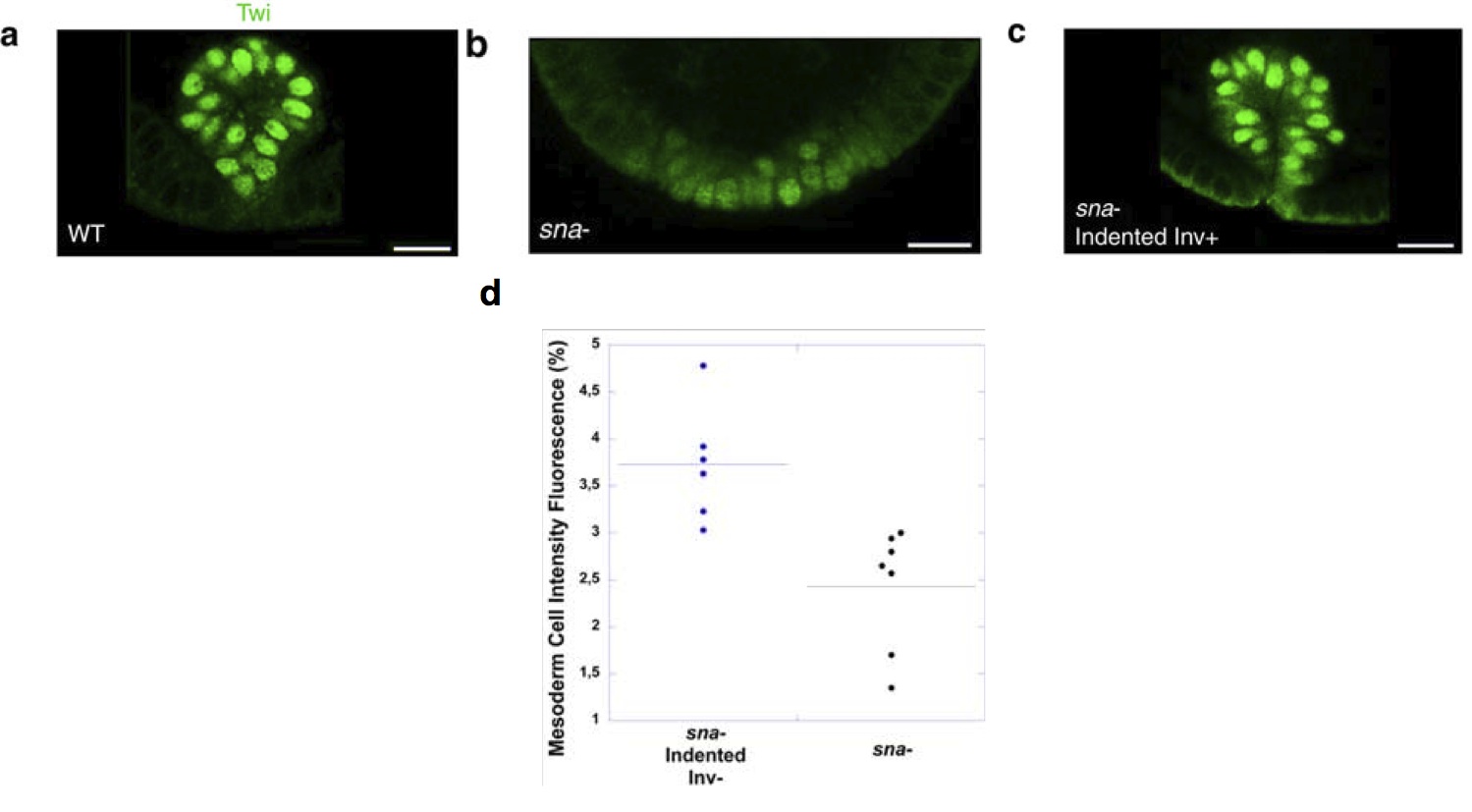
In Drosophila, the study was performed on snail-/- mutants. These mutants lack invagination of the ventral furrow, which gives rise to the bulk of the trunk mesoderm in the fly. Previous research had demonstrated that gently poking the ventral side of a drosophila snail mutant rescues invagination with 70% of success. In snail mutants lacking invagination, twist expression fades prematurely in the mesoderm (though it is correctly initiated at earlier stages). Rescuing invagination rescues a high level of twist expression in the ventral furrow. Strikingly, even in the 30% of cases when poking does not rescue invagination, a small increase of twist expression was observed in response to cell deformation. Altogether, these results indicated that the mechanical constraints linked to ventral furrow invagination maintain a high level of Twist expression in the drosophila mesoderm.
Twist immunostaining in the ventral furrow (future mesoderm) of Drosophila embryos. (a) is a wild-type individual, (b) a sna mutant with reduced Twist expression and (c) a sna mutant where invagination has been rescued by indentation. This also rescues high levels of Twist. (d) levels of Twist measured in sna mutants that were poked, but failed to respond by invaginating; the quantification shows that poking alone partially rescued Twist expression.
Mechanical induction of mesoderm identity in fish
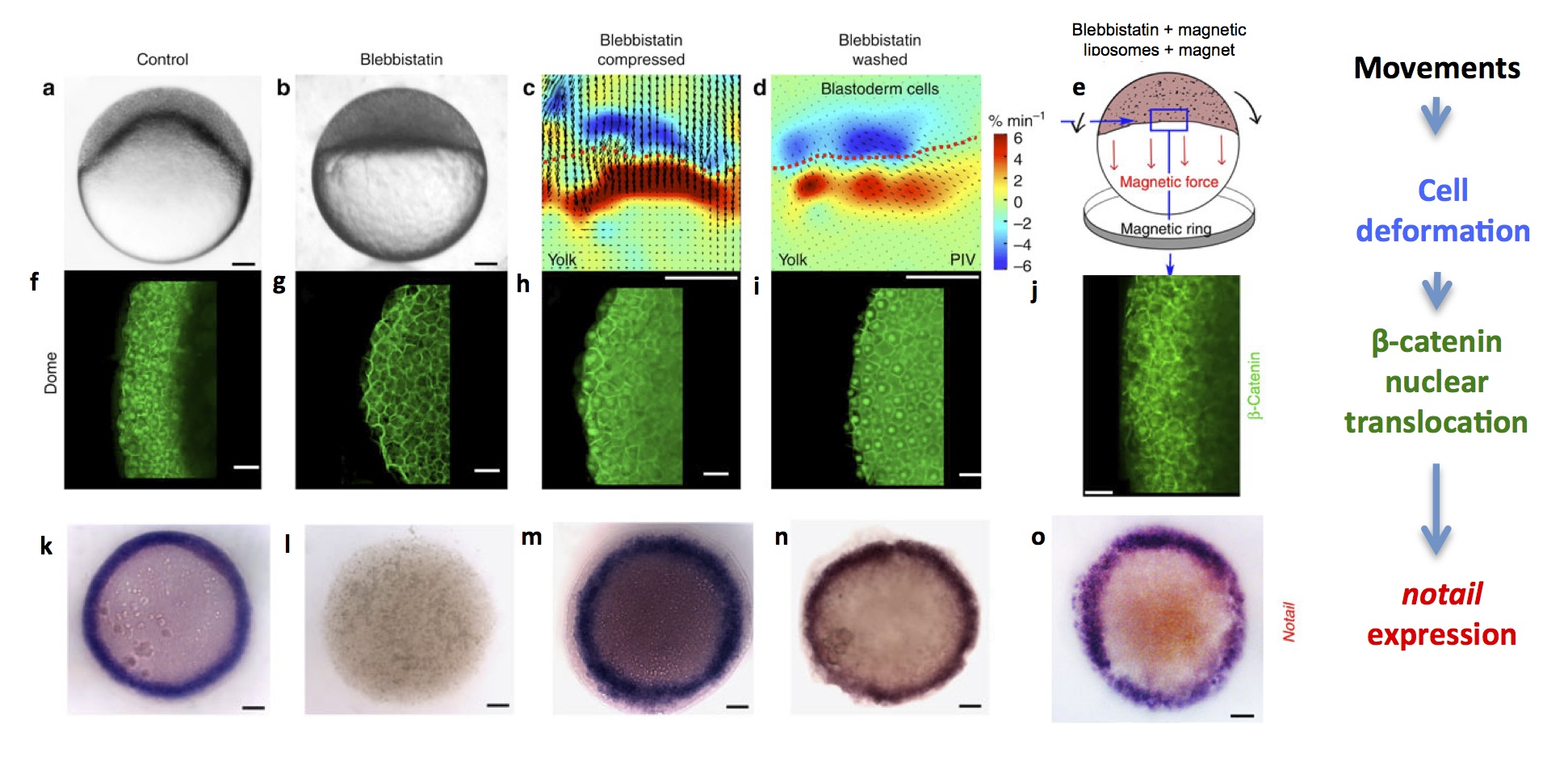
In zebrafish, the first morphogenetic movement that happens is epiboly: cleavage produces a small mass of cells on top of a ball of nutritive yolk. The first task of the cells is to enclose the yolk, and to achieve this, they start spreading over it and engulfing it. At the beginning of this spreading movement, the cells of the presumptive mesoderm – which form a marginal ring around the bottom of the mass of cells – undergo a specific deformation: they are stretched and dilated. Shortly after being deformed, these cells show nuclear translocation of β–catenin and, under the control of β–catenin transcription activity, start expressing notail, thus acquiring the first molecular signs of mesoderm identity. Could cell deformations due to the first gastrulation movements be required to induce this identity, as they are in drosophila? We demonstrated, by blocking gastrulation movements using specific inhibitors of non-muscle myosin II (blebbistatin) or microtubules (nocodazole), that deformation is indeed required for β–catenin to move into the nuclei and for notail expression to be initiated. Moreover, rescuing movements by artificial bulk compression of the embryo, by washing away blebbistatin, or by injecting magnetic particles in the embryos and using a magnetic ring to pull the marginal cells, resulted in a rescue of β–catenin nuclear translocation and notail expression.
Zebrafish embryos at the dome stage (beginning of gastrulation). (a) controls, (b) embryos with movements blocked by blebbistatin treatment, (c) PIV (Particle Image Velocimetry) quantification of cell deformations at the margin of artificially compressed blebbistatin-treated embryos (blue is dilation and red is compression), (d) PIV quantification of cell deformations after washing blebbistatin, which prompts resumal of wild-type movements and (e) schematic drawing of magnetically deformed embryos. (f-j) β–catenin immunostaining of embryos in each experimental condition, showing that cell movements are necessary and sufficient for nuclear β–catenin translocation in marginal cells. (k-o) brachyury in situ hybridization of embryos in each condition, showing that cell movements are necessary and sufficient for brachyury expression around the margin (future mesoderm).
An ancient function for mechanotransduction in mesoderm induction?
The drosophila/zebrafish comparison suggested one tempting conclusion: that mesodermal identity was under the control of mechanical signals already in the last common bilaterian ancestor, more than 570 million years ago, and that mechanical signals still induce mesoderm identity in the embryos of most, and maybe even all, bilaterian animals. Indeed, one strikingly recurrent theme in bilaterian development is the expression of brachyury along the blastopore – an observation that could be elegantly explained if brachyury were under the control of conserved mechanical strains.
If so, one might need to consider a revised status for embryonic geometry in developmental biology – not only as an output of gene expression, but as an integral part of the regulatory networks that control development. By doing so, we might get insights into how the evolution of embryonic shape and the evolution of differentiated cell identity (often considered as largely independent issues) actually constrain each other. We might also come closer to understanding why, in the individual development of every single animal of our planet, the dance of gastrulation needs to reenact, in an unbroken chain since our Precambrian ancestors, the way the first animals stopped looking like balls, and paved the way for the diversity of animal shapes we see today.
This Wellcome Trust-funded post-doc position is available to carry out computational modelling of coordination of planar polarity as part of an interdisciplinary team using Drosophila epithelial development as a model system. The Strutt lab (MRC Centre for Developmental and Biomedical Genetics, University of Sheffield) studies the planar polarity signalling pathways that control coordinated cell polarisation in animal tissues. In collaboration with Prof. Nick Monk (University of Sheffield) we are now seeking to combine our biological expertise with computational modelling approaches, to build an integrated understanding of coordinated cell polarisation.
The post-doc will be involved in developing quantitative models to understand the effects of integrating collective protein behaviour and different regulatory mechanisms in the coordination of cell polarity, and to devise and assist in the experimental testing of such models. The work will build on existing theoretical models for coordination of cell polarity and incorporate quantitative data producedthrough analysis of conventional and super-resolution images of developing tissues in both the wildtype state and following experimental manipulation.
Informal enquiries may be directed to David Strutt (d.strutt@sheffield.ac.uk) or Nick Monk (n.monk@sheffield.ac.uk). Formal applications should be made directly to the University of Sheffield (http://www.sheffield.ac.uk/jobs Job Ref: UOS007732) by no later than the 16th January 2014.
Recent relevant publications:
Brittle, Thomas & Strutt (2012) Planar Polarity Specification through Asymmetric Subcellular Localization of Fat and Dachsous. Curr Biol 22: 907-914
Strutt, Warrington & Strutt (2011) Dynamics of core planar polarity protein turnover and stable assembly into discrete membrane subdomains. Dev Cell 20: 511-525
Strutt & Strutt (2009) Asymmetric localisation of planar polarity proteins: Mechanisms and consequences. Semin Cell Dev Biol 20: 957-963
Fischer, Houston, Monk & Owen (2013) Is a persistent global bias necessary for the establishment of planar cell polarity? PLoS ONE 8: e60064
Schamberg, Houston, Monk & Owen (2010) Modelling and analysis of planar cell polarity. Bull. Math. Biol. 72: 645-980
The Royal Institution Christmas Lectures are an annual event where science is celebrated and young people are inspired. This year’s lectures celebrate the Life Fantastic, and will showcase the excitement, beauty and medical potential of developmental biology.
If you were brought up in the UK, the Royal Institution (RI) Christmas Lectures will have been almost as much part of Christmas as Christmas pudding or the Queen’s speech. This annual event started in 1825, instigated by Michael Faraday, and has been broadcasted on the BBC in the festive season since 1966. From the very beginning that the Christmas Lectures were aimed primarily at a young audience, something very rare in Victorian times. The lectures aim to dazzle and inspire young people in equal measure, and often include fantastic demonstrations. The list of speakers over the years is impressive: from Michael Faraday himself to Sir David Attenborough.
Following in the footsteps of such distinguished scientists, this year’s speaker is developmental biologist Dr Alison Woollard. The Woollard lab is based in the Biochemistry Department at the University of Oxford, and focuses on the molecular mechanisms of cell fate determination during C.elegans development. Her series of talks, entitled Life Fantastic, aims to excite and inspire young people, bringing developmental biology to a wider audience. In Alison’s own words: ‘I’m incredibly excited and proud to present this year’s Christmas Lectures. This is partly because my area of science, developmental biology, tends to be under-represented in the media and in science communication, but mainly because Life Fantastic is such an interesting story to share.’
Life Fantastic will be divided into three lectures. The first lecture will focus on how all organisms start as a single cell and develop into a complex beings. The second lecture will explore the concept of mutations, how small changes in the DNA can have evolutionary consequences, and how our knowledge of mutations can be important to understand disease. The final lecture focuses on ageing, and how developmental biology and genetics may potentially help us to live longer. True to the spirit of the Christmas Lectures we have been promised an action-packed series of lectures, where Alison’s model organism, C.elegans, will take central stage, and also featuring lobsters, mussels, Chihuahuas, goose and naked moles!
So if you ever wanted to explain to your family what developmental biology is and why it is important, or just want to see developmental biology presented in all its glory, why not watch this year’s Christmas Lectures? We are certainly in for a (Christmas) treat!
Watching in the UK:
The RI Christmas lectures will be broadcasted on BBC4 in the following days:
– Lecture 1: Where do we come from? – 28th December (8 p.m.)
– Lecture 2: Am I a mutant?- 29th December (8 p.m.)
– Lecture 3: Could I live forever?- 30th December (8 p.m.)
Watching outside the UK:
The RI Christmas Lectures will be available to stream on the RI website in early 2014.
Special Christmas Lectures I’m a scientist, get me out of here!:
The Royal Institution is collaborating with ‘I’m a scientist’ in a special I’m a scientist, get me out of here! RI Christmas Lectures Q&A with Alison and other developmental biologists. Question submission is now open, and answers will start being published with the broadcast of the first lecture. You can read more about this project here.
The RI advent calendar:
The RI is also running a science advent calendar this year, exploring all 23 chromosomes and mitochondrial DNA. These outreach videos explore different science concepts, including developmental biology, such as the movie below explaining the concept of stem cell. You can watch all the movies released so far here.
With the pre-festive season and the long winter darkness that accompanies it, it is appropriate to wonder how daylight/darkness cycles affect our biology. Regular daily variations such as daylight/darkness cycles are called circadian rhythms. For example, human skin needs to respond to harmful UV radiation generated by sunlight in a circadian manner. Amazingly, our cells have developed an inherent and self-sustained clock in order to adapt their behavior to these daily fluctuations.
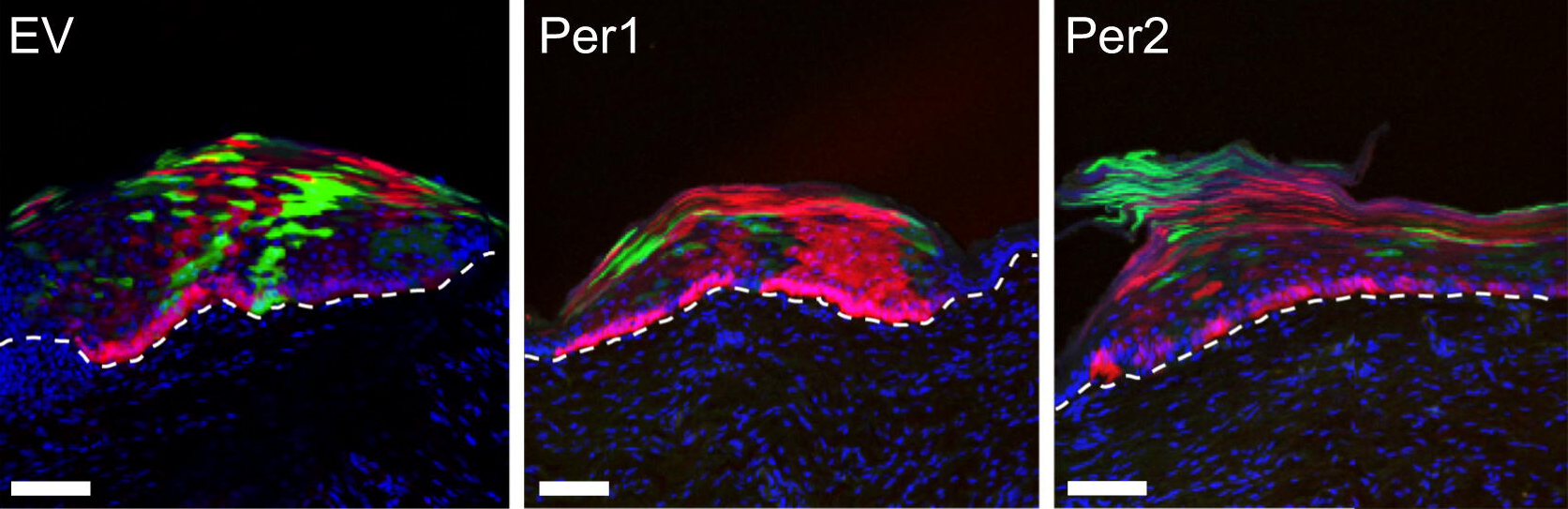
In a recent study published in Cell Stem Cell, Janich and colleagues tried to understand how circadian rhythms could modulate self-renewal and differentiation of human skin (epidermal) stem cells. Part of their approach consisted in using genetic engineering to increase and sustain the expression of the core clock genes Per1 and Per2, core clock genes being required for regulation of circadian rhythms in cells. They show that this over-expression of Per1 and Per2 results in spontaneous stem cell differentiation.
In this picture, one can observe skin that is obtained from the transplantation of a mixture of human skin stem cells (in red and in green, transplanted at 1:1 ratio in the 3 panels) into recipient mice. In all three panels, the red cells are “normal” cells. In the control left panel, the green cells are also “normal” (EV). One can see that the bottom (basal) layer, the one in which the stem cells reside, is composed of green and red cells. In the middle panel, the green cells have been engineered to over-express Per1. In the right panel, the green cells over-express Per2. In contrast to the left panel, the green cells that over-express Per1 or Per2 are found in the upper skin layers (differentiated cells) and not in the basal layer containing the stem cells. From this observation, the authors conclude that over-expression of the core clock genes Per1 or Per2 triggers epidermal stem cell differentiation.
This example shows that circadian rhythms play important roles in stem cell decisions. Interestingly, it has also been shown in another study that strong disturbance of circadian rhythms can lead to premature ageing. So while you enjoy your Christmas holidays, make sure you get your beauty sleep, your stem cells need it!
Janich, P., Toufighi, K., Solanas, G., Luis, N. M., Minkwitz, S., Serrano, L., Lehner, B. and Benitah, S. A. (2013) ‘Human epidermal stem cell function is regulated by circadian oscillations’, Cell Stem Cell 13(6): 745-53.
DNA extraction from fruit is an easy experiment that makes a great demonstration for kids’ science fairs. I ran a DNA extraction stall at Oxford’s Wow!How? family science fair a few years back. Unfortunately I didn’t take any photos at the time but I had a lot of fun this weekend recreating the experiment in my kitchen!
The experiment is hands on and messy, which kids tend to love, and there’s plenty of opportunity to explain why DNA is important in telling the cells in our body what to do. You could even go into more detail and explain some of the concepts of genetics to older children.
During a busy science fair there might not be time to wait 20 minutes for the extraction solution to work. To avoid having to wait you could set up stations for each of the steps below and every half an hour or so prepare a handful of fruit/extraction buffer solutions and also some alcohol/purified DNA mixtures.
Click here for a downloadable instruction sheet that can be printed off for children/parents to take home.
Here’s what to do:
1) Prepare your equipment
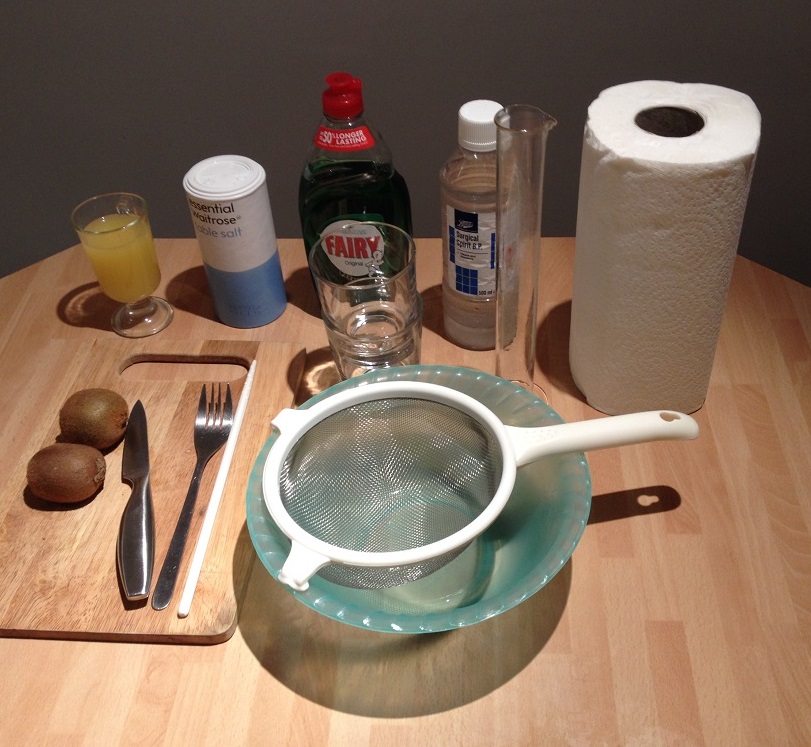
You will need:
– Two kiwis
– Pineapple juice
– Table salt
– Washing up liquid
– Cold alcohol – put in the freezer before you start the experiment (I used surgical spirit but strong rum also works well)
– Two small glass beakers (or plastic cups)
– Sieve
– Bowl
– Tall glass/measuring cylinder
– Kitchen Roll
– Stirring rod (or chopstick)
– Knife
– Fork
– Chopping board
2) Make the extraction solution
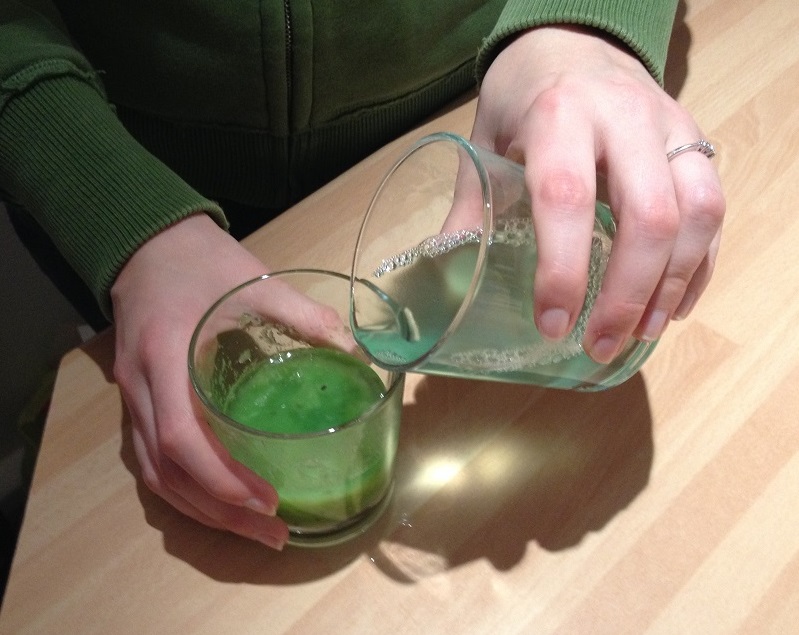
The DNA is tightly packaged inside the nucleus of cells. The membranes of the cell and of the nucleus are rich in fats so we can break them down using a detergent. The salt helps to get rid of the proteins that package the DNA tightly inside the nucleus.
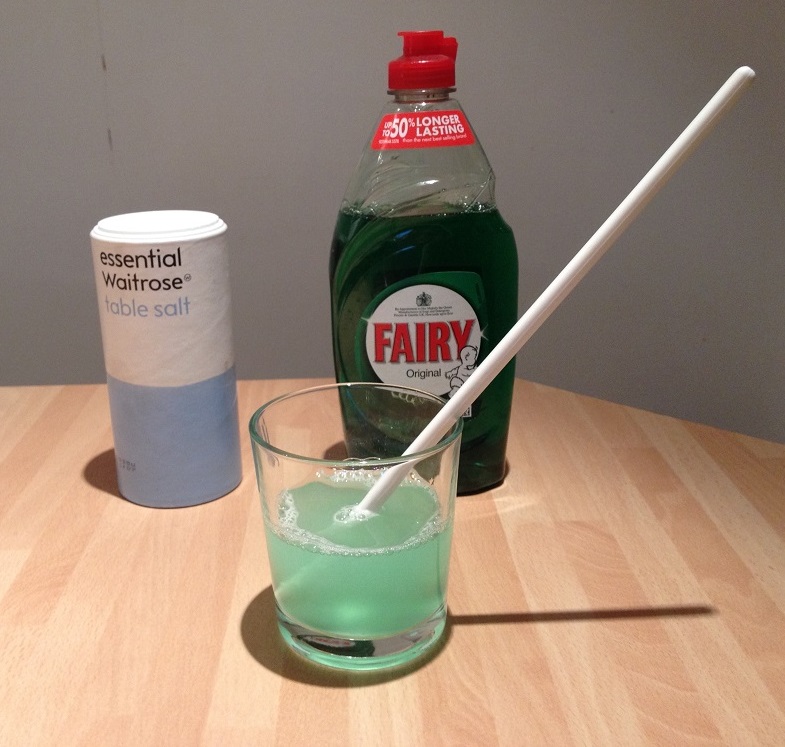
– In one of your beakers measure out about 80mls water
– Add half a teaspoon of salt and stir until dissolved
– Add two teaspoons of washing up liquid and stir gently avoiding making too many bubbles
3) Prepare your fruit mush
DNA can be extracted from anything living. You could also try this experiment with strawberries or bananas. Make sure you remove the fruit skins as they are mostly dead and don’t contain DNA. The kiwi needs to be broken up so the extraction solution can get to the cells.
– Peel your kiwis and chop into small pieces
– Add the chopped up kiwi to the second small beaker and use the fork to mush it up
4) Add the extraction solution to the fruit mush
In this step the detergent breaks down the cell membranes so the DNA can be released. The salt removes proteins that are bound to the DNA.
– Add your extraction solution to the kiwi mush
– Leave at room temperature for about 20 minutes
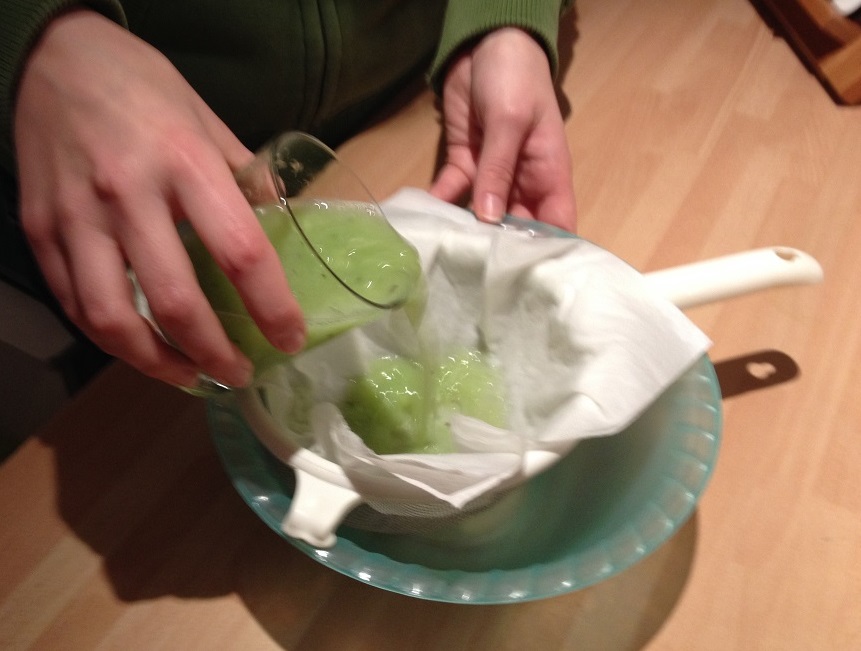
5) Filter the solution
This gets rid of the fruit pulp and seeds and should leave a pure solution of DNA
– Put your sieve over a clean bowl and line the sieve with a few sheets of damp kitchen roll
– Pour your green mush into the sieve carefully, being careful not to break the kitchen roll
– Use a fork to gently push the mixture through the sieve.
– The pulp and seeds should be left in the sieve and there should be a greenish liquid in the bowl. Transfer this to a tall glass or measuring cylinder.
6) Purifying the DNA
If you want an even purer solution of DNA then we need to remove proteins that are bound to the DNA. Pineapple juice contains an enzyme that breaks down proteins. If you haven’t got any pineapple juice then contact lens cleaning solution can also be used.
– Add pineapple juice to the green liquid. You will need about 1ml of pineapple juice to 5mls of the green DNA solution.
– Leave at room temperature for about 5 minutes
7) Precipitating the DNA
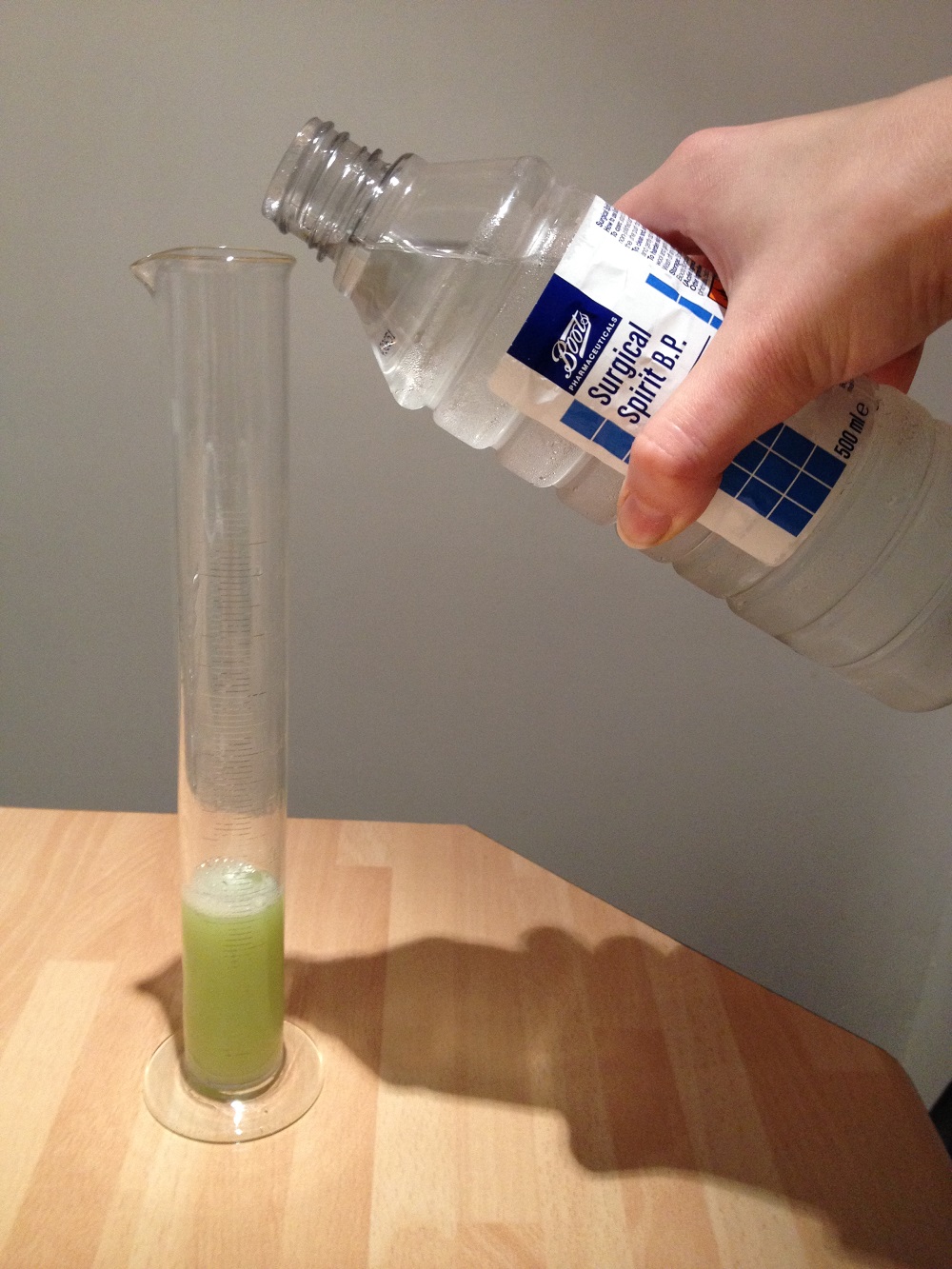
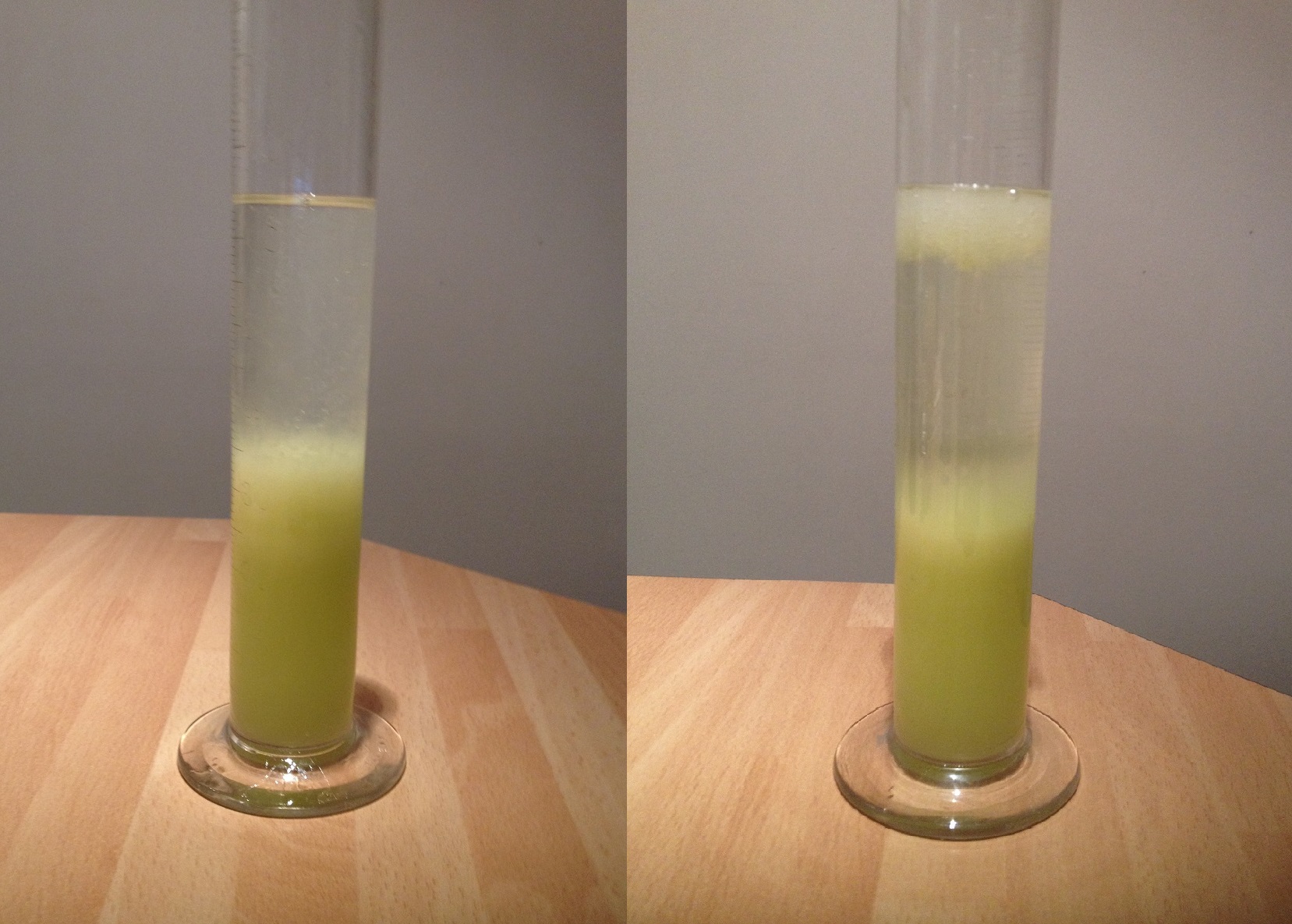
DNA dissolves in water so will not be visible. However, it does not dissolve in alcohol so if we add surgical spirit then the DNA will collect as a white mass at the top of the tube.
– Remove the alcohol from the freezer
– Carefully pour the alcohol down the side of the glass
– You need about equal volumes of DNA solution to alcohol
8) Visualise the DNA sample
After about 10 minutes you should be able to see a mass of white stringy stuff at the top of the tube (see right hand photo). This is the kiwi DNA! You can fish this out using the chopstick and place it onto a piece of card to take home.
Sources
This protocol is adapted from the following sources:


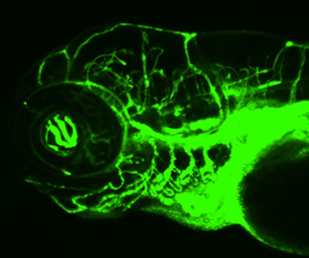 On p.
On p. 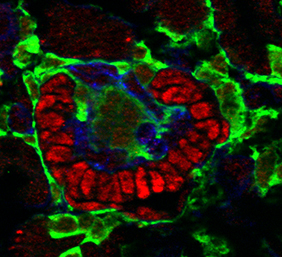 The role of Notch signalling in pericyte development is also investigated by Raphael Kopan and colleagues (p.
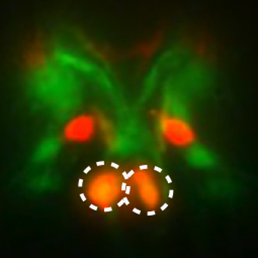 Neuronal subtype specification is regulated by the coordinated action of transcription factors. Any one factor may be expressed in multiple subtypes, but specification is achieved based on the precise combination of factors and is therefore context dependent. In this issue (p.
 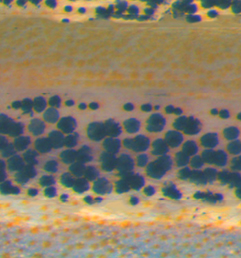 The striped pattern of the zebrafish skin offers an excellent model system in which to study biological pattern formation. Previous studies have shown that the interactions between melanophores and xanthophores are crucial for pattern formation, but little is known regarding the molecular mechanisms that regulate this phenomenon. Now, on p.
 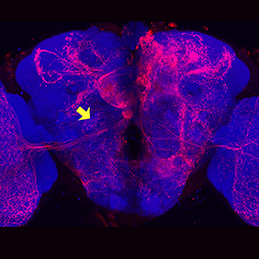 Neuronal diversity in Drosophila is generated by the temporal specification of type II neuroblasts (NBs) and their progeny, the intermediate neural progenitors (INPs). Multiple transcription factors are expressed in a birth order-dependent manner within each INP lineage, but whether this temporal patterning gives rise to discrete neuronal sets from each individual INP cell is unclear. Now, on p.
 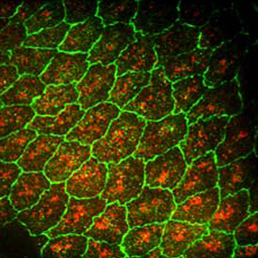 Dorsal closure is a morphogenic process that involves the interplay of mechanical forces as two opposing epithelial sheets come together and fuse. These forces impact cell shape and the rate of morphogenesis, but the molecular pathways that translate mechanical force into phenotype are not well understood. Now, on p.
 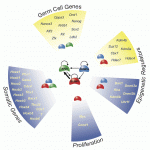 Primordial germ cells (PGCs) are the precursors of sperm and eggs, which generate a new organism that is capable of creating endless new generations through germ cells. Here, Magnúsdóttir and Surani summarise the fundamental principles of PGC specification during early development and discuss how it is now possible to make mouse PGCs from pluripotent embryonic stem cells, and indeed somatic cells if they are first rendered pluripotent in culture. See the Primer on p.
 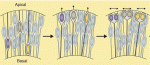 In their Development at a Glance article, Centanin and Wittbrodt provide an overview of retinal neurogenesis in vertebrates and discuss implications of the developmental mechanisms involved for regenerative therapy approaches. See the poster article on p.