

Book review: An introduction to mathematical biology
Posted by Development Book Reviews, on 15 December 2011
This book review originally appeared in Development. Lance Davidson reviews “Mathematical Models of Biological Systems” (by Hugo van den Berg).
Book info:
Mathematical Models of Biological Systems By Hugo van den Berg Oxford University Press (2010) 256 pages ISBN 978-0-19-958218-1 (paperback), 978-0-19-958219-8 (hardback) £27.50/$49.50 (paperback), £65/$117 (hardback)
 One of the key goals of modern cell and developmental biology is to expose the underlying principles that drive cell differentiation and to elucidate how organisms construct functional multicellular structures. Thanks to advances in sequencing, high throughput screens and sophisticated imaging technologies, these fields are now awash with quantitative descriptions of gene transcription, cell signaling and cell mechanics. However, extracting key principles from the flood of new data is a major challenge for researchers and a central obstacle to fundamental progress in cell and developmental biology. The tools required to interpret this vast amount of biological data and to test hypotheses based on these studies can be found in quantitative analysis and mathematical modeling. With the book Mathematical Models of Biological Systems, Hugo van den Berg aims to contribute to the training of a new generation of biologists and mathematicians and to provide them with an introduction to the methods that are now available to quantitatively analyze biological data.
Like many quantitative biologists, my first exposure to mathematical modeling was not in the context of cell biology or developmental biology, but came through examples from physical chemistry, physiology and population ecology. In these fields, simple problems can be formulated using ordinary differential equations (ODEs) with complete statements of the state variables, such as initial conditions. As students, we learned to write ‘word-models’ and to translate these into sets of ODEs. Word models are narrative passages intended to translate the details of a biological problem such that biologists and mathematicians alike can understand the problem in a way that allows equations to be written which capture those details. For instance, we can distil the interactions between predators and prey by stating the rules that govern their populations. Rules that govern the population of prey might include sources of population growth, such as birth or migration, and losses to the population due to predation or disease. The precise statement of these rules should be complete enough to govern the mathematical formulation of the model. Given a well-defined word model, the mathematical biologist can then write a series of ODEs; for example, with variables that represent the number of predators and prey and equations to describe how populations of predators and prey change. As students, we sometimes discovered that there were closed form solutions of these ODEs, in which changes in variables can be predicted explicitly by equations. But more often we found that we could only evaluate the general dynamic behavior of the variables; for instance, whether populations of predators and prey are stable or not. The insights and training that these model-building exercises gave us were instrumental in becoming fluent in the basic skills of mathematical modeling. The processes of formulating a model and relating fundamental principles to the mathematics and experimental outcomes were often more informative than the solution itself. However, after marveling at the awesome power of ODEs, we soon realized that the solution of some, or indeed most sets of, ODEs was intractable, that there was no way to capture relevant details of complex biology with continuous variables, or that model predictions could not be tested experimentally. As such, the tool kit of ODEs used to learn the skills of mathematical modeling is less useful for developing the quantitative models that are needed to describe problems in cell and developmental biology.
 (1 votes)
 Loading...
 Dates for your calendar
 (No Ratings Yet)
 Following the discovery of the structure of DNA and during the early days of molecular biology, RNA was considered to be a less interesting cellular component to study than DNA. This was primarily because RNA was thought to be simply a molecular photocopy of the genetic blue print stored in DNA. But how things have changed! Since those early days, our understanding of the cellular roles of RNA has changed radically. RNA is now considered to be of central importance to both molecular biology and cellular function. Far from only containing genetic information, RNA is now regarded to have credible catalytic properties through the availability of its 2′-OH, a reactive group that replaces a non-reactive ‘O’ atom in DNA. Moreover, its catalytic roles include key functions in the most important molecular machines of the cell, such as the spliceosome and ribosome. In hindsight, it would perhaps not be so surprising if the RNA world hypothesis turned out to be correct. This hypothesis states that the first life forms on our planet were RNA-based simple cells in the pre-biotic soup. RNA is certainly a better candidate than either DNA or proteins for a self-replicating molecule that acts both as a template for, and that has the necessary catalytic machinery to perform, its own replication. Moreover, the discovery that most mRNAs are spliced, and the gradual uncovering of a breathtaking number of ways in which gene expression is regulated post-transcriptionally, have meant that the field of RNA has undergone rapid growth in the past few decades. This rapid growth has recently increased even further because of the discovery of RNA interference (RNAi), as well as the discovery that small RNAs, distinct from tRNA and snRNA, undergo processing to fulfil a range of cellular functions. These include the regulation of transposable element transposition by piRNAs, regulation of translation by microRNAs and still poorly explored large non-coding RNAs (ncRNA). Many of these ncRNAs have turned out to have important roles in development and during disease processes, such as cancer. Therefore, it is clear that all aspects of RNA molecular biology have now become central to our understanding of cell and developmental biology.

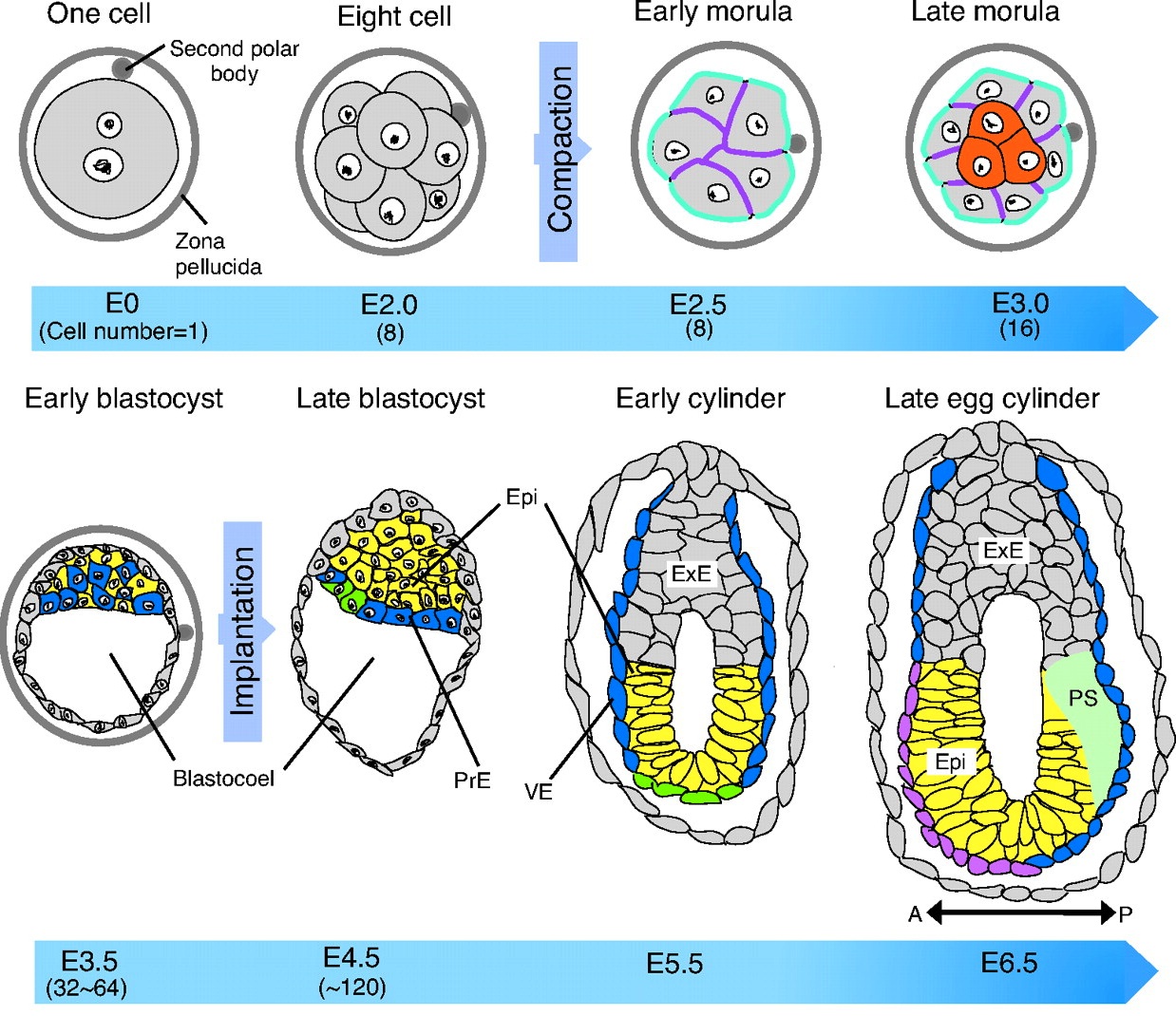

 What is to be taught in an undergraduate course on developmental biology? As in all branches of biology, there is far too much known to be able to teach it all, and any introductory course would sacrifice depth. Inevitably, choices must be made, and one choice is to emphasize important principles and concepts of development across all organisms. Lewis Wolpert and Cheryll Tickle, with a cast of impressive supporting authors, have made excellent selections in Principles of Development. This is the fourth edition of the book and the thoughtful choice of topics that went into the first edition is still evident, although there have also been many useful updates.
 (8 votes)