Many internal organs fill and empty periodically while carrying out their normal physiological function. Associated peripheral neurons act as specialised mechanoreceptors to detect changes in organ volume, and relay this information to the brain, where it is processed, and used to evoke appropriate physiological and behavioural response(s). For example, during a meal the stomach expands to accommodate ingested food, triggering neural circuits to inhibit feeding behaviour, promote digestion, and evoke feelings of satiety, fullness, nausea or pain, depending on the size of the meal. Despite being central to normal physiological function many basic questions remain about the mechanisms of organ volume sensing.
In this project you will explore how mechanisms of gut volume sensing control physiology and life cycle in a classic insect model—the blood-sucking bug Rhodnius prolixus. You will use state-of-the-art techniques in genomics, imaging, genetic manipulation, and gene/protein expression analysis to identify the molecular and cellular mechanisms of mechanotransduction in the Rhodnius gut and define the relevant neural circuits that act to control profound changes in this creature’s physiology and development in response to feeding.
This project is a curiosity-driven exploration into a fundamental question relating to how animals sense and respond to their internal world. The molecular mechanisms of organ volume sensing are not well understood for any animal, including humans, but are likely to be conserved. Therefore, the project is likely to provide insight into physiological processes that are key for maintaining health in humans, illuminating areas relating to appetite, overeating and disorders connected to visceral pain.
Specific details about the project:Rhodnius prolixus is a blood-sucking bug of immoderate feeding habits. It can take from its host a volume of blood sufficient to increase its own weight by about tenfold. The food-swollen gut distends the abdomen and sets in train a series of endocrinological processes that culminate in profound changes to the physiology and life cycle of the animal. These include (i) a rapid diuretic response, enabling the animal to jettison excess salts and water, returning the animal to a more comfortable state, and (ii) stimulation of body growth and maturation that precede the transition to the next life phase (an older nymph or metamorphosis to adult form).
A major goal of the current project is to determine how abdominal distension is sensed and transduced to the brain to elicit such dramatic changes.
For more details please contact: Barry.Denholm@ed.ac.uk
Completed application form along with your supporting documents should be sent to our PGR student team at sbms-postgraduate@ed.ac.uk by 16 December 2021. References: Please send the reference request form to two referees. Completed references for this project should also be returned to sbms-postgraduate@ed.ac.uk by the closing date: 16 December 2021.
It is your responsibility to ensure that references are provided by the specified deadline.
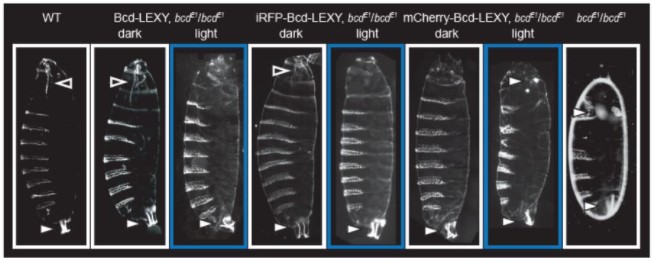
Promoter repression and 3D-restructuring resolves divergent developmental gene expression in TADs Alessa R. Ringel, Quentin Szabo, Andrea M. Chiariello, Konrad Chudzik, Robert Schöpflin, Patricia Rothe, Alexandra L. Mattei, Tobias Zehnder, Dermot Harnett, Verena Laupert, Simona Bianco, Sara Hetzel, Mai Phan, Magdalena Schindler, Daniel Ibrahim, Christina Paliou, Andrea Esposito, Cesar A. Prada-Medina, Stefan Haas, Peter Giere, Martin Vingron, Lars Wittler, Alexander Meissner, Mario Nicodemi, Giacomo Cavalli, Frédéric Bantignies, Stefan Mundlos, Michael I. Robson
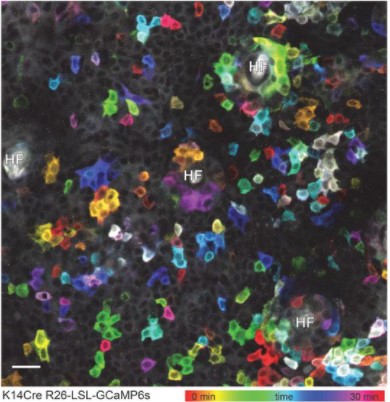
The p53-p21 axis plays a central role in lymphatic homeostasis and disease Rohan Mylavarapu, Molly R. Kulikauskas, Cathrin Dierkes, Nema Sobhani, Michelle Mangette, Jeffrey Finlon, Wanida Stevens, Farinaz Arbab, Neil F. Box, Mark Lovell, Ajit Muley, Carrie J. Shawber, Beth Tamburini, Friedemann Kiefer, Tamara Terzian
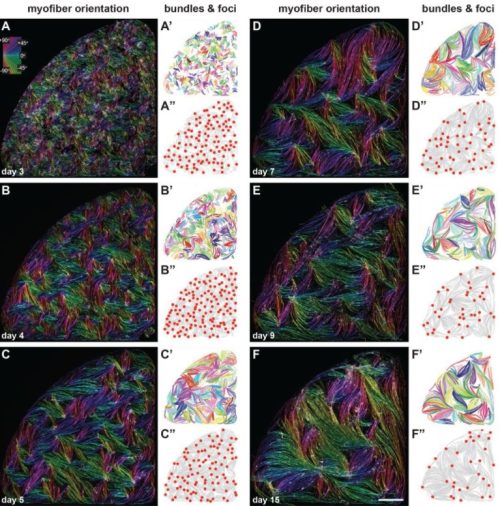
A kinase-dead Csf1r mutation associated with adult-onset leukoencephalopathy has a dominant-negative impact on CSF1R signaling Jennifer Stables, Emma K. Green, Anuj Sehgal, Omkar Patkar, Sahar Keshvari, Isis Taylor, Maisie E. Ashcroft, Kathleen Grabert, Evi Wollscheid-Lengeling, Stefan Szymkowiak, Barry W. McColl, Antony Adamson, Neil E. Humphreys, Werner Mueller, Hana Starobova, Irina Vetter, Sepideh Kiani Shabestari, Matthew M. Blurton-Jones, Kim M. Summers, Katharine M. Irvine, Clare Pridans, David A. Hume
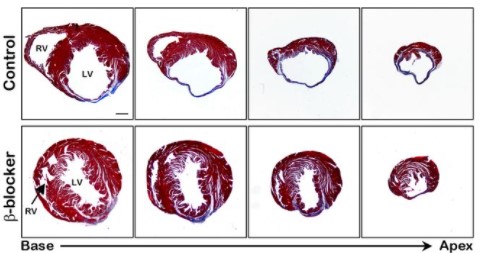
ACTN2 missense variant causes proteopathy in human iPSC-derived cardiomyocytes Antonia T. L. Zech, Maksymilian Prondzynski, Sonia R. Singh, Ellen Orthey, Erda Alizoti, Josefine Busch, Alexandra Madsen, Charlotta S. Behrens, Giulia Mearini, Marc D. Lemoine, Elisabeth Krämer, Diogo Mosqueira, Sanamjeet Virdi, Daniela Indenbirken, Maren Depke, Manuela Gesell Salazar, Uwe Völker, Ingke Braren, William T. Pu, Thomas Eschenhagen, Elke Hammer, Saskia Schlossarek, Lucie Carrier
In the latest episode of Genetics Unzipped, presenter Kat Arney is getting in harmony with the science of music. Is there a music gene? Does musical talent really run in families? And how does the inability to perceive music impact on daily life?
Music is a deeply human characteristic – whether it’s clapping, tapping, singing or playing, most of us love to listen – and maybe move – to good tune or a funky beat, and there are plenty of music makers in the world, from schoolkids playing the recorder or making beats on a laptop to virtuoso concert pianist and global pop stars. But where does our musical urge come from? And is it in our genes?
Kat chats with Reyna Gordon. associate professor and director of the Music Cognition Lab in the Department of Otolaryngology and the Genetics Institute at Vanderbilt university in Tennessee. She’s the recipient of a prestigious NIH Director’s New Innovator Award for her work looking at the underlying biology of why rhythm means so much to us.
Our second guest is Jasmin Pfeifer, from Heinrich-Heine University in Dusseldorf, Germany. A linguist by training, Jasmin has found herself involved in the world of genetics through her studies of a condition called congenital amusia, or hereditary tone-deafness.
If you enjoy the show, please do rate and review on Apple podcasts and help to spread the word on social media. And you can always send feedback and suggestions for future episodes and guests to podcast@geneticsunzipped.com Follow us on Twitter – @geneticsunzip
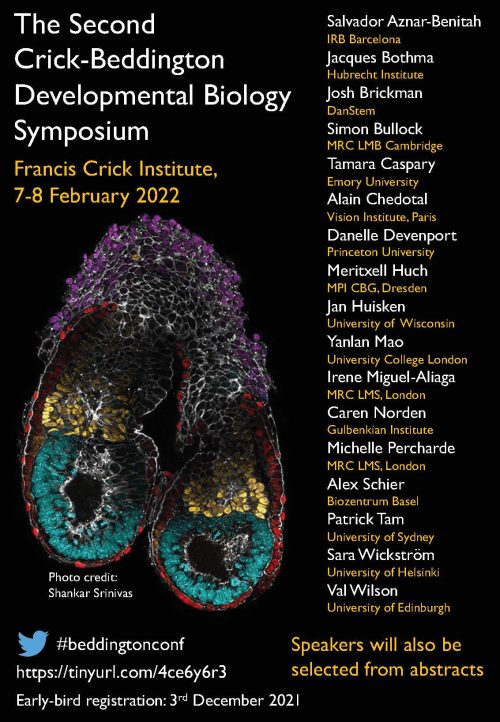
This meeting will showcase state-of-the-art developmental biology across the lifecourse. The multidisciplinary programme will highlight the latest innovations in live imaging of developing systems, organoid approaches to unravel developmental mechanisms, and the mathematical modelling of morphogenesis and organ homeostasis. Featuring 17 internationally renowned plenary speakers, alongside short and flash talks selected from the submitted abstracts of early career researchers.
Discounted early-bird registration until 3rd December
Abstract submission deadline: 16th December
Registration, abstract submission and speaker biogs here:
The programme offers generous four-year DPhil studentships which cover full fees, pay a tax-free, enhanced stipend of ~£17,609 pa, and provide £5,300 pa for research and travel costs.
Student on this programme start research on their main projects immediately and so they have a full four years to work on their research project. If their work is delayed by the pandemic students will be given a fully funded extension.
Individuals of all nationalities are welcome to apply.
Applications for entry in October 2022 must be submitted before 12 noon, 3rd December 2021.
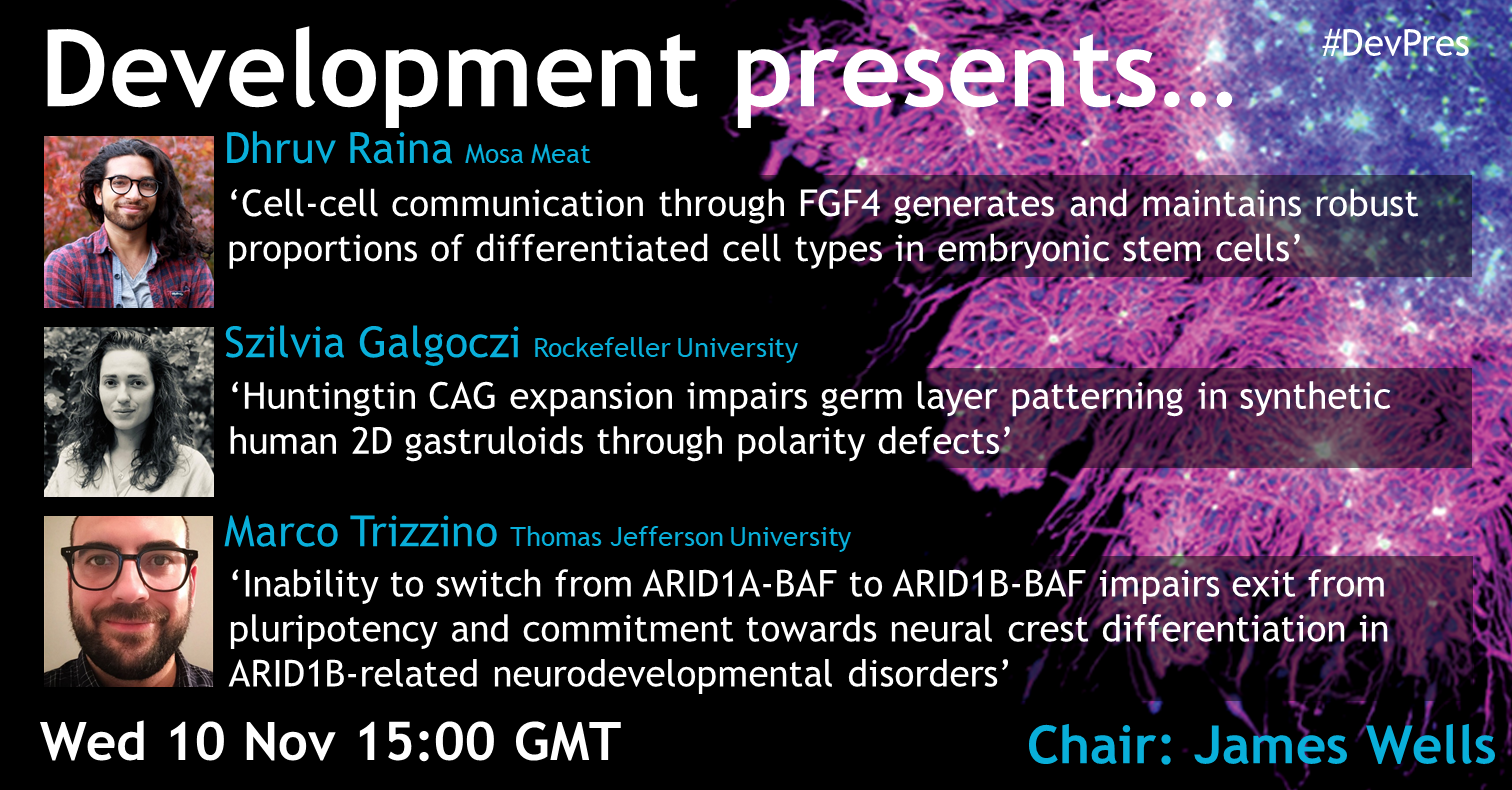
Dhruv Raina (Senior Scientist, Mosa Meat, previously a PhD Student in Christian Schröter‘s lab at the Max Planck Institute for Molecular Physiology) ‘Cell-cell communication through FGF4 generates and maintains robust proportions of differentiated cell types in embryonic stem cells’
Szilvia Galgoczi (Research Specialist/Visiting PhD student in Ali Brivanlou‘s lab at Rockefeller University) ‘Huntingtin CAG expansion impairs germ layer patterning in synthetic human 2D gastruloids through polarity defects’
Marco Trizzino (Assistant Professor at Thomas Jefferson University) ‘Inability to switch from ARID1A-BAF to ARID1B-BAF impairs exit from pluripotency and commitment towards neural crest differentiation in ARID1B-related neurodevelopmental disorders’
The webinar will be held in Remo, our browser-based conferencing platform. After the talks you’ll have the chance to meet the speakers and other participants at virtual conference tables. If you can’t make it on the day, talks will be available to watch after the event on the Node. You can also sign up to our mailing list for email alerts.
The current NIH director, Francis Collins, is retiring at end of the year. He urged that a woman should succeed him, but what would your list of eligibility requirement be? Is a medical degree an essential? The ability to address the inbuilt inequity in science?
Articles in Science and Nature address these and many other issues with the appointment.
You are not alone. Even Nobel laureates fail to get all grants funded
I received another disappointing un-fundable score for my @NIH grant today. I am privileged, and I realize no-one wants to hear me complain. Just sharing to make the point that everyone experiences this kind of feedback, and that it never stops from stinging! 1/3
American Association for Antomy scholar program and the story behind it.
I am so proud of the American Association for Anatomy for supporting this program. This is a great example of "putting your money where your mouth is". https://t.co/h7tFlmdPPG
So, I am breaking tradition and I'll tell you a little bit about how the idea for the ASP program came to be. I hope it will help explain why I think it will be a game changer.
Thanks to the #DevBio community for sharing their thoughts, especially on twitter. If you have some news that you think we should share on our blog, please get in touch at thenode@biologists.com. If you are interested in getting involved with writing preLights you can find out more here.
Register yourinterest by October 31st 2021 for the Edinburgh Gallus Genome and Embryonic Development (EGGED) Workshop in 2022. EGGED 2022 will run on the 12-15th of July 2022 at The Roslin Institute and R(D)SVS, Easter Bush Campus, The University of Edinburgh. Full registration will open in due course and spaces will be limited due to the nature of the workshop.
The EGGED 2022 Workshop will provide hands-on training for developmental biologists that use or would like to use the chicken embryo in their research. Instruction will include fundamental techniques, ex ovo culture, and imaging to advances in transgenics, gene editing, and genomics and using the chicken embryo to teach developmental biology. This practical workshop is open to researchers with a range of experience; from students and early career researchers to group leaders and principal investigators. The workshop will also provide an opportunity for scientists to share, learn and develop embryological techniques that use chicken embryos.
The UKRI-BBSRC funded Roslin Institute and the National Avian Research Facility (NARF) have developed globally unique chicken resources, including a range of transgenic fluorescent reporter chicken lines. EGGED will bring together the world’s embryology experts to share their skills and showcase these exceptional resources. To date, speakers for EGGED 2022 include; Prof Marian Ros, Prof Claudio Stern, Prof Tatjana Sauka-Spengler, Prof Neil Vargesson, Dr Raman Das, Dr Hervé Acloque, Dr Ben Steventon, Dr Jérôme Gros, Dr Mike McGrew, Dr Jacqueline Smith, Dr Joe Rainger, Dr Adam Balic, and Dr Denis Headon.
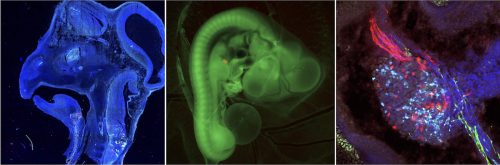
From left to right; 1) Whole head cross-section (x10) of a Chameleon transgenic chicken embryo, with cells either labelled in blue, red, green or cyan. 2) GFP chicken embryo with a ‘red’ graft placed into the limb bud with micro-surgery. The graft is about 50-100uM. 3) Dorsal Root Ganglion of the nervous system of a Chameleon transgenic chicken embryo. Nerves going into the dorsal root ganglion are red, and nerves coming out are green.
A Royal Society of Edinburgh Saltire Facilitation Network Award has been awarded to The Roslin Institute, R(D)SVS and the NARF, both based at The University of Edinburgh Easter Bush Campus, to hold these practical workshops in both 2022 and 2023. EGGED is also supported by The Company of Biologists, including support towards making the meeting sustainable.
We also aim to document the specialist skills demonstrated at the EGGED workshops and make them available online as an important developmental biology community resource.
EGGED is held in memory of Dr Donald Ede, a graduate of the University of Edinburgh, a talented chicken embryologist and member of the RSE, who passed away in 2018.
Event organisers are Dr Megan G Davey (The Roslin Institute, R(D)SVS) and Dr Lindsay Henderson (The Roslin Institute, NARF). Read more on the EGGED website and register your interest here.
In the latest episode of Genetics Unzipped, presenter Kat Arney is squelching through the Californian mud, swimming with platypuses, bearing witness to daylight robbery and even finding time to catch an episode of Star Trek as she looks back on some of the most mind-blowing stories from the world of genetics in 2021.
We meet the Borgs – huge genetic elements in archaea that can assimilate genes from their neighbours – and discover how whitefly pulled off a genetic theft that enabled them to become one of the world’s most destructive agricultural pests.
We hear how researchers are developing mirror-image DNA polymerases that can make mirror-image DNA – perfect for long-term, stable data storage. Then there’s the strange discovery that hundreds of viruses use a DNA base called 2-aminoadenine, known as Z, instead of the usual adenine (A), with big implications for our understanding of the genetic code as we know it.
And finally, we take a dive into the duck-billed platypus genome, to discover what these mysterious monotremes can teach us about mammalian evolution.
If you enjoy the show, please do rate and review on Apple podcasts and help to spread the word on social media. And you can always send feedback and suggestions for future episodes and guests to podcast@geneticsunzipped.com Follow us on Twitter – @geneticsunzip
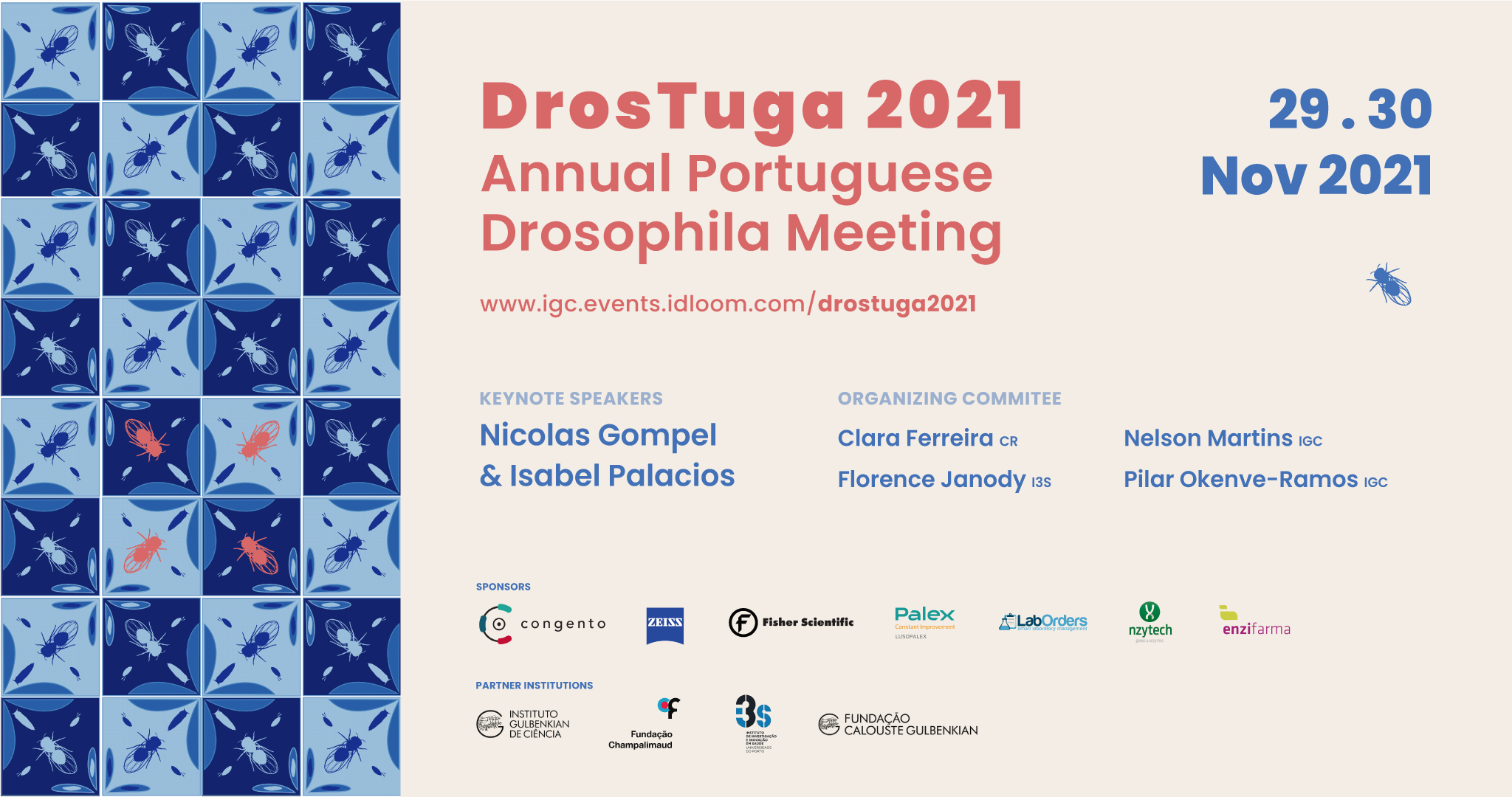
The 8th Edition of the Annual Portuguese Drosophila Meeting (#DrosTuga2021), aims at bringing together national and international members of the Portuguese Drosophila community. Along with them, Portuguese Drosophila scientists abroad and any participant from other country interested in Drosophila and developmental research are invited. https://igc.idloom.events/drostuga2021
–
The purpose of this Drosophilameeting is to promote open sharing of data and ideas, as well as to provide arich forum for discussion of new research findings and conceptual breakthroughs in an informal environment.
–
Due to the ongoing uncertainty caused by the COVID-19 pandemic, this edition will be held entirely ONLINEon the afternoons of the 29th and 30th of November 2021.
The event will include selected short and long talks presented at the Plenary Sessions via Zoom. Thanks to our sponsors, the best talks and posters will receive a prize. In addition to the presentations, there will be time for discussion and mixing between researchers at all career stages during the two interactive Poster Sessions (held in the Hopin platform). You can take a look at the programme for more details.
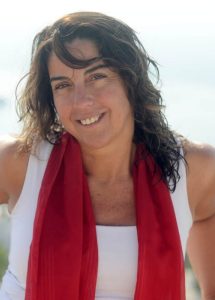
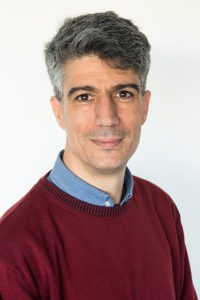
In this DrosTuga 2021 edition, we will have the pleasure of listening to two great Keynote Speakers. Their exciting work spans a broad range of topics of interest to our community: Isabel Palacios and Nicolas Gompel. Besides our speakers research, we will have the opportunity of talking about outreach and the importance of Drosophila studies in science.
Attendance is FREE, but registration is compulsory.
NEW Abstract submission deadline for posters only: 7th November 2021 (23:59h GMT+1). Click here to submit your abstract. The deadline for short and long talks is now closed (24th October 2021).
Registration deadline: 24th November 2021 (23:59h GMT+1). Click here for registration.


 (No Ratings Yet)
 Loading...