The community site for and by
developmental and stem cell biologists

Researchers grow ‘seed’ of spinal cord tissue in a dish

Posted by , on 3 September 2014

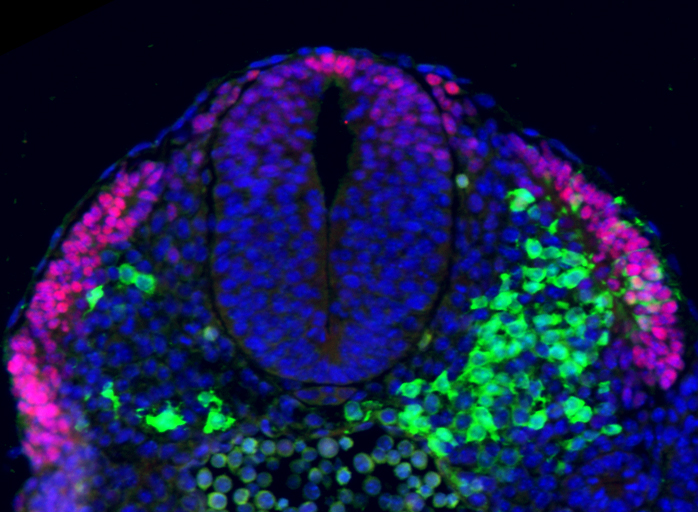
Neuromesodermal progenitors (green) generated in a culture dish form normal precursors of muscle (pink)

Medical Research Council (MRC) scientists have for the first time managed to turn stem cells into the specialised cells that go on to form spinal cord, muscle and bone tissue in the growing embryo. Their discovery could lead to a new way of studying degenerative conditions such as spinal muscular atrophy, which affects the nerve cells in the spinal column, and may pave the way for future treatments for this and other neuromuscular conditions.

During normal embryo development the spinal cord, muscle and skeleton all form from a group of cells called NMPs (neuro-mesodermal progenitors). This process is driven by a series of carefully timed chemical signals, which instruct NMPs to turn into the different cell types in the growing embryo.


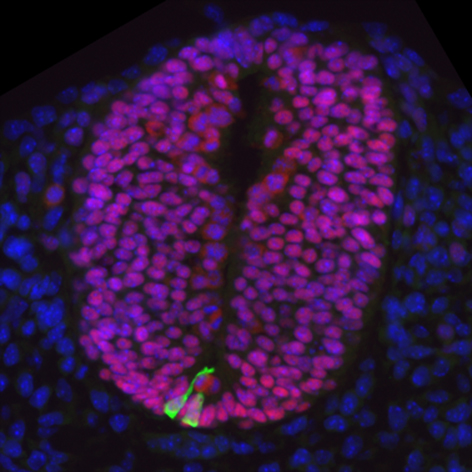
By carefully studying and then mimicking this process in a petri dish, researchers at the MRC National Institute for Medical Research and the MRC Centre for Regenerative Medicine, at the University of Edinburgh, were able to coax mouse and human embryonic stem cells into becoming NMPs and then spinal cord cells.

Dr James Briscoe, who co-led the research from the MRC National Institute for Medical Research, said: “There have been some great advances in the field of stem cell research in recent years, with scientists being able to grow liver, heart and even some brain tissue in the lab. The spinal cord, however, has remained elusive because the NMP cells have largely been overlooked – even though they were first discovered more than 100 years ago.

“The real breakthrough for us was realising that we had to coax the stem cells into this intermediate ‘stepping stone’ cell type before turning them into spinal cord and muscle cells. We can’t yet produce the tissues themselves, but this a really big step. It’s like being able to make the bricks and raw materials but not yet build the house.”

Researchers have previously been able to grow some types of nerve, muscle and bone cells in the lab by converting them directly from stem cells. But this is the first time the intermediate NMP cell type, which acts like a ‘stepping stone’, has been created from stem cells. The advantage provided by guiding cells through the routes used in normal development is that the resulting cells may bear closer resemblance to those that occur naturally in the body. This may help any future therapy utilising these cells by providing positional cues to allow them to better integrate with the surrounding tissue.

Neuromesodermal progenitors (green) generated in a culture dish form normal precursors of the spinal cord (pink)

In the near-term being able to grow NMP cells in the lab will allow researchers to learn more about normal human development in a part of the embryo that is otherwise difficult to study. In future the method could also be refined to allow scientists to grow tissue from patients with diseases that affect the spinal cord, muscles, or the motor neurones that connect muscles to the brain and spinal cord. This would provide a powerful new tool to study in a dish how these diseases progress and take hold in the body.

Prof Val Wilson, the co-leader of the research from the MRC Centre for Regenerative Medicine, at the University of Edinburgh, added: “NMPs are important because they’re the source of the spinal cord and most of the bones and muscles in our body. But they have been like Cinderella cells. Although recognised for more than a century in the embryo, they’ve tended to be ignored by scientists trying to make these cell types in a dish. We hope this work will bring them out of obscurity and highlight their importance.”

Dr Rob Buckle, Head of Regenerative Medicine at the MRC, said: “This study is a fantastic example of how combining different branches of science can lead to new discoveries. While there have been many important advances in reprogramming stem cells, it’s important that we explore all the possible routes to generating the specific cell types best suited to clinical development. Incorporating detailed knowledge of early developmental processes is likely to play an important role in providing the fine tuning required to achieve this.”

This article was first published on the 26th of August 2014 in the news section of the MRC website.

The paper, entitled ‘In vitro generation of neuromesodermal progenitors reveals distinct roles for Wnt signalling in the specification of spinal cord and paraxial mesoderm identity’, by Gouti et al, is published in the journal PLOS Biology. Further information available from the MRC press office: press.office@headoffice.mrc.ac.uk

Thumbs up (1 votes)
Loading...

Tags: , ,
Categories: Research

Navigate the archive

Use our Advanced Search tool to search and filter posts by date, category, tags and authors.

Ethical development

Posted by , on 2 September 2014

This editorial was first published in Development. We encourage feedback from the community on our policies – please leave any comments below.


A central premise of scientific publishing – that publication in a peer-reviewed journal means that the reader can be confident that an article is solid – has been challenged on a number of fronts in recent times. In October 2013, John Bohannon managed to get completely fictitious and nonsensical papers accepted for publication in over 100 Open Access journals that supposedly operated a peer-review system(Bohannon, 2013).Around the same time, an article in The Economist (http://www.economist.com/news/briefing/21588057-scientists-think-science-self-correcting-alarming-degree-it-not-trouble) suggested that biotech companies no longer trust the results of published studies from academia, finding them more often than not to be irreproducible (see also Begley and Ellis, 2012). And our own field has recently seen a number of high-profile retractions that have generated significant discussion about research oversight and the reliability of the publishing system for detecting research misconduct, as well as how such cases are handled by institutes, and the mainstream and social media.

Here at Development, and The Company of Biologists more broadly, we take our responsibilities to protect the integrity of the scientific record very seriously. We are members of the Committee on Publication Ethics (COPE) and follow their guidelines and policies in ethical matters (see www.publicationethics.org, for details). Like many other journals, we have a number of checks in place to try and detect potential ethical problems at the earliest possible stage – before publication. Unfortunately, no process is perfect (though we always aim to learn from any mistakes), and there are cases where published papers need to be investigated – and potentially corrected or retracted. Here again, we have clear procedures to ensure this is carried out as carefully, thoroughly and efficiently as possible (while maintaining confidentiality as appropriate), and we are constantly seeking to improve these procedures as policies change and new tools become available. Most of the ethical issues we encounter can be divided into three main categories: authorship disputes, plagiarism and inappropriate data manipulation.

Questions of authorship – who qualifies as an author, and in what order – are ideally agreed between authors well before submission, and adjusted if need be during the revision process. However, different individuals have different ideas as to what justifies authorship on a paper, and the increasingly collaborative nature of science means that assigning authorship is not always straightforward. Development’s guidelines state: ‘An author is someone who has made significant and substantial contributions to a study. This should include conception, design, execution and interpretation of the findings being published, and drafting and revising the article.’ Obviously, not all authors will necessarily have been involved with all stages of the work: consider the student who arrived halfway through a project – and so played no part in ‘conception’, or the lab head who didn’t actually carry out any of the bench work – the ‘execution’. We believe that a detailed ‘Author Contributions’ statement (required in all papers since 2013) is the best way of making it clear who did what on a paper, and in most cases, this works well. We also ensure that all listed authors are kept informed of the progress of a manuscript through our system, so that they can inform us of any potential concerns they may have.

But what about individuals, not listed on the paper, who believe they qualify for authorship? Such cases may only come to light after an article has been published, when the sometimes angry non-author emails us to assert their right to authorship. We aren’t in a position to weigh up the relative contributions of different individuals, so if the relevant parties can’t agree between themselves, we have to refer the case to the relevant institute(s) for them to investigate. This can be lengthy and painful, and serious authorship disputes can even result in papers being retracted from the literature. Our advice? Discuss authorship at an early stage in the project, be prepared to be flexible if contributions change (e.g. during revision, where someone new may have to step in to complete experiments – particularly if original authors have left the lab), keep lines of communication with collaborators and former colleagues open, and ensure that those who don’t quite qualify for authorship are recognised in the Acknowledgements section.

Fortunately, we have not experienced many problems with plagiarism in Development, although it is something we take seriously and police actively. All papers accepted for publication in the journal are run through a plagiarism detection program, iThenticate, that checks for significant matches to other papers or online material. We apply common sense here: there are only so many ways to describe a particular protocol, and original phrasing can be difficult particularly if English is not your native language. What we are looking for are cases where authors have clearly copied from another source without reference, and the degree of plagiarism defines our subsequent action: asking the authors to quote the original article, to rephrase their text, or – in extreme cases (which fortunately we have not yet encountered) – withdrawing the paper from publication. Of course, no software can detect so-called intellectual plagiarism, the ‘stealing’ of ideas, and here we rely on our reviewers and readers to alert us to potential problems, which we can then investigate.

By far the majority of ethical concerns we encounter involve data presentation and manipulation. The Journal of Cell Biology pioneered efforts to educate authors on appropriate figure processing (Rossner and Yamada, 2004) and to screen papers for possible problems before publication, and many publishers, including The Company of Biologists, now employ routine screening procedures to look for potentially inappropriate image manipulation in all accepted manuscripts (our policies on figure preparation can be found at http://dev.biologists.org/site/submissions/figure_prep.xhtml#manipulation). Referees can also play an important part here, by looking at figures with a critical eye when reviewing a paper and by alerting the editor to any potential concerns with data. Of course, it should be noted that an author who really wants to ‘cheat the system’ may be able to do so by clever use of Photoshop, or by manipulating the experiments conducted rather than the data collected. Moreover, our checks are not perfect, although we are always striving to improve them. However, when we do detect inconsistencies of concern – most frequently, unmarked splicing of gel lanes or alterations to the background of an image – we contact the authors, asking them to explain how the data were processed and to send us the original data behind the figure. In the vast majority of cases, authors are able to provide these easily and can reassure us that experiments have been conducted and reported appropriately, alterations can be made to the figure(s) where necessary, and there is no significant delay to publication. More substantial errors, such as duplicating data between panels or figures, can also be detected in some cases; it should be noted that these may be the result of honest error on the part of the author (the careless pasting in of the wrong image when preparing a complex panel) and can also be resolved rapidly. Unfortunately, however, not all instances of data manipulation are ‘innocent’, and we will not publish a paper where questions are hanging over the integrity of the data.

These are the cases that the reader never sees: those that are identified and resolved before publication. The more high-profile cases are those picked up after the paper has been published. Journals are receiving an increasing number of anonymous emails, often relating to papers published many years ago. These can be somewhat obtuse; a frequent complaint is that ‘error bars look too small or too similar to be real’. As responsible publishers, it is our duty to investigate all such complaints, and some real and important cases of image manipulation have been unearthed from anonymous tip-offs. We also receive reports from non-anonymous readers, as well as from the authors of the papers themselves – who may discover problems with their data as they follow it up in subsequent studies. The categories of errors and their frequencies are similar to those we identify pre-publication, as are our steps to investigate them. The first step is always to contact the corresponding author for an explanation; most issues can be readily resolved by an explanation from the authors and the provision of original data – potentially resulting in the publication of a Correction – but occasionally we do find more serious problems that may indicate intent to deceive and that require in-depth investigation.

So what do we do when we do identify serious problems – either before or after publication? As with authorship disputes, it is often impossible for us to resolve questions of data integrity at a distance. In these cases, we ask the appropriate bodies at the authors’ institute(s) to step in. They can look at the history of the research in detail, including going through lab notebooks, freezers and so on. This can take considerable time, although we will endeavour to keep our readers informed where appropriate: we are introducing a policy of publishing a Publisher’s Note to make readers aware of potential problems while investigations are ongoing. In all cases, we will take the necessary action once an investigation is complete to ensure the integrity of the scientific record. This might mean publishing a correction or a retraction.We are fortunate that retractions are rare here at Development, but this does not mean that we are reluctant to retract a paper where appropriate.

One important point to consider is the degree to which publishing policies have changed in the past decade or so. Those ‘manipulations’ that we now deem inappropriate (such as unmarked splicing of gel lanes) were common practice 10 years ago, and it can be unfair to judge the integrity of a paper published several years back by today’s standards. Moreover, manipulated data does not always imply fraudulent activity – authors frequently process their data for clarity or aesthetics without realising that this may not comply with journal policy. Still, many problems can be avoided through good recordkeeping and well-organised long-term storage of the original data (like many institutes, we expect that authors should retain records for a period of around 10 years), and through conservative post-processing of data – so that the submitted image accurately reflects the data gathered.

Simple mistakes can have significant consequences on the conclusions of a line of research. The vast majority of scientists are honest, and should be treated as such unless there is clear evidence to the contrary. Even in cases of clear misconduct, individuals should not be vilified – as an organisation, we take an educational rather than a punitive approach, and it is always important to retain perspective in these cases. It is often argued that the pressure to publish can lead researchers to cut corners, produce sloppy data or even commit fraud. This is no excuse, but in a culture where the rewards for a high-profile publication are so high, it is perhaps inevitable that a small number of people will succumb to these temptations. Fortunately, this is very rare and, at Development, we are proud to have the reputation of publishing papers that ‘stand the test of time’; for this, we are grateful to our editors, reviewers, authors and readers, whose careful work protects the integrity of our papers. Although there is always room for improvement, we hope that the policies we have in place, and continue to review and develop, will help to ensure that we correct any honest mistakes made and remain vigilant to the rare cases of intentional fraud.


Olivier Pourquié, Katherine Brown and Claire Moulton

References

Begley, C. G. and Ellis, L. M. (2012). Drug development: raise standards for preclinical cancer research. Nature 483, 531-533.

Bohannon, J. (2013). Who’s afraid of peer review? Science 342, 60-65.

Rossner, M. and Yamada, K. M. (2004). What’s in a picture? The temptation of image manipulation. J. Cell Biol. 166, 11-15.

Thumbs up (1 votes)
Loading...

Tags: , , ,
Categories: Discussion

In Development this week (Vol. 141, Issue 18)

Posted by , on 2 September 2014

Here are the highlights from the current issue of Development:


Mcc: a new player in gastrulation

FigureThe mutated in molorectal cancer (Mcc) gene has been described as a tumour suppressor, and has been shown to interact with β-catenin and thus limit Wnt signalling. However, various data also indicate a potential role in regulating the cytoskeleton. Ray Dunn and colleagues set out to investigate this further in zebrafish and Xenopus (p. 3505). In both species, they find that morpholino-induced mcc knockdown leads to phenotypes typical of defects in convergence and extension during gastrulation. Importantly, these phenotypes can be fully rescued by co-injection withMcc RNA. In zebrafish, the defects in cellular behaviour are very similar to those seen upon disruption of non-canonical Wnt pathway. Through epistasis and biochemical analysis, the authors provide evidence that Mcc is likely involved in transmitting the Wnt signal from Vangl2 to the downstream effectors RhoA and JNK. Although the detailed molecular mechanism remains unclear, these data identify an important role for Mcc as a component of the non-canonical Wnt pathway that coordinates anamniote gastrulation.

Chromatin dynamics in sperm

During spermatogenesis, the chromatin undergoes significant changes in architecture, with histones being largely replaced by protamines, inducing genome-wide condensation. Two papers provide insights into the regulators and mechanisms of this histone-to-protamine transition and its importance for male fertility.

FigureOn p. 3495, Leonard Guarente and colleagues analyse the consequences of SirT1 deletion in pre-meiotic spermatids. SirT1 is an NAD+-dependent deacetylase, the whole body deletion of which has been shown to impair male and female fertility via a systematic effect on reproductive hormone levels. However, whether it is also required in the germ cells themselves is not known. In this article, the authors show that SirT1 depletion specifically in the testis leads to a cell-autonomous defect in sperm maturation and male fertility. They find that histone hyperacetylation – one of the first steps in the chromatin changes of the histone-to-protamine transition – is significantly impaired, with consequent defects in the recruitment of downstream proteins required for histone removal and protamine deposition. Moreover, their data suggest that loss of SirT1 may accelerate reproductive ageing. Although the molecular mechanisms by which SirT1 regulates histone acetylation remain unclear, these data uncover an important role for this protein in the male germline.
FigureMeanwhile, Paul Knoepfler and co-workers investigate the role of the histone H3 variant H3.3 in regulating spermatogenesis (p. 3483). H3.3 is generally associated with active transcription. Here, the authors generate a knockout of one of the two genes encoding H3.3, H3f3b, which leads to a strong reduction in H3.3 levels in the male germline. The mutant mice display a severe defect in sperm morphology and production, and hence in male fertility. Analysis of the chromatin state of H3f3b knockout germ cells reveals an increase in the levels of the repressive mark H3K9me3, and a decrease in H3K4 methylation, a mark of active chromatin. Importantly, the authors uncover defects in the histone-to-protamine transition, with both protamine levels and incorporation being reduced. These data provide the first insights into the role of H3.3 in mammalian spermatogenesis, and indicate an important role for this histone variant in regulating the striking changes in chromatin structure that accompany sperm formation.


Root nodule fate map revealed

FigureWhile most plants derive nitrogen (N) from the soil, some plants, such as legumes, can create their own supply by forming specialized root nodules that house N2-fixing bacteria. Nodule tissue ultimately derives from root cells that are reprogrammed to a nodule cell fate during nodule initiation, but exactly which root cells can contribute to the developing nodule primordial has not been fully established. Now, on p. 3517, Ton Bisseling and colleagues unveil a detailed fate map of the origin of different cell types within the Medicago truncatula root nodule. By combining detailed and careful microscopy with promoter-reporter expression analyses, the authors analyse the fate of each root cell layer during nodule initiation. They show that the root inner cortex, endodermis and pericycle divide and transdifferentiate into about 16 cell layers that are located in the basal part of the nodule, whereas the middle cortex reprograms into the nodule meristem. The authors then use these data to re-evaluate previously published root nodule mutants, providing important contextual information for key developmental events during root nodule formation.

Out of the niche: exploring unknown pathways

In May 2014, approximately 200 stem cell scientists from all over world gathered near Copenhagen in Denmark to participate in ‘The Stem Cell Niche’, part of the Copenhagen Bioscience Conferences series. The meeting covered an array of different stem cell systems from pluripotent stem cells and germ cells to adult stem cells of the lung, liver, muscle, bone and many more. In addition to the stem cell niche, the meeting focused on a number of cutting edge topics such as cell fate transitions and lineage reprogramming, as well as stem cells in ageing and disease, including cancer. Here, Kateri Moore and Giulio Cossu describe the exciting work that was presented and some of the themes that emerged from this excellent meeting. See the Meeting Review on p. 3441

Roles for Hedgehog signaling in adult organ homeostasis and repair

JoynercroppedThe hedgehog (HH) pathway is well known for its mitogenic and morphogenic functions during development, and HH signaling continues in discrete populations of cells within many adult mammalian tissues. Here, Ralitsa Petrova and Alex Joyner review recently identified functions of HH in modulating the behavior of tissue-specific adult stem and progenitor cells during homeostasis, regeneration and disease. See the Review on p. 3445


piRNAs: from biogenesis to function

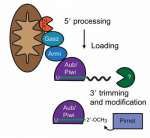
MiskacroppedSince their discovery less than a decade ago, Piwi-interacting RNAs (piRNAs) have been shown to repress transposable elements in the germline and, hence, have been at the forefront of research aimed at understanding the mechanisms that maintain germline integrity. More recently, roles for piRNAs in gene regulation have emerged. In their Review, Eva-Maria Weick and Eric Miska highlight recent advances made in understanding piRNA function, highlighting the divergent nature of piRNA biogenesis in different organisms, and discussing the mechanisms of piRNA action during transcriptional regulation and in transgenerational epigenetic inheritance. See the Review on p. 3458

Thumbs up (No Ratings Yet)
Loading...

Categories: Research

This month on the Node- August 2014

Posted by , on 1 September 2014

Here are last month’s highlights! Don’t forget to check our jobs page too.


morphometricsResearch:

– Gary wrote about his visit to a particle accelerator to image Xenopus embry0s using X-rays.

– Thomas discussed his  paper in Development on the evolution of the development underlying the complex cerebellum found in amniotes.

– Milos introduced his blog ‘Creative Morphometrics’, where he addresses problems in cell shape analysis and proposes solutions using R and python code.

– and Christele discussed a Cell Stem Cell paper challenging the dogma that haematopoietic stem cells keep their DNA intact to ensure a healthy lifelong function.


Discussion:

– We reposted an opinion piece published in Development considering the role of morpholinos in the context of new genome editing techniques. Join the discussion!

– What should the future of research be like? Join other graduate students and postdocs in the discussion by participating in the Future of Research symposium!


Also on the Node:

Chile2– The latest post in our outreach series is by Kathleen, who launched the project ‘Ciencia Al Tiro‘, which brings science to underprivileged children in Chile.

– We reposted an obituary on the life and research of Yoshiki Sasai.

– The interview chain continues, with an interview with the winner of the SDB poster prize Niteace Whittington

– And Cat reported from the European Evo-Devo meeting, which took place in Vienna last month.


Happy reading!


Thumbs up (1 votes)
Loading...

Categories: Highlights

Advocating FOR grads and postdocs: the Future of Research symposium

Posted by , on 27 August 2014

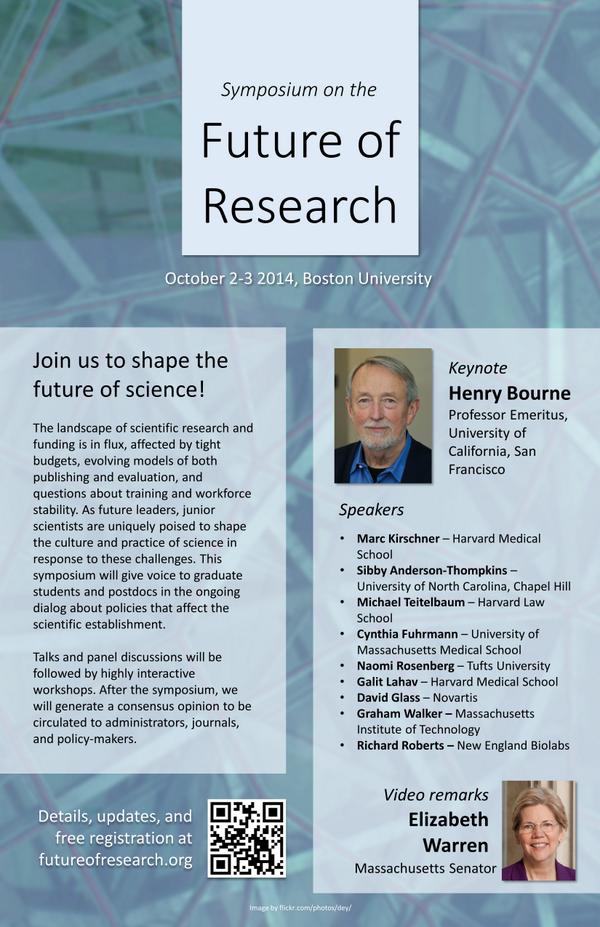
FORposter

You may have noticed a recent trend in the perception of the graduate and postdoctoral experience, be it in the state of our mental health; or perceived career goal of “academia-or-bust”; or maybe you’re just keeping your pulse on leading US academics warning of the imminent dangers of a flawed biomedical research system or the need for a fair deal for PhDs and postdocs?

You’re certainly not alone – a group of postdocs in the Boston area are organizing the Future of Research symposium to be held October 2-3. The goal is for young scientists-in-training to come together, discuss aspirations for a better future for the scientific enterprise.

What will the symposium involve?

We will have concerned scientists and policy-makers in attendance, including a message from Senator Elizabeth Warren, a keynote address from Henry Bourne, and panel discussions. Participants will also have the opportunity to give voice to their concerns through a variety of workshops focusing on important themes relevant to how we work, and how we will work.

What are the themes of the workshops?

We have an ambitious set of topics to cover:

1) Metrics of success:

– How we measure publication, funding and tenure
– Do we reward certain approaches to science, and penalize others?
– Do we ignore teaching in evaluating researchers?

2) The structure of funding:

– How stable is the funding situation (focusing on the US) and how tenable?
– Should there be a change to how funding is awarded in relation to training PhDs and postdocs?

3) The structure of training:

– How should graduate and postdoc training be done?
– Is there too much focus on a career in academia and not enough on “alternative” careers?
– Are PhDs in the US too long?

4) The structure and sustainability of the workforce:

– Do we have too many PhDs and postdocs?
– Should lab sizes be limited?
– Should we train more staff scientists and research associates and establish permanent, non-PI scientific positions?

These are just some of the issues we could consider: please feel free to comment below or tweet to suggest more (also see below for ways to get involved). We also want to keep the issues of efficiency and competitiveness in our minds when discussing all these issues. For example, is it possible that a significant amount of funding is wasted by deliberate or unknowing competition? Can the scientific enterprise be improved by greater sharing of data earlier in the traditional publication process?

How can I get involved?

Come to the symposium! But if not, there are other ways to make your voice heard and we want to hear from all sorts of researchers in all sorts of places:

Pre-register and/or sign up for updates at futureofresearch.org

Follow @FORsymp

Like our Facebook page and join our group

Join our LinkedIn group

And feel free to comment below; and spread the word amongst your colleagues, both within developmental biology and in other academic fields. We hope that this event will give us a basis to make a statement to the research community about the issues facing trainee scientists and academics, possibly with the production of a white paper. Therefore we hope to receive comments and feedback on what you think.

In the build-up to the meeting, there will be a series of posts on different topics where again, we would be grateful for feedback and comments on your thoughts.

The Future of Research symposium will be held at Boston University October 2-3 2014.

Thumbs up (2 votes)
Loading...

Tags: , , , , , , , , , , , , ,
Categories: Careers, Discussion, Events

Left-right asymmetry, embryonic development, and more

Posted by , on 26 August 2014

Hello there, first time posting on The Node! Every so often Wiley compiles a small selection of recent research on a particular topic, and the most recent is on the topic of developmental biology. This includes some special issues from journals with reviews on:

The first two special issues are free to read and download. There is also a free chapter from our leading book on evolution and development.

If you’re interested, the link to these is here.

Hope it’s useful!
admin-ajax[1]


Thumbs up (No Ratings Yet)
Loading...

Tags: ,
Categories: Resources

Postdoctoral fellowship in neural stem cell and developmental neurobiology

Posted by , on 24 August 2014

Closing Date: 15 March 2021

The Division of Developmental Biology and Neuroscience along with Pediatric Neurosurgery at Cincinnati Children’s Hospital (#3 children’s hospital in USA) have openings in Dr Tim Vogel’s lab for postdoctoral Research Fellows to study neural stem cells, glial progenitors, and developmental neuroscience, focusing on cilia and cell signaling in murine models. We have a large group of developmental neuroscientists that work with our laboratory at one of the top children’s hospitals in the USA.

The major goals of our research are to understand neural stem cell differentiation and ciliary signaling mechanisms that lead to a common neural developmental condition seen in humans (For details see Nature Medicine 18, 1797–1804 (2012)). Our lab employs a number of ciliopathy mouse genetic models with in vivo and in vitro systems to study the genesis of hydrocephalus. These include novel in vivo cilia subcellular imaging techniques, molecular /cellular neurobiology, protein biochemistry, genetic, and pharmacological methods.

Our lab has a strong interest in translational neuroscience research and is focused on developing novel medical therapies in our cilia models.

For more information about current projects see: http://www.cincinnatichildrens.org/research/divisions/n/neurosurgery/labs/vogel/default/

Or see : http://neurojobs.sfn.org/jobs/6425490/postdoctoral-fellowship-in-neural-stem-cell-and-developmental-neurobiology

We will be attending the annual SFN meeting to discuss the position with applicants. Schedule a time to meet with members of our lab.

For More Information: Contact: Tim Vogel   Tim.vogel at cchmc.org
Please send a brief statement of scientific/research interests, your curriculum vitae, and a list of 3 references.

Highly motivated postdoctoral candidates with experience  in neuroscience, genetics, developmental biology, molecular/cellular biology, regenerative biology, or biochemistry are encouraged to apply. A strong background in biochemical, cellular, neuroscience, genetic, or developmental biology in mouse models is preferred.

NOTES:
2 openings.
Thumbs up (1 votes)
Loading...

Tags: , , ,
Categories: Jobs

Outreach Program: “Ciencia Al Tiro” (Science Immediately)

Posted by , on 21 August 2014

Ciencia Al Tiro (Science Immediately) is an Outreach program developed to encourage interest in science and technology. Our inspiration was to help the situation of education in Chile where there is an extremely large difference in the quality of education among schools. According to an OECD assessment of student performance, Chile has the largest gap in Latin America in performance between the private and public schools and this gap has the strongest correlation in the region with socio-economic level. This inequality in education is driven and maintained by the extreme inequality in income distribution in Chile (The Economist, December 13, 2007). Thus, because the poor quality of education in Chile is an urgent problem, we named the program “Ciencia Al Tiro” (Science Immediately; www.cienciaaltiro.cl).

We initiated our program, which is based in the Interdisciplinary Center for Neuroscience, University of Valparaiso, in 2008 using a semester to develop the hands-on workshops with the idea that the students learn about science through performing experiments and constructing projects. Valparaiso is a very poor city and our University, which is located on Cerro Playa Ancha, is within 10 minutes of some of the most underprivileged schools in the country. Starting in 2009 we implemented the workshops in our neighboring poor public schools focusing on junior high school students. Our workshops are designed and taught primarily by graduate students, although the program is open to all scientists. Initially we went to the schools to implement the workshops where as “Tias” and “Tios” (aunt and uncle, the children refer to teachers and adults a tios) we give a very short introduction (10 minutes maximum) and then start the activity.

We design science workshops to convey not only basic concepts, but also to incorporate concepts of climate change and energy efficient technology, to develop awareness and prepare the students for a future where energy will be very expensive. Thus understanding fundamental concepts in science will help resolve problems throughout life by providing a better understanding of the world around us. Our workshops cover a wide variety of topics; we build things like simple motors, solar ovens, thermometers, hand warmers, reactors for biogas, and we teach concepts for example math through the use of a compass (calculate distances and angles), nitrogen cycles through an aquaponics activity, neuroscience through building a neurons and creating a neural circuit, a theatre to explain how a solar electric panel works, genetics via Drosophila, and of course because my lab works on zebrafish we do a zebrafish development day.


students & zebrafish

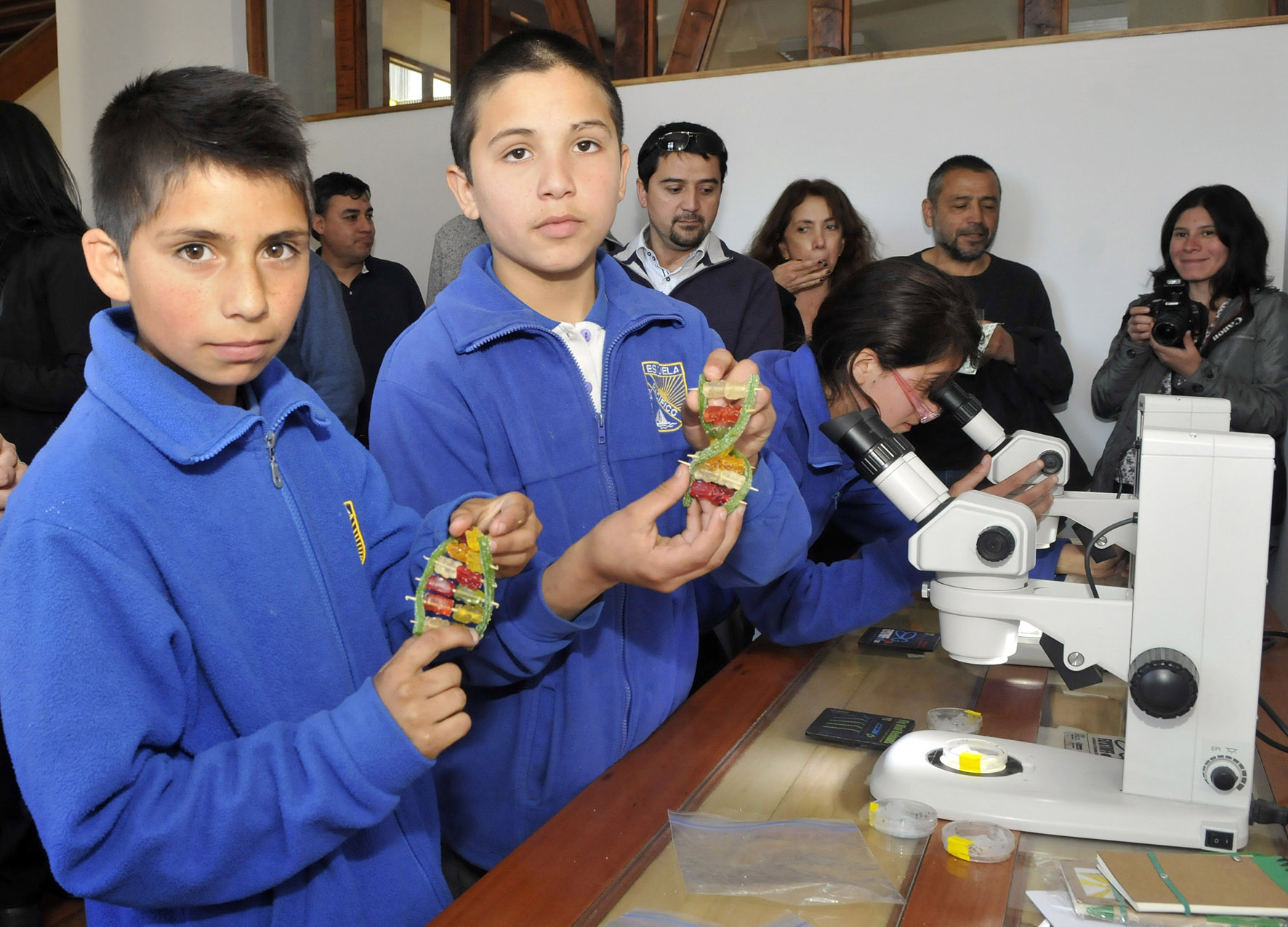
DNA demonstration


Because of the sad state of the public schools we implemented two major projects to convey how science can help with the quality of life. In one school we renovated a science room incorporating concepts of energy efficiency (insulation and double paned windows) because there is no heat in the schools. The school sits at the edge of the hill facing the open sea and temperatures can reach 6 C in the winter. Using programmable temperature sensors, our students measured the temperatures over several months in the room that we renovated and in the adjoining room showing that the insulated room had a much more stable temperature i.e. much warmer in the winter. We were awarded the Chile Verde (“Green Chile”) national recognition (Chile Verde 2010, Caso 48, page 71; http://www.porunchileverde.cl/chile-verde-2012). More recently (2011) we installed solar showers in a different public school because many children have no hot water at home. The showers were for the children and school employees so the whole community of the school learned about the technology (http://www.cienciaaltiro.cl/index.php/energia-eficiente/duchas-solares). We had an inauguratiohttps://thenode.biologists.com/wp-content/uploads/2014/08/DNA-demonstration.jpgn and it was a treat to see the students explaining to public politicians the differences between solar electric and solar thermal energy.

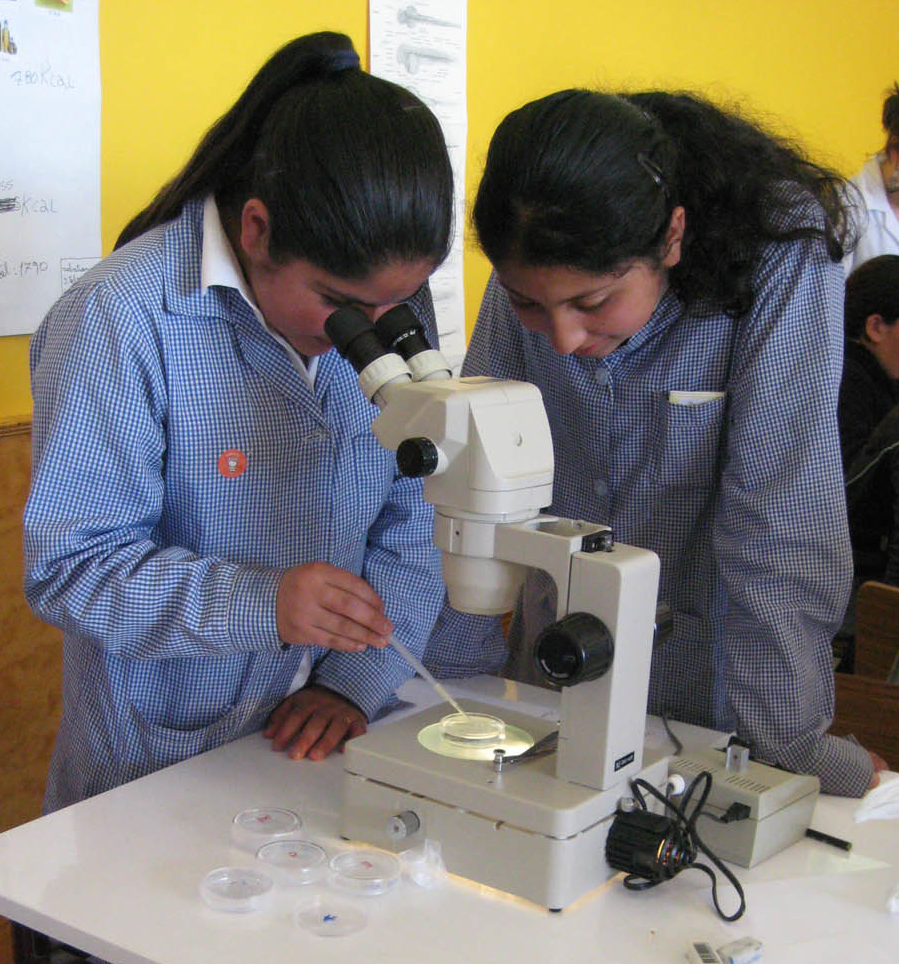
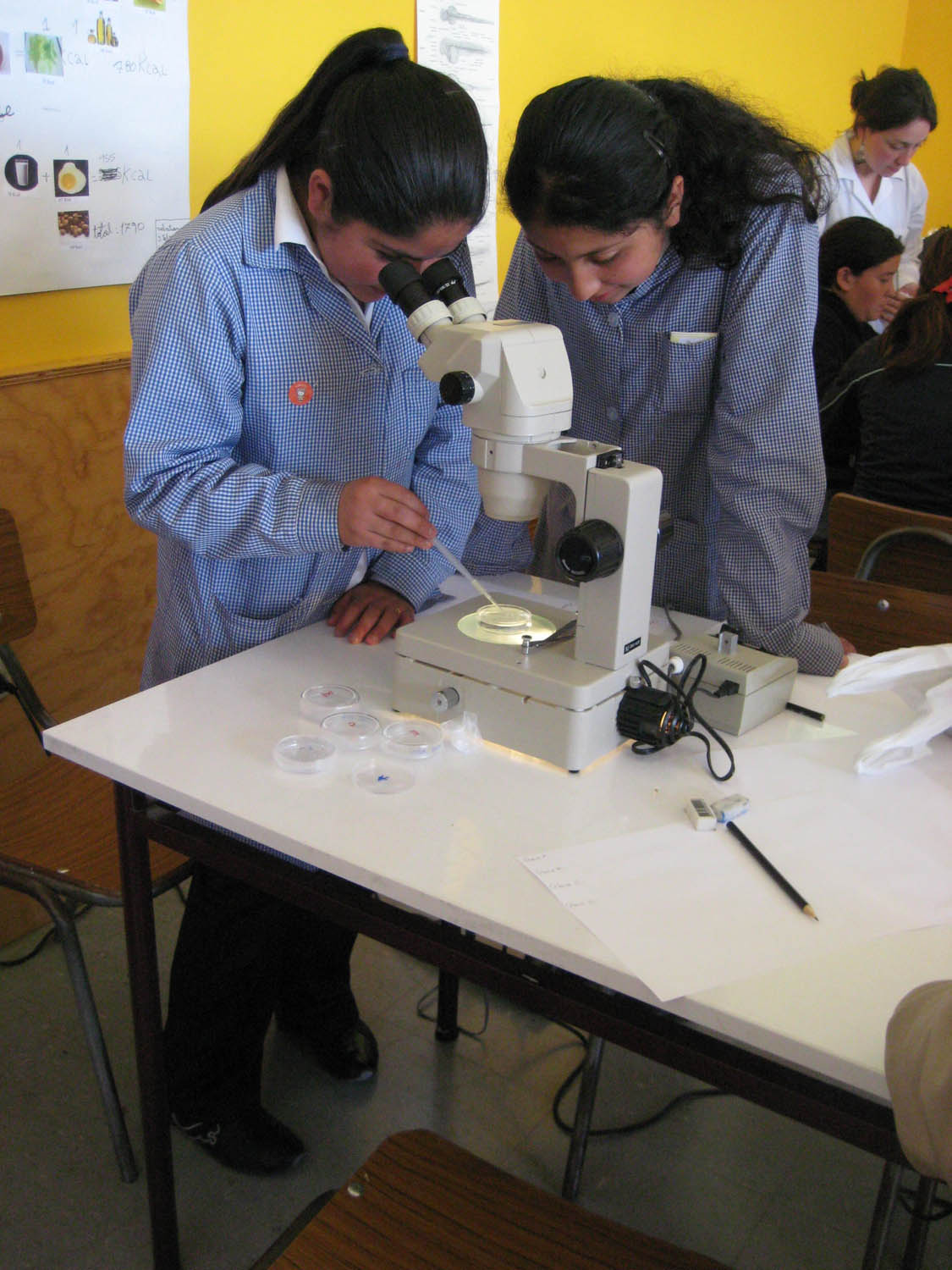
After doing our workshops over the years one of the most important things that captures kids’ (and adults’) attention is a dissecting microscope. They are usually fascinated first by the dirt in their fingernails before focusing on the zebrafish embryos. In addition we use the compound microscope to show the kids brain slices with labeled neurons as part of our neuroscience workshop. As scientists we often forget how really cool microscopes are. Also animals, they love the aquaponics workshop because they have fish (zebrafish) and plants in their classroom. Finally the kids like to see if the project they built functions, for example we make three types of solar ovens and then compare which style of oven gets the hottest. We then use the ovens to cook hard-boiled eggs and cookies that they can then eat. This knowledge extends beyond the students, their parents (usually the mother) often want to learn about solar ovens and if our students have siblings in the same school they often show up at the end of class to see the fish, look at neurons in the microscope, or watch fruit flies in their vials.

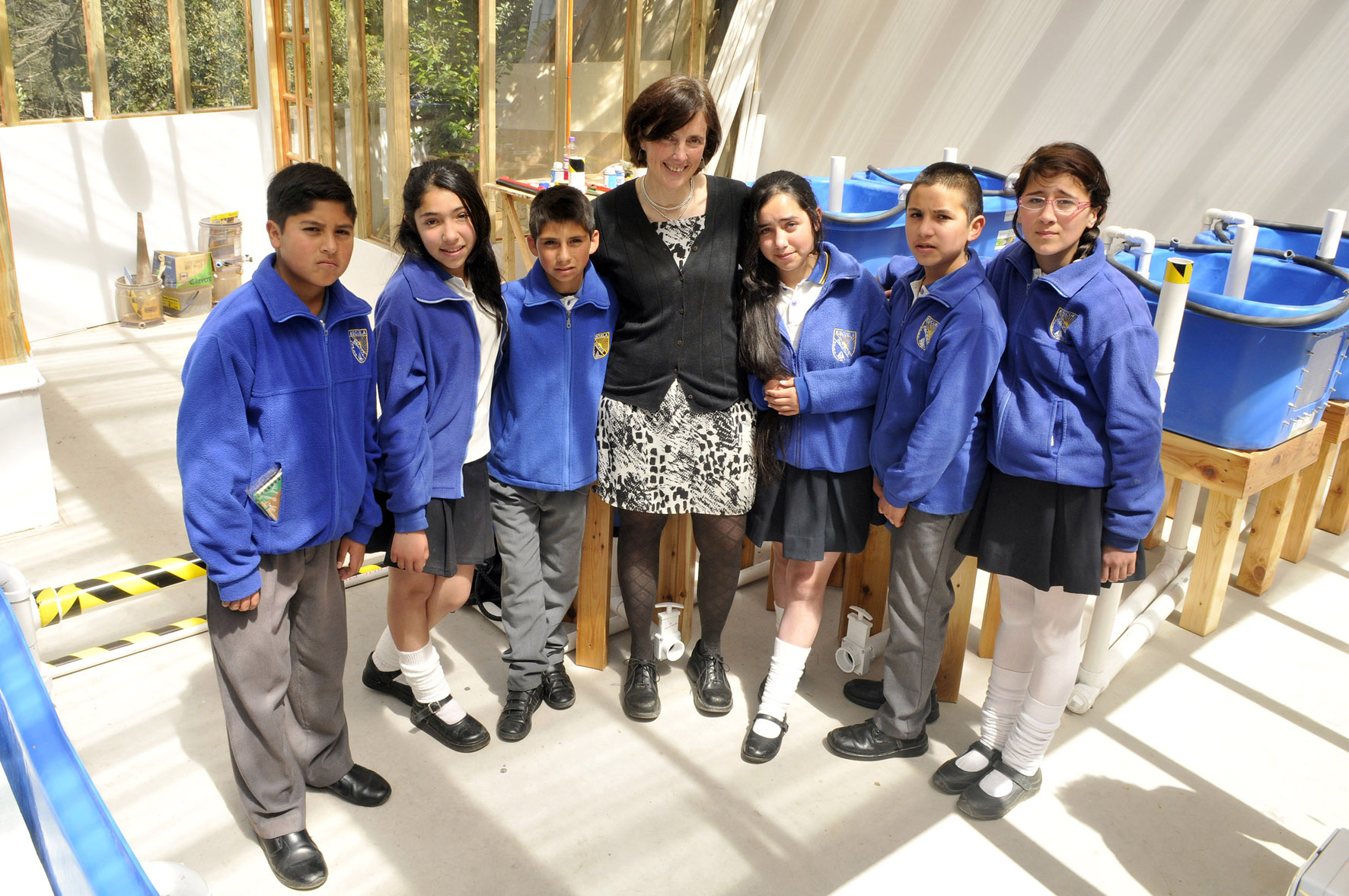
Because of the challenges of leaving equipment in public schools (theft is a big problem in Chile) and because we lacked space at the university for our equipment (purchased  with Millennium Science Inititaive Outreach funding): dissecting microscopes, compound microscope with a camera system, an E-Rack system used to work with zebrafish, and an Aquaponics System, we pursued a new model where, through private funding, we renovated an old house in Valparaiso near the university and the first floor is a science center dedicated to Ciencia Al Tiro. With the new science center we have initiated long-term projects with seventh and eighth graders including a project to fabricate fish food from restaurant waste. We use fish in the aquaponics system to test whether the fish (a fish found in the local reservoir called Chanchitos) like the food and use zebrafish to look at potential effects on egg laying. A second group is working with our hedgehog “Dominque” to see learn about circadian rhythms using a sensor that detects the revolutions of her wheel when she runs to measure her activity pattern (she runs 4-5 kilometers a night!). A third group is measuring watt usage and luminescence to test whether it is really true when the light bulb packages say “uses 9 watts, illuminates like 40 watts”. A small group of eighth graders returning from last year is investigating the effects of pH on plant growth and the nitrogen cycle using the aquaponics system in our greenhouse. The students will be applying to the regional science fair in October for a chance to present their projects, let’s hope all goes well!


Kate and Aquaponics kids


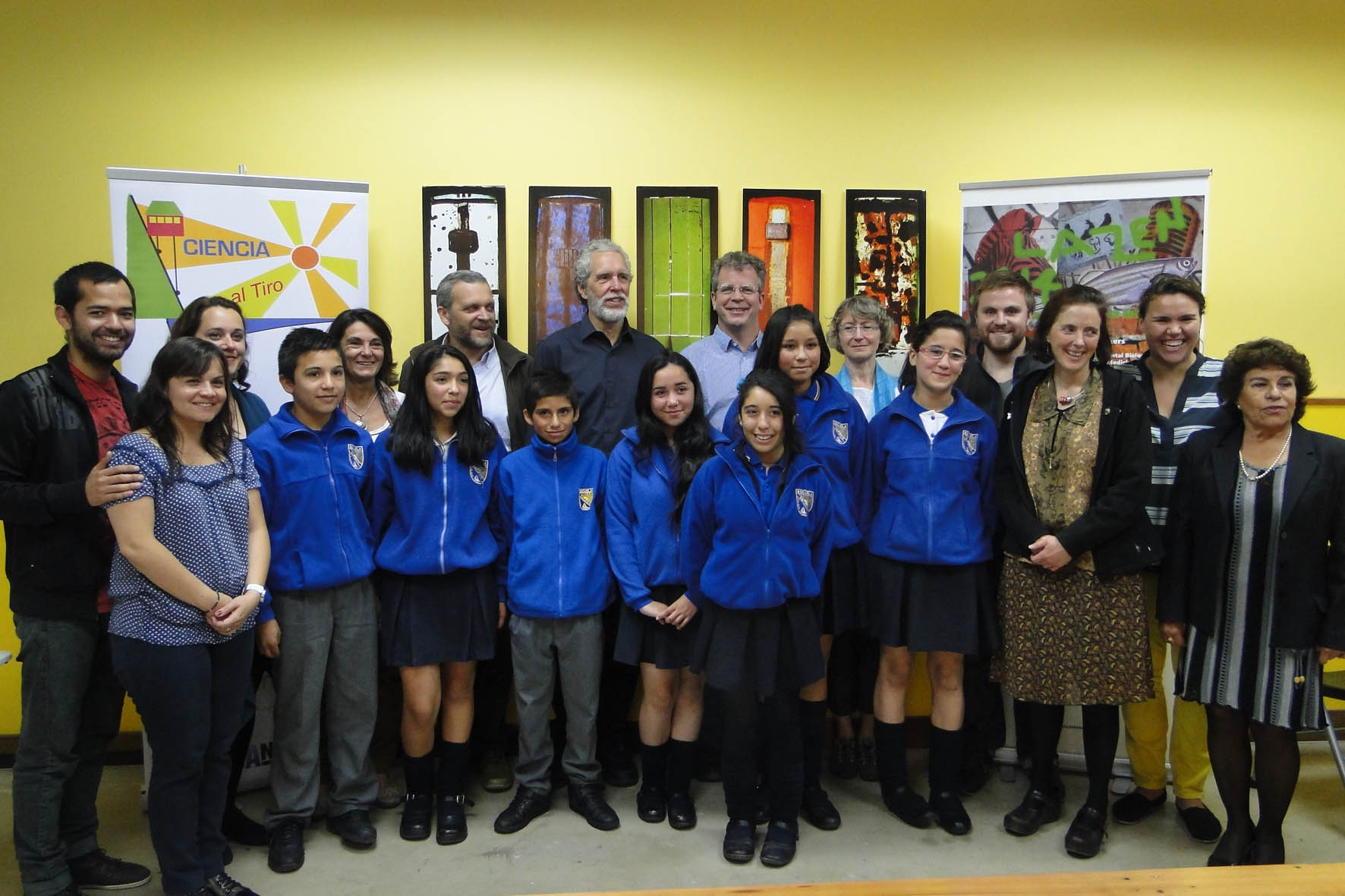
We did an extra experiment this year. I organized the Latin American Zebrafish Network Course and Symposium in Valparaiso in April. We decided to incorporate a morning of outreach and had some of our students from Ciencia Al Tiro interview our invited scientists including Dr. Monte Westerfield (USA), Dr. Derek Stemple (UK), Dr. Lila Solnica-Krezel (USA), Dr. Nora Calcaterra (ARG), and Dr. Flavio Zolessi (UR). Our students had previously participated in a workshop we ran on how to be a scientific journalist. Because of potential language problems all students were paired with a Tio or Tia who spoke English. It was a delightful event, the students not only asked about science but also the country of origin, some scientists are born in one country, yet live in another. We often forget how many opportunities we have as scientists, to travel, to meet new people, and to exchange ideas. All of this happiness and interest was conveyed in the morning of interviews. Our kids were left with the impression that science is not only “bakán” (cool) but also a tremendous doorway to understanding far away places.


students and research scientists


One of the main challenges of our project is that we work with children that come from very rough situations, at times some care takers (called “apoderados”; not everyone has a “Mom” and/or a “Dad”) think we are doing “tonterias” (foolishness). But we easily forget these moments when we see the kids’ excitement, when their “apoderados” show up at their end of the year presentation and are so excited that their kids have done such a cool project. On a personal level there are days where I am overwhelmed by the need, the need for exciting and interesting programs for young people, so many parents want their children in our program, yet we are small; a drop in an ocean of need, but I always remind myself and our group that we are an important drop.

Outreach is an activity that is urgently needed because it teaches young scientists to communicate ideas clearly to non-scientists. Outreach is also important because it drags us out of our labs and we as scientists become more visible to the public, not just to the students but also their families and their communities. Sadly outreach is highly undervalued in the research science community; it does not produce papers, or if so papers of low impact, it brings in little money, and there is an understated idea that those who are not good enough to do research do outreach. It takes creativity and intelligence to meet the challenge of conveying the excitement and importance of science. Our philosophy is that science is everywhere and knowledge is a gift that cannot be stolen.

If you want to develop a program, I would make sure there is some way of valuing the time spent in outreach activities, especially if you are a young untenured professor. Learn how to write projects for funding and learn the culture of the school where you might work, sometimes they are not keen on having outsiders come in, it can be hard on the ego to have doctorate students teaching alongside a science teacher. I would try and remember your own childhood, what did you like in school, what drove you crazy in school. I clearly remember that when I was bored or the teacher was not very good I would skip class. I think there are basic principals, everyone is curious, everyone wants to look through the microscope, play with a computer, but the older you get the more it is bashed out of you.

CAT Book CoverFinally, for those who might be interested, we will be publishing a book in the coming months (before the end of the year) called La Alegria de la Ciencia (The Happiness of Science) which has 12 of our most popular workshops. As a native English speaker I became aware that many of the on-line resources for science projects are in English. Most people, at least in Chile, do not speak English, or do not speak it well enough to understand the information on line. Thus the book is in Spanish; there is no English translation. It is a very pretty book with the workshops related to Chile and specifically Valparaiso. For example, Cata, our main character, ponders why the trolleys (electric) do not belch black smoke like the city buses. We have partial funding for the book so we hope to make it available at reduced cost, please write me (kathleen.whitlock@uv.cl) if you are interested. In addition the plan is to make an electronic version available through our website.


Outreach logo new squareThis post is part of a series on science outreach. You can read the introduction to the series here and read other posts in this series here.


Thumbs up (2 votes)
Loading...

Tags: ,
Categories: Outreach

Yoshiki Sasai: stem cell Sensei

Posted by , on 21 August 2014

This obituary first appeared in Development.


Stefano Piccolo looks back at the life and research of his friend and colleague Yoshiki Sasai.
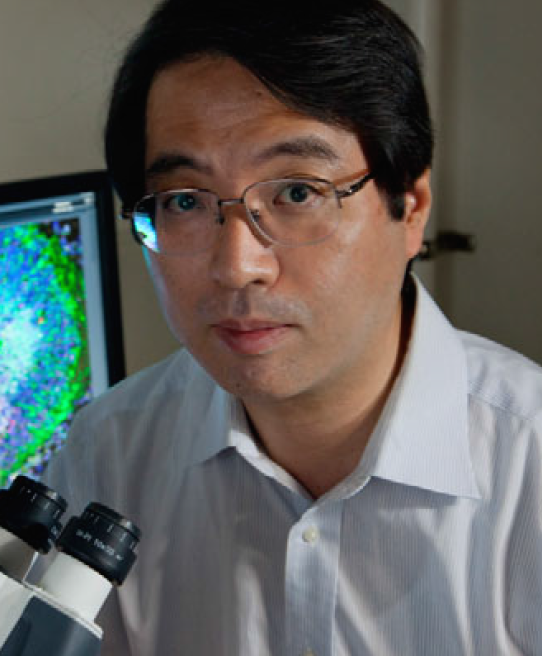
 

Yoshiki Sasai2On 5 August 2014, Yoshiki Sasai died at the age of 52, near to the RIKEN Center for Developmental Biology in Kobe, Japan. This is the institute that he had helped to establish and painstakingly driven to become a world-leading research institution. The scientific community mourns the loss of one of its giants. But for those of us fortunate enough to have enjoyed Yoshiki’s friendship, or to have been transformed by his teachings and intellectual intensity, the grief of his death is devastating. He was a pioneer in the fields of developmental and stem cell biology, and here I will try to summarize and celebrate his exceptional legacy.

Yoshiki Sasai was born in Hyogo, Japan, and grew up playing baseball and cultivating the noble discipline of Kendo (the Japanese martial art that uses bamboo swords). Like other members of his family, he entered medical school, receiving his MD from the University of Kyoto in 1986. However, after completing an internship in internal medicine, he was frustrated by the limited biological understanding involved in routine clinical practice. He wanted to get at the root of the fundamental principles by which cells and tissues, particularly the brain, operate in health and disease. He therefore left the hospital halls to join the neurobiology laboratory of Shigetada Nakanishi as a PhD student. There, he became intrigued by how neural cells control their differentiation status. He was a gifted molecular biologist and, during his PhD, he identified mammalian HES family members and revealed their anti-neurogenic properties (Sasai et al., 1992).

For his postdoc, his instinct for cutting edge research brought him to southern California, to work on early Xenopus embryology in the laboratory of Eddy De Robertis (HHMI, UCLA). I vividly remember the day I first met Yoshiki. I was a newcomer to the De Robertis laboratory, just arrived in Los Angeles from Italy, and he was the senior postdoc of the lab. The respect he garnered from Eddy and the rest of the team was palpable. A few weeks after arriving at UCLA, Yoshiki had already cloned a new secreted factor, Chordin. This discovery held the key for what was then one of the biggest mysteries in developmental biology: the workings of the Spemann organizer. This fragment of the early embryo serves as signaling source to induce the nervous tissue and pattern the body plan, but its inner workings were yet unknown (De Robertis, 2009). Yoshiki had found that Chordin was expressed precisely in the organizer; moreover, injection of chordin mRNA was sufficient to generate a twin body, thus recapitulating the effects of transplantation of the organizer tissue. His first paper had already appeared in Cell (Sasai et al., 1994), and when I arrived in Los Angeles, Yoshiki was about to publish his second landmark discovery in Nature: the observation that neuralization of naïve cells induced by Chordin could be reversed by BMP4 (Sasai et al., 1995). Eddy made it clear that now it was my turn to venture into the biochemical mechanism for the Chordin-BMP antagonism. Of course, I had no idea where to start, so I was directed to Yoshiki for practical advice. At our first meeting, he effortlessly noted down a long list of ‘to-do’ experiments, with such rigor, logic and in-depth analysis of potential pitfalls and necessary controls to leave me at the same time captivated and intimidated. I still have those lab notes with me! By following that to-do list, it took only a few months to show that Chordin is not providing the embryo with any signal, but rather depriving it from the BMP signal, physically trapping BMPs in the extracellular space (Piccolo et al., 1996). Yoshiki was thus a central figure in establishing the notion in the late 1990s that the neural fate is a default state (Sasai and De Robertis, 1997).

Yoshiki treasured the essence of these discoveries: for embryonic cells, we often must remove external instructions, rather than adding them. Remarkably, with minimal external cues, cells apparently ‘know’ what they have to do, and can initiate entire developmental programs. By 1996, Yoshiki had returned to Japan to take up a position as associate and then full professor at Kyoto University. In 2003, he moved to Kobe, to the newly established RIKEN center. Through the years, he continued to work with the frog model system, providing seminal findings on the transcription factors involved in neural patterning and on the mechanisms responsible for sizing the embryo (Inomata et al., 2008). In parallel, he was using embryonic stem cells (ESCs), which he essentially considered the mammalian counterpart of the naïve frog embryo ectoderm cells that he had neuralized with Chordin. In his lab, lessons obtained in the frog model system were applied to ESCs, and vice versa (Sasai et al., 2008).

Yoshiki had a unique ability to see things clearly while others were left wandering in the dark. Creative intuition was then coupled with an ability to conceive straightforward experimental approaches, many requiring a patient, almost ritual, optimization in perfect Japanese style. He established a mouse ESC culture system containing minimal exogenous growth factors, a system that allowed cells to spontaneously slip into a telencephalic progenitor fate (Watanabe et al., 2005). Another major innovation was the discovery of an efficient method to culture human ESCs (Watanabe et al., 2007; Ohgushi et al., 2010). Until the mid-2000s, advances using human ESCs had been hampered by the fact that, unlike mouse ESCs, human ESCs are vulnerable to dissociation, and thus are lost through passaging. Yoshiki was not discouraged by this trivial, yet apparently insuperable, limitation: he systematically searched for chemical compounds able to sustain human ES passaging. One of these, a ROCK inhibitor, instantly did the trick and allowed human ESCs to survive through multiple passages; this compound is now routinely used in the field of ES and induced pluripotent stem cell (iPS) research.

It was the follow-up to his initial ESC work that made Yoshiki a scientific superstar. Inducing some specific types of neural cell types was too easy for Yoshiki; his challenge was to generate entire parts of the mammalian brain in the Petri dish. At that time, no techniques existed for generating organs from stem cells in culture. Earlier attempts to coax cells into organs by putting them on artificial scaffolds had been met with mixed success or had floundered. Keeping faith with his ‘less-is-more’ approach, Yoshiki not only removed growth factors from his ESC cultures; he also removed cells from the tissue culture plastic on which they are normally maintained, and grew them in suspension as floating spheres in Matrigel. He sensed that freeing stem cells from any external impediments would allow them to follow their own inner biological script (Sasai, 2013).

The results were awe-inspiring. Yoshiki and his colleagues showed that when their neuroepithelial ‘balls’ reached a given size, they started to form complex three-dimensional brain structures. In a series of seminal papers, they reported the generation in a dish of cortical tissue, of optic cups covered with a multilayered retina and of functioning pituitary glands (Eiraku et al., 2011, 2008; Suga et al., 2011). Yoshiki saw the emergence of these tissues under his microscope as a sort of living origami: he had only to adjust the initial conditions and then the tissue would continue its ordered folding and progressive assembly spontaneously, without external instructions. Size, topology and differentiation were all orchestrated by mysterious ‘self-organizing’ principles. When he repeated his famous optic-cup experiments with human ESCs, the induced eyes were, in fact, very human in terms of size and photoreceptor types (Nakano et al., 2012). Species-specific differences appeared to be intrinsically encrypted in cells, and blossomed under his in vitro organogenesis conditions. When I met him at a meeting and asked whether he would now rush to apply these astonishing findings to human retinal disorders, he answered “No way, the specialists should take credit for that. I will only be their consultant”. Indeed, he had already conceived what was for him the next frontier: getting a handle on the nature of tissue’s self-organizing scripts, which he sensed were a consequence of both a chemical and a biomechanical chain of events (Eiraku et al., 2012).

Those who met Yoshiki on the conference circuit will certainly remember that he was an outstanding lecturer. His talks were perfectly punctuated with wit and a sense of playfulness. Others may have met him in the evenings of the many symposia organized at his institute as the exuberant RIKEN bartender (he expected tips, too!). The more private Yoshiki was a positive, charismatic and generous man. And it was impossible to resist being fascinated by a man who could talk passionately about so many diverse things, whether the topic was Japanese culture, the delicacies of an Italian risotto or evolutionary plasticity.

Hopefully, Yoshiki’s ‘eyes-in-vitro’ will help treating blindness in the future. But whatever the translational legacy of his work, he was certainly a visionary scientist, who opened our eyes to the wonders of developmental and stem cell biology and its potential for mankind.

Goodbye Sensei, we miss you.


References:

De Robertis, E. M. (2009). Spemann’s organizer and the self-regulation of embryonic fields. Mech. Dev. 126, 925-941.

Eiraku, M., Watanabe, K., Matsuo-Takasaki, M., Kawada, M., Yonemura, S., Matsumura, M., Wataya, T., Nishiyama, A., Muguruma, K. and Sasai, Y. (2008). Self-organized formation of polarized cortical tissues from ESCs and its active manipulation by extrinsic signals. Cell Stem Cell 3, 519-532.

Eiraku, M., Takata, N., Ishibashi, H., Kawada, M., Sakakura, E., Okuda, S., Sekiguchi, K., Adachi, T. and Sasai, Y. (2011). Self-organizing optic-cup morphogenesis in three-dimensional culture. Nature 472, 51-56.

Eiraku, M., Adachi, T. and Sasai, Y. (2012). Relaxation-expansion model for self driven retinal morphogenesis: a hypothesis from the perspective of biosystems dynamics at the multi-cellular level. BioEssays 34, 17-25.

Inomata, H., Haraguchi, T. and Sasai, Y. (2008). Robust stability of the embryonic axial pattern requires a secreted scaffold for chordin degradation. Cell 134, 854-865.

Nakano, T., Ando, S., Takata, N., Kawada, M., Muguruma, K., Sekiguchi, K., Saito, K., Yonemura, S., Eiraku, M. and Sasai, Y. (2012). Self-formation of optic cups and storable stratified neural retina from human ESCs. Cell Stem Cell 10, 771-785.

Ohgushi, M.,Matsumura, M., Eiraku, M.,Murakami, K., Aramaki,T., Nishiyama, A., Muguruma, K., Nakano, T., Suga, H. and Ueno, M. et al. (2010). Molecular pathway and cell state responsible for dissociation-induced apoptosis in human pluripotent stem cells. Cell Stem Cell 7, 225-239.

Piccolo, S., Sasai, Y., Lu, B. and De Robertis, E. M. (1996). Dorsoventral patterning in Xenopus: inhibition of ventral signals by direct binding of chordin to BMP-4. Cell 86, 589-598.

Sasai, Y. (2013). Next-generation regenerative medicine: organogenesis from stem cells in 3D culture. Cell Stem Cell 12, 520-530.

Sasai, Y. and De Robertis, E. M. (1997). Ectodermal patterning in vertebrate embryos. Dev. Biol. 182, 5-20.

Sasai, Y., Kageyama, R., Tagawa, Y., Shigemoto, R. and Nakanishi, S. (1992). Two mammalian helix-loop-helix factors structurally related to Drosophila hairy and Enhancer of split. Genes Dev. 6, 2620-2634.

Sasai, Y., Lu, B., Steinbeisser, H., Geissert, D., Gont, L. K. and De Robertis, E. M. (1994). Xenopus chordin: a novel dorsalizing factor activated by organizer-specific homeobox genes. Cell 79, 779-790.

Sasai, Y., Lu, B., Steinbeisser, H. and De Robertis, E. M. (1995). Regulation of neural induction by the Chd and Bmp-4 antagonistic patterning signals in Xenopus. Nature 376, 333-336.

Sasai, Y., Ogushi, M., Nagase, T. and Ando, S. (2008). Bridging the gap from frog research to human therapy: a tale of neural differentiation in Xenopus animal caps and human pluripotent cells. Dev. Growth Differ. 50 Suppl. 1, S47-S55.

Suga, H., Kadoshima, T., Minaguchi, M., Ohgushi, M., Soen, M., Nakano, T., Takata, N., Wataya, T., Muguruma, K. and Miyoshi, H. et al. (2011). Self formation of functional adenohypophysis in three dimensional culture. Nature 480, 57-62.

Watanabe, K., Kamiya, D., Nishiyama, A., Katayama, T., Nozaki, S., Kawasaki, H., Watanabe, Y., Mizuseki, K. and Sasai, Y. (2005). Directed differentiation of telencephalic precursors from embryonic stem cells. Nat. Neurosci. 8, 288-296.

Watanabe, K., Ueno, M., Kamiya, D., Nishiyama, A., Matsumura, M., Wataya, T., Takahashi, J. B., Nishikawa, S., Nishikawa, S.-i. and Muguruma, K. et al. (2007). A ROCK inhibitor permits survival of dissociated human embryonic stem cells. Nat. Biotechnol. 25, 681-686

Thumbs up (2 votes)
Loading...

Tags:
Categories: Research

The Node at the GSA Xenopus Meeting

Posted by , on 21 August 2014

The Node is on its way to California, to attend the GSA Xenopus meeting, starting in Monterey this Sunday (24th August). If you are attending the meeting, do say hello to our community manager if you see her- Cat would love to hear your thoughts on the Node! We are also looking for someone to report from the meeting, so if you would like to blog about it get in touch. We look forward to meeting you there!

 
Node Xenopus

Thumbs up (1 votes)
Loading...

Tags: ,
Categories: News