Wellcome exists to improve health for everyone by helping great ideas to thrive. We’re a global charitable foundation, both politically and financially independent. We support scientists and researchers, take on big problems, fuel imaginations and spark debate.
We are seeking up to two Science Portfolio Advisers or Developers to contribute to managing the Cellular and Developmental Sciences portfolio within our Science division. You will liaise with internal and external stakeholders, including other funders, and provide our community of researchers with support and advice. You will need to keep abreast of the scientific field and attend key national and international conferences in the field.
To be successful in this role you will need to have a PhD and postdoctoral scientific experience in a relevant discipline. Some experience working outside academia in a research, funding or policy role is desirable although not necessary.
You should be confident interacting with your peers and the external scientific community. You will also be able to demonstrate that you can:
see the big picture and recognise scientific potential and opportunities
assimilate complex issues and work across science areas
lead and manage teams
communicate effectively and confidently with individuals and groups
work effectively and cooperatively within a team/matrix structure
apply your strong analytical and written skills to the development of briefing/position documents.
The salary will be between £36,000 and £52,000 plus benefits, depending on your experience.
To apply, please complete the online application process and ensure your covering letter explains how you meet the criteria for this job.
Very similar cell types are found across the animal tree of life. Much of animal diversity, therefore, arises not from the formation of new cells, but from the evolution of the developmental control of the numbers and patterns of orthologous cell types. Neural cells types are a particularly interesting example of this phenomenon. Almost all animals make serotonergic neurons, and for example, these neurons form at the anterior pole of many invertebrate larval types and in the anterior nervous systems of vertebrates. The numbers, distribution, and relative locations of serotonergic neurons are however quite varied. Thus animal gene regulatory networks (GRNs) must function to make this very conserved neural type, but be able to evolve the patterning and numbers of these cells.
We have used the sea star, Patiria miniata, as a model system to ask how serotonergic neurons are made, and how they are positioned, so that we can understand this phenomenon. Sea stars are representatives of one class (Asteriodea) of the Phylum Echinodermata, which also include sea urchins (Cl. Echinoidea), and sea cucumbers (Cl. Holothuroidea). The sea star larvae, like the larvae of many invertebrate marine organisms has just a small number of serotonergic cells and these are readily visualized by immuno-localization using an antibody against serotonin (Fig 1).
Figure 1. Immuno-localization of serotonergic neurons in the sea star bipinnaria larva. Lateral view, mouth is to the right, anterior is up, and dorsal ganglion is top left.
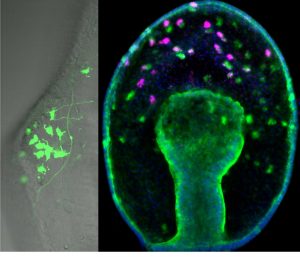
From previous work (Yankura et al., 2013) it was known that there are many soxc expressing cells scattered throughout the ectoderm in the two-day old gastrula that will form, not only the serotonergic neurons, but also other types of neurons in the later three to four-day larva. However, by the time neurons differentiate into various neural subtypes, the expression of soxc is extinguished. These cells were therefore labeled with a stable GFP construct to show that cells that originally express soxc do indeed end up forming serotonergic neurons (as well as other neural cell types) (Fig 2). Thus soxc+ cells in sea stars are neural progenitors, and these progenitors are distributed broadly across the ectoderm. The progression of these progenitors to differentiated neurons occurs through a series of asymmetric divisions (Fig 2). In particular one of the soxc+ daughters will express the LIM homeodomain transcription factor lhx2/9, and in turn lhx2/9 expressing cells will undergo both symmetric and asymmetric division, the asymmetric division producing a finally differentiated serotonergic neuron. Thus the lhx2/9 cells represent a proliferating, more restricted pool of serotonergic progenitors.
Figure 2. A stable GFP construct, driven by the soxc cis-regulatory region, is localised to neurons of the dorsal ganglion in the larval stage on left image. Right image: soxc expression cells (green) are found scattered throughout the ectoderm in the earlier gastrula. One of the soxc+ daughter cells expresses lhx2/9 (pink) in only the more anterior territory.
Next, the spatial domains in which these asymmetric divisions were occurring was examined. It has been known for many years that many animals, including the sea star larva (Yankura et al., 2010), share a remarkably conserved patterning along the AP axis. Genes with roles in patterning the anterior-most nervous system in vertebrates, for example, are also expressed in the most anterior regions of the larvae, and genes involved with patterning midbrain-hindbrain region are expressed at the posterior boundary of the ectoderm. This new work now shows that these AP domains control neural progression. That is, soxc+ cells divide to produce two soxc+ cells in the posterior zone, asymmetrically divide to produce an lhx2/9+ sister in the intermediate zone; lhx2/9+ cells will also divide symmetrically in this mid-zone, and will exit proliferation and become differentiated neuron in only the anterior-most, foxq2 expressing zone. These AP domains, therefore, establish neural proliferation zones.
Altering the size of the AP zones caused predicted changes in neural proliferation, and therefore changed the final numbers of serotonergic neurons. This shows therefore that a function of these highly conserved territories, in sea stars at least, is to regulate neural cell type progression.
This new work, therefore shows that neural progenitors form throughout the ectoderm without regard to patterning in the sea star, and that the GRN that establishes domains along the AP axis, controls neural progression. We predict that fairly simple evolutionary changes to this patterning GRN could change the size of these territories, and hence the numbers and distributions neural cell types.
REFERENCES
Yankura, K. A., Martik, M. L., Jennings, C. K. and Hinman, V. F. (2010). Uncoupling of complex regulatory patterning during evolution of larval development in echinoderms. BMC Biol8, 143.
Yankura, K. A., Koechlein, C. S., Cryan, A. F., Cheatle, A. and Hinman, V. F. (2013). Gene regulatory network for neurogenesis in a sea star embryo connects broad neural specification and localized patterning. Proc Natl Acad Sci U S A110, 8591–8596.
A postdoctoral position is available to study the cellular basis of morphogenesis in vertebrate craniofacial development. This work will integrate mouse molecular genetic and human iPSC approaches with live cell imaging, cell biology and biochemistry to study signaling mechanisms in development, and how this signaling goes wrong in congenital disease (e.g. PLos Biology 2015 13(4): e1002122, http://jcb.rupress.org/content/215/2/217.long, http://www.sciencedirect.com/science/article/pii/S0012160615301548). The position is in the laboratory of Jeff Bush (bush.ucsf.edu) in the UCSF Department of Cell and Tissue Biology and Program in Craniofacial Biology. The laboratory is located at the UCSF Parnassus Heights campus, in the center of San Francisco. UCSF offers an outstanding developmental biology community and a supportive working environment.
Candidates with a Ph.D. degree in a biological science and research experience in molecular biology, genetics, biochemistry, or live cell or live embryo imaging should submit a C.V. and names of at least 2 references via email to: jeffrey.bush@ucsf.edu
The Warwick – A*STAR Research Attachment Programme offers fully funded 4 year PhD studentships in Molecular Cell Biology and Microbiology, with students spending 2 years at Warwick and 2 years in Singapore at an A*STAR institute.
A strong 1st or an upper 2nd undergraduate degree (or equivalent international qualifications) in Physical Sciences (e.g. Engineering, Physics, Chemistry, Computer Science, Mathematics, Plant Sciences) or Life Sciences (e.g. Biology, Biochemistry, Biomedical Science).
Maths ‘A’ level or equivalent training is desirable.
Research training will be given in both Warwick and Singapore. Nonetheless, previous practical laboratory experience may be an advantage.
Application Procedure
To apply please send us:
a CV and covering letter
2 satisfactory academic references
Where appropriate, an English Language test certificate – acceptable tests can be found on the Study section of the Warwick website.
and also apply via the University’s online Postgraduate Application form HERE (please note that you are applying for course B93R PhD Molecular Biomedicine).
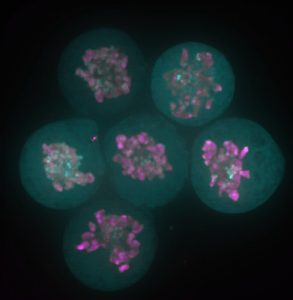
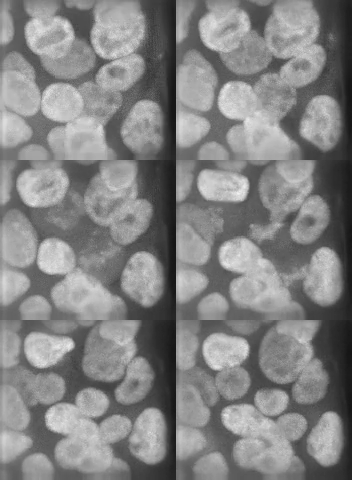
The story behind our recent paper (Festuccia et al., Nature Cell Biology 2016) started with a serendipitous observation made in a small room of the ISCR (Institute for Stem Cell Research), which at the time was still located in the King’s Buildings campus, south of town in my beloved Edinburgh. I was imaging a newly generated reporter ES cell line expressing a fusion between my favourite pluripotency transcription factor, Esrrb (Estrogen Related Receptor Beta), and a bright red fluorescent protein, TdTomato, when I noticed something I didn’t expect: I was able to identify dividing cells just by looking at the fluorescence signal from the Esrrb-TdTomato reporter. Esrrb was painting the mitotic chromosomes. I was surprised, and at the same time I realised I knew very little about the behaviour of transcription factors during cell division. Were all transcription factors supposed to remain bound to chromatin after condensation? And if so, with what consequences? Was this phenomenon reported in ES cells? What about other pluripotency factors?
Since then – I was finishing my PhD in the group of Ian Chambers – 4 years passed, and I learned that I was observing a phenomenon already described as “mitotic bookmarking”. Pioneering work over the last two decades in the groups of David Levens, Kenneth Zaret, Gary Stain, Marco Pontoglio and Gerd Blobel, among others, helped us understand that some proteins, including sequence specific transcription factors, remain bound to the chromatin during mitosis, marking promoters and key regulatory regions to facilitate the timely reactivation of gene expression after cell division. At the time of the observation, a friend and Post-Doc in Ian’s lab, Pablo Navarro, drove my attention to this concept. Pablo had already attempted to document bookmarking in ES cells. Unfortunately, regular fixatives such as formaldehyde delocalise transcription factors from mitotic chromatin (Pallier et al., Molecular Biology of the Cell 2003). The stimulating environment created by our usual scientific discussions made it possible for the implications of my initial observation not to remain unexplored. Thanks to the generosity of Ian, I was able to make of that observation the basis for my post-doc project, and I moved to the Pasteur Institute in Paris to join the newly established lab of Pablo. In these last 3 years, we were able to show that indeed during mitosis Esrrb remains bound to crucial enhancers regulating ES cell identity and instructs gene expression in daughter cells. We also understood that mitotic binding is very dynamic, and chiefly driven by the interaction of Esrrb with its consensus binding sites on DNA.
Nonetheless, many of the question I had at the time of the first observation of Esrrb mitotic retention remain open: the challenge that cell division, and another potentially disruptive phase of the cell cycle, DNA replication, pose to the control exerted by pluripotency factors over ES cell identity is a largely overlooked problem in our field. More generally, our understanding of the properties and structural organisation of mitotic, or newly replicated, chromatin is superficial. Can the observation made for Esrrb be extended to other pluripotency regulators? In the case mitotic binding will prove to be a general phenomenon, the current assumption of a restricted accessibility of mitotic chromatin will have to be challenged. Indeed, recent observations indicate that accessible genomic regions are largely invariant between interphase and mitosis (Hsiung et al., Genome Research, 2015). Coupled to the notion that a major portion of mitotic chromosomes is not constituted by chromatin (Booth et al., Molecular Cell 2016), this indicates that part of the DNA might reside outside domains formed of compacted nucleosomes in mitosis, possibly maintaining full or increased accessibility to transcriptional regulators, chromatin modifiers and remodelers. Or, vice-versa, we could imagine that precisely the binding of transcription factors keeps portions of the genome decompacted and localised in accessible regions of the chromatids.
If ES cells use specific mechanisms to ensure the continuity of transcription factor control over gene expression during cell division, and given that the activity of pluripotency regulators, like Esrrb, is tightly linked to the self-renewal ability of ES cells, could it be that the constraints posed by mitosis make it a favourable moment for ES cells to trigger differentiation programmes? Mitotic binding by Esrrb is restricted to only a fraction of the interphase targets. Declining levels of Esrrb and other factors might therefore trigger the further constriction of the set of accessible enhancers during cell division, irreversibly destabilising the pluripotency network in daughter cells. In fact, as part of my PhD research, I observed that Esrrb downregulation marks ES cell commitment to differentiation, and identified a set of enhancers that is inactivated during the early stages of this process (these results form the basis of a manuscript currently under revision). Many of these are indeed bookmarked enhancers.
I might just find myself in the lucky position of being able to link two parts of my previous work and contribute to our better understanding of how cell fate decisions are implemented by pluripotent cells early during development, and possibly later on in multipotent progenitors and adult stem cells.
New postdoc positions are available immediately in the laboratory of Dr. Terry Yamaguchi at the National Cancer Institute at Frederick. The group investigates how Wnt signals regulate the gene regulatory networks that control the fate of embryonic and adult stem cells. Current projects focus on understanding how Wnts regulate the self-renewal and differentiation of a recently described bipotent progenitor, the neuromesodermal progenitor (NMP), which generates the spinal cord neurons and musculoskeletal system of the trunk. Using a combination of mouse genetics, mouse and human embryonic stem cell in vitro differentiation, and genomic and proteomic approaches, Dr. Yamaguchi’s lab is investigating the molecular mechanisms underlying the activity of key transcription factors in NMP development, as well as in rare cancers such as chordoma. Please view the lab’s website for further details and a list of relevant publications at: https://ccr.cancer.gov/Cancer-and-Developmental-Biology-Laboratory/terry-p-yamaguchi
Number of Positions: 2
C.V. Required: Yes
Number of References Required: 3
Bibliography Required: Yes
Experience Required:
Interested candidates must have a Ph.D. and/or an M.D. and have less than 5 years of postdoctoral experience. Applicants that have a strong background in stem cell biology, molecular biology, embryology, genetics, functional genomics or a related discipline are encouraged to apply.
How To Apply: To apply, send a cover letter, CV including bibliography, and contact information for three references to the following address:
Dr. Terry Yamaguchi, Ph.D., Senior Investigator, Cell Signaling in Vertebrate Development Section, Center for Cancer Research, National Cancer Institute, Building 539, Room 218/205, Frederick, MD 21702-1201.
The aim of the third conference in this series is to understand the biology that underpins the success or failure of regenerative processes. We will explore the relationship between stem cell biology and regenerative biology so that both can be fully exploited to treat disease. This meeting will bring together scientists and clinicians interested in developmental and regenerative biology, stem cell research, gene therapy, tissue engineering and translational medicine. We welcome abstracts from all areas relevant to the main themes of the meeting, for both oral and poster presentations. Several oral presentations will be chosen from the abstracts submitted. A limited number of bursaries will be available for PhD students! Registration will open soon – for further details, visit: https://coursesandconferences.wellcomegenomecampus.org/events/item.aspx?e=633
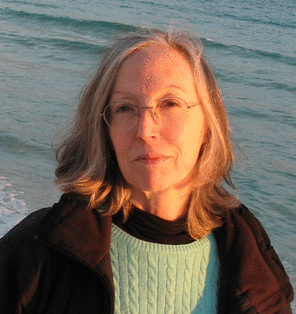
Kathryn Anderson is Professor and Chair of the Developmental Biology Program at the Sloan Kettering Institute in New York. Her lab investigates the genetic networks underlying the patterning and morphogenesis of the early mouse embryo. We caught up with Kathryn at the 2016 Society for Developmental Biology – International Society of Differentiation joint meeting in Boston, where she was awarded the Edwin G. Conklin medal.
You’re here at the SDB-ISD meeting to receive the Edwin G. Conklin medal. What does the award mean to you?
The recognition of your colleagues is a wonderful thing and I guess I’m kind of sentimental about this. It’s nice to think that the people in the field appreciate what we’ve done. The other part that’s particularly nice is that for a long time I was thought of as a fly person who’d gone astray! Doing the mouse project was a big risk and to think that people have appreciated it means a lot to me.
When did you first become interested in biology?
My parents must have steered me in this direction. My father was probably a frustrated chemist and I guess he wanted me to do science, not that I was particularly aware of it. I did science fairs at junior high and then I had an absolutely wonderful biology teacher in high school: he made a huge difference. We’d read things like The Double Helix and got an impression of what it was like to do science, not just the theory. And also, I grew up by the beach so a lot of my spare time was spent looking at tide pools, pulling up little animals – I always loved that.
In your early career at Berkeley you made seminal contributions to our understanding of early embryonic patterning in Drosophila. Looking back, do you think many of the questions you grappled with then have now been answered?
At the time I moved away from dorsoventral patterning, there were many open questions in the field, but I think no burning ones that I particularly wanted to get to the bottom of. Since I’ve left the field there have been huge steps forward. I’ve particularly followed progress in understanding morphogenesis, for instance Maria Leptin’s and Eric Wieschaus’ work on how the furrow cells actually do what they need to do, which has been really exciting. The Toll pathway has also opened up in exciting new ways. So it’s great to be able to follow the field in depth, because I used to live there!
In the 1990s your lab switched from working exclusively with flies to accommodate mice as well and mice are now your lab’s primary model system. What spurred on that change, and was it a challenging transition?
I was always interested in mammalian development and I took a mouse genetics course at Bar Harbor when I was teaching in Berkeley. So I was intrigued by the possibilities of mouse genetics. And then I did this totally wonderful sabbatical with Rosa Beddington at Mill Hill in London. At the time Mill Hill was exclusively vertebrate developmental biology, so to go there from the invertebrate field was very engaging. Rosa was amazing and she made mouse embryos seem totally accessible. I had some time to think on this sabbatical and thought ‘well, these guys really know what they’re doing, I can’t really improve on mouse knockout technology’. So what could I do in mice that would be a little different? This was the time when the MIT mouse genome project was beginning, where they’d made DNA polymorphism-based markers for genetic mapping. I read those papers and thought: you could actually map a mutant with a very small number of animals with that technology. So this opened up the possibility of doing forward genetics in mouse. One graduate student, Andrew Kasarskis, was convinced that he could get a thesis out of it, though many people thought I’d lost my mind! He moved with me when we moved the lab to New York, which really helped.
In terms of the challenges: I wasn’t really put off by them. The long generation time didn’t bother me – I mean a fly screen takes a year and a half! You just do things on a smaller scale. My goal was never to do Drosophilasaturation mutagenesis, that wouldn’t have worked.
And you seem to have brought an enthusiasm for genetics into your mouse work…
Genetics is essential. But we’ve never done only genetics – we combined it with biochemistry, cell biology, molecular biology. Genetics doesn’t exist in isolation, but without genetics you don’t know where your reality is. The fun and kind of sad thing about mammalian genetics is that there’s so much we don’t know, so you can do a simple, forward genetic recessive loss-of-function screen and still find new stuff. And this is in the mouse, which is such an important model – it’s a real thrill.
And what got you interested in primary cilia?
It was totally driven by the screen we did. It turns out there are a lot of genes in the mammalian genome that are required to make primary cilia. And if you make mutations in these genes you get aberrant Hedgehog signalling, and Hedgehog mutants have these beautiful and striking phenotypes at mid-gestation, the stage we chose to screen at. The phenotypes just leap out at you. We were also fortunate that we were prepared to recognise they were Hedgehog signalling mutants. Jonathan Eggenschwiler, the first postdoc to work on mice in my lab, had worked on one of the very first five mutants that came from the screen, which turned out to be Rab23. Jonathan did a lot of painstaking work to show that this mutant disrupted Hedgehog signalling and in the course of doing that we got to know what Hedgehog pathway mutants looked like morphologically.
Other people had made IFT [intraflagellar transport] mutants that disrupted cilia and hadn’t recognised what they were, but when we saw them in our labs, under our microscopes we said, ‘that’s Hedgehog’! That turned out to be pretty amazing, actually: there’s this whole organelle required for Hedgehog signalling in vertebrates, but not in flies, and there are literally hundreds of non-redundant genes in the mammalian genome where mutations disrupt cilia and thus Hedgehog signalling. It’s a geneticist’s dream, but raises the question of why organise the genome like this: there are so many weak points in Hedgehog signalling – and Hedgehog is so vital.
So at first we had an embarrassment of riches, trying to figure out how each of these genes worked. Other people started working on it too and showed that the Hedgehog pathway proteins are enriched in cilia and that they traffic from one place to another in response to Hedgehog ligands. This became an organelle that’s doing something dynamic and extremely interesting. And then, if you perturb the ciliary structure in different ways, you alter the pathway in different ways. So you can get gain or loss of signalling by disrupting different proteins, all of which are required to make cilia. It became a complex, but also tractable, puzzle.
Your lab also currently works on the mechanisms of gastrulation in the early mouse embryo.
Gastrulation was really what I came into the mouse system to do. To my great disappointment the Toll pathway does nothing in the early mouse embryo: the plan for my sabbatical was to start getting a foothold in what Toll does in early mammalian development, but my and other people’s studies made it pretty clear early on that the conserved function of the Toll pathway was in immunity, not development.
And so we worked on immunity for a little while, but I’m really a developmental biologist. My rationale for doing mouse genetics was that if the Toll pathway has nothing to do with mammalian development, then maybe there are things about early mammalian development that you can’t figure out by extrapolating from flies. So I wanted to find out the rules that control gastrulation and cell fate specification in the mouse. Mice are obviously very different to flies: everything is dynamic. It’s not like a blastoderm where every cell sort of knows what it’s going to do. Cell fate decisions are being made ‘on the fly’: cells move from one place to another, see another cue, do something different. It seemed like the rules might be quite different.
In the meantime a lot of people knocked out a lot of genes and found a bunch of signalling pathways important for mouse gastrulation, but the mutations we identified through screens were mostly other things: cell biology was really prominent. For instance, we’ve been very interested in how epithelial organisation and cell migration are regulated by those signalling molecules, and how they actually control a cell’s behaviour to get it to the right place to sense the next signal. Unlike the famous fly screens, in mouse screens we actually get a lot of the ‘mechanical’-type factors like cytoskeletal regulators. This is partly due to the lack of a real maternal contribution: you’re looking at the first time a lot of these systems are used. One of the first mutants we identified was a regulator of the Arp2/3 complex, something you’d not expect to find as a regulator of patterning in the fly screens, but which had anterior-posterior duplications in the body plan in the mice. This tells us that cell migration is crucial to make the body plan of the mouse. It was surprising and delightful to get these sorts of core cell biological factors coming from the screens.
Your lab is based at the Sloan Kettering Institute. I wonder what working in proximity to cancer biologists is like?
The Sloan Kettering Institute is the basic science branch of the Memorial Sloan Kettering Cancer Center and while there is cancer biology done here, most of it is basic science. When I arrived, I went to the Molecular Biology programme which was this funny mix of nucleic acid biochemists and fly geneticists. When Harold Varmus became president he decided that because of his personal experience, developmental biology was really important for cancer and so there should be a developmental biology unit. I think development is well appreciated in the Institute and we do get exposed to cancer biology. It’s nice to be able to see the connections and learn to speak the language.
Two years ago you were awarded FASEB’s Excellence in Science Award, which recognises outstanding achievements by women in biology. What do you think of the current outlook for young female researchers in developmental biology?
Things have improved, though perhaps not as much or as quickly as one would have hoped. Women face the same challenges as they did 20 years ago and there are fewer women in the field than there should be. I think things get better when there are women in leadership positions and that’s one way forward – to break these glass ceilings and make sure that we lobby to have women in charge, or create positive reinforcements for institutions that take these actions. As well as being positive role models, women in leadership positions can practically understand how to increase the prospects for younger women researchers.
Do you have any advice for young scientists?
Find what you love – it might be something that you love just for a personal reason – and follow that. You really need a personal love for what you’re doing.
What might Development readers be surprised to find out about you?
Maybe it’s not ‘surprising’, but a real passion I have outside the lab is music, whether modern classical composers like David Lang or bands like Radiohead. And New York is a great place for this passion.
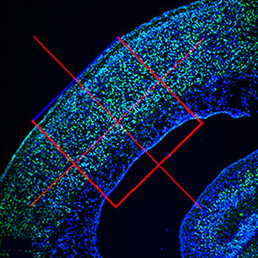
Zika virus (ZIKV) infection results in embryonic microcephaly and has been declared a global health emergency by the World Health Organization. Disruption of the neural progenitor cells is considered to be the major cause of microcephaly; however, the fate of other cell types, including differentiated neurons and vascular cells, remains unknown. Since infected mouse embryos die perinatally, it also remains unknown whether ZIKV infection can cause postnatal microcephaly in animal models. Now, on p. 4127, Jian-Fu Chen and colleagues report a postnatal model for ZIKV infection using intracerebral inoculation of embryonic brains with the ZIKV. The infected pups survive after birth and show postnatal microcephaly, which bears relevance for a better understanding of the microcephaly observed in ZIKV-infected newborn humans. In addition to microcephaly, the postnatal mouse model recapitulates several aspects of fetal brain abnormalities associated with ZIKV in humans, including extensive neuronal apoptosis and loss, axonal rarefaction, corpus callosum diminishment, and reactive astrocyte and microglial cell accumulation. Furthermore, the authors show that ZIKV infection leads to increased vessel density and vessel diameter, and causes blood–brain barrier leakage in the developing brain. While further research is required to better characterise the approach, the development of a postnatal model for ZIKV infection is an important step forward in understanding this disease, and the findings reported by the authors offer novel insight into the pathology of ZIKV infection in the postnatal setting.
Initiation and subsequent growth of the mammalian tooth depends on distinct populations of epithelial and mesenchymal stem cells located in the labial cervical loop (LaCL) and the neurovascular bundle, respectively. In rodents, Sox2 marks the dental epithelial stem cells (DESCs) and has been shown to be an important regulator of tooth development, but the molecular mechanism by which this occurs has not been determined. In this issue (p. 4115), Brad Amendt and colleagues uncover a Pitx2/Sox2/Lef-1 network that controls the epithelial stem cell niche in the continuously erupting rodent incisor. The authors demonstrate that Sox2 is necessary for the maintenance of the stem cell niche, as inactivation of Sox2 leads to lower incisor arrest, as well as abnormalities in the upper incisor and molar teeth. Conditional overexpression of Lef-1 can partially rescue the Sox2-related defect in incisor growth, possibly owing to increased cell proliferation at embryonic stages and the formation of a new compartment of stem cells in the LaCL. The authors also provide evidence for physical interaction between Pitx2 and Sox2, and show how both factors are core components of the Pitx2/Sox2/Lef-1 network. Together, these findings represent a significant milestone in our understanding of the transcriptional control that defines dental stem cell development and differentiation.
Kathryn Anderson is Professor and Chair of the Developmental Biology Program at the Sloan Kettering Institute in New York. Her lab investigates the genetic networks underlying the patterning and morphogenesis of the early mouse embryo. We caught up with Kathryn at the 2016 Society for Developmental Biology – International Society of Differentiation joint meeting in Boston, where she was awarded the Edwin G. Conklin medal.
This Review discusses how and when transposable elements are expressed during development and how they modulate genome architecture, gene regulatory networks and protein function during embryogenesis.
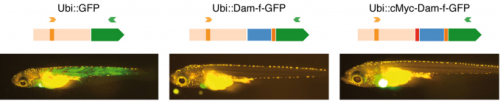
Joachim Wittbrodt and colleagues present critical improvements to the DamID protocol improve specificity and sensitivity in determining genome-wide protein-DNA interactions in transient or stable transgenic animal lines.
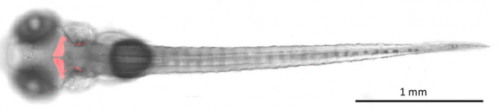
Reinhard Köster and colleagues present Tamoxifen-induced Caspase activation in zebrafish. This enables fast, efficient and specific cell ablation via targeted apoptosis.
This meeting report from Steven Pollard highlights the major advances and emerging trends in quantitative stem cell biology as presented at the 5th annual Cambridge Stem Cell Symposium this year.


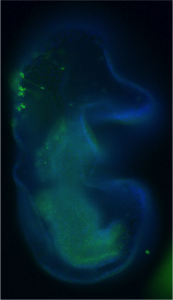
 embryonic microcephaly and has been declared a global health emergency by the World Health Organization. Disruption of the neural progenitor cells is considered to be the major cause of microcephaly; however, the fate of other cell types, including differentiated neurons and vascular cells, remains unknown. Since infected mouse embryos die perinatally, it also remains unknown whether ZIKV infection can cause postnatal microcephaly in animal models. Now, on p.
  Initiation and subsequent growth of the mammalian tooth depends on distinct populations of epithelial and mesenchymal stem cells located in the labial cervical loop (LaCL) and the neurovascular bundle, respectively. In rodents, Sox2 marks the dental epithelial stem cells (DESCs) and has been shown to be an important regulator of tooth development, but the molecular mechanism by which this occurs has not been determined. In this issue (p.
  Kathryn Anderson is Professor and Chair of the Developmental Biology Program at the Sloan Kettering Institute in New York. Her lab investigates the genetic networks underlying the patterning and morphogenesis of the early mouse embryo. We caught up with Kathryn at the 2016 Society for Developmental Biology – International Society of Differentiation joint meeting in Boston, where she was awarded the Edwin G. Conklin medal.
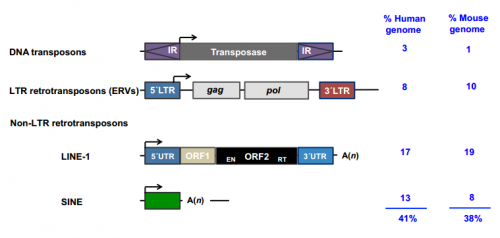 This Review discusses how and when transposable elements are expressed during development and how they modulate genome architecture, gene regulatory networks and protein function during embryogenesis.