
(Developmental) Biology around the internet- October 2014
Posted by the Node, on 15 October 2014
Here is October’s round-up of some of the interesting content that we spotted around the internet:
News & Research:
– Bananas, Jesus on toast and polar bear disguises- some of the 2014 IgNobel Prizes! And since then the real Nobel Prizes have also been announced, with two prizes for Biology. The prize in Physiology or Medicine was awarded to the discovery of the positioning system of the brain, and the Prize in Chemistry to the developers of super-resolution microscopy.
– ‘Sometimes, the brightest stars in science decide to leave’- on life outside the lab, in Nature News & Comment.
– A patient is for the first time implanted with iPS cells, in Japan- here and here.
– Nature launched a new website devoted to science software, apps and online tools.
– ‘The man who grew eyes’- a feature article on Yoshiki Sasai’s research in Mosaic.
– A movie based on the Woo Suk Hwang cloning scandal has been a success in the Korean box office.
– Can you explain your research using an infographic? The Society of Biology is running a competition! The deadline is the 5th of November.
– And you can vote for who you think should be the Stem Cell Person of the Year 2014 until the 22nd of October!
Weird & Wonderful:
– Crocket is an unusual way to determine authorship order in a paper!
– Ever wanted to 3D print a frog dissection model? One of the several models available at the NIH 3D print Exchange website!
– Explaining how science works… using cookies!
– Cute DNA plush toys… with magnets for hydrogen bonds!
– And follow the ups and downs of life in the lab with the Lego Academics twitter account!
Peer 1: Brilliant! Accept with no changes; Peer 2: Groundbreaking! Accept with no changes; Peer 3: Reject. pic.twitter.com/KbLPuT24vu
— Lego Academics (@LegoAcademics) August 12, 2014
Beautiful & Interesting images:
– Chromosome sweets
– The winners of the FASEB BioArt image competition have been announced
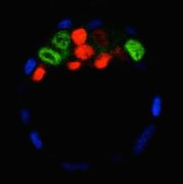
– Beautiful chicken embryo
Chicken embryo RT @Powerfulpixs via @embryoproject pic.twitter.com/2rokc3L0DT
— the Node (@the_Node) September 3, 2014
Videos worth watching:
– A great animation video on the New York Times illustrates the discoveries of van Leeuwenhoek and the beauty of the microbial world.
– See the winners of the Stem Cell Video contest launched by the Knoepfler lab blog
– And we spotted this great video on chick development:
Keep up with this and other content, including all Node posts and deadlines of coming meetings and jobs, by following the Node on Twitter
 (1 votes)
 Loading...


 (No Ratings Yet)

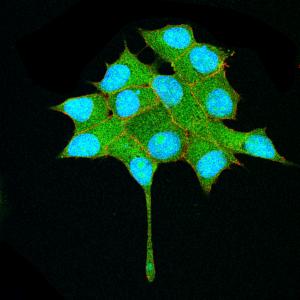
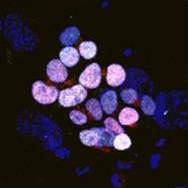
 The repair of cartilage and bone following damage remains a clinical challenge. Current cell-based therapies rely mostly on adult mesenchymal stromal cells, but the expansion of these into correctly differentiated and functionally competent chondrocytes, which give rise to cartilage and then bone, remains problematic. Here, Naoki Nakayama and colleagues develop a small molecule-based approach that mimics the embryonic somitic chondrogenesis programme and can be used to differentiate mouse embryonic stem cells (ESCs) into chondrocytes in vitro (p.
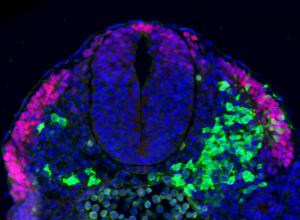
  The gene orthodenticle homologue 2 (Otx2) encodes a paired-type homeodomain transcription factor that is known to play a role in head morphogenesis. In the mouse, Otx2 is expressed in the anterior neurectoderm, where it is required for the differentiation of anterior neural tissues. Otx2 is also expressed in the anterior mesendoderm (AME) but its role here is unknown. On p.
  Numerous transcription factors (TFs), including PU.1 and Scl, are known to play important roles during haematopoiesis, but how these act within wider TF networks is unclear. Now, Berthold Göttgens and colleagues use transcription activator-like effectors (TALEs) to manipulate the expression of PU.1 and Scl and determine how these TFs function during developmental haematopoiesis (p.
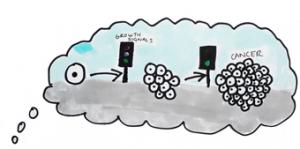
  Pattern formation during development often depends on the differential regulation of gene expression in response to a morphogen gradient, but how such gradients govern gene expression is unclear. A simplified view suggests that the morphogen activates a transcriptional activator, and that differential gene expression is dependent on the affinity or number of binding sites for this activator within target genes. However, this model does not account for bifunctional transcriptional effectors – those that function as activators and repressors – and has also been questioned by recent experimental results. Here, James Briscoe and colleagues describe a unifying mathematical model of morphogen-dependent gene expression that can explain recent counterintuitive findings (p.
 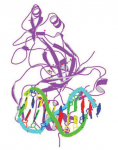 The T-box family of transcription factors exhibits widespread involvement throughout development in all metazoans. Here, Virginia Papaioannou provides an overview of the key features of T-box transcription factors and highlights their roles and mechanisms of action during various stages of development and in stem/progenitor cell populations. See the Primer on p.
 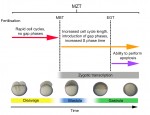 The initial phases of embryonic development occur in the absence of de novo transcription and are instead controlled by maternally inherited mRNAs and proteins. Following this period of transcriptional silence, zygotic transcription begins, the maternal influence on development starts to decrease, and dramatic changes to the cell cycle take place. Here, Steven Harvey and colleagues discuss recent work that is shedding light on the maternal to zygotic transition. See the Review on p.