
The community site for and by
developmental and stem cell biologists

The people behind the papers: Philippe Foerster & Nathalie Spassky

Posted by , on 8 February 2017

Radial glial cells are multipotent progenitors in the developing vertebrate brain. At their apical interface with the ventricular cavity around which the brain forms, they bear a primary cilium, a signalling and sensory organelle crucial for proper brain development. Today’s paper, from a recent issue of Development, addresses the link between these primary cilia and brain morphogenesis. We caught up with first author Philippe Foerster and group leader Nathalie Spassky of the Institut de Biologie de l’Ecole Normale Supérieure in Paris.


So Nathalie, can you tell us your scientific biography and what questions your lab is interested in?

NS I am a developmental neurobiologist. For my PhD that I obtained in Paris, I studied oligodendrocyte development in vertebrates. I then studied the contribution of multiciliated ependymal cells to adult neurogenesis as a post-doctoral fellow at UCSF. In 2010, I set up my own lab at the Institut de Biologie de l’Ecole Normale Supérieure, in Paris, where we develop multidisciplinary approaches to decipher the development and functions of ciliated cells in the mammalian brain.


What is Paris like for cell and developmental biology?

NS A highly stimulating environment with a great community of labs working on different aspects of cilia biology and brain development. The approaches range from cell biology to genetics and use a large variety of models (Xenopus, zebrafish, planarian, paramecium and rodents).


And Philippe, how did you come to join Nathalie’s lab?

PF I was a student in the Master 2 program in stem cell biology at the Pierre and Marie Curie University (UPMC) in Paris. I joined Nathalie Spassky’s lab for my Master 2 internship, because I was looking for a lab working on embryonic neural stem cells. I already had some experience in that field. What I immediately liked in Nathalie was her ability to mix disciplines (such as physics and biology) to approach things differently. This allowed me to contribute my computer skills to the lab and use them, especially for the analysis of apical surface segmentation.


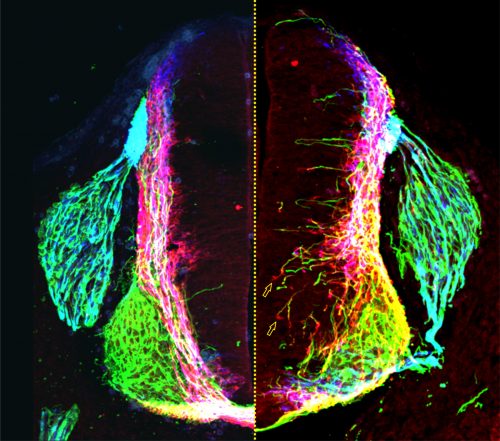
Representative coronal sections of control and Kif3a mutant forebrains, from Figure 1, Foerster, et al. 2017.


What was known about the role of primary cilia in brain morphogenesis before your current work?

NS & PF The primary cilium has mainly been studied during early stages of brain development. A number of labs have shown that the primary cilium is crucial for telencephalic patterning and morphogenesis. The primary cilium is also a well known transducer of Sonic Hedgehog signalling.


Can you give us the key results of your paper in a paragraph?

NS & PF Radial glial cells are bipolar cells found throughout the brain during embryonic development. These cells undergo morphological changes during the cell cycle and brain development. We have shown that the enlargement of their apical domain during development is regulated through the primary cilium and the mTORC1 pathway. Although the phenotype observed in the ciliary mutants does not lead to major cortical defects during embryonic development, it initiates postnatal hydrocephaly and might be responsible for major postnatal brain dysfunctions. This possibility is currently being tested in the lab.


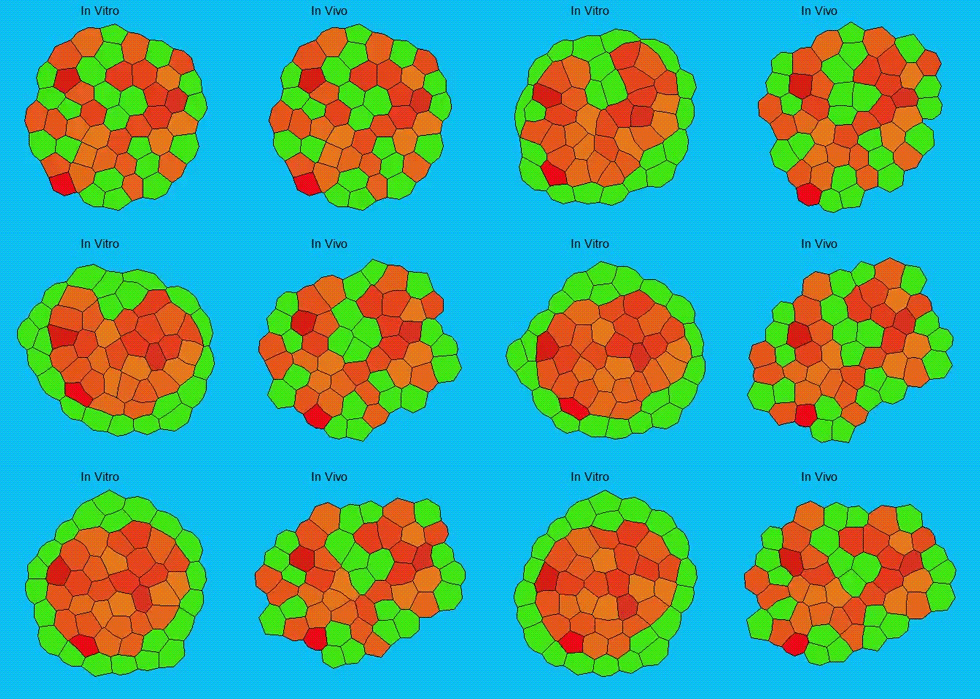
Segmented cortical surfaces coloured by apical cell area, from Figure 2, Foerster, et al. 2017


Why do you think having a larger apical surface interferes with normal radial glial cell development?

NS & PF Enlargement of the apical surface of radial glial cells affects the orientation of the mitotic spindle, maybe because radial microtubules do not attach correctly to the cell cortex during mitosis. Misorientation of the mitotic spindle leads directly to an increased number of basal progenitors and defects in cortical development, such as an alteration of the number of differentiated cells. Interestingly, we show that this phenotype can be rescued by treatment with the mTORC1 inhibitor rapamycin, suggesting that the apical domain is enlarged in cilia mutants through transduction of the mTORC1 pathway by the primary cilium. Further investigations are needed to determine the molecular mechanisms and whether they involves upregulation of protein synthesis.


Do you have an idea what is upstream and downstream of mTORC1 in this system?

NS & PF We would love to know! We think that the upstream signals could be biochemical and/or mechanical cues that would be sensed by the primary cilia. This was the reason why we generated mutants for the mechanosensory protein polycystic kidney disease 1 (Pkd1). However, no difference in the surface area of radial glial cell apical domains was observed in Pkd1 conditional mutants. It would thus be interesting to study how other mechanical stress pathways might be involved in these regulations. Similarly, the downstream signals should be the focus of future studies as they might involve specific molecular cascades and cytoskeletal modifications that would interfere with cell fate and brain development.


Coronal sections of the somatosensory cortex, from Figure 3, Foerster, et al. 2017.


What significance does your work have for our understanding of ciliopathies?

NS & PF Brain malformations are often observed in ciliopathies, although their etiology is still not well characterised. We show that primary cilia defects lead to ventricular enlargement (ventriculomegaly), which initiates postnatal hydrocephalus and might be responsible for major brain dysfunctions that still need to be characterized.


When doing the research, was there a particularly exciting result or eureka moment that has stayed with you?

PF It took me many hours to map the brain ventricle apical surface, which required tonnes of confocal images and lots of adjustments of the segmentation program. My eureka moment arrived when I saw for the first time the colour-coded area map of the apical surface of a Nestin-K3AcKO embryos at E14.5. When I saw lots of enlarged apical domains in Nestin-K3AcKO embryos, I realised that this tiny antenna could play a role in the development of this phenotype. I knew that we were on the right track when we obtained the western blot results showing the implication of the mTOR pathway and rescue with the mTORC1 inhibitor rapamycin. This pathway was already known to be involved in the proper control of cell size.


Classifying cells by mitotic stage, from Fig. 3, Foerster, et al. 2017


And what about the flipside: any moments of frustration or despair?

PF It took at least a year to breed the Nestin-K3AcKO (and IFT88cKO) mutants. At the end of my first year of thesis work, we had many problems with one of the Nestin cre line that we were using, because it unexpectedly displayed ectopic Cre expression. This was very stressful because we had to start the mouse breeding and the phenotype analysis all over again. It took another year to overcome these difficulties, but this time we double checked the cre recombinase expression before drawing conclusions!


Finally Philippe, what are your plans following this work?

PF I defended my thesis in September 2014. I then continued my career but in the world of IT while keeping in touch with the biomedical field. I have been working for more than 2 years now in an IT service company that is dedicated to clinical research.


And where next for the Spassky lab?

NS We are addressing several questions related to the molecular and cellular mechanisms of neural stem cell fate choices, multiciliated ependymal cell development and brain ventricular morphogenesis. To be continued…!!


Centrioles and centrosomes in ciliated radial glia, from Figure 5, Foerster, et al. 2017


Philippe Foerster, Marie Daclin, Shihavuddin Asm, Marion Faucourt, Alessandra Boletta, Auguste Genovesio, Nathalie Spassky. mTORC1 signaling and primary cilia are required for brain ventricle morphogenesis. Development. 144:201-210

Browse the People Behind the Papers archive here
Thumbs up (13 votes)
Loading...

Tags: , , ,
Categories: Interview

Navigate the archive

Use our Advanced Search tool to search and filter posts by date, category, tags and authors.

D’Arcy Thompson’s On Growth and Form – 100 Years On and Still Growing!

Posted by , on 7 February 2017

“For the harmony of the world is made manifest in Form and Number, and the heart and soul and all the poetry of Natural Philosophy are embodied in the concept of mathematical beauty.”


Diagram from On Growth & Form first edition (published by CUP 1917)
One of the famous Transformation Diagrams from On Growth and Form (published by Cambridge University Press in 1917)


D’Arcy Thompson’s On Growth and Form, which celebrates its centenary this year, is one of the key works at the intersection of science and the imagination. Hailed as “the greatest work of prose in twentieth century science”, it is a book that has inspired scientists, artists and thinkers as diverse as Alan Turing, C. H. Waddington, Claude Lévi Strauss, Jackson Pollock and Norman Foster. It pioneered the science of biomathematics, and has had a profound influence in art, architecture, anthropology, geography, cybernetics and many other fields. This year we celebrate the book’s centenary with a range of conferences, exhibitions and other happenings around the world, all of which are being promoted through the website www.ongrowthandform.org


D'Arcy Thompson by David S Ewart (University of Dundee Museum Services)
D’Arcy Thompson by David S Ewart (University of Dundee Museum Services)


D’Arcy Wentworth Thompson was born in Edinburgh in 1860. He took up the first chair of biology at University College, Dundee (now the University of Dundee) in 1885, aged just 24, and spent much of his first decade building up an extensive Zoology Museum. In 1889 he wrote to one of his students, “I have taken to Mathematics, and believe I have discovered some unsuspected wonders in regard to the Spirals of the Foraminifera!”


D’Arcy became convinced that the laws of mathematics could be used to explain the growth and form of living organisms. This was a controversial topic and it wasn’t until 1917 that he finally published his ideas in On Growth and Form. Nature called it “at once substantial and stately… It is like one of Darwin’s books, well-considered, patiently wrought-out, learned and cautious.” The comparison to Darwin is interesting, given that many saw the book as arguing against Darwinian evolution. D’Arcy said, “where it undoubtedly runs counter to conventional Darwinism, I do not rub this in, but leave the reader to draw the obvious moral for himself.” The “obvious moral” was that Darwin was wrong in seeing the evolution of form purely as a gradual process dictated by natural selection. D’Arcy’s Theory of Transformations, the most famous and radical chapter in the book, proposed that physical forces could cause a transformation from one species into another based on mathematical principles. Through his iconic transformation diagrams, D’Arcy demonstrated that laws of growth rather than evolution could be used to explain the different forms of related species.


For much of the 20th century, D’Arcy’s ideas ran counter to biology’s increasing focus on evolution and genetics but a number of developmental biologists such as C H Waddington continued to champion his work. He also found followers in other fields, such as the father of modern computing, Alan Turing.


By the 1980s, the growth of evolutionary-developmental biology had caused D’Arcy’s work to be revisited by many that had hitherto dismissed it. Richard Dawkins has noted that “It is one of the minor tragedies of biology that D’Arcy Thompson died just before the computer age, for almost every page of his great book cries out for a computer.” Technological developments have indeed transformed the scientific relevance of D’Arcy’s work, and new mathematical modelling techniques have allowed his theories to be tested scientifically for the first time. Today even arch-geneticists like Dawkins freely acknowledge D’Arcy’s significance.


D’Arcy has also been described as having a greater impact on the worlds of art and architecture than any other scientist of the 20th century. On Growth and Form inspired architects and engineers from Le Corbusier and Mies van der Rohe to Norman Foster and Cecil Balmond. Henry Moore, Richard Hamilton, Eduardo Paolozzi and Salvador Dali are among the artists known to have read and drawn on the book.


D'Arcy Thompson Zoology Museum
D’Arcy Thompson Zoology Museum, University of Dundee (photo by Alan Richardson)


Although D’Arcy’s original museum was demolished in the 1950s, his surviving collection is now displayed in the D’Arcy Thompson Zoology Museum at the University of Dundee, which is used not just in teaching life sciences but also by students of fine art, design, philosophy, creative writing and other subjects. The museum is open to the public regularly over the summer and for special events and activities throughout the year.


D’Arcy Thompson has recently been described as “the most important figure in the future of biology” and we are determined to ensure his work continues to exert a significant influence for many years to come. The centenary of On Growth and Form is being celebrated with a major conference and exhibition in Dundee in October (call for papers to follow soon!), and many other activities both here and around the world. Visit www.ongrowthandform.org to find out more.


Thumbs up (5 votes)
Loading...

Tags: , , ,
Categories: Events, Outreach, Science Art

New data reveals how gene knockouts affect whole embryo gene expression

Posted by , on 7 February 2017

DMDD logoNew DMDD data released on Expression Atlas reveals the effect of single gene knockouts on the expression of all other genes in the mouse genome. The gene expression profiles of 11 knockout lines have been derived from whole embryos harvested at E9.5, and the results can be compared with wild-type controls using an interactive online tool. Users can investigate which genes are differentially expressed as a result of a gene knockout, with the potential to uncover genes with similar roles or compensatory effects when a related gene is knocked out.

Data for additional lines will be released throughout 2017. The ultimate goal is to bring these molecular phenotypes together with the morphological phenotypes that have already been derived by the DMDD programme, to offer new insights about the effects of gene knockout on embryo development.


THE GENOMIC EFFECTS OF Ssr2 KNOCKOUT

The knockout of Ssr2 in the mouse was found to affect the expression level of 325 genes in total, and this is one of the 11 new datasets that can be explored in Expression Atlas.

The differential expression of each gene is described using the log2 fold change – a measure that describes the ratio of gene expression in the knockout to the level of gene expression in a wild-type control. A negative fold change (shown in blue in the image below) means that the gene was expressed at a lower level in the mutant. A positive fold change (shown in red in the image below) means that the gene was expressed at a higher level in the mutant.

A visualisation of the level of differential expression of 8 genes affected by the knockout of Ssr2.
Eight genes that are differentially expressed due to a knockout of the gene Ssr2 (above a cut off log2 fold change of 0.4). Six genes are expressed at a higher level, while Mfap2 and Ssr2 are expressed at a lower level.


The interactive tool in Expression Atlas allows different cut-offs to be applied to the fold change, so the genes displayed can be restricted to those with a large differential expression. The image above shows the 8 genes with a fold change greater than 0.4 as a result of knocking out the gene Ssr2.

The tool can also be used to visualise the data in graphical form. The plot below shows the fold change for each gene, allowing the user to quickly ascertain the extent to which a gene knockout caused differential expression of other genes. All 325 genes considered to have a significant change in the level of gene expression are plotted in red, with the rest shown in grey.


Graphical visualisation of the fold change for each gene in the mouse genome, following knockout of the Ssr2 gene.
A graphical visualisation of the fold change for each gene. The outlier with a fold change of -3.5 is the gene Ssr2, which has a much-reduced expression level in an Ssr2 knockout embryo.


The full list of lines with data currently available is: 1700007K13Rik, 4933434E20Rik, Adamts3, Anks6, Camsap3, Cnot4, Cyp11a1, Mir96, Otud7b, Pdzk1 and Ssr2.

The full dataset for any line can be downloaded for further analysis, while the individual line pages on Expression Atlas integrate the DMDD data with other pre-existing data, in cases where a gene has already been shown to alter expression.

Thumbs up (No Ratings Yet)
Loading...

Tags:
Categories: Highlights

This month on the Node and beyond

Posted by , on 7 February 2017

January was a productive month on the Node, with a variety of developmental biology content from the lab bench and beyond.


Research

We heard from the authors of a bunch of recent papers, including Ripla Arora on her recent Development paper on imaging the implanting embryo and uterine environment in 3D, and Kyle Martin on his recent PNAS paper which links taste, teeth and scales in sharks.


Nitya Ramkumar told us what Crumbs has to do with cell shape and gastrulation, highlighting her recent NCB paper, and Sylvia Dyballa and Cristina Pujades intorduced their eLife paper on using 4D imaging to understand inner ear morphogenesis. Highlighting another eLife paper, Ko Currie told us how planarian adults controlled neurogenesis.


People

Our People behind the Papers series continued with Miguel Brun-Usan and Isaac Salazar-Ciudad (University of Helsinki) on modelling and embryology, and Ehsan Pourkarimi and Iestyn Whitehouse (Sloan-Kettering, NY) on DNA replication and gene transcription.


Isabel Almudi, a postdoc in Fernando Casares’ lab in Seville, walked us through a day in the life of a mayfly lab and the beautiful eyes of the male flies.


We heard from three Company of Biologists Travelling Fellows – Hanna Hakkinen,  Nanami Morooka and Tetsuto Miyashita – who collectively crossed continents to learn new techniques in host labs.


Testsuto also told us about a meeting he had been to: the First International Hemichordate Meeting, and celebrated the potential of this enigmatic group of animals. We also heard from four undergraduate students who had received the Gurdon/The Company of Biologists Summer Studentships from the BSDB.


Beyond the lab

Valerie Butler argued for culturally relevant science education, to increase engagement and representation. Finally, a couple of resources: first in our latest round up of developmental biology preprints, and second in the awesome Lifemap, a zoomable and addictive online tool for exploring the tree of life, as introduced by its creator Damien de Vienne.


Around the web


The best tweets


https://twitter.com/AuditoryNerves/status/824301219460030464


https://twitter.com/FredrikJutfelt/status/823512955522256896


https://twitter.com/vividbiology/status/818491340489162752


https://twitter.com/debivort/status/823934351985545216


Thumbs up (No Ratings Yet)
Loading...

Categories: Highlights

PhD Scholarship – The Role of Cell Polarity in Tissue Repair

Posted by , on 7 February 2017

Closing Date: 15 March 2021

(A/Prof Helena Richardson’s & Prof Patrick Humbert’s laboratories at the Department of Biochemistry & Genetics, La Trobe Institute of Molecular Sciences (LIMS), La Trobe University Melbourne Campus (Bundoora)


We offer a PhD scholarship to an exceptional student (who has achieved a H1 Honours or equivalent) to determine how cell polarity perturbations affect signalling pathways in tissue repair. The project utilizes the model organism, Drosophila, and mammalian epithelial cell culture. This project will have important implications for understanding wound healing as well as cancer.


The Applicant should have Australian citizenship or residency. They should be highly driven and have a high level of achievement, including a first class Honours degree or equivalent in the field of Cell Biology and/or Genetics. Knowledge of Cell Biology theory and techniques is essential, and knowledge of Genetics, Molecular Biology and Biochemistry approaches is desirable. Experience in the Drosophila model organism, although not essential, will be highly beneficial.


The project will address the role of cell shape (polarity) regulation in epithelial tissue homeostasis, using an in vivo approach utilizing the Drosophila model system, and an in vitro approach with cultured mammalian epithelial cells. Sophisticated genetic techniques will be used to generate mutant patches of cells within an epithelium and the effect on cell morphology, cell extrusion, signalling pathways, cell proliferation, apoptosis and protein-protein interactions will be monitored utilizing sophisticated cell biological approaches involving fixed samples or live cell imaging. The project seeks to reveal novel mechanisms by which mutant cells interact with their microenvironment that can be utilized therapeutically to improve wound repair or to enhance elimination of the mutant cells.


Benefits of the scholarship

Benefits of the scholarship include:

  • A La Trobe University Research Scholarship for three years, with a value of $26,288 per annum, to support your living costs [2016 rate]
  • Opportunities to work with outstanding researchers at the Department of Biochemistry & Genetics, LIMS and have access to cutting-edge equipment and professional development programs
  • Opportunities for authorship on high impact scientific manuscripts.
  • Opportunities to attend national and international conferences


How to apply

  • Review how to apply for a graduate research scholarship at: http://www.latrobe.edu.au/research/future/apply
  • Contact A/Prof. Helena Richardson by email at h.richardson@latrobe.edu.au, with a full CV, academic transcript, and a cover letter outlining why you would like to be considered for this scholarship.
  • A/Prof Helena Richardson and Prof Patrick Humbert at the Department of Biochemistry & Genetics, LIMS will carefully review your application and consider you for this Scholarship.
  • The successful applicant who receives in-principle agreement for supervision, will then submit a complete PhD application to the La Trobe Graduate Research School, attaching a copy of the agreement to admissions.grs@latrobe.edu.au


You will be advised of an outcome by 30th April, 2017.


Closing date

Applications close 1 April 2017, unless filled sooner.


Contact us

If you require further information, please contact:  h.richardson@latrobe.edu.au or the La Trobe University Graduate Research School: grs@latrobe.edu.au

Thumbs up (No Ratings Yet)
Loading...

Categories: Jobs

PhD Scholarship – Embryo Development and Craniofacial Defects Research

Posted by , on 7 February 2017

Closing Date: 15 March 2021

A Ph.D. scholarship offered to an exceptional student, to investigate genetic mechanisms which underpin vertebrate birth defects, with a particular focus on craniofacial defects such as cleft palate.


This scholarship will be offered to an independent, proactive, forward thinking and enthusiastic candidate, who wishes to forge an independent career in science.


Applicants should have a high level of achievement, including a first class honours degree or equivalent.


As an applicant you should have an interest in developmental genetics and understanding the processes which govern embryo formation, as well as a keen interest and aptitude in biochemistry and molecular genetics. Your project will address biological and cellular behaviours which regulate how the vertebrate embryos forms, using the mouse, and zebrafish as genetic developmental models.


Benefits of the scholarship

Benefits of the scholarship include:

  • a La Trobe Research Scholarship for three years, with a value of $26,288 per annum, to support your living costs [2016 rate]
  • a fee-relief scholarship (LTUFFRS) for four years to undertake a PhD at La Trobe University (international applicants only)
  • opportunities for authorship on high impact scientific manuscripts.
  • opportunities to attend national and international conferences
  • opportunities to work with La Trobe’s outstanding researchers, and have access to our suite of professional development programs


How to apply

  • Review how to apply for a graduate research scholarship at: http://www.latrobe.edu.au/research/future/apply
  • Contact Dr. Seb Dworkin by email at s.dworkin@latrobe.edu.au, with a full CV, academic transcript, and a cover letter outlining why you would like to be considered for this scholarship.
  • Dr. Dworkin, and the Department of Physiology, Anatomy and Microbiology will carefully review your application and consider you for this Scholarship.
  • The successful applicant who receives in-principle agreement for supervision, will then submit a complete PhD application to the La Trobe Graduate Research School, attaching a copy of the agreement to admissions.grs@latrobe.edu.au


You will be advised of an outcome by 30th April, 2017.


Closing date

Applications close 1 April 2017, unless filled sooner.


Contact us

If you require further information, please contact:  s.dworkin@latrobe.edu.au or the La Trobe University Graduate Research School: grs@latrobe.edu.au

Thumbs up (No Ratings Yet)
Loading...

Categories: Jobs

Postdoctoral Position Developmental and Cancer Biology

Posted by , on 6 February 2017

Closing Date: 15 March 2021

An NIH-funded postdoctoral researcher position is available immediately in Dr. Nadia Dahmane laboratory at Cornell University-Weill Cornell Medicine in the Department of Neurological Surgery to study the transcriptional regulation of normal brain development and brain tumor progression. Our group uses cell biology, mouse genetics, biochemical and genomic approaches to decipher the cellular and molecular mechanisms controlling brain development and brain tumor progression (e.g. Xiang et al. Cell Death and Differentiation 2012; Baubet et al., Development 2012,Tatard et al., Cancer Research 2010; Deng et al. Journal of Cell Science 2012).

We seek enthusiastic, highly qualified and motivated individuals to join our research group. The successful candidate should have a Ph.D. degree with a strong background in molecular biology, cell biology, and/or biochemistry. Research experience in developmental neuroscience, cancer biology and animal models of brain diseases would be considered advantageous.

Our laboratory is located on the Weill Cornell Medicine campus in New York City.

Please submit your CV and a cover letter outlining your research interests, career goals and the names of three referees with contact information to Dr. Nadia Dahmane at: nad2639@med.cornell.edu

Thumbs up (No Ratings Yet)
Loading...

Categories: Jobs

From our sister journals – December & January

Posted by , on 6 February 2017

Here we highlight some developmental biology related content from other journals published by The Company of Biologists.


Journal typography

JCS kicked off 2017 with a Special Issue relevant to many developmental biologists: 3D cell biology. It’s packed full of commentaries, interviews, research articles and techniques, and well worth a browse.


Brian Stramer of King’s College, London, a big fan of contact inhibition of locomotion, was featured as a cell scientist to watch.


Nicole Gorfinkiel and colleagues showed that α- Catenin stabilises actomyosin foci and E-Cadherin to promote apical contraction in the Drosophila amnioserosa.


Masahiko Takemura and Hiroshi Nakato implicate a heparan sulfate endosulfatase in stem cell divisions during homeostasis and regeneration.


John Wallingford and colleagues explore the role of RhoA and actin in the emergence of a new apical surface in Xenopus  multiciliated cells.


CoB_BioOpen_AW

Mi Hye Song and colleagues report a role for Casein kinase II  in the early cell divisions of the C. elegans embryo


Shaun Collin and colleagues track the development and distribution of taste papillae and oral denticles in the bamboo shark.


Ottoline Leyser and colleagues investigate how the plant hormone strigolactone regulates shoot development.


Kelly Smith and colleagues describe how single nucleotide polymorphisms can increase the efficiency of CRISPR/CAS9 genome editing in zebrafish.


CoB_DisModMech_AW_RGB

Vivian Siegel payed tribute to her lifelong mentor Susan Lindquist


Douglas Epstein and colleagues link prenatal ethonal exposure and Shh pathway mutants with optic nerve hypoplasia.


Journal typography

In their review, Todd Gillis and colleagues explore temperature-induced cardiac remodelling in fish.

Mark Denny explores the fallacy of the average: why biologists should take account of Jensen’s inequality.

Daniel Rittschof and colleagues explore the metamorphosis of barnacles, and their relationship to bacteria.

Belinda Chang and colleagues identify a second visual rhodopsin in zebrafish and categorise its properties and evolutionary history.


Thumbs up (No Ratings Yet)
Loading...

Tags:
Categories: Highlights

Research Technician position near Washington DC

Posted by , on 3 February 2017

Closing Date: 15 March 2021

A position (#122764) is available immediately for a Research Technician/Faculty Specialist to contribute to our studies in neural crest and placodes. The Technician will conduct research, assist in the training of students, and take part in the management of the laboratory of Dr. Lisa Taneyhill at the University of Maryland. Laboratory skills should include the ability to perform various molecular biology and biochemical assays, such as recombinant DNA/cloning; immunoprecipitation and immunoblotting; and/or immunohistochemistry. Experience with microscopy, chick embryology, and tissue culture is desirable. For more information on the lab, please see http://www.ansc.umd.edu/people/lisa-taneyhillA Bachelor’s degree (B.A. or B.S.) in a related field and prior laboratory research experience is essential. Fluency in spoken and written English is required. Salaries are highly competitive, negotiable and commensurate with qualifications. Fringe benefits offered. Applicants must apply through eTerp at https://ejobs.umd.edu. Applications will be accepted until a suitable candidate is identified.

Thumbs up (No Ratings Yet)
Loading...

Categories: Jobs

January in preprints

Posted by , on 3 February 2017

Our latest monthly trawl for developmental biology (and other cool) preprints. See June’s introductory post for background, and let us know if we missed anything


2017 started where 2016 had left off, with an number of preprints covering most corners of developmental biology, plus more relevant work from related fields. Looking at the list below, it’s clear that a mix of young and established labs are using preprints. Following the trends of last year, they were predominantly found on bioRxiv, with some also on arXiv and PeerJ Preprints.

This month features regeneration in mouse digits and whole ascidians, how body axes form in gastruloids, the link between metabolism and signalling in mice, and developmental plasticity in Arabidopsis. There also were a whole bunch of fly papers, and new tools including a new ImageJ and ‘WikiGenomes’. Happy preprinting!


Cytoplasmic flows in the Drosophila oocyte from Drechsler, et al.


Developmental biology

 | Genes & chromosomes

Abortive Initiation as a Bottleneck for Transcription in the Early Drosophila Embryo. Alexander S. Serov, Alexander J. Levine, Madhav Mani


The Drosophila Dosage Compensation Complex activates target genes by chromosome looping within the active compartment. Tamas Schauer, Yad Ghavi-Helm, Tom Sexton, Christian Albig, Catherine Regnard, Giacomo Cavalli, Eileen E M Furlong, Peter B Becker


Genome-wide Search for Zelda-like Chromatin Signatures Identifies GAF as a Pioneer Factor in Early Fly Development. Arbel Moshe, Tommy Kaplan


Polycomb-Mediated Chromatin Loops Revealed by a Sub-Kilobase Resolution Chromatin Interaction Map. Kyle P. Eagen, Erez Lieberman Aiden, Roger D. Kornberg


The Nucleosome Remodelling and Deacetylation complex restricts Mediator access to enhancers to control transcription. Maria Xenophontos, Nicola Reynolds, Sarah Gharbi, Ewan Johnstone, Jason Signolet, Robin Floyd, Meryem Ralser, Susanne Borneloev, Sabine Dietmann, Remco Loos, Paul Bertone, Brian Hendrich


Targeted degradation of CTCF decouples local insulation of chromosome domains from higher-order genomic compartmentalization. Elphege P Nora, Anton Goloborodko, Anne-Laure Valton, Johan Harmen Gibcus, Alec Uebersohn, Nezar Abdennur, Job Dekker, Leonid Mirny, Benoit Bruneau


Lateral elements and transverse filaments of the synaptonemal complex, from Chrichton, et al.


Defects in Meiotic Recombination Delay Progression Through Pachytene in Mouse Spermatocytes. James H Crichton, David R Read, Ian R Adams


Tex19.1 Regulates Meiotic DNA Double Strand Break Frequency in Mouse Spermatocytes. James H Crichton, Christopher J Playfoot, Marie MacLennan, David Read, Howard J Cooke, Ian R Adams


Spacer sequences separating transcription factor binding motifs set enhancer quality and strength. Marion Gueroult-Bellone, Kazuhiro R Nitta, Willi Kari, Edwin Jacox, Remy Beule Dauzat, Renaud Vincentelli, Carine Diarra, Ute Rothbacher, Christelle Dantec, Christian CAMBILLAU, Jacques Piette, Patrick Lemaire


Direct visualization of transcriptional activation by physical enhancer-promoter proximity. Hongtao Chen, Miki Fujioka, James B Jaynes, Thomas Gregor


Diverse yet highly selective interorgan crosstalk mechanisms shape the bodywide transcriptome landscape. Norio Takada, Madoka Omae, Fumihiko Sagawa, Neil Chi, Satsuki Endo, Satoshi Kozawa, Thomas N Sato


| Patterning & signalling

A defined platform of human peri-gastrulation-like biological fate patterning reveals coordination between Reaction-Diffusion and Positional-Information. Mukul Tewary, Joel E Ostblom, Nika Shakiba, Peter W Zandstra


Expression of the GATA6::H2B-Venus reporter in the gastruloids of Turner, et al.


Gastruloids develop the three body axes in the absence of extraembryonic tissues and spatially localised signalling. David Turner, Luz Alonso-Crisostomo, Mehmet Girgin, Peter Baillie-Johnson, Cherise R Glodowski, Penelope C Hayward, Jérôme Collignon, Carsten Gustavsen, Palle Serup, Benjamin Steventon, Matthias Lutolf, Alfonso Martinez Arias


Early frameshift alleles of zebrafish tbx5a that fail to develop the heartstrings phenotype. Elena Chiavacci, Lucia Kirchgeorg, Anastasia Felker, Alexa Burger, Christian Mosimann


Multiple zebrafish atoh1 genes specify a diversity of neuronal types in the zebrafish cerebellum. Chelsea U. Kidwell, Chen-Ying Su, Masahiko Hibi, Cecilia B. Moens


Olig2 and Hes regulatory dynamics during motor neuron differentiation revealed by single cell transcriptomics. Andreas Sagner, Zachary Gaber, Julien Delile, Jennifer H Kong, David L Rousso, Caroline A Pearson, Steven E Weicksel, Neda Mousavy Gharavy, James Briscoe, Bennett Novitch


Warburg-like metabolism coordinates FGF and Wnt signaling in the vertebrate embryo. Masayuki Oginuma, Philippe Moncuquet, Fengzhu Xiong, Edward Karoly, Jerome Chal, Karine Guevorkian, Olivier Pourquie


Semaphorin-Plexin signaling influences early ventral telencephalic development and thalamocortical axon guidance. Manuela D. Mitsogiannis, Graham E. Little, Kevin J Mitchell


A damped oscillator imposes temporal order on posterior gap gene expression in Drosophila. Berta Verd, Erik Clark, Karl R. Wotton, Hilde Janssens, Eva Jimenez-Guri, Anton Crombach, Johannes Jaeger


Dynamic Maternal Gradients Control Timing and Shift-Rates for Gap Gene Expression. Berta Verd, Anton Crombach, Johannes Jaeger


Functional regulatory evolution outside of the minimal even-skipped stripe 2 enhancer. Justin Crocker, David L. Stern


Double fluorescent in situs in Drosophila embryos from Erik Clark’s preprint.


Dynamic patterning by the Drosophila pair-rule network reconciles long-germ and short-germ segmentation. Erik Clark


The scaffolding protein Cnk Interacts with Alk to Promote Visceral Founder Cell Specification in Drosophila. Georg Wolfstetter, Kathrin Pfeifer, Jesper R. vanDijk, Fredrik Hugosson, Xiangyi Lu, Ruth H. Palmer


PEAPOD limits developmental plasticity in Arabidopsis. Derek W. R. White


| Morphogenesis & Mechanics

Quantification of myosin distribution predicts global morphogenetic flow in the fly embryo. Sebastian J Streichan, Matthew F Lefebvre, Nicholas Noll, Eric F Wieschaus, Boris I Shraiman


Active diffusion and advection in the Drosophila ooplasm result from the interplay of the actin and microtubule cytoskeletons. Maik Drechsler, Fabio Giavazzi, Roberto Cerbino, Isabel M Palacios


Myosin II activity is not required for Drosophila tracheal branching morphogenesis. Amanda Ochoa-Espinosa, Stefan Harmansa, Emmanuel Caussinus, Markus Affolter


Astral microtubule dynamics regulate anaphase oscillation onset and set a robust final position of the C. elegans zygote spindle. Helene Bouvrais, Laurent Chesneau, Sylvain Pastezeur, Marie Delattre, Jacques Pecreaux


Cortical elasticity determines the geometry of prospective mesoderm constriction in Drosophila melanogaster. Konstantin Doubrovinski


| Stem cells, regeneration & ageing

Molecular and functional variation in iPSC-derived sensory neurons. Jeremy Schwartzentruber, Stefanie Foskolou, Helena Kilpinen, Julia Rodrigues, Kaur Alasoo, Andrew J Knights, Minal Patel, Angela Goncalves, Rita Ferreira, Caroline L Benn, Anna Wilbrey, Magda Bictash, Emma Impey, Lishuang Cao, Sergio Lainez, Alexandre J Loucif, Paul J Whiting, HIPSCI Consortium, Alex Gutteridge,Daniel J Gaffney


Schematic of experimental design from Stumpf, et al’s study.


Stem cell differentiation is a stochastic process with memory. Patrick S. Stumpf, Rosanna C. G. Smith, Michael Lenz, Andreas Schuppert, Franz-Josef Müller, Ann Babtie, Thalia E. Chan, Michael P. H. Stumpf, Colin P. Please, Sam D. Howison, Fumio Arai, Ben D. MacArthur


Production of Multilayer Cell Mass from Olfactory Stem Cell and Its Utilization Potential in Nervous Tissue Regeneration. Olga Nehir Nehir Oztel, Adil M. Allahverdiyev, Aysegul Batioglu Karaaltin, Melahat Bagirova, Ercument Ovali


Non-viral induction of transient cell reprogramming in skeletal muscle to enhance tissue regeneration. Irene de Lazaro, Acelya Yilmazer, Yein Nam, Sarah Qubisi, Fazilah Maizatul Abdul Razak, Giulio Cossu, Kostas Kostarelos


Targeted gene correction of FKRP by CRISPR/Cas9 restores functional glycosylation of α-dystroglycan in cortical neurons derived from human induced pluripotent stem cells. Beatrice Lana, Jihee Kim, David Ryan, Evangelos Konstantinidis, Sandra Louzada, Beiyuan Fu, Fengtang Yang, Derek L. Stemple, Pentao Liu, Francesco Muntoni, Yung-Yao Lin


Integrated time-lapse and single-cell transcription studies highlight the variable and dynamic nature of human hematopoietic cell fate commitment. Alice Moussy, Jeremie Cosette, Romuald Parmentier, Cindy da Silva, Guillaume Corre, Angelique Richard, Olivier Gandrillon, Daniel Stockholm, Andras Paldi


FGFR1 expression in the perinatalmouse brain, from Collette, et al.


Glial and stem cell expression of Fibroblast Growth Factor Receptor 1 in the embryonic and perinatal nervous system. Jantzen C Collette​, Lisha Choubey​, Karen Muller Smith.


Transcriptome analysis of genetically matched human induced pluripotent stem cells disomic or trisomic for chromosome 21. Patrick K. Gonzales, Virginia Fonte, Christine M. Roberts, Connor Jacobsen, Gretchen H Stein, Christopher D. Link


Yorkie is required to restrict the injury responses in planarians. Alexander Y.T. Lin, Bret J Pearson


Macrophages are required to coordinate mouse digit tip regeneration. Ken Muneoka, Jennifer Simkin, Mimi Sammarco, Luis Marrero, Lindsay Dawson, Mingquan Yan, Catherine Tucker, Alex Cammack


Histological and haematological analysis of the ascidian Botrylloides leachii (Savigny, 1816) during whole-body regeneration. Simon Blanchoud, Lisa Zondag, Miles K Lamare, Megan J Wilson


Multi-generational silencing dynamics control cell aging. Yang Li, Meng Jin, Richard O’Laughlin, Lev S Tsimring, Lorraine Pillus, Jeff Hasty, Nan Hao


Age-dependence and aging-dependence: The case of neuronal loss and lifespan in a C. elegans model of Parkinson’s disease. Javier Apfeld, Walter Fontana


The differential spatiotemporal expression pattern of shelterin genes throughout lifespan. Kay-Dietrich Wanger, Yilin Ying, Waiian Leong, Jie Jiang, Xuefei Hu, Yi Chen, Jean-Francois Michiels, Yiming Lu, Eric Gilson, Nicole Wagner, Jing Ye


Cell biology

Mapping load-bearing in the mammalian spindle reveals local kinetochore-fiber anchorage that provides mechanical isolation and redundancy. Mary Williard Elting, Manu Prakash, Dylan B. Udy, Sophie Dumont


Phenotypic classes from Dudin, et al.’s screen.


A systematic screen for morphological abnormalities during fission yeast sexual reproduction identifies a mechanism of actin aster formation for cell fusion. Omaya Dudin, Laura Merlini, Felipe O Bendezu, Raphael Groux, Vincent Vincenzetti, Sophie G Martin


Photorelease of Diacylglycerol Increases the Amplitude and Duration of Protein Kinase C-BetaII Relocation in cyto. Joachim Goedhart, Theodorus W.J. Gadella


Crawling chytrid fungi implicate actin regulators WASP and SCAR in an ancient mode of cell motility. Lillian K. Fritz-Laylin, Samuel J. Lord, R. Dyche Mullins


Distinguishing Mechanisms Underlying EMT Tristability. Dongya Jia, Mohit Kumar Jolly, Satyendra Chandra Tripathi, Petra Den Hollander, Bin Huang, Mingyang Lu, Muge Celiktas, Esmeralda Ramirez-Pena, Eshel Ben-Jacob, Jose N. Onuchic, Samir M. Hanash, Sendurai A. Mani, Herbert Levine


Asymmetric adhesion of rod-shaped bacteria controls microcolony morphogenesis. Marie-Cecilia Duvernoy, Thierry Mora, Maxime Ardre, Vincent Croquette, David Bensimon, Catherine Quilliet, Jean-Marc Ghigo, Martial Balland, Christophe Beloin, Sigolene Lecuyer, Nicolas Desprat


A checkpoint roadmap for the complex cell division of Apicomplexa parasites. Carmelo A Alvarez, Elena S Suvorova


Evo-devo & evo

A miRNA catalogue and ncRNA annotation of the short-living fish Nothobranchius furzeri. Mario Baumgart, Emanuel Barth, Aurora Savino, Marco Groth, Philipp Koch, Andreas Petzold, Ivan Arisi, Matthias Platzer, Manja Marz, Alessandro Cellerino


The minute wing phenotype in silkworms, from Yu, et al.


Mutation of a palmitoyltransferase ZDHHC18-like gene is responsible for the minute wing mutation in the silkworm (Bombyx mori). Ye Yu, Xiaojing Liu, Xiao Ma, Zhongjie Zhang, Na Liu, Chengxiang Hou, Muwang Li


The RAG transposon is active through the deuterostome evolution and domesticated in jawed vertebrates. Jose Ricardo Poole, Sheng Feng Huang, An Long Xu, Pontarotti Pierre


It′s okay to be green: Draft genome of the North American Bullfrog (Rana [Lithobates] catesbeiana). S Austin Hammond, René L Warren, Benjamin P Vandervalk, Erdi Kucuk, Hamza Khan, Ewan A Gibb, Pawan Pandoh, Heather Kirk, Yongjun Zhao, Martin Jones, Andrew J Mungall, Robin Coope, Stephen Pleasance, Richard A Moore, Robert A Holt, Jessica M Round, Sara Ohora, Nik Veldhoen, Caren C Helbing, Inanc Birol


Revisiting suppression of interspecies hybrid male lethality in Caenorhabditis nematodes. Lauren E Ryan, Eric S Haag


Large-scale rewiring in a yeast hybrid. Rebecca Herbst, Dana Bar-Zvi, Sharon Reikhav, Ilya Soifer, Michal Breker, Ghil Jona, Eyal Shimoni, Maya Schuldiner, Avraham Levy, Naama Barkai


No evidence for the radiation time lag model after whole genome duplications in Teleostei. Sacha Laurent, Nicolas Salamin, Marc Robinson-Rechavi


Hybrid incompatibility caused by an epiallele. Todd Blevins, Jing Wang, David Pflieger, Frédéric Pontvianne, Craig S. Pikaard


Evaluation and rational design of guide RNAs for efficient CRISPR/Cas9-mediated mutagenesis in Ciona. Shashank Gandhi, Maximilian Haeussler, Florian Razy-Krajka, Lionel Christiaen, Alberto Stolfi


Tools & Resources

Escape Excel: a tool for preventing gene symbol and accession conversion errors. Eric A Welsh, Paul A Stewart, Brent M Kuenzi


ImageJ2: ImageJ for the next generation of scientific image data. Curtis T. Rueden, Johannes Schindelin, Mark C. Hiner, Barry E. DeZonia, Alison E. Walter, Kevin W. Eliceiri


WikiGenomes: an open Web application for community consumption and curation of gene annotation data in Wikidata. Tim E Putman, Sebastien Lelong, Sebastian Burgstaller-Muelhbacher, Andra Waagmeester, Colin Diesh, Nathan Dunn, Monica Munoz-Torres, Gregory Stupp, Andrew Su, Benjamin M Good


Measuring physiological responses to stressors using a novel Hmox1 reporter mouse. Michael McMahon, Shaohong Ding, Lourdes P Acosta-Jimenez, Tania G Frangova, Colin J Henderson, C. Roland Wolf


A toolkit for tissue-specific protein degradation in C. elegans. Shaohe Wang, Ngang Heok Tang, Pablo Lara-Gonzalez, Bram Prevo, Dhanya K Cheerambathur, Andrew D Chisholm, Arshad Desai, Karen Oegema


Whole genome sequencing and assembly of a Caenorhabditis elegans genome with complex genomic rearrangements using the MinION sequencing device. John R Tyson, Nigel J O’Neil, Miten Jain, Hugh E Olsen, Philip Hieter, Terrance P Snutch


Progress Towards a Public Chemogenomic Set for Protein Kinases and a Call for Contributions. David H Drewry, Carrow I Wells, David M Andrews, Richard Angell, Hassan Al-Ali, Alison D Axtman, Stephen J Capuzzi, Jonathan M Elkins, Peter Ettmayer, Mathias Frederiksen, Opher Gileadi, Nathanael Gray, Alice Hooper, Stefan Knapp, Stefan Laufer, Ulrich Luecking, Susanne Muller, Eugene Muratov, R. Aldrin Denny, Kumar S Saikatendu, Daniel K Treiber, William J Zuercher, Timothy M Willson


The 4D Nucleome Project, from Dekker, et al.


The 4D Nucleome Project. Job Dekker, Andrew S Belmont, Mitchell Guttman, Victor O Leshyk, John T Lis, Stavros Lomvardas, Leonid A Mirny, Clodagh C O’Shea, Peter J Park, Bing Ren, Joan C Ritland, Jay Shendure, Sheng Zhong, The 4D Nucleome Network


Mass-spectrometry of single mammalian cells quantifies proteome heterogeneity during cell differentiation. Bogdan Budnik, Ezra Levy, Nikolai Slavov


Interactive analysis of Long-read RNA isoforms with Iso-Seq Browser. Jingyuan Hu, Prech Uapinyoying, Jeremy Goecks


Genome Graphs. Adam M Novak, Glenn Hickey, Erik Garrison, Sean Blum, Abram Connelly, Alexander Dilthey, Jordan Eizenga, M. A. Saleh Elmohamed, Sally Guthrie, André Kahles, Stephen Keenan, Jerome Kelleher, Deniz Kural, Heng Li, Michael F Lin, Karen Miga, Nancy Ouyang, Goran Rakocevic, Maciek Smuga-Otto, Alexander Wait Zaranek, Richard Durbin, Gil McVean, David Haussler, Benedict Paten


Multiplexed dynamic imaging of genomic loci in single cells by combined CRISPR imaging and DNA sequential FISH. Yodai Takei, Sheel Shah, Sho Harvey, Lei S Qi, Long Cai


CRISPR-RT: A web service for designing CRISPR-C2c2 crRNA with improved target specificity. Houxiang Zhu, Emily Richmond, Chun Liang


The 3D genome organization of Drosophila melanogaster through data integration. Qingjiao Li, Harianto Tjong, Xiao Li, Ke Gong, Xianghong Jasmine Zhou, Irene Chiolo, Frank Alber


Bayesian inference of agent-based models: a tool for studying kidney branching morphogenesis. Ben Lambert, Adam L MacLean, Alexander G Fletcher, Alexander N Coombes, Melissa H Little, Helen M Byrne


Cell fixation and preservation for droplet-based single-cell transcriptomics. Jonathan Alles, Samantha Praktiknjo, Nikos Karaiskos, Stefanie Grosswendt, Salah Ayoub, Luisa Schreyer, Anastasiya Boltengagen, Christine Kocks, Nikolaus Rajewsky


Pebbles as Dry Ice Replacement for Snap Freezing of Rodents Brains. Rene Bernard, Larissa Mosch, Ulrich Dirnagl


Accurate alignment between correlated light, cryo-light, and electron cryo-microscopy data using sample support features. Karen L Anderson, Christopher Page, Mark F Swift, Dorit Hanein, Niels Volkmann


Research practice

Data Reuse as a Prisoner’s Dilemma: the social capital of open science. Bradly Alicea


Biocuration as an undergraduate training experience: Improving the annotation of the insect vector of Citrus greening disease. Surya Saha, Prashant S Hosmani, Krystal Villalobos-Ayala, Sherry Miller, Teresa Shippy, Andrew Rosendale, Chris Cordola, Tracey Bell, Hannah Mann, Gabe DeAvila, Daniel DeAvila, Zachary Moore, Kyle Buller, Kathryn Ciolkevich, Samantha Nandyal, Robert Mahoney, Joshua Von Voorhis, Megan Dunlevy, David Farrow, David Hunter, Taylar Morgan, Kayla Shore, Victoria Guzman, Allison Izsak, Danielle E Dixon, Liliana Cano, Andrew Cridge, Shannon Johnson, Brandi L Cantarel, Stephen Richardson, Adam English, Nan Leng, Xiaolong Cao, Haobo Jiang, Chris Childers, Mei-Ju Chen, Mirella Flores, Wayne Hunter, Michelle Cilia, Lukas A Mueller, Monica Munoz-Torres, David Nelson, Monica F Poelchau, Josh Benoit, Helen Wiersma-Koch, Tom D’elia, Susan J Brown


Is Democracy the Right System? Collaborative Approaches to Building an Engaged RDM Community. Marta Teperek, Rosie Higman, Danny Kingsley


Why not…

Variation in the microbiome of the urogenital tract of koalas (Phascolarctos cinereus) with and without “wet bottom”. Alistair Raymond Legione, Jemima Amery-Gale, Michael Lynch, Leesa Haynes, James Gilkerson, Joanne Devlin, Fiona Sansom

Thumbs up (No Ratings Yet)
Loading...

Tags:
Categories: Highlights