Earlier this year, Development launched Stem Cells & Regeneration: a website dedicated to hosting all of the journal’s stem cell and regeneration content. This online home means that you can now receive email alerts that contain only the Stem Cells & Regeneration content from Development. So if this is your main interest, sign up for email alerts now.
More than just an outlet for the latest research, Development’s Stem Cells & Regeneration page is also a home for the community. With regular posts on stem cell news, events, awards and meetings, the website will keep you up to date and in the loop of the stem cell scene.
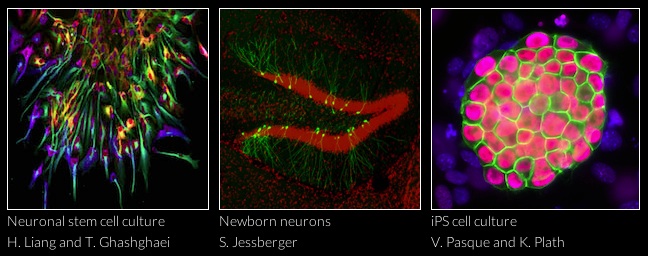
There’s also a Stem Cells & Regeneration Image Gallery page, which shows how truly beautiful this area of science can be. Visit the Image Gallery and submit your own!
Three images from the Stem Cells & Regeneration Image Gallery. Click on the picture to go to the full gallery site
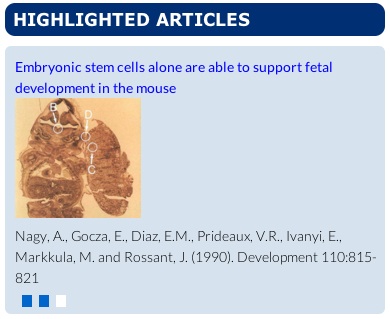
For a trip down memory lane, don’t miss the Highlighted Articles section, where we mine the archives for some truly classic Development papers, like this one from the Rossant lab in 1990.
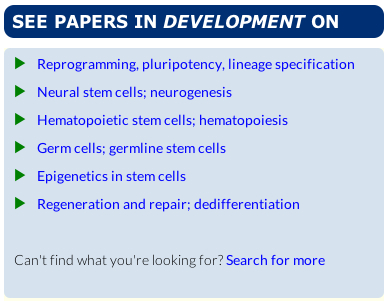
There also a handy tool for searching particular areas within Development’s Stem Cell & Regeneration content. Or you can customise your own search here.
The launch of the website coincides with a new research section within Development, entitled “Stem Cells And Regeneration”. By doing this, Development is reaching out to the stem cell and regeneration communities,with the aim of highlighting the fundamental importance of developmental principles in these research areas. For more on why Development feels that this is important, click here.
So sign up and stay tuned as Stem Cells & Regeneration brings you the latest Development papers in the field. Engage with us and become part of your community.
Following the publication in Nucleic Acids Research of my new database that I developed in Olivier Pourquié’s lab, I would like to introduce you to Manteia http://manteia.igbmc.fr/. This database contains a lot of information (genomic, regulation, interaction, phenotype, disease etc …) for animal models (mouse, chicken, zebrafish) and man. These data are all formatted so they can be used together. In a same species, this makes it possible to ask complex questions by combining different types of data, but you can also use data from different species in order to supplement them or make predictions.
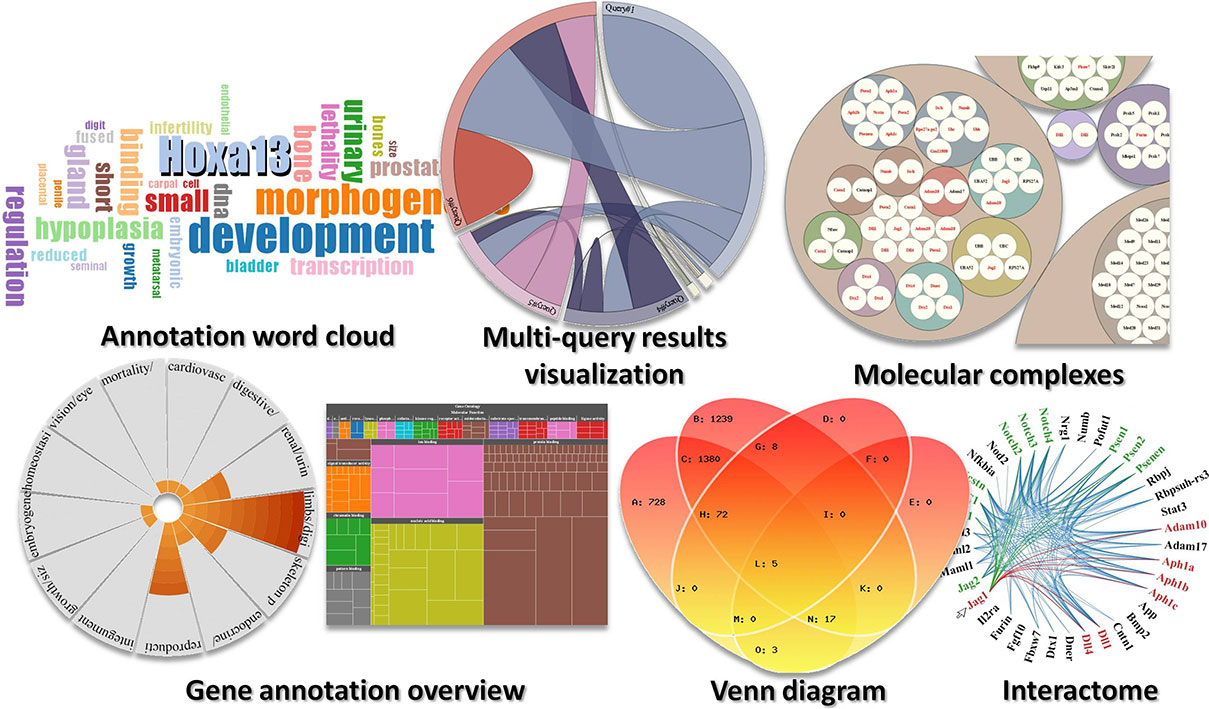
Mining huge complex datasets usually requires computer skills that few biologists have. However the user interface available for most public databases is too basic to really give a biologist the freedom to study all these data as a whole and make new discoveries. This is why I have developed new easy to use data mining and visualization tools for Manteia. One of these tools is called Refine. It allows to break down a complex biological question into multiple simple queries. For example, to identify candidate genes potentially involved in human muscle diseases using mouse phenotype data while taking into account a linkage analysis, one will select the genes corresponding to the chromosome region of interest using a tool called “chromosome location”, then from the result page one will search for their mouse orthologs using the “orthology” tool to finally find the genes involved in muscle phenotypes using “phenotype” or involved in myogenesis using “gene ontology “. The whole process takes a few seconds and gives the researchers the freedom to test different strategies to refine their list of candidates.
Another search tool is called “Query Builder “. This tool uses a simple interface to create complex queries such as: “I am looking for genes belonging to the Wnt signaling pathway and involved in somitogenesis but not in myogenesis” using Boolean operators (and, or, not). Several independent queries can be addressed at the same time. This is particularly useful when one is looking for genes that could explain a patient’s clinical features. In this case a query will be designed for each feature and the system will order the genes by relevance without discarding those that do not correspond to all of the symptoms. Every datasets can be used together to create a query. Whether to make predictions, test hypotheses or analyze experimental results.
Manteia is not limited to the selection of genes based on their annotation. Datasets can be analyzed statistically to see if they tend to be involved in the same biological functions, in the same signaling pathways, if they come from the same chromosomal regions etc. … this is particularly useful for analyzing deregulated genes from microarray or RNA seq experiments. These statistical tools can also be used to see which annotations are correlated to check, for example, if the genes involved in a biological process or a disease belong to the same signaling pathway.
There are a lot more things you can do with this system. Feel free to read the article (http://nar.oxfordjournals.org/cgi/content/full/gkt807?ijkey=8NMUhzVEjkVGdGw&keytype=ref) and watch our tutorial videos to learn more about Manteia. The release of the paper is not the end but the beginning of the project. Feel free to give your impressions on this database, make suggestions to improve the user experience or suggest new data to be entered in the system.
I am James Lloyd and have just finished my PhD at the University of Leeds, UK working with Prof Brendan Davies (plant developmental biologist) and Dr Andrew Cuming (moss biologist).
Moss is a plant, a fact that some people I eat lunch with refuse to believe. It is sometimes called primitive. While moss does look like plants that exist in the fossil records and lived hundred of millions of years ago, it has been evolving during this time, so what is true for modern moss might not have been true of ancient plants. But moss is very useful in comparative studies, allowing us to gain an insight into the evolution of developmental processes and assess how ancient they are.
To keep moss happy in the lab, we grow it on agar plates with a defined medium in a room with continuous light at 25 oC. Here, a whole plant (often called a colony) will grow from a single haploid spore or a ‘spot’ of moss tissue. Any part of a moss plant can regenerate to form a new moss plant on standard media, making it easy to routinely subculture moss. The main body of the plant is haploid, in contrast to animals and vascular plants, in which most tissues are diploid.
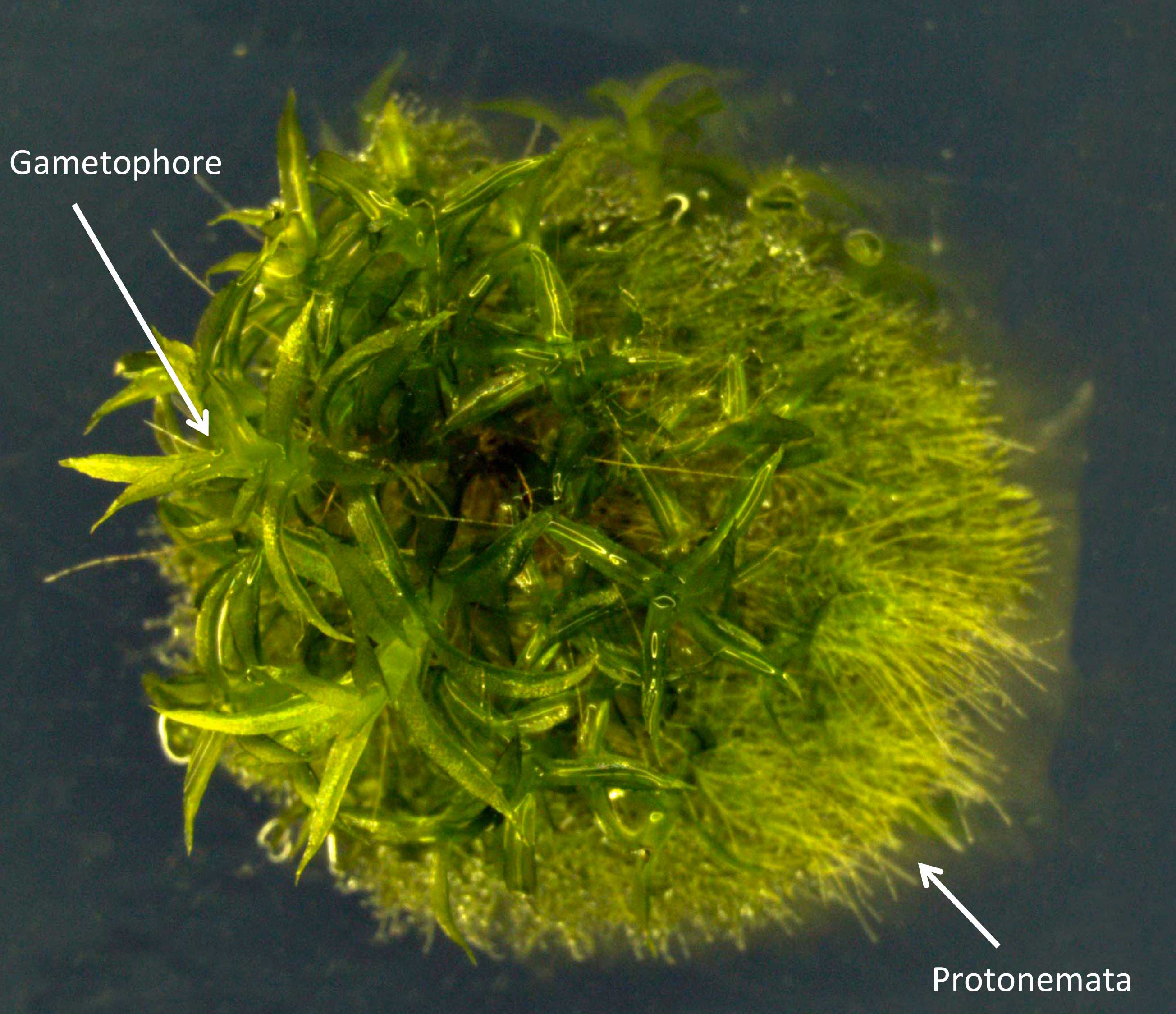
A moss plant consists of filamentous tissue (protonemata), which are great for studying polar tip growth in plants. These filaments branch and eventually some of these branches become leafy shoot-like structures called gametophores (see photos). At the base of these gametophores, filaments called rhizoids grow and anchor it in the agar.
Photo of moss by James Lloyd University of Leeds
Moss can take months to go through the full life-cycle but only takes about three weeks to produce fully expanded colonies with large gametophores, which can be studied. If you are brave enough to go through the whole life-cycle (as moss will regenerate any tissue, you do not always need to bother unless you want to phenotype the diploid tissue), you can grow moss in short day conditions (8 hours light, 16 hours dark) while being cooled to 16 oC stimulates production of the reproductive organs at the apex of gametophores. A few drops of water will then allow the water-dependent sperm to swim and fertilise egg cells resulting in the appearance of a small diploid structure at the apex of a gametophore. Inside this ‘sporophyte’, meiosis will occur and many new haploid spores will be produced.
Moss is a user-friendly model plant. It mostly sits there on a Petri dish, photosynthesising. Moss could almost be thought of as the yeast of the plant kingdom because it is grown on defined media but can also have genes knocked out at will using homologous recombination.
While most plant researchers wanting to study mutants of their favourite gene need to make RNAi knockdown lines or hope someone has randomly hit that gene with a point mutation or transposons/T-DNA insertion, moss researchers can ‘easily’ make their own knockout mutant lines. Flowering plants have to low a rate of homologous recombination to make this feasible, but it would greatly improve GM strategies. You could even knock-in tags or mutations in to your favourite genes, in case a full deletion isn’t appropriate. Just clone around one kilobase of DNA from upstream and downstream of the gene you want to knock around an antibiotic selection gene and you are away.
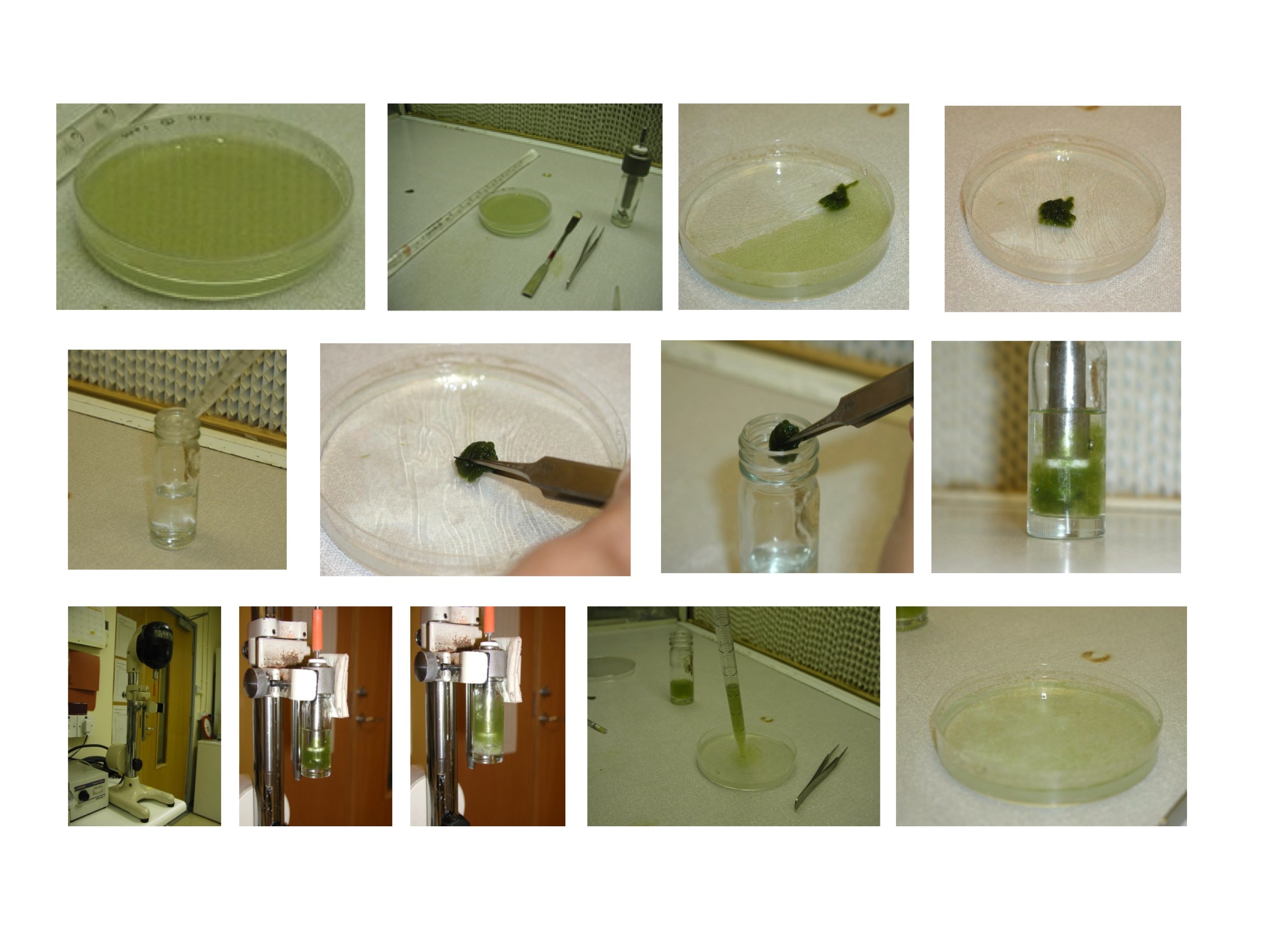
A day in the life of a moss researcher can vary a lot depending on if you are transforming moss with your knockout construct you have just made or if you are sub-culturing it or simply pulling the plant apart to phenotype. Generally moss is happy to be left alone for a while and can be easily manipulated in a molecular lab. To collect filamentous tissue for phenotyping or transformation, moss can be homogenized or blended (click in the photo below for a bigger image).
Moss is a useful model to understand how plant development has evolved over the last few hundred million years and the basic mechanisms underlining some growth forms such as polar tip growth could be better understood. Moss also has its uses in better understanding processes common to all plants. Animal researchers have used multiple, evolutionarily distant model organisms for years, which has helped better understanding in many processes as different models have their own advantages and disadvantages. Moss has many advantages over the flowering plant model Arabidopsis thaliana, such as easy to generate gene knockouts and easy of propagation of tissue. Studying moss can reveal insights about basic pathways (such as RNA decay) in plants that were not apparent from studying A. thaliana alone. Sometimes what is true for moss is true of rice, but not of A. thaliana.
How to homogenise moss by Dr Andrew Cuming University of Leeds
Thanks to Dr Barry Causier for proof reading and Dr Andrew Cuming for moss homogenising photo.
This post is part of a series on a day in the life of developmental biology labs working on different model organisms. You can read the introduction to the series here and read other posts in this series here.
The Pluripotent Stem Cell Platform (PSCP) is a hub in the UK Regenerative Medicine Platform, a joint research council programme to tackle the critical challenges in developing new regenerative treatments (www.ukrmp.org.uk). PSCP is a multi-disciplinary collaboration focussed on the quality controlled manufacturing and differentiation of human pluripotent stem cells suitable for clinical applications (http://www.ukrmp.org.uk/hubs/cell-behaviour-differentiation-and-manufacturing/).
Two post-doctoral positions are available in a programme headed by Austin Smith and Ludovic Vallier at the Wellcome Trust-MRC Cambridge Stem Cell Institute (www.stemcells.cam). The research is centred on optimising the generation and expansion of human iPS cells and derivative foregut endoderm and neural progenitor stem cells. The main objective is to harness the basic biology of these progenitor cells for the development of new cell based therapy approaches.
Candidates should have at least 3 years experience with culture and characterisation of pluripotent stem cells and/or their differentiation products.
Applications are encouraged from candidates with an appreciation of cell production for clinical use and/or Good Manufacturing Practice are encouraged
Technical support will be available and access to a range of flow cytometry, imaging and qPCR instrumentation.
Posts are funded for two years.
Salary: £27,854 – £36,298
Once an offer of employment has been accepted, the successful candidate will be required to undergo a health assessment.
Applications must be submitted by 17:00 on the closing date of Thursday 12th December 2013.
Interviews will be held towards the end of week commencing 16th December 2013.If you have not been invited for interview by 16th December 2013., you have not been successful on this occasion.
Please quote reference PS02164 on your application and in any correspondence about this vacancy.
The University values diversity and is committed to equality of opportunity.
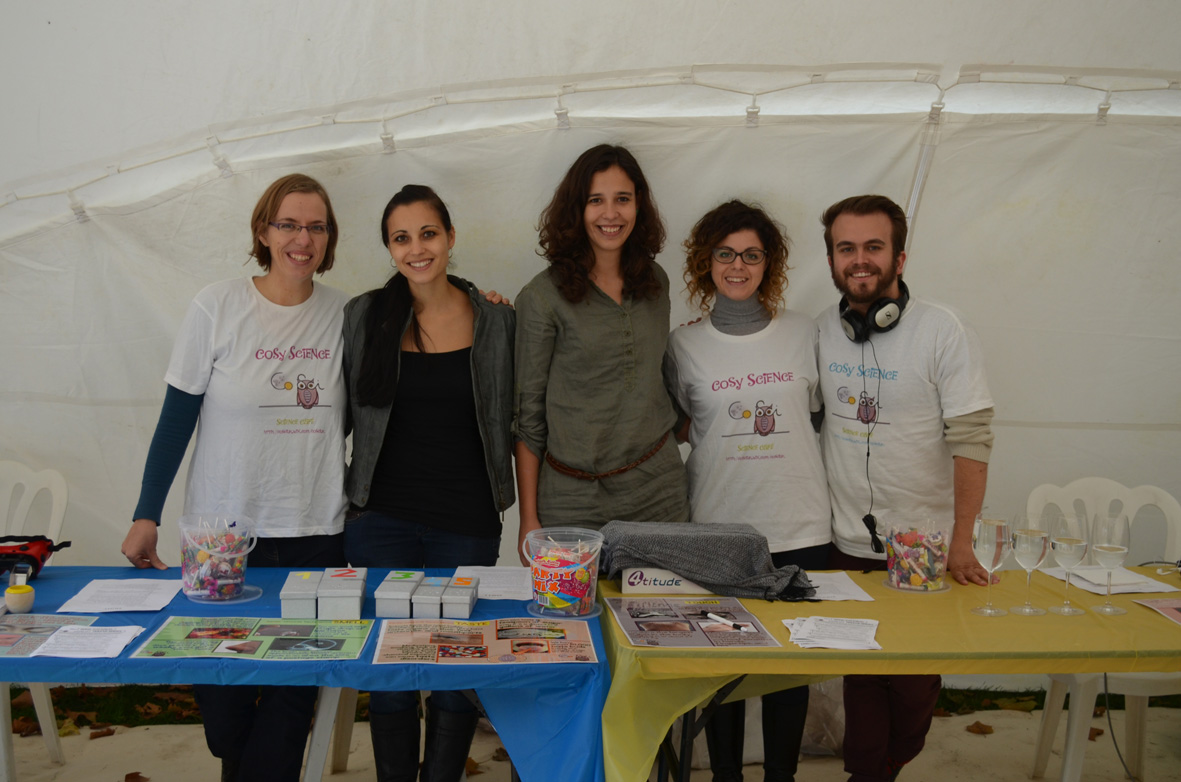
Cosy Science is a non profit organisation formed in 2012 at Cancer Research UK London Research Institute, by a group of young scientists: Olga Martins de Brito, Kinga Bercsenyi and Nathalie Schmieg. After few months the team expanded with the additions of Mario Ruiz, Alessandra Audia, Michael Parkinson and Mariana Campos.
Cosy Science Team: from left to right – Kinga Bercsenyi, Nathalie Schmieg, Mariana Campos, Alessandra Audia and Mario Ruiz
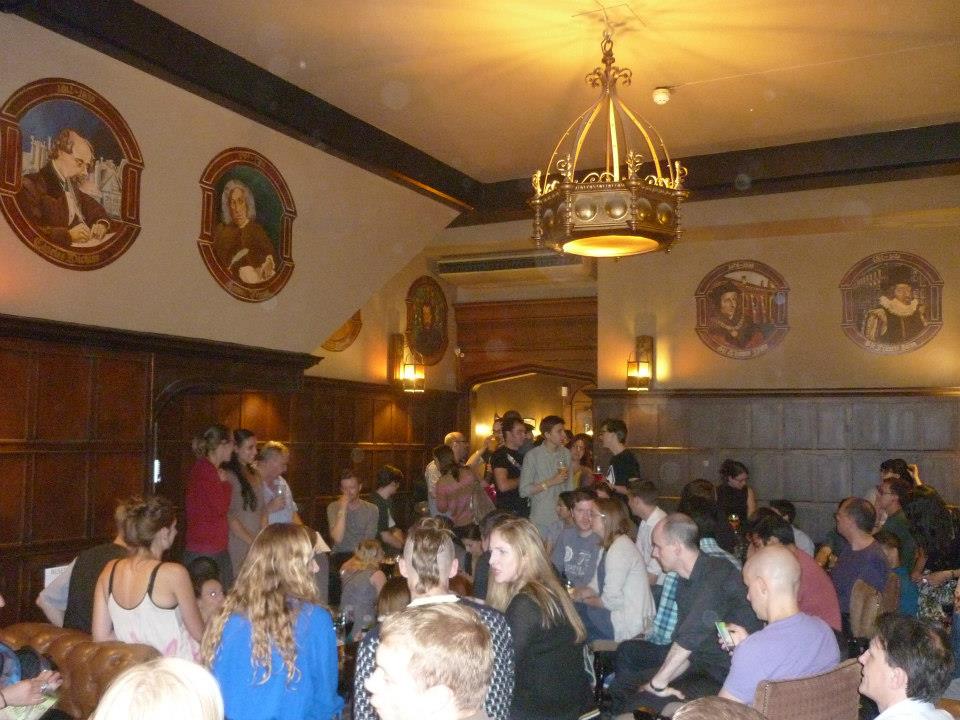
Our main objective is to get the public more involved in science, with an emphasis on asking questions and discussing rather than sitting and quietly listening for an hour in a lecture theatre. What makes this different from other science cafés is that it is set in the friendly, comfortable environment of a pub to attract people from all backgrounds and to encourage them to ask questions.
Our first speaker was Nobel Prize laureate Sir Tim Hunt, who speaks at the Exmouth Arms, our first venue, about winning his Nobel Prize. The night was a huge success thanks to a large turnout of fellow scientists and friends but having a Nobel Prize winner as a first speaker also helped.
After this triumph, the Cosy Science team set about inviting leading scientists from a broad range of disciplines/scientific backgrounds such as Professor David Nutt on drug policy and the Professor Steve Miller on the chemical cosmos. Our Science café has now become a hugely popular regular event, held on the last Tuesday of every month.
With publicity from The Londonist and TimeOut, we have seen our numbers swell to 300 followers on Twitter, 500 likes on Facebook and more than 400 contact on our emailing lists. From such a large network, we generally struggle to fit everyone into our larger venue and the Cittie of Yorke (just round the corner on High Holborn) but we still see people coming back for more – regulars and newcomers alike.
Our speakers are invited to give a brief talk of around 30 minutes to introduce their field of research highlighting interesting facts and key aims of their research. Afterwards there is a little break in which the audience can play a game specially designed by us for the topic of the talk. During this pause we collect donations from the audience to allow us to continue our project. Later we open the discussion to the floor and that, in some cases, can last for over an hour.
The Company of Biologists and EMBO both liked the idea of the science café to attract the public to scientific talks and thanks to that we have sourced funding for several events and we were able to provide free food and drinks. This initiative helped us to attract more people to our events – not bad for an organization with humble beginnings from London Research Institute.
Our invited speakers are scientists who, frequently in their careers, speak to a very specific audience. However, Cosy Science aims to communicate science to a lay audience. Our main challenge is to make sure that our speakers are able to keep a clear and simple language, avoiding too much jargon. In this way our audience can understand the talk, be captivated and curious about the subject. To ensure that this is the case we often meet with the speakers beforehand and keep in touch with them throughout their preparation to provide them with guidance when they need it. Imagine a group of PhD students helping a group leader with designing a talk and selling their topic to an audience without the use of any visual aids!
David Nutt speaks to the Cosy crowd in one of our events.
As PhD students we spend most of our day in the lab, doing experiments at the bench, surrounded by scientists that share our love for science. Cosy Science gives us the platform to share this passion with everyone who is open minded enough to take it! We believe that explaining one’s research to an audience that is not from that specific field makes it easier to step back from the day-to-day problems and see the bigger picture, question basic assumptions we might not even think of, and at last but not at least to think outside the box. Furthermore, as the general public funds our research, we strongly believe that they should be aware and understand the outcomes of their investment in us.
Our next event will take place on the 26th of November at 7pm and will be ‘Unlocking the Secrets Behind Regenerative Medicine’. The evening is funded by the British Council and will include free food and drinks. We invite you to come over: it’s going to be a very fascinating night in which a panel of scientists will help us to understand the immense potential of a stem cell research.
As a non-profit organisation we recently received a fellowship for outreach activities sponsored by EMBO. We are therefore planning to expand our activities and organise a kids’ version of the science café – a science club! Kids will have the opportunity to listen, see and touch science done by real scientist in a relaxed environment not called ‘School’. We aim to foster their interest in science, their creativity and their critical thinking.
And who knows? Maybe there is even more room to expand: a larger venue, renowned speakers or more frequent talks, not even talking about the idea of doing our own version of Science Show Off with PhD students, so if you have any suggestions, fell free to get in touch with us at cosciuk@gmail.com.
Alessandra Audia & Mariana Campos
This post is part of a series on science outreach. You can read the introduction to the series here and read other posts in this series here.
Postdoctoral Research Fellow in Developmental Neurobiology Excellent Opportunity for an experienced Postdoctoral Research Fellow to work in a world class Research Institute.
Queensland Brain Institute The Queensland Brain Institute (QBI) was established as a research institute of the University of Queensland in 2003. The Institute is now operating out of a new state-of-the-art facility and houses 31 Principal Investigators with strong international reputations. The QBI is one of the largest neuroscience institutes in the world dedicated to understanding the mechanisms underlying brain function.
Details of the current QBI interdisciplinary research programs can be found at http://www.qbi.uq.edu.au.
An exciting opportunity exists for an experienced Postdoctoral Research Fellow/ Research Fellow to join the Neural Migration Laboratory at the Queensland Brain Institute. The successful applicant will be responsible for conducting research into the role of guidance receptors in the development of the vertebrate brain using the mouse as the development model.
The person Applicants must possess a PhD in a relevant field and have a strong background in molecular and/or cell biology. Demonstrated ability to bring research to publication and the ability to collaborate successfully with international researchers will be highly regarded.
Remuneration This is a full-time, fixed term appointment for an initial period of up to 3 years (renewal subject to funding and performance) at Research Academic level A or B. The remuneration package will be in the range $72,443 – $77,764 p.a. (Level A), or $81,857 – $97,205 p.a (Level B), plus employer superannuation contributions of up to 17%. Level of appointment will be commensurate with qualifications, experience and academic achievements.
Enquiries Contact A/Prof Helen Cooper on h.cooper@uq.edu.au To submit an application got to http://www.seek.com.au/job/25540987. All applicants must supply the following documents: Cover Letter and Resume. Application closing date Sunday 9 December 2013 11:55pm E. Australia Standard Time
We are pleased to announce the 1st joint meeting of the French Society for Developmental Biology (SFBD) and the network for Functional Studies on Model Organisms (EFOR), to be held at the FIAP Jean Monnet center, 75014 Paris, Feb. 10-12, 2014.
This symposium, which also stands as the annual meeting of the SFBD society and of the EFOR network, will bring together distinguished speakers around two key developmental topics: « Cell plasticity and tissue homeostasis » and « Laterality »
The following speakers have confirmed their participation:
Cell Plasticity and Tissue Homeostasis:
Andrea Brand (Univ. of Cambridge UK)
Isabel Farinas (Univ. de Valencia, Spain)
Uri Frank (Univ. of Ireland, Galway, Ireland)
Cayetano Gonzalez (IRB Barcelona, Spain)
Thomas Graf (CGR Barcelona, Spain)
Maarten van Lohuizen (NKI Amsterdam, The Netherlands)
Shahragim Tajbakhsh (Pasteur Institute, Paris)
Laterality:
Christelle Jozet-Alves (UCBN Caen, France)
Oliver Hobert (Columbia U., NYC, USA)
Thierry Lepage (CNRS UPMC Villefranche sur Mer, France)
Stéphane Noselli (IBV Nice, France)
Frédérique Peronnet (LBD Paris, France)
Myriam Roussigné (CBD Toulouse, France)
A significant time will be allocated to short talks selected from the submitted abstracts, and to poster sessions.
The number of participants will be limited to 200.
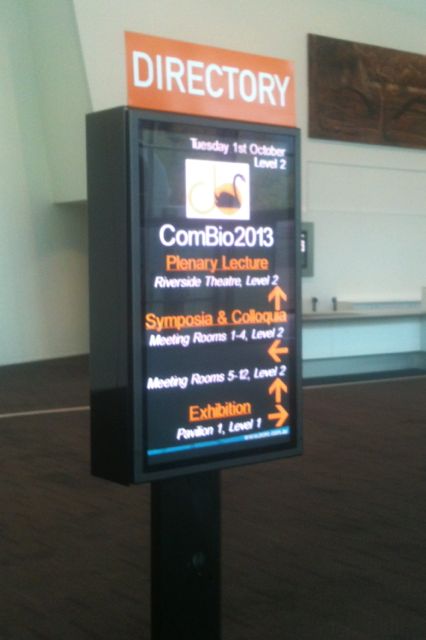
ComBio, the largest annual life sciences conference in Australasia, combines the annual meetings of the Australia & New Zealand Society for Cell and Developmental Biology (ANZSCDB), the Australian Society for Biochemistry and Molecular Biology (ASBMB), and the ANZ Society for Plant Biology (ANZSPB). The conference attracts around 1000 researchers, not only from Australia and New Zealand but worldwide. Due to its broad scope, this meeting provides an exceptional opportunity to expand your knowledge beyond one’s own field of research and to meet and network with leading researchers from all over Australasia.
This years meeting was held at the Perth Conference and Exhibition Centre in Perth, Western Australia from the 29th September to the 3rd of October. The meeting covered a broad range of topics including developmental and cell biology, cell-cell signaling, gene regulation, structural biology and regenerative science.
There were several Plenary lectures from both local and invited overseas speakers on topics diverse as RNA metabolism, re-designing photosynthesis and the splicesome. Prof. Philip Ingham (A*STAR Insititute of Molecular and Cell Biology Singapore) reflected on a quarter of a century of hedgehog signaling research, his research careers includes many pioneering studies in Drosophila and zebrafish identifying the role of hedgehog signaling components.
With multiple concurrent symposium it was often very hard to decide which talk to attend. I’ve highlighted some of the talks I attended to give you a sense and a taste of the impressive scope of developmental biology research presented at the meeting.
2013 ANZSCDB President Professor Peter Currie (Monash University, Melbourne) discussed his group’s work studying muscle progenitor cell biology in muscle growth and regeneration using a zebrafish model. To study this, they are using transgenic animals to follow old and new growth muscle fibres to determine the age of muscle and trace how muscle grows.
Dr Ian Smyth (also of Monash University in Melbourne) revealed some amazing 3D images showcases the their work using optical projection tomography and their own software (TreeSurveyor) to understand branching morphogenesis during development of the nephrons in the mouse kidney. This technology allows for finer mapping of branch volumes, length and angles to not only study branching over time but also how disease states influence on branching morphogenesis and the final nephron number.
Dr Annemiek Beverdam heads a new group at the University of New South Wales in Sydney, studying the role of YAP proteins in stem cell proliferation in the mouse post-natal epidermis. Skin cancer is a huge problem in Australia and New Zealand, with over 400,000 Australians being treated for skin cancer each year. Her group is studying the role of the Hippo pathway in epidermis homeostasis and skin cancer.
There were several great talks on sex-biased gene expression, sex-differentiation and fertility. Professor Jozef Gecz (University of Adelaide) presented his group’s work investigating sex-differences and abnormal expression of genes in PCDH19-female limited epilepsy disorder. I was honoured to present my own group’s work examining RNA pausing as a mechanism of sex-differential gene regulation during development of the mouse gonad and brain. A/Prof Dagmar Wilhelm (Monash University) presented recently published work on sexually dimorphic expression of short and long ncRNAs and their likely roles in sex determination. Professor Peter Koopman (Institute for Molecular Biosciences, University of Queensland, Brisbane) showcased the latest work from his laboratory on factors influencing the sex specific differentiation of foetal germ cells. Professor Eileen McLaughlin (University of Newcastle, NSW) presented findings on the role of RNA binding proteins Musashi-1 and -2 as key regulators of germ cell development during spermatogenesis in Drosophila and vertebrates.
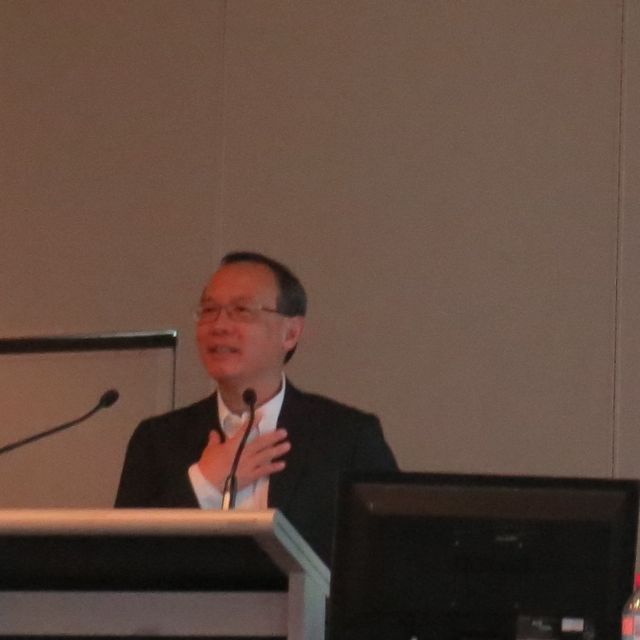
Prof. Alpha Yap presenting his ANZSCDB President’s Medal plenary lecture
As always, ComBio also incorporated the annual general meeting and awards presentation for the ANZSCDB. The highly prestigious ANZSCDB President’s Medal was awarded to Professor Alpha Yap from the Institute for Molecular Biosciences at the University of Queensland. Professor Yap’s laboratory studies the cellular mechanisms behind cadherin-morphogenesis and their role in epithelial organization, health and disease. He presented new exciting cell biology studies aiming to understand how cadherins co-operate with the actin cytoskeleton and the factors that drive cell extrusion from an epithelial sheet.
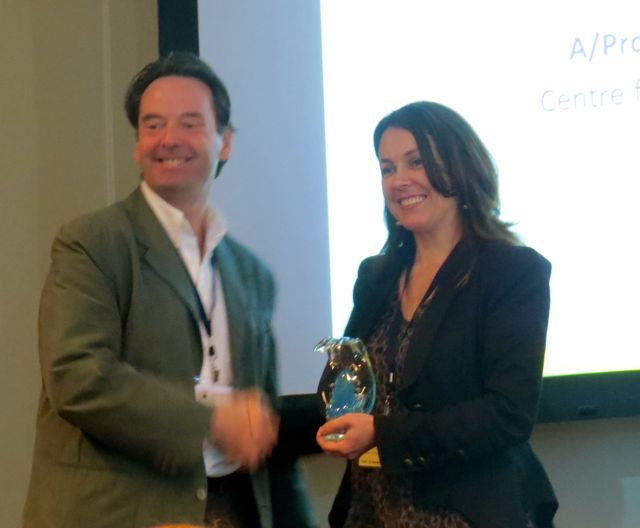
The ANZSCDB Young Investigator Award was won by A/Prof Natasha Harvey (Centre for Cancer Biology, University of Adelaide) for her work studying the development of the lymphatic system, which is not as well understood as the rest of cardiovascular system development. She presented recent work aimed at unraveling the molecular mechanisms behind the role of an ubiquitin ligase protein, Nedd4, essential for the formation of the mouse lymphatic vascular system.
A/Prof Natasha Harvey receiving the ANZSCDB Young Investigator Award for 2013
ASBMB Lemberg Lecture and Medal winner Professor Sharah Kumar (also of the Centre for Cancer Biology at the University of Adelaide) gave an overview of his work characterized a several developmentally regulated genes including Nedd genes (ubiquitin ligases) in neural and vascular development and overall animal growth. Mutations in these proteins produce specific developmental phenotypes, and data from his lab show that they are required for correct trafficking of cell surface proteins such as receptor proteins required for the IGF-1 signaling pathway. To further understand the molecular mechanisms of Nedd protein function, the Kumar group have extended their studies into the Xenopus oocyte system and Drosophila, making optimal use of the advantages these systems offer over mammalian models.
If you’re interested in attending Combio2014, to be held in Australia’s capital Canberra, information can be found at http://www.asbmb.org.au/combio2014/.
The Node will be there, so please say hello to Cat, our community manager, if you see her around! She would love to meet you and know what you think about the Node. If you don’t know what Cat looks like, don’t worry. She will be speaking briefly about the Company of Biologists and the Node at the end of the first morning session (see the programme here).
If you are not attending, we will try to give you a taste of the conference. We will be tweetingfrom the meeting if internet connection is available, and we will also blog about it afterwards. You can still register for the conference until Monday(the 11th of November).
Fixed-term: The funds for this post are available until 30 November 2017 in the first instance.
As part of the UK Regenerative Medicine Platform (UKRMP), three UK Research Councils; Biotechnology and Biological Sciences Research Council, Engineering and Physical Sciences Research Council and the Medical Research Council have invested £25m in research and equipment to support the development of regenerative medicine therapies for a range of applications.
The Pluripotent Stem Cell Hub has been awarded £4.5m to establish a collaboration which brings together researchers from industry and academia to develop the processes needed to take these cells from laboratory-based research to the commercial manufacture of safe, effective and reproducible products for use in regenerative medicine. The Hub will work with the other strands of the UKRMP to tackle some of the critical challenges in developing new regenerative treatments from discoveries made in the lab (www.ukrmp.org.uk).
For exceptional candidates it may be possible to appoint up to the top of Grade 9 (£48,729-£53,233). In addition, it may be possible to offer a supplement to the salary range stated for this role any such supplement would be awarded on the basis of a demonstrable history of exceptional achievement and is entirely at the discretion of the University
An exciting opportunity for a Project Manager who has held a senior management role in a complex environment and a proven track record in business/ bioindustry whilst empathising with academic ethos.
We are looking for a highly motivated individual to manage projects effectively according to industry best practice, determining and delivering to agreed scope, quality, budget and deadlines. The Project Manager will manage a number of projects concurrently and will maintain accurate project plans, work schedules, issue and risk logs to enable projects to be delivered successfully.
The successful applicant will be commercially astute, intellectually agile with excellent communication skills.
The successful applicant will be educated to at least degree level and have a further qualification (MSC, PhD or MBA). You will be able to demonstrate your ability to build effective relationships with funders, Engage with experts worldwide, develop summary documents and reports, organisation meetings and associated administration, and work related communication. Hands on experience of budgeting, grant applications and other administrative tasks in a research- led environment would be highly advantageous as would experience of working as part of a senior management team with budgetary responsibility and accountability for group and individual performance.
The role-holder will be a confident and articulate communicator and will possess a highly collaborative and inspirational leadership style with a track record of managing and developing multi-disciplinary teams as well as building relationships with external partners.
Based in central Cambridge, you must be willing to travel between the partner sites.
Once an offer of employment has been accepted, the successful candidate will be required to undergo a health assessment.
Applications must be submitted by 17:00 on the closing date of Friday 6th December 2013.
Interviews will be held in the week commencing 16th December 2013. If you have not been invited for interview by 12th December 2013, you have not been successful on this occasion.
Please quote reference PS02099 on your application and in any correspondence about this vacancy.
The University values diversity and is committed to equality of opportunity.
The University has a responsibility to ensure that all employees are eligible to live and work in the UK.



 This post is part of a series on a day in the life of developmental biology labs working on different model organisms. You can read the introduction to the series