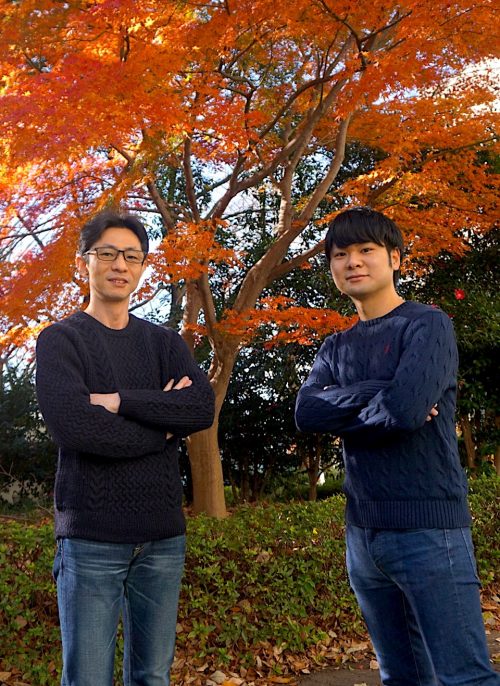

The people behind the papers – Brandon Carpenter and David Katz
Posted by the Node Interviews, on 5 July 2021
This interview, the 94th in our series, was published in Development earlier this year.
A dynamic pattern of histone methylation and demethylation controls gene expression during development, with some processes such as formation of the zygote involving large-scale reprogramming of methylation states. A new paper in Development investigates how inherited histone methylation regulates developmental timing and the germline/soma distinction in Caenorhabditis elegans. To hear more about the story we caught up with first author and postdoctoral researcher Brandon Carpenter, and his supervisor David Katz, Associate Professor in the Department of Cell Biology at Emory University School of Medicine in Atlanta, Georgia.
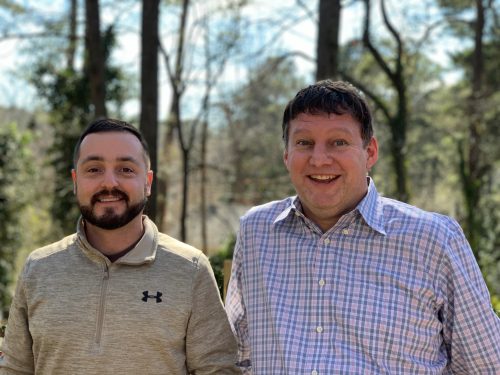
David, can you give us your scientific biography and the questions your lab is trying to answer?
DK: As a graduate student, I worked with Dr Shirley Tilghman at Princeton on the regulation of genomic imprinting. We provided in vivo evidence for the first chromatin boundary formed by CTCF at the H19 locus in mouse. As a postdoc, I worked for Dr Bill Kelly at Emory University on the regulation of histone methylation in the germline of C. elegans. We provided the first evidence of a transgenerational phenotype (sterility) caused by the build-up of histone methylation, when the H3K4me1/2 demethylase Lsd1 is mutated. In my own lab at the Emory University School of Medicine, we have worked on both C. elegans and mouse model systems to study the mechanisms that regulate histone methylation and how inappropriately inherited histone methylation gives rise to phenotypes. We have also implicated LSD1 as a crucial molecule that may contribute to Alzheimer’s disease: our data suggest it is being inhibited by pathological aggregates in dementia patients. We are currently trying to develop a therapeutic intervention based on what we have learned about the function of LSD1 in the Alzheimer’s disease pathway.
Brandon – how did you come to work in David’s lab and what drives your research today?
BC: After obtaining my doctoral degree, I knew I wanted to continue studying development, and that I wanted to focus on a model system that would allow undergraduates to develop projects related to my research. As a graduate student, I fell in love with mentoring students and wanted to find opportunities to inspire students in the classroom as well as at the bench. Thus, my passion for mentoring and studying developmental biology led me to the Katz lab, where I could work with the beautiful model system, C. elegans, to study how epigenetic inheritance affects developmental cell fates.
At Emory University, I joined the Katz lab as a Fellowship In Research and Science Teaching (FIRST) Fellow (part of the National Institutes of Health-funded IRACDA programme) where, in parallel with my research, I was able to develop my teaching and mentorship skills. The most exciting part of joining the Katz lab was being able to bring my research into the classroom at Oglethorpe University, a nearby small liberal arts college. The Katz lab has a longstanding collaboration with Dr Karen Schmeichel from the biology department at Oglethorpe, integrating C. elegans experiments into the entire curriculum. As part of this, I was able to teach a semester-long Course-based Undergraduate Research Experience (CURE) based on the research I was conducting in the Katz lab. As part of this semester-long CURE, Oglethorpe students became inspired by the science we are doing in the Katz Lab and generated data for this manuscript. Jovan Brockett, an undergraduate student, is an author on this manuscript for research he did in the classroom! My passion for understanding how an organism develops from a single cell drives my research, and the feeling I get when I see my mentees succeed while studying these mechanisms provides the fuel that keeps me going.
How has your research been affected by the COVID-19 pandemic?
BC: For me, COVID-19 hit right as I was finishing the experiments for two of my postdoctoral projects. During the ∼2-3 month lab shut down I was able to stay productive by submitting and revising manuscripts, but being away from the lab made it hard to advance interesting new ideas. The thing I miss most about not being able to go into lab is my ability to bounce crazy ideas off my talented Katz lab colleagues.
Before your work, what was known about the role of inherited histone methylation in the germline/soma distinction?
BC, DK: This paper is really about two major lines of research coming together to create a new story. We had been working on how two histone modifying enzymes, the H3K4me1/2 demethylase LSD1 (SPR-5 in C. elegans) and the H3K9 methyltransferase MET-2 cooperate to reprogramme histone methylation at fertilization to prevent the inappropriate chromatin environment from being passed on from one generation to the next. We had found that a failure to reprogramme histone methylation in spr-5; met-2 double mutants causes a maternal effect developmental delay and sterility phenotype. We were interested in how the inappropriate inheritance of histone methylation causes the developmental delay. Dr Susan Strome, with some help from Dr Bill Kelly, had performed some beautiful work showing how maternal deposition of the H3K6 methyltransferase is required transgenerationally to help specify the germline in progeny. Brandon had noticed some similarities between the developmental delay that we were observing and some high temperature phenotypes that Susan Strome had shown and were continuing to be worked on by Dr Lisa Patrella in her own lab. As detailed below, Brandon was able to show that the MES-4 system and the SPR-5; MET-2 reprogramming mechanism antagonize one another. It is also important to note that several labs have identified somatic repression mechanisms that antagonize the MES-4 system. We are interested in seeing how these systems interface with SPR-5; MET-2 reprogramming, so stay tuned!
Can you give us the key results of the paper in a paragraph?
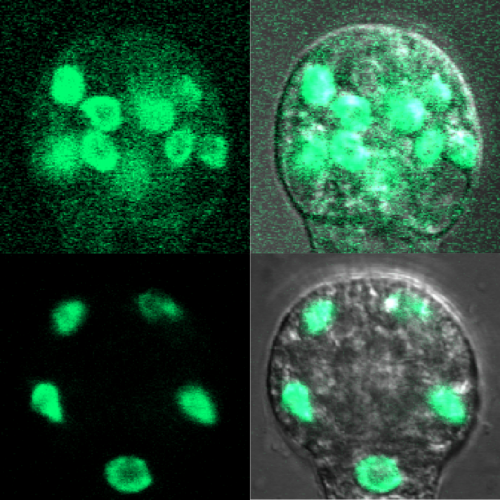
BC, DK: We had previously shown that SPR-5 and MET-2 act together to repress germline genes at fertilization. In this paper, we found that H3K36 methylation antagonizes this repression to prevent these germline genes from being completely shut down. Without inherited H3K36 methylation, the germline is not properly specified. In contrast, without SPR-5; MET-2 repression, H3K36 is inappropriately propagated to the soma, resulting in germline genes being inappropriately expressed there. The inappropriate expression of germline genes in the soma results in a developmental delay. Thus, neither SPR-5; MET-2 reprogramming nor the MES-4 germline inheritance system can properly function without each other. Instead SPR-5, MET-2 and MES-4 coordinately balance three difference histone modifications (H3K4, H3K9 and H3K36 methylation) to ensure that germline versus soma is properly specified.
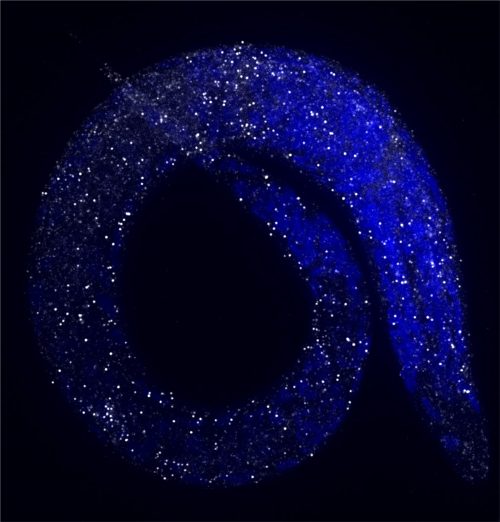
Why do you think inappropriate somatic expression of germline genes causes developmental delay?
BC, DK: As discussed in the paper, we think that there are two possible mechanisms for how the ectopic expression of germline genes causes developmental delay in spr-5; met-2 mutants. One possibility is that transcription of the germline programme itself causes the developmental delay. For example, if germline transcription factors are competing with somatic transcription factors to turn on genes, it is possible that the mix of proteins generated is simply too confusing for the cell to commit to its proper cell fate. The alternative is that a part of the germline function interferes with somatic development; for example, the germline precursors undergo a cell cycle arrest. It is possible that the proteins involved in this germline cell cycle checkpoint slow the progression of somatic cells via cell cycle regulation. Consistent with this latter possibility, we show that spr-5; met-2 mutants can silence an extrachromosomal array in the soma. This function, which is normally confined to the germline, suggests that somatic tissues in spr-5; met-2 mutants make proteins that can perform some germline functions. Thus, it is possible that a germline function acting in the soma prevents somatic cells from quickly adopting their proper cell fate.
What relevance do your data have for human patients harbouring mutations in histone-modifying enzymes?
BC, DK: Recent genome sequencing has revealed that several neurodevelopmental disorders are caused by mutations in histone-modifying enzymes. These include mutations in: (1) the H3K36 methyltransferase Setd2, the H3K27 demethylase Kdm6a and the H3K4 methyltransferase Kmt2d, which cause Kabuki Syndrome; (2) the human orthologue of spr-5, LSD1, which causes a Kabuki-like Syndrome; and (3) the H3K36 methyltransferase Nsd1, which causes Sotos Syndrome. Similar to what we observed in spr-5; met-2 mutant progeny, many of the human patients with mutations in these histone-modifying enzymes suffer from global developmental delay. Based on our model, it is possible that the developmental delay in these patients may be caused by the failure to properly regulate histone methylation during essential developmental transitions. Consistent with this, we have recapitulated some phenotypes in a maternal hypomorphic mutant of Lsd1 in mice that are reminiscent of Kabuki Syndrome. We hope that by continuing to study how mutations in histone-modifying enzymes in C. elegans and mice give rise to developmental defects, we will shed light on the human diseases caused by defects in histone-modifying enzymes.
When doing the research, did you have any particular result or eureka moment that has stuck with you?
BC: As detailed above, I had made the observation that the developmental delay we were observing had some similarities to some high-temperature phenotypes that Susan Strome had shown and were continuing to be worked on by Lisa Patrella in her own lab. This raised the possibility of a connection between SPR-5; MET-2 reprogramming and the MES-4 inheritance system. The crucial test of this potential connection was to knock down mes-4 via RNAi and see if it rescued the developmental delay, and we were very excited to find that it did rescue it, and even more excited when our RNA-seq subsequently showed that MES-4 germline genes are expressed in the somatic tissues of spr-5; met-2 mutants. After this independent confirmation of the connection between the two systems, we were confident that we had figured it out.
And what about the flipside: any moments of frustration or despair?
BC: The most frustrating part of this project was trying to gather enough L1 larvae to perform the initial genomic experiments. When we first started the project, there were no strains available that could balance the spr-5 mutant allele. I had to genotype every single hermaphrodite parent! At one point, I thought I would never get enough larvae to perform the genomic experiments. But David saw on science Twitter that the Caenorhabditis Genetics Center (CGC), which houses C. elegans strains, was developing new balancer strains. I contacted them and was able to get the FX30208 tmC27 [unc-75(tmls1239)](I) balancer even before they made it available to the broader C. elegans community. By reporting back that it worked well, I was also able to give back to the C. elegans community.
What next for you after this paper?
BC: I am officially on the academic job market searching for a tenure-track position and developing exciting new projects of my own that stem from this paper. We have mounting evidence that mutations in highly conserved histone-modifying enzymes may give rise to developmental phenotypes in vertebrates that are similar to what we observe in C. elegans. I want to take advantage of C. elegans mutants that fail to properly inherit histone methylation to further investigate how inherited chromatin states affect complex developmental processes like cell-to-cell communication and cell migration. I am also interested in potentially introducing the human version of Lsd1 into C. elegans to humanize the worm so that I can generate mutations that have been found in the human LSD1 patients. This type of approach is on-going through the NIH-funded Undiagnosed Diseases Network (UDN).
Where will this story take the Katz lab?
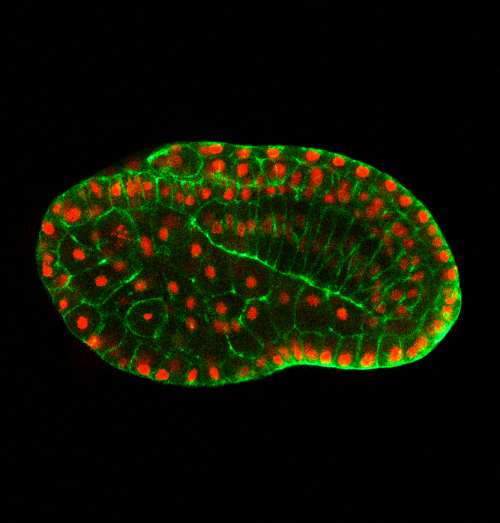
DK: We believe that spr-5; met-2 double mutants provide an excellent model for understanding how cells respond to inappropriately inherited histone methylation. We are taking advantage of the invariant embryonic cell lineage in C. elegans by performing automated lineage tracing experiments in spr-5; met-2 mutants. This will enable us to understand cell by cell how inappropriately inherited histone methylation affects processes such as cell division timing, cell migration, programmed cell death, etc. We hope to combine this with single cell RNA-seq to ask how each cell responds transcriptionally to this inappropriately inherited histone methylation. So stay tuned.
Remarkably, trying to understand the regulation of histone methylation in the germline has also taken us into the Alzheimer’s disease field. While trying to understand whether SPR-5; MET-2 reprogramming is conserved in mice, we serendipitously discovered that LSD1 is continually required for the survival of hippocampus and cortex neurons. We are interested in the possibility that terminally differentiated cells continually employ histone-modifying enzymes, such as LSD1, to maintain their cell fate. In the meantime, we have gone on to provide evidence that LSD1 is inhibited by pathological aggregates of tau in mice and human Alzheimer’s disease patients. We believe that this inhibition is a crucial part of how pathological tau induces neurodegeneration. So, you never know where developmental biology will lead!
You never know where developmental biology will lead!
Finally, let’s move outside the lab – what do you like to do in your spare time in Atlanta?
BC: I like to go hiking with my 5-year-old twin daughters, play golf, and find cool breweries who push the edge on brewing delicious stouts and IPAs!
DK: I enjoy soccer with my 13-year-old twins and co-host a popular Atlanta United podcast. I also co-founded a very small vineyard just outside Atlanta at a friend’s house, and we have just produced our first successful vintage of a Norton/Cabernet Sauvignon blend. But I am also happy to drink a local beer with my outstanding postdoc Brandon.
 (No Ratings Yet)
 Loading...