The Wellcome Trust – Medical Research Council Stem Cell Institute draws together outstanding researchers from 25 stem cell laboratories in Cambridge to form a world-leading centre for stem cell biology and medicine. The Institute receives core funding from the Wellcome Trust and Medical Research Council and is also a University Strategic Initiative. This generous support is enabling the Institute to expand and build on its reputation for excellence in this cutting-edge field. Principal Technician
Salary: £33,230 – £44,607pa
The funds for this post are available until 30th June 2017 in the first instance.
We are now commencing an exciting period of change as we prepare for the design and build of 800m2 of new accommodation on the University’s Biomedical Campus. The role holder will be key in assisting the Administrator to both maintain and improve existing infrastructure but also, and vitally, in supporting and assisting with relocation design and planning. After the relocation, planned for 2017, the role holder will maintain and strengthen the core services as well as having input into their strategic planning.
To assist the Institute Administrator in the day-to-day running of the Institute the key aspects of the role are: Leadership, Communication and Problem Solving.
The role holder will be responsible for building maintenance and security, implementation Health and Safety procedures, and organisation and supervision of the Institute’s technical and cleaning staff. Experience in managing building projects and refurbishments is desirable.
You should be able to demonstrate experience in recruitment, supervision and performance management and will have excellent written and oral communication skills. You will be responsible for procurement and purchasing of high value goods and services and must have a good understanding of financial accounting processes. Practical experience of computerised accounting packages and familiarity with University Financial System is desirable but training can be provided.
Educated to degree level or equivalent in a biological science or related subject, you will have previous management experience in a senior post in a science-related area in either higher education or industry setting as well as excellent motivational and interpersonal skills. Extensive experience in a biomedical environment including a period of hands on research is essential.
The building is multi-occupancy building and you will act as the Safety Officer for the Stem Cell Institute and the Cambridge Systems Biology Centre and will liaise with the Department of Chemical Engineering and Biotechnology in all matters relating to building maintenance.
Applications must be submitted by 17:00 on the closing date of 28th November 2013.
Previous applicants do not need to apply.
Interviews will be held in the afternoon of Wednesday 18th December 2013. If you have not been invited for interview by Wednesday 11th December 2013, you have not been successful on this occasion.
At EuroStemCell we’ve been watching The Node’s outreach series with interest. It’s really great to see public engagement featured ike this!
Meanwhile, we’ve been beavering away on all kinds of activities, which you can find out more about in our October Newsletter, just out last night. There’s lots to celebrate this month – we launched 5 new language versions of our film ‘Stem cells – the future‘ and it’s now also available to order on DVD; we held an event showcasing our writing competition winners; and, hot off the presses, our partner Elena Cattaneo has been awarded Stem Cell Person of the Year 2013 for all her wonderful work in science, public engagement and policy.
Stem cells – the future, le futur, die Zukunft, il futuro, nasza przyszłość, el futuro
We’re excited to announce that our short film, Stem cells – the future: an introduction to iPS cells, is now available in French, German, Italian, Polish and Spanish as well as English, with a supporting quiz for the classroom. You can order a DVD or view the film online and download the quiz, all in your language. Read more
Science and storytelling: Brave New Words event
Last Wednesday, a large, friendly audience of scientists, writers and science communicators gathered in Edinburgh to celebrate EuroStemCell’s recent writing competition by launching a booklet of winning entries, and listening to stunning readings from the booklet. A fantastic panel of writers discussed the interplay between words and science, and one audience member was so impressed with the panel’s thoughts that she wanted to ‘eat their brains’! There was lots of chatter on Twitter too, all captured in a Storify of the tweets. Read more
Elena Cattaneo is Stem Cell Person of the Year!
Many congratulations to our partner, Dr Elena Cattaneo, who is the winner of the 2013 Stem Cell Person of the Year Award run by Dr Paul Knoepfler via his well-known blog. We know Elena not only as a leading scientist, but also as a very active, fantastically energetic and supportive collaborator in public engagement with stem cell research. She’s also recently become a senator. All in all, a great choice for Stem Cell Person of the Year!
‘‘None of the scientists would comment on the record, for fear that it would affect their funding or that of their postdocs and graduate students’’ Nature, September 2012
‘Is science wrong?’ The Economist, frontcover October 2013
A Disclaimer
I have been very fortunate to come across senior scientists in my career who do not correspond to the stereotype that I put forward below; quite the opposite. I would thus like to make it clear that this piece is not at all aimed at any particular individuals. It is simply a hypothesis as to why science is, or might be, wrong.
A hypothesis
The first quote above comes from a news article that accompanied the publication last year of the findings of the ENCODE project consortium, and was part of Nature’s coverage of the project that included a mini-discussion of the (now seemingly) age-old debate about the merits of funding large consortia vs. investigator-led, hypothesis-driven research.
It came back to me recently as I was pondering a podcast from that most esteemed of journalistic news sources, The Economist. In their 2012 review of the year, they (correctly in my view) called the ENCODE publications (there were 30 papers published across 3 journals: Nature, Genome Research and Genome Biology) ‘‘the most significant findings of 2012 in life science’’. Now, in late 2013, they have run a piece, and indeed a front cover, entitled ‘‘Is science wrong?’’. This new discussion examines not the philosophical underpinnings of the scientific method in its modern incarnation, as might be concluded from the title (and front cover); rather, they bring to light a debate that until now has, I think, been largely brushed under the carpet by the scientific establishment. It is one that the huge army of excellent scientists either having been previously, or likely to be in future, forced out of science have long been airing. Perhaps now that someone other than the disenfranchised have made the point, funding agencies and their government paymasters, not to mention senior scientists, will begin to listen.
The criticism boils down, ultimately, to a single contention: that the modern career structure in science contradicts the very aims of science itself. Journals don’t publish repetitions of previous work, funders won’t fund it, and guess what? Scientists won’t do it. Cue massive surprise and outrage when significant proportions of published work are not repeatable. If you recruit some of the brightest people on the planet whose only way to remain doing what they love is to play a system that pits them against each other in an incredibly rudimentary way, then you cannot act surprised and outraged when they play that system to the detriment of the scientific enterprise.
A significant problem exists within the scientific community, however, that perpetuates this wrong: no one who in a position of power seems prepared to change it. To say that science attracts egos is something of an obvious statement to anyone who has ever met a scientist (or read one of their blogs), let alone been to a scientific conference and seen them talk about their work. The scientific career structure at present does not simply allow self-promotion, it absolutely depends upon it. That this is not in the interests of science as a discipline (and of course the future generations of the world who will depend upon its activity for their technology) should be self-evident to anyone with a brain, let alone the superb education of those at the top of the scientific establishment.
However, if the people who get to the top of science have been rigorously selected for their ability for self-promotion, then those same people are very unlikely to set about systematically re-designing the system for the better. It is rather depressingly reminiscent of a careers session that I heard of recently where some young female PhD students were quizzing a (very) leading light of the scientific world about career planning. ‘Families are not an option’ was the gist of the response from the luminary. She was female. A woman who feels she has had to give up the very notion of family life in order to get where she is surely is less likely to advise young women coming after her that they should be entitled to have both career and family. I may be wrong – I am certainly not a scientific luminary, let alone a woman – but I suspect that I am not.
Science shouldn’t be like this. Surely, we actually do know better. So should funders. Some lone voices have been saying this for years and years. Perhaps now some journalists have cottoned on to it, somebody with power will actually listen. It is, quite literally, not rocket science.
My name is Nana and I’m a third year PhD student at the MRC National Institute for Medical Research in London. Our lab is in the Division of Molecular Neurobiology—so it comes as no surprise that we work on the brain! All animals need a functional brain to interpret sensory information and to produce behavioural responses. In the brain, a large diversity of cell types, neurons and glial cells, form complicated networks. We are interested in how neurons and glia are generated, and how neurons can form specific connections with each other. These connections are formed in a stepwise coordinated manner, and our model to study neural circuit assembly is the visual system of the fruit fly, Drosophila melanogaster.
Cartoon of a Drosophila male (left) and female (right). From Shimosako et al. doi:10.1007/978-1-62703-655-9_4
The Drosophila visual system, as its vertebrate counterpart, is organised into synaptic units of columns and layers. These are not only important for visual information processing, but also during development make it easier for each neuron to find its partner. I, in particular, am investigating how neurons target their axons and dendrites into specific layers in the brain.
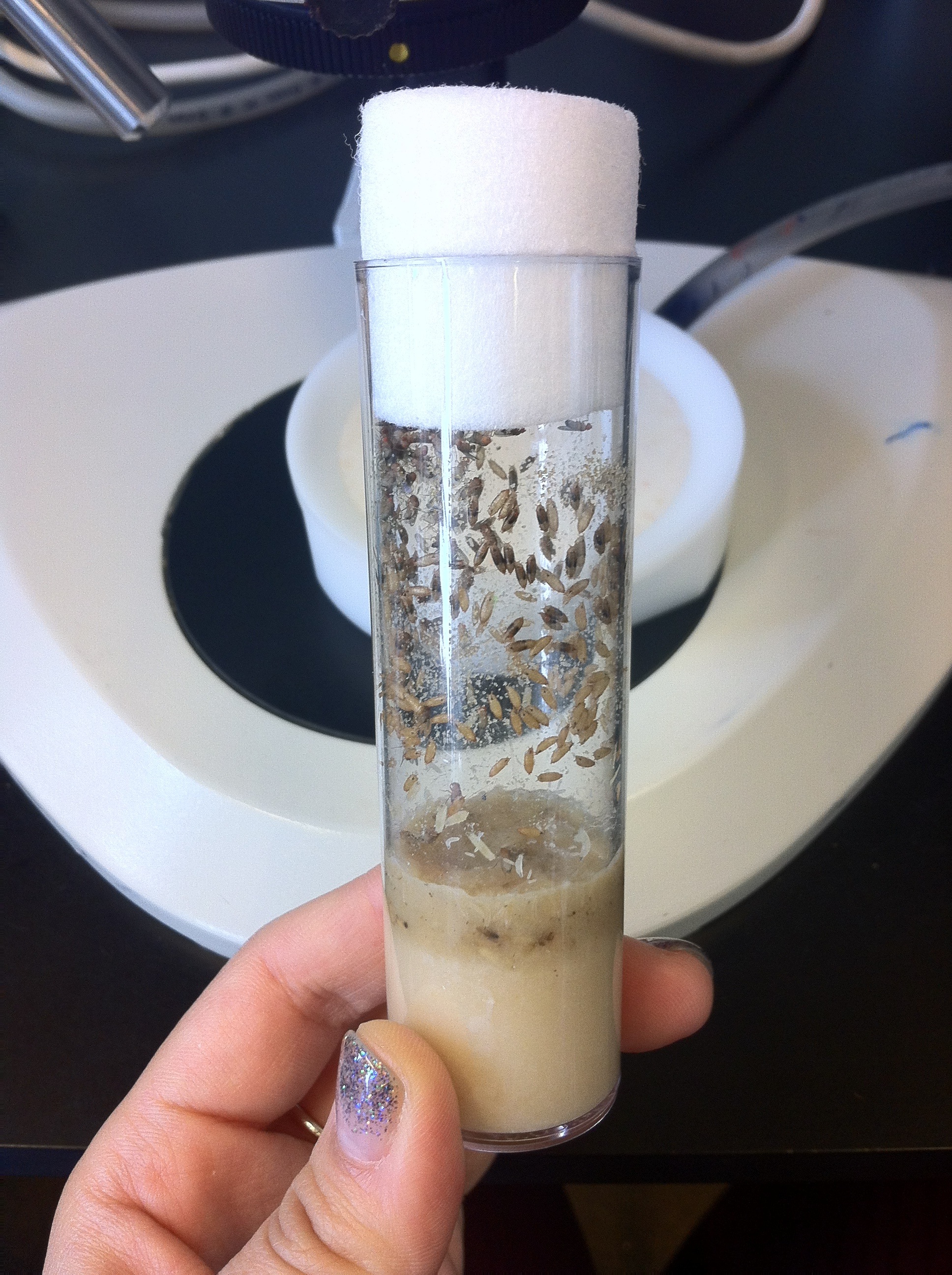
My model organism, Drosophila melanogaster, is a small fly weighing about 1mg. The life cycle of flies is very short, and the embryo develops into an adult in 10 days at 25 °C. This is great because you know the outcome of experiments relatively quickly, compared to animals with longer life cycles. Flies live in tubes containing fly food at the bottom. Fly food consists of cornmeal, yeast, and other nutrients they need. The flies will lay eggs on the food, the hatched larvae will eat through the food, and eventually crawl up the side of the tube to pupate. After about 4 days, those flies hatch, and the whole cycle continues.
A fly vial. Larvae and adults eat the food at the bottom, where eggs are also laid. Larvae crawl up the wall when they’re ready to pupate, and a few days later, adults hatch.
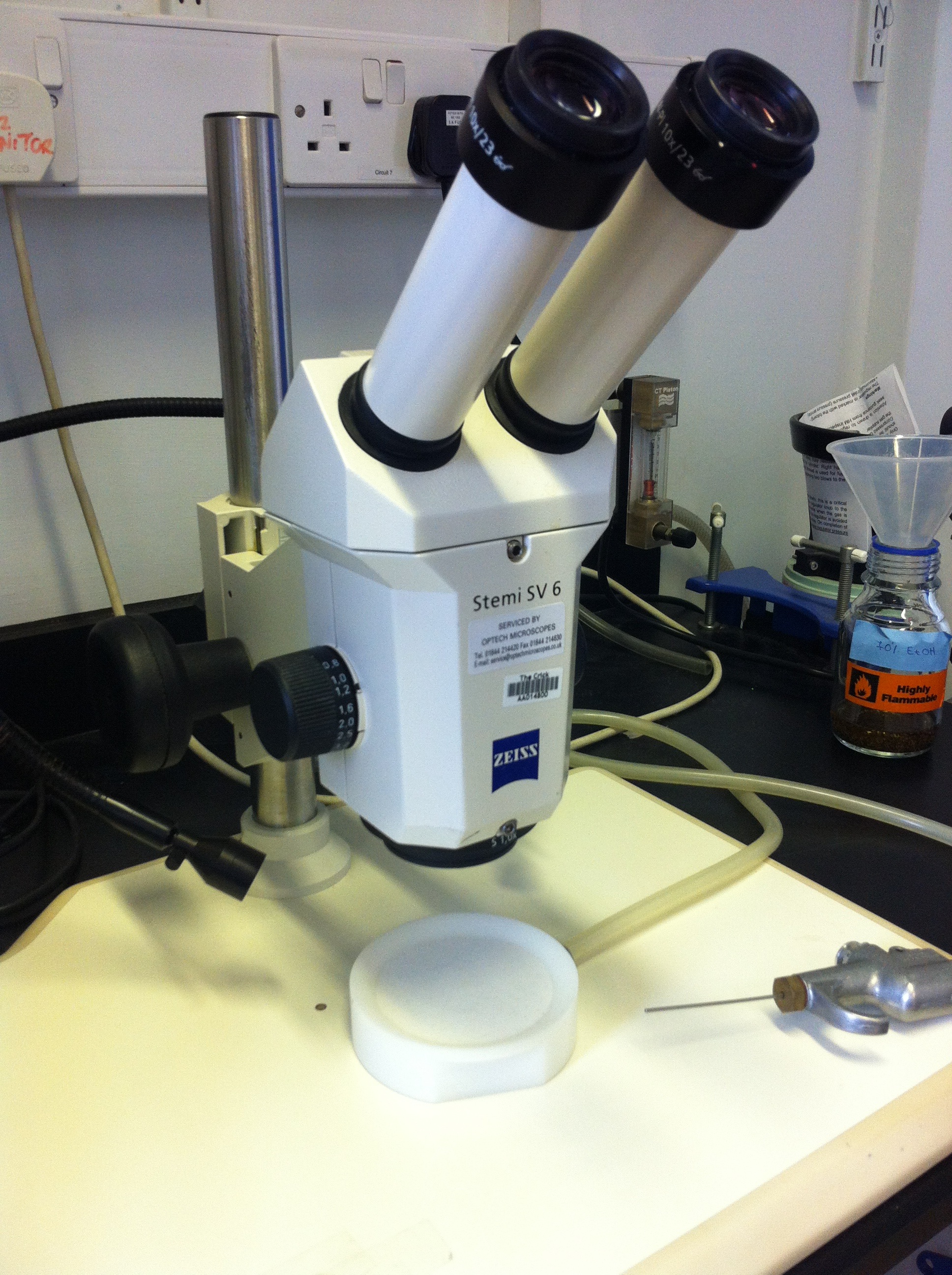
Most “fly people” start their day in the fly room. It’s a temperature controlled room, maintained at 22 °C, with workstations consisting of dissecting microscopes and fly pads. Fly pads release a controlled amount of CO2, so the flies placed on the pads fall asleep. It’s absolutely essential to have this, otherwise we won’t be able to sort through the flies if they’re still moving! We have two other rooms with different temperatures—18 °C and 25 °C. Those don’t have workstations, but are used to keep our fly stocks. The life cycle of flies varies depending on the temperature, and it gets shorter as the temperature increases. The 18 °C room is for stocks which we don’t use on a daily basis, but need to keep for future experiments. 25 °C is the temperature we most frequently use for experiments. Flies are happy at 25 °C, they lay eggs well, and the timing of development is well characterised so we know precisely what happens at certain time points. For example, we know when the embryos hatch, the larvae moult, and when the pigments become visible in the eyes and wings of pupae. Not only can we see these external features, but we also know where the axons of well-studied neurons are at particular developmental stages.
A typical fly workstation, with a microscope, CO2pad and a CO2 “gun”, which we use to insert CO2 directly into vials so flies fall asleep.
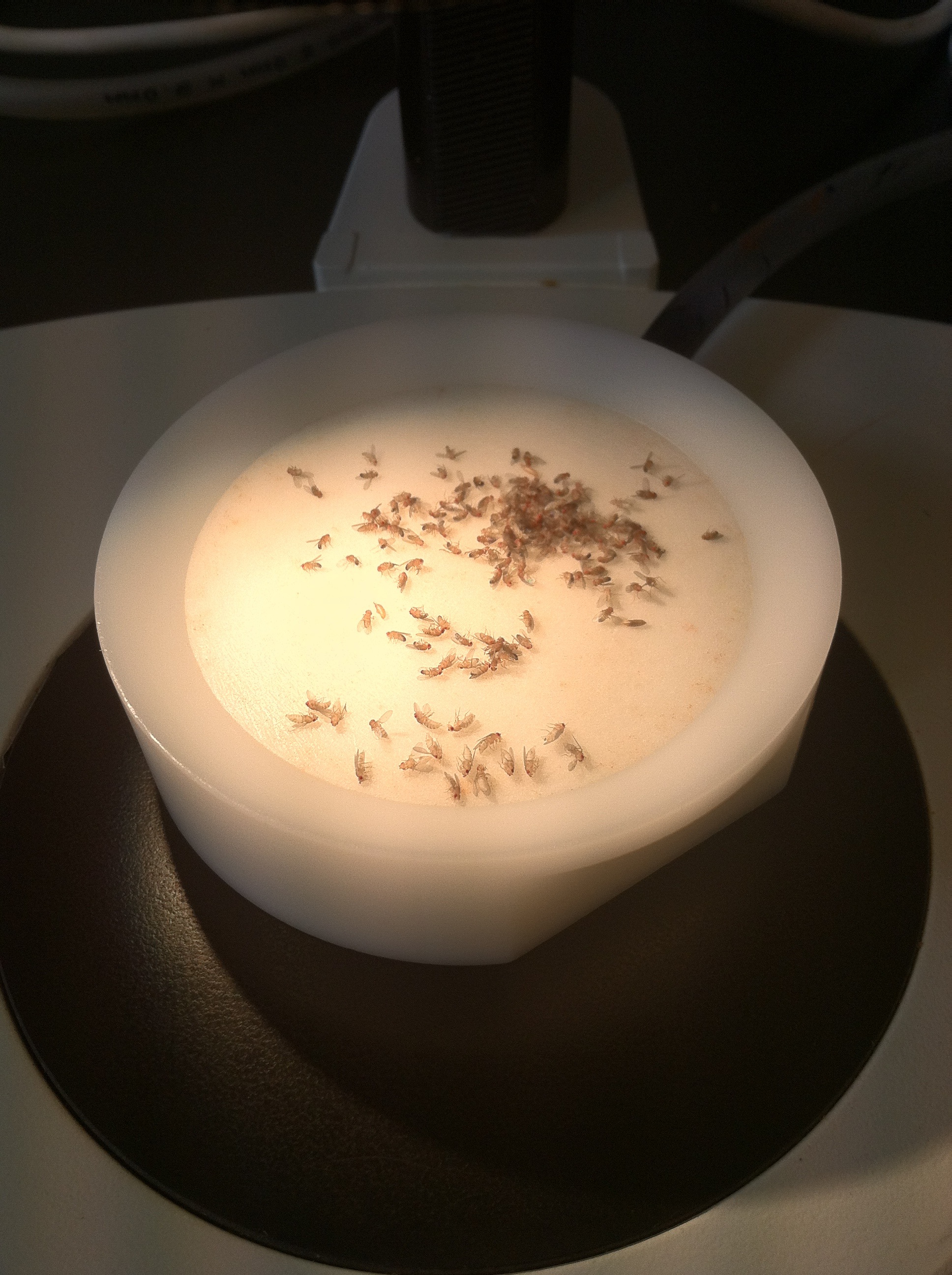
In the fly room, we first collect “virgins”. Virgins are females that have never mated with males, and we need these for genetic crosses. To ensure that the females are virgins, we collect them within a few hours of their hatching before they are developed enough to mate. And since most flies hatch in the morning, we’re most likely to find virgins when we first get to work. Once we have enough virgins, and depending on when we need the offspring for an experiment, we set up the crosses. To set up a cross, we simply retrieve the males and virgins of the right genotype from their vials, and move them to a new vial. The males then proceed to court the females within minutes.
Flies are asleep on the CO2pad, so we can select the virgins (near the front).
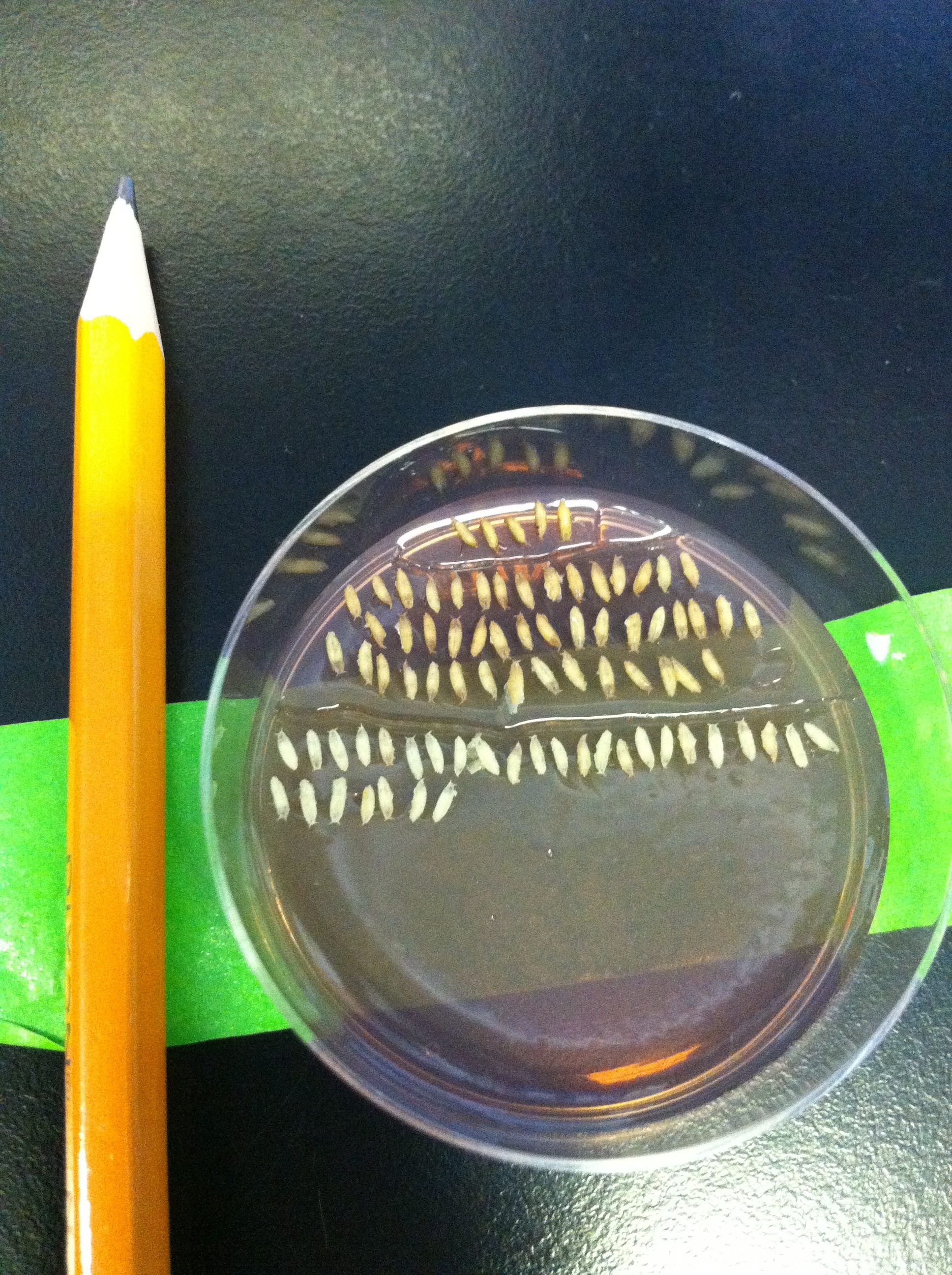
After collecting virgins, I usually move on to dissections. The cells of the visual system are generated from the third instar larval stage onwards, and continue to develop throughout pupal stages. Since my neurons of choice target their axons in late pupal development, most dissections I do are of pupae. I need to stage the pupae, meaning I collect the white prepupae, which have freshly-pupated and still retain the larval white colour, and count the number of hours after puparium formation (APF). The white prepupal stage corresponds to 0 hours APF, and the flies hatch between 90-100 hours. I look at anything between 24 and 85 hours APF depending on the experiment. We dissect fly brains under a microscope, using a tweezer in each hand. The great thing about flies is that the number of samples you can dissect is not limited by any laws or rules. The only factor which limits the sample number is how difficult it is to get progeny of crosses with the right genotype—when the flies have multiple transgenes loaded onto most of their chromosomes, they are not as healthy as wild type and sometimes refuse to hatch!
WPP are collected on a plate with agar containing grape juice. They’re very small, as you can see compared to the pencil.
The best thing about using Drosophila is its extensive genetic toolbox. Using the Gal4-UAS system, we can express any transgene in specific cell types. Additional genetic “tricks” allow us to label neurons or glia of interest in the brain, also at a single cell level. This is very useful when we want to investigate the function of genes, and for example would like to know whether they’re required in a specific cell. Another advantage of flies is that the genome is completely sequenced. We have good knowledge of the sequence of all genes often down to the single base. There are some un-annotated (potential) genes in the genome, and there’s always excitement if you work on them—because if you find a function for them, you get to pick the name of the gene. I think fly gene names are really inventive and fun, which help you remember them. swiss cheese, sex-lethal, technical knockout, and tinman to name a few!
After dissecting, I take care of my fly stocks before lunch. One annoying thing about flies is that we can’t cryopreserve the embryos, so we always need to maintain stocks as live flies. This means we need to “flip stocks” every few weeks, which involves transferring the flies from their old tube to a new tube.
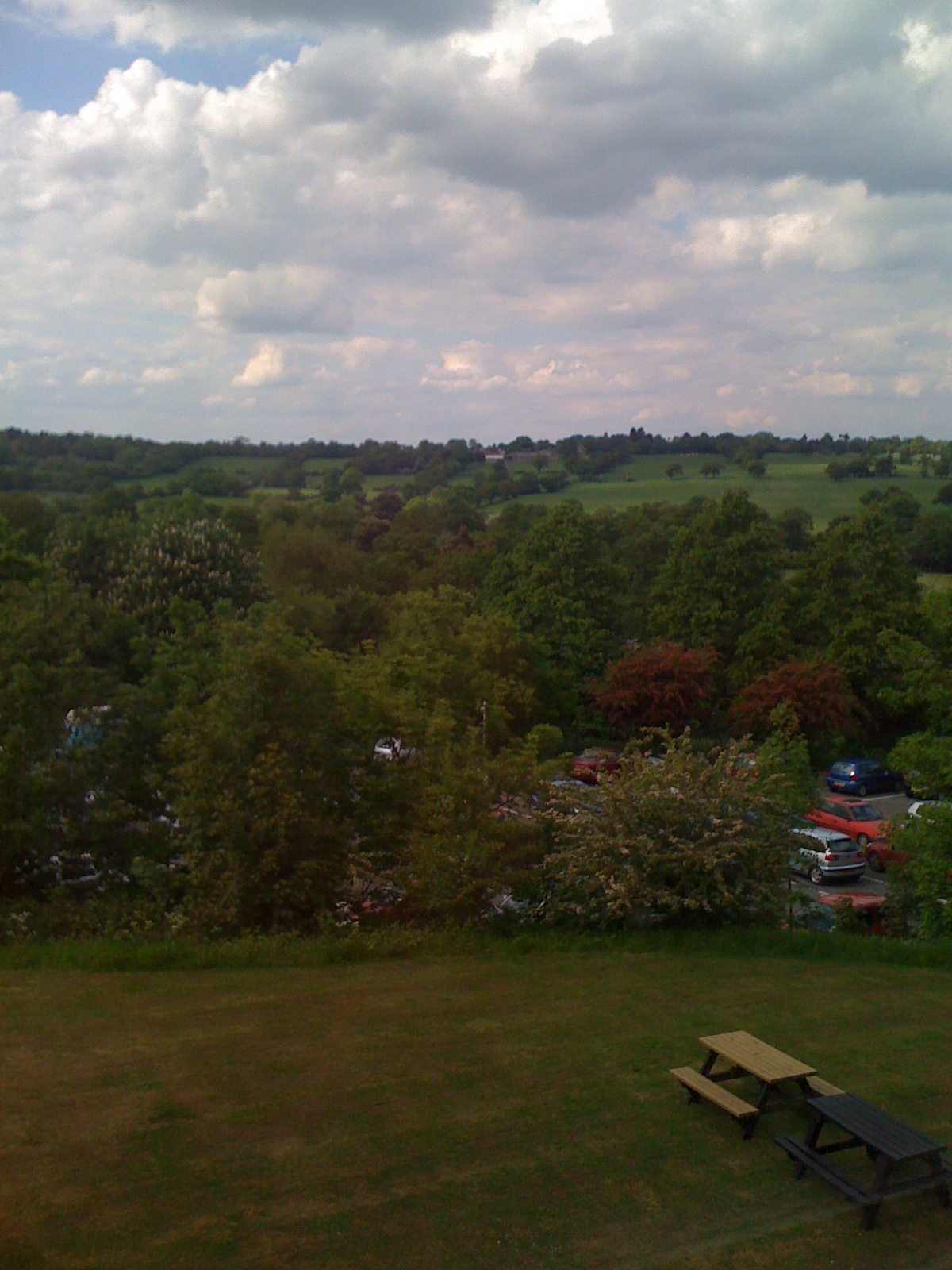
At lunchtime, all the fly groups eat together. There are three fly labs at NIMR, with around 30 people in total. We all share the fly room and equipment, and give experimental advice to each other. I see everyone every day in the fly room and in the canteen, and we certainly build amazing friendships. I’d say that’s a perk of working in a communal fly environment!
The countryside view from the NIMR canteen.
The first thing I do in the afternoon is to incubate my dissected brain samples from the previous day in secondary antibody. They would have been incubated in primary antibody overnight, and after 2.5 hours incubation in secondary antibody at room temperature, they are good to go.
To prepare the brains for confocal microscopy, I mount them on a glass slide. We don’t slice the brains, but look at them as a whole because they are very small. We place the tiny brains in a drop of mounting medium, and then under a fluorescence dissecting microscope, shift their orientation in the medium. This gives us the perfect orientation to visualise the brain in a reproducible manner, but it requires a lot of patience, and your hands need to learn to make adjustments in the μm range. It’s essential to get this right, otherwise we won’t be able to tell whether axon projections are reaching the correct area of the brain. And we need to know if it’s a phenotype, or just looks like one because it’s sloppily mounted!
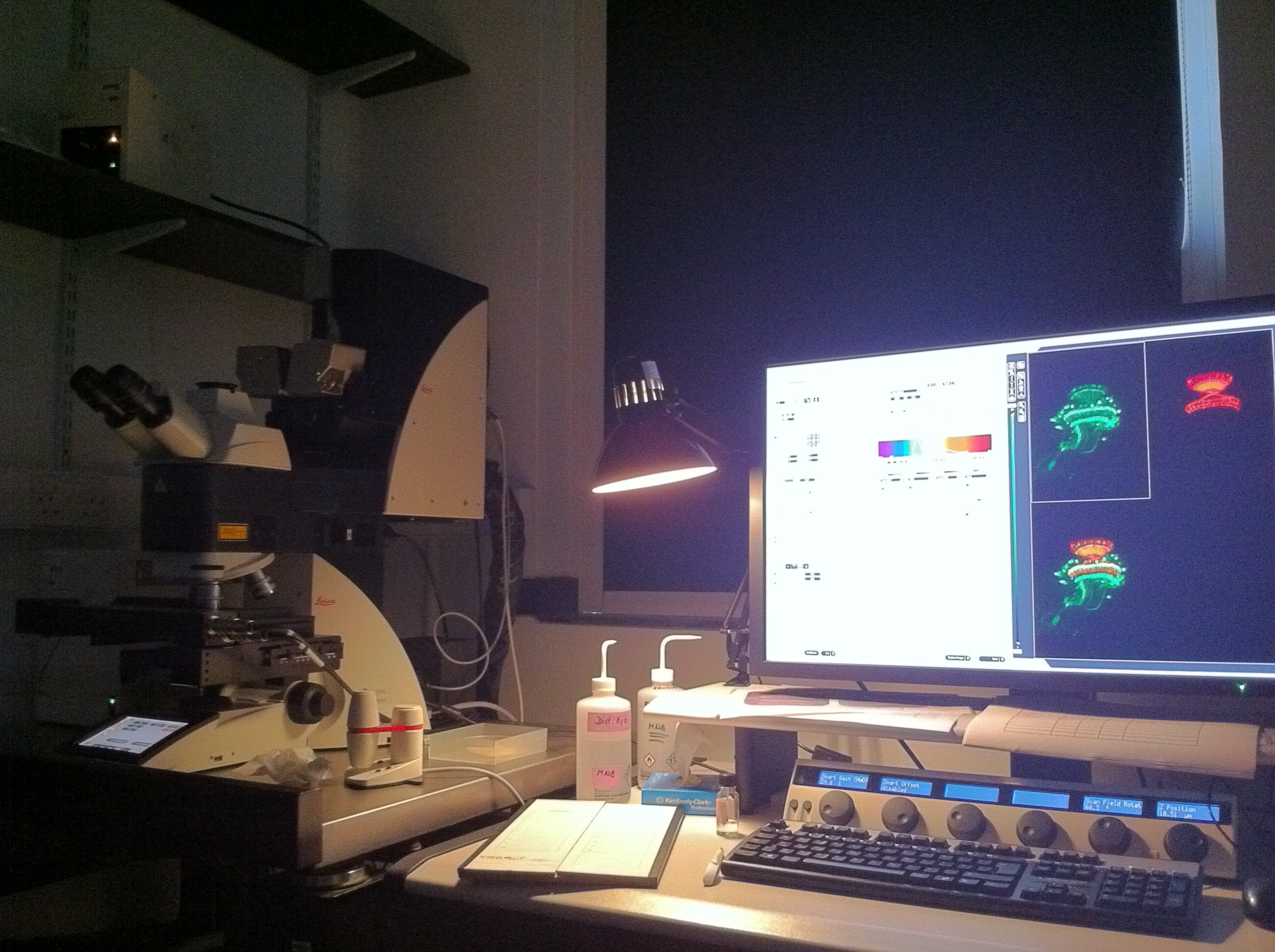
A typical set up of a confocal microscope.
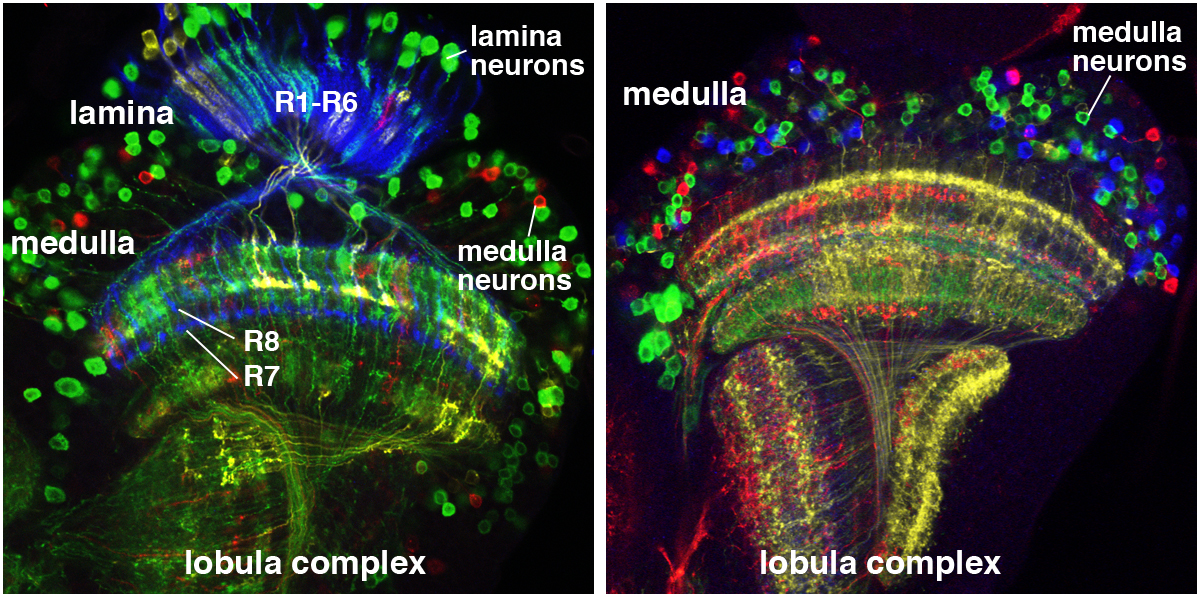
The confocal microscope is arguably the most important thing our lab uses. We need to look at fluorescently labelled neurons at the single cell level so it’s crucial to have a microscope with high enough resolution. We use techniques which allow us to label our cells with sometimes up to 5 different colours in the same sample, so generating an image (with multiple focal planes) could take a long time. The current microscope we have is only a few years old, and is able to do fast scans. Even then, when I have to follow the neuronal processes across the brain, scans could take about an hour. Still, it is very rewarding to look at the final image, which labels neurons (or antibodies recognising proteins) in different colours.
A rainbow in the fly visual system. We use a technique called Flybow to identify individual neurons in the Drosophila optic lobe. Left: Timofeev et al. 2012; Right: from D. Hadjieconomou.
The final thing I do before calling it a day is to go to the fly room and collect virgins again. This time I collect the flies that have hatched during the day. Then I store my flies at 18 °C for the evening, and after a night’s rest, they will be ready for me again in the morning.
It’s been 3 years and 8 months since I started working in my current lab. I started off as a research technician, focussing on molecular biology projects to create new transgenic fly lines. Now, I’m fully immersed in the fly genetics and immunohistochemistry—and looking forward to continue working with these cool little guys to find out more about brain development.
This post is part of a series on a day in the life of developmental biology labs working on different model organisms. You can read the introduction to the series here and read other posts in this series here.
“Evolution of the Human Neocortex: How Unique Are We?” was the question asked at the Wiston House in West Sussex from 22-25 September 2013. Although we were hardly the first to consider whether the human brain is something special, the ‘unique’ pileup of methodological approaches likely improved the dialogue on this topic. My own presentation sought to link cells, cortical areas, and behavior, and certainly the new information I acquired will contribute to this. Here is a summary and reaction to some of the themes that arose from the meeting:
A DIVERSITY OF ANIMALS MODELS AND NEOCORTICAL STRUCTURES ARE LINKED BY THEIR SIMILARITIES. Zoltán Molnár stressed structural similarities between mammalian and bird cortex — but noted that these have been found despite of developmental differences. Tatsumi Hirata suggested that the mammalian neurogenic sequence, in which cortical layers result from stem cells each generating both deep and upper layer neurons, is primitive, and that isolated chick neurons developed in culture ‘revert’ to a similar developmental pattern. Luis Puelles found that, in mice, the claustrum arises very early in development, and insula cells migrate across it – confirming our neuroanatomist forefathers (Meynert, Brodmann, Cajal, Rose) who described claustrum as a deep layer of the insula in humans. To wrap things up, the continuity of brain function was addressed by Constance Scharff, who played a German folk tune sung beautifully… by a bullfinch.
GIVEN THESE REGULARITIES WHICH OVERREACH TAXONOMIC LINES, STRUCTURAL CONSTRAINTS LIKELY UNDERLIE THEM. Talks hinted that cortical organization follows a continuum along a caudal-rostral gradient. Barbara Finlay showed that across species, the same patterns emerge: there is a decrease in neuron density along a caudal-rostral axis, with the highest density in the occipital pole. Also along a caudal-rostral axis, the layer widths change, with an increase in the proportion of cortex that is comprised of upper layers versus lower layers. This gradient recapitulates primate evolutionary trends exemplified in humans: decreased neuron density, and upper layer expansion, and anteriorly-skewed brain enlargement. This organization forces forward the processing of information; with a bigger brain, there is even more information compression along the axis. Ed Lein showed that along the cerebral cortex, and within cortical lamina, a caudal-rostral gradient is followed by gene expression profiles – perhaps providing the developmental and functional basis of the similar structural pattern. Although in terms of its transcriptome the cerebral cortex is a largely homogeneous tissue, its most caudal aspect, the primary visual area, is most district in humans, whereas the primary somatosensory area is most distinct in mice.
SEVERAL SPEAKERS DISCUSSED MECHANISMS FOR MAKING NEOCORTEX BIGGER AND MORE HUMAN. Arnold Kriegstein told that humans – compared to mice – have an enormous outer subventricular zone with fast-jumping radial glia. This mechanism shortens migration distance, and may be important for big brains. Svante Pääbo awed by extracting entire genomes from a Neanderthal and tiny bit of a Denisovan, and these archaic forms are identical to modern humans in genes relevant to language. Further hints at the role of FOXP2 in advanced cognition came from humanized mice which showed faster learning and minds surpass those of cave men; Not to mention Neanderthals wore makeup, Denisovans crossed oceans, and both contributed to modern human genomes! Franck Polleux presented that, uniquely in humans, there is a partial duplication of the gene SARGAP2. Structurally it plays a role in the higher dendritic spine density of human versus macaque interneurons; functionally this gene is associated with social cognition and object recognition. Gavin Clowry found evidence for greater connectivity in the GABAergic interneurons of human versus mouse cortex. Thus, human uniqueness has elements at the level of genes and neuron connectivity.
BRAIN REGIONS ARE COMPRISED OF NEURONS WHICH TOGETHER MAP THE BODY. Jon Kaas gave the sole talk on brain area function, showing that primate posterior parietal cortex is subdivided according to specific ethnologically relevant motor functions (a pattern replicated in frontal lobe) but do not have distinct boundaries based on somatotopic maps. He told that in bigger brains, the addition of cortical areas could improve serial processing, as in a computer. Perhaps duplication of topographically defined areas has diversified brain functions in big-brained humans. Barbara Finlay pointed out the importance of these incomplete areas for understanding how new areas arise. Recent research suggests an emphasis on bottom-up processing during tool use in humans, which compared to chimpanzees have more parietal activity, and less prefrontal strain (Hecht et al 2013) perhaps resulting from duplicate cross-modal representations. It would be curious to know the developmental mechanism for, and the function of, doubled posterior parietal representations which sometimes pop up in our species (e.g., Sereno and Huang 2006, subject 2).
HUMAN-SPECIFIC BRAIN REGIONALIZATION COULD EFFECT GYRIFICATION. Chris Walsh was informed by observations of a human pathology with reduced gyrification in Broca’s language area, due to a mutation in GPR56 noncoding sequence. Developmentally, expression of this gene seems to limit the sizes of the ventricular zone and outer subventricular zone, and also the thickness of the upper layers of the cerebral cortex. Dean Falk discussed differences in sulcal patterns between humans and apes, and provided new insights into what our most recent shared ancestor’s brain may have looked like, based on her description of the Sahelanthropus endocast. The little data extracted from fossil endocasts reveals that our brains are a bit different from those of the earliest members of the human lineage.
YET, UNFORTUNATELY, WE ARE STILL A LONG WAY FROM INTERPRETING BEHAVIOR FROM GYRI. Surprisingly, the mechanisms behind folding the cerebral cortex into gyri may be very primitive, and may not reflect functional networks. Talks by both Wieland Huttner and André Goffinet pointed to an early origin of gyrification in mammals, including data from converging models based in both phylogenetic and developmental studies. Victor Borell demonstrated a distinct gene expression pattern concurrent with the location of sulci in ferrets. This brought into question the classic tension based theory of gyrification (Van Essen 1997) described in Dean Falk’s talk, which was based on Colette Dehay and Pasko Rakic’s past work on striate and extrastriate cortex formation.
WHAT IS THE UNIT OF BRAIN ORGANIZATION ESSENTIAL FOR IDENTIFYING HUMAN UNIQUENESS? With variability in factors including genes, regulatory factors, proteins, cells, connections, timing, specificity, activity, structures, number, and size, there must have been near-infinite ways in which unique human cognitive capacities could have emerged! The victory of this meeting was in representing the diversity of levels of magnification, and how these interact, for there is no magical unit at only a single level.
OUR JOB NOW IS TO DRAW LINES AND RECONSTRUCT HISTORIES. Pasko Rakic illustrated this point in a cartoon: a mouse attempts to have cocktails with a human – but instead drops his glass. This humorously represents the investigation of genetic factors in human-specific limb development to gain historical insight into the evolution of our unique brains. However, I am also reminded that human uniqueness is the story of just one animal. I am astonished to consider the primitiveness of gyrification and neocortical lamination; and the convergence of singing. With the meteoric loss of the dinosaurs, whose brain and body sizes exceeded those of living birds, what unique behaviors might also have been lost?
If you are interested in topics like these I invite you to participate in ENBER, a network which brings together brain evolution researchers across the globe and across different fields. ENBER includes a mailing list (@eurnetbrainevor) for sharing information about upcoming opportunities (meetings, grants, jobs, publications) and a researcher directory. I also maintain a listing of brain evolution research results that have appeared in the news (@BrainEvolutionN), so please inform me if your research has recently received attention from the press.
More about this workshop: Steve Briscoe discusses his impressions of the same meeting here. Katherine Brown discusses a related public event here.
The Autumn Meeting of the BSDB on ‘Axon Guidance and Regeneration’, held on the 28th – 30th August, 2013 at the University of Aberdeen in the beautiful surroundings of Old Aberdeen, was an excellent conference of around sixty delegates, full of exciting talks, highly distinguished speakers, and many opportunities for interaction and fruitful discussion. Talks and posters throughout the conference ranged over a number of fascinating topics, including both classical and novel axon guidance mechanisms (how neurons project axons correctly to specific targets to achieve the circuitry of the nervous system) and how these findings may be used to promote axon regeneration after injury or disease. How different axons project to specific targets in the same environment was discussed in detail, including novel and exciting evidence to support the idea of how not only one specific axon guidance cue, but combined cues acting in synergy, combined with a variety of receptors on different cells, as well as translation and transcription, can guide axons.
We were extremely lucky to have two wonderful and inspiring plenary talks. Using the optic system as a model, Professor Carole Mason (Columia University, USA) showed her work on how a combination of the guidance molecules Sema6d, PlexinA1 and NRCAM are all required at the optic chiasm for contralateral retinal ganglion cell axons to cross the midline, an important mechanism for the correct connectivity of the visual system. These findings bring forward the idea that a consortia of guidance molecules and specification cues both on the axon growth cone and in the environment is needed for correct axon guidance. In addition, Professor Mason showed exciting new work on how the birthdate (neurogenesis rate) of different neurons in the eye may lead to specification of their identity. In the second plenary lecture, Professor Christine Holt (University of Cambridge, UK) showed us her fascinating work on how differential translation of the actin assembly machinery in different parts of the axon growth cone can lead to attraction or repulsion. This suggests that local translation in the axon, dendritic spine and surrounding cells can affect axon guidance and neuronal activity.
In addition, Paola Bovolenta (Instituto de Neurociencias, Spain) described her work on how different levels of the morphogen sonic hedgehog (Shh) in both RGC cells themselves and at the midline are important for correct guidance of RGC axons. Artur Kania (Institut de Recherches Cliniques De Montreal, Canada) and Franco Weth (Karlsruhe Institute of Technology, Germany) added to this theme and described complex and novel work showing how guidance cue additivity, synergy and a variety of forward/reverse and cis/trans signalling through multireceptor complexes on growth cones can guide axons.
How to study what happens to the circuitry of the nervous system when correct axon guidance is disturbed or incomplete was discussed by several speakers, in particular by using transgenic mouse, fish and fly models to disturb genes in particular parts of the optic system.
The function of nonneuronal cells in axon guidance and regeneration was also discussed. Iris Salecker (NIMR, UK) described how their beautiful imaging of CNS glia in Drosophila medulla neuropil glia (mng) mutants is helping to define the development of different glial classes and the nature of their association with developing axons, and to suggest novel genes involved in these processes. Charles ffrench-Constant (MRC Centre for Regenerative Medicine, UK) told us about his group’s work on oligodendrocytes and central remyelination, and in particular, how a limited window for CNS remyelination in the CNS by oligodendrocytes may be extremely important for targeting therapies in multiple sclerosis. Several talks focused on the genes and mechanisms controlling the physical process of axon extension and how these may be manipulated to promote axon regeneration. Kristjan Franze (University of Cambridge, UK) used high-resolution ‘stiffness’ maps of Xenopus brain tissue to show that axonal growth speed and length is affected by the ‘stiffness’ of the axonal growth substrate. This exciting finding suggests that, in addition to typical chemical signals, mechanical forces in surrounding tissue are important for correct axon guidance, and suggest that a mechanosensative channel may be important. In a similar technological advance, Geoffrey Goodhill (University of Queensland, Australia) showed how their careful and in-depth timelapse analysis of axon growth cone morphology led to the discovery of oscillations in growth cone shape over time, and that these oscillations predict the eventual movement and guidance of the growth cone. Finally, exciting findings in enhancing CNS axon regrowth were shown by Frank Bradke (DZNE, Germany). By using a blood-brain barrier crossing drug to stabilize axonal microtubules, causing an accumulation of microtubules at the axon leading edge and axon regrowth, they were able to show functional recovery after CNS injury in rodents, an inspiring result in the difficult CNS environment.
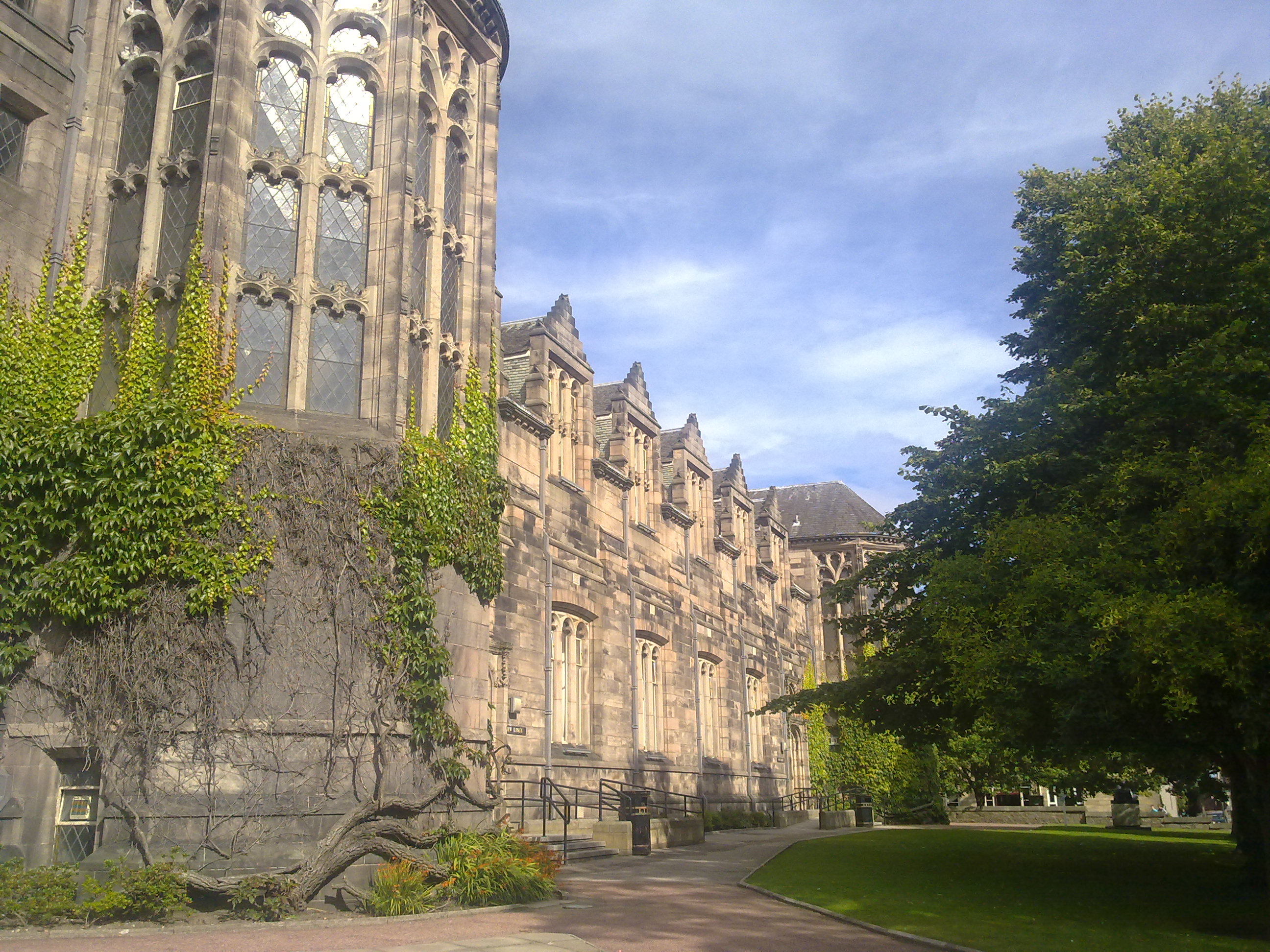
The conference location in the historic Elphinstone Hall and New Lecture Theatre at the University of Aberdeen, surrounded by greenery and beautiful buildings, provided a tranquil environment for many enjoyable and productive discussions and informal chats over refreshments and during excellent poster sessions. On the last night, we were treated to the sight of dolphins swimming in the sea next to Aberdeen beach, during a drinks reception before a great Conference Dinner and opportunity to relax and socialise in the Beach Ballroom on Aberdeen seafront. This was followed later in the evening by a very active and enjoyable Ceilidh (traditional Scottish dance), ably assisted by our Scottish delegates.
I would like to thank the conference organisers and BSDB for providing this great opportunity for researchers to hear about and discuss cuttingedge and exciting research in the field of axon guidance and regeneration.
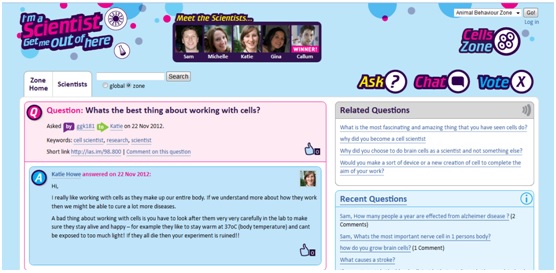
For those of you who haven’t heard of it before, ‘I’m a Scientist, Get me out of here!‘ is an online event that aims to connect school children with real working scientists. In the two weeks over which the event runs, the students get to interact with scientists online and ask them anything they like – from questions about their job and how they got to where they are today, to burning science questions they’ve always wanted to know the answer to. For example: ‘What is snot made of?’!
Scientists volunteer to take part and are allocated to a themed zone related to the area of science that they work in. For example, I worked on the cell biology of oocytes and embryos, so was placed in the Cells Zone. Throughout the event the students then get to vote for their favourite scientist. During the second week of the competition the scientist with the least votes gets evicted each day, eventually leaving one winner – hence ‘I’m a Scientist, Get me out of here!’!
The main focus of the event is the fast and furious live online chats which take place a couple of times every weekday during the event. Up to 30 students and two or three scientists mean that you are literally bombarded with questions and lightning-quick typing is the order of the day. The many hours of my youth spent honing my keyboard skills by chatting on MSN messenger came in very handy here!
Outside of the live chats students can also log on to the website in their own time and pose yet more questions to the scientists. The questions really did come flooding in and ranged from ‘Why do we sneeze?’ to ‘How do cells come together to form an object?‘. For these questions, the scientists have a bit more time to consider the questions and give a more in depth answer. An important balance had to be struck between answering these questions in an engaging and informative manner without being too patronising and, most importantly, without slipping into the impenetrable jargon that we use so freely in our daily work.
A few times I had to resort to Googling to help answer some of the students’ questions and in doing so learnt some new things myself! For example I was asked ‘What is the unification of gravitation with quantum chromodynamics?‘. As a cell biologist, I’m not ashamed to say I had to look this one up!
Over the course of the event I also fielded a lot of questions about what I like to do for fun – such as ‘What football team do you support?‘. I expect the students were surprised (and relieved!) to learn that all the scientists had other interests outside of the lab. The ability to interact with scientists directly also helped to dispel some of the myths that scientists are all introverted geeks who can’t interact with other humans.
I took part in ‘I’m a Scientist’ in November 2012 and had such a great experience it prompted me to explore other outreach and public engagement activities and now, one year on, I work in science engagement at the British Library. I would wholeheartedly recommend ‘I’m a Scientist’ to all readers of the Node – whether you are interested in outreach as an alternative career or if you just want to take step back and look at your research from a totally different perspective. It was refreshing to have to justify to enquiring students exactly how my research related to real-life – something that can be too easily lost sight of after long days at the bench. It also needn’t take up too much time – you can fit in the chats between experiments and then answer the offline questions in your own time. Although it really is very rewarding so I found myself checking for new questions throughout the day and eagerly awaiting the next live chat! All you have to do to sign up is write a one sentence summary of your research, which then gets judged by teachers and students…
This post is part of a series on science outreach. You can read the introduction to the series here and read other posts in this series here.
– The American Society for Cell Biology meeting in New Orleans will still be accepting registrations (no longer at reduced rate unfortunately!) until the meeting on the 14th of December.
– Registration is also open for the BSCB/BSDB joint Spring Meeting, which will take place in March at the University of Warwick. Early bird registration deadline is the 7th of February.
Here’s a basic but really important question… how do stem cell scientists actually identify the stem cells they are raving about? We have all heard that we have stem cells in our gut, in our skin, in our eyes or in our brain for example, but scientists are still looking for stem cells in other tissues.
To understand how scientists go about spotting stem cells in adult tissues we have to remember what a stem cell is. A stem cell is a cell that can make copies of itself, a process called self-renewal. A stem cell is also a cell that can specialize into the cell types of its own tissue, a process called differentiation. For example, blood stem cells have to self-renew to maintain their reservoir in the bone marrow, but also produce daughter cells that specialize exclusively into all the types of blood cells (red blood cells, immune cells, platelets,…). So when scientists are looking for stem cells, they basically are looking for cells that comply with these criteria.
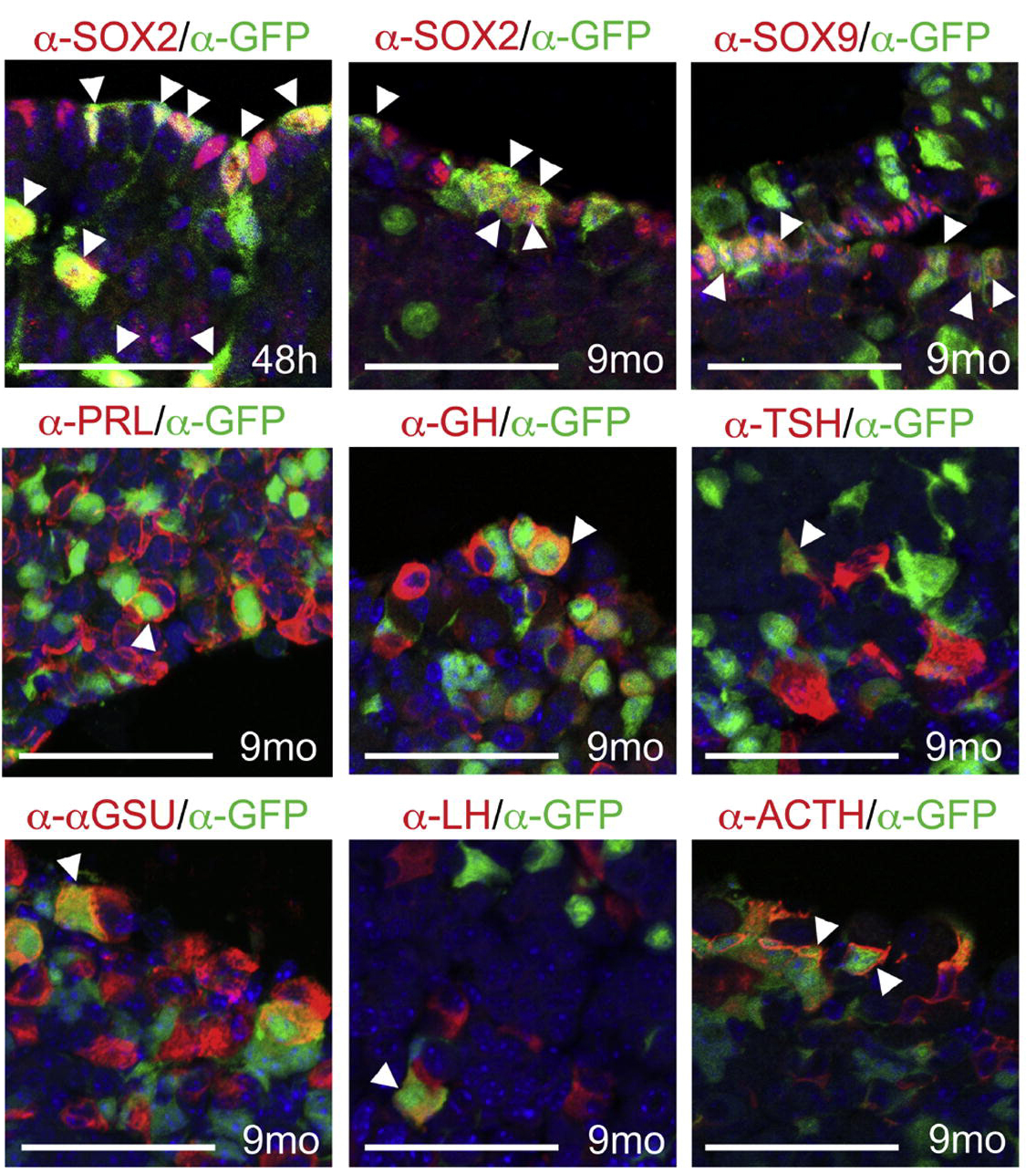
In order to look for such cells, most “stem cell spotting” studies use an in-vivo lineage trace experimental strategy. A recent example of this was a study published in Cell Stem Cell, in which Andoniadou and colleagues have identified a pool of stem cells in the adult pituitary gland. In a nutshell, they use fancy genetic engineering method to tag cells that express the protein Sox2 with a fluorescent protein, which makes them able to visualize these Sox2 positive cells. After the initial “tag” step, the researchers wait for a few months and can then see the cells that have been produced by the original Sox2 positive cells. This works because the daughter/grandaughter/great-grandaughter cells also have the fluorescent tag, passed down through generations of dividing cells.
In the upper right picture of this panel, one can see that 48 hours after the “tagging” step, the majority of Sox2 cells (in red) are also tagged with the fluorescent protein (seen by α-GFP, in green), so that the cells appear yellow (arrowheads). The other pictures in the panel have all been taken 9 months (mo) after the initial tagging of the Sox2 positive cells. One can see that some “tagged” cells (in green) still express Sox2 (yellow cells, arrowheads), indicating self-renewal. In the other pictures, some “tagged” cells (still in green) also express proteins such as SOX9, PRL, GH, TSH, GSU, LH, and ACTH (yellow cells, arrowheads), which are proteins that are expressed in the specialized cells of the pituitary gland, indicating differentiation. So from these observations, the authors conclude that, during the 9 months after tagging, some of the original Sox2 positive cell population has self-renewed (because some progeny still express Sox2) and differentiated into the specialized cell types of the pituitary gland (because some progeny express a battery of differentiation markers). This tells us that the original cell population is a stem cell population!
Though this lineage tracing strategies are fairly complicated and time consuming, this is how many scientists spot stem cells in our bodies!
Picture credit:
Andoniadou, C. L., Matsushima, D., Mousavy Gharavy, S. N., Signore, M., Mackintosh, A. I., Schaeffer, M., Gaston-Massuet, C., Mollard, P., Jacques, T. S., Le Tissier, P. et al. (2013) ‘Sox2(+) stem/progenitor cells in the adult mouse pituitary support organ homeostasis and have tumor-inducing potential’, Cell Stem Cell 13(4): 433-45. doi: 10.1016/j.stem.2013.07.004.
Developmental and Regenerative Dermatology Laboratory
School of Medical Sciences, University of New South Wales
PhD Scholarship
The Developmental and Regenerative Dermatology Unit is seeking a highly motivated and enthusiastic postgraduate student for a research project in skin (cancer) biology.
Recently, we made the pivotal discovery that Yes-associated protein (YAP) functions as a key molecular switch in epidermal stem/progenitor cell proliferation and differentiation (Beverdam et al., JID 2013). Currently, we are investigating the developmental genetic context in which YAP functions to control skin stem/progenitor cells in normal and in disrupted skin biology, and the PhD student will participate in this research.
We employ genetically manipulated mouse models, human skin samples, advanced imaging technology such as confocal microscopy and whole mouse in vivo imaging, gene and protein expression analyses and whole genome approaches to address our research questions.
Outcomes of our research will open up exciting new avenues for translational research and the development of treatments for human regenerative skin disease.
For more info on the laboratory: https://research.unsw.edu.au/projects/dr-annemiek-beverdam
Award: Scholarships are valued at $24,653 per annum (tax exempt), and may be renewed for up to three years, subject to satisfactory progress.
Eligibility: All applicants must hold an Honours degree or equivalent in a related biological science (e.g. Developmental Biology, Genetics, Cell Biology, Pathology). Applicants should have a particular interest in the project on offer and have experience in histology, molecular biology techniques, cell culture, bioinformatics and mouse handling.
Application Process: Applicants should include the following documents
• Cover Letter
• Curriculum Vitae
• Copy of an academic transcript
• Names and contact details (email address and phone number) for at least 3 referees.
All applications should be emailed to Dr. Annemiek Beverdam: A.Beverdam@unsw.edu.au


 We’re excited to announce that our short film, Stem cells – the future: an introduction to iPS cells, is now available in French, German, Italian, Polish and Spanish as well as English, with a supporting quiz for the classroom. You can
 Many congratulations to our partner, Dr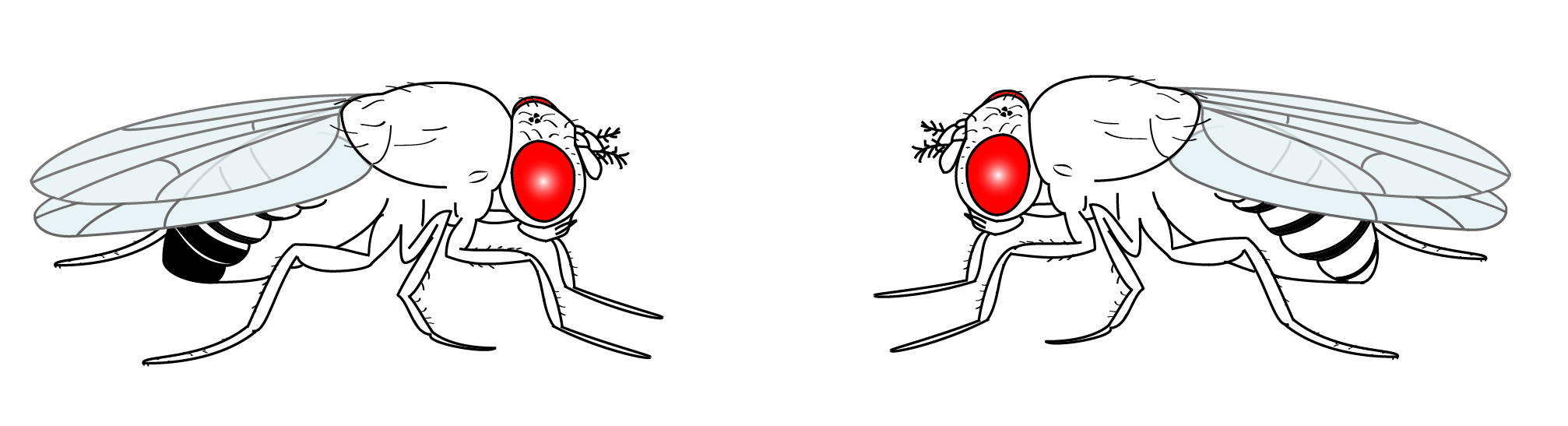
 This post is part of a series on a day in the life of developmental biology labs working on different model organisms. You can read the introduction to the series